28 C
Awka
Tuesday, March 31, 2026

Trumpet With Certain Sound

Home Blog Page 6

US President as Caesar: Immunity, Impunity and Road to Calamity

0
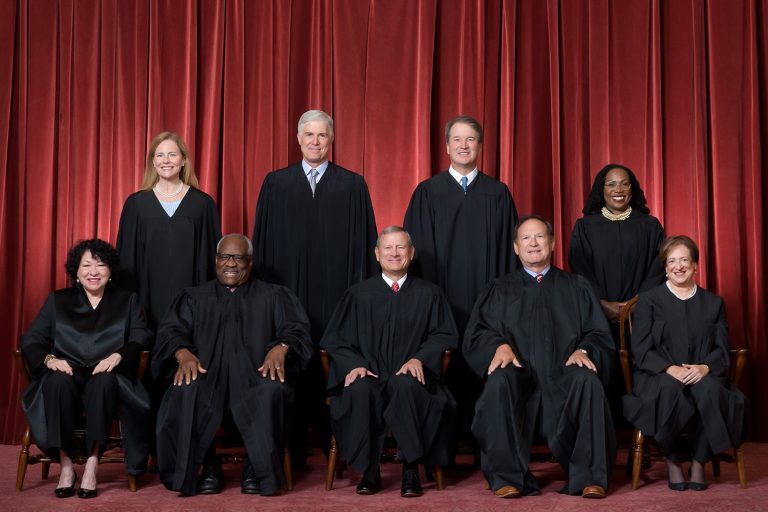
US Supreme Court Justices

A recent ruling by the US Supreme Court went far beyond constitutional provision and precedent to grant the president absolute or presumptive immunity on all his ‘official acts’, shielding him in perpetuity from criminal prosecution. This essay posits the ruling as an ideologically-based attempt to bolster the presidency, enabling it to assert its will in a multicultural, conflict-prone and post-constitutional America. This will backfire, though it creates a troubling precedent for countries like Nigeria, modeled on the American archetype.

By Chudi Okoye

After more than two hundred and thirty-five years in which he’s had pride of place in the canon of American political thought, it seems poor old John Locke is about to be toppled by Thomas Hobbes.

The Founding Fathers and framers of America’s famous constitution, rejecting the Old World’s tradition of monarchical absolutism, had crafted for their new country a constitution that combined diverse philosophical principles from different historical periods – from classical antiquity to their own Enlightenment era.

The framers picked up from Aristotle the idea of rule of law, and from Cicero his ideas on republicanism. They were impacted as well, in various ways, by the views of Enlightenment thinkers such as Immanuel Kant, David Hume, Voltaire and Thomas Paine. However, the framers were most notably influenced by the ‘social contract’ theorists and the like whose intellectual imprints can be found deeply embedded in the American constitution. They adopted Montesquieu’s concept of separation of powers, leading to the three separate but co-equal branches of government, as well as Jean-Jacques Rousseau’s notions of ‘general will’ and ‘popular sovereignty’. Above all, however, after considering Thomas Hobbes’s version of the ‘social contract’ theory based on the idea of a strong central authority (the so-called “Leviathan”), the framers opted for John Locke’s version anchored on the concept of natural rights and limited government.

For over two centuries, the constitutional innovation developed by the framers held firmly, and would become a beacon of self-government for many new nations. But this may be about to change, with the recent Supreme Court ruling, delivered July 1st in Trump v. United States, a landmark case concerning the limits of presidential immunity. The ruling puts the American constitutional tradition under severe test, and may likely unleash, some legal experts say, a Hobbesian Leviathan in lieu of Locke’s restrained executive. If this is unchecked, the portents are ominous for America, but also for countries like Nigeria that modeled their systems of government on the American template.

Trump and Immunity
About a month after Donald J. Trump took office in January 2017 as the 45th US president, the newspaper, Washington Post, adopted and began running under its masthead the slogan, “Democracy Dies in Darkness.” A little less than two years later, almost midway through Trump’s tenure, media consultant and former Republican strategist, Rick Wilson, published a book ominously titled: Everything Trump Touches Dies. Trump’s insurgent presidency was characterized by chaos, everyone could see. But these warnings from Wilson and the Post have proved particularly prescient, given what Trump has unleashed upon America, even in his post-presidency and as he bids to retake power in the November 2024 presidential election.

Donald Trump

In his quest for absolution and power, Trump has managed to get the conservative majority in the US apex court to declare, surprisingly and contrary to legal consensus, that a US president has immunity from criminal prosecution which presumptively extends to all of the president’s official acts – with absolute immunity for official acts within an exclusive presidential authority that Congress cannot regulate, such as overseeing foreign relations, commanding the military, issuing pardons, vetoing legislation, managing immigration, and appointing judges.

The case that caused the US Supreme Court – dominated by six conservative justices, three of whom were appointed by Trump – to pronounce such sweeping presidential immunity concerns the former president’s participation in attempts to overturn the 2020 US presidential election, particularly his role in instigating or encouraging the January 6, 2021 (dubbed “J6”) mob attack on the Capitol Building (seat of Congress, the legislative branch of the US federal government).

The path to the immunity ruling had begun in February 2021 with civil lawsuits filed against Trump at a district court seeking damages for his incitement of the J6 attack. Trump asserted presidential immunity for that case. This was however rejected by the trial judge, Amit Mehta, an Indian-American, with the judge’s opinion upheld on circuit appeal. Later, a special counsel, Jack Smith, who had been appointed by the US Attorney General, began investigating Trump’s actions pertaining to the 2020 election and the J6 attack. A grand jury put together for the case indicted Trump, centered on charges that the mob he incited tried to violently overthrow the government and stop the peaceful transition of power, and had assaulted law enforcement officers. Trump would file a motion seeking to vacate the charges, again citing presidential immunity. But the judge assigned to the case, Tanya Chutkan, an African-American, rejected his petition. Again, the rejection of Trump’s immunity claim was upheld on circuit appeal.

In its unanimous decision rejecting the immunity claim, the panel of the Circuit Court of Appeal argued that former presidents do not have immunity against crimes committed while in office, especially crimes related to recognizing and implementing election results. The panel noted that presidents have immunity for some “discretionary acts,” but it flatly rejected the claim of “absolute presidential immunity… for every official act.” Seemingly horrified by such a claim, the appeal court panel said the very idea “would collapse our system of separated powers by placing the President beyond the reach of all three Branches.” It said, in conclusion, that “We cannot accept that the office of the Presidency places its former occupants above the law for all time thereafter.”

This was the judgment bizarrely vacated by the apex court on Trump’s appeal, with a 6-3 decision – split on ideological lines – which was carried by the conservative majority (all White justices, except for Clarence Thomas, who’s Black but proto-White). Writing for the majority the Chief Justice, John Roberts, argued for an “energetic and independent executive” which needs immunity to be able to take “bold and unhesitating action.” As such, he ruled that Trump had absolute immunity for acts he performed as president within the purview of his core or exclusive constitutional power; that he had presumptive immunity for official acts within the “outer perimeter” of his official responsibility, where he shared authority with Congress; and that he had no immunity for unofficial, private acts. The Chief Justice then remanded the case to the district court for an analysis of which specific acts by Trump are prosecutable based on the above taxonomy.

Supreme Court Chief Justice John Roberts

It was a most controversial ruling, especially because during oral hearings some very weird hypotheticals came up relating to the extent of presidential immunity. Trump’s lawyer argued, for instance, that owing to immunity, a president could not be prosecuted for selling US nuclear secrets to a foreign adversary, or for accepting bribes to perform his duty, ordering the military to stage a coup so he could retain power, or even ordering the assassination of a political opponent. He said the president must first be successfully impeached and removed by Congress (nigh impossible in a polarized environment) for criminal charges to be brought.

Although it rejected the Trump lawyer’s view that impeachment and removal by Congress are prerequisites for the criminal prosecution of a president, the conservative majority seemed unperturbed by the extreme hypotheticals that were presented. It offered a ruling based on a maximalist theory of presidential immunity.

It is indeed a bizarre decision.

None of the three liberal justices on the Supreme Court bench agreed with the majority opinion. One of them, Sonia Sotomayor, alarmed that the extreme hypotheticals posited by Trump’s lawyer did not constrain the majority, argued that its ruling on presidential immunity was more expansive than the founders would have recognized. She also wrote that the expansive immunity granted by the majority would reshape the institution of the presidency, and could permit criminal conduct by presidents because it would be virtually impossible for prosecutors to bring stickable charges. She strongly dissented from the majority decision.

Also dissenting, Ketanji Brown Jackson wrote that the majority ruling meant that “for the first time in history” the president, who already is “the most powerful official in the United States, can (under circumstances yet to be fully determined) become a law unto himself.”

That indeed is the crux of the matter. But the question is: why would the conservative justices – some of them allegedly originalists who stick to the original meaning and historical context of constitutional text – be so eager to grant expansive immunity to Trump (and, admittedly, all presidents) even though they concede in their own ruling that there’s “fragmentary evidence” for presidential immunity in the US constitution? A basic search of the constitution shows there’s an express immunity provision (at Article I, Section 6, Clause 1) for members of Congress, with regard to their speeches, debates, and other legislative activities. But, as many legal experts have pointed out, the constitution is virtually silent on presidential immunity. So, if there’s no strong textual basis for presidential immunity in the constitution, why would supposed textualists in the Supreme Court – who presumably only accept the ordinary meaning of constitutional text without attempting to intuit original intent – theorize it in their recent ruling? You have to wonder!

Deciphering the Decision
Some commentators, reacting to the ruling, have said it eviscerates a major plank of American democracy which, as one put it, is a “suspicion of concentrated power.” Others accused the majority of rendering a transparently political judgment, aiming to shield Trump, an ideological ally, in the lead-up to the November 2024 presidential election. Even before the ruling, many historians, journalists, commentators, political scientists, and constitutional scholars, often writing in liberal media, criticized the court for even entertaining the case and legitimizing Trump’s outlandish theory of immunity. Meanwhile, over in conservative media land, there’s mostly support for the ruling, even though most conservatives ordinarily profess a preference for individual liberty and constrained authority.

Mulling over the whole matter – the majority’s specious reasoning, the strident bench dissent, the wrangles over the ruling within the legal profession, as well as the rancorous public reaction, all of which cleaved along ideological lines – it is obvious that ideological tribalism has reached a new level in modern America. I will go even further to say that it has reached the vicious level often theorized in Western anthropology about the primordial forms of tribalism in Africa and other non-Western societies. It might seem a stretch to say this. But when one really looks at it, the conclusion seems inescapable that ideological tribalism in what some are calling “post-constitutional” America is no different from primordial tribalism in Africa. Both are merely varieties of identitarian politics emanating in a milieu of heightened social conflict. In America, the conflict plays across vast domains of civic society, but most dramatically in the law courts. It’s especially so with Supreme Court cases: apex rules engender epic rows!

To understand what may be behind the aggressive ruling on presidential immunity by the Roberts court, we have only to pick up the pulse of political extremism on the ideological right. Whether in mainstream conservative media or at more obscure but nonetheless influential think-tank or special interest forums, conservative wingnuts peddle an apocalyptic view of American politics and society which depicts liberals and the progressive left as ‘traitors’ out, for reasons never fully explained, to destroy the ‘American way of life’. Consider for instance the writings of one Michael Anton, a paleo-conservative ideologue of the Trump era who’s highly influential in right-wing circles. In the lead-up to the 2016 presidential election in which Trump faced Hillary Clinton, this chap wrote a breathless article titled “The Flight 93 Election,” a reference to United Airlines Flight 93, hijacked by al-Qaeda terrorists on September 11, 2001 and headed for the US capital, until passengers fought back and deflected it. By this analogy, Anton meant that conservatives must fight back and take control of America, before it’s crashed by liberals and progressives.

Trump won in 2016 but lost in 2020. Anton and his ilk have since been plotting his comeback, again peddling extremist writing, including his 2020 book, tellingly titled The Stakes: America at the Point of No Return.

I should mention that Anton is an avowed student of Leo Strauss, a 20th century German-American scholar of Jewish descent who rejected modern liberalism for its supposed lack of moral and spiritual grounding, and equally for its alleged tendency to undermine the presumably sacred authority of religion, tradition, and natural law. Anton condemns the Black Lives Matter movement; derides American diversity; decries the “ceaseless importation of Third World foreigners” into America, and insists there should be “no more importing poverty, crime, and alien cultures” – all red meat for the right trumpeted by Trump himself on the hustings.

Shall I also mention the unhinged ideologues at the Heritage Foundation, an influential think tank affiliated with the Republican Party? The group is gearing up for a fight in the 2024 election, having produced a policy document for an incoming Republican administration, named Project 2025: Mandate for Leadership. In the document, the group lays out a draconian blueprint designed to reshape the US government, based on a unitary theory of government which asserts that the president must have absolute power over the executive branch. The document lays out detailed plans to roll back civil rights, voting rights, women’s rights, what have you, and for the administration to take a hard line on immigration, foreign policy, etc. The group wants to reclassify federal civil service workers so they become political appointees completely loyal to Trump.

The Heritage Foundation’s president, Kevin Roberts, has made it clear the group is spoiling for a fight, saying recently: “We are in the process of the second American Revolution, which will remain bloodless—if the left allows it to be.”

You can hear in all of the above – in the American right’s political and policy agenda – Chief Justice Roberts’ argument for an unbounded president able to take “bold and unhesitating action.”

It is a yearning for ‘Caesarism’ or ‘Bonapartism’, a leap from Locke to Hobbes. It is an argument for a singular, concentrated authority able to impose order on a cacophonous, conflict-bound, post-constitutional society. The American right, probably upset by the ideological war which it imagines it is losing to the liberals and progressives, wants an imperial presidency, a Deus ex Machina, to slow down progress and return America to a primordial social order, or as Trump’s campaign slogan says: to “Make America Great Again.”

This, I think, is the essence of the Supreme Court’s ruling on presidential immunity. What could go wrong!

I worry that African leaders, including those in Nigeria, would become further emboldened in transgressing constitutional law, if even America tilts towards an imperial presidency.
US Democrats: From Debate Debacle to Defeating Donald Trump

0
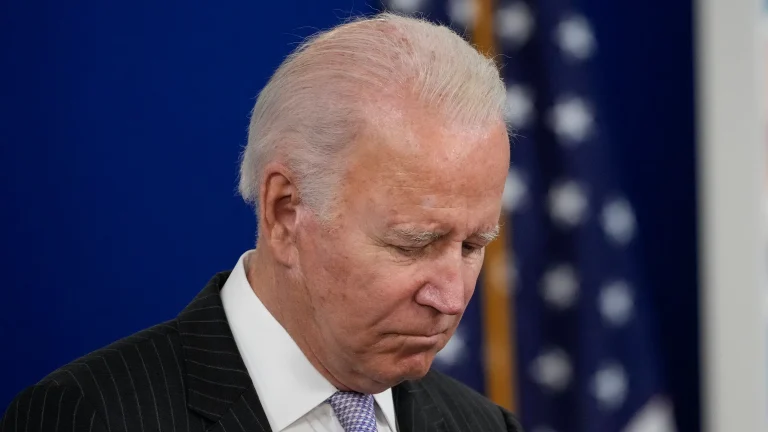
Biden: Bowed, But Beaten?

Democrats need to quickly resolve the issues arising from Joe Biden’s recent presidential debate debacle, and focus their energies on confronting the looming menace of Donald Trump’s return to power.

By Chudi Okoye

They seem rather befuddled and in a serious funk, following the unflattering performance of Joe Biden, their presumptive nominee for the upcoming US presidential election, which will hold only four months hence in November. There’s deep anxiety within the Democratic Party. Nerves are frayed. Hearts are palpitating. And there’s utter confusion about what next to do: whether to push President Biden – now 81 and long facing concerns about his age and mental acuity – to step aside for a sprightlier substitute, in hopes of potentially improving the odds for Democrats; or allow him to plod on to a possibly disastrous end.

Either option is riddled with risks.

The Democrats are in this predicament because Joe Biden, on June 27, spectacularly flubbed the first of two presidential election debates his party had, rather audaciously, called for. In the 90-minute debate hosted by CNN, Biden looked every bit his age and then some: stiff and seemingly confused, often freezing mid-thought; his voice raspy or inaudible throughout, indeed garbled for the most part and occasionally trailing off mid-sentence. It was painful and utterly embarrassing to watch: prime-time intimations of senile dementia in stark display for audiences across America and the world.

In most other leadership situations, performance like that would be certain cause for defenestration. But it won’t be all that easy in this particular case, for the simple reason that Joe Biden can’t be dislodged as the prospective presidential candidate for his party if he’s unwilling to surrender the mantle. In the lead-up to the 2020 election which he would win, a then 77-year old Biden – seeking to allay concerns beginning to bubble about his advanced age – had hinted he might serve only one term. Subsequently however, the president, buoyed by a string of domestic policy successes, had changed his mind and decided to bid for re-election. Although this caused some dismay in his party and disquiet – going by opinion polls – among potential voters, Biden had gone on nonetheless to win the Democratic Party primary, in a process that seemed at times like a coronation. He therefore now has a clutch of delegates that must vote for him at the party’s convention in August when, if he stays in the race, he will be formally nominated as the party’s candidate for the November presidential election.

This means that although measures – from moral suasion to political pressure – can be taken to persuade Biden to stand down, the decision is ultimately his. He cannot be compelled to exit the contest.

So the Democrats are in a bind. They have cast this as a pivotal election, with nothing less than American democracy on the ballot. In their view, Donald Trump poses a singular risk to America’s democratic traditions with his multifarious mischiefs, his authoritarian ambitions, and his insidious plan – enabled by the extreme right – to overturn the institutions of the American government. The Democrats consider it imperative to stop Trump and the onslaught of right-wing extremism.

But how best to do this? The theory behind Biden’s second-term primary ‘coronation’ was that he might again defeat Donald Trump, having seen him off even as an incumbent president in 2020: a feat that the mighty Clinton machine couldn’t manage in the 2016 election when Trump had been merely a wild-card contender. However, with Biden totally bombing in the first debate, there’s now little confidence he has enough verve in him to vanquish the ex-president who’s only three years younger but appears much spryer. At least that’s the view among some Democratic Party cadres, who think Biden has become a burden. These party apparatchiks want Biden immediately to withdraw from the race, so the party can begin to configure a new ticket led by someone much younger. They also worry about down-ballot drag, if Biden insists on running.

Media Hostility
It’s not just jittery Democrats that are calling for immediate change. There’s now a groundswell of opinion, notably amongst the liberal media intelligentsia, that Biden is no longer viable and that the imperative of preventing Trump’s return requires a more vigorous Democratic ticket. This opinion appears to have congealed in the liberal media, expressed in differing cadences of exasperation and impatience – even, in some cases, impudence. Were Biden, therefore, to insist on staying the course, he’d not only be running against Trump but also against a potentially hostile liberal media. His centrist policies, and especially his unquestioning support for Israel’s brutal war on Gaza, already cause great outrage in progressive media land. And of course he faces downright hostility across the conservative media ecosystem.

This means that, should Biden decide to stick it out, he’ll face unrelenting scrutiny, even from some usually sympathetic media. He’ll not be given any benefit of the doubt. Biden has to be steady and consistently perform from here on out, to calm the jitters in his flank. There is very little margin for error. If he again succumbs to ‘senior moments’ – or whatever it was that caused his doddering and stuttering at the last debate – there’d be no coming back from that!

He not only has to outperform in the next debate (if it holds – canny Donald Trump might duck it, to freeze the debacle of the first debate), he must also turn in more campaign events to shake off the stigma of the last debate.

Can he do it? The call for Biden’s exit is predicated on the fear that his feebleness and inarticulacy in the first debate were signs of an irreversible cognitive decline, implying that they could re-occur in the course of the campaign. Were there to be a reoccurrence, especially closer to election date, there would simply be no opportunity to regroup or change course. Better then, the thinking goes, to revamp the ticket right away. Even now, it might already be a bit late, advocates of change concede. But they insist the Democratic Party has a deep bench, with several political stars who could quickly rig up a campaign and be ready to hit the road right after the party convention.

Among those frequently mentioned are: blue-state governors like Gavin Newsom of California and Jared Polis of Colorado; swing-state and red-state governors such as Michigan’s Gretchen Whitmer, Pennsylvania’s Josh Shapiro, and Kentucky’s Andy Beshear; cabinet stars such as Pete Buttigieg and Gina Raimondo; and even, some add, Senators Raphael Warnock from Georgia and Cory Booker of New Jersey. There’s of course vice-president Kamala Harris; though some find her somewhat insipid, and she carries the baggage of the Biden administration. She’s particularly associated with some of the administration’s vulnerabilities, such as immigration and border crisis. Still, she could be in the mix if there’s an open convention in August.

Potential Alternatives to Biden

New Direction, New Problems
The problem however is that, though undoubted political talents, every one of these potential alternatives would need time to ramp up, given the long lead time already built up by Donald Trump, and of course his outsize personality. None has Trump’s or Biden’s profile and even political machinery. It’s doubtful if any has Biden’s funding potential. Besides, a Biden exit might send adverse political signaling to the voters, especially with remonstrations from disaffected Biden loyalists and internal party squabbles as contention builds up towards the August convention. Even after nomination, there might be a lag, to assuage frayed egos, before the Democratic Party can coalesce to face Trump. It’s not clear from the party’s history that it has the discipline or brutal efficiency to whip all forces into line quickly enough.

It is for these concerns, perhaps, that party grandees have spoken up for the Biden status quo. They think a Biden exit could unleash more problems than it would solve, and therefore entails a greater risk for the party.

Will the party grandees prevail? Will Biden in fact agree to step aside? Does he have much more in him, some hidden strength which may yet confound the omens? Was the bizarre spectacle we all saw in the first debate on June 27 a mere fluke which misrepresents the profile of an energetic Biden that staffers and spokespeople swear by, or are their claims mere spin?

There’s no doubt that the Democrats have a real problem on their hands. But I sincerely hope they can quickly resolve the conundrum and get back on their game.

Possible Solution
I am personally mad at Joe Biden for enabling Israel’s atrocities in Gaza. I think he’s been feeble in his handling of the Israeli prime minister, Benjamin Netanyahu. And in so unflinchingly supporting Israeli’s brutality in Gaza, Biden has betrayed a callous disregard for Palestinian suffering that I cannot reconcile with his Catholic confession. Yes, Israel has the right to respond after Hamas heinous attack of Oct 7, 2023; though that attack itself was not unprovoked, contrary to how it’s been characterized by Israeli apologists. Still, Israel has gone way beyond proportionality, as dictated by international law, in seeking revenge. And I am livid that Joe Biden has enabled this atrocity.

It was perhaps for this reason that I had a frisson of schadenfreude observing Biden’s bizarre behavior at the CNN debate and surveying the fallouts. Watching Biden freeze or dodder on the stage, I did wonder, rather playfully, whether he was spooked by the ghosts of Gaza, or tormented by the restless spirits of innocent children whose murder by Israel he has enabled. I briefly recalled the accounts in Shakespeare’s plays – of Banquo’s ghost haunting Macbeth, or the various ghosts that haunted Richard III.

But we must overcome such base epicaricacy. The consequences of a Trump return to the US presidency are ominous, both for the US itself and the world at large. The idea of such a vile character, a convicted felon and unrepentant racist leading America yet again has got to terrify any right-thinking person. The Democrats must therefore quickly overcome the debacle of Biden’s debate performance and get on with confronting the prospect of a Trump return.

I appreciate their dilemma of choosing either to maintain the Biden status quo, or to seek Biden’s exit so they can present a worried America with a fresh choice. Either option is fraught with risks. But there might be a way to reconcile the two options.

Assuming that Joe Biden – backed by his family and doctors – feels he still has pep in him and can go the distance in this campaign, then why not keep him at the top of the ticket but have as his running mate, not Kamala Harris, but one of the political talents being mentioned as a replacement for Biden – perhaps Gavin Newsom of California or Gretchen Whitmer of Michigan?

Either would add verve to the ticket, creating excitement on the hustings that a staid Biden/Harris ticket could probably not muster. If a Biden exit is too risky given the political calendar and other factors, then let’s inject excitement into the ticket. This seems to me the most prudent solution.

Of course this would mean, unfortunately, that Kamala Harris would be taking a fall for Biden. But she could be rewarded in other ways, for instance with a Supreme Court nomination, substituting her for the reportedly sickly Justice Sonia Sotomayor who should be persuaded to retire (she needs to go soon anyway, to avoid a repeat of Ruth Bader Ginsberg, whose refusal to retire – despite her sickness and bench longevity – led to the current lopsided conservative majority in the Court). If neither suasion nor gentle pressure would work with Sotomayor, or it is feared that her forced retirement might alienate the Latino community (especially if she’s to be replaced by yet another Black woman), Kamala Harris could be made Secretary of State, or perhaps US Attorney General, to replace the bland and wimpy Merrick Garland. After a stint heading a huge federal department, Ms. Harris could again run for president, with much improved favorability rating.

This might be one way the Democrats could escape their current dilemma, and then focus squarely on trying to defeat Donald Trump in November.

Debt and Decadence

0
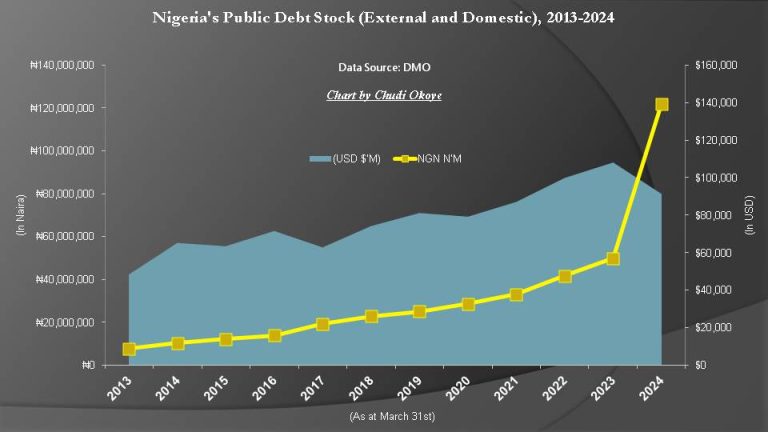
Nigeria's Debt Stock

By Chudi Okoye

You wouldn’t think, to observe the profligate habits of Nigeria’s ruling elites, that the nation is now caught in an unyielding debt trap. The recent update on Nigeria’s public debt provided by the Debt Management Office (DMO) shows yet again, as previous updates did, that the country now has a totally unsustainable debt profile. But if our governing elites are perturbed by the dismal debt profile, there’s not the slightest intimation of it in their disposition.

On the other hand, if we the immiserated Nigerian masses, are disgusted with the profligacy and decadence of our ruling class in the face of a rising debt burden, we have yet to make this known. We might want to borrow a leaf from Kenya where a popular protest seems to have forced the withdrawal of an unpopular tax bill.

What stood out to me in reviewing the DMO’s debt profile update, released on June 20th, was not just the magnitude of our public debt, but also the widening gap in the dollar-naira ratio.

To see how far the naira has depreciated, let’s compare the dollar and naira equivalents of our outstanding debt in the past 12 years, as depicted in my chart above. The changes over the past two years are particularly striking.

As of March 2022, our total debt, as compiled by the DMO, was $100.1 billion, or N41.6 trillion.

By March 2023, our debt had risen to $108.3 billion, or N49.9 trillion.

As indicated by the latest figures, our total debt as of March 2024 stood at $91.4 billion, or N121.7 trillion.

If my math is correct, our debt rose 8.2% YoY in dollar terms between March 2022 and March 2023; or 19.9% denominated in naira.

On the other hand, the latest figures would suggest that our debt dropped 15.6% YoY in dollar terms from March 2023 to March 2024; but in naira denomination it shot up 143.9%!

Such are the travails of the naira.

But let’s not get too comfortable thinking that our total debt stock is trending down dollar-wise. The latest figure probably doesn’t include the $20 billion (~N30 trillion) Ways and Means “loan” illegally borrowed from the Central Bank and recklessly spent by the Buhari administration, facilitated by Godwin Emefiele. Senate president, Godswill Akpabio (that annoying fellow who desecrates an office once held by Dr Nnamdi Azikiwe and Dennis Osadebey), promised months ago to probe that transaction. But we can be sure nothing will come of the probe. After all, Akpabio is in charge!

If we compound that Ways and Means “loan” into the debt stock, and also add in the proposed budget deficit for 2024, we can assume a significant increase in the debt profile (about half of Tinubu’s 2024 N28.8 trillion budget, as revised in December, is based on deficit financing). But the deficit ratio will likely increase because the revised budget was based on $1/N800, a spectacular failure of budget forecasting given the current exchange rate.

With our GDP now revised down to $252.7 billion by the IMF (placing Nigeria 4th in Africa) and our total debt stock pushing to $120 billion (if we add the Ways and Means component and the proposed budget deficit), we would be well over the 40% debt-to-GDP limit stipulated by the 2007 Fiscal Responsibility Act.

So, in a very obvious sense, our government is breaking the law by exceeding the borrowing limit.

Provocations
Our politicians are totally out of control, borrowing recklessly, in part to fund their white elephant projects and their avaricious tastes. Part of the unsustainable borrowing goes to fund recurrent expenditure, including the massive emoluments our governing elites appropriate for themselves, which are among the highest in the world. Our president travels in unspeakable splendor, with a motorcade that would be an embarrassment in civilized climes. We’ve just spent, in these lean times, the unbelievable sum of N21 billion to renovate the vice-president’s residence, a figure about 18.5% of the entire budget of Ekiti State in 2023 – to take just one example. There’s talk that a new jet might be purchased to add to the Presidential Air Fleet, based on a National Assembly recommendation, ostensibly because our president and his vice encountered minor travel inconveniences on their recent foreign trips, arising from poor maintenance of existing planes.

And, consider this: despite the huge public outcry and the senselessness of it, our government is proceeding with plans for the trans-zonal Lagos-Calabar coastal highway, a project currently estimated to cost N15 trillion – representing nearly 4% of Nigeria’s recently revised GDP. This is a project secretly awarded, without competitive bidding, to someone said to be the president’s friend and business partner.

The outrages and provocations piled on Nigerians by the governing elites are unspeakable. But what are ‘we the people’ doing about it? Clearly, our leaders are beyond redemption. Similar to out-of-touch ruling classes in pre-revolutionary societies at other times and places in history, our rulers don’t seem to care what the masses think. They don’t seem the least perturbed by the mass suffering in the land.

So what do we do? Can we the Nigerian people rise up to protest the insidious misgovernance of our country? With the Nigerian military seemingly a spent and discredited force, the prospect of a corrective military intervention would appear remote. So, it’s up to us, the people, as we’ve just seen in Kenya with the assertion of people’s power to upend an oppessive tax legislation.

Right of Revolution
The ‘right of revolution’ (or right of rebellion) has been recognized through much of human history as a form of redress, justified by law where a governing class acts – without legitimate cause – against the common interest of the people, or in ways that undermine the health of the polity. This doctrine includes the right of resistance to tyranny, and in some cases it affirms the justifiability of tyrannicide.

The principle goes as far back as ancient China and Rome, as well as medieval Europe, and is well established in modern political philosophy. It is recognized as a principle of natural law, upheld by several political philosophers, including social contract theorists John Locke and Jean-Jacques Rousseau, and others like the philosopher J. S. Mill and the literary critic Dr. Samuel Johnson.

Because of the intellectual justification these thinkers provide, the right to popular resistance against an injurious ruling class has been enshrined as a tenet of positive law in some constitutional jurisdictions – including several states in the United States of America, as well as several countries in Europe, Asia and Latin America.

The right of revolution is not perforce enshrined in the Nigerian constitution. However, the principle is inferred in the UN Universal Declaration of Human Rights which, though aspirational and non-binding, is a constitutive document of the UN reflecting the UN Charter, which itself is binding on all member states, including Nigeria. The third paragraph of the Declaration reads as follows:

Whereas it is essential, if man is not to be compelled to have recourse, as a last resort, to rebellion against tyranny and oppression, that human rights should be protected by rule of law.

Notwithstanding the clear intent of international law and morality, in Nigeria we suffer the villainy of our ruling elites and endure social conditions far more oppressive than what triggered revolutions elsewhere at other times in history.

We Nigerians have proved ourselves incapable of rising up against our vile and oppressive rulers, held back, in my opinion, by the following factors, among others:

▪️Persistence of tribal and ethnic sensibility, which prevents the development of class consciousness and revolutionary instinct

▪️Hopelessness and the pathology of “learned helplessness” which induce political lethargy

▪️Fear of reprisals from the security state, preventing the emergence of true revolutionary leadership

▪️A traditional culture that fetishizes status and obedience, leading to undue reverence for those in authority

▪️Stockholm Syndrome and economic dependence on our oppressors

▪️Imported religions (both Christianity and Islam) that promote temporal endurance and the notion of otherworldly rewards

▪️Acculturation to the norm of non-violence, instilled in us by some of our early political leaders such as Dr Azikiwe, which upholds the virtue of gradualist – rather than radical – change.

So, given all the above, we end up in what I’d call a revolutionary stupor, roiled and agitated, embroiled in conditions that should trigger a revolutionary upheaval, but never sufficiently kindled as to rise up against our decadent and totally incompetent rulers.

It is a deeply depressing situation.

Easter Meditations: Is Prayer Most Powerful as Sound, Thought or Light?

0
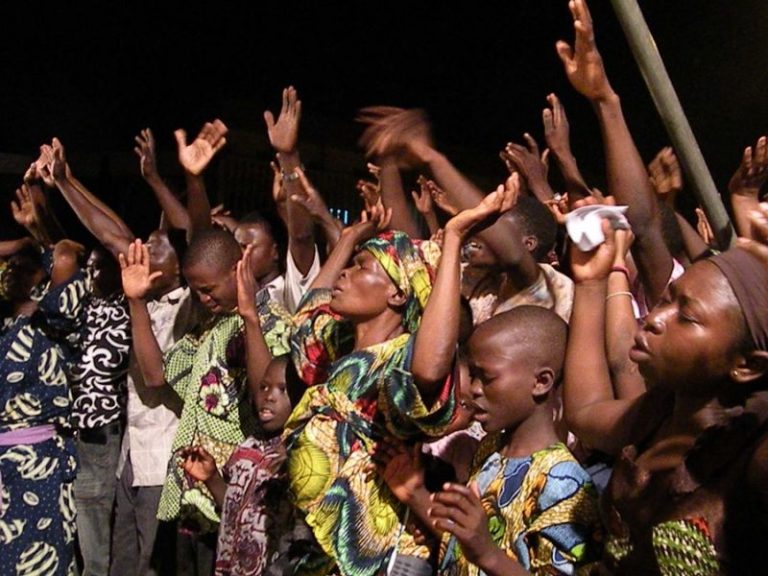
Nigerians Praying

By Chudi Okoye

We are at this moment more than midway through the Holy Week in Christendom, a period requiring of observant Christians that they engage in fasting and abstinence, along with meditation and prayer, as we re-enact the passion of Christ and hope to rise with him symbolically on Resurrection Sunday. This moment, especially the Easter Triduum (comprising the three “high holy days” of the Christian faith), is inarguably the most important in the liturgical year or Christian calendar.

For me, as a cradle Christian (born into Catholicism, served as an altar boy and Block Rosary convener in my hometown, Awka), this is a moment for deep reflection, though I admit to a wobbly adult observance. I often, in this holiest of Christian seasons, ponder some of the deeper mysteries and greater controversies of our religion. At Easter last year, for instance, I proposed a possible rehabilitation of Judas Iscariot, the notorious apostle who’s generally – but mistakenly and unfairly in my view – taken to have betrayed Jesus.

Following that rather daring foray, which appeared to have been well-received (many readers told me they enjoyed it), I wish this year to take up another ‘hot’ topic, one relating to the central institution of this solemn season: prayer. As we move towards the end of the Holy Week, I wish briefly to probe, not merely the metaphysics of our Paschal rogations, but also the physics of prayer in broader terms.

What is prayer, and what actually transpires when we engage in the sacrament of prayer?

Let’s begin with the basics. There have been, over the ages, some wonderfully poetic definitions of prayer. For St. John Vianney, the 18th/19th century French Catholic priest canonized in 1925, “prayer is the inner bath of love into which the soul plunges itself.” For St. Thérèse of Lisieux, a 19th century French Catholic nun also canonized in 1925, “prayer is a surge of the heart; it is a simple look turned toward heaven, a cry of recognition and of love, embracing both trial and joy.” What’s perhaps considered the classic definition of prayer comes from St. John of Damascus, an Arab Christian monk born around 675 AD and declared a Doctor of the Church in 1890. For him, “prayer is the raising of one’s mind and heart to God or the requesting of good things from God.”

Going from sacred to secular sources, prayer has been defined as “an invocation or act that seeks to activate a rapport with an object of worship through deliberate communication; an act of supplication or intercession directed towards a deity or a deified ancestor.” Prayer is communion with God, the sharing or exchanging of our intimate thoughts and feelings with Him (it could be some other deity, but for the purpose of this piece, let’s just focus on the Christian God). It is communication with God, typically enacted through adoration or worship, by praising God, by confessing our sin before Him, thanking Him and asking Him for our needs and desires. Some traditions hold that the object of prayer is not to change the will of God, but to secure for ourselves and for others the blessings that God is already willing to grant, for which we have to plead as grace, not moral desert.

From these definitions, we get a clear sense of prayer essentially as metaphysics; nonetheless, being a form of communication, it must also be considered as physics. As an act of communication, involving the transmission or supposed exchange of information, prayer takes different forms in different spiritual traditions: from simple or complicated gestures to spoken or written words in the form of formal creedal statements or spontaneous utterances; from songs and hymns to chants and incantations; and from all these to various forms of spiritual meditation. But whatever the mode or medium, the act of praying implies a kind of communication with the supernatural – with God specifically; it is a transmission or an exchange of information. Prayer follows the typical transmission model of communication, complete with its source, transmitter, channel, receiver, destination, and not to forget, noise – including cultural, psychological and semantic noise!

Nigerians in Desperate Prayer

Given all this, the question arises: if prayer is a form of communication or information transmitted from one node to another (a packet which must be encoded at source, transmitted through channels disturbed by various forms of noise, received and finally decoded at the destination), how fast does it travel and how long does it take to reach its destination? And what form must our prayer take to achieve the greatest velocity: as sound wave, thought, or something else?

To answer these questions, let us deal first with the question of communication or information transmission speed. Let us consider prayer as spoken word or chant, transmitted as sound wave. As we know from physics, under standard conditions (assuming dry air at 20 °C or 68 °F), the speed of sound is 343 metres per second (about 0.213 miles or 0.343 km per second; which is 767 mph or 1,234.4 km/h).

Is this then the utmost velocity of our uttered prayers, the top speed at which our spoken supplications ascend to God in heaven?

It is important here, for context, to compare the speed of sound (the putative velocity of our spoken prayers) to the speed of light. We focus on the speed of light because it is currently the ultimate speed limit in the universe (all superluminal or faster-than-light [FTL] travel is purely conjectural). The speed of light is 299,792,458 metres per second (which approximates to 186,282 miles or 299,792 km per second; that is 670.6 million mph or 1,079.3 million km/h).

In other words, light travels more than 874,000 times faster than sound! Whereas light travels 186,282 miles in one second, sound takes almost five seconds (4.695 seconds) to travel just one mile.

If prayer as sound wave is slower than the speed of light, what then to say about prayer as thought? Is thought faster than photon?

Unlike sound and light, there is no known direct measurement yet for the speed of thought. Thoughts are sparks of cognition constantly flitting through our minds as conscious beings. We can think of the speed of thought, on one level, as the rate at which information is processed and transmitted within the brain. This varies significantly within or between individuals, depending on factors such as the complexity of the thought process, the emotional state of the individual doing the thinking or meditation, differences in individual cognitive abilities, the external stimuli, and so on. Thinking can be zipping fast, occurring within milliseconds in certain circumstances, or they can drag into minutes and hours of contemplation. In general, researchers measure thought indirectly through reaction time, using imaging techniques like functional magnetic resonance imaging (fMRI) and electroencephalography (EEG) to glimpse which areas of the nervous system light up during different thought processes. Researchers agree that thoughts, as electrochemical signals, can be swift, but definitely not as swift as the speed of light.

There is some complexity about the speed of thought across space-time when we get into the quantum realm, beyond classical physics. In quantum mechanics, particles supposedly defy classical rules, such that, through what is known as quantum entanglement, information can instantaneously pass between two entangled particles even if separated by vast distances. This is still an evolving field of modern physics. But researchers think that here again thoughts, though potentially swift, are not light-speed swift.

So then, consider this: if neither sound nor thought in their propagation is as fast as light, how much time is required for our prayers, as sound wave or thought, to traverse the vast expanse of space to reach heaven, the abode of God which must be the ultimate destination in our prayer-information transmission model? Consider that the diameter of the observable universe is about 93 billion light-years, and that the distance from Earth to the edge of the observable universe is 46 billion light-years. Now, as I pointed out earlier, the speed of light is 186,282 miles (299,792 km) per second, which translates to 5.88 trillion miles (9.46 trillion km) per year. If we put these two figures together – the distance from Earth to the edge of the observable universe and the distance light travels in a year – we get a little over 270 billion trillion miles (270 sextillion or 270^21 miles) as the distance from Earth to the edge of the observable universe. The actual figure, to write it out in full, is 270,480,000,000,000,000,000,000 miles. This is the distance light travels to reach the edge of the observable universe.

Now, consider this: If heaven, the putative destination of our prayers, lies somewhere beyond the edge of the universe, how much longer would our prayers, as sound wave or thought (thus, traveling at much slower speed than light) take to reach it? The answer is obvious; moreso in the case of our uttered prayers, since there’s presumably no air to propagate them as sound across the vast emptiness of space.

There is of course some uncertainty as to where exactly ‘heaven’ is located; and it is unclear if indeed God resides only in the heavenly realm or is everywhere immanent. The Bible and Christian (as well as other religious) traditions present a somewhat confusing theology about the divine realm. The Bible suggests that God is omnipresent (see, for instance: Jeremiah 23:23-24, Psalm 139:7-10 and Proverbs 15:3), a sense implied both in the doctrine of divine immanence and in Baruch Spinoza’s pantheism. It is also evinced in the pandeism of Moritz Lazarus and Heymann Steinthal. This would suggest that our prayers – deployed as waves of sound or thought – do not need to travel great distances through cosmic space to reach God. He is here, immanent in all manifestations of nature, and therefore close to us.

But the same Bible also proposes the idea of divine transcendence, a panentheistic view suggesting that, even though we can find His imprints in nature, God Himself resides in a heavenly abode well-beyond our physical universe (see, for instance: Genesis 28:12, Isaiah 40:22, 1 Kings 8:27, Acts 7:49, Psalm 33:13-14, Psalm 97:9 and Psalm 115:2-3). Paul, writing in 2 Corinthians 12:2, spoke of Christ being taken up to the “third heaven”, which has been interpreted as a place beyond the atmosphere and outer space.

On this view, which is also well-established in religious cosmology, it would seem that our prayers have quite a distance to travel to reach God, his abode being, presumably, far beyond our physical domain. There is even a hint of this in the incipit of the Lord’s Prayer, a key Christian prayer said in two of the canonical gospels (Matthew and Luke) to have been taught by Jesus: “Our Father who art in heaven…” (“Nna anyi no n’Enu Igwe”, in Igbo language).

If, on this theological construct, God resides in a celestial realm far removed from our earthly domain, and if therefore our prayers have a ways to travel to reach Him, what might be our most expeditious way to pray? Is it through our sometimes reverent and other times muddled thoughts, or through our sometimes solemn and other times noisy supplications?

We have seen that sound and thought do not travel nearly as fast as light. But is there a way to convert our prayers into particles of light (Albert Einstein’s photon), so they can travel at the greatest cosmic speed to reach God?

Indeed there is! It is through our deeds. Our prayers get to God the quickest, not merely in what we think or say, though these are important, but in what we do. It is for this reason, I suppose, that Jesus criticized the loud, performative prayers of the Pharisees (Matthew 6:5), a trait unfortunately all too common in contemporary worship. It is probably why Jesus said in John 8:12 that he is “the light of the world,” and why he also said in Matthew 5:16: “let your light shine before others, that they may see your good deeds and glorify your Father in heaven.”

It is why we are told in 1 John 1:5-6 that “God is light, in him there is no darkness at all,” and that “if we claim to have fellowship with Him and yet walk in the darkness, we lie and do not live out the truth.”

It is what underpins the parable of the lamp under a bushel, found in Matthew 5:14–15, Mark 4:21–25 and Luke 8:16–18, and in the non-canonical Gospel of Thomas (Saying 33).

Our most fervent thoughts or most prayerful utterances, travelling through the cosmic expanse, cannot reach God as quickly as the light we emit through our purposeful deeds.

This, I think, is the lesson we must learn when we contemplate, not just the metaphysics but the physics of prayer, especially in this Paschal period. If God is immanent in nature and is in us, then contemplative prayer or spiritual meditation might be the quickest way to reach Him. But if God is transcendent, abiding in a heavenly realm far removed from us, then prayer as sound is inferior to prayer as the light emitted by our purposeful deeds.

Happy Easter, everyone!

20% Population, 1% Political Power

0

20% Population, 1% Political Power

By Chudi Okoye

The math is simply mind-bending
Bleaker even than in racist America
Where once the beleaguered Black,
Considered as White man’s chattel,
Were estimated three-fifths a human
In their owners’ political calculation.
America re-jigged its rusted math
After eighty years of utter absurdity
Though its wrenching reminder remains.

Yet, in sixty-three years of self-rule
In a nation born of flawed imagination
A presidential incumbency calculus
Consigns, by craft and sheer graft,
A certain set of so-called citizens –
The vested ‘n tested Igbo-Nigerians –
To the uttermost precincts of power
So folks nearly a fifth the federation
Offering some of the nation’s very best
Boast just one percent the presidency.

(First Draft: Feb 7, 2024)

Stooperpower

1
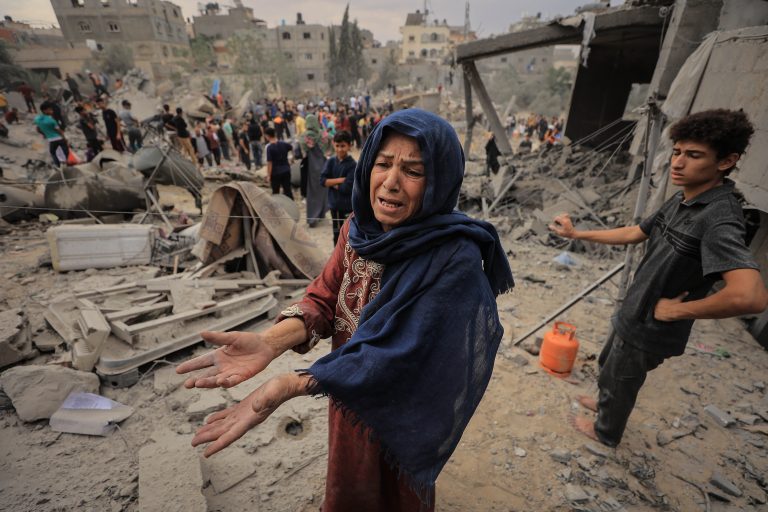
Israel Destroys Gaza

Stooperpower

By Chudi Okoye

Anthony Blinken blinks inartfully
At the spate of unspeakable horrors
Visited upon Gaza by America’s vexed ally.
Joe Biden, his boss, bends unabashedly
To the whims of a wild client state
With balls bigger than its budget.

Oh, how are the mighty crawling!
Amid the uneven brawling in Gaza
A brag superpower is brought low
Subjugated by a swaggering ministate.

Parading a puzzling weakness of will
Even, some say, an uncommon callousness
America gazes as blood gushes in Gaza.
It mouths insincere moral platitudes
And peddles a pious plan for Palestine
Whilst sending munitions to mutiliate Gaza.

Alas for the abject unbecoming!
America, once the world’s moral police
Now, under the bind of Bidenyahu,
A bald and barefaced stooperpower.

(2nd draft: 28 Feb, 2024)

Supreme Court Ensnares the South East

0
Embattled secessionist: Nnamdi Kanu

With the recent Supreme Court ruling reinstating the terrorism and treasonable felony charges leveled against Nnamdi Kanu, danger looms for the South East. The region must lobby harder to have the case terminated, failing which it should brace up for the risks of a protracted trial, and prepare for the grim fallouts of a possible conviction.

By Chudi Okoye

It is a fascinating study in contrasts, the fates of these two frenzied flanks of the federation. Political agitation erupts in the two sections of the country, the South West and the South East. Over time, it accrues political capital for the one section but culminates in utter calamity for the other; it produces a political boon for one but accumulates doom for the other.

It is a dichotomy with a long historical arc.

In the 1960s during Nigeria’s First Republic, the cadence of political life varied across the regions. At first, in the immediate aftermath of independence, the East was at ease while unrest burgeoned in the West. But before long it was the East that became embroiled in civil war, while the West wended its way into federal power which in the long run would bring it great prosperity.

This switch was manifested most starkly in the political fortunes of the statesmen who led each region. At independence, Dr. Nnamdi Azikiwe, the nationalist giant from the East, became Governor-General and later, from 1963, President of the country. Chief Obafemi Awolowo, the preeminent doyen of the West, was Leader of the Opposition in the House of Representatives. Amid the conflagrations in Western Nigeria politics at the time, Awolowo found himself convicted of treason and sent to prison. But in the roiling aftermath of the coups of 1966, some three years into his term Awo was plucked from prison, eventually to become a powerful finance commissioner and vice chairman of the Federal Executive Council in Yakubu Gowon’s military regime.

Awo’s bête noire from the East, Nnamdi Azikiwe, did not go to prison. He escaped the embroilment of the First Republic, but from afar advised Odumegwu Ojukwu and helped the Igbo war effort. But after the war his stature waned compared to Awo’s. This was evinced in the two presidential elections held in 1979 and 1983, in both of which Awo outperformed Zik. In the 1979 election where Zik, under the Nigerian People’s Party, managed a mere 16.75% of the votes, Awo, with his Unity Party of Nigeria, secured 29.18% – only about 4.5 points behind the victorious National Party of Nigeria. The gap widened in the 1983 presidential election in which both statesmen again contested. Awo increased his vote haul to 31.09%, while Zik’s shrank to 13.99%.

The fates of these two great statesmen mirror the political vicissitudes of the regions from whence they hailed. The South West has waxed, but the South East has waned.

Following the military’s annulment of the 12 June 1993 election won by Bashorun Moshood Abiola, South West agitation through Oodua Peoples Congress (OPC) and the National Democratic Coalition (NADECO) compelled a concession of the very first presidency of the 4th Republic to the region.

Even so, separatist agitation has rippled through the region just as it has in the South East. But it is a tale of two separatist agitations in terms of the fates of their famous protagonists.

Sunday Adeyemo (a.k.a. “Sunday Igboho”) and Nnamdi Kanu (incidentally separated in age by five years – the former being younger, just as Awo and Zik had been separated in age by about five years, the former being younger), are both political activists ostensibly protesting the injustices of the Nigerian state. Both have been driven, apparently frustrated with an inveterate state, to agitate for self-determination for their region. One, Igboho, is known to have amassed weaponry as part of his agitationist enterprise, which invited a state security raid, although he’s not known to be affiliated with any particular organization except the occasional suggestion that he should lead the South-West Security Network Agency, a.k.a. Amotekun. The other, Kanu, a more voluble and bombastic figure, founded the now-proscribed separatist movement, the Indigenous People of Biafra (IPOB), which has an armed wing, the Eastern Security Network (ESN). Both have gotten into trouble with the law, and both had to skip the country at some point.

Today, however, Sunday Igboho is a free man, and from all accounts leads a flourishing life. By contrast, Nnamdi Kanu has been in detention since 2021, having been renditioned from Kenya after jumping bail in 2017 following his 2015 arrest. A legal tussle had ensued, with an Appeal Court ruling in October 2022 to quash the treason and terrorism charges against him on grounds of his extraordinary rendition. But, in a ruling last week, on 15 December, the Supreme Court reversed the Appeal Court’s decision and reinstated the charges against Kanu.

As it is, Kanu faces a potentially prolonged treason and terrorism trial. If the federal government does not withdraw the case, it will resume at the federal high court as ordered by the Supreme Court and, whatever the ruling there, will again go through an appellate process to berth once more at the apex court. If convicted, Kanu faces a life in prison, along with other concurrent penalties. Apart from the grim personal consequence for Kanu, this portends great danger for Igboland.

Time, then, to think harder about what to do to avert the looming danger.

Risk Management
There are, the way I see it, three strategic steps to take in the Kanu affair, all mutually inclusive: intensify lobby to quash the case; change legal strategy; and prepare to defuse the fallouts.

Find a way to persuade FG to terminate the trial. So far in Nigeria’s history, no-one has been convicted on a treason or treasonable felony charge under a civilian government, except for the 1963 case of Awo and Tony Enahoro. Only during military rule were there such convictions. This might lull us into thinking that the case against Nnamdi Kanu will eventually be dropped on extrajudicial grounds. However, some political analysts believe there’s no lack of political will, even in this civilian dispensation, to convict Kanu. Commenting on the case last year before the Appeal Court dismissal of the charges, Ikemesit Effiong, head of research at SBM Intelligence, a Lagos-based political risk analysis firm, said:

“There is a strong likelihood that Kanu might be convicted because the political will exists to make an example of a separatist leader who has caused the central government more than its fair share of headaches, [especially because he’s from] a part of the country where skepticism of constituted authority runs high.”

If this is the case, it might be quite a challenge to persuade the federal government to drop the charges. It follows too that the affects and sporadic efforts emanating from the region are inadequate and may be of no consequence. If indeed there’s a strong desire to gain freedom for Kanu, there has to be a greater engagement and more concerted effort by the regional leadership. Granted that this will be hard for a leadership that was often the target of Kanu’s bombast and derision. But, given the larger geopolitical risks portended by a potential conviction of Kanu, there has to be a greater effort.

It is not entirely clear to me what efforts are being made by the Igbo political leadership – the South-East governors, federal legislators, traditional rulers, business elites, clergy – to secure Kanu’s release and have his case terminated. I note the occasional public pleas by Ohaneze, the Igbo socio-cultural group, and by assorted Igbo eminences. But I’m not sure if there’s more going on behind the scene, or if the efforts are in fact coordinated. I’m unclear too who’s being targeted by Igbo lobby.

We ought to coordinate and intensify the lobby, targeting not just national political figures like the president but also prominent figures in the security establishment who might be more invested in the punishment of treasonable or terrorist offences against Nigeria. It’s possible that resistance within the security establishment is forcing political intransigence in this matter. As such, Igbo leaders – particularly the federal legislators – ought to consult more widely, act more wisely, and move more aggressively on this issue. There is not just a political dividend but also huge peace dividend in securing freedom for Nnamdi Kanu, however irksome and threatening some might have found him in the past.

Change the legal strategy. As a corollary step, there ought to be a review of the legal strategy adopted by Kanu’s team. The Supreme Court seems to have now settled the disagreement between the trial and the appellate courts over the effect of Kanu’s extraordinary rendition, upon which the defense strategy had been partly anchored. Nigeria is a signatory to the United Nations Convention Against Torture (UN CAT), having signed the Convention on 28 July 1988 and ratified it on 28 June 2001. Article 3 of UN CAT prohibits extraordinary rendition where there are substantial grounds to believe that a person would be subjected to torture if renditioned.

Kanu with part of his legal team

Kanu’s legal team had at trial raised the issue of his forceful extradition from Kenya in 2021 by the Nigerian government, and had sought to have the case dismissed, in part for that reason. However, the trial judge, Hon. Justice Binta Nyako, had overruled the objection. She argued that there was a surviving bench warrant for Kanu’s arrest issued by her in 2018 which predated the 2021 rendition, and that the rendition was lawful because Kanu had jumped bail.

Ruling on the case in October 2022, however, an Appeal Court panel led by Hon. Justice Jummai Hannatu Sankey had accepted the defense argument. The court held that Kanu’s extraordinary rendition was an illegal act which made the charges against him incompetent and unlawful. “With [its] appalling disregard for local and international laws,” the Appeal Court ruled, “the federal government has lost the right to put the appellant on trial for any offence.” The court accordingly dismissed the case and ordered that Kanu be released.

But in its own ruling last week, a five-member panel of the Supreme Court led by Kudirat Kekere-Ekun disagreed with the Appeal Court. The apex court conceded that the rendition was illegal and infringed Kanu’s rights, but it said there is a “civil remedy” for the infringement and insisted that the rendition does not invalidate the charges against Kanu. In the lead judgment prepared by Hon. Justice Tijjani Abubakarit but read by Hon. Justice Emmanuel Agim, the court said there is no Nigerian law that prohibits the use of “illegally obtained evidence for the trial of a defendant.” The Supreme Court held that the “Court of Appeal was wrong to say that the Federal High Court can no longer try Mr. Kanu,” and in a unanimous decision ordered that the case be remitted to the trial court for continuation. The judgment also implies a reversal of the earlier Appeal Court order for Kanu to be released from detention.

This is, without doubt, a serious setback for Kanu’s defense. The legal team must now think harder how to confront the surviving charges against the IPOB leader. It won’t be easy.

Preparing for the unthinkable. While we must hope that Kanu’s legal team will eventually secure him an acquittal, we should ponder the possibility that he might be convicted. As such, we should begin to prepare for the fallouts which could involve a further assailment of Igboland by pro-Kanu agitators.

It is ironic that in the South West, which had been the hotbed of political violence at other times in Nigeria’s history, none of the great political provocations the Yorubas have faced – the overturning of M.K.O. Abiola’s victory in the 1993 presidential election, the assassination of his wife Kudirat in 1996, his own suspicious death in 1998, and more recently Sunday Igboho’s travails – has impelled them to despoil their homeland. However, the incarceration of Nnamdi Kanu has served as pretext for some so-called Biafra agitators to descend on their homeland, unleashing a reign of terror that traumatizes the populace and enforcing a sit-at-home campaign that chokes the regional economy.

Part of the reason secessionist agitation has morphed into criminality in the South East has to do with the very nature of Igbo secessionism. The Igbo mind is bifurcated about Nigeria. While there is a strong sense of ethnic identity which lends instinctive support to the secessionist enterprise, the Igbo adventurous spirit also craves the larger canvass of Nigeria and thus recoils from the idea of being constrained to the homeland enclave. A part of the Igbo mind craves self-determination; and yet, a part also craves deeper integration into the Nigerian political economy. This is why, beyond rhetoric, there’s little practical commitment to the idea of secession in important sections of Igbo society, even though it remains an animating ideology.

We thus end up with a paradox in Igbo polity: although there’s a strong sense of ethnic nationalism, there isn’t an equally strong sense of homeland. Igbos by and large consider anywhere they reside to be home and feel they can effectuate their ethno-nationalist sentiment wherever they reside. Little surprising therefore that the crème of Igbo society – from leading politicians to the business elites, the intelligentsia, even some traditional rulers and ironically some of those fighting for Igbo self-determination – are based, to a sizeable number, outside the homeland.

This wobbliness of homeland sensibility is perhaps also the reason that the so-called Biafra agitators, unlike their counterparts in the South West, feel no qualms despoiling their homeland and sabotaging its economy. They claim that through their security outfit they are protecting the Igbo homeland from Fulani incursion, but they in fact inflict as much or far greater harm on the homeland than any damage by Fulani marauders.

The truth is that whatever may be its ideological or political impulse, Igbo self-determination has been hijacked by rogue elements profiteering from it, and by others using it as camouflage for class warfare, as I argued in a previous article. These types will use a protracted trial of Nnamdi Kanu, and his conviction if that eventuates, to unleash mayhem in Igboland.

The Igbo leadership should work harder to have the case against Kanu quashed even as his lawyers get smarter in their defense strategy. But there must also be a forward plan to avert disaster in the homeland if perchance Nnamdi Kanu is convicted.

Merge or Submerge: A Hobson’s Choice for Major Opposition Parties

0
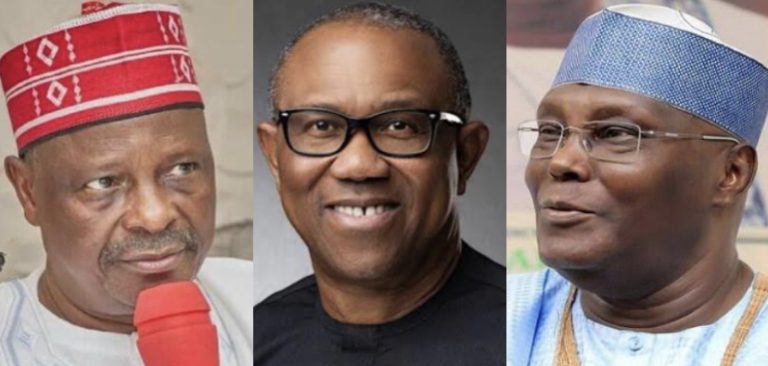
Opposition stalwarts: Rabiu Kwankwaso, Peter Obi and Atiku Abubakar

With Nigeria sliding into a Hobbesian state, major opposition parties face a Hobson’s choice: remain fragmented and ineffectual, or adopt ‘cooperative strategies’ involving an outright merger or formal electoral alliance, to wrest power from a fumbling but formidable ruling party.

By Chudi Okoye

Barely 22 months after the controversial 16 April 2011 presidential election in which Goodluck Jonathan was declared winner, and about 13 months after the Supreme Court affirmed the victory of the Peoples Democratic Party (PDP) candidate by dismissing a petition filed by the Congress for Progressive Change (CPC) which had challenged the result, three of the 19-odd opposition parties that contested but lost the election – CPC, the Action Congress of Nigeria (ACN), and All Nigeria Peoples Party (ANPP), along with breakaway factions of PDP and All Progressives Grand Alliance (APGA), announced that they had formed a new political party known as All Progressives Congress (APC).

The new party was formed on 6 February 2013, following several months of negotiation, implying that the idea of an opposition party merger had been mooted much earlier, probably soon after the devastating apex court ruling over a year before.

Leaders of the new party stated quite clearly that they merged because it had become more urgent to take power from a blundering PDP, the ruling party which had “won” all previous four presidential elections in the 4th Republic, and that a formidable party platform was needed to pull this off.

The creation of APC was an incredible feat of political engineering; the more so because of its parsimony. The architects did not, it seems, invite too many of the extant opposition parties to participate in the project; just the handful needed to create a winning coalition. It was text-book precision: exactly as prescribed by the late American political theorist, William H. Riker, who had died 20 years earlier in 1993 but was noted for his application of math and game theory to political science. In his groundbreaking 1962 work, The Theory of Political Coalitions, Riker invoked a “size principle” and suggested that rational political actors would seek to form only “minimum winning coalitions;” in other words, that rational “participants create coalitions just as large as they believe will ensure winning and no larger.” This appears to have been exactly what the architects of APC did.

In line with its bold (or bald?) ambition, in the very next presidential election held on 28 March 2015, about two years after its formation, the new party, APC, swept PDP from power. The 2015 election was not without the usual controversies attending Nigerian elections. But APC’s accession was an incredible feat, a historic defeat of a national ruling party in Nigeria. It was all the more remarkable because the new party had won with 53.96% of the votes, a 14-point swing from the 39.81% secured by its three main formative parties in the previous, 2011 election.

It is important to recall this history to juxtapose it against what looks to be confusing and incoherent moves by the PDP and other opposition parties towards evolving a cooperative strategy, after incurring an avoidable loss in the 25 February 2023 presidential election, largely due to their own error of strategic fragmentation. It is coming up to 10 months since that election, though not quite two moons since the Supreme Court ruling on the election. But the opposition parties appear to be at sea as to what to do in preparation for the next presidential election.

The opposition parties are still probably trying to shake off the loss, which must be particularly bitter because of the controversies surrounding the management of the election and the judicial rulings that affirmed APC’s victory. It has to be especially galling to be deemed to have lost to a failing party which fielded a fantastically flawed candidate, Bola Tinubu. Above all, it must really hurt to consider that the main opposition parties had in fact secured a combined share of the votes enough to have comfortably defeated the ruling party.

To state it as starkly as we can, if we reduced the cardinality, or the competitive set, in the 25 February 2023 election to a matrix of three players – (1) the ruling party, (2) the three major opposition parties: PDP, the Labour Party (LP) and the New Nigeria Peoples Party (NNPP); and (3) all other parties, we can state, based on the official results, that the vast majority of those who went to the polls in fact voted against the ruling party; only that misguided fragmentation dissipated the opposition payoffs (to use game theory language) and thus saved the ruling party from being voted out. APC managed only a miniscule 36.61% of the votes, compared to the 60.7% won by the main opposition party but frittered away due to platform fragmentation.

This is not to deny the allegations of electoral fraud and judicial shenanigans leveled by the opposition against the ruling party, the electoral umpire and the courts. But the margin of the splintered opposition votes was high enough to have overcome the effects of such misconduct.

The 2023 election outcome might be disappointing, but it is still promising for the main opposition parties in terms of the next presidential election. The results show that if the opposition parties can manage to prevent a severe erosion of support, they might have a better chance than did the formations that merged to become APC. Their 60.7% vote tally in 2023 is nearly 21 percentage points higher than the combined votes secured in 2011 by the parties that eventually combined to form the APC. This presents a compelling logic for a merger of today’s major opposition parties, and therefore for the parties to explore this option.

All the more reason, then, to marvel at the seeming confusion of the opposition parties about next steps. Last week, news emerged that members of some opposition parties led by a PDP chieftain, former senator Dino Melaye, had met to commence dialogue on party cooperation, under the auspices of what they called “Conference of Opposition Political Parties in Nigeria” (COPPIN). This followed an earlier statement by Atiku Abubakar, PDP’s flag-bearer in the February election, calling for a united opposition front against what he saw as an emerging one-party dictatorship under the ruling APC.

It is unclear at the moment how seriously to take the opposition moves. In October, when Atiku invited other major opposition figures to join his investigation of Tinubu’s US record, nothing came of it, perhaps because it wasn’t clear what Atiku wanted with his invitation. Later in November when Atiku called for the opposition parties to work together to prevent a creeping one-party dictatorship under APC, the Labour Party seemed initially keen on the idea, only to recant shortly after. This time, when Dino Melaye convened his conference last week, Labour sent a mid-ranking functionary; APGA sent some junior members; and other invited parties sent their apologies.

These apparent lurches notwithstanding, as I argued in a previous piece shortly after Atiku floated the idea, a main opposition concert – whatever form it takes: whether an outright merger or some form of electoral alliance – will be imperative to unseat the ruling APC in the coming presidential election.

Given the current impunity pervading the Nigerian political system, an opposition pushback could be an important step – but certainly not the only one – to demonstrate the ability of our democratic system for self-correction, and in this way stave off any yearning for non-democratic intervention.

At the press event after their meeting, the speakers, especially Melaye, indicated that the goal of COPPIN was not party merger but to promote electoral and judicial reforms needed to save Nigerian democracy. But therein lies the rub. With the current configuration of the National Assembly, it is uncertain what would be the legislative prospects for any extensive reforms such as it seems the opposition parties are contemplating.

Certainly at the moment, despite all appearances and the alarmist squawking, APC does not completely dominate the legislature: the party controls 49% of House of Representatives seats (176 of 360) and 54% of Senate seats (59 of 109). This is not an unusual level of legislative control in democracies, though some might worry that the party also controls 60% of state assembly seats (598 of 991) and over 55% of the governorships (20 of 36). In the UK parliament, for instance, the ruling Conservative Party controls 54% of seats in the House of Commons (350 of 650), and 34% of seats in the House of Lords (269 of the current 784). In any case, APC is no more dominant today than PDP had been when it bestrode Nigeria like a Colossus, bragging that it would rule the country for at least 60 years. And yet the party was defeated on first challenge by a merged opposition front.

While there isn’t, strictly speaking, a reality of one-party dominance in Nigeria, an APC that hasn’t been shy of playing dirty politics should be taken to be in a position, purely as a matter of self-preservation, to water down or even filibuster any legislative proposal that might remotely favor the opposition. It would not be impossible to push through such proposals, but it would be harder for a fragmented opposition.

This then is the second compelling reason (in addition to the 2023 presidential election vote tally discussed above) for an opposition concert, an intentional “cooperative strategy,” as game theory would recommend.

Ultimately, even if significant electoral and judicial reforms are successfully legislated, for there to be any meaningful electoral impact, there’ll have to be some consolidation of the major opposition parties. If not, the logic of fragmentation that impaired opposition chances in the February 2023 election will persist into 2027 and probably beyond.

It is something of an immutable law of politics that you win elections through political alliances and mass mobilization. You don’t win elections by dissipating your forces. APC understood that, hence the alliance that brought the party into being in 2013, which enabled it to defeat the then ruling party, PDP. It beats me why the extant opposition parties thought they could defy the law of political gravity in 2023, and why they persist in thinking so even now.

I understand that it may be early days yet, and that there’ll have to be several confidence building steps before the opposition parties can escalate to a merger or some form of integrative alliance. But I would argue that the earlier they began to explore the options the better.

Certainly President Tinubu, though imbued with incumbency advantages, will have acute vulnerabilities in 2027. He is running a listless administration that’s also proving to be financially undisciplined and insensitive about the social condition. If, as some expect, this administration fails to turn the economy around, alleviate the current suffering or improve security by the time of the next presidential election, and if we compound these with Tinubu’s reputational baggage lingering from the last election which will surely be re-litigated in the next, then I believe he will be vulnerable.

On the other hand, however, the major opposition parties have a lot of issues to work at, if they engage, to be able to develop a cooperative strategy for the next election. These issues, centering in part on personal ambitions and geopolitical concerns, had led to PDP fragmentation towards the last election. They became magnified in the course of the campaigns and have since been compounded by other issues causing further ruptures within the previously splintered platforms. Some of these post-election issues will create room for opportunistic incursion by the ruling party which will seek to denude the opposition’s support base. There are already reports of high-level overtures and actual defections.

The opposition parties will need a long lead-time to work through all these complex dynamics; the better the earlier, therefore, that they engage in serious talks.

Nigeria isn’t in imminent danger of becoming a one-party state. But under APC rule the country is sliding into a Hobbesian state. A Hobson’s choice thus faces the major opposition parties demanding cooperation. It is a political imperative to save Nigerian democracy.

On Kissinger: His Deeds, Doctrine, and Lessons for Nigeria

0
Late Henry Kissinger

Nigeria should adopt Kissinger’s ‘great power’ vision to assert itself in Africa and the Global South, but not his more devious methods.

By Chudi Okoye

As a young, bright-eyed and bushy-tailed idealist weaving my way in the world of liberal academia, I detested Henry Kissinger. The famous man didn’t make much of my world – the less developed fringe and the least important in his grand geopolitical model; and I, in turn, didn’t think much of him. Even all these years later, it seems I’m no less kindled about Kissinger. So much so that, within just a few minutes of hearing about his passing on 29 November 2023, aged 100, I’d penned a pointed poem which I published on WhatsApp, as placeholder for a more elaborate critique.

I felt it was important, even as expected panegyrics had begun to pour in from his admirers, to remind the world what this man had wrought when at the commanding heights of U.S. foreign policymaking. I am glad that in the days since his death, a few obituaries have played to that imperative, without descending into unnecessary obloquy.

There is no question, as most everyone who knew or read him has acknowledged, that Henry Kissinger was a superior intellect. His record at Harvard University where he studied and later taught, and his impressive oeuvre on diplomacy, attest strongly to that fact. However, although he did much for the historicization, theorization and practice of diplomacy, he also did much that mangled our world. This is something that his establishment biographers and other hagiographers often fail to emphasize, or even mention.

In this piece, I will run through Kissinger’s record, but also point up potential lessons for Nigeria’s foreign policy in what has come to be called the ‘Kissinger Doctrine’.

Kissinger was both a master and a relic of realpolitik diplomacy. As many critical experts have argued, he perceived this planet purely as a playground for competing hyper-powers, with America, his America, destined for the dominant position. He was called the ‘American Machiavelli’ in some circles (others too, including Alexander Hamilton and Donald Trump, have attracted the tag), because he was arguably influenced by the famous Florentine who favored a ruthless exercise of power, with little concession to morality. Kissinger was also influenced by the wily Anglo-Irish statesman, Viscount Castlereagh, as well as the latter’s equally scheming Austrian counterpart, Prince Metternich (his 1954 Harvard doctoral dissertation was a study of these two statesmen). As the 7th U.S. National Security Advisor (1969 to 1975) and 56th Secretary of State (1973 to 1977), Kissinger prosecuted America’s hegemonic foreign policy objectives with poise, grit and great skill, but also with utter ruthlessness.

In a terse but well-worded obituary he wrote in 2021 for his 4th successor as Secretary of State, George P. Schultz, Kissinger invoked the Aristotelian concept of phronesis (practical wisdom) and the Hebrew word chokhmah (divine wisdom), both of which he said the deceased possessed. The first of these attributes, which implies wisdom in determining ends and matching them to means, was abundantly displayed in Kissinger’s own deportment at the department he headed. It was an attribute which, following Aristotle, Kissinger deemed “indispensable for statesmen.” The second attribute, which “stresses the importance of choosing worthy ends,” as Kissinger himself described it, was in dubitable evidence: manifest for the major movers he really cared about, but sorely lacking for the less important players in global affairs.

Since the announcement of Kissinger’s death, there has been a rehash of the longstanding praise for his foresighted effort in facilitating U.S. rapprochement with China, his deftness in achieving détente with the old Soviet Union, as well as his creative diplomacy in helping Israel and Egypt reach an accord after the Yom Kippur war of 1973, an accord which stabilized the Middle East for a while. These maneuvers, amongst many others, helped to defuse broader tensions at that phase of the Cold War.

Alongside his many accomplishments, however, Kissinger is criticized for his various other foreign policy postures, in particular his push for America’s dastardly bombing of Laos, Cambodia and Vietnam, and its broader atrocities in the Indochina wars; for his backing of Indonesia’s invasion, occupation and genocide of East Timor, the former Portuguese colony which had declared its independence in 1975 but which the Indonesian president, Suharto, considered a part of his country; his cynical support of brutal dictatorships in Latin America, particularly in Chile, Argentina, Brazil, Uruguay, Paraguay and elsewhere, all being part of America’s support for the so-called ‘Operation Condor’, a campaign of political repression and state terrorism that swept the region from 1975 to 1983, ostensibly to stamp out left-wing movements; his betrayal of the Bangladeshi people as they fought for freedom from Pakistan; his betrayal too of the Kurdish peshmerga guerrillas fighting for independence from the Baathist regime in Iraq; his support of Turkish invasion of Cyprus in 1974; and his myriad other moves using Third World countries as pawns in his ‘grand design’ and aggressive pursuit of America’s foreign policy objectives.

Whether in Southeast Asia, South America, the Indian subcontinent, the Persian Gulf or elsewhere, Henry Kissinger’s key concern was to curtail Soviet influence and advance American interest, whatever the cost to the local populations. And the cost was astronomical: in millions of lives lost, in physical destruction of target countries, in economic and political devastation, etc.

One historian, Gary Grandin, chronicling the atrocities committed by America in the Indochina wars, with Kissinger’s keen advice, reports that “the United States dropped 790,000 cluster bombs on [Laos, Cambodia and Vietnam], releasing just under a trillion pieces of shrapnel—either ball bearings or razor-sharp barbed darts” on those countries; that “[m]ore bombs were dropped separately on Cambodia and Laos than combined on Japan and Germany during World War II;” that “U.S. pilots flew, on average, one sortie every eight minutes and dropped a ton of explosives for each and every Laotian, delivering a total of 2.5 million tons in nearly 600,000 runs;” that Agent Orange, the herbicide and defoliant used by the U.S. military as part of its chemical warfare program in the Indochina wars, hit a third of Cambodia’s rubber plantations; and that “there are 80 million unexploded cluster bombs in Laos that are still maiming and killing hundreds of people, often children, every year.”

In East Timor, about a quarter of the population was wiped out during Suharto’s invasion and occupation of the country, which was perpetrated with U.S. approval, based on the logic of Kissinger’s grand strategy.

Though adored by many on the American right and elsewhere, there is, without question, a strong historical case against Henry Kissinger, a case many have made, including the late Christopher Hitchens who scripted the searing polemic, The Trial of Henry Kissinger, later in 2002 made into a TV documentary.

This was a man condemned by his own colleagues at Harvard University, led by the Nobel economist Prof. Thomas Schelling, for his role in U.S. bombardment and invasion of Cambodia. These guys gathered up in the spring of 1970 and stormed to Washington DC to express their outrage.

Even when Kissinger himself was awarded a Nobel Peace Prize in 1973, jointly with the Vietnamese diplomat, Le Duc Tho, the latter rejected the award, and some members of the Nobel committee resigned in protest.

Many consider Kissinger a war criminal. The historian, Stephen Rabe, who wrote a book about Kissinger’s atrocities in Latin America, told the Associated Press recently that he doesn’t “know of any U.S. citizen who is more deplored, more disliked in Latin America than Henry Kissinger.”

The general impression about Kissinger, which is not disputed even by his admirers, is that he cared little for the less privileged geopolitical players in what we now call the Global South. As historian Nancy Mitchell told The Guardian earlier this year, he had “contempt for all developing countries,” and was particularly unconcerned about their nationalist or developmental aspirations.

We saw that in bold relief in his undisguised contempt for Black Africa. Initially neglecting the continent, when eventually compelled to engage with it, his approach, as The Guardian reported, was “befogged by deception, secrecy and browbeating.” His intervention fuelled the war in Angola. In Rhodesia, he only paid lip service to the demand for Black majority rule. He visited South Africa immediately after the 1976 Soweto massacre, the first U.S. secretary of state to do so in three decades, imparting prestige on the apartheid regime which helped to prolong its life. Elsewhere in Africa, in order to contain Soviet influence, Kissinger cuddled brutal regimes such as Mobutu’s in Zaire (now the Democratic Republic of the Congo) and Jean-Bédel Bokassa’s in the Central African Empire.

Kissinger’s realist (read ‘amoral’) approach to foreign policy was evident too in Nigeria. Long declassified documents show that although he recommended American relief intervention in the Nigerian civil war especially for the devastated Biafran side, he nonetheless denied that any genocide of the Igbos had taken place. This in part explains America’s ambivalence about the war, contrasting sharply, say, with its decisive stance in the 1956 Suez Canal crisis.

There’s long been a view, previously expressed and recently revived in TRT Africa, that the February 1976 coup attempt in Nigeria which claimed the life of Gen. Murtala Mohammed who championed an activist and non-aligned, Africa-centered foreign policy for Nigeria, was backed by the American CIA. It is instructive that the Nigerian government, in April 1976 – just two months after the coup attempt – abruptly cancelled a visit to Nigeria planned as part of Kissinger’s ‘Africa Shuttle’ that year. The ostensible reason was that it was an inconvenient time for Nigeria, coming so soon after the coup attempt. But, as the New York Times speculated at the time, the cancellation came at a time that U.S.-Nigeria relations had become strained, as they supported different factions in the Angolan civil war, among other differences. It was frostiness between a potential regional power that was, at the time, becoming increasingly self-aware and a global superpower aggressively pursuing its self-serving geopolitical interest.

Lessons for Nigeria
Notwithstanding Nigeria’s tense relationship with Kissinger, or perhaps because of it, there are lessons to be learned from his career. The very first thing is for Nigeria to recover its self-awareness as a country with the potential, even a manifest destiny, to become a real regional power in Africa, similar to America in the global arena. There has been, since the 19th century, a notion that America has some “special virtues,” a “manifest destiny” (a term coined in 1845 by newspaper editor John O’Sullivan) – or, as some put it, an “irresistible destiny” – to reshape the world. Kissinger believed in American exceptionalism, and he pursued its ends with “missionary” zeal. We could emulate his vision and vigor to pursue Nigeria’s manifest destiny in the African and even global context, without necessarily adopting his destructive tactics.

Today, there’s scant perception of any Nigerian manifest destiny because the country is led by largely ill-equipped, poorly educated and deeply unimaginative political Lilliputians. They have wrecked the country and reduced its stature, allowing other regional players to take centre stage. Today, South Africa – a country Nigeria once propped up as its Black population struggled against apartheid – wields a far greater diplomatic clout than Nigeria. Though Nigeria has 3.5x the South African population, and though we claim to be the largest economy in Africa, South Africa operates an annual budget nearly 4x Nigeria’s. It was South Africa, not Nigeria, that the newly formed BRIC countries invited in 2010 to join the group. South Africa is the only African member of the G20, not Nigeria, though the African Union has now joined as an institution. And, in the latest edition of the exclusive Lowy Institute’s Global Diplomacy Index rating only the top 65 countries in the world, South Africa ranked 26th: Nigeria did not even make the list.

There is no realistic sense in which Nigeria today can claim to a dominant regional leadership in Africa. Even its dominance of the West African sub-region is in doubt. We have gone from Jaja Wachukwu claiming African leadership for Nigeria in a 1960 House of Representatives speech to foreign policy activism and global confidence under the military, and from there to the current whimper, an inconspicuous Nigeria with a muffled global voice.

If there is anything we can learn from Kissinger’s doctrine and his diplomatic enterprise, it is clear vision and self-assertion. We can do it, however, we can attain real leadership position in Africa and the Global South, without accepting the more destructive legacy left by Henry Kissinger.

Let’s Fix Our Liberal Democratic System, Not Jinx or Nix It

0
Former President Olusegun Obasanjo

Former President Olusegun Obasanjo calls for political import substitution in Africa, to replace “unworkable” Western-style liberal democracy with “Afro Democracy”. He’s wrong.

By Chudi Okoye

It seems almost surreal that one should have to defend ‘liberal democracy’ as a system of government in Nigeria, given how fiercely we fought to phase out military rule. But here we are. In the aftermath of the contentious 25 February 2023 presidential election, there appears to be abroad a post-election stress disorder (PESD) which simply won’t abate.

There was a zestful outing against Western liberal democracy the other day in Abeokuta. The ever-engaged Olusegun Obasanjo, the former military ruler who gave Nigeria presidential democracy in 1979 and who returned 20 years later to lead us as a democratically-elected president, has now decided that democracy is not a functioning or fitting form of government for Africa. Earlier this week, on 20 November, the long retired but hard-wired and still-inspired general gathered a small crowd at the grand Olusegun Obasanjo Presidential Library in Abeokuta, Ogun State, to make this momentous declaration. The gathering was given the grand title of a “High-level Consultation on Rethinking Western Liberal Democracy in Africa.”

Delivering the keynote address, Obasanjo suggested that African countries discard the liberal democratic system “forced” on them by Western imperialist powers. He said Africans had no part in conceptualizing the liberal democratic form; nor were their peculiar needs or interests taken into account in the West’s democratic conception. He decried the fact that liberal democracy has become, in Africa, not majority rule but rule by the minority, with a fraction of a fraction of the population lording it over the vast majority, entirely in its own parochial interest. He argued that liberal democracy is not working for Africa, and that as it is also coming under stress even in the West where it had autochthonous origin, Africans had better look inwards to design a homegrown system that would suit their peculiar environment and serve their needs. He named such a homegrown system “Afro Democracy”.

Although Obasanjo’s suggestion seems, on the face of it, innocuous, it is not quite clear what he hoped to achieve with the two-day conference at his presidential digs. Were those assembled supposed to come up, in the two days of conference, with a blueprint for his “Afro Democracy”?

It might not be altogether uncharitable to question Obasanjo’s motive in flying this kite in a febrile post-election environment. Some may wonder if it’s a dog whistle, an attempt to foment trouble or at least put the present administration on edge. Certainly if that is his goal, there’ll be plenty in the opposition and maddened majority who might cheer. But even if there isn’t any sinister motive, even if it’s a well-intended patriotic endeavor, you have to wonder why a senior statesman would stoke anti-democratic sentiment in an explosive post-election atmosphere. Why could he not have waited for more sober reflection when the rawness of election contestation has receded and tempers have cooled? What was the rush?

Besides the issue of motive and moment, there may be a question as to whether Obasanjo has the moral authority to critique our practice of democracy, having himself introduced a lot of the anti-democratic practices that engendered the pathologies we see today. His brazen assaults on the constitution during his tenure are well-known – whether in seeking tenure elongation or foisting his choice of candidates, at national, state and even LG levels, often using anti-democratic tactics; in his vindictiveness against political opponents; in the lack of accountability and mismanagement of state resources; in imposing an imperial presidency, a carryover from his autocratic antecedents as military ruler, etc. And this is to say nothing of how Obasanjo and the military cabal midwived the 1970s constitution-making and transition processes, regimenting those processes to constrain populist tendencies, and for all that ending up with a deeply flawed 2nd Republic that was aborted barely four years after its inception.

Even so, the worst aspect of Obasanjo’s recent intervention is that he did not really point to the specific tenets of liberal democracy which he finds unfitting for Africa. What exactly in liberal democratic theory or praxis does he object to? In theory, liberal democracy more than most other forms of government tends to guarantee the protection of human rights, civil liberties, civil and political rights; it promotes the rule of law; aspires to the principles of popular sovereignty, majority rule, separation of powers and a system of checks and balances between branches of government; it promotes an independent judiciary; it upholds a multi-party system with at least two viable political parties, periodic elections, universal suffrage and civic engagement; it allows for an independent press and seeks to engage public opinion, etc.

Which of these tenets and features of Western liberal democracy is Obasanjo objecting to with regard to Africa?

It is true of course that whatever liberal democracy is supposed to be in principle, its specific manifestation in our environment has been far from impressive. I will come to that in a minute. But that is not a reason to say it is strange or unsuitable in our environment. Without subscribing to the teleological arguments of neoliberal ideologues like Francis Fukuyama, one could argue that some (or even much) of the underlying philosophical tenets of liberal democracy are universal. Some of them were embedded in our traditional systems of government long before the Westerners arrived. The Igbos for instance practiced a rustic form of direct democracy not unlike the classical Athenian model. In other pre-colonial societies which were larger, stratified and more complex than the segmentary Igbo villages, they had more elaborate forms of political organization, with varying levels of role differentiation, separation of powers, checks and balances, and so on. What was objectionable in our traditional systems has found a superior expression in the theory of liberal democracy.

Arguing in favor of liberal democratic theory is not, of course, to defend it in all its comparative praxis. There is in fact in every type of democracy, even those considered ‘full’ or ‘consolidated’, much to be criticized: voter ignorance and malleability which can lead to poor electoral choices, political corruption, inefficient decision-making, political polarization, gridlock and dysfunction, excessive cost of political access, persistent inequality, and the potential for democracies to produce demagogues and wannabe tyrants.

Our nascent democracy in Nigeria, under both the parliamentary and presidential systems, has manifested many of these adverse traits, often in extreme form. It is for this reason that we have continued to receive negative rating in major democracy indices. For instance in the 2022 Economist Intelligence Unit Democracy Index, on an ordinal scale ranging from ‘authoritarian regimes’ to ‘hybrid regimes’ to ‘flawed democracies’ and then ‘full democracies’, we were categorized as ‘hybrid regime’.

It might be tempting to want to give up altogether on liberal democracy on account of such dismal record, as it appears Obasanjo is doing. But this would be to ignore the gains we have made. Let’s focus on a few. Consider that we have now, in this 4th Republic, had 24 years of uninterrupted civilian rule. This is over 2x the combined duration of the first three republics, and just five years away from equaling the cumulative intervals of military rule from January 1966 to May 1999. In these 24 years, we’ve had five presidential administrations, and we’re on our third peaceful transfer of power, one of them to an opposition by a defeated incumbent. In these transitions, no incumbent has tried to hang on to power, except for the initial sortie by Obasanjo which was stoutly rebuffed. This is certainly evidence of a deepening democratic culture, even if we can’t say we’re now firmly beyond the risk of re-autocratization.

Of course the democratic arena remains cluttered and chaotic. There is far too much evidence of electoral fraud and irregularities, suggesting a high level of political desperation and a system that induces such behavior. Our election management remains deeply irrational and unprofessional, magnifying the volume of electoral litigation. The judicial rulings are, for the most part, deeply dissatisfying. But this is not merely or even mainly because of judicial capture or rascality, as the retinue of captious commentators – including, sadly, some members of the bar – would have us believe. While there certainly have been some baffling bench decisions, most have been sound on grounds of strict legal reasoning, even if they ended up disappointing broader demosprudential expectations. What no one is acknowledging is that the sheer volume of election litigations might be forcing an overburdened bench to fall back on strict construction of the law, with little room for normative jurisprudence. This is something you might expect our legal analysts to explain to the public, but, alas, they are too often seduced by the frenzy of lay criticism. It has to be a good sign, though, that in spite of the massive volume of cases and the howls of protest over the outcomes, we do not see the losers typically seeking extrajudicial redress.

On the whole, then, whilst we can’t yet claim a confident stride towards democratic consolidation, we can say that we have come too far to have to overturn the system.

In my view, it will be quite disruptive to dismantle our existing democratic order, as the former president is suggesting. The system is already deepening, if slowly. We should preserve the gains we’ve made, but also continue to improve the system so it can deliver better outcomes. We should seriously consider ideas like a return to the parliamentary system, or at least to regional federalism; or introducing proportional representation; having a less costly unicameral legislature at the federal level as in the states; changing to a single six-year presidential term; mandating electronic voting and electronic transmission of results instead of merely prescribing these as options; and reforming the election litigation process.

These are some options we should consider to strengthen our democracy, and not simply throw out the baby with the bath water. Especially for something as vague as Olusegun Obasanjo’s “Afro Democracy”.