28 C
Awka
Thursday, April 2, 2026

Trumpet With Certain Sound

Home Blog Page 5

Nigeria: Hunger Protest, Potential Realignments, and the 2027 Presidential Election

0
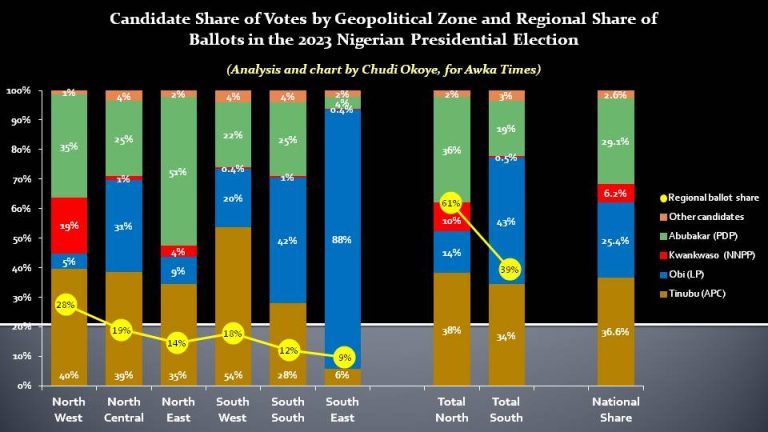
Candidate Share of Votes by Geopolitical Zone and Regional Share of Ballots in the 2023 Nigerian Presidential Election

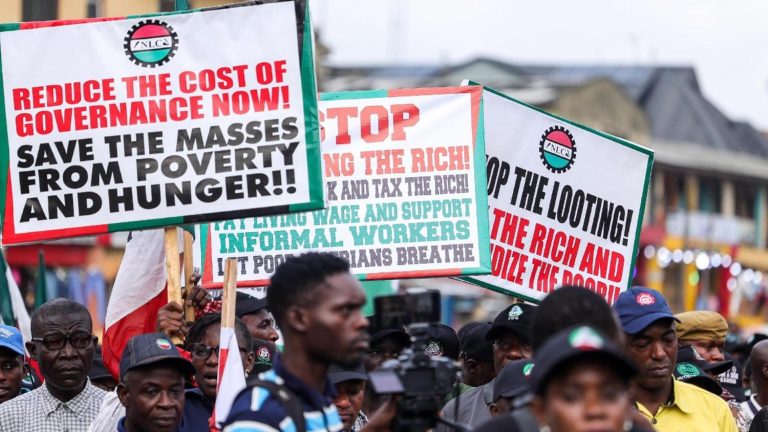
The activists who planned the recent #EndBadGovernance protest in Nigeria could not have expected its political fallouts, including the potential to trigger realignments in the 2027 presidential election.

By Chudi Okoye

Even before the recent #EndBadGovernance protest in Nigeria had commenced, its pre-announcement by planners prompted a preemptive attack by fringe elements in the Southwest region and apologists of the current Nigerian administration who tried to pin the proposed protest on the Igbos of the Southeast. Igbo abstention from the protest and the manner of the protest’s eventual execution, with its most truculent expression (involving deaths, property damage, looting and stochastic violence) occurring in parts of the impoverished North, appear to have unleashed a different dynamic: a potential fracturing of the political alignment that ushered in the present All Progressives Congress (APC) administration headed by President Bola Ahmed Tinubu.

In a previous essay on this issue, I described how ethnic discourse had unfortunately – but characteristically for Nigeria – been injected into a protest that was conceived essentially as a revolt of the hungered poor. What had the makings of class struggle regrettably suffered an atavistic regression – a reversion to ethnic mean, to borrow concepts from psychiatry and statistics.

My initial article had focused on a particular aspect of the protest discourse: a projection of mischievous intent onto the Igbos of the Southeast, who were said to be behind the protest because they were still stewing over the loss of the election by one of their own, Peter Obi of the Labour Party. The Igbos were then given an ultimatum – by faceless Yoruba firebrands – to remove themselves from Lagos and other parts of the Southwest. In the wake of the protest, however, a different narrative is emerging: a narrative surreptitiously pushed by administration hunchos and keenly cultivated by some members of the Southwest media intelligentsia, retrojecting a northern geopolitical motive into the protest. According to this new theory, the hunger protest erupted, not necessarily because Nigerians were in any worse condition than the miseries suffered in other lands, but because northern elites, like fish out of water, have become restless being out of power.

When fish is out of water, its gills collapse, it suffers stress and potential brain damage, and it eventually dies if deoxygenation is prolonged. I am metaphorizing, but this is essentially what’s presumed in parts of the Nigerian media to be happening to the temporarily displaced northern power elites. I have read deeply argued articles suggesting that the protest was orchestrated by the ‘North’, and that it was an early warning signal that an impatient North is angling to retake power by 2027. It is also suggested that the protest and the North’s impatience mean its alliance with Tinubu, which led to the ascendance of Muhammadu Buhari and his succession by Tinubu, is now all but dead.

This could be alarmist. But if it is even close to being realistic, it completely changes the outlook for the 2027 presidential election.

Successful Alliance
Nigerian politics is notoriously transactional, with its practitioners – for the most part lacking ideological conviction or simply inured by ideological consensus – in continuously shifting alliances. So it was with the political alliance that brought the incumbent president, Tinubu, as well as his predecessor, Buhari, to power.

Tinubu and Buhari

Buhari, an unsmiling former military dictator chucked out by his colleagues after only 20 months in power, had transformed himself into a barely relatable democrat in pursuit of the Nigerian presidency under civilian dispensation. But he was unsuccessful in all his initial efforts. In 2003, he contested under the All Nigeria Peoples Party (ANPP) but was defeated by Olusegun Obasanjo, another ex-military henchman seeking re-election under the banner of the People’s Democratic Party (PDP). In 2007, Buhari was trounced by Obasanjo’s successor, Umaru Yar’Adua. In 2011, this time fighting under the Congress for Progressive Change (CPC), Buhari was defeated by Goodluck Jonathan.

Having been rejected three times by the Nigerian electorate, a dejected Buhari was reportedly ready to pack it in, but for a renowned political strategist from Lagos, Bola Tinubu, who interjected in his depression and persuaded him on a new tack. In 2013, in order to take on then incumbent PDP, Tinubu mobilized various political formations – including his own Action Congress of Nigeria (ACN), Buhari’s Congress for Progressive Change (CPC), All Nigeria Peoples Party (ANPP), a breakaway faction of the All Progressives Grand Alliance (APGA) and a faction of PDP (nPDP) – to form the APC. The new party would win power in the 2015 election, toppling PDP’s 16-year incumbency. Buhari also won re-election in 2019, and was succeeded by Tinubu himself in 2023.

Despite its spectacular rise to power, the APC’s nine-year reign in Nigeria has been an unmitigated disaster, even if one factors in global events that occurred during its rule, like the Covid-19 pandemic, the Ukraine-Russia war and the Israeli genocidal war on Gaza which is threatening a wider Middle East conflagration. The APC’s governance failure is reflected in the decline of all economic and social indices under the party’s watch, marked the most by the collapse of the country’s currency; a severe contraction of the economy, with the GDP just about halved to $252.7 billion in 2024 from its peak when the party took power; the widespread insecurity in the land; decay and the grimification of social life; and, latterly, the embarrassing hunger protest which revealed Nigeria to the world as a poor country, despite its swagger. All of these resulted in the party’s shrunken governing mandate, seen in its reduced share of presidential election votes from 53.9% in 2015 and 55.6% in 2019 to 36.6% in 2023.

The APC’s poor record of governance, in addition to geopolitical power struggle and conflicting personal ambitions within the party, may be at the root of its seemingly troubled alliance.

2027 and an Unraveling Alliance
If indeed the APC alliance is becoming fractured, if the North is truly becoming restless as suggested, it might not be unconnected with the fact that Bola Tinubu has governed with a heavy Yoruba accent. He has been exceedingly parochial (no less, probably more so, than Buhari before him), and appears to be on a rapid trajectory to consolidate Oduduwa hegemony in Nigeria. It is telling that a Tinubu that was backed in the 2022 APC primary by northern governors, who helped secure his nomination reportedly against Buhari’s wish, is now – again supposedly – facing the unsteady support of the North. If that is the case, it means a political realignment might be being considered by Tinubu strategists for his re-election in 2027.

To understand the point here, let us look at how Tinubu won the election of 2023, as reflected in the official results (see chart above). Tinubu won the election with a plurality of 36.6%, the lowest winning score of any president in the 4th Republic, and the second lowest throughout Nigeria’s presidential history. It was a narrow victory won largely because of his alliance with the North.

My analysis of the 2023 results shows that the North boasted 61% of the votes, compared with the South’s 39%. Tinubu won 38% of the total northern vote, beating his nearest competitor in the region, Atiku, by two percentage points. Tinubu’s win in the North was made possible by a strong performance in the Northwest, which made up 28% of the total national vote and where he garnered 40%, the highest score. He also carried the North Central, which represented 19% of the national vote and gave him 39%. He was outperformed by Atiku in the Northeast where his running-mate, Kashim Shettima, hailed from, his 35% to Atiku’s 51%; but then, that geopolitical zone constituted only 14% of the national vote.

The importance of the North to Tinubu’s victory is further revealed if we consider his performance in the South. As already indicated, the South boasted only two out of five voters, significantly trailing the North; even so, Tinubu was outperformed in the South by Peter Obi. Tinubu secured 34% of the overall southern vote, driven by the 54% he obtained in the Southwest (which made up 18% of the national vote), and the 28% he won in the South South zone (which made up 12% of the national vote). But he was considerably outperformed in the South by Obi who won the region with a sizeable plurality of 43%.

Tinubu was soundly beaten by Obi in two southern geopolitical zones: in the Southeast where Obi scored a forbidding 88%, and in the South South which Obi carried with 42%. Even in Tinubu’s native Southwest zone, which he carried with a slight majority, he was given a run for his money by Atiku (who won 22% of the votes in the zone), and by Obi (who got 20%).

It is fair to say therefore that the North was crucial to Tinubu’s victory, such as it was, in the 2023 election. It is significant therefore if it appears now that this political alliance may be going through some stress. It has to be assumed that the sabre-rattling regime apologists, especially those in the Lagos-Ibadan media axis openly mocking Tinubu’s northern allies, must be aware of the fundamentals of the last election.

If so, it means that a different playbook might be in consideration for the 2027 presidential election. Perhaps an attempt at further inroads into the two regions where APC had decent showings in 2023 (Northeast and South South), to mitigate any erosion in the North Central and Northwest. This calculation perhaps explains the stupendous amount (₦20 billion) spent on renovating the residence of the vice-president, Shettima, who will be expected to exploit the power of incumbency to erode Atiku’s victory in that zone in 2023. It might also explain the indulgence of Nyesom Wike (“the Mouth from the South,” as I call him), the talkative and generally obstreperous character installed as minister of the Federal Capital Territory. He’s there to usurp Peter Obi in 2027 and deliver a clear APC majority in the South South – assuming he does not implode before then!

Assuming my speculations are correct, what should the other leading candidates do?

I have written several articles, before and after the 2023 election, arguing that Atiku owes a duty to the Southeast to repay the zone’s loyalty to the PDP since 1999, by facilitating the emergence of a Nigerian president of Igbo extraction, which is necessary for Nigeria’s unity. I berated him before the election for undermining the prospect of this; I have urged him, after the election, to do the right thing; and I have said that if he does not, Obi must do what is necessary to send Atiku, who’ll be 80 by the next election, into political retirement.

As it is, reading the tea leaves – or his “body language,” to borrow a vernacular of Nigerian politics – there’s a non-zero probability that Atiku might run again in 2027. Let me be clear: I am not predicting it. It’s possible that Atiku might be influenced by what happens in this November’s US presidential election. If America elects Kamala Harris, it might discourage Atiku, sensing a swing against gerontocracy, to seek the Nigerian presidency. If, however, America elects 78-year old Donald Trump, Atiku might be emboldened.

Atiku might also be encouraged if he thinks the Tinubu/North alliance might fracture. In that case, he’ll want to exploit northern disaffection and improve on the 36% of the region’s vote he secured in 2023, whilst pushing for further inroads in the South South, and defending his win in the Southwest.

Of the three leading candidates from 2023, Peter Obi has the greatest burden, I think. Whereas Tinubu has achieved for the Southwest what the great Awo could not, and whereas Atiku’s skin in the game is primarily personal, Obi has the burden of winning for Nigeria. Equilibrium in Nigeria’s tripodal politics, to say nothing of equity, requires Igbo presidential accession. I have written repeatedly that this has to be achieved in 2027. Of the current crop of the Southeast’s political leaders, Obi is the readiest, given the coalition he has built. If the region misses this window, it won’t be until 2039 that it might have another opportunity. But by then, the current crop of Igbo political elites will be quite aged; and I am not sure yet about the clout of the next generation.

Obi performed creditably in the 2023 presidential election. While he wasn’t adjudged the winner of the election, he did achieve a result that no other third-party had attained in Nigeria’s presidential history. For the 2027 election (assuming he’s running!) he’ll need to defend his impressive performance in the South, and re-strategize to improve on the 14% he won in the North. For this, he’ll need a deeper incursion into the northern power circles. I’m afraid this means that although Obi has built a progressive coalition, he’ll need a running-mate with cachet within the northern establishment. Obama did it in 2008, by picking Joe Biden as running-mate, to persuade America to vote for a Black man as president. Obi should think carefully about his running-mate for 2027: someone who’ll not put off his young and ebullient base, but who can persuade the northern powerbrokers to trust him.

The 2027 presidential election promises a scintillating contest: between a depleted incumbent who will seek re-election for personal and other parochial reasons, but who seems to be bleeding support; an aged juggernaut who might run one last time to achieve a burning personal ambition; and an effacing populist with the burden of history on his shoulders.

Who comes out victorious will say as much about the candidates as it does about Nigeria itself.
If Kamala Cracks the Glass Ceiling, Can It Be ‘Obi-literated’ In Nigeria?

1
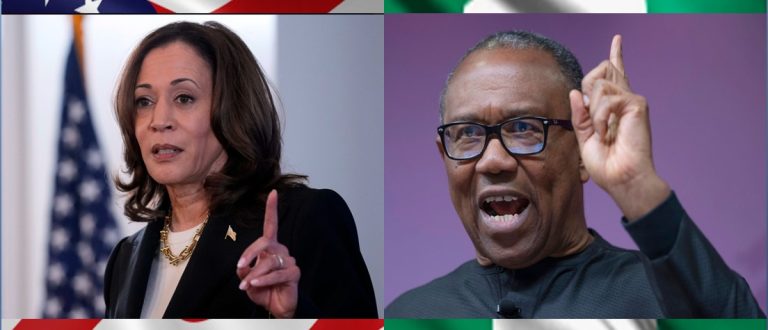
Kamala Harris (US) and Peter Obi (Nigeria)

History beckons in Nigeria, if Kamala Harris can smash the power ceiling in the US.

By Chudi Okoye

They are both trying to break a glass ceiling in their respective countries: she, a gender barrier; he, an ethnic one. They are both ‘youngish’ boomers facing septuagenarians who’re well past their prime, being far older than the average age of their countries’ previous leaders. She, at 59, faces an opponent aged 78, in a country with a previous presidential inaugural median age of 55; he, now 63, last year faced and may yet again face a rival who officially claims 72, in a country with a mean age of 50 for its previous heads of government.

Kamala Harris of the United (but quarrelsome) States of America and Peter Obi of (a somewhat disunited) Nigeria are separated by a world of personal experiences. They’ve followed different paths to prominence in public service: she, intrinsically; he, via the private sector. She was district attorney and attorney general in California, US senator and presidential aspirant, before berthing as the incumbent US vice-president. He became governor of Anambra State and was a vice-presidential candidate, before running for president in his own right. Despite their different points of departure, Harris and Obi may be headed for a similar point of arrival as barrier breakers, if providence smiles on them and they also remain steadfast, focused on what they must do to achieve a history that beckons.

I plan, in this brief excursion, to probe some of the cross-currents, specifically to see what might be relevant in Harris’s foray into the firestorm of US presidential politics, were Obi to re-launch his own presidential bid in Nigeria in 2027. I will look specifically at: (1) how Kamala Harris emerged as the presumptive nominee of her party; and (2) how she’s handling the reactionary forces in US politics, as she rolls out her campaign.

Fortune Favors Kamala
It is nothing short of Shakespearean how Kamala Harris emerged as the Democratic Party’s presumptive nominee for the 2024 US presidential election. To hear her political opponents tell the story, including yarns spun by the Republican Party’s seemingly discombobulated flag-bearer, Donald Trump, the rise of Harris is the result of an intramural conspiracy. They claim that Harris’s principal, Joe Biden, was on course to be trounced by Trump, particularly after his disastrous first debate, and was thus forced against his will to yield the ticket.

There was no indication of subterfuge in the eventual exit of Joe Biden from the presidential race. It was his dismal performance in the June 27 debate, which he and his team had proposed, that proved his undoing. There was certainly a measure of pressure from the Democratic Party hierarchy, alarmed about losing a critical election to Trump, urging the 81-year old to consider whether he had the stamina for what would be an excruciating campaign. While Biden balked at obliging his party, campaign funding – especially from big donors – had begun to dry up, eventually forcing Biden’s decision to quit.

All through the wrenching process, Harris stood firmly by Biden, without the slightest sign of disloyalty to a principal with whom she shared a deep bond. It was her unimpeachable behavior that made possible her seamless transition to the top of the ticket when Biden eventually decided to stand down.

This was crucial because, on deciding to yield, Biden not only endorsed Harris as the party’s nominee, he also orchestrated the transfer of his campaign machinery to Harris – funds, personnel, field operations, etc. This, in turn, gave Harris a great head start. It put her in a prohibitive position against potential challengers, were the party to permit an open primary to choose Biden’s successor, as some were suggesting. With a crunched time to revamp the ticket before the November election, the party alighted on a remote delegate voting arrangement which Harris handily won, having been endorsed by Biden and other party leaders.

It was chance and party pragmatism that occasioned Harris’s hop to the top of the Democratic Party ticket. She deserves great credit, nonetheless, for receiving the baton from Biden and, so far, running a good race.

There is something in all this for Peter Obi. His exit from the People’s Democratic Party (PDP) in May 2022, as the party’s primary loomed, was at the time a subject of some debate. Although Atiku Abubakar was odds-on to win the primary, some felt Obi might again have been made Atiku’s running mate, placing him in a strong position to succeed Atiku in 2027.

There’s little question that PDP would have won the 2023 presidential election, had the party been able to prevent Obi’s departure. Remember that Atiku, under the PDP, secured 29.1% of the votes, while Obi and Rabiu Kwankwaso, both of whom defected from the party, secured 25.4% and 6.2% respectively. These add up to a total of 60.7% won by the three. Although certain statistical adjustments must be made, in reverse-engineering the results, to reflect the incremental effect of the efforts the decampees made to boost their destination parties, a unified PDP would still have won a significantly higher share of the votes than the 36.6% plurality with which Bola Tinubu’s All Progressives Congress (APC) carried the election.

Still, there’s no telling whether Atiku, hankering after the presidency for very long and finally achieving it in 2023, could have been persuaded to walk away from power in 2027. This is where I think, reflecting on what transpired in the US, Peter Obi’s political skills will be tested, if he wants to run again. I am not at all convinced that the Nigerian opposition parties, in their current formation, have a chance of defeating Bola Tinubu’s APC in 2027. I have consistently argued the necessity of a recombination or at least an electoral alliance between the major opposition parties, if they hope to recapture power from the APC (see here and here, for instance). It puzzles me greatly that about a year-and-a-half or so before we enter the 2027 election cycle, there’s been no substantive move in this direction.

A challenge for Peter Obi, if he’s planning another presidential run, is to put Atiku Abubakar – who’ll be over 80 by the next election – out to political pasture. That way, Obi can forge an effective alliance between his Labour Party and PDP. Obi deserves credit for the formidable coalition he built to win a quarter of the ballots in 2023, a threshold no third-party had ever attained in Nigeria’s presidential politics. But he needs a more ruthless step to consolidate his base and turn it into a winning coalition. It starts with sending Atiku into political retirement. For inspiration, Obi can look to how 81-year old Joe Biden was persuaded to hang up his gloves.

Political Force Fields
Persuading Atiku to retire and inheriting his political machine will not be enough to send Obi to Aso Rock, I’m afraid. Even if Obi achieves that onerous task, he will still confront the reactionary forces and frictions of Nigerian politics. There will be atavistic forces threatened by his ethnicity; and there will be conservative forces, even if enlightened, threatened by the progressive and populist tendencies in his coalition.

Obi doesn’t need anyone to tell him that some laws of classical physics, particularly those of Newtonian mechanics, apply to Nigerian politics. The First Law of Motion says that an object at rest will persevere in that state of rest or if in motion will remain on a straight line, unless it is compelled to change that state by forces impressed upon it (F∆t = m∆v). The Second Law of Motion states that the force acting on a body is equal to the mass of that body multiplied by the acceleration (F = ma); as such, the acceleration of an object depends on the mass of the object and the amount of force applied. Both of these laws apply to Nigerian politics, along with the Third Law of Motion which states that whenever one object exerts a force on another object, the second object exerts an equal and opposite force on the first (F1 = -F2).

Obi should contemplate these Newtonian laws, and look to what’s unfolding with Kamala Harris in the US for inspiration on how to navigate the force field of Nigerian politics.

Harris faces a monumental gender barrier in this November’s election. Yes, Hillary Clinton had shattered the ceiling somewhat by winning the Democratic Party nomination and going on to win the popular vote in the 2016 presidential election by a statistically significant margin. She was nonetheless handily defeated by Donald Trump in Electoral College votes (the real decider of US presidential elections), garnering 227 to Trump’s 304. We will see in this year’s election if America will finally elect a woman as president.

Kamala Harris also faces serious racial resistance, although Barack Obama had cracked the racial barrier to US presidency in 2008. The ‘drag coefficient’ of racial bigotry is minimized as a result, but not eradicated.

We can see both of these factors, gender and race, in the particularly nasty politics of Harris’s opponent, Trump. I reported late last month, in the immediate wake of Harris’s emergence as the putative Democratic Party standard bearer following Biden’s exit, that Trump and his party had wasted no time hurling racist and misogynistic abuses at her. I predicted then that it would get worse. And so it has. Trump has mocked Harris’s racial identity; derides her intelligence – calling her “dumb” and “stupid” and “lazy” – all stereotypes used over the years by Whites against Blacks; deliberately mispronounces her name as a form of othering, to give Americans the impression that this woman, born in Oakland California, is not really an American, because she was born to immigrant parents; he even mocks the way Kamala Harris laughs, to invoke the stereotype of African slaves as laughing jackasses; and, in what doubles as a racist and misogynistic slur, he claims that she slept her way to the top.

Donald Trump says these things openly in the media, and on his campaign stops, to roaring laughter and the chortling delight of his supporters. It is all evidence that a significant part of the American population is unwilling to accept the idea that a Black woman can become US president.

Joy Trumps Hate
In Nigeria, of course, leading politicians don’t typically unleash the sort of verbal diarrhea that pours forth from Donald Trump, though their sidekicks aren’t always inhibited. (It is not lost on me that some rank and file Nigerians often appear to be highly enthralled with Trump: no doubt, I imagine – I hope! – because they lack full information about the extent of this man’s baseness.) Whilst reactionary politicians in Nigeria can be more circumspect, they act with no lesser prejudice, as is seen in the lopsided allocation of public goods.

There is a lesson in how Kamala Harris has carried herself in the face of Faustian bigotry. While Trump has been running his mouth, Harris is running her campaign with clout. She ignores his gutter-level baits and insults, or flicks them off with masterclass witticisms, and quickly returns to real issues. She meets Trump’s scowls with wan smiles; his sulking with élan; his grim deprecation of America with optimism. She steers her campaign with calm composure, with poise, with joy and measured exuberance – all of which seem so far to delight her thronging crowds and appear to be driving some positive flutter in the polls.

We don’t know if Kamala Harris can keep this up – all the way to election day. But there’s something to be said for “politics without bitterness,” a slogan adopted by the late Waziri Ibrahim in Nigeria’s Second Republic. Obi has been a practitioner of this type of politics. It is a good way to take bluntness out of the ruthless actions that must be taken to answer the call of history.

The United States has had challenges in its history with identity politics, specifically with regard to religion, race and gender. It took 184 years from the declaration of independence in 1776, and 172 years after the US constitution came into effect in 1788 (the constitution was drafted in 1787), before America elected a Catholic, in the person of John F. Kennedy, as the 35th president in 1960. He was inaugurated in 1961.

It took 232 years from declaration of independence, and 220 years from constitutional ratification, before the US elected a Black man, Barack Obama, as its 44th president, in 2008.

If Kamala Harris makes it this November, it would have taken the US 248 years from independence, or 236 years from constitutional ratification, to elect a woman as president.

None of the earlier breakthroughs came easily, even with the long historical drag.

I hope Peter Obi has studied in detail what made these breakthroughs possible, and that he is studying the intricate dynamics of Kamala Harris’s campaign, as she tries to persuade America to become a yet better version of itself by electing a woman as president. He’ll need the insights to get Nigeria to overcome its own hang-ups about electing a person of Igbo extraction as president, hopefully in 2027.

Clash of Class and Ethnicity in Regional Responses to the Hardship Protest in Nigeria

1
https://x.com/multimeverse/status/1819283544469909968/photo/1

The ongoing hardship protest in Nigeria may be squelched by strident rebuke and heavy-handed coercion, but there’s a deeper dynamic in it that bodes ill for the country.

By Chudi Okoye

After weeks of it being whispered and days of its disrupted execution, the 2024 hunger protest in Nigeria (hashtagged #EndBadGovernance) is winding down to a whimper.

Compared to the Kenyan protest (hashtagged #RejectFinanceBill2024) which erupted earlier in June and eventually forced President William Ruto to reject his legislature’s controversial finance bill, the Nigerian affair – some might argue – has yielded little except carnage, deaths, arrests, and a roiling of the republic. The fissures and pressures that provoked the protest persist, but the brutal response of the Nigerian regime makes clear that it isn’t going to give ground, despite pious pretenses about its disposition to dialogue.

That said, any claim of a failed #EndBadGovernance protest, already gleefully and unconscionably made by some, is, in my opinion, wrong. Something important has come out of the chaotic protest in Nigeria.

An Igbo proverb says a fierce wind reveals the rotten rump of a hen. So it has been with Nigeria and the #EndBadGovernance protest. The blustery wind of the protest has revealed the rotting rearside of Nigeria.

The patriotic protagonists who planned the Nigerian protest, evidently disillusioned and yearnful youths, were not naïve. They likely anticipated the antiquated heavy-handed response of Nigeria’s ‘hybrid regime’: as the country is currently classified in The Economist’s global Democracy Index which rates countries on a continuum between autocracy and democracy. They likely also envisaged protest infiltration by spoilers and nihilists, some possibly planted by the regime itself. But it is a safe bet that the protest organizers never saw this coming: the injection of ethnic dialectics into what is essentially class struggle, and thus regional variations in responses to their protest.

The #EndBadGovernance protest is about much that ails Nigeria today. It’s about the excruciating hardships faced by the populace, the lack of jobs and grinding poverty; about the surging inflation, seen most acutely in the astronomical rise of food and fuel prices, all made worse by the government’s neoliberal economic policies, including petrol subsidy removal and Naira depreciation. It’s about worsening insecurity in the land, the rampant kidnappings, banditry, farmers-herdsmen conflict and violent secessionist agitation.

The protest is also about the rank insensitivity of the present administration. In Nigeria, no one fears the lumpen povertariat. Not the gilded few, roistering and flaunting their fabulous wealth amid monumental poverty. Not the government, engorged in unbelievable profligacy. Even as the nation groans under the policies it has floated, the government remains bloated, its officials living large: miles-long convoys; new SUVs for federal legislators, price tag: ₦160 million each; ₦20 billion (nearly a fifth of Ekiti State’s entire 2023 budget!) spent renovating the vice-president’s residence; plans to purchase new planes for the presidency, to add to the existing fleet; and, despite public outcry, plans proceeding apace to spend ₦15 trillion (about the combined 2024 budgets of the 36 states) on a coastal highway contract, awarded without competitive bidding to a company connected to President Bola Tinubu and his family.

It is for these outrages and more that the protesters are pouring out on to the pavements.

But not if you ask some ethnic chauvinists. Even with the #EndBadGovernance protest merely looming, word was already abroad, pushed by mischief-makers purporting to speak for Yorubas of the Southwest, that this was a plot by Igbos of the Southeast, an “insurrection” no less, to bring down Bola Tinubu’s government. Soon there was talk of a counter protest, with genocidal threats and the tag #IgboMustGo, insisting that Igbos must vacate Lagos and other parts of the Southwest. On July 27, the following message was posted on X, the social media platform, under the handle, Lagospedia:

“Lagosians and every S’West stakeholders [sic] should prepare for the massive protest of #IgboMustGo on the 20th – 30th of August. They have 1 month from now to leave and relocate their business from all S’West States. We urge all Yorubas living in the S’East to return home.”

To their credit, as the tempo of threats and intimidation rose, some Yoruba leaders spoke up to foil the roil. Lagos State governor, Babajide Sanwo-Olu, along with spokespeople for Yoruba organizations like Afenifere, the Yoruba Council of Elders, the Eminent Elders Forum and the Western Regional Organization all made statements to douse the tension. So did candidates in the 2023 presidential election, Atiku Abubakar of the People’s Democratic Party (PDP) and Peter Obi of the Labour Party (LP), who condemned the ethnic slur and incitement, calling for the purveyors to be apprehended by the authorities. Even President Tinubu, in his otherwise vapid address to the nation on August 4 about the protest, spoke out against the ethnic attacks.

Igbos, however, were not entirely reassured. The Indigenous People of Biafra (IPOB) waved off the Yoruba leaders’ statements as “hypocritical,” insisting they were the secret “sponsors” of the attacks on Igbos. The South East Caucus in the National Assembly criticized the ethnic profiling and scapegoating of Igbos, recalling the bloody history of such targeting, for Igbos in Nigeria but also other tribes in Africa. Other interventions were defiant, insisting on Igbo right to live anywhere in Nigeria as long as demands for restructuring or Igbo separation from the federation are rejected.

Nevertheless, with an apparent ploy to pin protest planning on the Igbos unfolding, and with all that this entailed, there was a cascade of cautions from Igbo leaders and groups advising Igbos to shun the protest. The pitch for protest abstention came from all corners: Ohaneze Ndigbo, governors, lawmakers, IPOB, etc. All urged Igbo people to stand down and let this one pass because the calculus of blame and retribution was stacked against them.

Dissecting Indifference
It is totally understandable why Igbo leaders would urge a path of protest resistance. It’s self-preservation. Thinkers and philosophers going back to Adam Smith, Jean-Jacques Rousseau, Baruch Spinoza, John Locke, and Thomas Hobbes – and even their predecessors in classical antiquity like Epicurus – have emphasized the idea that self-preservation is a fundamental aspect of human nature. A 2018 reissue of Samuel Butler’s 1900 prose translation of Homer’s Odyssey has a subtitle that captures the sentiment: “Self-preservation is the first law of nature.”

And so it is with the Igbo decision to stay out of the 2024 #EndBadGovernance protest.

At first, one might wonder how wise really it is for Igbos to opt out of this historic political surge in Nigeria. It is not as if they’ve fared any better in this economy.

Igbos are not in any way immune to the widespread privation in Nigeria. Although their homeland was once posited as a felicitous region somewhat better off than the more impoverished parts of Nigeria, years of marginalization and neglect by the federal government (which became more acute in the Buhari/Tinubu era), along with sustained misgovernance by a rapacious regional ruling class, led to an increasingly radicalized separatist movement which in turn has spawned a spate of violent criminality, seen most vividly in a rising scourge of self-terrorism in the region. The economic and social consequences of this have been devastating: a contraction of the regional economy, caused by supply chain disruptions, market uncertainty, investment flight and business collapse; all leading to a loss of productivity and widespread unemployment, creating a swollen underclass which, in turn, feeds the terrorist enterprise. It is a vicious circle.

Given the festering conditions in the region, and especially the widespread discontent, you would think the Southeast would offer a fertile ground for the current protest. Alas, but for a smattering of protest activity in some of the Southeastern states, the region in general demurred, in line with leadership guidance. In fact, there was even the depressing spectacle of some Igbo characters taking matters too far, disporting themselves in pubs and parks as they mocked earnest protesters in other parts of the country who were getting killed, arrested and generally harassed by the authorities.

It was most unbecoming. But you could understand (even if you don’t justify) the detachment and sense of schadenfreude in a people long brutalized by Nigeria, whatever they do. Igbo people have gone from initially resisting assimilation into a colonial Nigeria to a Nigerianistic fervor under the leadership of Dr. Nnamdi Azikiwe. From there, after being framed for the failure of Nigeria’s First Republic, it was ‘Biafrexit’, as I call it, led by Emeka Ojukwu which culminated in civil war. Then there was a re-embracing of Nigeria, in the Second Republic, led again by Zik and the likes of Alex Ekwueme. After that, with yet another bout of Igbo othering and rejection by Nigeria, an impatient tendency emerged seeking Igbo exit from the country, led by the likes of Ralph Uwazuruike and Nnamdi Kanu. A brutal suppression of that tendency led to yet another phase in Igbo evolution in Nigeria: what I call ‘Biafritis’, a phase of despondency and self-mutilation.

Igbos have tried really hard, yet again, to be good Nigerians in this Fourth Republic. In the first 20 years of the current dispensation, across six presidential elections held between 1999 and 2019, Igbos overwhelmingly voted for contenders from other parts of the country, even rejecting their own kin who contested (including, in 2003 and 2007, their great war leader, Ojukwu). However, in 2023, they backed Peter Obi, not necessarily for primordial reasons but because Obi had put together a third-party electoral coalition that they thought offered Nigeria reprieve from the governing duopoly of the PDP and All Progressives Congress (APC) that seemed bereft of new ideas to move the country forward.

Obi constructed an unusual coalition comprising a cross-section of eager youths (of the type behind the current hunger protests), organized labor, members of the enlightened urban professional class, segments of the intelligentsia, and even organized religion (mostly Catholic and evangelical), all built on a primordial core of Obi’s Igbo South East.

Obi was not returned as winner of the 2023 presidential election. He was instead accounted by the electoral commission to have secured 25.4% of the votes, carrying 11 states plus the Federal Capital Territory, as against the 36.6% won by the APC’s Bola Tinubu who carried 12 states, and the PDP’s Atiku who secured 29.1% and also carried 12 states.

Although Obi contested the election result in court, his legal challenge was nowhere as fierce as Atiku’s who really shredded Tinubu in his forensic assault. Even as Tinubu settled into governance, it is Atiku, I would argue, that has provided the boldest opposition to his administration. Yet, time and again, we see tics of nervousness and vituperation from the administration whenever Obi pipes up in opposition to its policies and actions. It is not hard to understand why: geopolitics.

This is what we have seen with the ongoing hunger protest in Nigeria. Though backed both by Obi and Atiku, bigots and regime apologists – most of them edgelords and bargain basement provocateurs – were fast to fasten an ethnic logic to the protest, attempting to foist it on Obi and his Igbo ethnic group. Hence, the Igbo abstention: a rational reaction by a people constantly threatened in the Nigerian firmament.

There’s some concern, no question, as to the near- and long-term implication of Igbo protest avoidance. One could make a cogent case that it culminates to self-disenfranchisement, given that there’s casus belli for the protest which affects the Igbos and everybody else – more so because the Nigerian constitution envisions democratic participation both through street protests (see Sections 39(1) and 40) as well as through the ballot box (see for instance Sections 14(1)(c) and 77).

One could also make a case that protest abstention threatens to fracture Peter Obi’s delicate third-party coalition, comprising a concentric circle of an Igbo core and outer progressive rings, which he will need for another sortie in 2027, failing which Igbo stab at the presidency of Nigeria will be unfeasible until 2039, as I have argued in previous writings. Protest abstention could prove a forced error in this regard.

But all that aside, Igbo abstention signifies something deeper for Nigeria: an emotional withdrawal, a form of psychological abandonment, by a constitutive part of the federation which had hitherto invested energy and resources into the Nigerian project.

Similar to signals before an earthquake (animal behavior, changes in water level, earth tremors) or those before a volcanic eruption (gas emissions, temperature changes, subsidence), for those who wish to take note: Igbo emotional or strategic exit portends an ineluctable fracturing of the Nigerian federation.

Will America Reach Higher and Hire Harris, or Slump into a Dump with Trump the Grump?

0
Kamala Harris or Donald Trump

Donald Trump and wingnuts in his Republican Party are lobbing racist and misogynistic attacks at the Democratic Party’s new presumptive nominee, Kamala Harris. Will it prove a winning tactic for them?

By Chudi Okoye

With recent events in the country, especially the frightening assassination attempt on one leading party’s candidate and the scrambling of the other major party’s ticket, the uncertainty surrounding the November 2024 US presidential election is greatly heightened. Even so, by enlightened and rational rules of politics, this shouldn’t, in any real sense, be a competitive race. One of the presidential contenders is a relatively young, joyful and delectable woman of color with both Black and Indian heritage who has significant incumbency advantages, being part of an arguably successful administration. She was also a trial attorney who, in her long and lauded legal career, had prosecuted the likes of her opponent: a grumpy old White man with a lengthy rap sheet, a walking crime wave all by himself who has been convicted of multiple felonies, fraud and sexual assault. This felon still faces further criminal charges including his incitement of an insurrection, done to illegally retain power after he’d lost his re-election bid nearly four years ago with a governing record field experts consider the very worst in US presidential history.

If all things were equal, the Democratic Party’s presumptive nominee, Vice-President Kamala Harris, who emerged after President Joe Biden decided to abandon his re-election bid, shouldn’t be in what seems a tight race with the Republican Party’s candidate, Donald Trump. But, alas, such are the idiosyncrasies of US politics that the outcome of the November 2024 presidential election remains wholly unpredictable, despite the current buzz around Harris.

I wrote in a recent essay that “in America ideology intersects in intricate ways with deep social currents pertaining to race and ethnicity, religion, gender, sexuality, disability and class,” and that this intersection of “ideology with overlapping social identities tends to render American politics particularly toxic and volatile…” The intersection of ideology and identity in large part explains why a presidential race which, in my opinion shouldn’t be a close-fought match, at present appears to be.

I chuckle today as I remember a time some years ago, as I got ready to relocate from the UK to the US and a friend, thrilling about the opportunity, told me that I was moving to a country with a vibrant democracy and the “most enlightened citizens in the world.” I was skeptical of this assessment even then, but I know for sure now that my friend had been only half right. America certainly has a vibrant democracy. But I would say that on average, its citizens are a long shot from being the “most enlightened” in the world. I’ll explain.

Scholars have consistently highlighted the incidence of ‘low-information voters’ and ‘low-information signaling’ in America, terms coined in 1991 by Samuel Popkin of the University of California, San Diego. These notions build on the concept of ‘cognitive miser’, developed in 1984 by American psychologists Susan Fiske and Shelley Taylor who argue that the human mind typically avoids making huge cognitive efforts, preferring simpler explanations for social phenomena and less tasking ways to solve problems.

In a 2017 paper which might be said to reflect this concept, Aaron Dusso of Indiana University talked about “the woefully low levels of political knowledge possessed by the average American,” arguing as follows:

“…democracy is supposed to rest on a foundation of enlightened citizens who not only have the ability to understand the important political issues of the day, but can vote for the candidate(s) that best represent their personal political views. Unfortunately, 80 years of public opinion research has, without exception, demonstrated that the vast majority of Americans do not have this ability.”

I invoke this point in part to explain the cloud of uncertainty that surrounds the 2024 presidential race in America, despite what might look to a rational observer as unambiguous fundamentals favoring the Democratic Party and its presumptive nominee.

How does one explain the competitiveness and even, at this point the polling edge, of Donald Trump: a thrice-married man of deep moral failings and no known religious affinity; an obstreperous and vindictive character with a calcified public image as a megalomaniac, narcissist, racist, misogynist, business and political cheat, and above all, a scofflaw who now has a string of felony convictions in his trail, with several pending criminal cases? Answer: dog-whistle and identity politics.

Dog-whistle Rhetoric
American history is dotted with the cynical use of dog-whistles – coded messaging intended for a specific audience, usually White – which are often deeply parochial. It was at play in the Republican Party’s use of racist tropes as part of its ‘Southern strategy’ in the 1950s, deployed to displace the Democratic Party and deepen its own support in the South, as racial tensions built up over the odious ‘Jim Crow laws’ that enforced racial segregation (“Jim Crow” is pejorative, a caricature of African Americans). It was there in the laden phrase ‘states’ rights’, used, again in the 1950s, as code for institutionalized segregation and racism. There was unmistakable dog-whistling and pejoritizing of Blacks as well when, during his presidential campaign in 1980, Ronald Reagan referred to “Cadillac-driving ‘welfare queens’ and ‘strapping young bucks’ buying T-bone steaks with food stamps.”

Who can forget the fusillade of racist dog-whistles, innuendos and double-entendres fired at Barack Obama in 2008 when he dared to launch a presidential run? The Republicans and far-right types in the media accused him of being “anti-White” because he and his wife attended a church (of which I’m currently a member) that preached Black liberation theology. At various times they claimed that Obama was not a patriotic American; that he was a drug addict and even a drug seller – a stereotype of Black Americans; and that he was married to an “angry” Black woman who was “ungrateful” for all that America had done for her. One commentator, attempting an even weirder otherization of Obama whom he considered slimmer than average Americans, wondered if he wasn’t “too thin” to be elected president. There was the suggestion that Obama, who was a law professor, was elitist, and that he could never understand average Americans – even though they also derided him as a “community organizer.”

These broadsides against Barack Obama culminated in the frenzied ‘birther’ movement which questioned his birthplace, citizenship status and eligibility to run for president. Claims that he was not eligible to run for president reached fever-pitch, and persisted even though at some point before the 2008 election Obama was forced to release his official Hawaiian birth certificate, duly confirmed by the Hawaii Department of Health. This did not quell the debate over Obama’s citizenship status, which continued even after he’d been elected. This forced the release, finally in April 2011, of a certified copy of his original Certificate of Live Birth, along with contemporaneous birth announcements published in Hawaii newspapers.

I don’t know if Obama ever lived down the humiliation.

Kamala Harris and Barack Obama

It is worth noting that Donald Trump, even though he was not running for president at that particular time, was deeply involved in the birther movement and the assailment of Obama. When Trump did eventually run in 2016, he simply dusted off the dog-whistle playbook, seen most vividly in his repackaging of an old Reaganite shibboleth, “Make America Great Again,” which he deployed as coded nostalgia for an Anglo-Saxon past of White privileging. A key element of that was his xenophobic targeting of immigrants, especially yet-to-be regularized stayers and new border arrivals, at whom he hurled vile and racial slurs, claiming they were “criminals” and “terrorists” flocking to America “with very contagious diseases” and “poisoning the blood of our country.” At different times in 2018 and 2019, in meetings with aides, Trump reportedly asked why border patrols couldn’t simply shoot migrant families seeking asylum below the waist as deterrence! New York Times journalists, Julie Hirschfeld Davis and Michael D. Shear, also report in their 2019 book, Border Wars: Inside Trump’s Assault on Immigration, that Trump discussed with aides the idea of building an electrified border wall; and that he even considered digging a water-filled trench at the border, possibly stocked with snakes or alligators! The Times’ reporters write that Trump’s “overarching goal was to make the experience of crossing the border into the United States as terrifying and perilous as possible.”

Trump’s anti-immigrant fulminations, likely borne of resentment at demographic changes in the United States which could further erode White privileging, is a constant of his political rhetoric. He spouted much the same during his failed 2020 bid for re-election, playing the racist and xenophobic card; and he is doing it all over again this year, in his third presidential bid. It is all of a piece with his abetting of Neo-Nazi and White nationalist tendencies, well documented by the media, which nonetheless he does so dexterously as to leave room for plausible deniability.

Kamalaphobia
With the exit of President Joe Biden from the November 2024 election and the emergence of Vice-President Kamala Harris as the Democratic Party’s presumptive nominee, Trump has wasted no time, as is his wont, slurring his new opponent. He has also created a permission structure for members of his Republican Party and far-right wingnuts to throw mud at the vice-president. They have been making racist and extremely reprehensible sexist remarks about her, in traditional but especially on social media. They have claimed, for instance, that this accomplished woman of color – who comes from a family of academics and was district attorney in San Francisco, Attorney general of California and United States senator, before becoming VP – is dumb as a rock and only attained the positions she did as “DEI hire” (i.e. through affirmative action) and by dispensing sexual favors!

They have targeted Ms. Harris through her Jewish-American husband who is also a lawyer and visiting professor at Georgetown University Law Center, claiming that the couple connived with the powerful Jewish lobby in the US to force Biden to step down, and that Biden’s exit was a “Jewish coup.” They call the vice-president “AIPAC slut Kamala,” and her husband a “cuck” (i.e., a weak or servile man whose wife is sexually promiscuous).

They have mocked Ms. Harris for not having a biological child, even though she has stepdaughters through her husband’s first marriage.

They have even started mocking her usually joyful laughter, calling here “cackling Kamala,” a subtle clowning caricature of the type often deployed by mirthless White folks.

The campaign of calumny has commenced, as with Obama, and it may get worse. The goal is to discredit and disqualify Kamala Harris in the minds of voters, not on policy issues but on her identity. This is why the 2024 race is unpredictable, despite favorable fundamentals for Kamala Harris. It is unclear if an uninformed majority in America, lured by racist and sexist signaling, will return to power a despicable White man who was a failed president; or if a majority will summon their better nature, soaring to higher heights to hire an eminently qualified woman of color as president.

Britain, an older nation but younger democracy than America, has had three female prime ministers and even a prime minister of Indian ancestry. America has a chance, if she can but take it, to make history this November.

Biden’s Re-election Bid Was Scuttled in 2024. Shouldn’t Tinubu’s be in 2027?

0
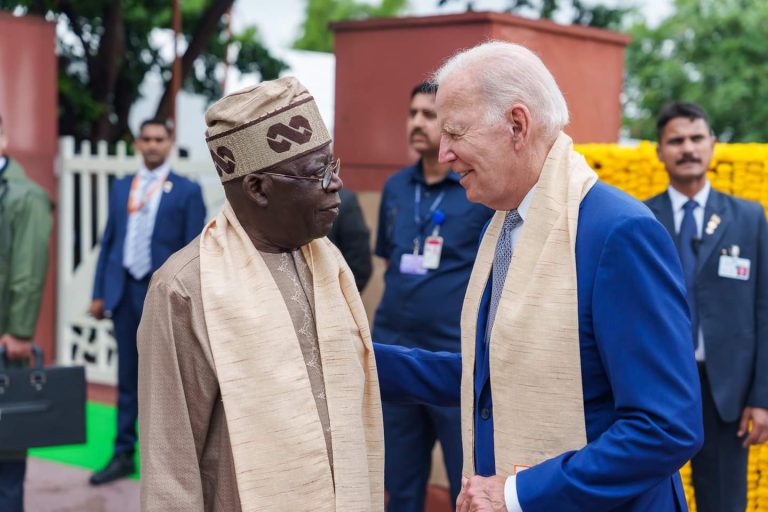
Presidents Bola Tinubu and Joe Biden

At 81, President Joe Biden, who is just over 2x the median age of Americans, was forced to abandon his re-election bid on account of dotage. At over 72 years of official age, Bola Tinubu is 4x the median age of Nigerians, and seems no healthier than Biden. Shouldn’t he be stopped if he seeks re-election in 2027?

By Chudi Okoye

Only a quarter of an inch saved America from the eruption of a major political crisis, after a sniper’s gun crackled on July 13, targeting former president Donald Trump at a campaign rally near Butler, Pennsylvania. The attempted assassination had failed, only just; but it set off political reverberations which, barely a week later, upended the November 2024 US presidential election. The gunman’s bullet only grazed Trump’s ear, leaving a slight wound, but it went straight through the heart of President Joe Biden’s political career, forcing him on 21 July, after much reluctance and understandable resistance, to announce the end of his re-election bid.

Trump’s quick-thinking reaction in the frightful moments following the assassination attempt, springing up with the aid of his Secret Service agents, pumping his clenched fist in the air and urging his supporters to “Fight! Fight! Fight!” before leaving the stage, presented a cinematic image of defiance. It was not quite at the same level of brave defiance as former president Teddy Roosevelt who was shot 112 years earlier on 14 October 1912 whilst out campaigning to regain the White House. After being shot at point blank range by a mentally deranged fellow who had been stalking him for weeks, with the bullet lodged in his rib, Roosevelt still went on to deliver his address at a planned campaign rally, speaking for 90 minutes as blood soaked his shirt, before finally agreeing to be taken to a hospital. He told the crowd he’d been shot, but that “it takes more than that to kill a Bull Moose” (referring to a nickname for the political outfit he’d formed for his presidential run).

Whilst perhaps not at the level of Roosevelt’s remarkable resilience, Trump’s reaction was in its own way the stuff of political legend. It has for sure been made into one by Trump’s supporters and the dude himself. The packaging contrasted very sharply with the image of an aged and debilitated Joe Biden who bungled a presidential debate, constantly dropped lapsus linguae including embarrassing malapropisms and solecisms even at carefully staged events, had been seen shambling on and off stage or delicately clambering on to Air Force One, and was reported to have succumbed to a Covid-19 infection that grounded him even as Trump sprang back up on the political stage just days after he was nearly killed by a sniper’s bullet.

Joe Biden and Donald Trump are separated in age merely by three years and seven months, but personal issues and the burdens of office make Biden appear much older. In poll after poll, prospective voters had expressed concern about Biden’s age, his physical condition and mental acuity, and therefore his ability to perform the onerous duties of the office. It was alarm about the political consequences of this public sentiment, in relation not just to the presidential election but also its likely drag on down-ballot races, that led the Democratic Party stakeholders – lawmakers, party leaders and donors, even the liberal media – to demand (in increasingly strident tone) that Joe Biden stand down. After initial resistance, he finally gave in to the pressure on 21 July; thus, yet again, upending the November election.

We don’t know how this might impact the election. But Biden’s exit, by most expert accounts, has given his party – and the country – a fighting chance against the looming danger of Donald Trump’s return to power.

Lessons for Nigeria
In the well-known pastoral comedy, As You Like It, the melancholy character, Jaques, utters one of William Shakespeare’s most famous speeches in which he describes what he considers the seven stages of life:

All the world’s a stage,
And all the men and women merely players.
They have their exits and their entrances,
And one man in his time plays many parts,
His acts being seven ages.

Jaques’ description of the final stages of life, the 6th and 7th, is particularly striking:

The sixth age shifts
Into the lean and slippered pantaloon
With spectacles on nose and pouch on side,
His youthful hose, well saved, a world too wide
For his shrunk shank, and his big manly voice,
Turning again toward childish treble, pipes
And whistles in his sound. Last scene of all,
That ends this strange eventful history,
Is second childishness and mere oblivion,
Sans teeth, sans eyes, sans taste, sans everything.

There have been not a few blighted cases in world history when men sought to defy gravity and this very simple Shakespearean portrait of ageing, clinging on to power and refusing to gracefully exit the stage even when well-advanced in age. Supported by celebrated thinkers such as Plato (who favored rule by wise, old philosopher kings and wrote in his famous work, The Republic, that “it is for the elder man to rule and for the younger to submit”) and Plutarch (who claimed in his Moralia [Book X, 54] that “States, when they are in difficulties or in fear, yearn for the rule of the elder men”), rule by oldies, a.k.a. gerontocracy, has manifested historically in many cultures, from the ancient Greek city-state of Sparta to China and the Soviet Union in the 20th century, as well as theocratic states such as Iran, Saudi Arabia and the Vatican, among others.

Today, although the global trend is towards a younger generation of political leadership, there are still several countries ruled by extremely old men, as heads of state or even heads of government. They range from Mahmoud Abbas, who is nearly 89 and has been serving as President of the Palestinian National Authority since 2005, to the almost 88-year old Pope Francis, Sovereign of the Vatican City State and 85-year old Ali Khamenei, Supreme Leader of Iran. Not to be forgotten are Salman bin Abduaziz al Saud, King of Saudi Arabia, who is pushing 89; Harald V, King of Norway, getting on 88; Mishal I, who became Emir of Kuwait last year, aged 83; as well as the presidents of Ireland and Italy, respectively Michael D. Higgins and Sergio Mattarella, who are both 83.

There are others too, advanced in age though slightly younger, who wield significant power as heads of government in their countries. These include Alexander Van der Bellen, the president of Austria who is now 80 and Prime Minister Benjamin Netanyahu of Israel, who is approaching 75.

Africa too has its share of presidential graybeards. There’s for instance Paul Biya, now nudging 92, who has been president of Cameroon since 1982 (before that prime minister from 1975) and is currently the oldest serving leader of a state. There’s Nangolo Mbumba, who this year became President of Namibia at almost 83, having held office as vice-president for the previous six years. Alassane Ouattara, now in his 14th year as President of Ivory Coast, clocked 82 in January this year. Nana Akufo-Addo, the Ghanaian president, is 80. He is only a few months older than Yoweri Museveni, current president of Uganda who helped to topple Idi Amin (1971–79) and later Milton Obote (1980–85) but has remained president for over 38 years – since January 1986!

Nigeria – Population Median Age vs. Heads of Government Age

In Nigeria, the ages of successive heads of state, whether under military rule or democratic setting, have hardly nudged these outliers. In the 2nd Republic, of course, some of the country’s political grandees did come out of retirement to contest presidential elections. Dr. Nnamdi Azikiwe and Chief Obafemi Awolowo were aged 75 and 70 respectively when they contested the 1979 presidential election; and they’d turned 79 and 74 when they returned for the 1983 contest. But of course, neither of them won, both losing in 1979 to a then 54-year old Shehu Shagari. Until the emergence of Muhammadu Buhari as civilian president in 2015, the average age of Nigeria’s civilian heads of state from Tafawa Balewa had been 59, compared to the average of 43 years for the country’s military heads of state. But with Buhari’s return, the age trend spiked. Buhari was pushing 73 when he emerged as democratic president in May 2015, a clear 25 years older than the average inceptual age of all previous incumbents. And he finished his second term nearly 81. As president, Buhari had persistent health issues, traveling abroad on medical trip (on Nigeria’s tab) for a record 200 days.

The age trend has remained higher than the historic average under the current president, Bola Tinubu, who is officially 72 – leading to what I described in a previous writing on this issue as “creeping caducity” in the country’s leadership. And, to make matters worse, Tinubu appears to be in no better shape health-wise.

In the face of US president, Joe Biden’s decision to terminate his re-election bid, there is a serious question hanging over Tinubu, should he – as seems likely – seek re-election in 2027. Biden was seeking re-election on what he and his supporters consider a solid governing record in his first term. Compared to Biden, Bola Tinubu has so far run a listless administration, with no meaningful achievement more than one year in, and Nigerians suffering unimaginable distress under his rule. Yet, his poor record, which shows no sign of improvement in the rest of his current tenure, will likely not deter Tinubu from seeking re-election.

This leads to an interesting juxtaposition and a serious question for Nigerians. President Joe Biden, at 81, is a little over twice as old as the average American; yet, despite his arguably impressive governing record, he was forced to abandon his re-election bid on account of dotage. At his official age of 72, Bola Tinubu is four times as old as the average Nigerian, and he seems no healthier than Biden. If he continues to underperform, again as seems likely, what would be the justification for his re-election, or even the basis for his seeking it?

Joe Biden did not end his re-election bid without a fight. He had won a commanding share of pledged Democratic Party delegates and was coasting to official nomination at the party’s convention this August. He had the record with which he believed he could present a winning case to the electorate. Yet, a string of factors – his poor performance at the presidential debate, intimations of persistent health issues, poor polling results, intense pressure from the media and party stakeholders – compelled Biden eventually to hang up his gloves.

Biden salvaged his reputation and legacy by following the Shakespearean rule about exiting the stage at the appropriate time. In doing so, he brought a fitting fortissimo coda to his long career in public service. If Tinubu rears up for re-election in 2027, refusing to exit the stage, will Nigerian stakeholders be able to tell him where to stick his ambition?

Jesus Chose Saul of Tarsus; Trump Chose Vance of Ohio

1
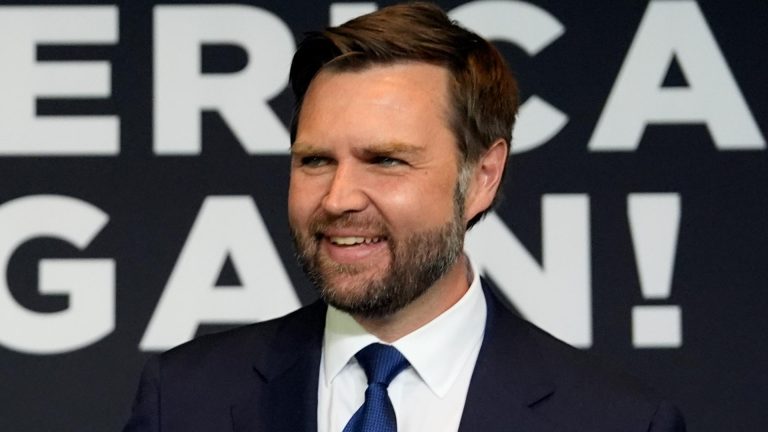
JD Vance, Donald Trump's running mate for the Nov 2024 US presidential election

What St. Paul had been to Jesus, JD Vance could be to Donald Trump: a linchpin to transform Trumpism into a governing ideology transcending even Trump’s presidency.

By Chudi Okoye

He went from childhood poverty and abuse, having a thrice-married mother menaced by drug addiction, to the US Marine Corps, Yale Law School, stints in legal practice and venture capital, and then election to the US Senate. He became a best-selling memoirist married to a Yale Law School alumna who worked for a prestigious Washington DC law firm, having clerked for a couple of conservative judges: Brett Kavanaugh, who would later be appointed to the US Supreme Court; and the current US chief justice, John Roberts.

He has cycled through several surnames – from his birth surname to his stepfather’s surname and then his grandparents’ surname. And in like manner, he went from an ardent ‘Never Trumper’, an implacable and highly vocal critic of the former president, to MAGA ideologue who has now been picked (and on July 17th accepted nomination) as Donald Trump’s running-mate for the November 2024 US presidential election.

The metamorphosis of JD Vance is nothing if not spectacular.

With a brainy and quietly impactful wife born to first-generation immigrant parents from Andhra Pradesh, the advance of Vance to VP nomination is a certain win for India, and it will be more remarkable still if the couple makes it to the White House, so soon after Rishi Sunak’s breakthrough as Britain’s first prime minister of Indian-Punjabi ancestry.

But it won’t be India alone that would gain unexpected presence in the White House with the accession of JD Vance and his Indian-American wife. Right-wing orthodoxy too would have found a firmer footing at the centre of power, its unstinting advocate there providing ideological coherence and policy evocation to Donald Trump’s inchoate and scatter-brained MAGA utterances.

Oftentimes, the selection of a running mate by a US presidential nominee isn’t followed by too much flutter outside the party circle. Even when, as is usually the case, a VP nominee is chosen for strategic reason – to capture some crucial voting blocs or swing states, promote party unity, or give Beltway street cred to a greenhorn president – the focus is always on the presidential candidate. More so for a big – if abrasive – personality like Trump. But in this case, there is something to be said for what JD Vance brings to the Republican Party ticket. There appears to be a changing zeitgeist in US politics – a worrisome one, mind – and Vance seems to be its avatar (in tow with Trump), tailor-made for the disruption that is likely to come.

A brief biblical reference may help make my case. Specifically, a New Testament allusion.

Saul (Paul) of Tarsus, who’d been a vicious persecutor of the emergent Jesus movement, would become – following his Damascene conversion – a major force in the propagation of Christianity. He indeed became the greatest Christian proselytizer, as some scholars and theologians argue, taking the faith far into the Gentile world where it blossomed but might never have reached had Christianity remained a Second Temple Jewish sect, as it was under Jesus himself and his initial disciples. Ditto, possibly, for MAGA.

Trump has certainly found his Paul in JD Vance. MAGA proselytizing will require a true convert, a fervent adherent like Vance who has drunk deeply of MAGA grievances and imbibed the movement’s ethos, after his earlier very loud disapprobation of the movement. But Vance, 39, brings much more to the table: youthful vim and intellectual vigor; a deep commitment to right-wing philosophical and policy orthodoxies; and a willingness to pound the pavement preaching the gospel of MAGA to wider congregations. Not unlike what Paul did for Jesus and the 1st century Christian movement (I don’t mean to liken Trump to Jesus, though some of his evangelical supporters have certainly done so, especially since his ‘miraculous’ escape of an assassination attempt).

Vance and the MAGA Gospel
Saul of Tarsus had his Damascene conversion; Vance of Ohio had his ‘MAGA-scene’ conversion. Jesus, as we know, inspired the Christian religion. But, beyond his brief teachings and his works as recorded in the Gospels and elsewhere, Jesus never wrote anything down or synthesized his teachings into a formal religious doctrine. It was Paul – a highly educated Pharisee and Roman citizen who’d received a formal and highly structured education, studying Jewish law and traditions under the prominent Jewish teacher Gamaliel (see Acts 22:3) – who incubated the “mustard seed” of Jesus’ teachings, laying the intellectual foundation for a new Christian religion different from ancestral Judaism. Paul provided the intellectual framework later, over centuries, developed by a succession of Christian philosophers and theologians.

The slogan, “Make America Great Again,” has long provenance in America politics. It was notably used by the Republican, Ronald Reagan, in his 1980 presidential campaign; and even by the Democrat, Bill Clinton, in 1991/92. Trump’s frequent claim to have originated the slogan is therefore unsubstantiated. But he has been, without question, a great popularizer of the potent slogan. Even so, Trump – a flighty, more reflexive than reflective, character – has never turned the ‘MAGA’ slogan into a political or even policy doctrine. It has been more a rousing – and merchandizing – slogan for his political campaign. Now, similar to what Paul did for the nascent Christian movement, with the choice of JD Vance as Trump’s running mate, MAGA might become intellectualized, woven into the fabric of extreme-right ideological and policy thinking to which Vance is much more cognitively connected than Trump.

Trump and Vance

Many leading American pundits have speculated on the reason Vance was chosen to be Trump’s running mate. Far be it from me, a Nigerian-American scribbler, to question their celebrated expertise. But it seems to me that some of them miss the obvious point: that Vance could vanquish the other contenders because he offered greater promise as an ideological linchpin, a means to turn MAGA into formalized Trumpism, an ideology and a governing doctrine for the Republican Party representing Trump’s ultimate capture of the party. Trump has already defeated the establishment elites in the Republican Party, planting his family members and acolytes in the party’s governing structures and winning the fealty of the party’s elected officials. See how the latter debase themselves swarming around Trump. But the one redoubt of the fading establishment was the intellectual disposition of the party. JD Vance represents the intellectual arrest – a ‘MAGAfication’, if you will – of traditional Republicanism, and simultaneously an intellectual extremification of Trumpism. Vance checked many boxes, such that he was likely at once strongly recommended and also independently favored by Trump.

Vance is an intersection point for several strands of the emerging Trumpist ideology. He likely aligns with the views of the conservative justices in the US Supreme Court, for two of whom his wife clerked, as I earlier noted. These justices, in their recent ruling on Trump v. United States, propounded a maximalist theory of presidential immunity which, I argued two weeks ago, suggests “a yearning for ‘Caesarism’ or ‘Bonapartism’, a leap from Locke to Hobbes.” Vance has previously invoked Carl Schmitt – the 20th century German jurist, political theorist, and prominent member of the Nazi Party who despised liberalism and offered an expansive vision of executive power – claiming that liberals are enthralled to him. But, as several commentators have observed, Vance’s “politics hardened as he prepared to run for elective office,” and the accusation he levels against liberals in relation to Schmitt is “pure projection.” If in fact Vance is a closet admirer of Schmitt’s, he’d be in the good company of another Trumpian acolyte, Michael Anton, who’s greatly influenced by a Schmitt contemporary, the conservative German-American scholar, Leo Strauss, who also rejected liberalism.

Vance has also been linked to the Heritage Foundation, the conservative think-thank affiliated with the Republican Party which produced the controversial Project 2025 document, a far-right governing agenda which it proposes for a second Trump term. Vance previously praised the document, and is in fact said to be friends with the foundation’s president, Kevin Roberts.

Vance is sometimes associated with ‘national conservatism’, a growing movement in parts of the West with a reactionary, anti-democratic and anti-egalitarian outlook which rejects the liberal notion of a teleological progression of history towards greater liberty, enlightenment and democracy. In some cases, advocates of this view exhibit alt-right and neo-fascist tendencies, and openly support a return to traditional forms of government, including even absolute monarchy. His dalliance with national conservatism notwithstanding, Vance – in part reflecting his own straitened background – also cultivates right-wing populist views focusing on the needs of the neglected White working class, families, communities, and the nation, and frowns on foreign military adventurism.

The upshot of this ideological portrait of JD Vance? An ambitious fellow who – though arguably “ideologically labile,” as the New York Times columnist, Michelle Goldberg, described him – is firmly entrenched on the right, perhaps far-right, of the spectrum. As the ‘young man’ voraciously explores ideological viewpoints and consolidates his own views, he’s perhaps the perfect pick to help define Trumpism as the ideological plank for a Republican Party now completely dominated by Donald Trump. On current form, that ideology is likely to be far further right of the mainstream instincts of the now defenestrated conservative elites.

It is a frightening proposition. Not least because it confronts a flailing and seemingly dispirited Democratic Party, riven and openly antagonizing its frail front-runner, Joe Biden, who seems to have little to offer in the face of a resurgent Republican Party except his much-touted governing record (a record tarnished by his enablement of Israel’s ongoing genocidal war on Gaza) and a laming promise to “finish the job.”

It is also frightening because of what it portends for the world. What becomes of liberal internationalism – the belief in international law, multilateralism, collective security, economic interdependence, human rights and democracy – if America retrenches and in fact tilts towards autocracy? Will this add impetus to the problem of democratic recession around the world, especially because Trump palls around with dictators and has expressed dictatorial ambitions?

A Trump victory in the coming US election should worry all of us. Jesus wisely chose Paul of Tarsus who set a small, proto-Christian, Jewish sect on the path to becoming a global behemoth. Trump has chosen JD Vance of Ohio as his running mate. Will this choice produce an illiberal dynamic that may propagate around the world?

Trump Shooting Shames America, After Showpiece Elections in Europe

0
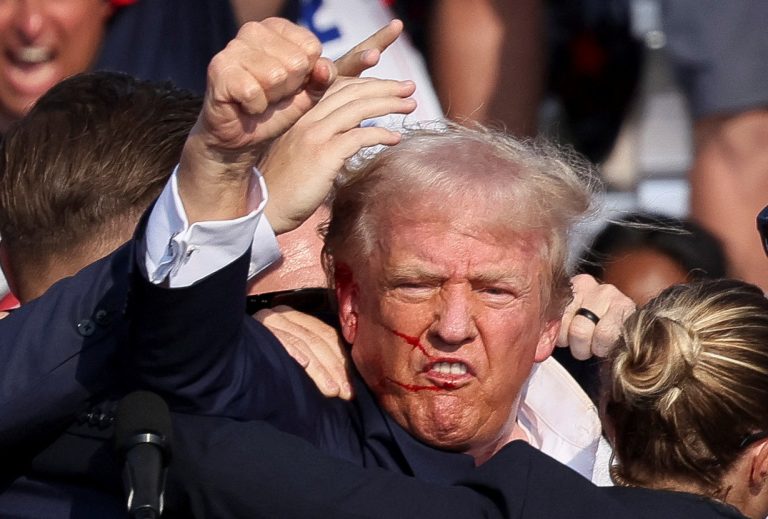
Donald Trump, fist raised in defiance, after the shooting incident (Reuters)

The blight of political violence, seen again in the alleged attempt on former president Donald Trump’s life, is a peculiar stain on America, which is arguably the world’s oldest constitutional democracy.

By Chudi Okoye

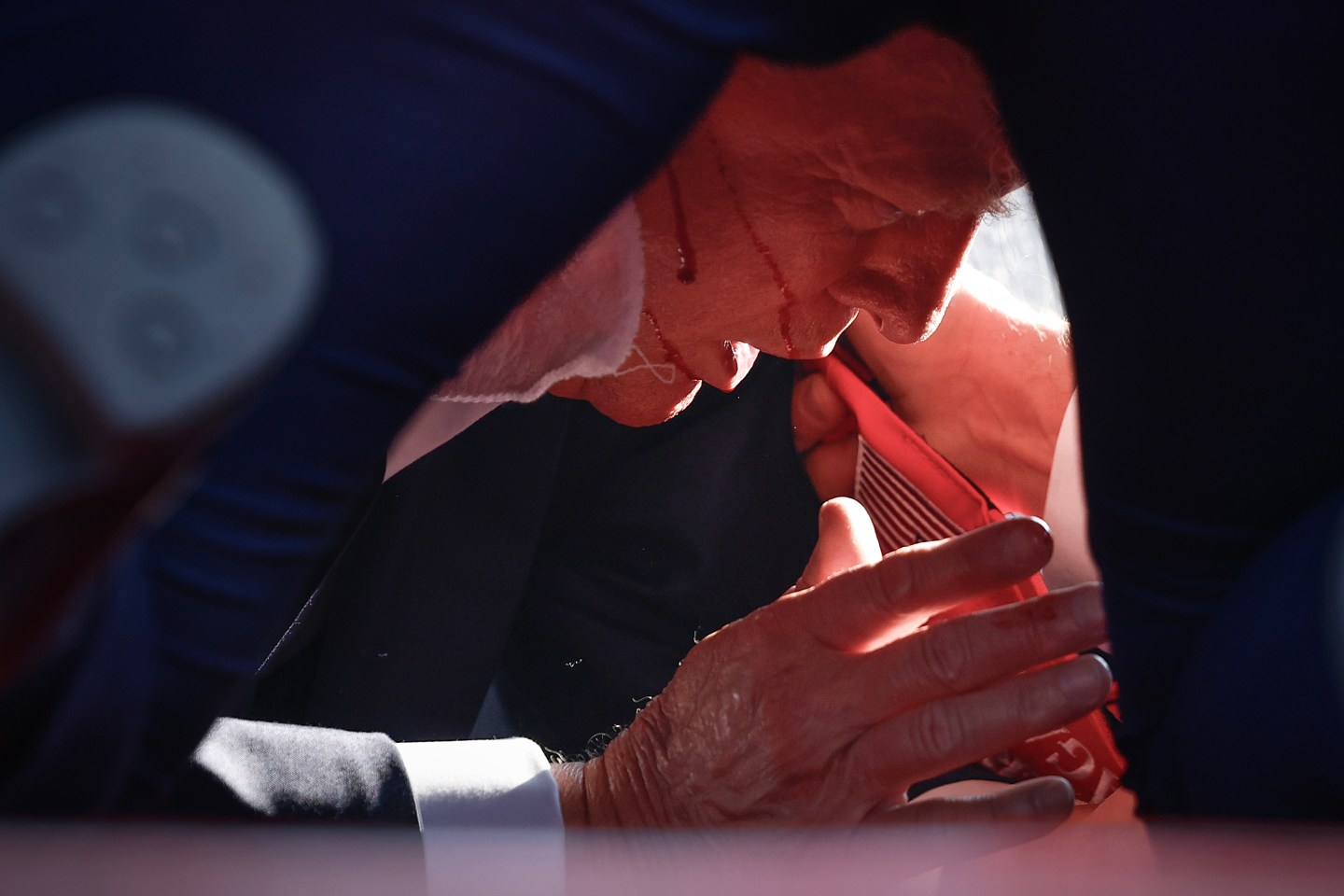
The crowd was screaming “USA! USA! USA!,” with Donald Trump pumping his clenched fist in the air, his face contorted and what looked like blood trickling down from his right ear, as he was hustled off stage by Secret Service agents. Moments earlier, the former US president and presumptive Republican Party nominee for the Nov. 2024 presidential election had been crouched on the podium, protected, after a shooting incident at his campaign pass in Pennsylvania which appeared to have been an attempt on his life. The sniper, said to be one Thomas Matthew Crooks, a 20-year old registered Republican (thus a member of Trump’s party), had fired from a rooftop about 426ft (130 m) from Trump’s podium, in clear sight of the assembled crowd, and had apparently winged the top of the ex-president’s ear. Ouch!

It was remarkable how the gunman could have gotten so close to the venue without detection. An obvious security failure, now supposedly being investigated. Nevertheless, the shooter was reportedly killed by Secret Service in crossfire, though unfortunately there was another fatality and some folks in the crowd were also injured.

A picture of this scene framed by Donald Trump as he departed, complete with a US flag fluttering in the background, was priceless tableau vivant for the upcoming election.

Bloodied but unbowed!

Shaken, but not stirred!

Trump wanted to project an image of defiance (kudos to the eternal showman for quick thinking), and he worked his crowd to do the same before being bundled off the podium. Instinctive or affected, that imagery and the incident from which it sprang are a stain on American democracy.

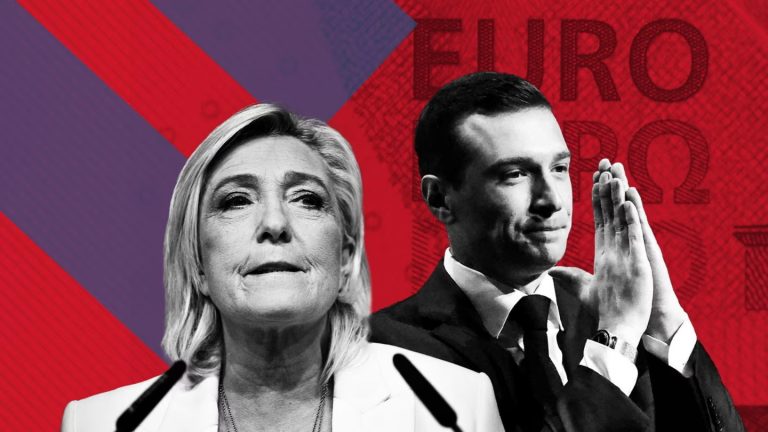
Why is it that America, after more than two centuries of democratic practice, remains a noisy, chaotic and violent political culture – much unlike Europe, and increasingly like Africa and other places where Western-style democracy is only a relatively recent implant? Both France and the United Kingdom just called and concluded, in a matter of weeks, national elections that saw major changes in government: a weakened ruling party in France and expected exit of the current prime minister, due to a changed legislative pecking order resulting from the election; a complete change of governing party in the UK, after its own election. Consequential outcomes; yet, there was no report of political violence in either country.

But in America, the pageant of democracy is rarely without a violent tangent. From raucous campaigns to disputed results and electoral litigations to violent insurrection to assassination attempts: it is all there in the democratic action movie that is America.

Scholars trace rising political violence in America to varied factors such as a mental health crisis overrunning the country, as well as unfettered access to, and resultant ubiquity of, firearms – due to 2nd Amendment fetishism and the powerful gun lobby. Debate rages on the weight of these factors. But there’s consensus that a leading cause is incendiary rhetoric reflecting deep ideological and political polarization in the country.

Deep Polarization
When Comte de Tracy, the Enlightenment philosopher and French aristocrat, coined the term ‘ideology’ in 1796, in the era of revolutionary France, he could not have known what would become of his baby barely two centuries later. What he’d conceived of as a ‘science of ideas’, the abstract preoccupation of ideologists, evolved over the years to encompass a set of beliefs, values and principles that guides an individual’s or a group’s understanding of the world. This was supposed to be differentiated from the irrational impulses of the mob or the particularistic interests of partisans. However, far from such lofty notions, the concept has become, in our time, a cudgel in the palms of political partisans and ideologues. It has become a divisive factor no less pernicious than primitive ethnicisms in Africa and elsewhere often condescendingly theorized by smug Western ethnographers.

There’s no greater illustration of this than what obtains in America.

American politics is uniquely animated by ideological antagonism. This is not necessarily because mainstream tendencies in the major political parties, Republican and Democratic, are vastly differentiated. No. There is in fact something of a loose consensus at the centre of American politics. Rather, it is because the main parties are coalitions of differing tendencies, with centrist impulses pulled to the extremes of right and left on the ideological spectrum. The political space is bursting with energy, and political survival often requires catering to different ideological interests, including the radical extreme on either side.

The pulse of politics is all the more quickened because in America ideology intersects in intricate ways with deep social currents pertaining to race and ethnicity, religion, gender, sexuality, disability and class. That is, in America ideology is deeply intersected with identity. The intersectionality of ideology with overlapping social identities tends to render American politics particularly toxic and volatile, more so when ‘wedge issues’ (i.e., controversial and divisive issues) are involved.

Political praxis based on ideology is supposed to be rational, focusing on ideas and principles, universal values and goals; and it ought to dwell on issues and policies that have universal appeal. Its practitioners are also supposed to be flexible, willing to compromise on policy issues to make progress, especially in light of new information.

But this is hardly the case when ideology intersects with identity. In that case, for the most part ideology becomes corrupted, conscripted in service of parochial interests. Ideological beliefs are shaped in this case not by universal principles but by group or personal experiences and identities such as race, gender, sexual orientation, etc. Politics becomes mainly focused on maximizing parochial interests. Policy issues may be framed at a superficial level through an ideological lens, but at a deeper level they serve narrow interests. For this reason, ideology soon loses its universalizing effect and becomes a source of enduring political cleavages. Ideology imbues social identities with an intellectual justification, validating parochialism in a way which makes compromise difficult or even impossible. Ideology becomes theology, an immovable structure of belief serving specific rather than universal interests.

The result is extreme polarization, seen in the increasingly divisive language employed by politicians; in unbridled partisan rhetoric which fosters what theorists call ‘affective polarization’, referring to in-group positive feelings and sentiments as against intense out-group animosity. We see it too in political practice, in actual legislation and public policy – in the “allocation of values,” to leverage David Easton – which caters to particularistic interests, creating deep wells of discontent in the polity.

This, sadly, is the story of America, a supposedly enlightened democracy gradually succumbing to cultural degeneration. And Trump, a purveyor of divisive politics, has added greatly to this phenomenon.

Trump crouching for safety, after the shooting

Trump’s Political Persona
We should all be glad that Donald Trump survived the alleged attack on his life. But I hope it won’t sound too harsh in this febrile moment for me to say – invoking the metaphor of chickens coming home to roost – that the man had it coming. He has played a not insignificant part in the debasing and vulgarization of American politics. And what happened to him in the pastureland of Pennsylvania was a direct result of it.

His political persona, at once cartoonish and calculating, undermines America. His demagoguery and uncouth language infects and inflects the dynamics of politics. He makes vile and incendiary comments, targeting everybody high and low, from political opponents to ordinary citizens. Trump has to be among the world’s most foul-mouthed politicians, seemingly with no filter as he spews his stream of consciousness on social media or whilst out on the hustings. Most importantly, his policy pursuits, packaged for him by far-right ideologues using him to achieve their grand agenda of halting progressive change, bode ill for America.

I know this might sound jarring, especially with pundits and politicos at this moment crouching under the numbing weight of political correctness. I have read some of the bland editorials in mainstream newspapers. What I say here might sound somewhat impolitic, and maybe even brazen coming from a mere naturalized citizen translocated from previous nestlings in Europe and Africa. But, being here, I have a stake in what America makes of itself.

We should not allow this moment to turn into a political martyrization of Donald Trump. The man, being a ceaseless self-promoter, will want to make that happen. And it’s not just him. Trump boosterism syndrome, rabid in his circle before now, will hence likely swell way beyond his base. We should not let that happen. Pennsylvania was not Trump’s Damascus. Trump will be Trump, and he’ll maximize to the hilt any boost he secures from this incident, without in the slightest changing his political stripes.

Trump’s political opponents should allow space for a traumatized nation to recover. But they should not tarry too long in taking on the spectacular menace to American democracy that is Donald J. Trump.

FOSAD commends Supreme Court judgment on financial autonomy for Local Government Areas

0

…Says ruling will stimulate grassroots development

The Forum of South-East Academic Doctors (FOSAD) enthusiastically commends the recent Supreme Court judgment granting financial autonomy to Local Government Areas (LGAs) in Nigeria. This landmark decision is a pivotal step toward stimulating grassroots development and enhancing democratic governance at the local level.

The Supreme Court’s ruling is poised to empower LGAs with greater control over their finances, enabling them to address and implement development projects tailored to the specific needs of their communities. Financial independence is crucial for the efficient delivery of essential public services such as healthcare, education, infrastructure, and social welfare programs, which significantly impact the daily lives of citizens.

For too long, LGAs have been hindered by a lack of financial independence, leading to delayed projects and inadequate public services. The centralization of funds has stifled local innovation and responsiveness, often resulting in the misallocation of resources. By granting financial autonomy, the Supreme Court’s judgment addresses these issues, paving the way for more accountable and transparent governance at the grassroots level.

This decision aligns with the principles of federalism enshrined in the Nigerian Constitution. It reaffirms the importance of LGAs as the third tier of government, essential for fostering development and improving the quality of life for all Nigerians. The LGAs should not rely solely on federal allocation but rather leverage on it create other viable sources of revenue generation.

FOSAD calls on all stakeholders, including state and federal governments, to respect and implement the Supreme Court’s ruling in both letter and spirit. Proper implementation of financial autonomy for LGAs will lead to significant socio-economic transformation, reduce poverty, and create more opportunities for sustainable development at the grassroots level.

To strengthen the effective implementation and enforcement of the Supreme Court ruling, FOSAD calls for the speedy amendment of the laws guiding local government elections. To this end, we recommend that the constitution be amended to transfer the conduct of local government elections to INEC. This will ensure that proper elections are conducted as most state electoral commissions cannot handle the new dimensions of the Supreme Court ruling

FOSAD hereby lauds the Supreme Court for its progressive stance and urges local government officials to leverage this autonomy to drive meaningful change and development in their respective areas. This ruling marks a new dawn for local governance in Nigeria, promising a brighter and more prosperous future for all communities.

Signed
Dr Stephen Nwala
President,
Forum of South-East Academic Doctors (FOSAD)

Dr Uzor Ngoladi
Secretary General
Forum of South-East Academic Doctors (FOSAD)

French Election, Age Anxiety in the US, and Lessons for Nigeria

0
National Rally's Marine Le Pen and Jordan Bardella

Mainstream partisan maneuvers that saved France from far-right insurgence, and persistent interrogation of President Joe Biden’s age in America, offer plenty of lessons for Nigeria’s opposition parties and the electorate at large.

By Chudi Okoye

If Nigeria’s opposition parties were to prove they are not adrift but politically adroit, they’d be taking a lesson from what just unfolded in France; they’d also be calibrating what’s currently manifesting in America. In France, sheer pragmatism halted, for now at least, the electoral advance of far-right extremism; and in America, increasing anxiety about political dotage may yet unscramble the upcoming presidential election. There are lessons in both for Nigeria, if the country is willing to learn.

Let’s start with France. As we know, that country (along with others in Europe and elsewhere) has seen a steady pitch of its politics towards what some generously describe as far-right ‘populism’ and ‘nationalism’, but which in reality is simply politics of xenophobia. This trend is typified, if anything does, by the unrelenting political surge of the far-right populist and nationalist party, National Rally (Rassemblement National in French).

You might wonder what’s wrong with a ‘populist’ or ‘nationalist’ ideology, especially since we have had no trouble ascribing those epithets to political parties in Nigerian history. Dr. Nnamdi Azikiwe’s National Convention of Nigerian Citizens (NCNC) was lauded as a nationalist party. Rabiu Kwankwaso’s New Nigeria People’s Party (NNPP) is often described as populist, as was his late mentor Mallam Aminu Kano’s Peoples Redemption Party (PRP). Some other Nigerian parties have also attracted such tags.

Populism, as an ideational construct, seeks to elevate ‘the people’ as a moral force, often contrasted with corrupt and self-seeking ‘elites’. Nationalism, especially in its ‘political’ and ‘civic’ manifestation, espouses the ideology of freedom, rights and national self-determination. So, in principle, there’s nothing wrong with either populism or nationalism. Except when they become too narrowly constructed. The ‘people’ in populism becomes racially or ethnically delineated, for instance; and nationalism becomes, say, nativist, appropriating the national identity for an exclusive population subset.

And that brings us to France’s National Rally. The party was founded as the National Front in 1972 by two politically controversial figures: Jean-Marie Le Pen, a far-right politician at various times convicted of racism, racial incitement, and specifically Holocaust denialism; and Pierre Bousquet, also a far-right politician who was in the Waffen-SS, a Nazi combat force. National Rally, as the party is now called (as part of an attempt at mainstream makeover) stridently opposes immigration, and has been accused of xenophobia, Islamophobia and anti-semitism. It also promotes economic protectionism and zero tolerance for breaches of law and order.

For much of its history, the party, rather noisy and notorious, nestled in the fringes of French politics. It had very few seats in the French national assembly until 2017, often none at all or just one or two – except for a fluke in 1986 when it picked up 35 of the assembly’s then 573 seats, all but one of which it promptly lost in the legislative election held two years later. It did slightly better in the French regional councils, but not by much; was unimpressive in France’s European Parliament elections; and has lost in every French presidential election it contested.

The National Rally’s problem had been its close identification with the extremist politics of its founder, Le Pen. However, after his daughter, Marine, took over leadership of the party in 2011 and started to reposition and rebrand it (including the change of name), the party began to see some improvements in its fortunes. Following another leadership change in 2022 (to a then 27 year old Jordan Bardella), the party’s fortune has changed dramatically, even though its core populist and nationalist platform remains. It picked up 89 of 577 national assembly seats in the 2022 election, up from just eight. It secured 41.4% of votes in the 2022 presidential election, up from 33.9% in 2017, 17.7% in 2002, and negligible results at other times. It even began to register more noticeably on the Richter scale of European Parliament elections.

This year, in the June 9th French European Parliament election, National Rally won by a landslide, picking up 30 of 81 seats, against just 13 by its nearest competitor. Rattled by the party’s surge, the French president, Emmanuel Macron, whose coalition had lost 10 of its 23 European Parliament seats, called a snap national election for June 30th. In the first round of balloting, National Rally outperformed all the other parties. With the result, it appeared that the party was on a path finally to the centre of French government, set to burst through the so-called cordon sanitaire, the strategic firewall that France’s centrist and leftist parties had maintained for decades to prevent far-right political ascendance. With a plurality of seats in the national assembly, the party’s leader could have become prime minister (second only to the president), who heads the government – overseeing senior and junior ministers – and has at his disposal the armed forces, the civil service and government agencies.

It was, for the mainstream parties and the French establishment, a scary prospect. And this was where pragmatism and political gamesmanship kicked in – the reason I’m recounting this history.

Petrified by the prospect of a far-right takeover, centrist and left-wing parties closed ranks, in an elaborate, though not entirely fireproof, political concert, determined to change outcomes in the second round of balloting. They conspired to endorse each other’s candidates or persuade less promising candidates in their ranks to stand down in the broader interest of the nation, thus consolidating votes to defeat far-right contenders in various constituencies.

It worked. As the final votes were tallied up, it emerged that the National Rally had suffered a setback. It secured, in combination with its far-right alliance partner, a total of 142 seats across the two rounds of voting. This placed it 3rd after the overall winner, the left-wing party, New Popular Front, which garnered 180 seats and was followed by Macron’s coalition, Ensemble, with 159 seats.

It was a triumph of political collaboration, though it’s unclear if the concert will hold. The underlying anxieties in French politics remain which had made the far-right’s extremist rhetoric and policy agenda alluring. But for now, there is some relief that the ‘blue scare’ had been beaten back a bit.

Le Pen and Bardella’s party, National Rally, suffered a setback

Plenty of lesson for Nigeria’s opposition parties which, as I have argued many times before, lost the 2023 presidential election in large part because they splintered their votes, with the exit of Peter Obi and Rabiu Kwankwaso from the main opposition party, Peoples Democratic Party (PDP). Because of their ill-advised defections, whatever engendered such, Nigeria is today ruled by a corrupt, clueless and fiscally incontinent dotard running a minority government of total misfits. How different it might have been had the leading opposition candidates thought to subordinate the ambitions to the national interest, as the French have just done.

It’s even more depressing because, well over a year now since the election, there’s no sign the opposition has been chastened. In 2013, after losing in several election cycles to the then ruling party, PDP, a number of the main opposition parties joined together to form the All Progressives Congress (APC) which was then able to wrest power from the PDP by the very next election, in 2015. A little over two years to the next presidential election, there’s no sign – in public anyway – of political gravitation among the opposition parties. With the opposition seemingly continuing to flail and to fumble, there’s a chance that the dotard in Aso Rock will be re-elected in 2027, even if he becomes vegetative like his predecessor. After all, Aso Rock is now effectively a retirement home for our presidents.

Speaking of dotage, consider the continuing commotion in the US Democratic Party over its presumptive presidential nominee, Joe Biden’s disenchanting debate performance two weeks ago. That worrisome outing has put the octogenarian’s age and mental state front and center in American politics. Despite the president’s protestations about his fitness and insistence on his presumptive mandate, he has received full-throated support from a dwindling number in his party, with some publicly and reportedly many in private asking him to step aside and yield to a younger alternative.

Consider how this matter continues to roil America, despite the fact that Biden is carrying out his presidential role with – his close associates say – vouchable vigor.

Contrast this with Nigeria’s eight years of presidential debility under Buhari, with the country picking up a huge tab for his medical care, including his frequent medical trips abroad. Yet, despite that harrowing experience, we have now another presidential dotard and hypochondriac who may well inflict himself on the country for a second term, after a listless first tenure, because the nation isn’t sufficiently outraged, and the opposition isn’t strategically mobilized.

Nigeria is a young country – historically and demographically speaking. But it is a country whose edifice is creaking like the rickety bones of those it has been cursed to have lately as leaders.

With Elections, Few Countries Bring It Like Britain!

0
Starmer and his wife entering 10 Downing Str; Sunak and hi wife leaving

Britain does it again, delivering a fast, efficient and consequential election, without any controversy.

By Chudi Okoye

Surprising most everyone including vast members of his own party, even its inner cast, on May 22, 2024 – several months before he absolutely had to – he called a snap general election. To kick off the electioneering process, about a week later on May 30th, he dissolved parliament. With this, the country was thrown into an election mode, though in every hood the mood was sombre and slightly tentative, for his seemingly hasty – though some say gutsy – move.

The election was held five weeks later on July 4th, exactly as scheduled. Polling opened promptly at 7am that day and closed at 10pm. It was followed instantly by the exit poll, announced by the media. Not long after, actual results began to come in from the constituencies, with the first seat declared at 11:15pm, an hour and fifteen minutes after polling had closed. It wasn’t long before the rest of the results began rolling in, so rapidly in fact that by 5am the next morning, barely 24 hours after polling had opened and seven after it closed, it was known which political party had won the majority of votes, which thus would form the next government, and who therefore would be the next British prime minister.

Unsurprisingly, because the polls had previously predicted it, the election had not gone all that well for his Conservative Party. In fact, the party suffered a huge loss, a rout really, shedding 252 of its 373 parliamentary seats. No less than 12 cabinet-level ministers lost their seats. Even a former Conservative prime minister, Liz Truss, who’d held a safe seat in a Conservative bastion with a huge 24,180 majority, saw herself tossed out in the tsunami. It was a historic loss for the party, its worst result since becoming an organized political party in the early 19th century.

Nonetheless, though humiliated and heavy-laden, though wearied by the historic significance of the loss to which he had led his party, in a mere matter of hours Mr. Rishi Sunak – a sharp 44-year old who became the first ever British-Asian prime minister of the United Kingdom – had announced his resignation, after only 20 months on the job. By midday, just hours after it became clear that his party had been shellacked, he had made it over to Buckingham Palace, per tradition, to inform the British monarch that he was resigning as the First Minister of His Majesty’s Government. The meeting lasted mere minutes. And then, through the imaginary revolving door shortly after, came Keir Starmer (an alumnus of my old university at Leeds), who had just led his lorn party, Labour, to a landslide victory. He was there, again per tradition, to be formally asked by the monarch to form a new government.

Sir Keir and his party had pulled off a stunning victory: after 14 years in the wilderness, through a run of five Tory prime ministers, Labour was set to form a new government with a comfortable majority of 174 seats, the largest since the Blair revolution in 1997.

Long before the dizzying day came to a close, Sir Keir, the new prime minister, had appointed the full complement of his cabinet, with the world watching in real time as each of the new ministers came through the door of 10 Downing Street, the official residence and office of the British prime minister. By the next day, July 6th, being a Saturday – just two days after the election and a day after he assumed office, the new prime minister had convened his first cabinet meeting and had got down to the business of governing.

How’s that for British efficiency!

Oh, I’m sure you’ve heard about the ruthless, almost indecorous speed by which an outgoing British prime minister is ejected from 10 Downing Street. The BBC helpfully reports what transpired this time:

“Out with the old, in with the new. Nothing represents the rapid, ruthless business of politics like removal vans at Downing Street. Moving a new prime minister – staff, family, pets and paraphernalia – into 10 Downing Street is a complex feat. [This time} it happen[ed] in a day. Former Prime Minister Rishi Sunak vacated 10 Downing Street on Friday after Labour won a landslide victory in the general election. Shortly after, new PM Sir Keir Starmer and wife Victoria Starmer arrived at No 10.”

In the United States, presidential transition lasts well over two months, between election in early November and inauguration on January 20th. In Nigeria, it takes longer than that. As we saw in the last cycle, election was held on February 25, 2023, with the new president – amid a din of controversy – sworn in on May 29th. And it wasn’t until about the end of July before the new president submitted his ministerial list for Senate approval.

Back to the UK! Notice, if you will, that in all the ruthless efficiency of the process, though the election this year shattered or suspended the careers of many talented politicians and some so-called ‘big beasts’ of contemporary British politics, there were no evident recriminations. No controversies or disputes about the election results. No court cases that I am aware of. There was no reported violence. Nobody was molested or killed.

Yes, Britain has been doing this for a while now, and so it has muscle memory. But it’s by no means the world’s oldest democracy. The country just became quite good at election management. That’s partly why, though outperformed by the Nordics and some other countries, it is considered a ‘full democracy’ in The Economist’s 2023 Democracy Index (ranked 18th in the world), whereas an older democracy like the United States is estimated a ‘flawed democracy’ (ranked 29th). Don’t even get me started on Nigeria which – I think too generously – is considered a ‘hybrid regime’ (ranked 104th).

British elections are all the more impressive because they aren’t too heavily monetized. We will have to wait for reporting on the final cost, but if past election expenditures are anything to go by, the ballot that was just concluded in Britain, which involved the election of 650 members of parliament, would have cost the Treasury something in the neighborhood of £140 million.

Compare this to the ₦355 billion – or, going by the exchange rate at the time, $768.4 million (£664.6 million) – budgeted for Nigeria’s Independent National Electoral Commission (INEC) to conduct the 2O23 general election, which involved electing the president and his vice, and a fraction of the 469 members of the National Assembly. It’s not even close.

The UK is ranked 6th in the world by GDP while Nigeria, which has only 7.2% the UK’s GDP and is ranked 53rd, spends nearly five times as much as Britain to elect its national leadership. It costs far more to elect our politicians than it does in the UK, and our lot are far better compensated, though they end up doing far less than their UK counterparts in terms of actual work. The economists’ efficiency wage theory totally collapses on contact with the Nigerian political system.

Yes, Britain’s historical atrocities – enslaving other peoples, plundering foreign lands, conniving to keep awful regimes in power, originally creating the conundrum in the Middle East and now supporting Israel’s genocidal war on Gaza – are inexcusable and unforgivable.

But when it comes to gearing up to deliver an election, few countries bring it like Britain!

We will now wait to see how well Labour will govern, knowing how brittle the British electorate can be.