28 C
Awka
Tuesday, April 7, 2026

Trumpet With Certain Sound

Home Blog Page 4

In the Historic Contest of Early Christianities, Did Gnosticism Lose Unjustly?

0

To grow and consolidate, the early Christian Church vehemently suppressed any deviations from proto-orthodox theology, with Gnosticism a prime target. Despite centuries of imposed obscurity, however, Gnostic thought still resonates and, if nurtured, may yet find fertile ground for revival in Africa.

By Chudi Okoye

They were derided as heretics, branded as corrupters of the faith, and systematically suppressed by the politically entrenched proto-orthodox Church. To the leaders of the nascent Christian movement grappling with dissent and sectarian conflicts, the Gnostics represented a particularly dangerous threat. They offered a fundamentally different vision of Christianity—one that promised salvation through personal knowledge (gnosis) and spiritual enlightenment, rather than divine grace mediated by ecclesiastical authority. This challenge to orthodoxy invited a relentless persecution of the Gnostics. Their vibrant communities—once flourishing circles of spiritual inquiry—were driven underground; their charismatic leaders exiled; their sacred texts hunted down and destroyed in systematic purges designed to erase their legacy. Amid the tide of oppression, many fled to far-flung corners of the Egyptian deserts or further afield, seeking refuge in hidden enclaves beyond the Church’s reach, desperately clinging to the remnants of their esoteric traditions.

The suppression of Gnosticism transcended mere theological rivalry; it was a calculated and ruthless campaign. Early Christians, themselves once persecuted within the Roman Empire, gained imperial favor under Constantine’s Edict of Milan in 313 AD, which granted them freedom of worship. By 380 AD, Emperor Theodosius I’s Edict of Thessalonica established Christianity as the state religion, transforming the Church into a formidable political force. Empowered by imperial sanction, proto-orthodox leaders convened ecumenical councils, such as the one in Nicaea in 325 AD, to consolidate their authority. Carefully crafted creeds were employed to define “correct” belief, while dissenting voices—particularly the Gnostics—were silenced. Edicts urged the faithful to reject Gnostic teachings and burn their scriptures. Writings by influential Church Fathers like Irenaeus of Lyon and Tertullian refuted and mercilessly mocked Gnostic doctrines, cementing the image of Gnosticism as a perilous deviation from the true faith.

For centuries, the victors in this formative theological battle depicted the Gnostics as deviant mystics whose doctrines threatened the unity of the Church. Even respected thinkers like Valentinus—once a candidate for the bishopric of Rome—were recast as corrupters of the faith. With the relentless attack, Gnostic voices gradually faded into obscurity, their profound contributions buried beneath layers of doctrinal intolerance. The scattered remnants of Gnostic thought survived only in fragments, rediscovered centuries later in texts like the Nag Hammadi library—ancient manuscripts unearthed in 1945 from the sands of Egypt. This remarkable discovery included works such as the Gospel of Thomas, a compilation of enigmatic sayings attributed to Jesus; the Apocryphon of John, a vivid cosmological vision; and the Gospel of Philip, which challenges conventional interpretations of Christian sacraments—all whispering the echoes of a suppressed spiritual heritage.

As victors in this theological war, proto-orthodox leaders shaped the narrative of Christian history. Yet, as we contemplate the complexities of the Christian faith, perhaps it is time for a mature re-evaluation of those long-suppressed doctrines, contrasting them with the claims of vested orthodoxy. What invaluable truths might lie within these marginalized teachings? As the Apostle Paul reflects in 1 Corinthians 13:11: “When I was a child, I spoke as a child, I understood as a child, I thought as a child; but when I became a man, I put away childish things.” Is it not time we approached these forbidden ideas with grown-up curiosity? This is the journey I undertake in this essay.

This essay builds on my recent Awka Times piece, which examined the suppression of African religions by European colonialism and explored the potential revival of indigenous African spirituality, given its resonance with quantum entanglement. This historical pattern mirrors the suppression of Gnostic thought by the early Church, both traditions offering profound insights marginalized by dominant power structures. In this essay, I similarly explore the potential rehabilitation of Gnostic theology, arguing that its striking parallels with modern science—particularly in quantum mechanics, cosmology, and neuroscience—merit serious reconsideration. Furthermore, I propose that the African religious landscape, with its vibrant interplay of indigenous spirituality and Christianity, offers a more promising path for a Gnostic revival than the rigid institutions of the Western Church and Eastern Orthodoxy.

Gnostic Origins and Theological Departures

The term “Gnosticism” was first coined in the 17th century by Henry More, an English philosopher of the Cambridge Platonist school. It comes from the Greek adjective “gnostikos,” deriving from ancient texts, which means “learned” or “intellectual”. Gnosticism, one of the most enigmatic strands of early Christian thought, emerged during the formative centuries of the Common Era. Although the precise origins of Gnosticism are still debated, scholars agree that it was not a unified movement but a constellation of diverse sects. These groups shared a common emphasis on esoteric knowledge (gnosis) as the key to liberation from the material world’s corruption and a return to the realm of divine fullness (pleroma). Gnostics emphasized the ineffability of the Supreme God, thus echoing Platonic and Neoplatonic thought.

The Gnostic worldview was deeply syncretic, drawing on various cultural and philosophical influences. Greek philosophy, particularly Platonism, provided the foundation for Gnostic dualism between spirit and matter. Gnostics radicalized Platonic ideas, portraying the material world not merely as a shadow of an ideal realm, as in Plato’s Theory of Forms, but as a ‘prison’ created by a malevolent demiurge (creator god) named ‘Yaldabaoth’. In some Gnostic traditions, this deity is identified with the sometimes vengeful Old Testament God, Yahweh. Additionally, Gnostic thought absorbed aspects of Jewish mysticism and apocalypticism, reinterpreting Old Testament narratives, including the rebranding of Yahweh that subverted traditional Jewish theology. Eastern traditions, particularly Zoroastrianism, significantly influenced Gnostic cosmology as well, contributing ideas such as the dualistic struggle between light and darkness and the existence of a transcendent, benevolent God distinct and distant from the material realm.

Within this tapestry of influences, distinct strands of Gnostic thought emerged, including groups such as Valentinians, Sethians, and Manichaeans. Each sect integrated different influences, yet they all shared a core commitment to the saving power of gnosis. This was a key differentiating feature of Gnostic theology.

The divergence between Gnosticism and proto-orthodox Christianity was rooted in theological and philosophical disagreements. Proto-orthodox Christianity affirmed the intrinsic goodness of creation, grounding this belief in the Genesis proclamation that God saw all things He had made as “very good” (Gen 1:31). Gnostics, however, viewed the material world as inherently flawed, created and superintended by an imperfect demiurge.

Salvation was another point of contention. Proto-orthodox Christians believed salvation was achieved through faith in Christ’s sacrificial death and resurrection, mediated by the Church’s sacraments and teachings. Gnostics rejected the doctrine of sacrificial atonement, denying the redemptive death, Incarnation and resurrection of Christ. Instead, they emphasized the need for individual enlightenment as the path to self-salvation, seeing Christ not as “Savior” but as a divine emissary imparting secret knowledge to awaken humanity’s true spiritual nature.

This esoteric approach to salvation often clashed with the exoteric perspective of the proto-orthodox Church which emphasized communal worship and doctrinal uniformity. For Gnostics, the soul’s journey was deeply personal, guided by mystical insight rather than adherence to creeds. This stance undermined the proto-orthodox Church’s authority, which depended on its role as the custodian of revealed truth.

Gnostics diverged sharply from proto-orthodox teachings on ethics. Their practices varied widely, with some groups embracing asceticism to transcend the material world, while others adopted libertinism, believing that physical acts held no moral consequence. These extremes often scandalized proto-orthodox leaders, who emphasized adherence to strict moral principles.

The ethical divide underscores a deeper theological schism, particularly evident in their differing approaches to the ‘Problem of Evil’. As I argued in a recent essay, this is a persistent conundrum for established theology. It is a particularly knotty problem for monotheistic religions that posit the reality of a single, omniscient, omnipotent, and omnibenevolent God. In polytheistic traditions, where pantheons include gods who are benevolent, malevolent, or morally ambiguous, the presence of evil is neither unexpected nor anomalous; rather, it reflects the interplay of diverse divine wills. In pantheism, evil is reinterpreted as merely one facet of an impersonal cosmic order, a byproduct of natural processes projecting neither praise nor moral blame. Meanwhile, in panentheism—where the divine both pervades and transcends the world—evil is seen not as divine intent but as an inherent limitation of creation, though this raises the question of why an all-encompassing deity would permit such a limitation.

If the problem of evil is only passingly probed or poorly probematized in panentheism, it becomes a true theoretical quagmire in monotheism: Why does suffering exist in a world supposedly created by a benevolent God? If God is all-powerful, all-knowing, and all-good, why does evil exist? (An obverse ‘Problem of Good’ critique might be invoked against Gnosticism, demanding explanation for the pervasive evidence of good—and indeed the very perception of a ‘Problem of Evil’—in a world supposedly created by a malevolent demiurge. But this objection is untenable, as Gnosticism does not posit a convergence of omnipotence and omnimalevolence; rather, it holds to the benevolence of the Supreme God, whose imprint is evident even in the ambiguous origin of the demiurge and the paradoxical nature of the world it supposedly created.) The treatment of the ‘Problem of Evil’ in the competing theologies of orthodox Christianity and Gnosticism reveals a striking crosstab: each assigns responsibility for the corruption of creation to one entity while paradoxically entrusting another with its correction.

Orthodox Christianity staunchly defends God’s goodness through free-will and soul-making theodicies (defenses of God despite evil) and attributes the existence of evil to human sin and disobedience. Yet, it places the responsibility for redemption squarely on God, arguing that salvation is not achieved through human effort but through divine grace (Ephesians 2:8-9). In this schema, Christ’s death is presented as the ultimate atonement for human sin, a divine intervention to repair the corruption wrought by humanity.

In contrast, the Gnostics attributed the corruption of the material world to the demiurge, a flawed creator god. Yet they saw the potential for redemption embedded within creation itself. The divine spark—fragments of the ineffable Supreme God—was scattered throughout the material universe, particularly in human souls. Gnosticism thus placed the responsibility for salvation on individuals, requiring them to awaken their innate divinity through gnosis (esoteric knowledge) or the guidance of a revealer figure like Christ. For Gnostics, salvation was not an external gift of grace but an internal process of enlightenment. This vision, in which corruption and correction were intertwined and redemption arose organically from the flawed material world, represented a profound inversion of orthodox theology.

Interestingly, Gnostic ideas seem to have influenced some early Christian thinkers. Origen, for instance, proposed that souls existed before embodiment and would ultimately reunite with God, reflecting Gnostic views of spiritual precedence over material existence and hopes for spiritual redemption. Augustine, once a Manichaean, retained concerns about sin and the soul’s material entrapment. Even the pro-orthodox Cappadocian Fathers—a 4th-century trio from modern-day Turkey—occasionally expressed views of the material world and divine transcendence subtly aligned with Gnostic sensibilities.

The partial adoption of Gnostic perspectives by some Church Fathers underscores the complexity of early Christian theological debates. Gnostics, far from mere heretics, were theological provocateurs challenging orthodoxy to refine its doctrines. Their rejection catalyzed the development of core beliefs, while traces of their thought persisted in the very tradition that sought to silence them.

If Gnostic influence can be discerned in orthodox theology, even stronger parallels emerge between Gnostic thought and modern scientific and philosophical paradigms, as I show below, underscoring its enduring relevance.

Scientific and Philosophical Echoes

The intellectual contours of Gnosticism find remarkable echoes in modern science and philosophy, as if ancient metaphysical intuitions anticipated contemporary insights. From the paradoxical mysteries of quantum mechanics to the cosmic narratives of impermanence and entropy, the Gnostic worldview deeply resonates with our evolving understanding of reality.

Quantum Mechanics: At the core of quantum mechanics is the tension between the predictable outcomes of classical physics and the inherent randomness of quantum behavior. Particles can exist in multiple states (in ‘superposition’) until observed, echoing the Gnostic notion that true reality remains hidden behind the physical world until revealed through spiritual knowledge. Quantum entanglement, where particles remain connected over vast distances, mirrors the Gnostic vision of a reality intricately linked by forces beyond the material world. Even quantum duality—where objects act as waves (spread-out oscillations) and particles (localized entities)—mirrors the Gnostic dualism of spiritual versus material realms. In addition, the ‘observer effect’ in quantum mechanics, where the act of observing a particle changes its state or behavior, aligns with Gnostic beliefs that esoteric knowledge can reveal the deeper essence of reality beyond its material façade.

Cosmology: Modern cosmology’s study of the structure and fate of the universe mirrors Gnostic ideas about the cosmos. The scientific view of an indifferent universe destined for entropy (disorder) parallels the Gnostic belief in a flawed demiurge responsible for our broken world. Our Sun will eventually expand into its Red Giant phase, incinerating the inner planets, including the Earth. This highlights the fragility of existence—a key Gnostic theme. Cosmological theories like the ‘Big Rip,’ where the universe’s expansion tears galaxies apart, or ‘heat death,’ where the universe cools down to maximum entropy and becomes devoid of usable energy, highlight the transience of material existence—a central Gnostic idea. Even the ‘Big Crunch,’ which envisions a universe eventually collapsing into nothing, resonates with the Gnostic belief in impermanence. Moreover, concepts like ‘dark matter’ and ‘dark energy,’ mysterious forces shaping the cosmos, echo the Gnostic idea of hidden dimensions beyond human perception.

Neuroscience: Recent neuroscience findings suggest that consciousness might be more than just brain activity, possibly a fundamental aspect of the universe. This aligns with Gnostic beliefs in a higher reality beyond the physical world. Studies on meditation, near-death experiences, and psychedelics (mind-altering drugs) reveal deeper states of awareness that transcend the body and ego, suggesting that consciousness can exist independently of the brain. These discoveries challenge our understanding of reality and echo the Gnostic quest for spiritual transcendence and union with the divine.

Metaphysics: Carl Jung’s psychological theories and David Bohm’s philosophy of physics show striking parallels with Gnostic thought. Jung believed that universal symbols and innate patterns of thought, which he called archetypes, are shared across all human minds and drive our behavior. This concept aligns with the Gnostic idea that a divine spark lies within all humans, hidden beneath the surface of material existence. Similarly, Bohm’s idea of an ‘implicate order’ suggests a deeper, interconnected reality behind our ‘explicate’ physical world, echoing the Gnostic view that the material world is just a layer over a higher spiritual truth. Both Jung and Bohm, along with other traditions like existentialism and Eastern metaphysics, offer new insights into reality that reflect the Gnostic quest for spiritual awakening and transcendence.

The parallels between Gnosticism and modern thought, depicted above, suggest the possibility of Gnostic revival after centuries of obscurity. Indeed, neo-Gnostic movements are already emerging, driven by the rediscovery of texts like the Nag Hammadi library. The next section will examine how African spirituality and Christian traditions intersect with Gnosticism, offering fertile ground for Gnostic revival.

Africa and Gnostic Revival

At first sight, a correlation of African spirituality and religion with Gnostic theology might seem implausible, given the individuated approach of classical Gnosticism, which contrasts with African communalism. However, closer inspection reveals surprising connections.

The holistic approach of African cosmology, wherein the material and spiritual are deeply interconnected, resonates with Gnostic thought, which posits a hidden reality beyond the material world. While the African communal concept of Ubuntu might seem to oppose the individualistic ethos of Gnosticism, African belief systems also emphasize the sacredness of the self. For example, the Igbo concept of Chi—a personal god or divine force unique to each individual—not only underscores the sanctity of the self but also suggests a direct link between the individual and the divine. This mirrors the Gnostic belief in a divine spark within each person, obscured by the material world but accessible through knowledge and spiritual awakening. This interplay between communal values and individual spirituality parallels the Gnostic balance between personal gnosis and universal interconnectedness.

The veneration of ancestors—a cornerstone of African spirituality in traditions like the Igbo Odinani and the Akan’s Akom—parallels the Gnostic reverence for spiritual intermediaries such as ‘aeons,’ who act as conduits between the material and divine realms. Both systems prioritize accessing hidden knowledge through guidance, whether from ancestral figures or divine emanations. This common emphasis on intermediaries highlights a practical dimension of spirituality, fostering direct engagement with the divine and the unseen.

The African concept of ‘divine multiplicity’ further reinforces this alignment. African spiritualities often acknowledge multiple deities, spirits, or energies, reflecting a cosmology that sees divinity as multifaceted and interconnected. This mirrors the Gnostic view of a complex divine realm populated by aeons and other spiritual entities, emphasizing a richly layered understanding of the sacred. In fact, similar to Gnosticism, some African religions distinguish the Supreme Being from the creator god, as in the respective Igbo concepts of Chukwu and Chineke—though without Gnosticism’s disdain for the latter. These diverse manifestations of divinity enable both traditions to accommodate varied spiritual experiences and perspectives.

The historical context of colonialism and syncretism adds another layer of compatibility. While colonial powers sought to suppress indigenous African practices and impose rigid Christian doctrines, African communities often responded with remarkable adaptability. By blending Christian teachings with native beliefs, they created spiritual systems that value personal revelation, communal harmony, and transcendent experiences—concepts deeply embedded in Gnostic thought. For instance, African Independent Churches, though not immune to quackery, emphasize healing, prophecy, and direct communication with the divine. These practices reflect a Gnostic-like pursuit of experiential spirituality, grounded in personal and communal contexts. This contrasts with the rigid hierarchies and doctrinal conformity of Western Christianity and Eastern Orthodoxy. The absence of such rigid structures in the African context allows for greater openness to mystical insights and personalized pathways to the divine.

Ultimately, the adaptability, inclusivity, and mystical richness of African spirituality provide fertile soil for a modern Gnostic revival. The dynamic interplay of ancestral wisdom, personal revelation, and communal values positions the African religious landscape as a beacon for spiritual exploration.

As the precariousness of the material world becomes increasingly evident, underscored by both science and modern philosophy, the ancient wisdom of Gnostic theology—long suppressed by a politically entrenched Church—now seems intuitive and prescient. While green shoots of Gnostic revival may appear elsewhere, it is in the fertile ground of African spirituality that neo-Gnosticism, if nurtured, could find its most vibrant resurgence.
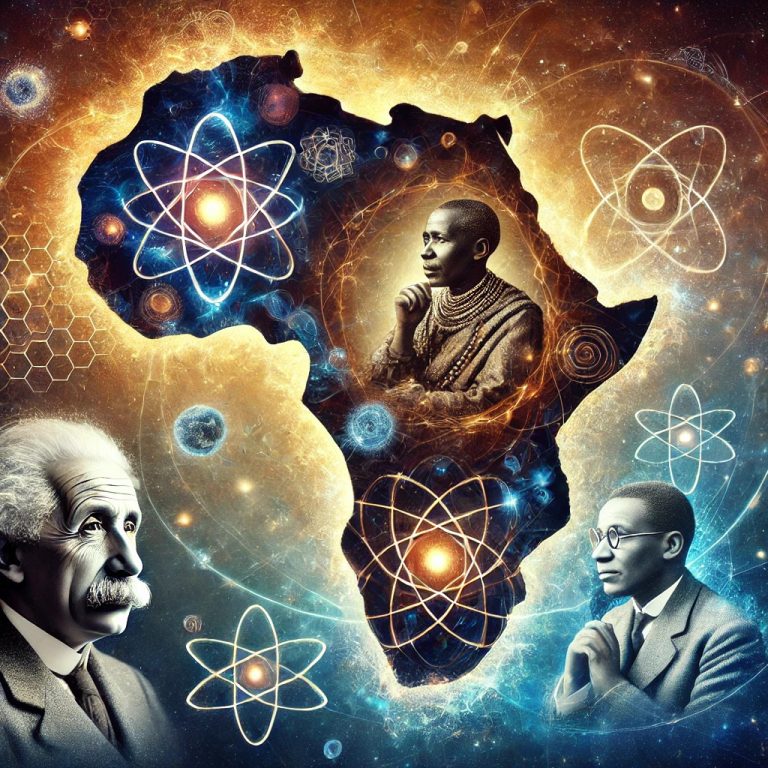
African Spirituality and the Peculiar Promise of Quantum Entanglement

0
African Spirituality and Quantum Entanglement

The final installment in a trilogy on existence, God, and religion, this essay examines the prospects for reviving African spirituality—long overshadowed on the continent by Christianity and Islam—through the embrace of quantum entanglement.

By Chudi Okoye

It is a truly exquisite irony of history. Ever since its arrival in Africa, Western Christianity, together with Islam, has steadily eroded and nearly obliterated African traditional religions, a process immortalized in the haunting first lines of David Diop’s 1956 poem, The Vultures: “In those days / When civilization kicked us in the face / When holy water slapped our cringing brows / The vultures built in the shadow of their talons / The bloodstained monument of tutelage.” Yet now, at the enigmatic edge of quantum physics, Western science offers an unexpected opportunity for the renewal of African spirituality. Through the phenomenon of ‘quantum entanglement’—where two particles become mysteriously linked regardless of their distance apart—Western science could aid the revitalization of African traditional religion and foster further syncretization of African Christianity. With the promise of quantum entanglement, it seems that what one current of Western culture nearly extinguished, another may now help to restore.

There’s an important caveat, however. The restorative potential of quantum physics for African spirituality depends on the willingness of Africans to embrace it. Unlike the historical incursion of Western religions, the integration of quantum physics into African spiritual thought will not be forced. Its transformative promise will require Africans, through intellectual engagement, to perceive its relevance and embrace it willingly—an act of self-agency that could occasion a cultural renaissance across the continent.

Entangled Phenomena
Quantum entanglement is among the most mind-bending phenomena in quantum mechanics, the branch of physics that studies the behavior of subatomic particles. It stands as one of the most counterintuitive concepts in modern physics, challenging long-held assumptions about the nature of reality. Its discovery and subsequent development have significantly influenced our understanding of the universe, challenging classical interpretations of the physical world.

The seeds of quantum entanglement were sown soon after the start of the 20th century, in the formative years of quantum mechanics, with significant contributions—often amid heated debates—from some of the greatest physicists of the era. Albert Einstein—who, by the beginning of that century, had emerged as a leading figure in physics, having already revolutionized the field with his theory of relativity—was deeply skeptical of the probabilistic nature of quantum mechanics. To Einstein, the randomness of quantum events stood in stark contrast to the predictability of classical physics, where cause and effect were clear and could be unambiguously theorized. He questioned the idea that two connected particles could instantaneously influence each other’s states or behavior, regardless of the distance separating them, which would suggest that observing one particle could reveal information about the other. This phenomenon, Einstein argued, violated the fundamental principle of locality, which states that an object can only be directly influenced by its immediate surroundings, and that no interaction or physical effect can travel faster than the speed of light.

Einstein’s discomfort culminated in 1935 when he, along with Boris Podolsky and Nathan Rosen, formulated what became known as the Einstein-Podolsky-Rosen (EPR) paradox. In their seminal paper, “Can Quantum-Mechanical Description of Physical Reality Be Considered Complete?” they argued that quantum mechanics, as it stood, was incomplete, primarily due to the implications of entanglement. The term entanglement was introduced in a letter to Einstein that same year by another prominent physicist, Erwin Schrödinger (of the ‘Schrödinger equation’ and ‘Schrödinger’s cat’ fame), encapsulating the idea of particles being interlinked such that the quantum state of one cannot be described independently of the other. This was a radical departure from the assumptions of classical physics. Dismissing this concept, Einstein provocatively labeled it “spooky action at a distance,” contending that some “hidden variables” must be at play and that quantum mechanics could not provide a complete description of physical reality. This only deepened the divide between Einstein and proponents of the new quantum framework.

Meanwhile, the Danish physicist Niels Bohr, one of the foremost architects of quantum theory and Einstein’s friend as well as intellectual adversary, took a starkly different view. He argued that quantum mechanics was indeed a complete theory and that entanglement was not a flaw in our understanding of nature. Rather, Bohr insisted that it reveals the interconnectedness of particles at the subatomic level, with non-locality (instant connection across distances) and randomness serving as fundamental features of reality. This directly challenged Einstein’s deeply held belief in locality and causality.

Niels Bohr and Albert Einstein

Though Einstein, who passed away in 1955, did not live to witness it, the reality of quantum entanglement has been robustly confirmed through decades of rigorous experimentation following the theoretical debates. In 1964, Irish-British physicist John Stewart Bell developed a mathematical theorem (‘Bell’s Theorem’) that provided a way to test the competing interpretations of quantum mechanics. Subsequent experiments, including groundbreaking work by physicists such as John Clauser, Alain Aspect, and Anton Zeilinger—who were awarded the 2022 Nobel Prize in Physics for their independent studies—have largely supported Bohr’s view. These experiments solidified our understanding of quantum entanglement, proving conclusively that entangled particles exhibit correlated behaviors that cannot be explained by “hidden variables” theories or other classical assumptions. The findings established entanglement as a cornerstone of modern physics.

The discovery of quantum entanglement has sparked revolutionary thinking across multiple disciplines. For instance, it has enabled the development of groundbreaking technologies such as quantum computing (which leverages phenomena like entanglement and superposition—where quantum bits can be both 0 and 1 simultaneously—to perform complex calculations exponentially faster than classical computers) and also quantum cryptography (which relies on entanglement to create theoretically unbreakable communication channels). Though as yet speculative, researchers are even exploring potential applications in neuroscience and consciousness studies, imagining entanglement as a tool for understanding complex biological systems.

The philosophical implications of quantum entanglement are profound, challenging our understanding of space, time, and reality itself. The instantaneous linkage of entangled particles across any distance suggests a universe far more interconnected than classical physics ever envisioned. This interconnectedness compels us to rethink foundational concepts, such as causality, locality, and the very fabric of existence.

The theological implications of quantum entanglement are equally compelling. A growing number of religious scholars and theologians see this phenomenon as a scientific metaphor for the spiritual concepts of unity and interconnectedness. Several mystical traditions postulate themes of universal unity that resonate with quantum entanglement—from Ein Sof or ‘The Infinite’ in Kabbalah (a tradition in Jewish mysticism) to the notion of Wahdat al-Wujud or ‘Unity of Being’ in Sufism (a mystical practice in Islam); from the Buddhist idea of dependent origination to Indigenous views of interconnection. Quantum entanglement provides a scientific language that appears to validate varied theological notions about the interconnectedness of all existence. It suggests a universe where separation may be more illusory than real, with connections extending beyond conventional notions of space and time.

At its core, the story of quantum entanglement is a reflection of humanity’s enduring curiosity—a relentless drive to understand a universe that consistently defies our assumptions. It reminds us that reality is not only interconnected but also far more mysterious and awe-inspiring than our ordinary perceptions reveal. Some theologians and philosophers see quantum mechanics as a bridge between science and spirituality. The notion that particles remain connected across vast distances resonates deeply with the spiritual concepts of divine omnipresence and universal consciousness—central themes in African spirituality, which has the interconnectedness of all existence at its core.

World Religions in Africa
Christianity and Islam, two of the world’s major religions, both arrived in Africa through complex processes of trade, conquest, and cultural exchange. Christianity made its first appearance on the continent in the 1st century AD, with Egypt becoming a major center during the early Christian era. The missionary efforts of figures like Mark the Evangelist laid the groundwork for the Christian church in Alexandria around 50 AD (barely 17 years after the death of Jesus), about the same time Christian missions were beginning to spread in Europe through Paul the Apostle’s pioneering evangelism in modern-day Turkey and Greece.

Biblical accounts suggest that African contact with Christianity predated its spread to Europe. For instance, Jesus’ parents fled to Egypt with him to escape King Herod’s massacre of infants in Bethlehem (Matthew 2:13-15), an event that likely occurred in 5 or 4 BC. During Jesus’ lifetime, Simon of Cyrene, from modern-day Libya, was compelled to carry his cross on the way to the crucifixion (Matthew 27:32, Mark 15:21, Luke 23:26). Shortly after, the Ethiopian eunuch, a high official in the court of Queen Candace, encountered Philip the Evangelist and became one of the first recorded African converts to Christianity (Acts 8:26-40).

By the 4th century, Christianity had deeply entrenched itself in the Axumite Empire (modern-day Ethiopia and Eritrea), which adopted it as a state religion under the influence of early missionaries like Frumentius. Prominent African theologians and Church Fathers such as Tertullian, Origen, and Augustine of Hippo made significant contributions to Christian doctrine. Tertullian coined the term “Trinity” and defended the faith against heretical movements. Origen’s work in biblical exegesis systematized early Christian theology, while Augustine’s writings articulated key concepts that shaped Western Christianity.

Despite its early foothold in North and East Africa, however, it took centuries for Christianity to spread across the continent. In the 15th century, the Portuguese reintroduced Christianity to parts of Sub-Saharan Africa, notably the Kingdom of Kongo, where Catholicism was adopted by the ruling elite. The 19th and 20th centuries saw further expansion as Christian missionaries, often allied with colonial administrators, sought mass conversions. Unlike Europe’s gradual Christianization over centuries, often driven by military conquests and monarchs seeking to unify their domains under a single faith, the Christianization of Africa occurred amidst socio-political upheavals, including native resistance that was overcome under European colonial influence. By 2020, the success of Christianity in Africa was evident, with approximately 49.3% of the region’s population identifying as Christian, making Africa home to more Christians than any other continent.

Like Christianity, Islam established roots in Africa early on, with its expansion beginning in the 7th century AD through migration, trade, and military invasion. In 614 AD, Prophet Muhammad advised his followers to seek refuge in the Christian Kingdom of Axum to escape persecution in Mecca, marking the first hijrah, or migration. Following this, Islam spread through North Africa via trans-Saharan trade routes and military conquests. In 639 AD, Muslim forces under General Amr ibn al-Asi began the conquest of Egypt, which was completed by 641 AD. From Egypt, Islam spread across North Africa, with Arabic becoming the dominant language. Trade also brought Islam to East Africa, where coastal interactions with Persian Gulf traders led to its establishment, making Somalia the region’s first Islamic state. Islam gradually permeated West Africa via Berber traders, integrating with local cultures despite initial resistance from rulers. By the 17th century, it had also reached southern Africa, brought there by Dutch and British settlers importing Muslim slaves. Overall, as of 2020, Islam accounted for 41.5% of Africa’s population.

The impact of Christianity and Islam on traditional African religions has been profound, leading to significant demographic and cultural shifts. In 1900, upwards of 90% of Africans practiced indigenous religions. By 2020, however, the demographics had reversed: Christianity and Islam together accounted for over 90% of the population, leaving less than 10% adhering to traditional faiths. This decline is particularly stark in countries like Nigeria, where the two major world religions encompass about 99% of the population, according to sources like Pew Research and the CIA World Factbook.

This shift was not merely religious but also cultural. Traditional African practices, such as ancestor worship, community-based rituals, and cosmological systems, were often suppressed or reinterpreted within the frameworks of Christianity and Islam. Traditional beliefs were frequently labeled as primitive, demonic, or simply “pagan,” and viewed as inferior by practitioners of the foreign faiths.

Among my own people, the Igbos in Nigeria, for instance, Christianity led to the abandonment of abhorrent practices like the killing of twins and human sacrifice, and it introduced monogamy in place of predominant polygamy—a particular change perceived differently, depending on one’s perspective. However, Christianity also displaced many salutary aspects of traditional spirituality. The concept of Chi, a personal deity or divine essence believed to guide individuals through life by bringing fortune and protection, was central to Igbo cosmology. One’s life fortunes were thought to hinge on their relationship with their Chi and its efficacy as a life force. With the advent of Christianity, however, many Igbos shifted their allegiance to Jesus of Nazareth, regarding him as their ‘Lord and Savior’ and reducing Chi to a mere artifact of Igbo vernacular. This transition diminished the veneration of ancestral spirits and indigenous divination practices as Christian beliefs and customs took precedence.

At the same time, traditional morality, rooted in earthly sanctions, gave way to a focus on eternal rewards and punishments in the afterlife. Christianity introduced a new religious hierarchy centered on a single deity, religious leaders, and a priestly class. Catholicism, in particular, replaced the worship of smaller gods and ancestors with the veneration of saints. Sacred groves were destroyed, traditional rituals were labeled as pagan, and indigenous identities often faced an existential crisis under the weight of imposed Christian ideologies. This transformation disrupted cultural continuity and created divisions within families and communities. We see such communal disruption today in my own home town, Awka.

Initially, the Igbos resisted the incursion of Christianity, clinging to their indigenous faiths and traditions. Over time, however, missionary efforts and colonial influence eroded this resistance, leading to a near-complete surrender. Widespread conversion to Christianity followed, with many traditional ceremonies and festivals honoring ancestral lineage abandoned in favor of Christian practices.

The displacement of traditional African religions mirrors, to some extent, the transition from paganism to Christianity in Europe. In Europe, paganism receded gradually through missionary work, state endorsement, and occasional coercion. In contrast, Africa’s transition was often more abrupt, driven by external pressures from missionaries and colonial authorities, which disrupted local customs and belief systems on a larger scale.

Despite being marginalized in the current cultural landscape, traditional African religions have persisted, not so much in institutional forms but through syncretic processes that blend them with Christian and Islamic practices. This fusion is evident in various cultural expressions, such as the incorporation of indigenous symbols into Christian worship among the Igbo or the emergence of African Independent Churches like the Aladura movement in Nigeria, which combine Christian doctrines with indigenous spiritual practices. Similarly, Islamic practices in Africa often incorporate elements of Sufism, aligning with African mysticism.

This phenomenon mirrors historical syncretism in the West, where pagan traditions were integrated into Christian practices, such as the adaptation of winter solstice festivals into Christmas celebrations. In the Americas, syncretic religions like Vodou and Santería combined African spiritual practices with Catholicism. Likewise, in Africa, traditional practices continue to blend with Christian and Islamic contexts, reflecting the resilience and adaptability of indigenous spiritualities.

Quantum Spirituality for Africa
At its core, quantum entanglement reveals a universe of profound interconnectedness, where distinctions between individual entities blur. This concept resonates deeply with traditional African spiritualities, which emphasize the unity of all things and the interplay between the natural and transcendent realms. The well-known concept of Ubuntu, meaning “I am because we are,” embodies this ethos, highlighting the deep connection between individuals, their communities, and the wider natural world.

Similarly, the Shona concept of Ukama signifies kinship and interconnectedness, emphasizing balance and harmony within ecosystems. Ukama underscores the interdependence of humans, nature, and spiritual forces, fostering respect for all forms of life and the environment. It promotes collective responsibility for communal well-being, extending its impact across generations and bridging the physical and spiritual dimensions of existence.

Other African traditions echo these principles. Among the Igbo, concepts like Umunna (kinship), Igwebuike (strength in unity), and Chi (personal deity) embody the interconnectedness of individual and communal spirituality. Igbo cosmology also invokes Ezumezu, a complement to Chi, symbolizing interconnectedness across realms as well as the spiritual and temporal completeness of an individual as part of a potent totality ordained from creation. Similar ideas appear in Yoruba spirituality, through Omoluabi (ethical living) and Iwa (moral integrity), as well as in Swahili traditions like Ujamaa (familyhood and collective responsibility). These shared principles form the bedrock of African spirituality, contrasting with the individualistic ethos of most Western cultures.

Across Africa, spirituality is deeply woven into the continuum between physical and transcendent existence, embodying principles of interconnectedness that resonate with quantum entanglement. The notion of non-locality in quantum entanglement—the idea that particles remain connected across vast distances—mirrors African beliefs in spiritual connections that transcend time and space, such as ancestral ties and a universal life force. These parallels provide a framework for reinterpreting African cosmologies within a modern scientific context, offering cultural revitalization and philosophical enrichment.

The intersection of quantum entanglement and African spirituality invites deeper exploration, presenting opportunities to unite ancient wisdom with contemporary science. Principles like Ubuntu and Ukama align philosophically with quantum interdependence, underscoring shared values of community, harmony, and interconnectedness. Embracing these parallels could foster syncretism, strengthening communal bonds and restoring traditional beliefs. It could also reaffirm Africa’s cultural heritage, countering narratives of cultural erasure and offering Africa a unique platform to contribute meaningfully to global scientific and philosophical dialogues.

Africa’s current religious landscape reflects a history of displacement, but also one of resilience. While Christianity and Islam reshaped the continent’s spiritual identity, traditional beliefs have endured through adaptation and syncretism. Quantum entanglement offers a new lens for understanding these traditions, enriching them by connecting spirituality with science.

By embracing quantum entanglement as a metaphor, Africa can reclaim its spiritual heritage while confidently engaging with the future. As quantum science evolves, it may uncover deeper insights into the nature of interconnectedness—insights that could reinvigorate African spirituality and foster a more inclusive understanding of human consciousness.

In this journey, Africa has the potential to lead, uniting ancient wisdom with modern science and contributing to a global dialogue that celebrates the diversity and richness of the human experience. African scholars can extend current scientific exploration into the intersections with African spirituality. But African involvement need not be confined to academia. Spiritual leaders who have embraced syncretism can further enrich their practices by integrating insights from quantum physics. By fostering dialogues between science, religion, and tradition, Africa stands poised to reclaim and redefine its spiritual heritage in the context of contemporary knowledge.

A Journey to Agnostic Theism: Seeking God Amid Confusing Evidence

0
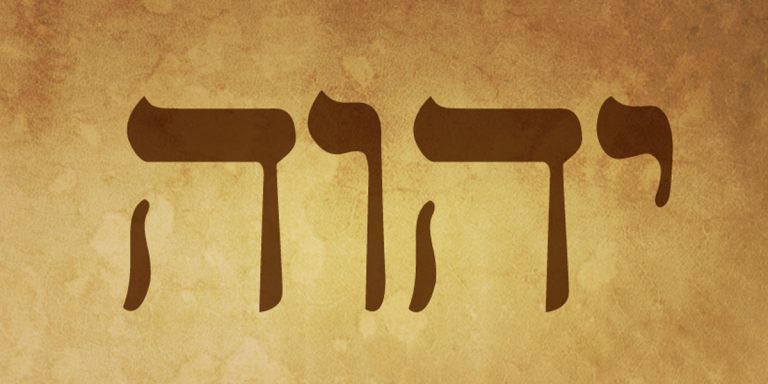
God's Tetragammaton

God isn’t a phantom, nor can He be fully fathomed.

By Chudi Okoye

If you ask Richard Swinburne, the British philosopher who has devoted his career to pondering the divine, he would say—with scarcely a pause—that it is far more probable that God exists than not. His compatriot, physicist Stephen Unwin, in his book The Probability of God, even ventures an audacious Bayesian estimate of 67% for the likelihood of God’s existence. Yet their fellow countryman, evolutionary biologist Richard Dawkins, counters this with a starkly different view: in The God Delusion, he rhetorically places the probability as low as 2%. Christopher Hitchens, another British thinker, spent his life passionately arguing along similar skeptical lines.

These contrasting positions reveal a decision-theoretic dilemma akin to a cosmic Prisoner’s Dilemma: should we embrace the common belief in God in pursuit of everlasting bliss, or seek skeptical autonomy (freedom to reason independently) and risk eternal damnation? Blaise Pascal, the 17th-century mathematician and philosopher, articulated this tension masterfully in his famous Wager, contending that belief in God is the safest gamble: it offers infinite gain if God truly exists and only finite loss if He does not; while disbelief risks infinite loss or, at best, offers finite gain.

The polarized perspectives on God highlight a profound tension between belief and doubt—between faith and reason—that has intensified in contemporary times due to the advance of science and modernization. This dichotomy has led to increasing secularization in affluent parts of the world, juxtaposed with the persistence and even intensification of religiosity and desecularization elsewhere. Agnostic theism seeks to navigate this tension by affirming the possibility of God’s existence while acknowledging the inscrutability of the divine.

As a layperson (a cradle Christian and fervent adherent in my youth) who has long pondered this matter, particularly to clarify the basis for my Christian faith, I find myself increasingly attracted to—or, at least, curious about—this philosophical position. It maintains a firm belief in God while recognizing ambiguity about His attributes and role in nature. On balance, I believe accessible evidence points strongly toward a transcendent reality and a Supreme Being we call God (my Igbo name—see byline—asserts this very claim). Yet, while affirming this belief, I cannot presume a high level of certainty about the true nature of God, His intentions, or methods—or whether these are accessible to human cognition. Consequently, I have become increasingly uncomfortable with religious dogma, preferring to show intellectual humility in my belief as I revel in—and try to unravel—the wonder of existence. I embrace science as a glimpse into the divine order but recognize its limits in addressing ultimate metaphysical questions.

The late theoretical physicist, Steven Weinberg, once said that science “doesn’t make it impossible to believe in God, but it makes it possible not to believe in God.” I would rephrase this slightly by saying that although science doesn’t make belief in God impossible, it offers natural explanations for phenomena once attributed to divine action, thus diminishing the necessity of invoking the divine while still leaving room for transcendent wonder. By staking out this position, I honor the search for truth—chiefly through science and philosophy—while accepting the profound mystery of being.

My approach here also mirrors that of the French essayist and mystic, Romain Rolland, who described an intimate alliance between the pessimism of intelligence piercing every illusion, and the optimism of will sustaining belief. This perspective, later popularized by the Italian Marxist philosopher Antonio Gramsci in his prison chronicles, captures the tension I navigate between intellectual agnosticism and willful theism.

In this essay, I will make the case for agnostic theism as an intellectually honest and philosophically coherent position, one that rejects the sometimes hubristic claims about divine knowledge made by fideists who favor faith over reason, among them some fervent proselytizers of world religions in Africa.

Debates About God’s Existence
The question of God’s existence has been a perennial focus of human inquiry, producing a rich tapestry of arguments both affirming and denying the divine. Among the most influential are the cosmological arguments, which contend that the universe must have an ultimate cause, conceived of as God. Classical thinkers such as Plato, Aristotle, and Thomas Aquinas emphasized the necessity of a “first cause” or “unmoved mover” to explain existence itself, in what we might today categorize as cosmological arguments. Aquinas also distinguished between the preambles of faith, which are rational truths accessible through reason (such as the existence of God), and the articles of faith, which transcend reason and must be accepted through belief (such as the Trinity or the Incarnation). The Kalam Cosmological Argument, traced back to the 9th-century Muslim polymath Al-Kindi and more fully developed by the 11th-century Persian philosopher Al-Ghazali, has been revitalized in contemporary discussions by William Lane Craig. This argument posits that since everything that begins to exist has a cause and the universe began to exist, it must necessarily have a transcendent cause, which is God.

Supporting these contentions are the teleological arguments, which point to the apparent design in the universe. From William Paley’s Watchmaker Analogy to contemporary discussions of fine-tuning, proponents like Richard Swinburne argue that the precise conditions necessary for life suggest the hand of a designer. These arguments align closely with the so-called strong anthropic principle (SAP), which posits that the universe’s laws and constants are not merely conducive to life but deliberately configured to ensure it. For teleological proponents, this intentionality points to a designer and a divine purpose underlying existence, although the principle itself does not explicitly claim the existence of God.

Meanwhile, the ontological arguments, originating with Anselm of Canterbury and later developed by René Descartes and Gottfried Leibniz, seek to prove God’s existence through reason alone, asserting that the very concept of a greatest conceivable being necessitates its existence. This is a more abstract argument which uses logic and reason to deduce the existence of God. In the 20th century, logician and mathematician, Kurt Gödel, proposed a formal, mathematical proof for the ontological argument, utilizing abstract reasoning and modal logic (the study of logical ‘necessity’ and ‘possibility,’ used to differentiate ‘necessary’ truths from ‘contingent’ or ‘possible’ truths).

However, for every theistic argument, there has emerged a counterpoint. Central among these is the ‘problem of evil,’ which challenges the coherence of an all-powerful, all-knowing, and all-good deity in a world rife with suffering. Philosophers such as J. L. Mackie argue that such a God is incompatible with the reality of evil, although Alvin Plantinga’s ‘Free-Will’ defense of God posits that moral freedom justifies suffering as a necessary byproduct.

Critics of the design argument appear, however, unpersuaded by such defenses. They point, in response, to natural evils and cosmic indifference, including the eventual destruction of Earth during the Sun’s Red Giant phase (which even the Bible, at 2 Peter 3:7, 10, and 12, anticipates), questioning why a benevolent God would create a universe where life seems fleeting and fragile against vast, impersonal forces.

Empiricists and logical positivists, including A. J. Ayer, dismiss metaphysical claims about God as meaningless, insisting that only empirically verifiable or falsifiable propositions are valid. Similarly, natural explanations offered by evolutionary biology and the weak anthropic principle (WAP) present alternatives to teleological claims, arguing that apparent design can arise from natural processes without invoking a designer. The WAP asserts that we observe fine-tuning because only a universe with conditions conducive to life could produce observers capable of noticing it. In this view, the fine-tuning is not a sign of purpose but a necessary condition for our existence. Thus, while the SAP emphasizes intentionality and implies a “designer,” the WAP reframes the issue, arguing that the universe’s life-supporting conditions are unremarkable given that only such a universe could allow life to arise.

Amid these intellectual tensions, some arguments transcend traditional categories, focusing on subjective and cultural dimensions of belief. Moral arguments, notably advanced by Immanuel Kant in his Critique of Practical Reason, propose that belief in God is a rational postulate necessary for the ultimate reconciliation of virtue and happiness, although the foundation of morality itself rests in human reason and the capacity for autonomous moral judgment. Others highlight the profound impact of religious experiences—transformative events that believers perceive as encounters with the divine. Critics such as Sigmund Freud, however, interpret these experiences as projections of psychological needs rather than evidence of an external deity. Finally, sociological perspectives explore how religion evolves as a human construct, shaped by societal and historical forces, further challenging its metaphysical claims.

The richness of these debates underscores the complexity of the divine question. For agnostic theists, they serve as reminders of both the plausibility of belief and the humility required in its pursuit. While arguments for God reveal profound mysteries pointing toward transcendence, counterarguments challenge believers to grapple with ambiguity, fostering a worldview that respects both faith and reason.

Reason and Religion
In the 19th century, building on the intellectual foundations laid by the Renaissance, scientific revolution, and Enlightenment in the preceding centuries, social theorists like Émile Durkheim, Max Weber, Karl Marx, and Sigmund Freud anticipated a steady decline of religion as societies modernized. Their secularization thesis, rooted in Enlightenment rationalism, posited that science and reason would supplant religious explanations. This view seemed plausible in industrializing societies, where technological advances and human development provided greater existential security, offering increased control over survival, health, and prosperity.

These luminaries were largely focused on Western societies, where their predictions have proven partially correct. However, they profoundly influenced later theorists who extended these expectations globally. Scholars such as Talcott Parsons, Daniel Lerner, Gabriel Almond, and Francis Fukuyama, drawing from modernization theory, argued that industrialization, urbanization, and the rationalization of governance and institutions would inevitably diminish traditional religious structures worldwide. Yet the persistence—and resurgence—of religiosity in many non-Western regions, such as the Middle East, South Asia, and Sub-Saharan Africa, complicates these assumptions.

This interplay between secularization and desecularization underscores the global complexity of religion in the modern world. In affluent societies with high existential security, religion has often receded from the public sphere, retreating into private life or commodified as a “product” in a competitive religious market. As theorists Rodney Stark and Roger Finke argue in Acts of Faith, in these contexts, religion functions more as a rational choice; it is consumed for social, psychological, or cultural benefits rather than out of fervent belief.

Yet globally, the influence of religion persists and even intensifies. In The Desecularization of the World, Peter Berger highlights striking religious revivals in the 20th century, including Islamic resurgence, the expansion of evangelical Christianity in the Global South, and the re-emergence of faith in post-communist societies. He observes that “the world is as furiously religious as it ever was,” attributing this to the growth of developing societies where existential insecurity remains high. Similarly, Pippa Norris and Ronald Inglehart argue in Sacred and Secular that religiosity thrives among economically vulnerable populations because it provides meaning, hope, and community in the face of uncertainty.

Thus, the global proportion of religiously affiliated individuals has grown, not so much because of widespread conversions but largely due to the rapid population growth in developing regions where religiosity remains strongest.

Role of Agnostic Theism
Agnostic theism offers a compelling framework for navigating this complex religious terrain. Unlike traditional theism, agnostic theism does not claim definitive knowledge of God’s essence or role in nature, although it affirms a strong plausibility of God’s existence. This perspective aligns with the insights of John F. Haught’s concept of God as “depth” and “future,” described in his What Is God? How to Think About the Divine—a transcendent horizon that eludes full comprehension yet imbues life with meaning.

This humility also resonates with Thomas B. Sheridan’s What Is God? Can Religion Be Modeled?, which argues that while religious practices can be scientifically modeled, the essence of God cannot. Sheridan distinguishes between denotative (precise and empirical) and connotative (metaphorical and interpretative) models, thus underscoring the limits of human understanding of the divine. For agnostic theists, this distinction is crucial: God is seen not as measurable or wholly scrutable entity, but an ineffable and awe-inspiring mystery.

Sheridan’s framework of denotative and connotative models presents an intriguing inversion of the approaches taken by Aquinas and Gödel. While Aquinas’s preambles of faith and Gödel’s necessary truths seek to establish certainty about God’s existence through rational proof, Sheridan’s denotative models focus solely on the empirical realm. In contrast, his connotative models, which explore metaphorical and existential dimensions, offer a plausible basis for belief in the divine. This approach aligns more closely with Aquinas’s articles of faith or Gödel’s possible truths, emphasizing interpretive meaning over empirical certainty. Ultimately, this inversion reflects Sheridan’s agnostic stance, where the divine emerges as a mystery to be interpreted rather than a certainty to be proven, resonating with the intellectual humility central to agnostic theism.

In affluent societies, where religion operates in a marketplace of choices, agnostic theism appeals to those like me seeking faith without excessive dogma. It presents God as a metaphorical ‘algorithm’—a guiding principle for the laws of nature rather than an interventionist deity. This perspective bridges secular rationalism and spiritual longing, embracing the concept of a divine source while acknowledging human epistemic limits.

Haught’s view of God as depth complements this metaphor, emphasizing the inexhaustible mystery of existence. Sheridan’s critique of traditional theology encourages a reimagining of God not as a personified being but as a foundational principle that fuels belief without demanding certainty.

Stephen Jay Gould’s concept of Nonoverlapping Magisteria (NOMA) offers another perspective on the interplay between religion and science. Gould argued that science and religion occupy distinct domains: science focuses on facts about the natural world, while religion addresses questions of purpose, meaning, and morality. By delineating these boundaries, Gould suggested that each contributes to human understanding without encroaching on the other.

Critics of the NOMA concept, like Richard Dawkins and the philosopher and neuroscientist Sam Harris, argue that the magisteria often overlap—particularly where science informs moral and ethical dispositions; and when religion adapts its doctrines in light of scientific discoveries or, more controversially, claims scientific facts as miracles or divine intervention. Despite critiques, however, NOMA provides a useful lens for agnostic theists by framing religion as a repository for questions science cannot resolve, distinct but at the same time complementary to science. As Gould later conceded, faith and reason are in some ways ‘interdigitated’ (i.e., interlocked).

In an era of secularization and desecularization, agnostic theism provides a nuanced path for reconciling faith and reason. It acknowledges the validity of religious belief while addressing the challenges posed by modernity, science, and skepticism. By recognizing God as a profound mystery—one that cannot be fully known but can still be meaningfully pursued—agnostic theism honors the enduring human quest for transcendence. It invites believers and skeptics alike to embrace the depth, future, and complexity of existence, seeking God amid the clutter of confusing evidence.

It is a journey on which I am now embarked, as a Christian rationalist.

A Persistent Question for Humans: Why is There ‘Something’ Rather Than ‘Nothing’?

0
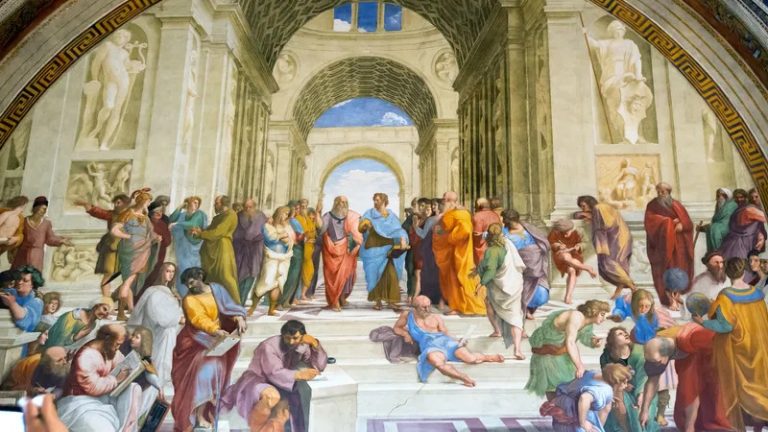
Raphael's 'The School of Athens"

A philosophical meditation on existence.

By Chudi Okoye

The question of why our universe (and possibly other universes) came into existence, specifically why there is something rather than nothing, has preoccupied theologians, philosophers, scientists, and even lay people like me for centuries. As the German polymath Gottfried Wilhelm Leibniz famously noted, nothing is simpler than something, which makes this inquiry all the more profound.

To clarify, I use the term ‘nothing’ in a strict metaphysical sense to mean the absence of matter, energy, space, time, laws, properties, or even potential for existence—a pure state of non-being, the absolute negation of ‘something.’ In contrast, ‘something’ encompasses anything that exists or has being, whether tangible or intangible, physical or abstract. It includes matter, energy, ideas, laws, entities, or phenomena that can be identified, experienced, or conceived, and it is the opposite of ‘nothing,’ encompassing all that can be said to “be” without presupposing any specific source or grounding for that existence.

I will commence this brief discussion of how thinkers down the ages have tackled the problem of why ‘nothing’ supposedly became ‘something’ by acknowledging that some thinkers in fact deny objective existence. Prominent among these: the Irish philosopher George Berkeley, who argued in an early 18th century treatise that “to be is to be perceived” (in Latin, esse est percipi)—which means that objects exist only insofar as they are perceived by a mind; and René Descartes, who doubted the existence of the external world, concluding with his famous ‘Cogito, ergo sum’ (‘I think, therefore I am’). Immanuel Kant, meanwhile, suggested that human perception is limited to ‘phenomena’—the world as it appears to us—while the true essence of things, the ‘noumena,’ remains inaccessible (more on this later). Other traditions, such as Madhyamaka Buddhism, also challenge the permanence and inherent existence of things, arguing that all phenomena are empty of inherent self-existence.

A more recent objection comes from Markus Gabriel, who, in his book Why the World Does Not Exist, argues that the concept of ‘the world’ as an all-encompassing totality is incoherent. Gabriel contends that reality consists of distinct ‘fields of sense,’ each with its own objects, facts, and contexts—be it in science, politics, or art. He thus rejects the very idea of a unified ‘world.’ This is part of his broader push for a ‘new realism’ that embraces the plurality of existence.

Still, despite these counter-intuitive contentions, the majority of thinkers believe there is something rather than nothing. And in this brief essay (very brief, considering the subject), I plan to explore how a few of them have attempted to explain phenomena.

There are some, like the English philosopher Stephen Law of the University of Oxford, who argue against the wisdom of attempting to answer this question at all. Prof. Law contends that this requires humans to step outside their “spacio-temporal” setting to imagine what could have triggered ‘nothing’ to become the ‘something’ that is our universe—a task he considers impossible. It is a position you might find too in Kant, who argued that such a question is beyond human comprehension, as human reason is limited to phenomena (objects of experience, or how things appear to us, including external objects, physical processes, and internal objects like feelings), not what he called noumena (“things-in-themselves” or reality that exists independently of our experience and are not directly accessible to us).

The British cosmologist, Martin Rees, agrees with this position, in one interview invoking the popular statement with which the late Austrian philosopher, Ludwig Wittgenstein, ends his book, Tractatus Logico-Philosophicus: “Whereof one cannot speak, thereof one must be silent.”

The objection to this question goes even further back, to the 5th century BC Greek philosopher Parmenides, who argued that the very idea of ‘nothing’ is a logical impossibility. For Parmenides, the concept of ‘nothingness’ is incoherent because ‘what is not’ cannot be thought or spoken of—after all, to speak or think of ‘nothing’ is to grant it a kind of existence, which contradicts its definition. Parmenides posited that only ‘Being’ truly exists, and that this Being is eternal, uncreated, and indivisible. Parmenides’ radical view challenged the common understanding of reality as composed of change and plurality. Instead, he argued that change and diversity are illusions, products of human perception rather than truths about reality. This idea influenced later philosophers, such as Plato and Aristotle, and it laid the foundation for metaphysical debates about the nature of existence and non-existence.

Aristotle himself considered the universe to be eternal; yet he rather confusingly (to me anyway) propounded the construct of an “Unmoved Mover,” which he developed to avoid an infinite regress in explaining the origin of motion in the universe. While Aristotle’s concept was primarily concerned with the eternal continuity of motion rather than the temporal origin of the universe, it raises an intriguing question: If the universe is eternal, with no beginning or end, why is there a need for a prime mover at all? Does the concept of the “Unmoved Mover” merely explain the perpetuation of motion, or does it have deeper implications for the origin of the universe itself, which Aristotle might not have intended? I think the latter.

There is, of course, the argument from theistic creation, familiar to all who adhere to one religion or another. St. Augustine, for instance, famously argued that God created the universe ex nihilo (out of nothing). For Augustine, this act of creation was not a process in time but the very beginning of time itself—he claimed that time was created along with the universe, making it meaningless to ask what ‘preceded’ creation. In doing so, Augustine anticipated modern scientific notions of “spacetime,” as in Albert Einstein’s theory of relativity, where time is intertwined with the fabric of the universe. However, I would argue that Augustine’s position raises a deeper question he does not fully address, namely: Why did God create the universe at all? Also, if God created the universe from a pre-existing nothing, as Augustine insists, does this imply that God was part of that nothing, or—God forbid!—that God was Himself nothing before creation? This is of course preposterous, but it is not an illogical interrogation of Augustine. For Augustine, creation was an act of divine freedom and love, not necessity, but this leaves unresolved the metaphysical conundrum of why a self-sufficient God would choose to create at all.

Gottfried Leibniz, mentioned earlier, who famously posed the question “Why is there something rather than nothing?”, argued that this universe exists because it is the “best of all possible worlds”—a creation according to divine wisdom and reason. However, I believe this answer addresses a different question than the one Leibniz posed: Why do we have this specific universe? Leibniz’s claim that this is the best possible world explains the particular nature of our universe, but it does not explain why there is something in existence at all, rather than nothing. Leibniz invokes the principle of sufficient reason—the idea that everything must have a reason or cause—and he attributes the creation of the universe to God as a “necessary being,” not unlike Augustine and other theistic philosophers. However, Leibniz does not address the deeper question of why a “necessary being” like God exists in the first place, or why God would create anything.

There are some later thinkers, including David Hume, Bertrand Russell, and Derek Parfit, who apply the so-called ‘brute fact’ logic to the question, asserting that the universe simply exists, and that there is no need to explain why it does. This view differs from denying the possibility of humans meaningfully contemplating the question of why there is something rather than nothing, as it acknowledges the question but claims that it lacks any further explanation.

Despite the ‘brute fact’ argument, modern physicists like Stephen Hawking and Lawrence Krauss have attempted to provide non-theistic answers to the question. Hawking, for instance, suggested that the universe could arise spontaneously from the laws of quantum mechanics. In his co-authored book, The Grand Design, he famously stated: “Because there is a law like gravity, the universe can and will create itself from nothing.” Similarly, Krauss, in A Universe from Nothing, argues that quantum fluctuations in a vacuum could spontaneously generate universes, without the need for a creator. However, critics have noted that ‘nothing’ in Krauss’ theory is not pure non-existence, as traditionally conceived in philosophy, but rather a quantum vacuum with inherent physical properties. Furthermore, critics claim, Krauss does not address the question of where these physical properties in the vacuum come from.

While Krauss and others have proposed the quantum fields argument for the spontaneous emergence of something from nothing, an actual mathematical demonstration of this was provided by a trio of Chinese quantum cosmologists in a 2014 paper. The paper, titled “Spontaneous Creation of the Universe from Nothing” and written by Dongshan He, Dongfeng Gao, and Qing-yu Cai of the Chinese Academy of Sciences, argues that the universe could emerge spontaneously from “nothing,” which the authors define as the absence of matter, space, and time, through the principles of quantum mechanics. Using the Wheeler-DeWitt equation (which frankly I myself found a little difficult to understand), the authors describe how quantum fluctuations can generate a “true vacuum bubble” that expands exponentially, driven by a quantum potential similar to the cosmological constant (that is, the force said by physicists to drive the accelerated expansion of the universe). This process, according to the paper, provides a scientific framework for the universe’s inflationary dynamics and avoids singularities (that is, points of infinite density, such as those predicted in black holes or the Big Bang).

It turns out, however, as with Lawrence Krauss, that the ‘nothing’ propounded in this paper is not absolute; it presupposes the existence of quantum laws and potentials. So, although Krauss and others propose quantum fields as a mechanism for the spontaneous emergence of the universe, their concept of ‘nothing’ is not absolute non-existence. It presupposes a quantum vacuum with physical properties. This leaves unanswered the deeper metaphysical question of why there are quantum laws or why there is anything at all, instead of absolute nothingness.

Modern cosmology has also grappled with the question of whether the universe’s total energy can provide insight into its origin. Some physicists, such as Krauss and Alan Guth, have proposed the zero-energy universe hypothesis, which suggests that the universe’s positive energy (from matter and radiation) and negative energy (from gravitational potential) perfectly cancel out, resulting in a net total energy of zero. This hypothesis aligns with the idea that the universe could arise spontaneously from “nothing” without violating conservation laws. However, even if the universe’s total energy is zero, this does not resolve the deeper metaphysical question of why such a balance exists or why the laws permitting this spontaneous emergence are themselves in place. While this hypothesis offers a fascinating scientific explanation for how the universe might have emerged, it still leaves unanswered the ultimate “why” of existence—why there is something rather than nothing.

The question “Why is there something rather than nothing?” remains one of the most profound and unresolved mysteries in human thought. Despite millennia of exploration by philosophers, scientists, and theologians, no universally accepted answer has emerged. Philosophy illuminates the question’s depth and offers deeply reflective answers, but these are fragmented and often substitute one mystery for another. Science, for its part, excels in describing the mechanisms of existence, offering powerful insights. Cosmological models like the Big Bang theory describe how our universe emerged and evolved. Yet they often assume pre-existing laws, leaving unanswered the question of ultimate origin. The notion of quantum creation, proposed by physicists like Stephen Hawking and Lawrence Krauss, seems to offer credible answers. However, the ‘nothing’ in such propositions includes quantum fields and physical laws, which are something rather than nothing. So science offers an as yet incomplete explanation. This permits the persistence of theological explanations. But these merely provide existential comfort and moral meaning; they do not empirically resolve the metaphysical problem of why something presumably emerged from nothing.

The question remains unresolved for several reasons: it may be beyond the limits of human cognition: if existence is rooted in a transcendent principle or entity, it might lie beyond our capacity to comprehend; or it may be that there’s nothing like nothing—as some argue, existence is the default and there’s no plausible alternative to it; or it may in fact be that we aren’t framing the question properly—our inability to conclusively answer this question may be simply due to linguistic confusion rather than metaphysical complexity.

This persistent uncertainty surrounding the question of why there is something rather than nothing is precisely why I find my position of agnostic theism—firm belief in God; uncertainty about God’s attributes or role in nature—to be both intellectually honest and philosophically coherent. It embraces the limits of human knowledge while remaining open to the possibility of a transcendent reality. It is a view about which I hope to write more fully at a later time.

And Americans Went Out to Vote, Vexed, and Flexed for Historic Change

0
Donald Trump after the 2024 presidential election

Donald Trump’s impending return to the U.S. presidency promises potentially profound conservative reversals in domestic and foreign policy. However, the inexorable logic of history suggests a progressive trajectory in the long run.

By Chudi Okoye

In March 1933, after a meeting with Franklin D. Roosevelt, Oliver Wendell Holmes Jr.―a distinguished jurist and recently retired justice of the US Supreme Court, then 92―famously quipped that the newly inaugurated president was “a second-class intellect with a first-class temperament.” This observation pointed to the new president’s unique mix of charisma, resilience, and optimism, even if not of a cerebral bent—traits that had won over the American public at a particularly difficult time.

If I were to adapt Holmes’s observation and apply it to Donald Trump, I might say he possesses a second-rate intellect, with great cunning and a canny political instinct. It’s how he was able to win 51% of the popular vote and significant projected share of electoral votes (301) in the 5 November 2024 presidential election; and is now poised to return to power despite the upheavals of his first tenure and a post-presidency marked a myriad of legal issues, controversies, and divisiveness.

We must acknowledge, at the outset, that the Democrats faced electoral backlash for their policies in the Middle East, specifically for supporting Israel’s use of disproportionate force in its ongoing war with Hamas and other regional actors, and its perpetration of what the International Court of Justice and other bodies consider plausible genocide against Palestinians in Gaza. Yet this was not an overriding factor, and the argument becomes somewhat complicated when considering the candidate who ultimately triumphed in the election.

So, why did Donald Trump win?

While opinions vary on this question, his re-election speaks to a complex mix of voter sentiment and societal undercurrents, similar to historical figures in the U.S. and U.K. who staged comebacks after losing power. In this piece, I will look―with studied objectivity―at the overlapping dynamics at play, and also explore the potential impact on both America and the world.

Donald Trump’s re-election is testament to his resilience and ability to connect with certain segments of the public, even through his many controversies. It also serves as a stark reminder that history often defies linear expectations, sometimes characterized by disconcerting reversals. History also teaches us, however, that even the most forceful leaders cannot permanently halt the natural cycles of change, nor bend history fully to their will. By examining the forces behind Trump’s comeback and drawing on historical cycles, based on Hegelian dialectics, we may begin to understand the tides that have led us to this moment, and where those tides might carry us in the years ahead.

Trump’s Resurgence and Historical Echoes
Donald Trump’s impending return to the presidency positions him among a unique class of political leaders who have achieved non-consecutive terms in the U.S. and beyond. In America’s 235-year presidential history, only Grover Cleveland previously accomplished this feat, serving as both the 22nd (1885-1889) and 24th (1893-1897) president. His comeback was fueled by public frustration with his successor, Benjamin Harrison, and inspired by Cleveland’s reputation as a steadfast reformer willing to confront corruption for public good.

In a similar―if opportunistic―fashion, Trump has portrayed himself as the champion of the ‘forgotten man,’ presenting a defiant stance against what is depicted as a liberal elite establishment. Although his first term record did not remotely match this image, his populist appeal has persisted, resonating with segments of the electorate seemingly disillusioned by mainstream politics and re-attracted to his brash and iconoclastic style.

In contrast to the United States’ two presidential comebacks, Britain’s parliamentary system has yielded at least 14 prime ministerial returns over the 303 years since the inceptual premiership of Robert Walpole beginning in 1721. Prominent figures such as Winston Churchill, who returned to power in 1951 after losing in 1945, exemplify this trend. Churchill’s return was a response to changing public priorities amidst concerns over perceived socialist excesses of the Labour government under Clement Attlee, as well as escalating Cold War tensions.

In America, Trump has similarly tapped into complex anxieties surrounding demographic shifts and supposed economic distress. By invoking the concept of a “real” America with his rallying cry to “Make America Great Again,” he has fostered a divisive rhetoric that inspires intense emotions within various population segments. This sentiment extends from nativist and xenophobic attitudes to the frustrations of working-class voters, culminating in hard-line stances on immigration and a focus on cultural particularism—trends similarly seen in contemporary nationalist eruptions in Europe.

Trump’s strategy reflects the broader appeal behind the political comebacks. Churchill and other prominent British comebacks—like Robert Peel, Viscount Palmerston, Benjamin Disraeli, William Gladstone and Harold Wilson—each resonated with their times, often either supporting British imperial ambitions or championing progressive reforms. These figures adapted to shifting political landscapes to achieve their returns, echoing Trump’s ability to capture and channel popular discontent.

Trump secured significant electoral support by harnessing a wave of grievance among voters alienated by conventional politics. According to exit polls, he won 57% of overall White vote—a demographic that comprised 71% of the electorate—with Whites without college degrees showing particularly strong support at 66%. Trump had overwhelming appeal among those prioritizing concerns about immigration (90%) and economic issues (80%), as well as individuals presumably facing financial hardships (74%). Dissatisfaction and anger were seemingly a factor, sentiments expressed by 73% of voters among whom Trump made significant inroads―he won 56% of those describing themselves as “dissatisfied” and 72% of those “angry” about America’s trajectory.

Religion played an undeniably pivotal role in Trump’s resurgence—a remarkable outcome given his history and ambiguous personal relationship with faith. He garnered 58% of the Catholic vote and 63% among Protestants and other Christian groups, collectively representing 64% of the electorate. While Harris dominated among other faiths and the religiously unaffiliated, these groups comprised only 36% of voters. Trump’s support was particularly striking among White Christians, securing 72% of White Protestants and other non-Catholic Christians, and an overwhelming 82% of White evangelicals. The influence of White Christian nationalism proved more statistically significant than other frequently cited factors: immigration (cited as the top concern by just 11% of voters), the economy (primary for 32%), or LGBTQ issues (with LGBTQ voters making up 8% of the electorate and breaking heavily for Harris at 86%). Indeed, non-LGBTQ voters, representing 92% of the electorate, split more modestly between Trump (53%) and Harris (45%). These patterns suggest that the contentious issues surrounding immigration, the economy, and sexual orientation may be, to some extent, proxies for deeper identity-based anxieties.

Abortion emerged as a significant wedge issue in the election, though only 14% of voters cited it as their paramount concern―ranking behind democracy and the economy, and marginally ahead of immigration. Yet its impact extended beyond those who prioritized it as their leading issue. The electorate displayed sharp polarization on reproductive rights: among the 65% who favored legal abortion in most or all cases, Harris commanded roughly 68% support. Trump, conversely, dominated among abortion opponents, capturing over 91% of the 32% who favored restricting or banning the procedure. These stark divisions point to the enduring power of abortion as a proxy for broader cultural and moral worldviews in American politics.

Race and racial tensions are also among the most persistent fissures in American politics, yet an in-depth examination reveals a complex interplay with other electoral fault lines. Trump’s critics often claim that his politics stems from a racially charged agenda—a claim that finds some validation in his inflammatory rhetoric and behavior that borders on racial provocation. However, such interpretations risk obscuring the intricate tapestry of voter sentiment and the broader spectrum of grievances at play, necessitating a careful and layered analysis of election results. The electoral data presents a nuanced picture: Harris commanded overwhelming support among African Americans (91% of women, 77% of men), yet this constituency made up just 11% of voters. Trump’s more modest advantage among White voters (60% men, 53% women, 57% overall) derived its electoral potency from their demographic dominance, constituting 71% of the electorate, as earlier indicated. Latino voters, at 12% of the electorate, displayed a notable gender divide, with women favoring Harris (60%) and men breaking for Trump (55%).

To disentangle these voting patterns, it is critical to distinguish between ‘racist’ actions, marked by beliefs in racial hierarchy, and ‘racially motivated’ behavior, which reflects concerns rooted in race without necessarily espousing racial supremacy. African American electoral solidarity, for instance, might be interpreted as collective action toward addressing historical inequities, paralleling patterns observed among marginalized groups globally. Conversely, segments of White voters exhibit pronounced anxiety over demographic shifts, perceiving social progress as a zero-sum equation that threatens their established status and identity.

This defensive posture finds particular expression in the increasing mainstream resonance of the so-called ‘White replacement theory’—a framework peddled in right-wing media and even evangelical circles that interprets demographic and political changes through the lens of displacement anxiety. Trump’s ability to amplify and harness these sentiments, though ethically unsavory, proved electorally potent.

In contemplating Trump’s return to power, it becomes clear that a singular focus on race or any single issue fails to grasp the complex mosaic of voter sentiment. The underlying discontent, fed by fears of displacement, economic hardship, and cultural shifts, has shaped a charged landscape. To understand this resurgence, one must look beyond singular narratives and appreciate the broader currents driving America’s evolving political tides.

Implications and Final Thoughts
Donald Trump’s return to power portends significant shifts in American governance through ambitious bureaucratic reforms, some of which are detailed in the so-called Project 2025 produced by his political allies. Domestically, his re-emergent presidency promises continued polarization on race relations, along with stricter immigration policies, while potentially reshaping American law with lasting consequences through conservative judiciary appointments. Internationally, Trump’s second presidency may fundamentally alter America’s global posture: questioning NATO commitments; potentially shifting America’s stance on the Russia-Ukraine conflict; intensifying Middle East tensions through more ardent support for Israel and a harder line towards Iran; and favoring transactional relationships over democratic ideals in foreign policy, potentially enabling authoritarian regimes in fragile democracies like those in Africa. These changes could redefine both domestic institutions and America’s global leadership role.

In pondering the potential fallouts from Trump’s return, it may fill the progressive-minded with a sense of foreboding and disillusionment about the direction of history. Yet, as the great German philosopher, Georg Wilhelm Friedrich Hegel, argued, history moves by its own logic toward a teleological end, even if sometimes in reversible cycles. Hegel proposed what he called the “Cunning of Reason,” by which he meant that history ultimately fulfills its designs―evolving in unexpected and circuitous ways but all the same toward a rational end. Sometimes, this process involves setbacks and regressions, creating the illusion of stalled progress. However, history marches forward regardless, and the forces that appear to reverse it often fuel a dialectical progression. Retrogressive forces hoping to freeze the frame of history always lose out in the end, whatever their momentary tactical gain

We learned long ago from the Standard Model of particle physics that the most basic elements of matter, quarks, are quirky and unstable, though gluons make an attempt to hold them together—a fitting metaphor for society, where conflicting ideologies and values are bound together in an uneasy balance. We also learn from cosmology that we inhabit an ever-expanding universe, and from biology that we ourselves, as humans, are products of an ineluctable process of evolution, similar to everything else in nature. Even the very gods we profess to worship, themselves―though we little understand them―evolve in our very own imagination.

Nothing remains the same. Morning starts at the darkest hour of night, this sometimes being the hour of mourning. It is there in my hometown Awka―nay, Igbo―concept of light, embodied in the saying: “chi ejili abani fo.” Morning emerges from the bosom of night. That is the persistent logic of world history.

In times of turmoil, it is easy to feel that progress is an illusion, but history has shown that seemingly dark moments often precede transformative change. As Bob Marley sang in Redemption Song, “[nothing] can stop the time.” Even as we grapple with Trump’s return, we can be assured that the trajectory of history is broader and deeper than any single presidency, and that it moves by an inexorable forward logic.

While Trump’s impending second presidency may feel like a step backward to some, history’s arc is long, and, as Hegel and countless others have noted, it bends—sometimes in surprising, even cunning ways—toward justice and transformation.

British-Nigerian Hardliner Wins Tory Leadership with Peculiar Political ‘Kemistry’

0
Kemi Badenoch is the bookmakers’ favorite to win the Conservative Party leadership contest.

Kemi Badenoch’s rapid rise in British politics is impressive and a thing of pride for her ancestral country. But her pugilistic political personae, beloved by her party’s hard right, may limit her national appeal and likely circumscribe her political trajectory.

By Chudi Okoye

A curious thing has happened to the British Conservative and Unionist Party. In the past forty-five years, the United Kingdom’s longest-standing political party and one of the world’s oldest still in existence—a party considered the bastion of British establishment—has given Britain its only three female prime ministers so far (Margaret Thatcher, 1979-1990; Theresa May, 2016-2019; and Liz Truss, Sept-Oct 2022), and one of Punjabi Indian descent (Rishi Sunak, 2022-2024). In just the past week, the party has also selected its first Black female leader, Kemi Badenoch, a first-generation immigrant of Nigerian descent, who is now the Leader of His Majesty’s Most Loyal Opposition and Leader of the Conservative Party. Her emergence means that Conservative Party leadership has passed from one child of immigrants to another―from British-Indian to British-Nigerian heritage. It is a remarkable moment in British politics. Should she endure in the political arena, she might one day break another barrier and become Britain’s first Black female prime minister.

The party of Robert Peel, Benjamin Disraeli and Winston Churchill has certainly come a long way. But its transformation has been paradoxical. Every one of the non-traditional leaders elected by the party, different in gender or ethnicity, has had to adopt hard-line policy and political postures to achieve their breakthrough: Thatcher’s zealous free-market ideology, May’s tough stance on immigration, Truss’s radical economic liberalism and Sunak’s Brexit fixation and equally hard line on immigration. Progress in representation, it seems, has required strict adherence to conservative orthodoxy. And it’s no different with Badenoch, with her strict conservative policy outlook and forceful positions in the culture wars.

Rapid Ascent
Kemi Badenoch’s biography is nothing short of remarkable, characterized by a rapid career progression. Born in 1980 in London to Nigerian parents, Badenoch’s childhood was split between Lagos, Nigeria, where her father worked as a family doctor and her mother as a psychology professor, and the United States, where her mother later secured teaching positions. She returned to the UK in 1996, aged 16, and stayed with a family friend as she studied for A-levels while working at McDonald’s. She earned B’s in Biology and Chemistry, and a D in Maths. The middling results notwithstanding, Badenoch went on to study Computer Systems Engineering at the University of Sussex, finishing with a Master of Engineering degree in 2003, aged 23.

Badenoch pursued another degree, in Law, at Birkbeck, University of London, completing it in 2009 while working part-time as a software engineer with Logica (later CGI Group), an IT and management consultancy firm. She then transitioned to a role as systems analyst at the Royal Bank of Scotland before moving into consultancy and financial services. From 2006 to 2013, she served as an associate director at Coutts, the private bank and wealth manager, and later took on the role of digital director at The Spectator from 2015 to 2016.

In 2005, while still a part-time student and less than 10 years back in the UK, Kemi Badenoch joined the Conservative Party, during Tony Blair’s tenure as Labour prime minister. This marked the beginning of her active involvement in British politics, which would lead to a rapid ascent, culminating in her elevation, on 2 November 2024, to Leader of the Opposition.

Her political rise began with her election to the London Assembly, secured after an initial setback, and truly accelerated with her entry into the House of Commons in 2017. In Parliament, she quickly established herself as a rising star, securing positions on both the influential 1922 Executive Committee and the Justice Select Committee in her first year. By 2018, she had stepped into the party’s internal power structure as Vice Chair for Candidates. ¬

Her ministerial career proved equally dynamic. From her first appointment as Parliamentary Under-Secretary for Children and Families in 2019, she moved through a range of high-profile positions: Exchequer Secretary to the Treasury, Minister for Equalities, and Minister for Local Government, Faith and Communities. By September 2022, she had secured a place in the Privy Council and entered cabinet as Secretary of State for International Trade.

In her final years before becoming Opposition Leader, Badenoch gained further cabinet experience, serving ―at a points concurrently―as Minister for Women and Equalities, President of the Board of Trade, and Secretary of State for Business and Trade. A brief period in mid-2024 as Shadow Secretary for Housing and Local Government served as the final step before her current role.

In less than two decades, Kemi Badenoch—by her own account “a first-generation immigrant”—has reached the highest ranks of the Conservative Party, at just 44. Her age could be an asset: by the next general election in 2029, she will be 49, significantly younger than the incumbent prime minister, Sir Keir Starmer, who took office at nearly 62. Yet, survival to the next election is uncertain within a party that has elected six leaders in the past eight years.

A newly adopted rule by the Conservative Party’s influential 1922 Committee, enacted shortly before Badenoch’s rise, raises the threshold for triggering a confidence vote against a sitting leader from 15% to 33% of the parliamentary party. This adjustment grants Badenoch a stronger buffer—though nothing is ever secure in the often fractious Conservative ranks. If she can hold her ground and steer her party to victory in the next general election—both significant ‘ifs’—she would achieve the historic milestone of becoming Britain’s first Black female prime minister. Such a victory would unfold nearly 69 years after Nigeria’s independence from Britain, meaning she would surpass the achievement of Rishi Sunak, who reached the premiership 75 years after India’s independence.

In recent decades, a remarkable roster of UK politicians of foreign ancestry has risen to prominent positions in British public life, perhaps reflecting the dynamism and diversity of modern British politics. Among them, Sajid Javid, son of Pakistani immigrants, has held a suite of top roles: Home Secretary, Chancellor of the Exchequer, and Health Secretary. Priti Patel, born to parents of Indian descent and Ugandan passage, served as Home Secretary. Diane Abbott, with Jamaican heritage, became a long-standing force in Parliament and Shadow Home Secretary for Labour. And London’s mayor, Sadiq Khan, himself the son of Pakistani immigrants, made history in 2016 as the first Muslim mayor of a major Western capital.

Chuka Umunna, with Nigerian and Irish roots, held the position of Shadow Business Secretary and, for a time, was touted as a future Labour leader. Alok Sharma, whose family hails from India, served as Secretary of State for International Development; while Kwasi Kwarteng, born to Ghanaian parents, became Secretary of State for Business, Energy and Industrial Strategy. Nadhim Zahawi, of Kurdish-Iraqi descent, oversaw the Education department; and Suella Braverman, born to Goan Indian parents, took on the roles of Attorney General and later Home Secretary. David Lammy, now Secretary of State for Foreign, Commonwealth and Development Affairs, is of Guyanese origin; and James Cleverly, a former Foreign Secretary, brings a unique heritage with a Sierra Leonean mother and an English father.

While Rishi Sunak’s ascent to the office of Prime Minister stands as a defining breakthrough, Kemi Badenoch joins this distinguished lineage as the Leader of the Opposition,. Her achievement not only underscores her political acumen but speaks to the evolving openness of Britain’s political system—a system increasingly willing, it appears, to entrust the highest offices to those from diverse backgrounds.

We must not overstate the point about openness, however, because the growing leadership diversity, which is undeniable, also compels a high degree of ideological conformity―particularly within the Conservative Party which has championed it the most. There’s no question that the Tories have a taller record of leadership diversity than the reputedly progressive Labour Party; but, at the same time, leadership prospect depends to a greater extent on conformity with party orthodoxies within the Conservative Party than appears to be the case in Labour. We see this dynamic on display in Badenoch’s rise in the Conservative hierarchy.

Political ‘Kemistry’
Throughout her Tory leadership campaign, Kemi Badenoch emphasized her background in computer systems engineering, claiming it equips her to approach problems analytically, unencumbered by ideology. While this is an appealing narrative and may hold some truth, Badenoch has not been at all reluctant to articulate her ideological positions, nor has she hesitated to engage in Britain’s abiding ideological battles.

Her combative style—often perceived as brittle by liberals—has earned her the nickname ‘KemiKaze’ (a play on the word ‘kamikaze’). This, coupled with her supposed chemistry with the rightwing base (a circumstance for which I coined the word ‘Kemistry’), has contributed to her rapid political ascent.

Kemi Badenoch represents a complex, sometimes contentious brand of conservative ideology that blends traditional British conservatism with personal convictions from her Nigerian heritage. A proponent of national identity and cultural assimilation, she has argued that “not all cultures are equally valid,” and has called for newcomers to imbibe British values as a part of their integration. She has advocated for an “integration course” requirement for new immigrants, believing that the UK’s identity must be respected and upheld by those it welcomes. Badenoch’s view aligns with her broader philosophy of national cohesion, wherein British citizenship embodies more than a legal status; to her, it signifies a commitment to shared values and responsibilities.

As a social conservative, Badenoch emphasizes personal responsibility and rejects progressive ideological frameworks that she sees as undermining social cohesion―all music to the hard right core of her party. She has voiced her opposition to what she perceives as “identity politics,” which she associates with social division and coercion rather than tolerance and unity. This stance surfaced powerfully during her 2020 speech opposing critical race theory’s role in UK schools, where she argued that such perspectives, if taught unchallenged, erode fundamental British values of fairness and debate.

Badenoch’s skepticism of “woke” ideology has won her admiration from hardline conservative figures, including U.S. politician Ron DeSantis. Badenoch, in turn, has praised aspects of DeSantis’s policies and shown alignment with conservative culture-war tactics. She considers herself a “net zero skeptic” and is wary of progressive policies, advocating instead for a balance between economic growth and environmental goals. Her affinity with American conservative thought is also reflected in her admiration for economist Thomas Sowell and philosopher Roger Scruton, whose writings often critique government intervention and promote individual freedom over bureaucratic oversight.

Historically, Badenoch’s views on British colonialism diverge from mainstream critiques; she has argued that the colonial era brought both harm and benefits. Her perspective is that the British Empire should be judged with nuance, as colonialism involved “a different bunch of winners and losers” rather than a simple narrative of oppression. Badenoch has even credited the Glorious Revolution of 1688, rather than colonial wealth or “white privilege,” as the catalyst for Britain’s eventual prosperity.

Politically, Badenoch belongs to the populist-leaning hard right of the Conservative Party, positioning herself as an alternative to progressive ideals. Her leadership bid emphasized themes of personal responsibility, reduced government intervention, and economic growth free from bureaucratic regulation. She has publicly criticized the expansion of government roles in everyday life, arguing that an increasing number of jobs have shifted from the productive economy to regulatory oversight. In her leadership campaign, she characterized this trend as emblematic of an emerging “bureaucratic class” and part of a rising progressive ideology that stifles individual freedoms and economic potential.

In the end, it is the combination of Kemi Badenoch’s ideological disposition and political demeanor, woven seamlessly with her personal story, that has made her a compelling public figure and a rising talent within the British political landscape. Still, her reputation as a ‘pugnacious’ figure, coupled with her staunch anti-woke rhetoric and sharp critiques of identity politics, has polarized opinion around her. To some, she is a much-needed voice for traditional values and national identity; to others, her approach is seen as deeply divisive. The trajectory of these contrasting perceptions will ultimately determine her prospects in British politics, not just in her new role as Leader of the Opposition, but well beyond.

As a Nigerian, I instinctively celebrate her ascent, though we are, on several fronts, ideologically distant.

US Democracy is Toast if Even the Post Offers ‘Anticipatory Obedience’ to Donald Trump

0
Harris, Bezos and Trump

There are ominous portents for American democracy, with potential global ripples, in US media owners’ veto of their newspapers’ presidential endorsements, for fear of political repercussions.

By Chudi Okoye

He is a billionaire two hundred times over, exalted even among the rarefied caste of ‘New Industry Titans’ said to wield “immense… power and influence” in the US and around the world. His conglomerate, Amazon, employs over 1.5m people and turned in revenues of $574.8 billion in 2023, representing 2% of US gross national income and second only to Walmart’s in worldwide ranking. Yet, with all that heft, Amazon founder and executive chairman, Jeff Bezos, is seemingly spooked by Donald Trump’s possible return as American president. He appears petrified about the consequences to his business of offending the notoriously vengeful former president.

Last week, on October 25, it emerged that Jeff Bezos had overruled an editorial the 146-year old newspaper he purchased in 2013, the Washington Post, had drafted to endorse Donald Trump’s rival in the 2024 US presidential election – the Democratic Party candidate, Vice-President Kamala Harris. The editorial was spiked pretty late in the election calendar: only eleven days to the November 5 polling date.

As reason for the reversal, the Post’s publisher and CEO, William Lewis, said that the paper was returning to its roots as an “independent” outlet which didn’t indulge in presidential endorsements in its earlier history. Lewis also said the decision reflected the paper’s trust in its “readers’ ability to make up their own minds.”

It is hard to square these ostensible reasons against known facts. It’s true that in its earlier history, the Post shied away from presidential endorsements. It had made an exception in the 1952 election when it endorsed the Republican Party candidate, Dwight D. Eisenhower, a popular and highly decorated war hero who’d been Supreme Commander of the Allied Expeditionary Force in Europe during World War II, and who’d planned two of the most consequential military campaigns that enabled allied victory: the 1942/43 North African campaign and the 1944 invasion of Normandy. After that, the Post recoiled from endorsements in the next five presidential elections. It wasn’t until 1976, 24 years and six election cycles later, that the Post picked up again, that year endorsing the Democratic Party candidate, Jimmy Carter. Since then, the paper regularly endorsed candidates, typically Democratic, abstaining only in the 1988 presidential election. So, it’s a bit disingenuous to claim that the newspaper is returning to norm by reversing itself this year.

It is downright inartful to say, as publisher Lewis did, that the decision was made because the Post trusts its readers’ ability to decide for themselves. This is bizarre in all kinds of ways. Does it mean that the paper didn’t trust its readers’ ability when it previously offered endorsements? Mind you, the Post is abstaining only from presidential endorsements: it will continue to endorse candidates for other category of elections – governorship, Senate, House of Reps, etc. So, is the publisher of the Washington Post implying that the paper’s readers are perfectly capable of making up their own minds in presidential elections, but can’t quite manage the feat in down-ballot elections without the Post’s guidance?

Quite bizarre!

Besides, a newspaper’s electoral endorsement isn’t an instruction to its readers whom to vote for. That would be election interference. It is simply an expression of the paper’s own values and preferences, which some readers may agree with and probably take into consideration, and others might not; just as with other op-eds.

None of the reasons adduced by the Post’s publisher to explain his newspaper’s sudden retreat survives close scrutiny.

The reason – the alarming reason – definitely lies elsewhere: in Donald Trump’s sinister and often repeated promise to punish his political rivals and their media enablers, if again elected, and in Jeff Bezos’s concern to protect his sprawling business interests. Bezos is probably hedging against fascistic reprisals should Trump return to power, likely unbounded in the face of the US Supreme Court’s expansive ruling on presidential immunity, which I discussed in a previous Awka Times article.

In an apologia of sorts Jeff Bezos wrote on October 28 – amid a din of denunciations for his decision, staff resignations and over 250,000 reader cancellations – he insisted that he had made a “principled decision,” claiming it’s all about changing the impression of bias that pervades the media and restoring trust. He stated there had been “no quid pro quo” with any of the campaigns in arriving at that decision, despite the fact that senior managers from his aerospace company, Blue Origin, had met with Trump on the very day the decision to pull the Harris endorsement was made. He dismissed suspicions about making the decision so close to the election, saying it was merely “inadequate planning.”

In some comments that greeted the effort, readers basically told Bezos to ‘buzz off’, and not to take them for fools.

The truth is, try as he might, Jeff Bezos cannot shake the impression of being compromised, of offering what Timothy Snyder, in his book, On Tyranny, calls “anticipatory obedience.” Snyder argues in the book that “most of the power of authoritarianism is freely given.”

In Bezos’s case, however, it appears to be a strategic move for self-preservation: an endorsement of Harris could jeopardize his business interests if Trump wins. By ‘defecting’ from Harris and choosing not to endorse anyone, Bezos likely safeguards his business interests regardless of who wins, potentially enhancing them should Trump prevail. In game-theoretic terms, Bezos’s action combines a ‘minimax strategy’ with a ‘neutral positioning’ akin to ‘defection’ within the Prisoner’s Dilemma framework, producing a dominant-strategy equilibrium aimed at minimizing risk and ensuring self-preservation. Yeah, I learned all that at business school!

Bezos may dress up his decision to disallow the Post’s proposed Harris endorsement in high-minded language about media neutrality and independence, but it’s at bottom about his bigger business interests. His other companies – particularly his cloud business, Amazon Web Services (AWS), and his aerospace company, Blue Origin – have significant contracts and business dealings with the US government, worth far more in strategic and financial terms than his loss-making newspaper which he’d purchased for a paltry $250m.

AWS, for instance, provides cloud computing services to key US government agencies, including the CIA, NASA, and the Department of Defense. Notably, in 2013, under the Obama-Biden administration, AWS won a competitive bid against IBM for a landmark 10-year, $600 million cloud computing contract with the CIA. This contract is considered a major step forward in enhancing interagency collaboration and operational efficiency across the intelligence community.

Similarly, in December 2022, AWS was one of four bidders, alongside Google, Microsoft, and Oracle, awarded a hefty $9 billion contract under the Biden-Harris administration for the Pentagon’s Joint Warfighter Cloud Capability (JWCC) program. This triumph followed a tumultuous history with the project’s predecessor, Joint Enterprise Defense Infrastructure (JEDI), during Trump’s presidency, in which Amazon – initially considered the frontrunner – had been mysteriously excluded. Amazon had sued the government on grounds of political interference. The company claimed that it had been passed over in the $10 billion contract because Trump used his power to influence the decision, as part of his “personal vendetta” against Bezos and his newspaper, for perceived critical coverage. Ultimately, on July 6, 2021, the JEDI project was canceled by the Pentagon, paving way for the JWCC initiative, for which AWS successfully submitted a bid.

Blue Origin, Jeff Bezos’s aerospace company, is actively involved in NASA’s Artemis program, specifically as part of the Artemis V mission. NASA awarded Blue Origin a $3.4 billion contract in May 2023 to develop a lunar lander, called the Blue Moon, which is intended to transport astronauts to the Moon’s surface as part of the Artemis V mission scheduled for 2029. This lander will dock with NASA’s lunar Gateway station, where crew transfers will occur in lunar orbit before the landing. Notably, Bezos’s Blue Origin competes with other aerospace companies for business on the NASA space programs, including SpaceX, owned by Elon Musk who’s been openly and unabashedly cozying up to Trump in this election cycle.

In addition to these contractual engagements, Bezos and his companies actively lobby the government on various policy issues, including tax policies, intellectual property rights, e-commerce and cloud computing regulations, and what have you. It’s a tangled web.

Against this backdrop, we can begin to meaningfully compute the Amazon founder’s sensitivity about the Post’s attempted endorsement of Kamala Harris. It was certain to have irked Donald Trump. The situation might be different were Harris comfortably ahead in the polls. However, in a tight race, with the outcome uncertain, Bezos could not risk offending the notoriously volatile and vindictive Trump. Recall the contentious $10 billion JEDI contract under the Trump administration. Amazon’s loss of that contract might never have been salvaged had Trump been re-elected. Nor would Bezos be likely to have had the successes he’s had with the Biden-Harris administration.

The lofty pronouncements by Bezos and his principals about principles and media independence, in my opinion, pale in significance against the backdrop of his broader business interests.

Mind you, Jeff Bezos is not alone in nixing his editorial board’s plan to endorse Harris. In fact a few days prior, Patrick Soon-Shiong, billionaire owner of the Los Angeles Times, similarly vetoed his board’s Harris endorsement plan. Observers speculated that the medical investor and transplant surgeon’s decision might not be unconnected with his pharmaceutical ventures’ need for seamless Food and Drug Administration (FDA) approvals, making it prudent to avoid conflicts with a potentially intrusive White House.

Soon-Shiong’s case had an interesting twist. Amid criticisms of his intervention, his Millennial daughter, Nika, a politician and activist, shared with the media that her family – having experienced apartheid in South Africa – saw this as a protest against the present administration’s support for Israel’s actions in Gaza. The sentiment sounded lofty, like the principled pronouncement of the Post’s publisher, Lewis. But no sooner had Soon-Shiong’s daughter made the lofty claim than her father shot it down, saying she spoke only on her own behalf and that she neither holds any role at the Times nor participates in editorial decisions. Ouch!

Editorial endorsements remain an optional tradition, shaped by each newspaper’s philosophical outlook. Some publishing giants have long abandoned the practice, among them the Wall Street Journal which hasn’t endorsed a presidential candidate since Herbert Hoover in 1928. Others recently retreated, citing strained resources and the peril of polarizing readers. Yet, stalwarts like the New York Times and The Guardian persist, viewing endorsements as an editorial duty, especially in fractured times.

Until recently, the Los Angeles Times and the Washington Post stood among the holdouts. But these majors, initially minded to endorse Harris, have been dissuaded by billionaire owners fearing political reprisals should Trump triumph.

It is a striking commentary on American democracy. Once a beacon to the world, America now finds itself categorized among ‘flawed democracies’ in the Economist’s Democracy Index, a reflection of its ever coarser political culture and persistent political dysfunction. During the last Trump presidency, abuses of power had surfaced, raising concerns of graver breaches should he return. Warnings of authoritarian tendencies have emerged from within Trump’s former inner circle, with several advisers, including his former vice-president, declining to back his current bid. Trump’s campaign rhetoric, laden with ominous threats against critics, the press, and vulnerable groups, alongside pledges to wield absolute authority, gives weight to these forebodings. The recent actions of media moguls like Jeff Bezos and Patrick Soon-Shiong, overruling their own editorial boards’ endorsements in fear of a potential Trump return, underscore the precarious path of American democracy.

Marxists have long argued that a “dictatorship of the bourgeoisie” rules society, with the capitalist elites holding both economic and political reins. Yet, as seen with Vladimir Putin in Russia and other autocrats elsewhere, political juggernauts can also subdue economic elites. America’s current trajectory hints at such a dynamic under Trump, igniting fears of democratic backsliding and increasing autocratization worldwide.

In his write-up on October 28, Washington Post owner Jeff Bezos framed his “wealth and business interests” as “a bulwark against intimidation,” insisting he was not under pressure but had acted on “principle” in vetoing his paper’s endorsement of Kamala Harris.

That may be. But logic and optics strongly suggest otherwise.

Israel Leaves No Turn Unstoned in Furious Fight for ‘Manifest Destiny’

0
From 'Palestine' to 'State of Israel' - Progressive Dispossession of Palestinians

The quest for ‘Greater Israel’ continues, from ancient Canaanite battles to modern Israeli-Palestinian conflicts, rooted in biblical and historical claims.

By Chudi Okoye

In a willful suspension of belief, most in the West like to wring their hands and pretend that no one can decipher Benjamin Netanyahu’s endgame. But you only have to read Ze’ev Jabotinsky to grasp what might be playing out presently in Palestine. The views of the influential 20th-century Zionist militant and author are clearly evident in the ongoing actions of the Israeli government, especially in the disposition of Prime Minister Netanyahu, who professes himself an adherent of the former Zionist leader.

I argued in the first part of my essay on the ongoing Israeli-Hamas war that, in its shock-and-awe response to the Hamas outrage of October 2023, the Israeli government may be focusing on a broader strategic objective than merely rescuing the remaining hostages held by Hamas. A throwback to Jabotinsky lends weight to this argument.

Ze’ev Jabotinsky (1880 to 1940) was a Zionist soldier and activist who founded several Jewish militant and paramilitary organizations during the period of Mandatory Palestine (1917 to 1948), amid growing conflicts between Jews and Palestinian Arabs which arose from increased Jewish immigration into Palestine after World War I. An author and influential orator, Jabotinsky articulated in clear and forceful terms what the Jews must accomplish in the land of Palestine; and he stated in stark and certain terms how they must set about the task.

He had developed the concept of ‘Revisionist Zionism’ which advocated the establishment of the state of Israel through territorial maximalism in Palestine, and he proposed a muscular military strategy to achieve the goal. In a powerful 1923 article titled “The Iron Wall” which is today both revered and reviled (depending on one’s perspective), Jabotinsky advocated for Jewish “colonization of Palestine,” arguing that this could only be achieved by using superior military force to overcome Arab resistance and by setting up a formidable wall of defense that could never be breached by conquered Arabs.

Interestingly, Jabotinsky, known for his realist approach to Zionism, never claimed that Jews were indigenous to Palestine or that the land originally belonged to them, as often asserted in pro-Israel rhetoric. He frequently referred to Palestinian Arabs as the “natives” and his own Jewish people as the “colonists”; but he was clear that the Arabs would never willingly accept Jewish settlement in Palestine. As he put it:

“Every native population in the world resists colonists as long as it has the slightest hope of being able to rid itself of the danger of being colonized. That is what the Arabs in Palestine are doing, and what they will persist in doing as long as there remains a solitary spark of hope that they will be able to prevent the transformation of ‘Palestine’ into the ‘Land of Israel’.”

For this reason, he strongly disagreed with moderate Zionists of his time who preferred a peaceful approach with native Palestinians. He proposed a more forceful approach:

“Zionist colonization must either stop, or else proceed regardless of the native population. Which means that it can proceed and develop only under the protection of a power that is independent of the native population – behind an iron wall, which the native population cannot breach. [We must] create in the country such conditions of administration and security that if the native population should desire to hinder our work, they will find it impossible.”

Jabotinsky’s viewpoint clearly won the day, adopted and implemented with varying intensity by successive Israeli governments ever since. As Prime Minister Benjamin Netanyahu – who counts himself among “the students of Jabotinsky” – stated in July 2023, in remarks at a state memorial ceremony for Ze’ev Jabotinsky on Mt. Herzl in Jerusalem,

“One hundred years after the ‘iron wall’ was stamped in Jabotinsky’s writings, we are continuing to successfully implement these principles. I say ‘continuing’ because the need to stand as a powerful iron wall against our enemies has been adopted by every Government of Israel, from the right and the left.”

Zionist leader, Ze’ev Jabotinsky (1880 to 1940)

A cornerstone of the Jabotinsky principle is the push for territorial maximalism, long embedded in the idea of ‘Greater Israel’ (Eretz Yisrael Hashlema in Hebrew). It is a form of Jewish irredentism, a drive to expand the territorial boundaries of Israel to limits considered consistent with biblical geography. This presumptive uber Jewish territory – given different names over time, including ‘Land of Israel’, ‘Land of Canaan’, ‘Promised Land’, ‘Holy Land’, and Palestine – has historically had varied definitions. Earlier encompassing the former Emirate of Transjordan (modern-day Jordan plus the West Bank) and the Sinai Peninsula in Egypt, the term is currently presumed by Israeli irredentists to include the State of Israel plus the two Palestinian territories – Gaza and the West Bank, and, by some religious or nationalist interpretations (though, more formally on strategic and security grounds), even the Golan Heights in Syria. It is the 10,846 sq miles (28,092 sq km) territory in the Southern Levant part of West Asia bordered by Jordan to the east, Syria to the north-east, Lebanon to the north, the Mediterranean Sea to the west, Egypt to the south-west, and the Red Sea to its southern tip.

Israel’s claim over this territory is based on a complex mix of factors, including biblical promises, spiritual connection, historical presence, cultural and national identity, land purchase, international recognition and security. However, although Israel claims historical ties to the land, it cannot claim Jewish indigeneity to, or historical ownership of, the land, as we see from the brief historical survey below.

Historical Background
The geographical area now comprising the state of Israel and the occupied Palestinian territories came to be called ‘Palaestina’ under Roman rule, around 135 CE, the name derived from ‘Philistia’, a Greek term earlier used in reference to the coastal Philistine territories. The region was settled in successive waves throughout history, with evidence of human settlements dating back to the Paleolithic period, including the Natufian culture (12,000–9500 BCE) and evolving communities through the Neolithic and Chalcolithic periods (10,000–3500 BCE). By this time, permanent settlements were emerging in places like Jericho (in today’s West Bank), one of the world’s oldest continuously inhabited sites.

Semitic-speaking Canaanite tribes, some probably descended from biblical Canaan (Gen. 9:18, 22), became prominent in the Early Bronze Age (circa 3000 BCE), further developing the city of Jericho and creating new city-states across the region, including Hazor and Megiddo. The Jebusites, a Canaanite tribe, inhabited Jerusalem, then known as Jebus, before it was conquered by King David in the 10th century BCE, according to biblical accounts. As the Bible indicates (Gen. 12:6), the Canaanites were established in the region well before the arrival of the Hebrew patriarch, Abraham, traditionally dated to around 1800–1700 BCE. Contemporary genetic studies have found strong DNA links between ancient Canaanites and modern Levantine populations, including Palestinians, Syrians, Lebanese, and Jordanians, indicating their longstanding continuity in the region.

The Palestine region also saw other significant migrations between the Middle Bronze Age and Late Iron Age. These included various Semitic-speaking peoples who settled in different parts of the region. There were the Amorites in Canaan and Syria, the Arameans also in Syria, and the Hyksos who ruled parts of Egypt and had influence in Canaan. The Moabites and Edomites settled east and south of the Dead Sea respectively, in modern-day Jordan; as did the Ammonites who lived further up, east of the Jordan River. The Phoenicians, known for maritime trade, were based in modern-day Lebanon, with centers in Tyre, Sidon, and Byblos. The nomadic Midianites lived in the southern territory, including the Sinai Peninsula and Arabian Desert.

The Israelites arrived around 1200–1000 BCE, settling in the central highlands and establishing kingdoms between 1000 and 586 BCE. Initially unified under kings Saul, David, and Solomon, they later split into the northern kingdom of Israel and the southern kingdom of Judah. Throughout their history, the Israelites often clashed with the Philistines, a non-Semitic people from the Aegean region who arrived around 1200 BCE and established a coastal confederation known as the Philistine Pentapolis: Gaza, Gath, Ashkelon, Ekron, and Ashdod. Other non-Semitic groups, such as the Hittites and Hurrians, also had a presence in the region.

Such was the regional landscape: a complex tapestry of interacting, often competing, city-states and small kingdoms. This dynamic persisted until stronger imperial powers began to dominate the region later in the Iron Age and beyond, bringing advanced military technology and frequently resettling the inhabitants to consolidate control.

Imperial Conquests
Similar to the successive waves of tribal migrations described above, the Palestine region also experienced repeated waves of imperial rule, due in part to its strategic location at the intersection of Europe, Asia, and Africa. The Egyptian Empire exerted control over the region from 1500 to 1178 BCE, ruling parts of it as vassal states. In 722 BCE, the Assyrian Empire conquered the northern kingdom of Israel, initiating the period of Assyrian Captivity. The Babylonians followed, capturing the southern kingdom of Judah in 586 BCE under Nebuchadnezzar II, leading to the destruction of the First Temple in Jerusalem and the Babylonian Exile. The Persian (Achaemenid) Empire, led by Cyrus the Great, overtook Babylon in 539 BCE and allowed Jews to return and rebuild the Second Temple. This ushered in a relatively tolerant period under Persian rule until 332 BCE, when Alexander the Great conquered Palestine and incorporated it into his empire. After his death, the Ptolemies (Egypt) and Seleucids (Syria) ruled the area until the Maccabean Revolt of 167 to 160 BCE, which led to brief Jewish independence under the Hasmonean Dynasty. Roman rule followed, beginning in 63 BCE with Pompey’s conquest of Palestine. This period introduced client kings like Herod the Great and transformed Judea into a Roman province. After the Jewish Revolt in 70 CE, the Romans destroyed the Second Temple, and following the Bar Kokhba Revolt in 135 CE, renamed the region Syria Palaestina.

After the Roman Empire’s split, Palestine became part of the Byzantine Empire from 330 to 636 CE, during which Christianity spread widely, especially after Constantine the Great’s conversion. Jerusalem became an important Christian city. In 636 CE, however, the Rashidun Caliphate conquered the region, followed by the Umayyad and Abbasid Caliphates, during which Jerusalem became a significant Islamic city. In 1099, during the First Crusade, European Crusaders established the Kingdom of Jerusalem, which lasted until the Muslim Mamluks expelled them in 1291. The Mamluks controlled Palestine until the Ottomans took over in 1517, ruling it as a quiet province until the 19th century, when Zionist immigration increased. Ottoman rule ended with World War I.

Following the fall of the Ottoman Empire, Britain administered Palestine under a League of Nations Mandate from 1917 to 1948. This period saw a surge in Jewish immigration due to European persecutions, leading to violent conflicts between Jews and Arabs. Britain’s 1917 Balfour Declaration supported a Jewish homeland in Palestine. In 1947, the UN proposed partitioning Palestine into Jewish and Arab states, with Jerusalem and surrounding areas under international administration. The Arabs rejected the plan, seeing it as unfair since Jews made up only a third of the population but were allocated over 56% of the land. Palestinians also opposed the plan due to their ancestral ties to the land, viewing it as part of the Arab world, and fearing future displacement through Jewish expansion – a fear driven by the disposition of Zionist leaders like David Ben-Gurion (founding father and first prime minister of Israel) who only tactically accepted the plan as a step towards further expansion. Despite Arab opposition, the independent state of Israel was declared in 1948, gaining instant recognition from the US and UN.

The forceful establishment of Israel has led to ongoing Middle Eastern conflicts and repeated wars with neighboring Arab states, mirroring ancient Israelite battles for a biblical homeland in Canaan. Israel has prevailed in most of these conflicts, expanding its territory in the process. Today, it occupies approximately 80% of historical Palestine, far exceeding the 1947 UN partition plan. Even the 20% designated as Palestinian territories remains under Israeli occupation with extensive Israeli settlements (the West Bank and East Jerusalem), or is blockaded (Gaza).

This trajectory aligns with the concept of a ‘Greater Israel’, reflecting Israel’s biblical and historical claims and echoing the maximalist vision of early Zionist leaders like Ze’ev Jabotinsky. Though Jabotinsky died in 1940 before the state of Israel was created, his dream endures; as Prime Minister Netanyahu affirmed at the 2023 memorial for the late Zionist leader, this vision is nearly realized. Israel’s current military actions across multiple fronts reflect this historic path toward dominance and perceived national destiny.

Hamas Leader, Sinwar, is Dead: Now the Dread of Israel’s Tread to a ‘Final Solution’

0
Benjamin Netanyahu, the late Yahya Sinwar

The fortuitous killing of Yahya Sinwar, de facto leader of Hamas who master-minded the horrific 7 Oct. 2023 attack on Israel, while celebrated by Israelis and others hoping for a halt in the Hamas-Israeli war, may not dim the desire of Israeli far-right elements for a permanent occupation of Palestine, to consummate the dispossession and displacement of Palestinians, in line with the century-old Zionist vision.

By Chudi Okoye

He was found dead in a refugee camp in Tel al-Sultan, Gaza, looking nondescript amid a pile of refuse and rubble in a building the Israeli forces had destroyed in the ongoing Israel-Hamas war. His end was in some ways redolent of the unceremonious denouement of Saddam Hussein, fished out by United States forces from a hole in ad-Dawr, near Tikrit, in December 2003; that of Osama bin Laden, the Saudi Arabian-born Islamist dissident and founder of al-Qaeda thought to have coordinated the 11 September 2001 attack on the United States who was killed by US forces in May 2011, unarmed, in his compound in Abbottabad, Pakistan, after a barely resisted 40-minute raid; and that of Muammar Gaddafi, apprehended in October 2011 by the NATO-backed Misrata militia whilst hiding inside a drainage pipe at a construction site in Sirte.

After an intensive year-long manhunt, on 16 October Israeli soldiers found Yahya Ibrahim Hassan Sinwar, de facto leader of Hamas and presumed planner of the 7 October Hamas attack on Israel, apparently killed by chance through a gunshot to his head and wounds to his arm and leg. Initially uncertain who he was, the Israeli soldiers found him in combat fatigues, seemingly fighting as he died, with defeat and defiance equally registered on his pain-corrugated face.

Sinwar died only a few days shy of his 62nd birthday. He had been born in 1962 to a refugee family fourteen years after that family was expelled by Zionist forces from Majdal, a depopulated Palestinian village now part of Ashkelon, a coastal city in the Southern District of Israel. The family was part of the estimated 750,000 Palestinians expelled from their lands amid the 1948 Arab-Israeli war, as Zionist forces enacted ‘Plan Dalet’, a military operation aimed at securing territory for the establishment of the Jewish state of Israel after the collapse of the British Palestinian Mandate. Sinwar had dedicated himself to fighting the Palestinian cause, was arrested several times and at a point served 22 years in Israeli prison, and has now been eliminated. Israel has finally “settled the score” with him, as Prime Minister Benjamin Netanyahu boasted as he toasted Sinwar’s demise.

Yayha Sinwar could be consigned to the dustbin of history as an inglorious terrorist, as the Israeli government and many in the West are wont to do. He certainly had his faults, a hard-edged militiaman who fought with all available means. But, in some circles he might be placed, with his passing, in the long line of militants and freedom fighters finally felled by imperialist or reactionary forces determined to curb their revolutionary endeavor. It’s a line that stretches from Spartacus who led a massive slave revolt against the Roman Republic and died in a final confrontation with the Roman army in 71 BCE, to the Mexican revolutionary, Emiliano Zapata, assassinated in April 1919; to Patrice Lumumba, who sought to liberate Congo from Belgian colonial rule and was assassinated by local opponents in January 1961 with Belgian and CIA support; to Che Guevara, a Marxist revolutionary who played a major part in the Cuban Revolution and was assassinated in October 1967 by Bolivian forces, also with CIA support; to Fred Hampton, the 21-year old revolutionary and deputy chairman of the Black Panther Party who fought against fascism and racism in the US and was assassinated by the FBI and Chicago police in December 1969; to Salvador Allende, the Marxist President of Chile who pursued socialist policies and was assassinated (some claim he committed suicide) in 1973 in the CIA-backed military coup led by Augusto Pinochet; to Amílcar Cabral, a pan-Africanist, revolutionary nationalist, poet and intellectual who fought for Guinean independence from Portuguese colonial rule and was assassinated in January 1973; to Steve Biko, the anti-apartheid activist and leader of the Black Consciousness Movement assassinated in September 1977 by South African police whilst in their custody; and to Archbishop Óscar Romero, an El Salvadoran Roman Catholic archbishop who spoke out against poverty, social injustice, and government repression and was assassinated in March 1980 whilst celebrating Mass.

This is in no way an exhaustive list of fallen freedom fighters. Some may question the dare in placing the Palestinian politician and militant, Yayha Sinwar, in that list. But, however objectionable his tactics might be deemed, they were in service ultimately of Palestinian nationalism. But now, silenced by Israel’s superior firepower, the question is: Will his demise bring this sordid war to a solid close? Will it break Palestinian resistance or instead stiffen it, likely causing the slaughter of the remaining Israeli hostages held by Hamas, thus triggering further escalation? Will Israel now accept a ceasefire so the hostages can be released? Or will the Palestinian carnage continue, preventing the possibility of a peaceful resolution?

Is there more, one may ask, driving Israel’s current onslaught than its desire to avenge the 7 October attack by Hamas and free the hostages?

On current evidence, I certainly think the latter. Israel doesn’t seem like it’s done; it is on a streak and won’t be stopped – not by the world’s wobbly institutions or the weak-willed waverers in Washington – except when it chooses. Israel has set its sights far beyond freeing the hostages.

Hostages to Misfortune
It might seem to some a totally outlandish presumption, an idea too cold-blooded to be contemplated by Israel. But it is very likely the calculation of Benjamin Netanyahu and the Israeli government, at this point, that there’s a higher strategic gain in sacrificing the remaining Israeli hostages being held by Hamas than in actually rescuing them.

No one will say openly, of course, that the remaining hostages are expendable. But why pursue a vigorous rescue when you can exploit the moral outrage at their continued hostage, visceral in parts of the world, to advance Israel’s greater strategic goals: further decimate, dispossess and displace the Palestinian population; scuttle or at least put off the prospect of Palestinian statehood; permanently cripple anti-Israel insurgency – whether by Hamas, Hezbollah, the Houthis or any other, and in the process also, perhaps finally, completely neutralize Iran; create deterrence through de facto Israeli military hegemony over the entire Israeli and Palestinian territories, in line – as Netanyahu has admitted – with the “iron wall” principle set out in 1923 by the Zionist militant leader and writer, Ze’ev Jabotinsky, who called for Jewish “colonisation of Palestine.”

There is much potential gain for Israel in strategic adventurism than in focusing on hostage rescue. The poor hostages could be sacrificed for the greater good of Israel, could they not?

And what better time than now to push for a ‘final solution’ to the pesky ‘Palestinian problem’? The world is in a moral haze over the Hamas-led 7 October 2023 incursion into the Gaza Envelope of southern Israel, the first invasion of Israeli territory since the Arab–Israeli War of 1948. The attack resulted in 247 Israeli civilians and soldiers being kidnapped and 1,139 killed (including 695 Israeli civilians – about 14 of whom were actually killed by the Israeli forces under the so-called ‘Hannibal Directive’ to prevent their kidnap, 71 foreign nationals and 373 members of the Israeli security forces).

Dead body of Yahya Sinwar amnd the rubble of Israeli destruction

The October 2023 Hamas-led attack was a devastating surprise which has elicited a disproportionate counter-attack by Israel, armed and funded by the United States, which in turn has resulted in Israel’s massacre of Palestinians and destruction of Gaza, acts carried out with the severest intensity. The scale, extent, and pace of Israel’s destruction of buildings and facilities in the Gaza Strip is said to rank among the most severe in modern history, surpassing the bombing of Dresden, Hamburg, and London combined during World War II, with greatly more shells and bombs dropped on Gaza in just the first three months of Israeli reprisals than the United States dropped between 2004 and 2010 after its invasion of Iraq. So far, over 43,000 Palestinians have been killed, more than half women and children, and hundreds of thousands are maimed, missing or displaced. There is a massive humanitarian crisis. Parts of Gaza, a city of 2.3m, now lie in ruins, following the damage or utter destruction of apartment buildings, hospitals, schools, factories, shopping centers, refugee camps, religious sites and other civilian infrastructure. After a year of Israeli shelling and bombardment of Gaza, the UN estimates that a total of 42m tonnes of rubble clutter the Strip, and that it might take up to 80 years and cost over $80 billion to clear the rubble and rebuilt the city. The scale of Israel’s destruction of Gaza has prompted some international legal experts to raise the concept of ‘domicide’, referring to “the mass destruction of dwellings to make [a] territory uninhabitable.”

Hamas’s action, though not unprovoked, has been widely condemned; but so too has been the brutality of Israel’s response which far infringes the norms of proportionality in international law. UN agencies have consistently documented the atrocities committed by both sides. On 20 May, with a cycle of rising atrocities seven months into the war, the International Criminal Court prosecutor Karim Khan announced that he would seek arrest warrants against Hamas leaders Yahya Sinwar, Mohammed Deif and Ismail Haniyeh (all of whom have now been killed by Israel) and also against Israeli leaders Prime Minister Benjamin Netanyahu and Minister of Defense Yoav Gallant, all for war crimes and crimes against humanity. The International Court of Justice has also taken up a case brought by South Africa in which it accuses Israel of committing genocide against Palestinians in the Gaza Strip, citing as well in the case Israel’s 75-year apartheid, 56-year occupation, and 16-year blockade of the Strip. The ICJ is considering the case, having concluded that it is plausible Israel’s actions in Gaza could amount to genocide; and has issued provisional measures ordering Israel to allow humanitarian flows and stop offensive action in parts of Gaza.

Israel has ignored the order. It has instead launched diatribes against the UN, accusing it of anti-Israel bias. It is vilifying an organization which had promptly recognized the state of Israel in 1948 (within one day of it being declared) and had admitted it as a full member only a year later, even whilst to this day denying Palestine a full membership. Brushing aside all pleas for restraint and having overrun Gaza, Israel has now also invaded southern Lebanon, recently killing several Hezbollah leaders and myriad civilians there. It has attacked Houthis in Yemen, and also lobbed attacks at Syria and Iran, and is threatening further actions which some fear could spark a regional war.

A wearied world looks on, unable to stop an implacable and unbounded Israel backed by an America in the grip of a powerful Israeli lobby. America, the only force that could potentially restrain Israel, is all the more hobbled being in the midst of a highly competitive presidential election in which none of the leading candidates dares speak against Israel, lest they be labeled anti-Semitic. Never has a superpower been so pinioned by its own policy tradition. It prompted a pensive poem I penned earlier in which I coined the word “stooperpower” to describe America in its current crouch.

It is the perfect cocktail for Israel to strike a decisive blow and assert what it considers its biblical claim in the historical struggle for the land of Palestine. In subsequent parts of this essay, I will explore the historical and biblical backgrounds to the Israeli-Palestinian conflict, as signposts to Israel’s ultimate goal in the current conflagrations.

FOSAD Decries Anti-Igbo Narratives in Don’s Inaugural Lecture

0
Professor Ahmed Bako

The Forum of Southeast Academic Doctors (FOSAD) has expressed its dismay at the content of the 50th Inaugural Lecture, titled “The Igbo Factor in the History of Intergroup Relations and Commerce in Kano: Opportunities and Challenges Revisited,” recently delivered by Professor Ahmed Bako at the Usmanu Danfodio University, Sokoto (UDUS). According to the group, Professor Bako misrepresented historical facts at various points in his lecture, and also engaged in typical Igbo profiling, teasing a xenophobic position that negates the integrative spirit of the Nigerian constitution.

As an academic advocacy group in part dedicated to understanding the diverse peoples of Nigeria and the broader tapestry of Nigerian history, FOSAD says it had looked forward with great interest when Professor Bako’s impending lecture was announced. The group says it had expected that, as a professional historian, the professor would present the history of Igbos in Kano – and their broader history in northern Nigeria – with depth and dispassion.

To be fair to Professor Bako, FOSAD says, he met the expectation to a degree at various points in his presentation. Citing credible scholarly sources, according to the group, Professor Bako correctly historicized the impetus behind Igbo emigration to other parts of colonial and post-colonial Nigeria.

FOSAD also says the professor correctly portrayed the enterprising nature of the Igbos who left their homeland over a hundred years ago to take advantage of opportunities presented in the colonial administration of Kano and other parts of the North.

Despite this incontestable historiography, FOSAD says Professor Bako – for reasons it cannot fathom – advanced some arguments that are not supported by historical evidence or contemporary fact.

One of the controversial and historically dubious claims made by Professor Bako, according to FOSAD, is his statement that Igbos set out in the colonial era to dominate Nigeria. As the professor put it in his lecture: “The Igbo in actual fact from the 1950s started sending their sons and daughters to Europe and America for higher education; all with the hope of eventual domination of the country; not necessarily for developing it for the benefit of the nation.” FOSAD says this is a provocative and historically inaccurate statement which calumniates the Igbos and misconstrues their legitimate attempt to compete in colonial and post-colonial Nigeria.

The academic group disputes the claim that Igbos ever sought to dominate Nigeria, pointing out that Professor Bako never provided historical evidence to back up his controversial assertion. The group also says that Igbos are known to invest in and improve any locality where they are domiciled, sometimes even at the expense of their homeland.

FOSAD disputes Professor Bako’s statement that Igbo traders, with their supposedly aggressive trade practices and insular trade groups, displaced indigenous traders in Kano or anywhere else in the colonial and post-colonial North. The group recalls many collaborative ventures between Igbos and indigenous people of Kano and elsewhere in the North, and argues that the more than century-old sojourn of Igbos in northern Nigeria would not be possible with the alleged Igbo aggressiveness.

The group also points to the successful settlement of northerners in parts of Igboland which continues to this day, despite the terrorisation of Igboland by Islamic bandits and militant cattle herders from the North.

Similarly, FOSAD decries Professor Bako’s silence on events that led to the Nigerian civil war, his selective account of the devastations and after-effects of the war, and his rather rosy depiction of the post-war policy of indigenisation which short-changed the Igbos but, in his recounting, was depicted as entirely beneficial to them. Professor Bako broached the issue of Igbo dispossession through the “abandoned property” saga; but nowhere in his historiography, according to FOSAD, was there a mention of the grim prospects faced by Igbos who had to scratch up a new existence in post-war Nigeria with the £20 given to them whatever their pre-war bank account balance.

According to FOSAD, the most vexatious part of Professor Bako’s lecture is his suggestion that Igbos self-marginalized themselves in the Nigerian political arena by focusing almost exclusively on commercial and mercantile pursuits in the post-war period. This couldn’t be further from the truth, FOSAD says, as Igbos have fully participated in the politics of the country, despite the fact that there has yet to emerge – fifty-four years after the civil war – a Nigerian president of Igbo extraction.

In this regard, FOSAD says it strongly condemns Professor Bako’s labeling of Ohanaeze Ndigbo, a socio-cultural organization seeking to promote Igbo unity and interests in Nigeria, as a secessionist outfit. Although the professor disclaimed an interest in contemporary politics, he nonetheless made a pointed reference to “current contestations on the question of power shift as well as agitations for separation by Igbo political platforms such as the IPOB, the Ohanaeze Ndigbo worldwide and other Igbo separatist groups.” FOSAD says this is a gross mischaracterisaton of Ohanaeze’s – and, by extension, broader Igbo – political outlook.

The academic group says this is more worrying given that Professor Bako concluded by saying he hoped his lecture “generates greater interest in the history of Igbo Diaspora in different parts of the country,” and that the lecture was delivered for “the northern elites to know what actually happened so that necessary arrangements are made.”

FOSAD says it wonders why an academic of Professor Bako’s standing should be wondering whether Igbos would ever depart northern Nigeria, despite the integrative aspiration of the Nigerian constitution (1999) which at Section 41(1) provides that “Every citizen of Nigeria is entitled to move freely throughout Nigeria and to reside in any part thereof, and no citizen of Nigeria shall be expelled from Nigeria or refused entry thereby or exit therefrom.”

FOSAD calls on all Nigerians to celebrate their shared citizenship, and to embrace their common interest in building a great country which could become the pride of Africa and beacon of Black civilization.