28 C
Awka
Monday, April 6, 2026

Trumpet With Certain Sound

Home Blog Page 17

Removal of Emir of Kano: Questions for Awka

2
Kingship intrigues in Kano and Awka: Sanusi, Nwosu and Ndigwe

The dramatic dethronement of the powerful Emir of Kano, Muhammad Sanusi II, on March 9, 2020 by the governor of Kano State is a compelling story all its own, but it highlights the question of why the long-lingering kingship crisis in Awka, with its deeply debilitating effect on Awka political economy, has not been decisively tackled by the governor of Anambra State. Is the Awka crisis more intractable? Are the contending forces more formidable? Or is there a Machiavellian attempt to keep Awka politically embroiled, weakening its ability to compete for authoritative allocations? Awka Times weighs up the evidence.

By Chudi Okoye

It wasn’t quite the ‘ides’ (i.e. middle) of March, as in the Shakespearean tragedy, Julius Caesar. But a local soothsayer might well have warned Sanusi Lamido Sanusi, the erstwhile Emir of Kano, to beware the ‘tides’ of March!

It was high noon on this fateful day in Kano as news broke of high palace drama in the ancient emirate: Following a long-drawn series of political and ideological confrontations with factions of the secular and clerical wings of the Northern establishment, the 14th Emir of Kano Emirate, Muhammad Sanusi II, was dethroned on March 9, 2020 by Gov. Abdullahi Umar Ganduje of Kano State.

It was an ignominious end to the regnal career of the public intellectual who urged changes upon the reactionary institutions of the Islamic North, just as he had nudged the chaotic institutions of the Nigerian banking sector towards radical reform when he served as Governor of the Central Bank of Nigeria (CBN). With his reformist agenda, he clearly confronted the powerful forces that controlled the institutions of finance and monarchy. He had to go.

As Central Bank governor, though acclaimed the world over for his reforms, Sanusi made powerful enemies and could not even make it to a fifth-year tenure before being chucked out. He had been appointed CBN governor on June 3, 2009, only to be dismissed on February 20, 2014.

As a reform-minded emir admired by liberal constituencies in Nigeria and beyond, he made even more powerful enemies and could not make it to a sixth-year tenure before being edged out from what could have been a lifetime perch for the 58-year old. He had been appointed Emir of Kano on June 8, 2014, coronated on February 7, 2015, only to be dethroned on March 9, 2020. The reason offered for his dethronement was an exercise in studied deprecation: “insubordination” and “disrespect to lawful instructions from the office of the state governor and other lawful authorities.”

In each of these dramatic dismissals, Sanusi was removed as the ‘Ides of March’ loomed. Sanusi’s well-groomed career, in money management and monarchy, ended almost as a Shakespearean tragedy.

To compound his misery, within hours of being dethroned as emir, Sanusi was banished from Kano to Loko, a nondescript mini-port town on the banks of the Benue River in Nasarawa State. Within ours of arriving Loko, the deposed emir was bundled off to yet another exile location in Awe LGA, in the same state. Emir Sanusi was uprooted from the grand opulence of the Kano palace, first to an unlit and unkempt bungalow in Loko, and then reportedly on to an apartment in Awe.

There had been epic drama surrounding his eviction from Gidan Rumfa, the grand 33-acre palace compound of the Emir of Kano which dates back to the 15th century. The eviction was marked by rushed indignities as a phalanx of security and other vehicles whisked him away at bolting speed through the vaulting gates of the palace. Sanusi’s destination into potential oblivion had just begun, though there is scant certitude that this highly opinionated intellectual will suffer his political banishment in sullen quietude.

After Kano, Rethinking Awka Kingship Crisis

The brutal efficiency with which the powerful Emir of Kano – a well-regarded professional and highly connected Fulani aristocrat – could be removed by a state governor is proof of the power of elected politicians in the current democratic dispensation in Nigeria. The fact that Sanusi was removed so unceremoniously, without much apparent concern for popular reprisals, offers a poignant statement of the balance of power between elected officials and traditional rulers.

But if the Kano State government could deploy such brutal efficiency in dealing with monarchic intrigue, why cannot, or why has not, the government of Anambra State moved with decisive vigor to stamp out the kingship crisis long festering in the capital city, Awka? We have reported prodigiously in Awka Times  the unresolved conflict which has seized the capital monarchy in Anambra State.

The basic facts of the Awka kingship conundrum are as follows:

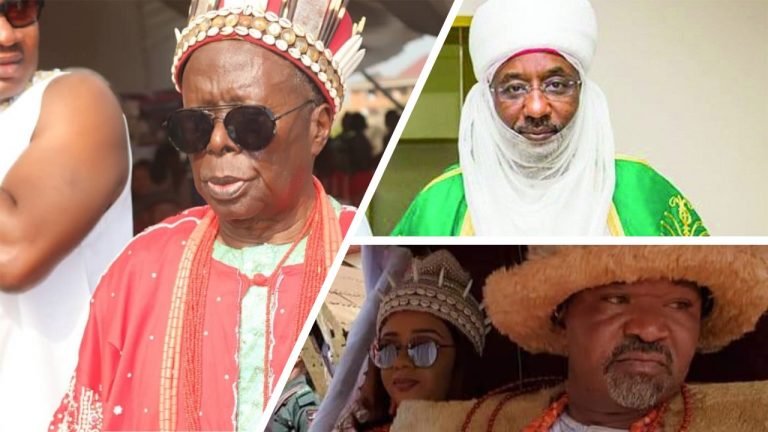
  1. The purported dethronement in 2017 of the Awka traditional ruler, Eze Uzu II, His Majesty Obi Dr Gibson Nwosu, who appears to have lost significant support among Awka people but is nonetheless officially recognized by the state government. The Governor of Anambra State is considered, in the political zeitgeist and governing laws for the kingship institution, as the ratifying authority in the selection of an Eze Uzu. So official recognition imbues Eze Uzu Gibson Nwosu with significant advantage, despite his loss of support among Awka chieftaincy institutions and apparent dissipation of popular support.
  1. The purported enstoolment of a new traditional ruler in Awka in the person of Augustine Ndigwe, “His Imperial Majesty, Eze Uzu III, Obi of Awka”, per his regnal claim. Ndigwe, like Nwosu, lacks overwhelming support among Awka people, as shown in Awka Times survey. Neither appears to enjoy commanding acclamation as the incumbent Eze Uzu, with Nwosu polling at a narrow plurality of 44% versus Ndigwe’s 39%. Ndigwe does suffer a statutory handicap, not being or likely to be recognized by the current administration in Anambra State, but he has the strategic backing of key chieftaincy institutions including Ozo Awka and the Council of Kingmakers, and also Otochal Awka, the revered oldest man in Awka gerontocratic tradition.

This then is part of the political situation in Awka today, a stalemated contest of “crowns” as it were, each side believing itself to possess the more credible claim to the Awka Stool and decidedly unwilling to concede.

Into this mix is thrown the crisis of Awka Development Union Nigeria, which has been longer in gestation, with contested factional claims to the position of ADUN president general and the right to conduct new ADUN elections.

There are several other aspects to the political tension in Awka, but the interlinked cases of kingship and town union crises are the ones in which the government of Anambra State could play a decisive role. But strangely the government’s role has been at best muted and indecisive, and even, some allege, partisan and Machiavellian.

Intricacies of Awka Kingship Crisis

Amidst the myriad political conflicts roiling Awka, we have not seen the Anambra State government play an assertive role, either to mediate the conflicts or, as we saw in Kano, to impose its will. The government seemingly prefers to take a side in the factional fight. In the kingship conflict, the state government has stood solidly behind Eze Uzu II Gibson Nwosu, refusing to acknowledge his purported impeachment and dethronement. Nwosu remains the officially certified incumbent, just as the government adamantly refuses to countenance Ndigwe’s claim to the Awka kingship stool. That of course is its prerogative.

Awka Times learned from sources in Ndigwe’s insurgent camp that after Nwosu was impeached in 2017 due to alleged breach of the kingship code of conduct, documents pertaining to the breach were sent to the state government’s ministry of chieftaincy and local government affairs inviting the government to verify the charges and impeachment process. The source indicates that government did not respond.

Similarly, after Ndigwe was installed by the breakaway elements of the Council of Kingmakers, the government was again sent notification with a request for recognition and certification. Again, sources say, the government was unresponsive. Perhaps government considered these maneuvers to be illegal and thus wished not to indulge them.

There is some divergence in how each of the kingship factions construes the role of government in the emergence of a traditional ruler. The Nwosu faction seems to consider the state authority something of a hegemon that confers recognition and certification, and thus political legitimacy. The Ndigwe faction, by contrast, insists that it is the community that selects its monarch and that legitimacy issues from the people. It argues that it is incumbent on government to certify a monarch chosen by the community.

The truth is probably in between these two claims.

The Awka Traditional Ruler’s Amended Constitution 1986 at Sections 8 to 14, and the Anambra State Traditional Ruler Law 2007 at Part II Sections 3 to 9, provide for the selection, presentation, recognition and certification of a traditional ruler. As we previously argued in Awka Times in our analysis of these laws:

There is… an unequivocal and irrefutable case to be made that the authority of an Eze Uzu is established upon formal recognition and certification by the Anambra State Governor. Going by the provisions of the Awka Traditional Ruler’s Constitution [and the Anambra State Traditional Ruler Law], the Governor would appear to be the ultimate grantor of rulership authority. But the matter cannot be as simple as that. For, while the Governor has ultimate certifying authority, the [Awka] constitution and its founding [state] laws make it clear that the Governor will be required to endorse the community’s choice, in so far as the proper selection procedure is followed and the candidate meets the criteria specified in state law. To an extent, the Governor’s constitutive power might be [considered] fiduciary, in that he is constrained to endorse the candidate chosen through the institutional processes of selection involving the whole community. The Governor cannot wantonly subvert the will of the people if the community speaks with one voice. However, the power of the Governor becomes more autonomous when there is ambiguity in the community, when there is contestation for the Stool and a crisis of legitimacy ensues.

The governor’s powers are also compelling with regard to decertification of a traditional ruler, though he exercises that power on the sufferance of a two-thirds majority in the State House of Assembly.

There is a significant difference between the decertification powers of the Anambra State governor and what transpired in Kano State on March 9th. In Kano, according to the press statement announcing the dethronement of Sanusi II, Governor Ganduje acted in accordance with the Kano State Emirate Law 2019, and effectuated the dethronement and removal in concert with the Kano State Executive Council “after due consultation with the relevant stakeholders”. The charges levied against Sanusi, as indicated above, were “disrespect” and “insubordination” shown towards the state governor and other “lawful authorities”. This sort of deprecatory attitude towards the Kano monarch recalls the statement made in 1982 by a former governor of Kano State, Abubakar Rimi, with regard to the then Emir of Kano, Ado Bayero. Speaking to an NTA interviewer who was questioning his treatment of the supposedly powerful emir, Rimi retorted, his eyes flashing and his manner dismissive:

You are really trying to make the Emir of Kano something which he is not. Let me tell you something my friend. I will advice you to stop talking about this Emir of Kano. The way you press people, and the way our political opponents want to regard the Emir, that is not the way we regard the Emir. As far as we the elected government of Kano State are concerned, as far as I the Governor of Kano State am concerned, the Emir of Kano is nothing, nothing, nothing but a public officer… who is being paid from public funds, and whose appointment is at the pleasure of the Governor of the State, and who can be dismissed, removed, interdicted, suspended if he commits an offence. There is nothing absolutely unique about Ado Bayero, Emir of Kano. He is equal to any one of my eight emirs, and believe me, if he commits any offence which will make it necessary for us to remove him, we will remove him, and we will sleep soundly.

This was a remarkable statement from the radical governor which found resonance 38 years later in the inglorious discrowning of Lamido Sanusi.

We are accustomed to thinking of northern emirs as powerful potentates. But it appears that the governing laws under which they are selected and dismissed, at least in the case of Kano, offers more expansive powers to the governor than in Anambra State. In Anambra, according to the traditional ruler laws of Awka and the state, the monarch is selected or appointed by the community and only presented to the state for recognition and certification. The Staff of Office and the Cap are presented to the selected Eze Uzu by the community through the Council of Kingmakers, whereas the governor, following presentation and recognition, merely issues a certificate. By contrast, in Kano State, as in Rivers State and elsewhere, it is the governor that presents the staff of office to the traditional ruler.

We see a similarly counterintuitive reality with regard to the removal of a traditional ruler in Anambra. In Kano, it took merely a concert of the “Executive Council” and “consultation with the relevant stakeholders” for the emir to be dethroned. In Anambra, a traditional ruler can be decertified and derecognized by the governor, for breach of the code of conduct or to maintain public peace, but only with the approval of two-thirds of members of the State House of Assembly. Even at that, the decertified monarch merely loses recognition by the state. He ceases to draw official remuneration, cannot attend government fora in an official capacity, etc. But his Staff of Office and Cap remain the insignias of authority the withdrawal of which remains the community’s prerogative.

The Awka Traditional Ruler Constitution, at Articles 15 (a) to (d), provides for the removal of the Eze Uzu on ANY one of the following grounds:

  • “Mental Capacity”
  • “Proven case of public misconduct or conduct which is contrary to the Awka Chieftaincy Code of Conduct”
  • “Withdrawal of recognition by the Government of the day”
  • “If the incumbent is adjudged by Awka Community through Ndichie of having committed “Alu” (Abomination)”

The constitution then details, at Article 16, the processes that will be followed by the Council of Kingmakers to try the Eze Uzu, and impeach him, if found guilty of the alleged charges.

The Law and the Role of Government

The constitutional arrangement sketched above shows that in Awka, as distinct from Kano, there may be concurrent jurisdiction between community and state government in the legitimation of the traditional ruler. This constitutional framework erects the possibility that an Awka traditional ruler may be decertified by the state governor but could still retain community legitimacy. Conversely, it seems, an Eze Uzu may retain official government certification but lose community legitimacy if duly impeached for any of the reasons cited at Article 15!

It is a legal architecture which grants the community a measure of independence and seemingly affords it some protection from the vagaries of partisan politics.

But, alas, it is also a constitutional design that could engender factionalism and stalemate if the state government and the commanding institutions of the community are at odds. Depending on the relative strengths of the factions, the government of the day may be more or less able to impose its will on the community. When the factions are stalemated, as seems the case in Awka today, the government may have less room to maneuver than if one faction had overarching superiority.

Sadly, given the politics of resource competition in the state, it also means that frictional communities could be vulnerable to Machiavellian officials wishing to kindle tensions in competing communities, the better able to extract authoritative allocations for their own native communities. Such, too, is likely the case in terms of how Anambra state government officials are managing the crisis in Awka.

In conclusion, given what we have seen above, it may not be possible for the Anambra State government to intervene in the Awka kingship crisis quite as forcefully as did its counterpart in Kano. The constitutional arrangement in Anambra does not lend that latitude of state power, it seems.

But whatever the constitutional constraints against more forceful intervention, nothing stops Anambra State government, if it means well for its long-suffering capital, from mediating Awka political conflicts, such that instead of taking sides as some allege, it acts more as an honest and perceivably disinterested peace broker. That is the more certain way – in the absence of a deus ex machina as in Kano – to finally break the fever of kingship crisis in Awka.

Force Headquarters Emerge Best As 2020 Nigeria Police Games End

0

By Ndu Chris Nwannah, ATM Guest Writer and Joseph Nwiyi, ATM Reporter

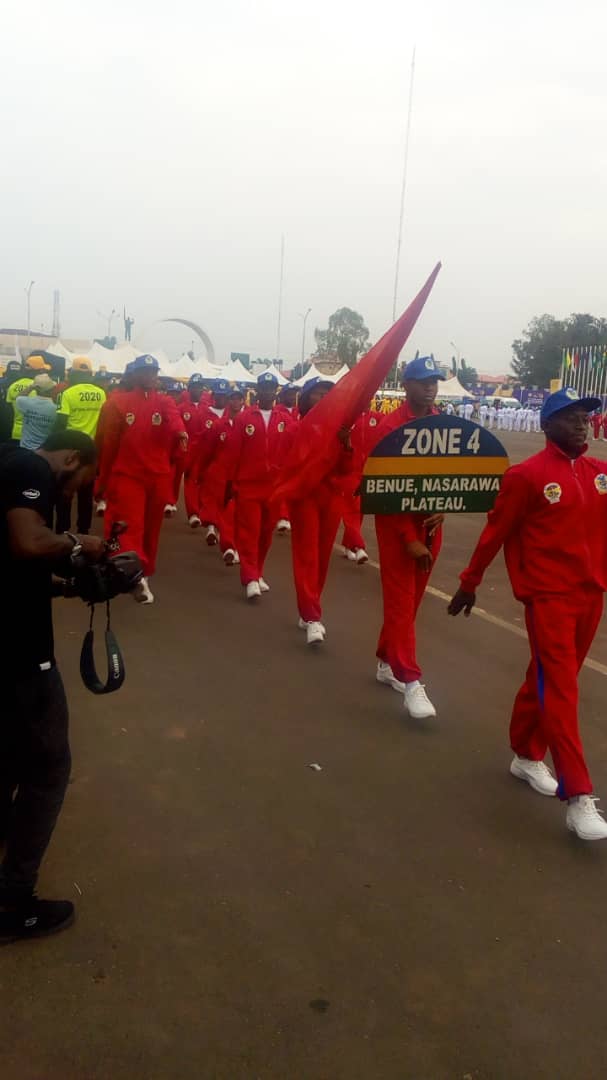
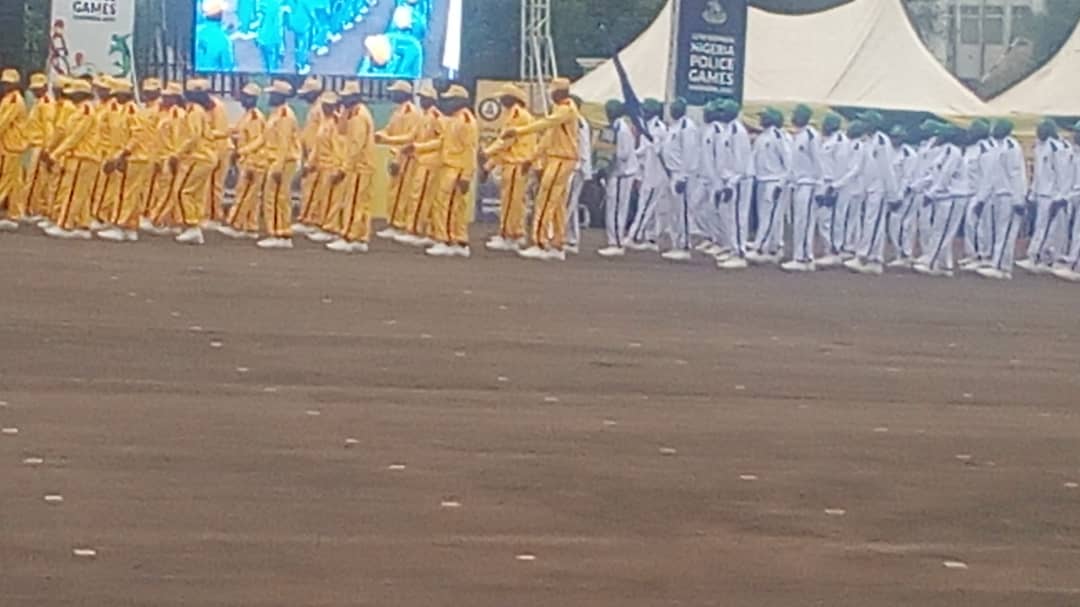
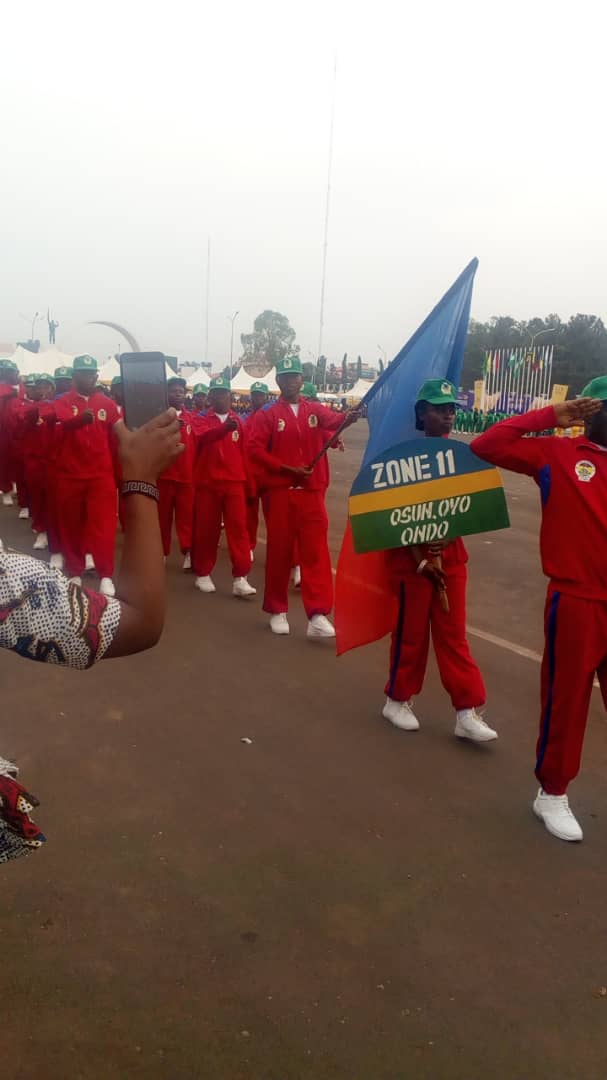
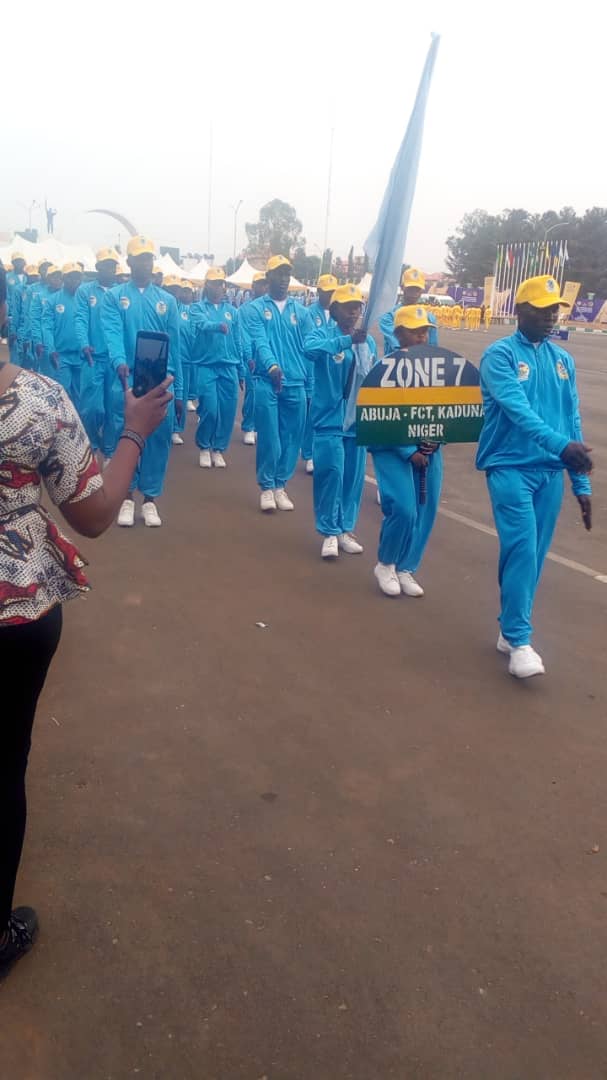
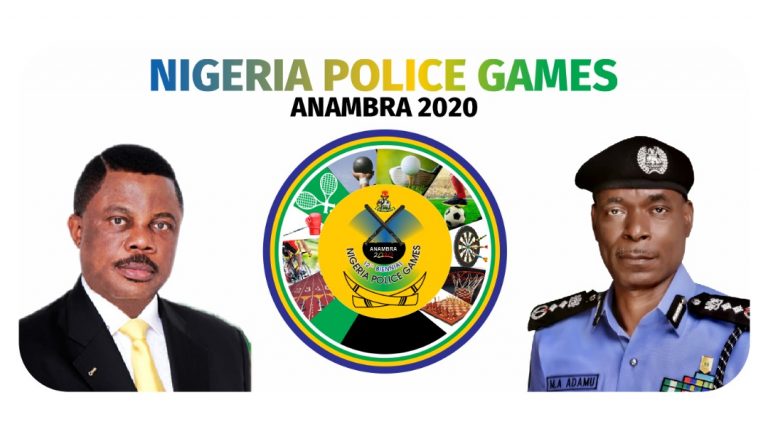
The 12th Biennial Nigeria Police Games event tagged Anambra 2020 has come to a colourful close at Ekwueme Square, Awka, capital of Anambra State. The closing ceremony witnessed several fireworks and entertainment by Flavour, Slow Dog, Harry Song, Mr. Real and other stars. There were also parades by the participating zonal police commands.

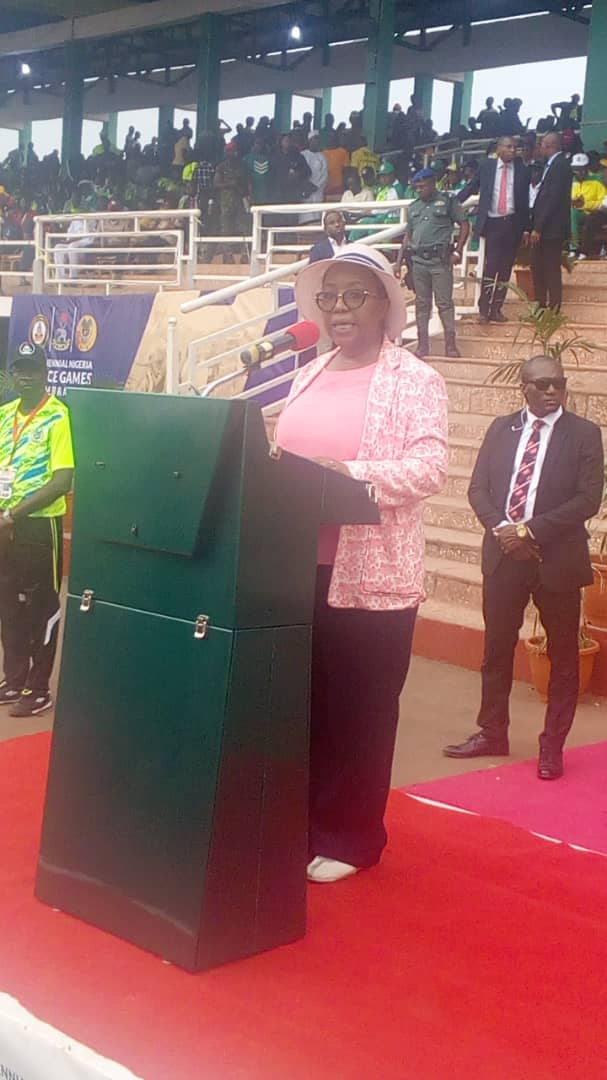
The event was declared closed on 7 March 2020 by President Muhammadu Buhari who was represented by the Minister of State for Environment, Mrs. Sharon Ikeazor. In the closing address read on his behalf, President Buhari said he was happy that the police had in the past produced quality personalities in the field of sports. The President noted that as part of the federal government’s national sporting objectives, he would continue to support the relevance of the games in development. He appreciated the police for their contributions to enhancing national security.

President Buhari commended Governor Willie Obiano for his vision in sponsoring the games. According to the President, the athletes were great in beautifully enriching the games with their talents.

Governor Willie Obiano who expressed happiness over the success of the event, noted that the games had remained a good platform for forging national unity. He assured that the facilities put in place for the games would be utilized adequately in grooming talents that abound in the area. The Governor congratulated the athletes for showcasing great talents.

Governor Obiano commended President Buhari for his attention to the progress of the games and also hailed the police authorities for offering the state the opportunity to stage the event. He applauded transporters from the state and other stakeholders for contributing to the success of the project.

The Inspector General of Police, Mr. Mohammed Abubakar was full of thanks to the Anambra State government for its unique support which helped the police to successfully execute the games. Mr. Abubakar noted that the event was a vibrant measure to discovering new talents. He was happy with the energies deployed by the organizing committee in ensuring its progress, stressing that the 2022 games would be better managed.

Force Headquarters Abuja had the best performance in the games, garnering 274 medals in total, made up of 118 gold, 80 silver and 76 bronze. Zone 2 Police Command – located in the South West geopolitical zone of Nigeria and comprising Lagos and Ogun state commands – came second with 83 gold, 85 silver and 62 bronze medals. Zone 11 Police Command – also located in the South West geopolitical zone and made up of Ondo, Osun and Oyo state commands – emerged third with 53 gold, 48 silver and 55 bronze medals.

Some athletes performed brilliantly in the competition. One of them was Oluchi Obi, a Police Constable from Ebonyi State who won four gold medals for Force Headquarters in different swimming categories. Oluchi was recruited by the police because of her swimming abilities. She expressed happiness over the feat and called for more effort to improve sporting facilities in the country. Yeiya Yellow also garnered three gold medals in swimming for the Force Headquarters, the same three gold medals won by Faith Edorodion, also of Force Headquarters.

The event was ended with a Thug of War challenge between the Navy and the Air Force, which was won by the Air Force.

Definitely Ekwueme Square Awka benefitted immensely from the games with the construction of an ultramodern swimming pool, two basketball courts, two volleyball court and one handball pitch.

Anambra State itself benefitted from hosting the event. Earlier, the state governor, Willie Obiano, disclosed that the state would make at least ₦1.5bn from hosting the 2020 Police Games.

At the closing ceremony, special award presentations were made to President Buhari, Governor Obiano, Mrs. Sharon Ikeazor, Chief of Defence Staff, former Inspectors General of Police, Mr Mike Okiro and Mr Solomon Arase.

Following Project Lag, New Completion Deadline Set For Anambra Int’l Cargo Airport

1
3D mock-up of the proposed Anambra State cargo airport

…. Project misses original 36-month deadline set in April 2017

…. New 15-month deadline set at recent Anambra Council of Elders meeting

…. Elders Council praise effort on the airport and other government initiatives, much to the chagrin of critical civic groups

By Chudi Okoye with Stella Nzekwe at Umueri, and Ndu Chris Nwannah, ATM Guest Writer

A new 15-month deadline has been set by Governor Willie Obiano of Anambra State for the completion of the Anambra International Cargo Airport, Umueri, in Anambra East Local Government Area. This new deadline became necessary given the existing project trajectory which points to a definite slippage.

When Governor Obiano initiated the ambitious airport city development project in April 2017, he had boldly asserted that it would be completed within 36 months, culminating in April 2020. However, project commencement was delayed for a variety of reasons. But after a stalled start, the project appears now to be re-engaged, necessitating a new completion date.

The new deadline was announced by Willie Obiano during the Anambra State Council of Elders meeting held on 4 March 2020 at Governor’s Lodge, Awka.

The Council of Elders meeting was attended by the cream of Anambra State establishment, including the Chairman of the Anambra State Elders Council, Chief Emeka Anyaoku; the Chairman of the Anambra State Traditional Rulers Council, Igwe Nnaemeka Achebe, the Obi of Onitsha Governor; and Governor Willie Obiano himself. The government-recognized Eze Uzu II of Awka, Obi Gibson Nwosu, did not attend due to travel exigency.

A communiqué signed by the Council’s Chairman, Chief Emeka Anyaoku and the Secretary to the State Government, Prof. Solo Chukwulobelu, said that the Council “received a briefing from Governor Obiano through a documentary on the key achievements of his administration since March 2014.” The council commended the administration’s scorecard.

The communiqué brought up specific areas of the state government’s performance for special mention. These included the cargo airport being built at Umueri, rotation of governorship seat, security and the government’s long-term vision for the state.

On the Umueri airport, the communiqué noted that “the Council was comprehensively briefed on the building of Anambra International Cargo/Passenger Airport at Umueri….” It hailed the state government on the 15-month deadline to deliver the project without any loan facility.

According to the statement, “members [of the Council] were satisfied with the pace of work, the choice of internationally reputable contractors in the construction and the 15-month deadline to deliver the airport and the business prospects of the airport. Members also expressed delight that the airport will be completed without a loan.”

Anambra State Council of Elders, March 4, 2020

The Umueri Cargo Airport project was launched on 11 April 2017. In an address delivered to flag off the project, Governor Willie Obiano was unequivocal about the scope of the undertaking, which was not just the airport but an entire aerotropolis ecosystem. “What we have come to flag off in Umueri today,” the governor said, “is not your usual airport project. What we are flagging off today is an Airport City Project with a model that will accommodate an airport with two runways, an aviation fuel dump, an airport hotel, an industrial business park, an international convention center as well as a facility for aircraft maintenance.”

The airport project was kicked off three years into the administration of Governor Obiano. Waxing rather lyrical in his project launch address, Obiano declared:

“I stand before you today to answer the call of history. In Christian numerology, the number 3 is the number of perfect manifestation. So, three years into my administration, the Lord God Almighty has given us a new VISION and a new SONG. Our elders say that ugo gbuzuo ochakee. Anambra State has finally hit the bend in the rivers and our famous can-do spirit has now taken over. From now on, we have nothing more to fear. Nothing! Not even ourselves.”

The governor boasted that “The UAC [Umueri Airport City] project is conceived to join some of the most advanced airports in the world with a capacity to land any of the most sophisticated vessels known to man today.”

Obiano announced that the airport would sit on 1,500 hectares of land, “with enough elbowroom for expansion from Ivite Umueri to neighboring communities such as Nando, Umunya, Otuocha, Aguleri, Nteje, Nsugbe and beyond.”

The governor stated that the project was estimated to cost over $2bn. He disclosed that the project was a public private partnership (PPP) investment by the Anambra State government, Orient Petroleum Resources Limited and Sinoking Enterprises Investments Ltd. of China. According to the governor, the project was to be facilitated by Elite International Investment Holdings Ltd. which will package all the funds needed for the project under a Build-Operate-Manage-and-Transfer arrangement.

It seemed from Obiano’s statement that the partners created a joint venture company named Anambra Airport City Infrastructure Limited, with 75% of its equity allocated to Elite International Investment Holdings Ltd., 20% to Orient Petroleum Resources Limited, and 5% to the government of Anambra State.

The governor indicated that the host communities would be entitled to 3% of the profit from this project in perpetuity as a part of the standard corporate social responsibility.

Obiano claimed in his project initiation address that “the economic benefits of the Umueri Airport City Project are enormous.” He said that the project was expected to generate 1,200 direct and 3,600 indirect jobs from inception to completion, with the people of Anambra State expected to “grab 70% of these jobs in continuation of our effort to create wealth and prosperity for our people.”

The governor touted other expected benefits of the airport project. He said that it would “provide an opportunity for training and skills transfer to our people”; greatly improve “the ease of doing business in Anambra State”; and also “wipe out the difficulties our businessmen and women often encounter in exporting and importing goods and services, and help in improving the entire supply chain.”

It will be recalled that Willie Obiano, whilst presenting the state’s 2020 budget to the state’s assembly on 26 September 2019, had announced that the state government had earmarked ₦6bn as part of its contribution for the construction of the airport.

At the time, Obiano said that critics of his administration’s airport project would be shocked at the pace of work after the rainy season. Obiano’s comment came about because media reports had begun to indicate that the project might be in trouble. For instance, it was reported in November 2018  that contractors and financiers might have abandoned the project. Another media report in April 2019 indicated as well that little or no work was going on at the site, which was said to be overgrown, erosion-ravaged and even occupied by herdsmen and grazed by their cattle. A pro-government media report issued in July 2019 claimed that the delay was “occasioned by Federal Government of Nigeria seizure of drone and other equipment imported by the Chinese investors.” The report indicated that work would soon resume at the site. When Awka Times visited the site on 4 January 2020, we found some equipment on the site, with some evidence of ongoing work although still at the ground-levelling stage.

Chinese technicians setting up for aerial survey and mapping of the Umueri airport site as at July 2019 (Video and voice narration courtesy of James Eze, Chief Press Secretary to the Governor of Anambra State)

Governor Willie Obiano, whose tenure expires early in 2022, has vowed that the first cargo flight must land at the airport before his terminal date; hence the new 15-month deadline declared at the recent Council of Elders meeting.

But skepticism remains. Opposition politicians in Anambra State had dismissed the proposed airport as a white-elephant project merely announced to enhance the prospects for Obiano who was fighting a tough re-election at the time. A spokesman for the All Progressives Congress (APC) insisted that the airport city project was a fluke and even claimed that Sinoking Enterprises Investment Ltd., the named foreign partner, was a fake company that ceased to exist many years back. Awka Times online checks here, here, and here appeared to show that Sinoking Enterprises (reg. no. 0753523), a private company incorporated in Hong Kong on 11 April 2001, had been dissolved on 3 December 2010, more than 10 years before it was named as a partner on the Umueri airport project. Awka Times could also not ascertain if the PPP corporate entity, Anambra Airport City Infrastructure Limited, was registered with the Corporate Affairs Commission (CAC). We found an entity named Anambra Airport Management Co. Ltd (RC no 197977), but this was registered in Lagos in 1992.

There is some media reporting that Anambra state government had begun to seek a new partnership for the project. Awka Times was not able to verify this claim. However, the apparent return of activity at the project site, along with Governor Obiano’s new deadline commitment, would seem to suggest funding viability for the project. Perhaps this is why the Council of Elders, after watching the video update, pronounced itself satisfied with the pace of work on the airport city project.

Still, some groups are not buying the reassurances of the Council of Elders eminences. The president of a civic group that goes by the name Anambra Ekunie, Dr. Ifeanyi Anachusi, has called the Council of Elders mere “praise singers”, and wondered “how much members of the council were induced with to make [such fawning] pronouncements…”

“Is it not shameful,” Dr. Anachusi asked, “that those so-called elders were invited to watch Obiano’s achievements on video? Anambra people cannot see the achievements. They are only on video. Those elders should come publicly to point to achievements on the ground. Obiano works in 3D video.”

Similarly, the civic group also raised doubts about the Anambra State Vision 2070 project, the 50-year development plan chaired by Prof. Chukwuma Soludo, which the Council of Elders appeared to support.

According the Council’s communiqué, “the meeting received a presentation from the Chairman of the Anambra State Vision 2070 Committee, Professor Chukwuma Charles Soludo. The Council expressed support for the strategic plan to make the state attain the status of a fully developed entity within 50 years.”

But the civic group Anambra Ekunie laughed off such a long-term planning. “It is amusing that Obiano is thinking of Anambra of 2070 when he has not been able to develop any part of the state, even his own Anambra north, since 2014 when he assumed office,” the spokesperson Dr. Anachusi stated.

On security, despite persistent reports of cult-related outrages and communal encroachments by herdsmen, the Council of Elders said it was appreciative of the robust measures put in place to protect lives and property in the area.

“The Council commended the state government’s effort to ensure that Anambra State remains one of the most secure states in the country, and in this respect applauded the work of the Anambra State Cattle Menace Committee set up by Governor Obiano since February 2015. The Council was briefed by the Anambra State Commissioner of Police and Director of State Security on recent media reports about purported security breaches.”

The Council of Elders also praised the rotational principle adopted by the ruling party in Anambra State, All Progressives Grand Alliance (APGA), to cede the governorship seat to the southern zone of the State in the next election cycle. It threw its weight behind candidates emerging from Anambra South senatorial district.

“The Council reiterated its position on the rotation of the office of the Governor among the three senatorial zones in the state, and hence its expectation that the next Governor of the state will come from the Anambra South senatorial zone.”

The Anambra Ekunie civic group appeared to reserve its strongest rebuke of the Council of Elders over the issue of governorship rotation. According to the group, members of the Elders Council are not in a position to determine which zone produces the next governor of Anambra state. Dr. Anachusi said that members of the group “will… mobilize against the so-called elders” if they attempt to impose any particular aspirant to succeed Obiano. There are indications that Obiano is nurturing Prof. Soludo to succeed him.

“It is very clear to us,” Anambra Ekunie said, “that the [Elders’] meeting was called to endorse a particular aspirant from Anambra South as successor to Obiano who is a resounding failure.

“We are not folding our arms. Anambra State also belongs to members of Anambra Ekunie, not just to the elders who have had a maddening run on the state since its creation,” the group said, warning the Council of Elders to focus more on how best to offer the state qualitative and result-oriented leadership.

It is clear that Governor Willie Obiano is being closely marked by Ndi Anambra, partisan and non-partisan alike, to see if he would complete his many announced projects before his exit in 2022.

Unknown Baby Refuse-dumped In Awka Metropolis

0

By Ndu Chris Nwannah, ATM Guest Writer

It was a horrible sight as an unknown baby was found dumped in a dumpster at Okpuno within the Awka Metropolis. The situation created panic among people, while some others, especially women bemoaned, what they a termed dastardly act.

According to them it was quite unfortunate that someone could throw such a beautiful gift from God into the refuse dump and left to die. They particularly fingered increasing prostitution and teenage pregnancies as factors that could be responsible for such wicked acts.

The Anambra State Police Command, while confirming the incident said be baby was dumped by a yet to be identified person in Okpuno, a satellite town near Awka, capital of Anambra State, Nigeria.

A statement by Police Public Relations Officer (PPRO) in the state, Mr. Haruna Muhammed noted that “on the 3 March 2020 at about 2:30pm, there was a report at B’ Division Awka that a baby was dumped by an unknown person at a refuse inside a container [in] Okpuno in Awka South LGA of Anambra State.”

Mr. Muhammed stated that police personnel were despatched to the scene, where the baby was certified dead by a medical personnel.

“Following the report, Police Patrol Team led by the DPO CSP Emma Ogbuanya rushed to the scene and discovered a baby boy of about a day old inside the container. Victim was photographed and confirmed dead by a Medical Doctor.

“Meanwhile, the Department of Environmental Sanitation was contacted, they arrived the scene and evacuated the corpse in order to avert health hazard to public living in the area,” the statement added.

The PPRO further noted that the Commissioner of Police in the state , Mr. John Abang, has ordered an investigation into the incident.

“Consequently,the Commissioner of Police, CP John B. Abang, has ordered for a discreet investigation into the circumstances surrounding the incident,” Mr. Mohammed stated.

No Hope for Ihedioha As Supreme Court Refuses To Reverse Imo Ruling

0
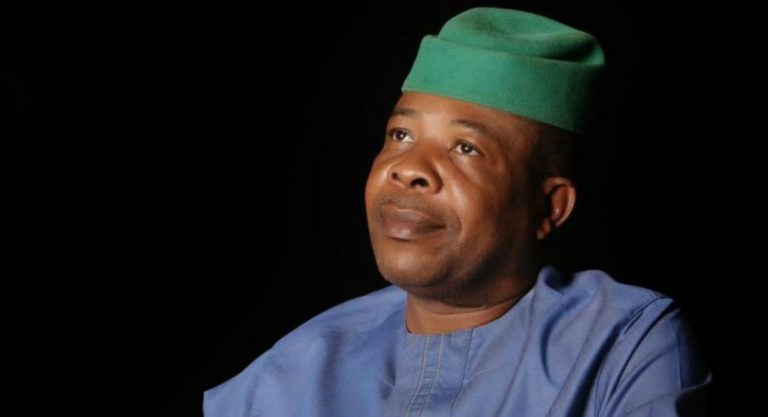
Now for Amadioha? Ihedioha loses again to APC under cloud of controversy

… Supreme Court majority dismisses application to reverse initial ruling, ostensibly for lacking merit

 … Lone dissenting judge argued otherwise, urging colleagues to reinstate removed governor

… Unlike in Bayelsa State case, Supreme Court does not award costs

… Ruling perpetuates the tradition of kinetic party politics in Imo State

By Chudi Okoye

The petition from Imo loomed very large and hope had bloomed; but the case was probably doomed the moment Bayelsa was mooned by the Supreme Court.

Nigeria’s highest court had, on 14 January 2020 – following a petition brought by the opposition party – nullified the election of Hon. Emeka Ihedioha of the People’s Democratic Party (PDP) in the Imo State governorship election of 19 March 2019. Ihedioha and the PDP had filed an application on 6 February 2020 pleading with the Supreme Court to reverse that ruling. On Tuesday, 3 March 2020, after some delay in the controversial case, the Supreme Court ruled on the application: it refused to grant the plea and threw out the audacious application for want of merit.

The court’s dismissive ruling came as a shocking conclusion to the high-profile case, but it was not entirely surprising given the precedent of what transpired very recently in Bayelsa State where the court had refused even to entertain a judicial review of its initial ruling.

The Supreme Court was clearly in no mood for legal experimentation.

The Nigerian apex court had seemed apoplectic when the All Progressives Congress (APC) filed a petition asking it to review its ruling in the contested outcome of Bayelsa State 2019 gubernatorial election. The court had earlier delivered a ruling overturning the presumed victory of APC’s candidate in that state’s election, Mr. David Long, on the basis that his running mate, Mr. Biobarakuma Degi-Eremienyo, had filed forged certificates of qualification with the Independent National Electoral Commission (INEC). The apex court seemed upset to be asked by the losing side to review its judgement. In a splenetic February 26, 2020 decision, the court threw out the petition saying that it was “vexatious, frivolous, and constituted a gross abuse of court process.”

Justice Amina Augie, who read the decision of the Supreme Court, said that granting the application for judicial review would “amount to violating the finality of [the Supreme Court’s] judgment”, that such concession would open the “floodgate” for judicial review application, and that “there must be an end to litigation.”

Justice Augie said she had tears in her eyes and was filled with regret that “very senior” lawyers could file such an application. To demonstrate its disgust, the court awarded a cost of ₦10 million against each of the two lead appellant lawyers, Chief Afe Babalola (SAN) and Chief Wole Olanipekun (SAN), to be paid to each of the three respondents in the case – the PDP, its Bayelsa State governorship candidate, Duoye Diri, and his deputy, Lawrence Ewhruojakpo.

It all stacked up to a ₦60 million smacking.

Against this background, it had seemed improbable that the Supreme Court would grant a petition, as canvassed in the case of Imo State, asking it not simply for a judicial review but to reverse its own ruling.

Dramatic Overturn

It will be recalled that on 14 January 2020, the Supreme Court had delivered a bombshell ruling voiding the election of PDP’s Emeka Ihedioha as Imo State governor, declaring APC’s Hope Uzodinma as the winner of the 9 March 2019 Imo State governorship election. Uzodinma had in fact been 4th-placed in the original vote tally. But Uzodinma had filed a complaint with the Imo State Governorship Election Petition Tribunal, claiming top position with a controversial re-computation that included votes from 388 polling stations which he argued that INEC had unlawfully excluded. He had lost the petition. He had also lost a petition on the same case filed at the Court of Appeal. Both the tribunal and the appeal court ruled that Uzodinma had not proved his allegation against the election of Ihedioha.

Emeka Ihedioha vs Hope Uzodinma

But good fortune awaited the persistent Uzodinma, for on January 14 the Supreme Court, in a unanimous ruling delivered by Justice Kudirat Kekere-Ekun, found in his favor, agreeing with him that results from the 388 polling stations should be computed. The court ordered that Uzodinma be sworn-in as the rightful governor of Imo State.

In the highly-charged aftermath of the ruling, the dislodged Imo State Governor, Emeka Ihedioha, along with his party, PDP, had filed an application on February 6 asking the Supreme Court  to “set aside” its earlier ruling of January 14, arguing that the judgment was a nullity because it was procured by fraud.

The Imo case had seized public imagination far more than most such petitions, drawing widespread media coverage and sparking anti-Supreme Court demonstrations within and outside Nigeria. At a point, Washington DC-based National Press Club, the world’s largest professional organization for journalists, weighed in, berating the Nigerian Supreme Court for allegedly delivering a “flagrantly fraudulent” judgement. The association said global punitive action, including visa restrictions and international legal sanctions, could be sought against the justices if the decision was not reversed.

All this heightened expectations that Imo might prove different from Bayelsa.

No Hope for Ihedioha

The hearing of the ruling reversal application was not without some drama. Initially set to be heard on 18 February 2020, Ihedioha’s lawyer, Chief Kanu Agabi (SAN), had asked the court for adjournment to afford him time to study, and be in a position to respond to, the processes filed by the APC and Hope Uzodinma, the first and second respondents in the case. The seven-man panel of Supreme Court justices, led by Chief Justice of Nigeria (CJN), Tanko Muhammad, had granted that request and fixed 2 March 2020 for the hearing.

However, when the matter was called up on March 2, Agabi yet again asked for a short adjournment, informing the court that he had just been served inside the court with the reply of the respondents and that he needed time to look at the documents in order to respond accordingly. The lawyer for Uzodinma and the APC, Mr. Damian Dodo (SAN) as well as INEC’s lawyer, Mr. Tanimu Inuwa (SAN), had said that they were ready to proceed with the hearing, but the CJN Justice Muhammad adjourned the hearing to the next day.

The court finally considered the application as adjourned on March 3. In a tough 6-1 decision, the Supreme Court panel dismissed the application requesting it to set aside its January 14 decision, arguing that the application lacked merit. Because the application prayed the apex court not for a judicial review but to reverse its initial ruling which nullified the election of Ihedioha, the panel majority, in a ruling read by Justice Olukayode Ariwoola, held that the application in fact amounted to asking the Supreme Court to sit on appeal over its own judgment. The majority held that the court lacked powers to do so in a judgment delivered on merit and in accordance with the dictates of the law and justice.

As Justice Ariwoola put it, “it is settled law that this court has no power to change or alter its own judgement or sit as an appellate court over its own judgement.” Continuing, he argued: “Certainly this court has no inherent power to grant what is being sought, it is beyond the powers of this court. There are no constitutional provisions for this court to review its own judgment.”

He said that on the basis of Order 8 Rule 16 of the Supreme Court, ”the general law is that [the court] has no power to alter any judgment.” He also referred to Section 235 of the 1999 Nigerian Constitution which he said provides that any judgment of the Supreme Court based on merit is final and shall not be reviewed under any guise once delivered, “except for clerical errors” or “if there is a missing link in the main body of the judgment.”

Justice Ariwoola concluded: “To say the least, this court has no competence and indeed lacked the power to sit on appeal in its own decision where the finality of the Supreme Court is entrenched in the constitution and inherent power can only be invoked where there is the law to do so.

“This court cannot ridicule, alter any judgment under any inherent power, as doing so would bring the court into disrepute and ridicule.

“The application is liable to dismissal and is hereby dismissed for want of jurisdiction and competence.”

Unlike the Bayelsa case, however, the justices did not award costs in the Imo case, stipulating that each side should bear its own cost.

The six majority justices on the Imo State panel were: CJN Tanko Muhammad, Olukayode Ariwoola who read the majority judgement, Sylvester Ngwuta, Kudirat Kekere-Ekun, Amina Augie and Uwani Abba-Aji.

Lonely Dissent

A dissenting opinion was offered by the 7th member of the apex court panel, Justice Centus Nweze. Justice Nweze said that he agreed with the applicants that the Supreme Court’s initial judgement which declared Hope Uzodinma as winner was entered in error. As such, he said, the Supreme Court owed a duty to the principle of justice to set aside a decision it had rendered in error. He insisted that the Supreme Court had the power to overrule itself, and averred that the court had “done so in the past.”

Lonely dissenter: Justice Centus Nweze

In a very sharp assessment, Justice Nweze said that “Mr. Uzodinma mischievously misled the court into [an] unjust conclusion with the unverified votes credited to himself in the disputed 388 polling units.”

He said that in his “intimate reading of the January 14 judgment, the meat and substance of Ihedioha’s matter were lost to time frame. This court once set aside its own earlier judgement and therefore cannot use the time frame to extinguish the right of any person.” This was a reference to the argument advanced by the respondents that the 60 days allowed for the Supreme Court to hear and rule on an appeal from the Court of Appeal in an election matter had elapsed by the time Ihedioha filed his application.

“This court’” Justice Nweze said, “has powers to overrule itself and can revisit any decision not in accordance with justice.”

He charged that Uzodinma and his party, the APC, misled the court into accepting the allegedly excluded results in 388 polling units without indicating the votes polled by the other political parties, and without indicating the number of accredited voters in the polling units. Justice Nweze said that he recalled that during the election tribunal hearing, Uzodinma had been pressed into admitting that he “hijacked the result sheets from the electoral umpire officials and completed the result sheets by himself.” The judge therefore wondered how the Supreme Court could have “misled itself into declaring Mr. Uzodinma as governor,” in light of such blatant irregularities.

Based on these facts, Justice Nweze said that he was of the view that the application by the PDP and Emeka Ihedioha should succeed. He concluded: “I hereby make an order repealing the decision of this court made on January 14… I also make an order restoring the respondents [Emeka Ihedioha and the PDP] as the winner of the March 9, 2019 governorship election.”

It was all to no avail, however. The majority ruling carried the day, and as it stands Mr. Hope Uzodinma of the All Progressives Congress, by dint of the Supreme Court’s ruling, is confirmed as the governor of Imo State. With the ruling, APC controls 20 of Nigeria’s 36 states at gubernatorial level, PDP 15, and All Progressives Grand Alliance (APGA) 1 state.

Kinetic Party Politics

The APC’s recapture of Imo State continues the tradition of kinetic party politics in the state. After the Second Republic dominance of the state by the Nigerian People’s Party (NPP) under the governorship of Sam Mbakwe (1979 to 1983), the state was taken by the conservative National Republican Convention (NRC) during the abortive Third Republic, under the governorship of Evan Enwerem (1992 to 1993). Following the return to civilian rule in the Fourth Republic, the PDP governed the state for eight years under Achike Udenwa (1999 to 2007), and afterward under Ikedi G. Ohakim (2007 to 2011) who decamped to the PDP from the Progressive People’s Alliance (PPA) in 2009.

The APC captured the party in 2011 under the helmsmanship of the political carpetbagger, Rochas Okorocha, who seemed to have conjured up a victory in the governorship election of 2011, doing same as well to win a reelection in 2015. Both wins were secured under highly controversial circumstances.

It will be recalled that Rochas Okorochas’ major competitor in the 2015 election had been the former deputy speaker, House of Representatives, Hon. Emeka Ihedioha, who contested under the PDP’s flag. The highly volatile election was deferred for several weeks, with federal authorities citing security concerns. Eventually the election took place on 11 April 2015, but just as with Okorocha’s first election, INEC had declared the 11 April 2015 governorship Imo State governorship polls inconclusive. A re-run was fixed for 25 April 2015 which Okorocha was judged to have won, thereafter governing Imo until 2019.

Emeka Ihedioha’s win in the 2019 government election had brought Imo State back into PDP fold, but in the continuing saga of competitive politics in the state, his apparent victory has now been overturned by a Supreme Court ruling through which an APC candidate, who had been accounted fourth in the initial vote tally, has vaulted into the vaunted governorship seat in Imo State.

Little wonder the bemusement of Justice Nweze, the lone dissenting voice within the Supreme Court panel. He had told his colleagues that the court made a mistake in its initial ruling, arguing that “the finality of the court cannot extinguish the right of any person,” and that the “court [had] a duty of redeeming its image.”

Being outvoted on the panel, however, Justice Nweze concluded with a prediction that “the decision of the Supreme Court in the instant matter will continue to haunt our electoral jurisprudence for a long time to come.”

President Buhari Kicks Off Biennial Police Games in Awka

0

…Applauds the exploits of Police personnel in sport

…Commends Police role in fighting insurgency

…NDLEA warns athletes not to spike  their system with drugs

…14th edition of Anambra Walk For Life held, presaging Police event

By Ndu Chris Nwannah, ATM Guest Writer, Joseph Nwiyi, ATM Reporter, Pamela Henry-Igwe, ATM Guest Writer, and Kenechukwu Chukwudi, ATM Guest Reporter

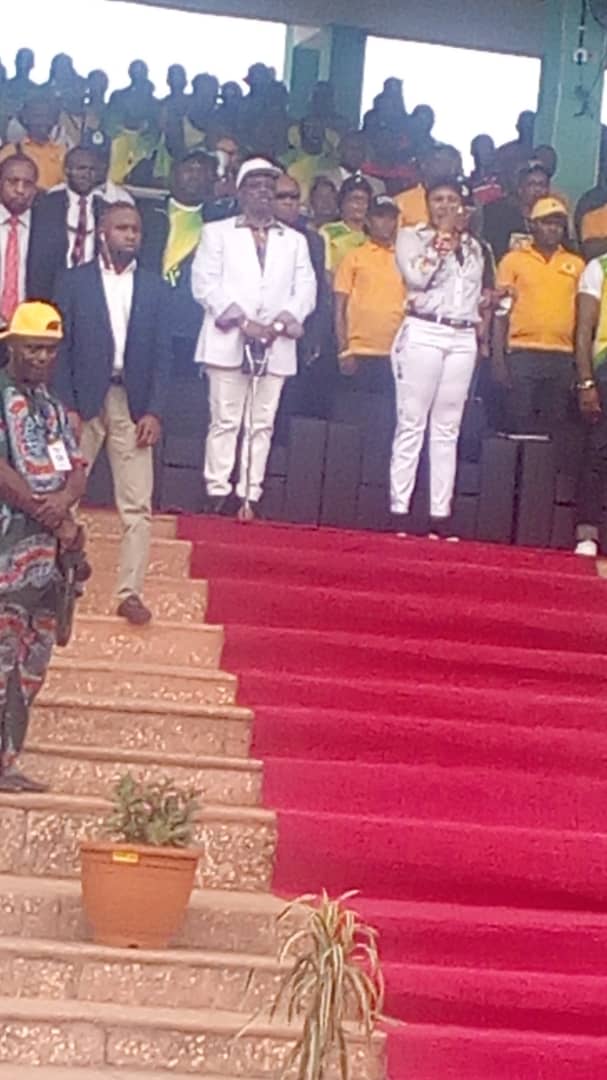
The Alex Ekwueme Square in Awka, capital of Anambra State, was filled to capacity on Saturday, 29 February as the President of Nigeria, Major-General Muhammadu Buhari, declared the commencement of the 2020 Biennial Nigeria Police Games, the 12th edition of the fiesta, hosted this year in Anambra State. Ekwueme Square, used as venue for the event’s opening ceremony, wore a bright new look with diverse decorations depicting Nigeria’s national colours and the police colours. The atmosphere was electrifying with superb fireworks along the road leading to the Anambra State House of Assembly Complex and the state Judiciary Headquarters, Awka.

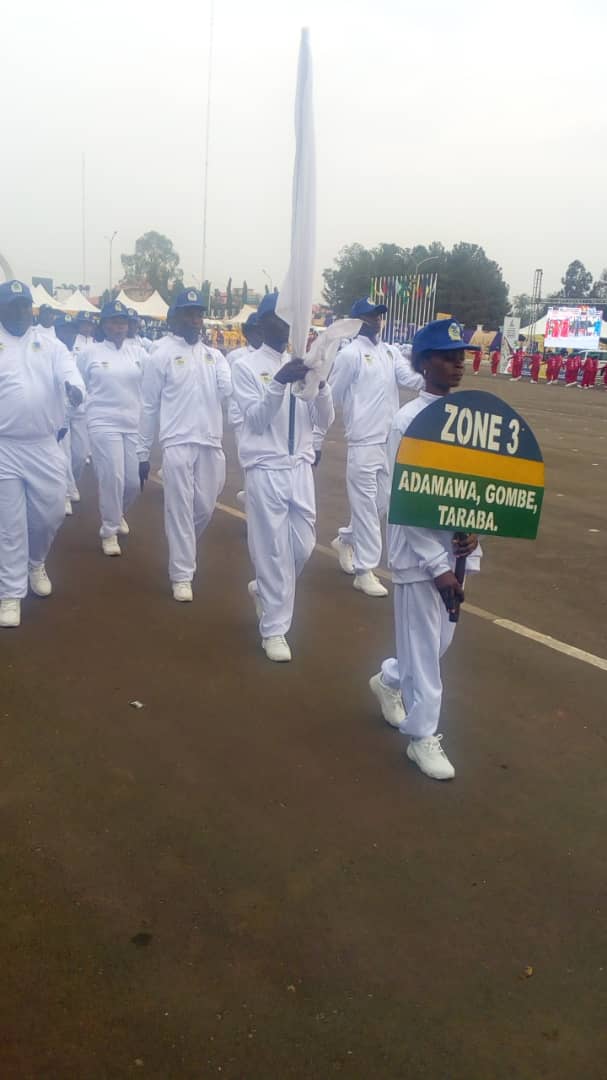
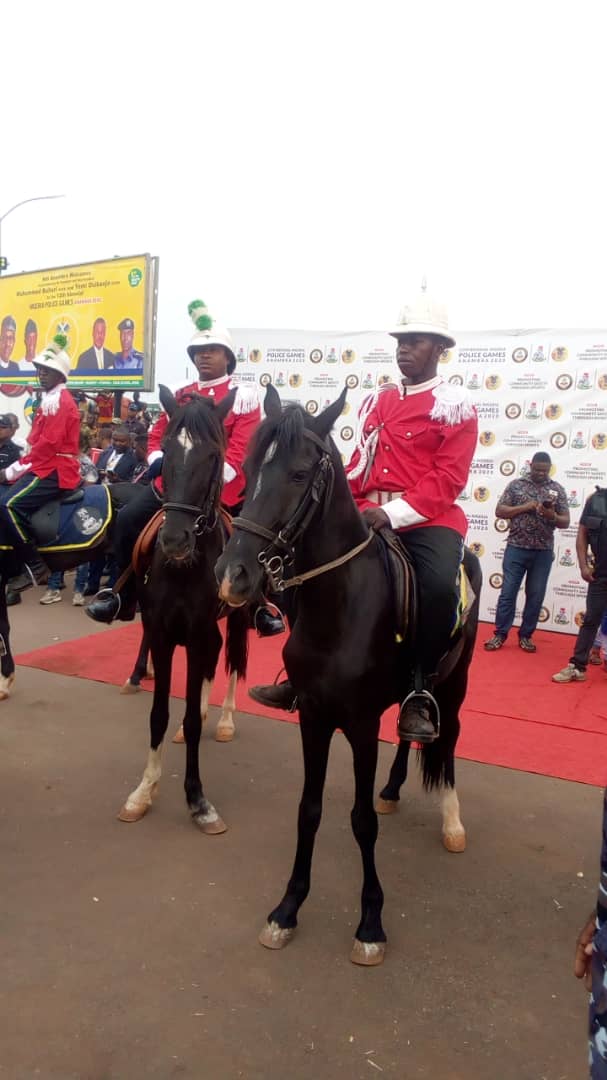
There were parades by special squads from the 12 Police Zonal Commands and Force Headquarters, even as the torch for the 2020 Nigeria Police Games was lit to the admiration of guests, participants, police chiefs, community and political leaders.

Declaring the games open, President Muhammadu Buhari whose address was delivered by the Minister of Police Affairs, Alhaji Mohammed Maigari Dingyadi, acknowledged the contributions of the police to sports development in the country. President Buhari said the event, coming at a time when the nation was battling insurgency, underscored the help rendered by the police in sustaining the nation through its participation in the war against terror in partnership with the military. He pledged the readiness of his administration in securing the nation.

President Buhari stressed that he would continue to prioritize the repositioning of the police because of their important role in national security. According to the President, it was due to this that he assented to the police funding bill to pool resources to enable the Force to tackle its challenges. He said that his administration had also approved the recruitment of 10,000 new personnel to boost Force performance. He commended the management of the police for its focus in delivering efficient security.

The President also spoke on police and citizens relationship, noting that it was in this regard that the concept of Community Policing was adopted to create a robust synergy with the public.

President Buhari urged the athletes to imbibe the spirit of sportsmanship during the games. He advised them to break existing national records, set new ones and be ready to replicate such in the international arena. The President appreciated Governor Willie Obiano of Anambra State for hosting the event as well as the warm reception accorded participants and officials.

Earlier, Governor Willie Obiano described sport as a uniting factor, stressing that it had the potential to bring together the country’s diverse backgrounds. Governor Obiano noted that Anambra had produced notable sport icons such as Emmanuel Ifeajuna, Mary Onyali, Emma Okala, Innocent Egbunike, Francis Obikwelu, among others. He emphasized that the games would have a great economic impact by adding value to numerous businesses in the area.  According to him, it has the potentials to attract over ₦1.5 billion into the economy of the state.

Governor Willie Obiano and IG Mohammed Abubakar at the opening ceremony

Governor Obiano was emphatic that the event would transform sports in the area. He pledged the readiness of his administration to sustain partnership with the police in the area of crime fighting.

Image result for nigeria police games 2020

The Minister of Youth and Sports Development, Mr. Sunday Dare, said he was happy over efforts to return the Police Games to its past glory. He called for partnership with governments, the private sector and institutions to sustain the games. Mr. Dare commended the police authorities for finding time within their tight schedule to engage in sports and charged all stakeholders to join hands to build a better future for the growth of sports in the country.

The Inspector General of Police, Mr Muhammed Abubakar, said that sports play a great part in the development of any nation. Mr. Abubakar stated that the games would no doubt help in the discovering of new talents that would represent the country in the future. He was happy that police personnel had excelled in the past, such as Chioma Ajunwa and late Sunday Bada among others. The Inspector General of Police noted that the Force was aiming to replicate the outstanding performances of the Police Machine teams in the past. He charged athletes to aspire to win laurels competitively. Mr. Abubakar expressed happiness over the investments made by Governor Willie Obiano to ensure the successful hosting of the games.

Ijelle masquerade outing gracing the opening ceremony 

The Chairman of the Central Organizing Committee of the Police Games, AIG Alkali Baba Usman commended efforts to promote sports development through the Police Games.

Multi-talented musician, Flavour, had a great performance as the crowd surged to savour his music. Harry Song also dished out beautiful melodies to entertain guests and contingents.

The Anambra Cultural Troupe was on hand to entertain the crowd with a parade of dancers depicting six ethnic nationalities in Nigeria: Igbo, Yoruba, Fulani, Hausa, Tiv and Efik.

The Governor of Ebonyi State, Chief Dave Umahi, was represented by his deputy, Dr. Eric Igwe, while Governor Ifeanyi Ugwuanyi of Enugu State was represented by the Secretary to the State Government, Mr. Gabriel Ajah.

Former Inspector General of Police, Mr. Ogbonnaya Onovo, was also in attendance. Police DIGs and AIGs, including the Awka indigene DIG Celestine Okoye, also graced the occasion, along with numerous dignitaries.

Earlier, in a pre-event press briefing, the Commander of the National Drug Law Enforcement Agency (NDLEA) in Anambra State, Mr. Muhammad Idris Misbahu, had urged athletes participating in the Police Games not to abuse performance enhancing drugs to excel in the competition.

Speaking in Awka through the agency’s Public Relations Officer, Mr. Charles Efosa Odigie, Mr. Misbahu emphasized that abusing performance enhancing drugs would increase the risk of high blood pressure, enlarged heart, irregular heartbeat, heart attack, stroke, dangerously high body temperatures and intense anger or paranoia.

He advised the  athletes to use their God-given talents and abilities to perform in the games and achieve victory.

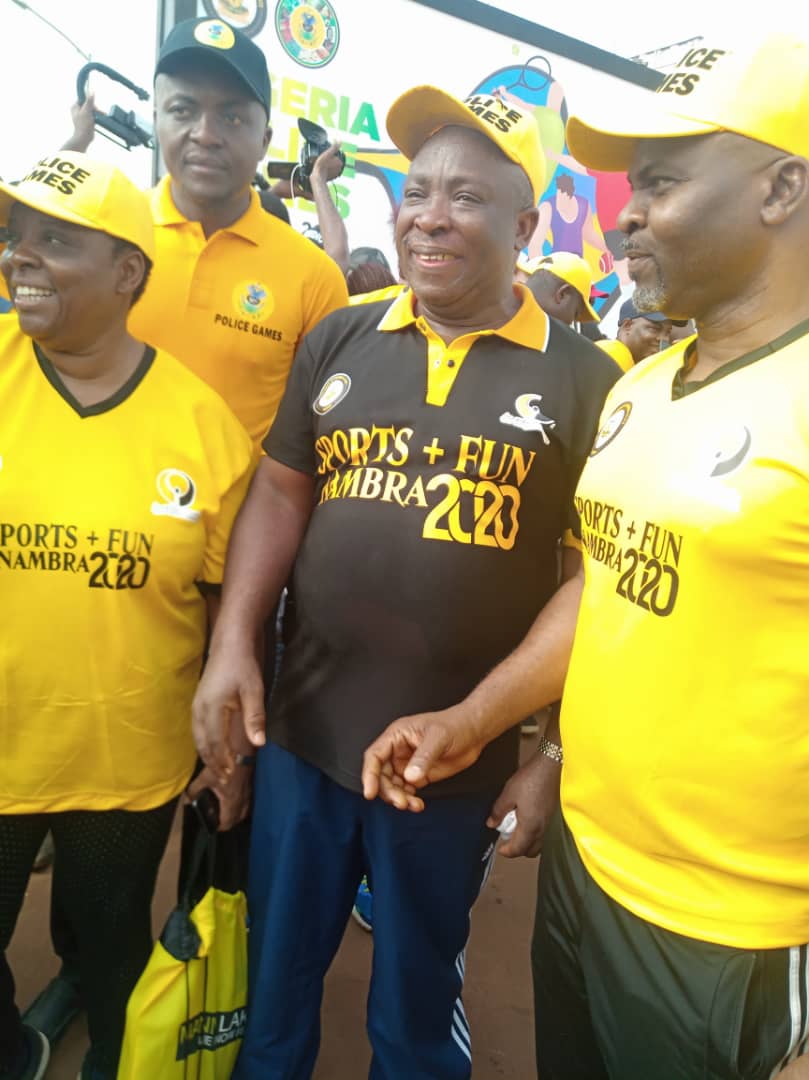
Prior to the opening ceremony, the 14th edition of the monthly fitness Anambra Walk For Life was undertaken, with ever more Ndi Anambra, taking part. The event presaged the 12th edition of the biennial Nigeria Police Games taking place in Anambra State this year.

The walk covered a distance of about 9.5 kilometers, starting from the open field opposite Governor’s Lodge Awka to Ekwueme Square Awka through the Enugu-Onitsha Expressway, with refill points to keep participants hydrated.

Anambra indigenes and residents turned out in numbers to join the walk including the former Senator representing Anambra Central, Senator Victor Umeh, the Secretary to the State Government, Prof. Solo Chukwulobelu, Speaker of State House of Assembly, Honourable Uchenna Okafor and other prominent government personalities.

Speaking at the end of the walk, the Chairman of the Anambra State Sports Development Commission, Mr. Tony Oli, remarked that the walk was a way to welcome the Nigerian Police Force for their games holding in Anambra State, to feel the vibe and preparedness of the state to host the event, and to appreciate the governor of Anambra State, Willie Obiano, for his immense support.

Former Senator Victor Umeh, showed excitement for being part of the walk, emphasizing that hosting the Nigerian Police Games in the state shows the level of security the government has brought to the state and the governor’s fit and healthy team, which is commendable.

The Speaker of the State House of Assembly, Honourable Uchenna Okafor and Secretary to the State Government Prof. Solo Chukwulobelu noted that the state is very ready to host the Police Games, as every logistics and facility has been put in place, noting that the game will also increase economic activities in the state.

Commissioner for Health, Dr. Vincent Okpala, reiterated their readiness to respond to emergency and any health challenge that might arise during the Police Games while her Basic Education counterpart, Prof. Kate Omenugha, revealed that school activities continues during the period of the games, dispelling rumours of closing schools for the games.

The game featured its regular ogene music, fruit breakfast and aerobic exercise at the end of the walk.

Police Arrest Tricycle Snatcher In Awka, Recover Weapon

0
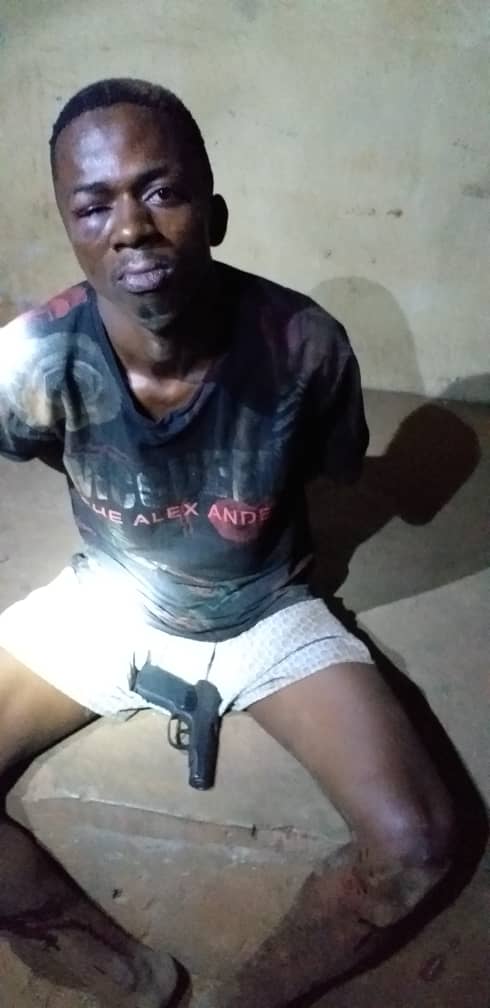
Arrested robber, bedraggled following beating by public

By Ndu Chris Nwannah, ATM Guest Writer

The Police in Anambra State have arrested a suspected armed robber who specializes in snatching tricycles, a three-wheeled vehicule popularly known as keke. The 21 year old suspect, Ndubuisi Chibuike, who hails from Nenwe in Enugu State, was nabbed by operatives of the State Anti- Robbery Squad (SARS) at Eke Awka, after allegedly dispossessing his victim, one Basil Agbaka, of his tricycle at gunpoint.

A statement released by the Police Public Relations Officer (PPRO) Anambra State Command, Mr. Haruna Mohammed, indicates that the arrest followed a distress call.

“On 26 February 2020 at about 9:15pm, following a distress call, Police operatives attached to the Command Special Anti-Robbery Squad (SARS) arrested at Eke Awka one Ndubuisi Chibuike, a male aged 21 years of Nenwe, Enugu State.

“The suspect, who was beaten to stupor by the mob, was rescued and arrested after he allegedly robbed one Agbaka Basil (male) of his tricycle at gunpoint.”

Mr. Mohammed said one Markov Pistol, six live ammunition and the allegedly snatched tricycle were recovered from the suspect.

“Meanwhile, the suspect was taken to the hospital for medical attention and would be charged to Court as soon as investigations are concluded,” the release noted.

NDLEA Arrests 45 Suspected Drug Peddlers In Anambra State

0
NDLEA Commander Mohammed Idris briefing journalists

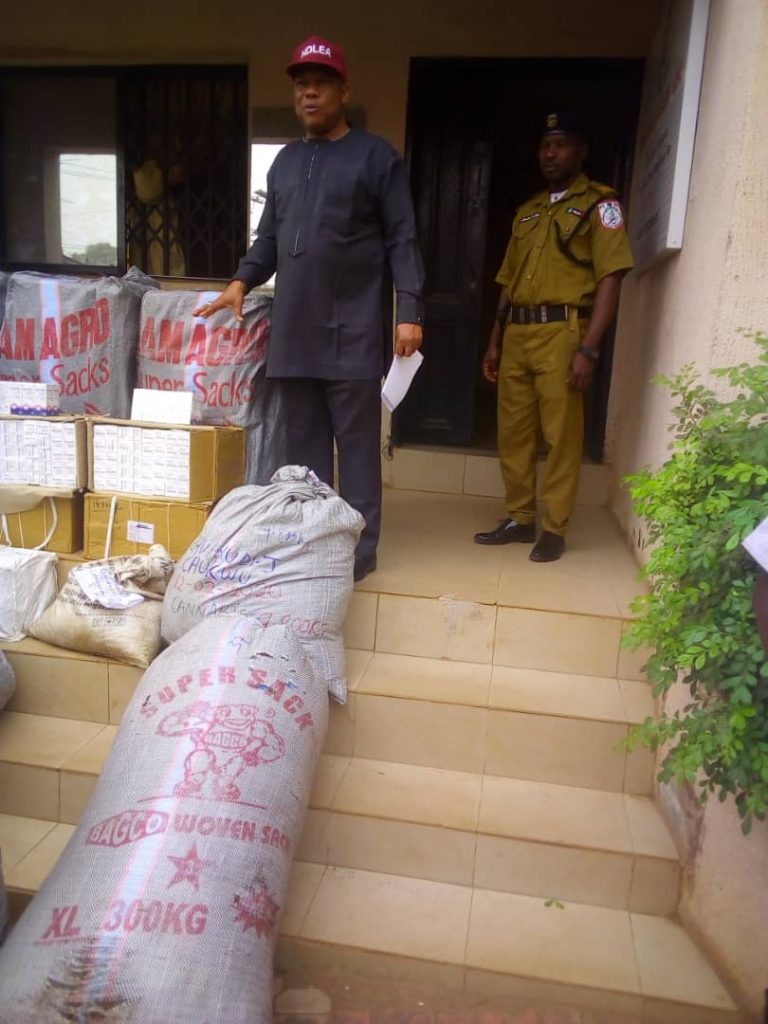
Seizes large kilogrammes of drugs

By Pamela Henry-Igwe, ATM Guest Writer

The National Drug Law Enforcement Agency (NDLEA) Anambra State Command says it arrested forty-five suspects for various drug offenses between January and February this year. The Commander of the Agency in the state, Mr. Mohammed Idris, made this known during a media briefing in Awka.  Mr. Idris explained that out of the forty-five persons arrested forty-two were males, while three were females.

According  to him, the Agency had also seized several kilogrammes of hard drugs from suspects and secured the conviction of five persons within the period under review.  The NDLEA boss gave a breakdown of the seized substances as: cannabis sativa 224.1521kg, cocaine 0.0464kg, crystalline meth 0.0052kg, heroin 0.0046kg, tramadol 2.180kg, codeine syrup 320.0000kg, and rophenol (known as the date rape drug) 1.540kg.

Mr. Idris said the command also had 149 pending cases at the Federal High Court, Awka and the Court of Appeal Enugu Division. He hinted that 23 persons were undergoing various stages of counseling at the Onitsha Area Command of the Agency.

Mr. Mohammed Idris applauded Governor Willie Obiano for his assistance to the command in the fight against drug trafficking in the area. The NDLEA Commander warned those involved in illicit drug activities to desist from such or face the full weight of the law.

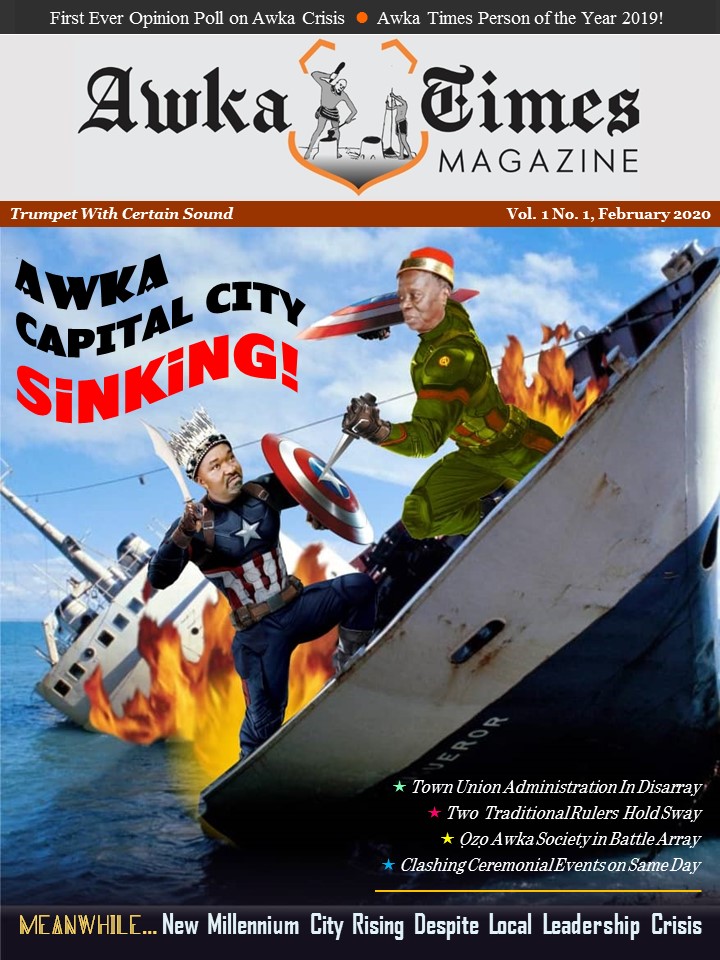
Now Available: Awka Times Magazine, Vol. 1, No. 1, February 2020 – Digital Print Edition

1

Greetings!

We are now ready to launch the print edition of Awka Times Magazine, following our successful online launch on 8 December 2019. Awka Times is taking the bold step of launching a complimentary print edition, in an age of changing magazine economics, to ensure that our product reaches all relevant readership segments.

In a groundbreaking print delivery plan, we are launching a paper print version as well as a digital print facsimile powered by flip book technology. This is fairly uncommon in the Nigerian magazine media market. Digital flip book format enables you to read the digital facsimile of the print edition on your phone, tablet or computer screen, flipping through the pages mimicking the real-life experience – complete with rustling sound as you turn the pages. Rediscover the sensation of reading a printed news magazine – in real-life digital format!

This announcement provides a link to the digital flip book version of our first print edition. The digital package can also be accessed through the “Magazine” menu on our website. The paper version will be on sale in Nigeria from 6 March 2020.

This inceptual print edition of Awka Times highlights the problem of the modern leadership institutions in Igboland, the new organs meant to integrate local communities into the democratic architecture of the modern state in this part of Nigeria. In our reporting on this issue, we focus on the twinned kingship and town union crises currently ravaging Awka town, the capital of Anambra State, Nigeria, limiting its allure and importance as a capital territory. We also look at the ongoing search for solutions, determined but so far ineffective. This story highlights the weakness of the kingship and town union institutions in parts of Igboland, suggesting that these modern leadership organs are yet to settle into the cultural milieu of some Igbo communities.

This edition also delves into happier news, however. It covers for instance an ambitious new project, undertaken by the Anambra State government and a consortium of private investors led by Dr. Clem Nwogbo to build a brand new city on the outskirts of the congested old Awka town. This edition also covers the philanthropic work undertaken by the Awka Times Person of the Year, 2019, Dr. Okey Anueyiagu, who is profiled and extensively interviewed.

There’s also reporting on recent news from Awka community and environs.

Our high-quality all-color print edition, in paper or digital flip book format, is available through highly subsidized subscription. Click the icon link here to access the digital flip book version, and check with your local vendor from 6 March 2020 for the paper version.

Welcome to Awka Times print edition!

Chudi Okoye
Publisher/Editor-in-Chief


[real3dflipbook id=’12’]

Awka Times’ Webmaster Proposes To His Angel

0
Awka Times' man, Onyekwere Godwin, after his marriage proposal was accepted by Ms. Chioma Ihezukwu

By Chudi Okoye

He simply could not wait any longer. It was her birthday, a momentous birthday at that, and she was writing her final exams at the Federal Polytechnic Bida, where she had been an outstanding student. She was coming into her prime, and he thought it was time.

And so on this day, 25 February 2020, the strapping young man made his move. He had arranged for seven of his close friends to accompany him on the journey he was planning. As the early morning sun began its majestic rise on this joyful day, the Abuja-based rising star, Amb. Onyekwere Godwin Nwachukwuneke – Awka Times’ tireless webmaster, ICT whiz kid, social entrepreneur and all-round jolly good fellow – gathered up his contingent. With Onyekwere wearing a simple tunic in Awka Times’ corporate color, the group piled into a line-up of two cars and set off west on the dusty, rough road to Bida, Niger State, driving some 220 kilometers and six animated hours on this relentless journey.

Onyekwere’s mission: To propose to his “Precious” paramour, sparkling Ms. Chioma Ihezukwu.

They arrived their destination in fine fettle, whereupon Onyekwere showed his mettle. There on the dusty pavements of Bida, as onlookers (students, lecturers, traders, okada riders and other spectators) marveled at the chivalry and the revelry of it all, Onyekwere got down on one knee and asked Chioma to marry him. Chioma was completely dumbstruck, having been led earlier to believe that her industrious boyfriend was ensconced in Abuja on her birthday, attending a series of business meetings.

The overjoyed young lady cried but soon took it in stride, and with pride agreed to be Onyekwere’s bride.

Somewhere beyond the clouds, the celestial choirs peeled off joyous hallelujahs to mark this moment of transcendent love. Even here, on this parched earth in Nigeria’s convulsive west midland, love blossomed; a bright new life of marital bliss beckoned.

On this day too, if you had looked closely at the Masthead of Awka Times – the revolutionary magazine whose website Onyekwere designed – you would have seen it celebrating the event in effervescent colors, toasting the newly engaged on this day of double celebrations.

Happy birthday, Chioma!

Happy times ahead to Onyekwere and his girl, Awka Times’ first engaged couple.

Onyekwere’s roundtrip on this day added up to some 440 kilometers and 12 hours of driving time, but it marked the beginning of a blissful journey to marital life, one started with determination, organization and great imagination.