28 C
Awka
Monday, April 6, 2026

Trumpet With Certain Sound

Home Blog Page 7

Coalition of Opposition Parties Imperative for Change in 2027

0
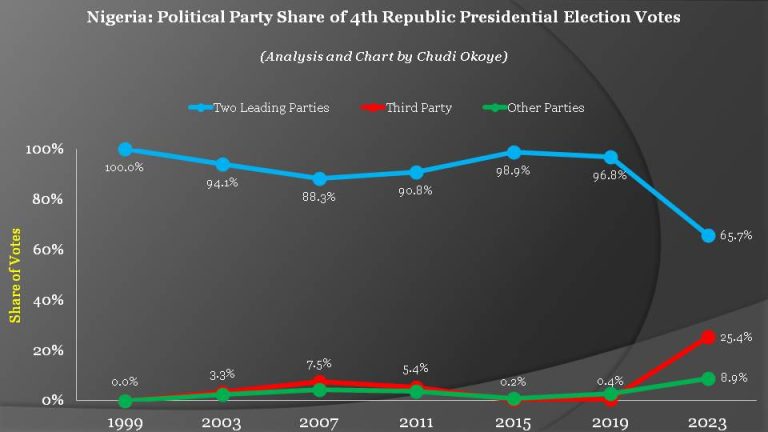
Nigeria - Political Party Share of 4th Republic Presidential Elections Votes

What’s to be done when change is imperative but the political conjuncture makes it improbable? A coalition of major opposition parties offers a promising path.

By Chudi Okoye

A defeat of the corrupt and incompetent ruling party, the All Progressives Congress (APC), in the February 2023 presidential election would have marked Nigeria’s stride as a maturing democracy. Unfortunately this did not happen, vexing a great many Nigerians desperate for change. Of course, APC didn’t come through the 2023 election unscathed. Its share of votes plunged – by 19 percentage points relative to 2019; and although the party survived the tough legal challenges mounted by the main opposition parties, it governs with a much shrunken mandate.

APC deserved a walloping after the galloping disaster of Muhammadu Buhari’s two terms. But an even more significant indicator of Nigeria’s democratic growth would be a defeat of the current president, Bola Ahmed Tinubu, in the election of 2027. The defeat of an incumbent and a peaceful transfer of power to the successful opposition are considered a powerful sign of democratic consolidation. We’ve just seen this yet again in Liberia, with Joseph Boakai’s defeat of the incumbent president, George Weah.

We might say, then, that the defeat of Tinubu in 2027 is a democratic imperative for Nigeria. But what are the odds of achieving this feat? And what’s the most promising path for the opposition?

Atiku Abubakar, candidate of the Peoples Democratic Party (PDP) in the February presidential election, has proposed what may be a workable, and walkable, path to that end. In a speech he delivered on 14 November whilst receiving the national executive committee of the Inter-Party Advisory Council, Nigeria (IPAC), the former vice-president called for a merger of the major opposition parties, so they can present a formidable front against the ruling party, APC, which, he averred, is exhibiting proto-dictatorial tendencies and is turning Nigeria into a one-party state.

It is strong stuff. Predictably, it elicited an equally strong rebuke from the APC. A spokesperson for the party said that Atiku was suffering from an “irrational fear of one-party dictatorship,” and advised him “to concentrate on repairing his damaged political psyche and attempt to revive his comatose PDP.”

No surprises there, I’d say. It’s par for the course for the seemingly jittery ruling party.

The slight surprise, rather, comes from the conflicting reaction of the opposition parties, as reported in the media. Punch reported that the Labour Party (LP) expressed an interest in the idea, while the New Nigeria Peoples Party (NNPP) appeared to hedge, offering a condition for its participation in any merger. Vanguard, on the other hand, reported that Labour has denied offering any positive signaling, quoting the exact same Labour spokesperson cited by Punch in its own report.

Meanwhile former Senator and prodigious kibitzer, Shehu Sani, has panned the proposition, penning on his Twitter page: “Merging PDP with the young, agile, and restless Labor supporters will be like fixing a Ferrari engine into a peogeot (sic).”

I am not sure which is the more accurate reporting about Labour’s reaction: the positive signaling presented by Punch or the rebuff reported by Vanguard. Perhaps, it’s simple political somersault: Labour was for the idea before it came out against it. Or, it might be merely a political dance to appear none-too-eager so as not to weaken the party’s position in a prospective political bargain. Whatever the case, it would be unfortunate if the opposition elements fail to at least explore the benefits of political cooperation.

First of all, a merger would mean a reversal of the very dynamic – opposition fragmentation – that enabled APC to eke out an improbable, though heavily contested, victory in the February election. Enlightened party interest should propel the opposition parties towards reconsolidation, the better to take on a fierce, if fumbling, APC that did not deserve to win the last election.

Beyond this, a move to coalition formation would only follow a tradition that has persisted– either in the form of a governing or an electoral alliance – throughout Nigeria’s political history. In the 1959 general election which heralded Nigeria’s independence, none of the regional parties emerged with sufficient seats to form a national government on its own. So the National Council of Nigerian Citizens (NCNC) and the Northern People’s Congress (NPC) entered into a governing alliance. This led to the leader of the former, Dr. Nnamdi Azikiwe, becoming governor-general and later, in 1963, president; while Sir Tafawa Balewa, NPC deputy leader and chief minister since 1957, was a shoo-in as prime minister.

As it happened, the NPC-NCNC coalition had become increasingly frayed and unstable as the 1964 general election approached. In the chaotic lead-up to the election, the kaleidoscope of Nigerian politics was re-scrambled. New electoral alliances were formed to fight the election: NPC, along with Ládòkè Akíntọ́lá’s Nigerian National Democratic Party (NNDP) and a straggle of other parties formed the Nigerian National Alliance (NNA); while the NCNC, Action Group and a rump of other political groupings coalesced into the United Progressive Grand Alliance (UPGA).

The political conflagrations from that election led to the January 1966 coup d’état and the collapse of the 1st Republic.

When democratic politics returned and election was held in 1979 to usher in the 2nd Republic, Alhaji Shehu Shagari’s National Party of Nigeria (NPN) secured the largest share of votes. But the party was not strong enough to form a national government on its own. So, in a repeat of the 1st Republic model, NPN entered into a governing accord with Azikiwe’s Nigerian People’s Party (NPP), with the latter offered a few ministerial portfolios in the NPN government.

The alliance did not subsist, however. Nor did the 2nd Republic itself. Still, when the military re-opened the political space for the 3rd Republic in 1992, a rash of political formations erupted, forcing the military to create by fiat a two-party system comprising the Social Democratic Party (SDP), ideologically positioned “a little to the left,” and the National Republican Convention (NRC), pitched “a little to the right.” These parties were veritable coalitions, each comprising a diversity of interests and tendencies compelled to cluster – by an ineluctable, nearest-neighbor political algorithm – into the superstructures created by the military. But the “voodoo democracy” of the 3rd Republic (apologies to Prof. Soyinka) was soon scuttled by the military.

With the emergence of the 4th Republic in 1999, there was yet a recrudescence of the coalition dynamic in Nigerian politics. We’ve had seven presidential elections so far in the 4th Republic. Results from the first six indicate a persistent duopolistic tendency, with two political conglomerates commanding a disproportionate share of votes, as seen in the following tallies: 1999 – 100% (there were only two parties); 2003 – 94.1%; 2007 – 88.3%; 2011 – 90.8%; 2015 – 98.9%; and 2019 – 96.8% (see chart above).

It was only in the 2023 election that we saw a departure from the two-party dominant outcome, with the leading parties, APC and PDP, securing a combined share of 65.7%. The Labour Party emerged as a third force, propelled from obscurity by the Peter Obi factor. Its 25.4% share of the votes and command of 11 states plus the FCT was many orders of magnitude above any previous third party performance.

This statistical trend begs the question of the best electoral strategy to defeat a floundering APC in the 2027 election. Should the opposition parties reconsolidate? Or is there a chance that either PDP or LP, each on its own, will emerge triumphant?

A single-party win is not impossible. But a coalition strategy would greatly improve the odds. A cooperative strategy makes sense when we consider the result of the 2023 presidential election, with the PDP candidate and the two former PDP members who decamped to LP and NNPP winning a combined 60.7%. Opposition coalition is further advised, being the very means by which APC emerged in 2013, to defeat a swaggering PDP just two years later.

Although it was PDP’s Atiku that has suggested the idea of a pan-opposition merger, this should not be, or be seen as, a play by him for another presidential punt in 2027. I’d expect Atiku to play a prosocial, statesmanlike role in building an opposition alliance for others before he exits the political stage – perhaps as a personal revenge but more in aid of Nigeria’s democratic development.

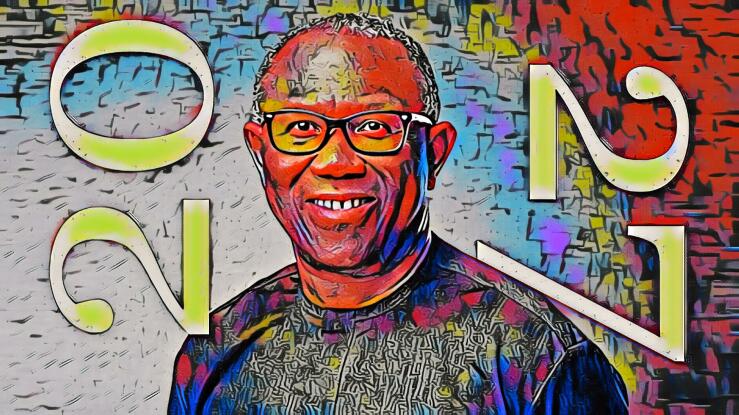
I would suggest, further, that any opposition electoral alliance that likely emerges should present a 2027 ticket led by Labour’s Peter Obi. This is not merely because Obi was the second runner-up in the February election. He has also attracted an ardent progressive base unmatched by any other candidate. This is important because, in Nigeria’s ever-opportunistic political culture, Labour, like other opposition parties, will likely lose some of its electoral cache before the next election, as plum-seeking politicians pivot to the ruling party. A strong base of personal support offers Obi a bargaining chip to bid for leadership in any emergent opposition alliance.

In addition to this, Obi also embodies a unique political calculus melding ideology and geopolitics. He represents the mainstreaming of progressive (though not radical) politics, and his election would constitute a geopolitical correction for the South East so far denied presidential accession. No other candidate in the coming electoral cycle will embody such a vital convergence in quite the same way as Obi.

This brings me, finally, to the argument made by Senator Shehu Sani concerning the incompatibility of PDP and Labour.

This is an incredibly ignorant comment, I would argue, with due respect to the senator. Democratic history anywhere in the world shows that mass political parties harbor within their ranks a diverse range of political tendencies. This is the case with the Democratic and Republican parties in the US, the UK’s Labour and Tory parties, and their counterparts elsewhere, all of which have moderate or centrist factions as well as more radical elements. All such parties also cultivate a generational mix. There is no reason therefore why the Nigerian Labour Party’s “young, agile and restless” horde, to use Shehu Sani’s description, cannot cohabit with PDP’s wizened, if staid but well-connected, political operators. Ferrari and Peugeot can certainly share the same garage!

If the opposition parties hope to win the next election and rescue Nigeria from the clutch of a dysfunctional ruling party, their best strategic option is to orchestrate a formidable coalition. Change won’t come by revolution, though it is increasingly invocated by starry-eyed and frustrated public intellectuals. Political theorists have long identified the conditions that can trigger revolutions if they converge. Some of these are present in Nigeria today: extreme hardship and mass discontent; acute perception of governmental failure; political decay and distrust of institutions. But other triggering factors are missing or not yet acute: widespread revolutionary consciousness cutting across primordial and class divides; intra-elite fissures and emergence of dissident elites; institutional decay paralyzing state coercive apparatuses; and a favorable global environment.

Military intervention is arguably less implausible than revolution as a mechanism for change, but it is barely more probable. The Nigerian military is totally discredited as a political institution and significantly depleted as a martial force. Whether in their stratocratic or civilianized guises, our erstwhile military rulers are deeply implicated in the Nigerian quagmire. So there is no moral justification for military intervention.

What do you do when change is imperative but the political conjuncture makes it improbable? Our best hope for a needed near-term change in Nigeria is a coalition of the major opposition parties, invigored by our present agonies and rising discontent.
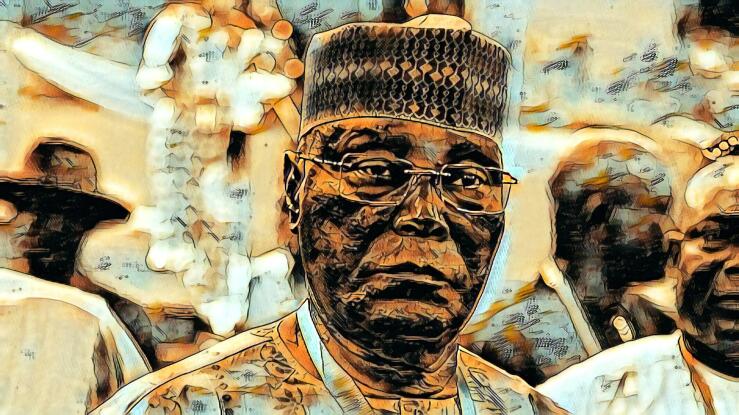
A Pained and Deeply Strained Valediction: Is This Atiku Abubakar’s Last Stand?

0
Atiku Abubakar: Key Loser in the 2023 Presidential Election (Awka Times reproduction)

After a dogged 30-year pursuit of the Nigerian presidency which so far has proved unsuccessful, Atiku Abubakar, who has had an illustrious political career otherwise, might now consider giving it a rest and working instead for the larger goal of Igbo presidential accession, to achieve his abiding dream of more intimately unifying the country.

By Chudi Okoye

You could conjure up varied homophones of his name, and they would all resonate in meaning. There is, for instance, “Attacus” – a genus of butterfly-like moths which, though beautiful to behold, is considered a pest because it can damage plant life as voracious caterpillar; leave irksome residue when it flaps its wide wings; and even trigger human allergies if allowed to infest. On the other hand, there have been historical figures of some renown named “Atticus”, among them a philosopher, a rhetorician and even a Christian martyr. Also, who can forget the fictional “Atticus Finch”, the fierce activist lawyer considered the greatest hero of American cinema and even a model of integrity in legal circles for his feisty but ultimately failed defense of a black man wrongly accused of rape in the novel, To Kill a Mockingbird. And yet, in Yoruba language, “a ti kú” means “we are dead”!

Every element of this homophonic pastiche, to some degree, is evinced in the manner by which our own “Atiku” Abubakar has projected himself and prosecuted his case in the 2023 presidential election dispute.

There he was on 30th October, presenting his studied response four days after the Supreme Court’s ruling on his election petition, offering the nation what could well be (though no one can really say) his last stand.

On this day, Atiku had on a serene, sky-blue kaftan and matching cap; and he wore his typically impassive demeanor, though his impassioned words revealed a seething, deep-seated anger. His incandescent mood was unmistakable even as he quietly and dignifiedly laid into the courts, his political bête noire – President Bola Tinubu, and the electoral umpire.

Waziri Atiku Abubakar had had much the same mien earlier on 7th September, a day after the Presidential Election Petitions Tribunal (PEPT) delivered its own judgment on the petitions brought by several opposition parties and their candidates to challenge the official results of the 25th February presidential election.

Seized as he seemed by a surge of moral indignation, and projecting as he did the image of a determined political crusader, Atiku proclaimed at his post-judgment press parley that he would “continue to struggle” for Nigerian democracy for the rest of his life, even though, as he put it, “for me and my party this phase of our work is done.”

No one can say, if they were fair, that the man didn’t try. Hardened perhaps by his previous political battles, not least against a self-entrenching military regime and later against the unconstitutional third-term agenda of a wily president and army general under whom he had served, Atiku emerged in the 2023 election legal contests as the fiercest challenger, and has inflicted by far the deepest wound on Tinubu’s presidency. He inveighed publicly and cuttingly against the courts and the electoral umpire, even as a complaisant Peter Obi, the other major protagonist in the post-election palaver, perhaps wisely (given his rabid support base) played a disciplined game of “politics without bitterness” (a la Waziri Ibrahim of blessed memory). Atiku put Tinubu through a crushing wringer, stubbornly pursuing a legal recourse – even beyond our shores – to uncover evidence from Tinubu’s past which revealed a man with a deeply flawed moral character. It was mainly on account of Atiku’s exertions that I wrote as follows in a recent prose poem, in oblique reference to Tinubu:

“Our hassled leader is lurking in his tasseled chambers, haunted by his tousled past and by opponents with whom he tussled.”

Atiku Abubakar has made sure that Bola Ahmed Tinubu is politically damaged.

But if Atiku laid waste to Tinubu’s political persona in the process of election litigation, what about Atiku himself? How does he come off in the whole election saga?

Not particularly well, I would say, despite the image of a principled political crusader that he sought to project in the 2023 election controversies. A parsing of his statements after the Supreme Court ruling against previous stances shows a measure of incoherence, shape-shifting and perhaps opportunism.

Questionable Recommendations
Consider, for a start, Atiku’s proposal, contained in his post-judgment press statement, that “we must make electronic voting and collation of results mandatory.” This is a somewhat surprising – if sensible – suggestion, coming from Atiku. Didn’t the man argue, through his lawyers for the 2023 election litigation, that electronic collation and transmission of results was already mandated by law? His suggestion here seems to confirm the opposing parties’ argument to the contrary, which was upheld by the courts. If Atiku’s reading of the statutes has changed in light of the courts’ ruling, he should simply have said so, and then on that basis, propose the mandation of electronic processes as he has done. His proposal here contradicts his earlier legal stance; yet he carried on as if the courts had been wrong in dismissing his argument.

Atiku also made another landmark suggestion which seems to me rather poorly argued. He said “we must provide that all litigation arising from a disputed election must be concluded before the inauguration of a winner,” noting that “[t]he current time frame between elections and inauguration of winners is inadequate to dispense with election litigations.” This is a suggestion I’ve heard elsewhere, and it sounds quite sensible, until you begin to peel it apart.

First, to an attentive observer, this would seem to be an unwitting admission that the petitioners, arguably constrained by time, had not been able to marshal the evidence they needed to prove their allegations of widespread malpractice and other infringements in the election. It was much the same point (which I cited in a previous article) made by one of Peter Obi’s lead counsels, Prof. Awa Kalu (SAN), in which he mentioned the near impossibility of assembling sufficient evidence, within the short window of time allowed by law, to back up the opposition’s case. As a reminder, Section 285(5) of the 1999 constitution as well as Section 132(7) and Paragraphs 4(5) to 4(6) of the 1st Schedule of the 2022 Electoral Act stipulate that parties wishing to file election petitions must do so, along with their list of witnesses and the latter’s depositions, no later than 21 days after the declaration of results. This is, undoubtedly, a tough requirement. But in arguing the point, both Atiku and Kalu appear to affirm the validity of the PEPT’s judgment that the petitioners adduced insufficient evidence to support their claims. This, in turn questions the pervasive narrative of a compromised bench pushed by Atiku and other figures in the opposition.

Beyond even this important point, one also wonders if Atiku, in proposing a delay to the inauguration of a new administration pending the legal resolution of election disputes, had considered the ramifications. Currently, our laws allow for a maximum of 21 days to file petitions, as noted above; 180 days after that for the appeal court – as court of first instance – to consider the petitions and render judgment ((Section 285(6) of the constitution and Section 132( 8) of the Electoral Act); and 60 days thereafter for the Supreme Court to deliver judgment on any appeal(s) resulting from the appeal court’s ruling (Section 285(7) of the constitution and Section 132(9) of the Electoral Act). This all adds up, on the outside, to a total of 261 days – nearly nine months after election results should have been declared!

Pray, is Atiku Abubakar suggesting that we delay the inauguration of a new government for more than nine months after an election has been called? Who would run the country during the prolonged interregnum? Should we formally extend the tenure of the incumbent president whose governing mandate is ending? Or should we perhaps install the Senate president as acting president, being next in line after the elected incumbent and his vice? If the latter, should we then change the laws, since Section 146(2) of the constitution allows a Senate president to act as national president for no more than three months?

Clearly, extending the time allowed for the resolution of election disputes, as Atiku recommends, would create a lot of confusion. To achieve his goal of a longer lead time for disputes, we must have an interregnum between administrations or start the election process much earlier. Either option is a recipe for political instability.

It isn’t clear if Atiku considered all these ramifications. It is possible the man merely meant that we should extend the 21-day window for the filing of petitions and submittal of evidence and witnesses, and not necessarily that we should extend the overall timeframe for dispute adjudication. But if that is what he meant, he should have said so, and then we can debate the merit of that suggestion. As it is, he merely said we should allow time for all election litigation to be settled before inauguration takes place. Clearly, in making this perfunctory suggestion, Atiku did not seem to have considered all the implications.

More Questionable Suggestions
There is also Atiku’s suggestion that we should switch to a majority voting standard. As he put it, “in order to ensure popular mandate and real representation, we must move to require a candidate for President to earn 50% +1 of the valid votes cast, failing which a run-off between the top two candidates will be held.” This is clearly a dig at Tinubu’s supposed victory, secured with only 36.6% of the votes cast in the February election.

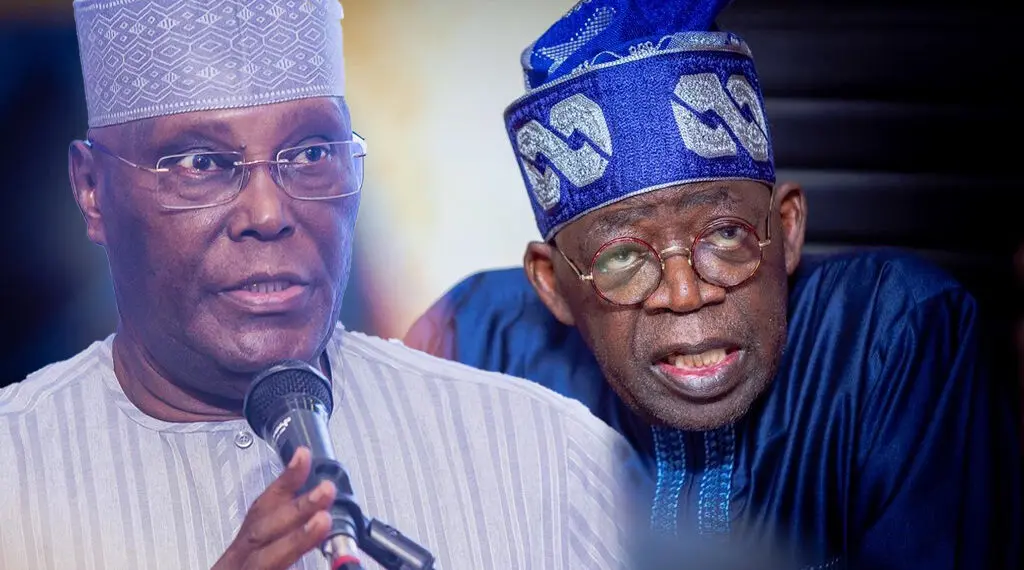
Atiku and his bête noire, President Tinubu

The 1999 constitution provides for both majority and plurality voting. It requires at Section 134(1)(a) that a candidate must win a “majority of votes” where there are only two contestants, and at Section 134(2)(a) that they secure the “highest number of votes” if there are more than two. Atiku’s recommendation of a majority vote, whatever the number of candidates, is well-intended I’m sure. But it will constrict political choices and rigidify our two-party dominant system which we have just begun to shake up with the 2023 election results. Would Peter Obi, for instance, have migrated to the Labour Party, and thus created an unprecedented third-party momentum, if confronted with the calculus of having to win over 50% of the votes? Certainly not! Atiku’s suggestion here is unsuited to our complex and politically diverse landscape.

Of all the suggestions made by Alhaji Atiku Abubakar, the most radical – and also the most curious because it seems self-implicating – is his proposal that “we… move to a single six-year term for President [which should] be rotated among the six geo-political zones.” Atiku based this proposal on the recommendation of the 1995 Constitutional Conference, in which the former vice-president had participated.

Fancy that! Atiku Abubakar now rooting for zoning and rotational presidency!

Pray, where was this commitment last year, in the lead-up to the primary election of Atiku’s party, the Peoples Democratic Party (PDP), when Atiku and his northern acolytes machinated his victory in a most brutal fashion, in the process frustrating southern members of the party who had demanded a rotational concession to the South based on the promise of the party’s own constitution? The greatest frustration of course was felt in the South East, a region which had supported the party in the most lopsided manner and has suffered for it with the accession of the All Progressives Congress (APC). It was this very issue that created the rupture within the PDP that led to the party’s defeat in the February presidential election.

I had written about this issue long before the election, in a July 2022 article titled “Atiku Abubakar versus the South East: Political Usurpation and Electoral Consequences in 2023.” I opened that article declaring that “Atiku Abubakar has a South East problem,” and went on to say that “it is almost certain that he faces an upset in that geopolitical zone in the coming presidential election….” I concluded the article arguing that the PDP had “made poor choices in the composition of its 2023 presidential election ticket,” and that “the mistake could cost it the election.”

This was in July 2022, seven months before the presidential election. Unfortunately, events turned out as I had predicted. Atiku’s primary election machinations and violation of his party’s zoning principle contributed in no small way to PDP’s loss of an election it should won handily, allowing Tinubu and his party to scrape through with only a plurality. This is the inescapable fact of the 2023 presidential election, whatever else might be said about electoral corruption.

Atiku, 2027 and the Igbo Question
Atiku’s frustration of the South East political goals did not start with the 2023 presidential election. There are many who believe he was deeply involved in efforts that frustrated Dr. Alex Ekwueme’s presidential outing in 1998 and 2003; surely a sad history for a man who moved the earth to build the party into a national juggernaut.

Atiku’s relationship with the South East is certainly complicated. He was once married to an Igbo woman. He has had deep ties in the upper tiers of the Igbo political class. Atiku has been running for Nigerian presidency since 1993, and on the three occasions when he snagged his party’s nomination, he picked a running mate of Igbo extraction. Yet, in the lead-up to the 2023 election when his party’s zoning principle should have been leveraged in favor of a southern flag-bearer, preferably someone of Igbo extraction, Atiku and his acolytes orchestrated the process in aid of his own selfish goal.

One could, perhaps justifiably, pick bones with Atiku and point to what I might call a soft bigotry of inferior concessions, perceivable in his apparent preference of Igbo for running mate but obstructing the legitimate Igbo aspiration to the top job. However, though that case could be made with merit, we need not dwell on it now. With Atiku now presumably in the twilight of his political career, it should be possible for him to make amends and dispense his remaining political capital in the service of helping to achieve the overarching Igbo presidential aspiration.

The 2027 presidential election seems to me an opportune moment to do this. Atiku would be aged well past 80 by that time. Although being an octogenarian has not proved an impediment to presidential ambitions in some countries (see, for instance, Joe Biden in the US), Nigeria, with its myriad governance problems and its weak democratic institutions, does need an energetic president – one who is relatively young and healthy. We saw what the debilitations of age and health did to the Buhari presidency, allowing diverse hidden forces to hijack his agenda and bend same to a privatized and primordial will. It turned the Buhari presidency into an unmitigated disaster. The same appears now to be shaping up with the presidency of Bola Tinubu, who claims to be in his early 70s but clearly betrays the ravages of a more advanced age, noticeable physically but also intimated by occasional signs of a cognitive decline.

There should be absolutely no question of Atiku Abubakar running for the Nigerian presidency in 2027. Instead, to prove what he told Arise TV last year about his “desire to unify the country,” Atiku should now work with the Igbo political class to achieve the goal of Igbo presidency in 2027 – and, in this way, avoid a brutal zoning logic that will put off the prospect to 2039.

The forces are well aligned for 2027. Though there’s always the advantage of incumbency in Nigerian politics, Bola Tinubu can (and should be) defeated if he seeks re-election, what with his so far listless and unbridled presidency and the baggage of ignominy he carries from the controversial 2023 election, resulting in no small measure from the forensic efforts of Atiku Abubakar himself.

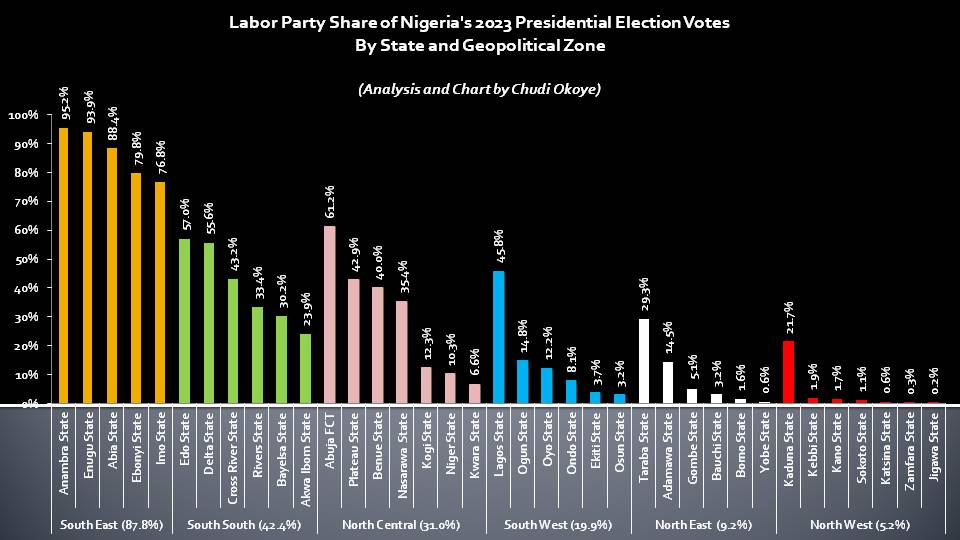
Breakdown of Labour Party share of votes in the 2023 presidential election

In addition to this, Peter Obi acquitted himself very well in 2023, achieving in a very short time what no fringe-party candidate had done since the dawn of the Fourth Republic. In a mere matter of months, he moved a moribund political party into the political map, winning 25.4% of the votes as officially accounted, securing 25% in 16 states and carrying the federal capital territory, Abuja, plus 11 of the states (including a Lagos State once governed by Tinubu). Beyond his native South East, Obi performed quite well in several other regions, nabbing 42.4% of votes in the South South, 31.0% in North Central, and 19.9% in the South West. It was only in Buhari’s North West zone and Atiku’s North East that Obi fell short, two resistant zones he couldn’t penetrate probably for want of time and strong local allies. Even in these two zones, however, there were some breakthroughs, with Obi winning 29.3% in Taraba State (North East) and 21.7% in Kaduna State (North West).

It is a performance with promises of improvement if the dynamic of 2023 can be sustained. All that is needed is for the South-easterners to coalesce around a common agenda in the nation’s interest, and to take their message of national integration into the furthest reaches of the country.

An Atiku that’s now advanced in age may not be able to carry off another presidential foray for himself in 2027. But he can certainly work towards the integrative agenda of producing a Nigerian president of Igbo extraction in his lifetime. In this way he might truly acquire for himself the revered status of a Nigerian statesman, and might even end up in the rarefied company of the esteemed Chief Obafemi Awolowo, as a great president Nigeria never had.

Achebe Mourns Nigeria

3
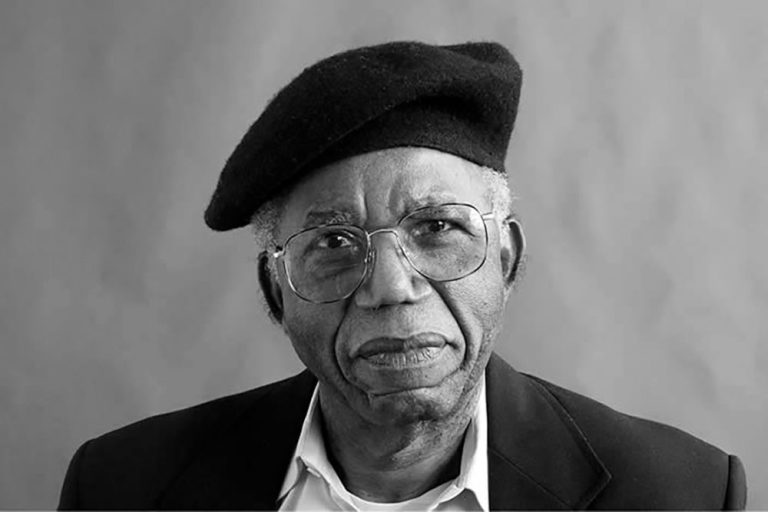
Chinua Achebe

Achebe Mourns Nigeria

By Chudi Okoye
October 27, 2023

It seems that God Himself, like a Vengeful Creditor, would deny this country a respite or Civil Peace.

It feels truly like the Beginning of the End. Everywhere in this land, even as you look, Things Fall Apart at a frightening pace.

Our hassled leader is lurking in his tasseled chambers, haunted by his tousled past and by opponents with whom he’d tussled. He pops out now and again, pretending to be still A Man of the People, to spin yet another yarn, telling us – who are mourning – that it’s Morning Yet on Creation Day.

But no longer can we hide the truth! The Arrow of God is upon this land, and we are No Longer at Ease. There is upheaval everywhere, The Old Order in Conflict with the New. You have, even now, Girls at War, and the masses used merely as The Sacrificial Egg.

We are all walking on a Dead Men’s Path; so, I urge you, Beware Soul Brother!

The Trouble With Nigeria is deep; it has become the epitome of Africa’s Tarnished Name, a faded country where existence feels like Home and Exile – all at once!

It feels today as hopeless as Christmas in Biafra, our hearts eager but our means meagre; our lives laden with plight but the gods seemingly in flight.

Speaking of Biafra! No longer can this fact be denied: The restless ghost of the ‘Vanquished’ is clearly haunting the ‘Victor’, the latter unable to turn victory into meaningful progress.

It is the infernal dance of the bird and the rope. Or, as our wise ancestors long warned, the spectre of the exhausted aggressor tangled aground with his subdued victim.

Indeed, as much for Biafra as for Nigeria, we can now erect a mournful epitaph that says: There Was a Country.

(Compositional Note: I have used the titles of various works by the great Chinua Achebe, titles italicized in this prose poem, to weave my narrative. All copyrights acknowledged.)

South East Summit 2023: A DUEL MANDATE for National Leadership

0
Anyim Pius Anyim, Ngozi Okonjo-Iweala and Olisa Agbakoba leading South East Summit 2023

Following the traumatic outcome of the 2023 presidential election, the South East summit on economy, security and politics holding this week is a welcome initiative to begin a reset that may enable a frazzled region to compete more effectively for power at the presidential level

By Chudi Okoye

The Labour Party is now, very methodically, plotting a path back to power. If the party wins the next general election, which must be held no later than 28th January 2025, victory would not have come a moment too soon. In the past 44 years, beginning with the Thatcherite revolution of 1979, Britain has had eleven general elections, only three of which were won by Labour. From these elections emerged nine prime ministers, six of whom at different points won general elections, while the rest exercised power through existing party mandate. Of the six election winners, only one has been a Labour prime minister; and of the three mandate riders, just one too has been Labour. So, of the nine prime ministers that have ruled Britain since 1979, only two have been Labour; the rest, Tory. It is not an edifying record.

The British Labour Party lost four general elections in a row from Margaret Thatcher’s ascendance in 1979. The party regained power in 1997 after major ideological shifts and tactical changes engendered by the Blairite revolution. But since 2010, the party has again lost four elections in a row. The political zeitgeist in the UK now appears to favor Labour, which is working assiduously to regain power. Due to its own focused efforts, which are more grind than grand gestures, and thanks too to a string of recent tactical blunders by dinky Tory prime ministers, Labour might be on the cusp of capturing power again; though, trailing the Conservative Party by 156 seats, this will not be a cakewalk.

The UK Labour Party’s exertions toward power provide ample lessons for us on these shores, particularly for the South East region in its so far elusive quest for federal power in Nigeria. Not unlike the UK Labour Party’s spotty record over the past two score and four years, the South East boasts only one of Nigeria’s 14 heads of government since independence: a short-lived military one at that with a turbulent six-month tenure representing only 0.8% of head of government tenures over the past 63 years. It is not an edifying record.

South East lags far behind other regions in national leadership

The South East’s stunted record of political accession is not of course for want of trying. In every national election, there’s been a rash of candidates from the region, with a rush of rotational claim to apex leadership. But for all that, the highest office remains elusive, the region coming the closest to date only with Dr. Nnamdi Azikiwe’s ceremonial presidency in the 1st Republic and Dr. Alex Ekwueme’s vice-presidency in the 2nd. The region came somewhat close again in the 2023 presidential election, with Peter Obi, campaigning on the platform of the Labour Party, securing 25.40% of the votes compared to the great Zik who’d managed only 16.75% in the 1979 and 13.99% in the 1983 presidential elections. As I pointed out in a March article for Awka Times, Obi had a more impressive footprint across the country than had Zik, hence his higher score. Still, for all that, according to the official results which are currently being contested, Obi came only third in the 2023 election, just as Zik had done in the two 2nd Republic elections.

In the wake of another seemingly failed South East sally, we must ask some obvious questions: Why does the region, home to one of Nigeria’s major ethnic groups, continue to play third fiddle in the drama of Nigeria’s presidential politics? Is it, as the Igbo saying goes, that the barber isn’t skilled or that his aguba (razor) and mkpa (scissors) aren’t sharp enough? What must now be done, and what is the timeframe to do it, for there finally to emerge an elected Nigerian president of South East extraction?

These questions, among many others I hope, will be top of mind in the convocation of the 2023 Igbo Day and ‘South East Summit on Security and Economy’, two events holding concurrently in Owerri, Imo State capital, on 28th and 29th September. The events are sponsored by the South East Governor’s Forum (SEGF) in collaboration with the socio-cultural group, Ohanaeze Ndigbo.

South East Summit Agenda
Going by the billing, the upcoming South East events will be star-studded, and issues to be discussed weighty and urgent. Luminaries from the five south-eastern states are expected at the events, among them leaders in politics and government, business, academia, media and civil society, along with traditional and religious leaders, as well as women and youths.

On the first day of summit, to be chaired by Anyim Pius Anyim, a former Senate President and Secretary to the Government of the Federation, the incomparable Dr. Ngozi Okonjo-Iweala, herself a former super minister and currently Director-General of the World Trade Organisation, will kick things off with a keynote speech dwelling on the overarching summit theme: ‘Beyond 2023, time for reset’. Thereafter, a series of speakers and discussion panels will tackle the most critical issues troubling the region, with specific regard to the triad of economy, security and politics. Newspaper reports indicate that Sam Amadi, a law professor and former Chairman of the Nigerian Electricity Regulatory Commission, will present a paper likely titled: ‘South-East Agenda 2043: A roadmap to accelerated economic transformation’; Gen. Azubuike Ihejirika (rtd), a former Chief of Army Staff, will look at ‘Overcoming South-East security challenges as a precursor to new development efforts’; while Dr. Chidi Amuta, a literary critic and newspaper columnist, will speak on the topic of ‘Enhancing the South East political competiveness in Nigeria’.

On the second day of summit, to be chaired by Dr. Olisa Agbakoba, former chairman of the Nigerian Bar Association, there’ll be break-out sessions looking more closely at the three topics of economy, security, and political inclusiveness. Dr. Abraham Nwankwo, a former Director General of the Debt Management Office, will chair the economy session; Chidi Odinkalu, a law professor and former chairman of the National Human Rights Commission, will guide a session on security; while Dr. Ferdinand Agu, a former Director General of Nigerian Maritime Administration and Safety Agency (NIMASA), will pilot the panel on political inclusiveness.

It looks, in all fairness, like a well-planned agenda, developed by a summit planning team led by my former editor-in-chief, Senator Chris Anyanwu. I would have expected nothing less of her. But, of course, the devil will be in execution, particularly in the coverage and depth of the presentations, the audacity of the major presenters in broaching the issues facing the region, the perspicacity of the discussion panels, and ultimately on the implementation of summit recommendations.

A Duel Mandate
I am highly encouraged by the conference theme: ‘Beyond 2023: time for reset’. It would seem to align with a perspective I myself have been urging on our region, beginning with a piece I wrote in early March, just two weeks after the presidential election, titled: “Beyond Grief and Anger: Preliminary Ideas for SE Political Strategy After the 2023 Elections”. In writing that piece I was concerned that the South East, “having invested heavy political capital in Peter Obi’s 2023 presidential bid” and getting a deeply muddled outcome, might succumb to a prolonged period of political grief and even irrational rage. Whilst acknowledging the need to interrogate the official results of that election using all legal means, I also urged an expeditious advance through what political analysts sometimes call the ‘stages of political grief’, to help us shake off the cloud of despondency and rage and begin early to prepare for the next electoral battle in 2027. I concluded that piece as follows:

“There’s probably some utility in political rage. But, to achieve the legitimate Igbo goal of cracking the glass ceiling of presidential power in Nigeria, we cannot allow the tyranny of protracted political grief. We cannot allow the current angst and despondency to fester.”

It seems to me that the South East summit scheduled to hold this week in Imo State, in urging a focus beyond 2023, has similar concerns. The summit of course has broader concerns than the primarily political focus of my earlier piece, going by the advertised agenda. But politics is an organic part of the agenda, with the topic of ‘political inclusiveness’ and ‘political competitiveness’ purposively projected.

The themes of political inclusiveness and competitiveness are an interesting choice. I can’t wait to see what the summit makes of them. To me, however, those themes represent, first, a triple rebuke; and second, an expression of renewed determination. The inclusiveness theme is a rebuke of the disectarian tendency which has arisen in the wake of the 2023 presidential election, playing into what I might call the ‘exitist’ pathology of the Igbo political fringe. The rage attending the controversial election has threatened a mainstreaming of this fringe pathology. The summit’s theme of inclusiveness is a clear rejection of that instinct and evidently an attempt to sublimate the political rage threatening to derail South East politics.

The competitiveness part of the summit’s political agenda is also a rebuke of sorts: of the entrenched interests in Nigerian politics which have frustrated the legitimate political aspirations of the South East; and of the region’s political class that has proved ineffectual in the face of systemic resistance – by failing to properly articulate a regional agenda, by pursuing individual goals often to the detriment of the region, and by not being persuasive and aggressive enough to advance the regional interest.

It seems then, to invoke a term I coined in an article I wrote over two years ago, that this week’s South East summit will be signaling a Duel Mandate for the regional leadership. The themes of inclusiveness and competitiveness suggest that we the south-easterners must remain in Nigeria, but also that we must find a thrusting new approach to achieve political equality and inclusiveness in our country.

My Duel Mandate coinage is of course a play on the classical Lugardian ‘Dual Mandate’ which described, as I wrote in that earlier article, “a deliberate plan to pursue the strategic and economic interests of the colonial metropole whilst yet striving to ‘civilize’ or ‘pacify’ the colonized ‘savages’.” It meant, as I noted, that “Imperial Europe could exploit African resources in so far as it committed to developing the peripheral colonies.” British neocolonial interests meant distorting Nigerian politics to favor a northern hegemonic bloc that has largely controlled power since independence. But in that 2021 article, I also pointed up the incipience of a Duel Mandate, “a new radical awakening which is rising in the southern region, threatening the norms of Nigerian politics.” I had argued that this new mandate involved a “fight for a restructuring of power relations in Nigeria,” and that “if not assuaged, it [would] cause unimaginable turbulence in the lead-up to the presidential election of 2023.”

We have seen how this played out in the 2023 presidential election. It had forced the nomination of a southerner in the ruling All Progressives Congress (APC), despite seeming attempts to retain power in the North. It culminated in the party winning the election, according to official results that are currently contested. And it had led to the splintering of the opposition People’s Democratic Party (PDP) for its insistence on fielding a candidate from the North, triggering an internal dissent and a sustained sabotage which cost the party the election.

With power shift to the South thus achieved in the 2023 cycle, ideally there ought to be an arrangement to further rotate power between the South West and South East in the 2023-2031 cycle, since the North is likely to demand a reverse power shift after the eight-year southern stretch. But, of course, the South East cannot expect a willing concession of power from a triumphant South West.

Since the South West will now likely dominate the 2023-2027 term, assuming the Supreme Court does not remove President Bola Tinubu, the South East must gird up to seriously compete for power in 2027: an obvious political imperative if we are to avoid a 16-year stretch from 2023 to 2039 after the South West and northern rotations. This, I believe, is the urgent message of the South East summit’s political competitiveness agenda. The South East regional leadership therefore has a Duel Mandate, a bidding to fight for power in 2027. This must be the focus in Owerri this week.

As with the Labour Party in the UK, we must entertain no illusions that this would be a cakewalk. It requires a ‘will to power’, to invoke Friedrich Nietzsche’s cryptic philosophical concept. It requires a subjugation of the individualistic tendencies of South East political actors. Given the current political landscape whereby four governing parties hold sway in the South East, it also requires the orchestration of a regional political concert, which will take all the diplomatic skills of the legendary Metternich to achieve. That political concert will have to be encompassing enough to bring back in the currently frayed grassroots of South East political society. Above all, whilst getting our house in order the better to bid for federal power, we must also strive to build more effective coalitions across Nigeria. Power is a coalition game in Nigeria, but to play the game effectively we have to bring something compelling to the table.

It will take all these and more to push an agenda of political competitiveness, or a Duel Mandate, for the South East. But it is an inescapable task if the region is to improve its political fortunes. A South East Duel Mandate to win federal power in 2027 might seem a little daunting. But if the Supreme Court, against widespread demosprudential yearning, upholds the appeal court ruling on the presidential election petitions, it will prove a boon to Bola Tinubu’s political legitimacy but it may also stiffen sentiment against the president. If Tinubu in addition fails to perform, as seems likely under the current conditions, he’ll be all the more vulnerable in 2027 to a formidable opposition. If President Tinubu becomes the second incumbent to be defeated at the polls, it would be a welcome milestone in the development of Nigerian democracy.

A Flight from Fact in Factional Debates over Nigeria’s 2023 Election Result

0
Trends in Presidential Election Results: Ruling Party vs. Opposition

Debates over the outcome of the 2023 presidential election in Nigeria seem to have taken a dark turn following the recent appeal court ruling on election petitions, with some critics rejecting the evidence of data, and others, not trusting the courts, apparently hoping for a forceful resolution.

By Chudi Okoye

The embers of disputation over the 25th February 2023 presidential election in Nigeria are still burning, re-inflamed by the controversial 6th September judgment of the appeal court’s Presidential Election Petition Tribunal (PEPT). And it will likely continue to smolder even after the Supreme Court has pronounced on the matter.

That is perhaps not unexpected, and maybe not untoward, in a vast, multinational and multifurcated polity such as Nigeria. What is disturbing, however, is that in the maelstrom of debate about the election, there seems to be not just disaccord but cognitive disagreement between the opposing sides. One side believes in the primacy of data, and derives its perspective from a strict application of rational and empirical logic. The other side, reflecting a long tradition of philosophy, appears to prioritize intuition and dogmatic belief. One side predicates its assessment on what is rational and provable. The other seems to believe that more fundamental truths about the election are revealed through intuition, and not necessarily empirical data.

This dichotomy was at play, to some extent, in the proceedings of the PEPT. But it is far more evident in the ensuing public debate over the PEPT’s ruling. The opposing sides in the debate seem to be based in parallel domains of cognition: one probing, analytic; the other dogmatic, full of certainty. It is, to all appearances, episteme vs. doxa, to invoke the ancient Greeks.

As the debate has unfolded, I have looked again at the 2023 presidential election result as announced by the Independent National Electoral Commission (INEC), comparing it to data from previous elections. I specifically performed an analysis looking at presidential election results from 2011 to 2023, to assess the statistical impact of what one critic described to me as “the magnitude of the electoral fraud and corruption that happened.” I wanted to subject this stirring discourse of widespread fraud, seen in the petitions themselves but more truculently in wider debates, to empirical test.

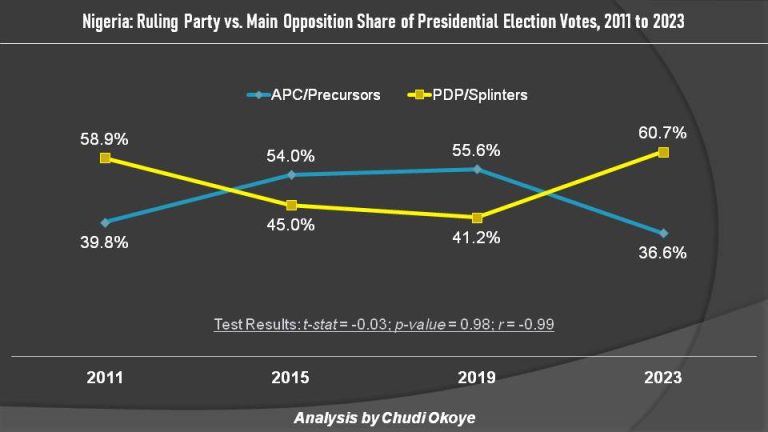
We know from official results that the All Progressives Congress (APC), which was created in 2013 through a merger of the major opposition parties, had won power by securing 53.96% of votes cast in the 2015 presidential election. This was a significant improvement to the 39.81% that APC’s precursor parties had secured in the preceding 2011 election. The newly-formed party would improve its share of votes, though marginally to 55.60%, in 2019. However in the 2023 election, APC’s vote share took a tumble, plunging 19 percentage points to 36.61%.

Conversely, the Peoples Democratic Party (PDP) – which hitherto had dominated the political space, winning the first four presidential elections of the Fourth Republic (1999, 2003, 2007 and 2011) with an impressive range of scores between 58.87% and 69.60% – would see its share of votes decline to 44.96% in 2015 and 41.22% in 2019, as the APC ascended. However, in the 2023 election, PDP, along with other opposition parties led by its renegade members (the Labor Party with Peter Obi and the New Nigeria People’s Party with Rabiu Kwankwaso), secured 60.70% of the votes, clearly gaining all the points lost by a shrunken APC.

I ran a statistical test (a two-tailed t-test) to compare these two arrays (APC’s vs. PDP/splinter parties’) and got a miniscule t-statistic of -0.03, with a p-value of 0.98 validating the null hypothesis of no difference (PS: the greater the value of a t-statistic, the greater the evidence against the null hypothesis which assumes no difference; but the closer this value is to 0, the more likely there isn’t a significant difference. Conversely, if p-value is higher than the standard 0.05, as in our test result, then the null hypothesis of no difference is not rejected.)

It wasn’t just a t-test that I deployed to evaluate the election results. I also ran a correlation (CORREL) test and, as expected, found that the two arrays are negatively correlated, with a coefficient (r) of -0.99. The t-test suggests that the electoral malpractices in 2023, such as there were, likely did not have a statistically significant impact on results; while the CORREL test indicates that the magnitude of change observed in the APC array correlates perfectly (and negatively) with that in the PDP/splinter parties array.

It would have been worrying if there were a statistically significant p-value in the t-test, or if the coefficient in the CORREL test were lower. Any of these would have indicated a distortion, suggesting that the opposition parties did not gain the same amount of vote share lost by APC.

These statistical tests show that whatever it was the APC got up to in the 2023 presidential election, the party ended up with a shrunken mandate, winning only because of the fragmentation of the opposition parties.

I had earlier articulated this point in a post-mortem article I wrote for Awka Times in early March, shortly after the election:

It cannot be gainsaid that the opposition parties’ strategic blunder was the primary reason for their electoral misfortune in 2023. This fact gets forgotten in the fevered aftermath of the election, with the opposition parties and their enraged supporters focusing only on the possible collusion between the electoral umpire and the ruling party. In 2013, in order to take on then incumbent PDP, various political formations had come together – including Action Congress of Nigeria (ACN), Congress for Progressive Change (CPC), All Nigeria Peoples Party (ANPP), a breakaway faction of the All Progressives Grand Alliance (APGA) and a faction of PDP (nPDP) – and formed APC. The new party would win power in the 2015 election, toppling a 16-year incumbent. By contrast, in 2022, rather than join forces to face a fumbling incumbent, leading aspirants in the opposition PDP – uncertain about their prospects in a deeply machinated PDP primary process which was unfolding – fled to fringe parties where they could easily snag presidential nominations.

In the same article, whilst acknowledging what I described as “grubby electoral machination” on the part of the ruling party, APC, I also concluded:

The evidence is clear and the conclusion inescapable: it is not so much that the ruling party, APC, ‘won’ the 2023 presidential election; it is rather that the main opposition parties may have lost it. These parties saw electoral victory looming, but they reached in and pulled out an ostensible defeat.

This conclusion, which is self-evident, is nonetheless controverted by those who prefer to focus on flaws in the election process and the integrity of the results. The argument goes that we simply cannot trust the official data, and therefore that any statistical analysis based on such data would be – as one fellow eristic put it to me – nothing but “mad science.” In our debate over the 2023 election, this friend insisted that INEC had “manufactured its own result,” and that this was the reason it did not upload results in real time to the public viewing portal, IReV. He further argued that whereas INEC could not falsify “traditional figures” reflecting ethnic-based voting, which presumably would have been easily detected, the commission instead deliberately altered trend-breaking results, which made up the bulk of the total votes, “where candidates (like Peter Obi) made inroads outside their ethnic zones.” Such “true figures,” my sparring partner claimed, were “either not released, [or were] rigged or manufactured.” He claimed that the worst incidence of this electoral misfeasance occurred in states like “Rivers, Benue, Lagos [and] Edo”. He also argued that it required a patient, evidence-led inquiry to expose this “highly suspicious intervention” by INEC, but the PEPT merely “dismissed it [on] frivolous technicalities, [thereby] playing into the crooked INEC hands.”

I have taken the trouble to dissect the foregoing argument because it gets to the kernel of the issue. The formal petitions filed by the opposition parties made much the same argument, merely with more tactful vocabulary. The protagonist in my informal debate made the claim more forcefully, boldly concluding that “we know what happened [in] the 2023 presidential [and] the whole world reported on it.”

It is really hard to fathom, but important to engage, this deliberate flight from empiricism. While no one is disputing the charge of irregularities in the 2023 presidential election (really, how could anyone?), the question is whether these were modal and if they significantly impacted the ultimate results, as our electoral laws require for an election to be invalidated. Section 135(1) of the Electoral Act 2022 stipulates that an election should not be “invalidated” if the courts consider that it was “conducted substantially in accordance with the principles” of the electoral laws and – this is key – that “non-compliance did not affect substantially the result of the election.”

This provision, as I argued in a recent Awka Times article, evinces a conservative disposition in our electoral laws with regard to election nullification. The provision has a long provenance in our electoral jurisprudence, going back even to some 1970s military decrees promulgated to usher in the Second Republic (Section 135(1) of the Electoral Act 22 is an exact replica of Section 111(1) of the Electoral Decree 73 of 1977, as amended by the Electoral Decree 32 of 1979). To overcome this tilt in the statutes, an election petition ought to be prosecuted with the strictest adherence to empiricism and an abundance of scrutable evidence.

In its 6th September judgment, the tribunal dismissed all the petitions, in part because, it said, they were “vague, generic, imprecise and nebulous,” and that much of the evidence tendered by the petitioners were unspecific or inadmissible. But many partisan critics of the judgment will not confront this fact. It is as if they think the rules of evidence should not apply in these cases; that the substitution of fact with fervency should suffice to establish the impact of the observed irregularities in the electoral process.

Let me restate a point I made earlier: I do not in any way dispute the observed flaws and irregularities in the administration of the 2023 presidential election. Nor am I insouciant about their reality. Like many critics, I am outraged that the process was so untidy, more so because some of what we witnessed were evidently machinated.

But there are two points of punctuation here. One is to ask if the observed flaws do rise to the level of substantial non-compliance required by our laws for an election to be overturned. Many have cited critical election reports produced by observer teams from the European Union and the African Union, among others. There’s no question these are useful reports, but of course they have no probative value. The petitioners also presented a plethora of evidence, but the much admitted by the PEPT was considered by that tribunal to be deficient. We will see if the Supreme Court thinks differently.

A second point to ponder relates to the impact of the observed irregularities on election results. Each of the main petitioners, Peter Obi and Atiku Abubakar, claimed that they’d won the election. However, as the tribunal pointed out, they did not provide an alternative tabulation of results to support the claim. Besides, there seems to be little justification for such claim from an inspection of the results. With APC shedding a huge 19 percentage points in the 2023 election (in effect, a 34% decline from its share of votes in 2019), it is difficult to see how the umpire, INEC, could have manipulated results substantially to favor the ruling party. This point gets glossed over by many of the critics.

Another insight from the official results that is discountenanced by critics relates to the spread of votes. My debate partner mentioned above claimed that INEC only released authentic results showing “traditional figures” (read ethnic votes) and manipulated the “true figures” reflecting votes gained by candidates outside their ethnic zone. But this claim is patently false. The official results show significant penetration of non-native zones by all the major candidates. Take Peter Obi, for instance, who was specifically mentioned to support the claim. Obi’s command of nearly 88% of the votes in his native South East geopolitical zone might give the impression that only his authentic votes in that zone were released by INEC. But his vote haul in the region represents only 32% of his total votes across the country. It is the same with the other major candidates. APC’s Bola Tinubu won 54% of the votes in his native South West zone, which represents 26% of his total national poll. For his part, PDP’s Atiku Abubakar won 51% of votes cast in his native North East zone, but this represents only 25% of his national total. It is only NNPP’s Rabiu Kwankwaso who picked up a meager 19% of the votes cast in his native North West zone, this comprising a whopping 85% of his total votes, thus confirming NNPP as a regional party. So, the claim that INEC corrupted the candidates’ national votes and released only their authentic ethnic votes is not supported by the official data, which the critics have refused to accept.

Major 2023 presidential candidates and their native votes

This refusal by critics to confront the actual election data is really a form of vincible ignorance, as it’s been characterized in moral philosophy since Thomas Aquinas in the 13th century and Origen in the 3rd. Along with the unwillingness to seriously engage the election tribunal’s legal reasoning, it does a lot of damage to the case being made. It gives the impression of an election challenge based not fully on facts but on dogma, the critics sometimes making their case with religious fervency.

But what we are dealing with here is not religion. It is competitive politics. It is election. It is law and the courts. We have to shed our dogmatic beliefs and come to court with empirical evidence. The justices are not our priests, providing unction to salve our wounded egos and shattered expectations. They are there to apply evidence to the provisions of law.

Some critics, upset with the conduct of the election and the appeal court’s ruling, are now calling for international sanctions and the pariahrization of Nigeria. Others, in subtle and not-so-subtle words, are even inviting military intervention, already convinced that the Supreme Court’s adjudication of the election petition would not be favorable. I guess it was alarm about this dangerous drift, and perhaps a belief that Nigeria cannot afford a political crisis in addition to a deepening economic crisis, that prompted Prof. Wole Soyinka’s intervention last week, overtly validating the 2023 election result and warning about surreptitious efforts to invite the military into our democratic disputes.

I share this concern with Prof. Wole Soyinka. However, I profoundly disagree with his claim – in pushing back against the insinuations to military intervention – that Peter Obi’s Labor Party has dissolved into a “regional party.” The election results do not bear out such claim, as I showed above. Yes, Obi cornered a commanding share of ballots in his native South East, but that haul represented only a third of his total votes across the country. I explained in another article why the South-easterners, who in previous elections voted overwhelmingly for candidates outside their zone, often against homegrown prospects, this time voted overwhelmingly for Obi, largely because of a perception that he had national appeal.

Prof. Soyinka erred in labeling Labor as a regional party. But his refutation of the claims about the 2023 presidential election, and his subtle warning against a dalliance with military intervention, cannot be so easily dismissed.

Will Supreme Court Part With PEPT On the 2023 Presidential Election Petitions?

0
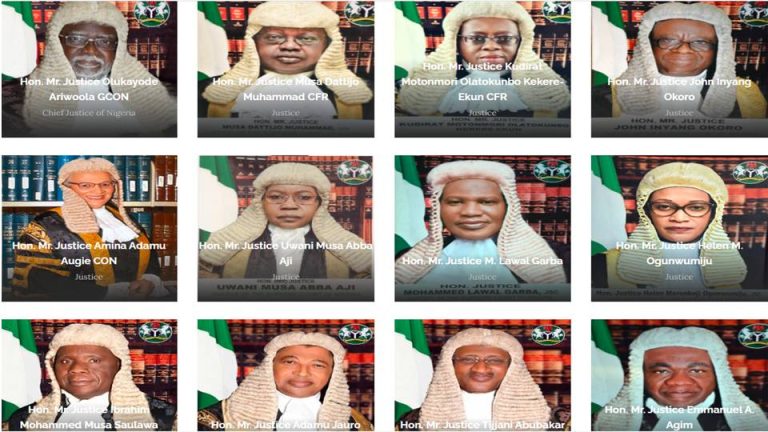
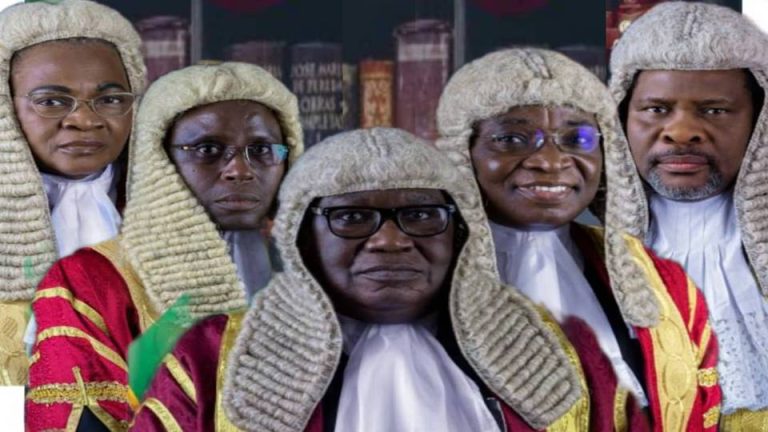
Supreme Court Justices

Stage is set to settle the legal, even if not the political, squabbles over the controversial February 2023 presidential election in Nigeria.

By Chudi Okoye

It could hardly have been a more disappointing judgment for the eager petitioners. It was, without mincing words, a rash deconstruction and pinching demolition of their case, laced with piercing commentaries and, in places, even pithy reprimands. Little wonder some wags have said their lordships acted almost as defense attorneys for the respondents.

One after another, in a surprisingly unanimous decision, members of the Presidential Election Petition Tribunal (PEPT), in lead or contributing opinion, picked apart all three petitions brought by the opposition parties – the Peoples Democratic Party (PDP), the Labor Party (LP) and the Allied Peoples Movement (APM) – to challenge the declaration of Bola Ahmed Tinubu, candidate of the All Progressives Congress (APC), as winner of the 25th February 2023 presidential election in Nigeria.

In the judgment delivered on 6th September 2023, the appeal court tribunal rejected the opposition parties’ petitions on various grounds, among them the following:

(a) That much of the allegations made in the petitions about widespread irregularities, corrupt practices and substantial non-compliance with the Electoral Act and INEC guidelines were “vague, generic, imprecise and nebulous,” and not supported with credible or admissible evidence or particulars specifying the polling units, collation centres or other places where the alleged irregularities and malpractices occurred;

(b) That the petitioners, having alleged widespread manipulation of results, vote suppression and inaccurate computation which depressed their votes and conversely inflated Tinubu’s, failed to present alternative results to support their claim of winning the election;

(c) That several of the witnesses called by the petitioners (10 of LP’s 13; 15 of PDP’s 27) were unacceptable, and that the statements on oath, testimonies and exhibits tendered by such witnesses were inadmissible, since these witnesses and their materials were tendered much later during hearings and not within 21 days of result declaration when the petitions were being filed (as required by Section 285(5) of the constitution as well as Section 132(7) and Paragraphs 4(5) to 4(6) of the 1st Schedule of the Electoral Act, 2022);

(d) That the petitioners did not have standing, and that time had lapsed anyway, to raise objections pertaining to the presumed double nomination of Tinubu’s running-mate, Kashim Shettima, an issue which, in any case, had been set aside in an earlier ruling by the Supreme Court;

(e) That the controversial issue of Tinubu’s forfeiture in a 1993 US drug case which the petitioners averred to be disqualifying, was in fact not germane, since this concerned a civil or non-conviction-based forfeiture, not a criminal forfeiture as envisaged under Section 137(1)(d) of the 1999 constitution; and also

(f) That some interpretations of the constitution and the Electoral Act adopted in the petitions were wrong, notably those presuming a special status for the Federal Capital Territory, Abuja, as well as those claiming that real-time electronic transmission of election results to INEC database and instant upload to its public viewing portal, IReV, were mandated.

At the end of the marathon judgment lasting over 12 hours, the tribunal’s chairman, Justice Haruna S. Tsammani, delivered his crushing conclusion and final orders:

Having considered and decided that the three petitions… are all devoid of merit, [they] are hereby dismissed. Accordingly, I affirm the declaration and return of Bola Ahmed Tinubu by the Independent National Electoral Commission (INEC) as the duly elected President of the Federal Republic of Nigeria. The parties in the Petitions are to bear their respective costs.

The other four members of the tribunal – Justices Stephen J. Adah, Misitura O. Bolaji-Yusuff, Boloukuromo M. Ugo, and Abba B. Mohammed – also read their contributing rulings, all concurring with the lead.

PEPT Delivering Ruling, 6th September 2023

It was not an entirely unexpected decision. Of course there was always a theoretical chance that the tribunal could pull a surprise and find for the petitioners, what with the plethora of allegations entered in the multiple petitions. However, even at a distance far removed from the nattering crowd of pessimists who thought it had all been fixed, it wasn’t too hard to see that the petitions had little chance of succeeding.

In several previous writings – one for instance in the first week of March before the appeal court panel had been constituted, and another on 3rd September just before the tribunal delivered its ruling – I had indicated skepticism that the opposition parties could succeed in their attempt to overturn the election.

In those earlier writings, I considered the nature of the opposition’s complaints about the conduct of the election; the evidence being adduced; the laws being invoked; and also the ambient political factors that could inform the judicial decision, all against what I considered the imperative of system preservation. I triaged all these factors to reach my conclusion. And it was this: that even though the administration of the 2023 presidential election was inarguably flawed, it was nonetheless improbable, though not impossible, that the appeal court would overturn the election of President Bola Tinubu, especially given the high bar of proving electoral infractions to the legal standard required for a verdict of substantial non-compliance to be returned; and given as well the high systemic cost of removing a president.

Mixed Reactions
Reactions to the ruling were swift and sustained, and predictably mixed. Some considered the judgment a triumph of legal reasoning, praising the appeal court panel for its professionalism in sticking to the law and its ‘bravery’ in standing firm despite the ambient noise. The ruling party, APC, hailed the decision, saying “[t]his epochal judgment has reinforced our democracy and underscored the vibrancy and independence of the judiciary.” Others too were gratified. PDP’s renegade chieftain, Nyesom Wike, a former presidential primary contender in the party and former governor of Rivers State now serving as Federal Capital Territory Minister in the APC administration, praised the tribunal’s decision, saying “Nigerians have spoken, and the court has confirmed it.”

Some legal experts reviewing the case were more measured. One, Ige Asemudara of Royal Practice Legal Practitioners & Consultants, said he would not call the judgment “good or bad,” though he considered it was delivered based on the understanding of the evidence and submissions of counsel as presented before the justices. He said moreover that he would “commend the judges because the judgment they delivered showed serious work has been put in place.” He noted too that “the jurisprudence [and] various philosophies underlying these decisions were long established.”

Another lawyer, Wahab Abdul of Wahab Olawale Abdul Agiidi & Co Chambers, noted too that the justices, contrary to expectation, did a very thorough analysis of the cases to reach their decision.

However, many others, especially those sympathetic to the petitioners, adjudged the ruling a miscarriage of justice. In the days since the ruling was delivered, in the more sober mainstream media as well as the ungoverned social media, not a few have labeled the judgment a judicial fraud, arguing there was a fix from the very start and that the ruling was a predetermined outcome. Several irate commentators alleged, without offering any evidence, that members of the tribunal had been ‘leaned on’ or offered unspecified inducements to deliver that judgment. In one instance on social media, a critic of the decision – no less a lawyer – declared that the judgment was “not a court decision at all [but] the product of bribery.” One usually measured newspaper columnist – also a lawyer – chimed in with a sparsely evidenced piece alleging that “Nigerian justices have been selling election judgments to incumbent presidents since 1979,” the implication unmistakable as to the instant case.

It has been more heat than light, to put it mildly, a truly astonishing fest of fiery condemnations; all the more remarkable since several of the critics, even lawyers, say they’ve not bothered to read the released judgment. It would seem that many, regrettably including supposed legal experts, preferred fervent polemic over a sober engagement of the legal issues.

The petitioners themselves all condemned the ruling. Atiku Abubakar of PDP said it was “bereft of substantial justice.” As for Peter Obi, although one of his lead counsels, Prof. Awa Kalu (SAN), has conceded the ‘impossibility’ of proving their case due to the difficulty in meeting the stringent requirement of both the constitution and the Electoral Act (that intended witnesses and their depositions be frontloaded with the petitions within 21 days of result declaration), the Labor Party candidate nevertheless said the tribunal’s decision “fell short of expectation.”

Unsurprisingly, both petitioners have announced their intention to file appeals at the Supreme Court. The apex court will have 60 days from the date of the tribunal ruling to deliver its own judgment, according to Section 285(7) of the 1999 constitution and Section 132(9) of the Electoral Act. So this matter should be resolved, one way or another, no later than 5th November.

The question, then, is: what are the chances of the appeals, when they are filed, succeeding at the Supreme Court?

Considering the points that inspired my initial prediction for the appellate decision, and also taking into account how tightly the appeal court argued the issues and the array of related stare decisis precedents it cited, I would estimate a mid- to fairly-high probability for apex court affirmation of the ruling; more so because some of the deficiencies found in previous presidential election petitions which had led to their dismissal by the apex court appear to be present in the current petitions, at least going by the judgment of the tribunal. There’s always of course the possibility of a surprise; but lest we forget, there’s also the overarching disposition of our electoral laws, going back even to the military decrees ushering in the Second Republic, which frowns at the nullification of elections except where there are substantial and proven infractions. This instinct is revealed in Section 135(1) of the Electoral Act 2022 which stipulates that an election should not be “invalidated” if the courts consider that it was “conducted substantially in accordance with the principles” of the electoral laws and that “non-compliance did not affect substantially the result of the election.”

Consider that last phrase – about non-compliance substantially impacting election results. And then recall that the result of the February 2023 presidential election was such that a whopping 63.4% of the voters actually chose the opposition parties over the ruling APC. In fact, the leading opposition candidates – PDP’s Atiku Abubakar, LP’s Peter Obi, and Rabiu Kwankwaso of the New Nigeria People’s Party (NNPP) – alone garnered a combined 60.7% of the votes. The result clearly indicates that whatever irregularities there might have been (and no one could claim there weren’t any), they could not have substantially impacted the outcome of the election. All three leading opposition candidates had been members of the PDP until the eve of the party primaries in 2022. So it was more likely the logic of opposition splintering that handed victory to the ruling party, as I argued in my analysis in early March.

For this and other reasons, it is hard to see how the Supreme Court would be inclined to overturn the verdict of the appeal court, more so given the conservative disposition of our electoral laws. Although we have seen some rather rash nullification of lower-level elections in recent time, the stakes here are higher and the conservative instinct of our electoral laws may prevail as the Supreme Court picks up the 2023 presidential election petitions.

That said, I wish to pick up one issue where I disagree somewhat with the tribunal’s ruling, this being the status of the Federal Capital Territory, Abuja, with regard to presidential elections.

The Abuja Question
Debate over the status of Abuja in presidential elections has been threatening since the inception of the Fourth Republic. Much has been written about it but, to my knowledge, until the 6th September ruling by the appeal court tribunal, there had not been any direct judicial pronouncement on the matter. The 1999 constitution, as amended, stipulates as follows at Section 134(2): to win the presidency, a candidate must secure

(a) … the majority of votes cast at the election; and

(b) … not less than one-quarter of the votes cast at the election in each of at least two-thirds of all the States in the Federation and the Federal Capital Territory, Abuja.

The interpretation of this provision is taking centre stage because, unlike the previous elections in which no major party had secured less than 25% of the votes cast in Abuja, in the 2023 election only Labor met that threshold. Upon this result, opinion has bifurcated on the true meaning of the constitutional provision regarding Abuja, with the argument centering on the word “and” in the phrasing above. There have been two traditions of interpretation. One (I suppose a textualist view) insists that the constitution means that a minimum of 25% in Abuja, along with a minimum of 25% in two-thirds of the states, is essential to win a presidential election. On this reading, Abuja is construed as having a special status, being a “miniature” Nigeria, and therefore that it requires a unique threshold separate from the states.

Articulating this view in the aftermath of the election and result declaration, Prof. Mike Ozekhome, who ended up on Atiku’s legal team, argued as follows:

The FCT, Abuja, is the seat of power of the Nigerian leadership. It is a cosmopolitan convergence of all federating units of the nation [and] the political nerve centre of Nigeria. It has been imbued with such a special status as a miniature Nigeria in such a way that any elected president must have to compulsorily win the required 25% vote in the FCT, Abuja, after winning 25% votes in 24 States. The reasons for this are not far-fetched. FCT, Abuja, is the melting pot which unites all ethnic groups, tribes, religions, people of variegate backgrounds; and other distinct qualities and characteristics in our pluralistic society.

Prof. Mike Ozekhome

A different (seemingly structuralist) reading considers Abuja not imbued with a special status but having the cognate status of a state, as indeed averred in Section 299 of the constitution. On this reading, Abuja is added to the 36 constitutive states to make a composite 37, resolving to a two-thirds threshold of 24.67 states (rounded to 25) which is clearly exceeded by the 29 states that Tinubu had won, according to INEC. This is the interpretation advanced by respondents in the various petitions, and it was accepted by the tribunal.

The textualist reading which insists on the imperative of 25% in Abuja would deny Tinubu victory, since he secured only 19.8% in the FCT. But this construction would mean, would it not, that Abuja residents are elevated over and above and have a virtual veto over the rest of the country. As the tribunal argued, this is an absurdity which clashes with the basic notion of equality, proclaimed by the constitution at Section 17(2)(a), that “every citizen shall have equality of rights, obligations and opportunities before the law.” Does the construction of a special status for Abuja not offend this basic principle? It is difficult to see how the Supreme Court could accept this interpretation, despite Ozekhome’s admirable eloquence on the status of Abuja.

There may be a way to thread the needle here, an alternative interpretation which reconciles the contending perspectives: the hints of a special status for Abuja versus the declarative principle of equality both of which are in the constitution. I think one way to reconcile the principle of equality enshrined in the constitution with the construction of a special status for Abuja would be to insist, not that a winning candidate should secure 25% in Abuja, but that they should secure a minimum of 25% in two-thirds of the votes cast in Abuja. A proper reading of Section 134(2)(b) should be that the candidate must secure (a) at least 25% in each of at least two-thirds of the 36 states, being 24 states; and also (b) at least 25% of two-thirds of the votes in Abuja, the FCT being a microcosm of Nigeria.

This reading approximates somewhat to the interpretation adopted by the Supreme Court in deciding the 1979 presidential election petition brought by the first runner-up in that election, Chief Obafemi Awolowo of the Unity Party of Nigeria (UPN), against the supposed winner, Alhaji Shehu Shagari of the National Party of Nigeria (NPN). However, in that earlier case the court offered an inversion of my proposed interpretation. By that 1979 ruling, Shagari was said to have secured a minimum of 25% in 12 states, being nearly two-thirds of the then 19 states; plus over two-thirds of 25% of the votes in the 13th state.

If we applied that model to the 2023 case, Tinubu’s 90,902 votes in Abuja would amount to 79% of 25% of the 460,071 total valid votes in the FCT. So he crosses the threshold, as decided in 1979.

However, given how contentious that interpretation had been, with legal scholars considering it a fudge of law and political expediency, I am proposing a hopefully non-controversial interpretation which is the obverse of the 1979 construction: that the special status of Abuja as a microcosm of Nigeria – presumed throughout the constitution – requires for it exactly the same thing required for the whole of Nigeria: 25% of two-thirds of its votes. In this case then, Tinubu’s 90,902 votes in Abuja would be 29.6% of two-thirds of the FCT’s total valid votes of 460,071. So, on this reading which recognizes Abuja status but treats Abuja exactly as the whole country, Tinubu meets the qualified 25% threshold.

This interpretation, I suggest, is a more sophisticated reading of Section 134(2)(b) of the constitution than the arguably simplistic interpretation offered by the tribunal, following the respondents; and it is a more equitable reading than the overreaching construction proffered by the petitioners. It also resolves the 1979 fudge which applied different logics for the two components of Shagari’s score: “25% in two-thirds” for the 12 states, and “two-thirds in 25%” for the 13th state. My reading maintains “25% in two-thirds” for both the states and Abuja. It recognizes the cosmopolitan status of Abuja, but applies the exact same mathematical standard to the FCT as the states.

I am not a lawyer. But it beats me why no one, so far, appears to have alighted on this interpretation.

All eyes are now on the Supremes!

Possible Consequences of the Awaited Court Ruling on Nigeria’s 2023 Presidential Election Petitions

0
Five Justices on the Presidential Election Tribunal

Whatever the Presidential Election Tribunal and eventually the Supreme Court decide regarding the 2023 presidential election petitions, Nigeria will be on edge. But some outcomes will be more politically portentous than others, and this will likely weigh with the courts as they reach their decision, especially with the current spate of coups in the neighboring region of Africa.

By Chudi Okoye

The petitions have been presented, the evidence tendered, and legal arguments rendered by opposition and ruling parties alike, and as well by the Independent National Electoral Commission (INEC). Five of the 18 political parties that contested the February 2023 presidential election in Nigeria – Peoples Democratic Party (PDP), Labor Party (LP), Allied Peoples Movement (APM), Action Peoples Party (APP) and Action Alliance (AA) – had filed separate petitions before the Justice Haruna Tsammani-led Presidential Election Petition Tribunal (PEPT) sitting in Abuja, praying the tribunal either to annul the presidential election altogether on allegations of widespread irregularities; or, in some cases, to vacate the declaration of Bola Tinubu as winner and instead affirm the petitioner as the rightful winner. Two of these parties, APP and AA, had pulled their petitions soon after pre-hearing commenced, leaving the field to just three parties which pressed their petitions to the end. Now, a frazzled nation awaits the ruling of the election tribunal, and eventually perhaps that of the Supreme Court, to see what becomes of the controversial 2023 presidential election.

Rumor had erupted in recent days alleging that the tribunal had set a date, September 16th, to render its judgment. This was however merely a speculation likely based on calculation that the tribunal, which commenced intake of petitions on March 20, has to present its ruling no later than 180 days thereafter, following Section 285(6) of the 1999 constitution and Section 132(8) of the Electoral Act. The rumor was immediately denied by the tribunal, but the calendar logic behind it cannot be dismissed.* So, now, Nigeria awaits the election tribunal, along perhaps with a bemused world.

A poignant slogan, “All Eyes on the Judiciary”, has since emerged in the Nigerian firmament to mark the momentous wait. The slogan is laden, full of expectations and foreboding; but it is also a not-so-subtle pressure on the judiciary. The slogan is also an inadvertent nod to the complexity of the matter before the apex judiciary. Whatever ruling they render, whether lawful or artful, it is likely to inflame the Nigerian polity, and this should be of concern given the current spate of military coups in the neighboring region of Africa.

The great American jurist, Oliver Wendell Holmes (1845-1935), had put forward the view that judicial decisions are not driven merely by sterile and deterministic “logic” but also by societal factors:

“The felt necessities of the time, the prevalent moral and political theories, intuitions of public policy, avowed or unconscious, and even the prejudices which judges share with their fellow-men, have had a good deal more to do than syllogism in determining the rules by which men should be governed.”

This view, I think, might be helpful in anticipating how the election tribunal in a matter of weeks, and the Supreme Court within 60 days thereafter, might rule on the 2023 presidential election petitions. I have argued this matter extensively with several lawyers and other informed folks with unequivocal opinion on it. I wish here to lay out my current thinking on the matter, following my previous intervention in early March examining prospects for the opposition’s legal recourse.

Political Conundrum
The outcome of the2023 presidential election really represents a conundrum for Nigeria. Consider again the following issues arising from the election:

1. The status of Abuja. Despite what many partisans and some legal experts claim about the clarity of the law, the language of the constitution on this matter is unclear. Section 134(2) of the constitution requires a winning candidate in a presidential election to have scored a share of votes

“not less than one-quarter of the votes cast at the election in each of at least two-thirds of all the States in the Federation and the Federal Capital Territory, Abuja” (emphasis added).

This is imprecise wording, one must say, particularly with the seemingly conjunctive “and”. There would have been no confusion had the constitution used the expression “two-thirds of all the States in the Federation and also two-thirds in the Federal Capital Territory, Abuja.” As it is, the law only says “and” Abuja. So, we aren’t sure if the constitution means that Abuja should be considered a part of the cohort of states from which two-thirds is derived; or if the FCT requires a separate and additional 25% threshold. In my previous analysis of this matter in Awka Times, I pointed to some sections where the constitution seems to construe Abuja as another state (e.g. Section 299), and others where it does not (e.g. Section 147(3)). The matter is not simple.

2. No Fourth Republic legal precedent. The issue is complicated in part because there’s no legal precedent in this Fourth Republic dispensation to provide guidance. No major contesting party – let alone a winning one – had failed to secure 25% of the votes cast in Abuja in any of the previous presidential elections. In 1999, Olusegun Obasanjo’s PDP secured 59.8% of the votes in Abuja while Olu Falae’s joint party platform, the Alliance for Democracy and All People’s Party (AD/APP), scored 49.2%. In 2003, PDP garnered 49.9% while Muhammadu Buhari’s All Nigeria Peoples Party (ANPP) picked up 38%. State by state and Abuja FCT results breakdown were never released by Prof Maurice Iwu’s INEC in 2007, but there’s probably no reason to suspect a deviation from previous norm, especially since we saw the same in subsequent elections. In 2011, Goodluck Jonathan’s PDP captured a commanding 63.7% while Buhari’s Congress for Progressive Change (CPC) scooped up 33.05%. In 2015 the scores were 51.2% for Jonathan’s PDP and 47.7% for Buhari’s APC. And in 2019, APC scored 35.9% while Atiku Abubakar’s PDP secured 61.3%.

So, as the data shows, all major parties surpassed the mark in Abuja in all preceding elections. It was only in the 2023 election, with Labor and Peter Obi mounting a credible third-party challenge, that the pattern was broken. In this year’s election, Labor picked up a whopping 61.2% of the Abuja ballot, leaving the other parties to scramble over the rump. As it turned out, neither of the two parties, APC and PDP, which scored the highest votes in the overall election as officially declared, was able to obtain 25% in Abuja. APC got somewhat close with 19.8% while PDP, long a command performer in the FCT, managed only 16.1% this time.

The results from Abuja present a serious challenge to the courts. There will be major uproar if the tribunal agrees with APC and INEC which had argued that Abuja should simply be construed as another state. On the other hand, the election will be upended if the tribunal rules, and the Supreme Court later agrees, that Abuja is indeed unique and imposes a separate 25% threshold.

3. Disputed infractions. A construction of unique status for Abuja would of course favor the Labor Party. But then, the party did not come much close to winning the required 25% in two-thirds of the 36 states (24 states), meeting the mark only in 15 states, versus APC’s 29 and PDP’s 21 – going by official results.

Labor of course contends (as does the PDP) that it had won the election, and that it was only widespread infractions in the collation, tabulation, transmission and announcement of results that scuttled its victory. That may well be. The question, however, is whether Labor (and the PDP) presented sufficient proof of substantial non-compliance at the election tribunal, as required by Section 135(1) of the Electoral Act, for the election to be annulled. It is also unclear how successfully the opposition parties had argued their other points: INEC’s failure to faithfully implement the electronic transmission of results from the polling units to its viewing portal (IReV); the double nomination of Kashim Shettima as APC’s vice-presidential candidate and senatorial candidate for Borno Central; and whether an old US drug case involving Bola Tinubu, along with questions about his educational qualification, nullified his candidature. Previous ruling on some of these matters raise concerns about their probative value. For instance, three different courts, including the apex court, had ruled that relevant laws allow INEC to transmit results using any mode it prefers. Similarly, a Supreme Court ruling on May 26 absolved Shettima of the charge of double nomination.

The Contenders – Atiku Abubakar, Bola Tinubu, Peter Obi

Ruling and Likely Consequences
Given the rack of issues sketched out above, opinions will likely be sharply divided among the five-member election tribunal, and eventually the Supreme Court panel appointed to hear any appeal. What matters, though, is where the majority opinion lies on the bench. There are three possible scenarios, of course, on how the matter might be dispositioned:

(a) The courts could maintain the status quo after parsing the evidence, affirming Tinubu’s election and ruling to dismiss the petitions for lack of merit;

(b) They could cancel the February election and, in line with Section 134(3) of the constitution, order a run-off between the two highest scoring parties and their candidates, APC and PDP; or

(c) They could nullify the February election and mandate a new one, open to all the registered political parties willing yet again to field candidates.

I am aware of the theoretical possibility of the courts awarding the election to either PDP’s Atiku Abubakar or Labor’s Peter Obi, as both indeed prayed the tribunal. But I am discounting this option. It would require a determination (a) that either candidate somehow scored the highest share of votes in the election; (b) that they met the 25% mark in more states than currently declared; and, additionally for Atiku, (c) that Abuja has no special status (since he did not get near the 25% mark there). These would all be heavy lifting in the judicial decision, though (c) is not improbable. So I consider the above three options as the more realistic.

There will certainly be an uproar if the courts choose Option (a), upholding the status quo. Widespread despondency would set in. There would be flashpoints of protests, some likely violent, especially if non-state actors like IPOB, ISWAP, Boko Haram and their various factions (likely incited by politicians) decide to exploit the situation.

The issue of Abuja could prove particularly vexing, especially if settled with a judicial fudge as had been the case in the 1979 presidential election. The issue in that election, of course, wasn’t about votes in the federal capital territory. Rather it was about calibrating two-thirds of the then 19 states, mathematically given as 12.66. The National Party of Nigeria (NPN), with its presidential candidate Alhaji Shehu Shagari, had attained the 25% threshold in 12 states, but (uncannily similar to Tinubu’s 19.8% in Abuja in 2023) had secured only 19.9% in the 13th state, Kano. The runner-up in that election, Chief Obafemi Awolowo of the Unity Party of Nigeria (UPN), had filed a suit arguing that Shagari had not met the constitutional requirement. However, Shagari’s lawyers rebutted the argument with the famous formulation that the 19.9% in Kano State exceeded two-thirds of the required 25%, and as such that Shagari met the required threshold! It was a clever argument, which the Supreme Court accepted, invoking a so-called Doctrine of Substantial Compliance. The ruling was a marriage of law and political expediency which could well play out again in the 2023, as it appears now to be an accepted precedent in Nigerian jurisprudence.

If the courts peg on this precedent a decision to affirm Tinubu’s ‘victory’, it would rock the realms for a while, under one scenario possibly triggering a crisis of legitimacy similar to that which led eventually to military intervention and the collapse of the Second Republic.

But that’s only one scenario, in the event that the courts rule for the status quo. It is also quite possible that even if there are initial flashpoints following a status quo ruling, these may never bubble up to a level of protracted concern for the security forces. This being Nigeria, such upheavals, however fervent initially, could quickly become attenuate, only rumbling on as low intensity discontent. Nigerians are a famously ebullient people, particularly so in the social spheres; but whilst easily politically mobilized, we aren’t too easily given to political extremism. A combination of factors – false consciousness through a persistent ethnic prism, ignorance, love of life, an incredible facility for adaptation, sheer exhaustion, apathy, etc. – conspire to make Nigerians, despite all appearances, a politically conservative people. So the political cost of Option (a) might not be considered unbearable by affected stakeholders.

Options (b) and (c) might seem, to some stakeholders, to be far more politically costly. One aspect of the ‘cost’ would be financial. It will be recalled that INEC had initially projected a cost of about ₦305 billion to conduct the 2023 general election, which eventually rose to a budget of ₦355 billion. It is doubtful if Nigeria can afford such a cost so soon after the recent election, especially in the current fiscal environment.

But there may also be a different kind of ‘cost’ consideration, leading to a level of resistance across the polity to the logistical demands of a new election. Consider the stakeholders already invested in the status quo, and even those not particularly invested but opposed to system destabilization. A ruling for Option (b), mandating a run-off between APC and PDP, could lead to a resounding victory for the ruling party, it being more cohesive than the thoroughly vitiated PDP. This option would leave the army of disaffected Obi supporters even more disenchanted. On the other hand, were the tribunal to rule for Option (c), few, if any, of the minority parties that contested the February presidential election could mobilize sufficient resources to contest effectively in a new election. Only the four parties that commanded the polls the last time around – the ruling APC and the opposition PDP, Labor, and Rabiu Kwankwaso’s New Nigeria Peoples Party (NNPP) – would be in a position to launch a meaningful bid. Even so, although the opposition parties could gain steam with such a ruling, they are all experiencing varying levels of internal rupture, in part as a fallout of the recent elections, and thus may lack a viable machine to command a new election.

There are also some constitutional issues that could arise with either Option (b) or (c). What would be the legal status of Tinubu’s short-lived incumbency, were his election nullified? Do we consider it a legal apparition? If so, how do we begin to unwind an administration that’s fast entrenching itself, creating facts on the ground, including ministerial appointments and a slew of executive decisions? What happens to the decisions already taken by the administration, for instance the withdrawal of petrol subsidy and the harmonization of the Naira exchange rate? Would those decisions then be considered illegitimate, and would we then revert to the status quo ante on these policies?

There’s still more potential for chaos with Options (b) and (c).

Who would run Nigeria if the courts mandate a re-run of the election? The Senate president would of course hold sway if both the president and the VP were removed, according to Section 146(2) of the constitution. But, pray, can anyone imagine a traumatized Nigeria under the (temporary) presidency of Godswill Akpabio, a figure of frequent EFCC interest? I know: with Tinubu, we’re already at a low point. But Akpabio at the helms would be a different order of absurdity. We can be certain that under his interim presidency, during which a new election must be held, APC would somehow emerge with a share of votes way higher than the 36.6% the party eked out, supposedly, to win the February election. Akpabio is not a man renowned for his continence.

What would happen if we came to such a pass, an overwhelming APC victory, with the public suspecting a cynical manipulation of the new ballot? Why, there would follow far louder howls of electoral malpractice, likely further destabilizing the country. This could result in far too tempting a scenario for military intervention, surely a concern given the current dynamic in Africa.

We might do well to recall here what happened at a different time in Nigeria’s history when a Senate president had been hoisted to the helms as the country’s president. In the tumult of First Republic politics, Prince Nwafor Orizu, then Senate president, had been thrust into power as acting Nigerian president after the incumbent, Dr. Nnamdi Azikiwe, departed the country in late 1965. The cascade of events following that culminated in the January 1966 coup, which in turn plunged the country deeper into political crisis. Amid the turmoil, a wearied Orizu was forced to make a nationwide broadcast announcing that the cabinet had ‘voluntarily’ decided to hand power over to the armed forces. This paved the way for the emergence of Nigeria’s first military head of state, Major General Johnson Aguiyi-Ironsi.

This is our history. A very troubling history.

The 2023 presidential election dispute presents no palatable options for the judiciary. All options would seem to incarnate an unedifying past we would sooner forget. The best we can hope for in the circumstance, I suppose, is that the courts would be wise enough to rule for the least bad option.

*UPDATE: On Moday September 4th, a statement was issued by the Chief Registrar, Court of Appeal Headquarters, announcing that the presidential election tribunal will deliver its judgment on September 6, 2023. The statement said the judgment will be rendered in a live broadcast.

President Tinubu’s Partial Ministerial Nominations: Matters Arising

0
Partial Set of President Tinubu's Ministerial Nominees

After much delay, President Bola Tinubu has sent a partial list of ministerial nominations for Senate confirmation. There are issues being raised about the nominations.

By Chudi Okoye

It is perhaps inevitable that in a complex and chaotic democracy like ours, it requires extreme political artistry to stitch together not just a winning electoral coalition but also, post-election, to assemble an efficient leadership team to manage the machinery of government. As perhaps a testament to the growing complexity of our politics, it has seemed in recent time to take newly-elected presidents an inordinate amount of time to assemble a ministerial cabinet for their administration, forcing a recent amendment to the constitution which requires new presidents to complete the task no later than 60 days after their inauguration.

After much delay, the new but seemingly fast-ageing administration of President Bola Tinubu has submitted, in the very nick of time, an initial list of ministerial nominees for Senate screening and confirmation.

There are several issues arising from the composition of the ministerial list, but I will focus on just two: representativeness and competency. I will deal with the issue of representation in this piece, and subsequently turn to competency when I’ve properly studied the résumés of the nominees.

The Nigerian constitution requires at Section 147(3) that a minister be picked from each of the 36 states of the federation, and (per Constitution Alteration Act No. 23 of 2023) that women comprise at least 10% of nominations.

The constitution also sets out other criteria for ministerial nominations, aside from federal character and gender representation. These include the provision at Section 147(5) that ministerial nominees meet the same minimum entry requirements prescribed for members of the House of Representatives. These requirements are set out at various subsections of Section 65, including a minimum age of 30 (65(1b)); a minimum of school certificate education (65(2a)); and membership of a political party (65(2b)).

There are also, at Section 68, the usual eligibility criteria pertaining to citizenship, criminal record, bankruptcy, authenticity of certificates, sanity, and so on; and a provision at Section 149 that nominees declare their assets.

It would appear from basic scrutiny that the initial list of ministerial nominees submitted by the presidency meets only a part of the key constitutional requirements. Women constitute about 25% of the list, thankfully exceeding the paltry 10% minimum imposed by the amended constitution.

However, as to geopolitical spread, Awka Times checks and other media reporting indicate that the current list omits some 11 states. The 28 nominees so far submitted to the Senate hail from a total of 25 states, one each from 22 states and two each from three states (Kaduna, Cross River and Katsina). The presidency cannot of course ignore the constitutional requirement of appointing at least one minister from each state of the federation. So it is expected that a supplementary list is forthcoming, even though the delay seems to offend the new 60-day rule for ministerial nominations.

One issue that may arise regarding the extant ministerial list concerns the ‘political caliber’ of nominees from each geopolitical zone. The current list is not particularly star-studded, speaking specifically in terms of national political stature, although it includes several ex-senators and ex-representatives, as well as ex-governors. Among the latter are relatively well-known names like Nyesom Wike and Nasir el-Rufai – former governors, respectively, of Rivers and Kaduna States. Still, there are already stirrings of unease in some quarters about the political profiles of those on the ministerial list. There is in particular concern being expressed that the South East contingent is made up of political lightweights who would likely end up as junior ministers in the administration. None of the three women and two men from the region, except perhaps for Dave Umahi (former governor of Ebonyi State), is a recognizable name. This is being theorized as a deliberate ploy to deny the region control of any strategic ministries.

This concern is exacerbated by the fact that the South East zone is again facing the prospect – which became egregious under Muhammadu Buhari’s regime – of being locked out of all the high offices of state: President of the Federation, Senate President, House of Reps Speaker, Secretary to the Federal Government, etc. There was also such concern in the recent appointment of service chiefs, with dispute arising as to the true ethnic identity of the appointee from the South East, Chief of Naval Staff Rear Admiral Emmanuel Ogalla, attended by complaints about the particular service portfolio ‘assigned’ to the zone.

It is unfortunate that such concern persists, though it is not totally unexpected in an environment of hypersensitive tribal politics. A theory of moral sentiment would require indisputable fair play in the allocation of ministerial portfolios. We shall yet see who gets what when ministerial portfolios are allocated; but, as an anticipatory step, let’s deal here with the fear about the recruitment of so-called political light-weights from the South East.

One reaction to this concern might be to shrug it off either as a non-issue or to justify the expectation on grounds of realpolitik.”Such is life,” some might say. “Elections have consequences!”

In Nigeria’s crusty culture of distributive politics, there’s a norm of survival of the fittest (or, more appropriately, survival of the stiffest), and a tradition of winners appropriating a lion’s share of political goods. In this environment, the South East might be told to suck it up since, unlike other regions which hedged their bet in the recent election by spreading their votes, the region voted overwhelmingly for the opposition Labor Party.

Indeed this has always been the case in Igbo voting behavior. As I pointed out in March in another Awka Times article:

“We the Igbos of the South East are reputed for our republican streak and rugged individualism. Yet, when it comes to presidential elections, we tend to vote in a concorant manner, offering a disproportionate share of our votes to a single candidate we favor in the contest, whether or not they are fellow Igbo. In 1979, the two South-eastern states as they existed then gave Dr. Nnamdi Azikiwe over 80% of their votes. In this Fourth Republic the five South-eastern states have offered a preponderant share of their votes to their preferred candidates in successive elections: Olusegun Obasanjo, nearly 70% in 2003; Goodluck Jonathan, 84% in 2011 and 91% in 2015; Atiku Abubakar, 76% in 2019; and Peter Obi, 88% in 2023.”

I also argued as follows in that piece:

“It is a high-stakes political gamble to continue to place the bulk of one’s chips behind one candidate; and it bucks the trend of other geopolitical zones hedging their bets, in successive elections, by distributing their votes competitively among leading candidates. Only the South East votes so lopsidedly for its preferred presidential candidates.”

I further argued therein:

“With a high-stakes gamble, you could win big or lose big, depending on whether or not you place a successful bet. Alas, the South East’s strategy has seemed so far to secure only suboptimal outcomes in the political game, yielding low payoffs when we pick a winning candidate but maximum pain when our electoral bets have been unsuccessful.”

Results of the 2023 Nigerian Presidential Election by Geopolitical Zone

It is germane to argue, with the cold logic of electoral choices versus political payoffs, that the South East should not expect to reap what it did not sow, so to say, having so unequivocally rebuffed Tinubu in the last presidential election (he secured only 5.7% of South East votes), just as it did Buhari before him.

However, although this would not be an unreasonable partisan argument to deploy, we have to ask if it augurs well for national integration. The continuing political minorization and marginalization of the South East cannot be in Nigeria’s long-term interest, even if it serves the narrow, near-term political ends of certain groups.

A plausible retort to this argument might be to ask: if South-easterners wanted ‘national integration’, why did they not vote for it in the last election? Why did they vote so lopsidedly for a candidate from their geopolitical zone? It would be a good question, but indeed some might argue that the South East did vote for national integration. Having voted nearly en bloc in previous elections for contestants from other regions, South-easterners voted this time around for a candidate who, in their opinion, offered the best chance for national integration after the fractious years of Buhari rule; someone also, again in their estimation, who stood the best chance of restoring the collapsing structures of Nigerian political economy left behind by Buhari.

It was indeed a rational choice, one might argue, made in the best interest of the country. As such, it would seem inequitable and particularly invidious to penalize the region – arguably still reeling from the traumas of being exceptionalized by Buhari – for the choice it made in the last election.

But even without appealing to any notion of geopolitical justice, it makes little tactical or pragmatic sense to ostracize any region, let alone one of the major constituents of the polity.

Politics is, or should be, about inclusion. Tinubu was declared winner only with a narrow plurality of the votes (36.6%), and he might not have sailed through had the opposition Peoples Democratic Party (PDP) not disintegrated and thus split its bloc of votes across several splinter parties. As such, if Tinubu intends to seek re-election, it behooves him to canvass political support in areas where he had underperformed, especially the South East where he made far the least inroad. He could start now to cultivate the zone and plant propitious seeds by trusting the region with strategic ministries in his administration. This would help to balance out the current distribution wherein the South East has only managed to secure as its highest office the deputy-speakership of the House, a rather meager accomplishment in the grand scheme of things.

Bringing the South East “back in” could be great for Tinubu’s governing agenda and his re-election prospects; and it would be a boon to national integration.

Let us wait to see how Tinubu fills out his ministerial nominations, and how he will eventually allocate the portfolios. At that point, if there’s sufficient data, I will turn to the issue of competency to assess whether the right team is in place to deliver Tinubu’s superlative campaign promises.

Postscript
On 2nd August 2023, a week after submitting his initial list of 28 ministerial nominees which had covered only 25 of 36 states, President Bola Tinubu sent the Senate an additional list of 19 nominees for screening and confirmation, covering the rest of the states as required by the constitution. This brought his total ministerial nominations to 47.

The distribution of nominees across Nigeria’s six geopolitical zones is clearly uneven, seemingly correlated to zonal share of votes received by the president in the February 2023 presidential election:

Share of Total Electoral Votes for President Tinubu vs. Share of Ministerial Nominations by Geopolitical Zone

There is in fact a strong correlation of ministerial nominations to electoral votes, a coefficient of 0.97, which is perhaps unsuprising in a politics of spoils system.

There are some cases of over-indexing, however. The South East zone, for instance, produced the least share of votes for Tinubu, and it has the least number of nominees. With five nominees from its five states, it is the only zone to get merely the statutory minimum. But its percentage share of nominees (10.6%) is higher than its share of Tinubu votes (1.4%) – clearly due to the forcing function of the constitution.

The North East over-indexes as well in terms of its share of nominees versus share of votes. This probably reflects the influence of President Tinubu’s vice-president, Mr. Kashim Shettima, who hails from the zone.

The South South zone produced the second least haul of votes for Tinubu in the February presidential election, and, correspondingly, the second lowest number of ministerial nominees. But it over-indexes on share of nominees, likely a nod to Mr. Nyesom Wike, former governor of Rivers State and PDP stalwart whose efforts helped to scuttle his party’s electoral chances over primaries grievances, paving the way for Tinubu’s victory.

It would appear, on the whole, that political settlement was a stronger factor in President Tinubu’s ministerial nominations than technocratic competence, a disturbing fact considering the complex task confronting this administration.

Easter Meditations: Toward a Possible Rehabilitation of Judas Iscariot

0

By Chudi Okoye

It is long past time to begin seriously to reconsider the portrayal of Judas Iscariot in biblical exegesis and intellectual discourse. In fact, such reappraisal has been going on in certain scholarly circles, especially since the translation of the recovered non-canonical Gospel of Judas and its publication in 2006. But it has yet to percolate into popular consciousness, which remains rigorously wrapped in reproving orthodoxy.

The Gospel of Judas elevates the status of the eponymous apostle and suggests that, although his action of handing Jesus over to the authorities was vile and painful, it was done with the full knowledge of Jesus himself and in obedience to the will of God. As Prof. Craig Evans of the Acadia Divinity College in Nova Scotia, Canada, told the Associated Press at the time the translated manuscript emerged, the Gospel of Judas “implies that Judas only did what Jesus wanted him to do.” In a key passage of the gospel, Jesus singles out Judas from the pack of apostles, telling him: “Step away from the others and I shall tell you the mysteries of the kingdom.” He reveals many things to Judas, apparently, and then discloses, as if by commission, the critical role the apostle will play in his divine mission: “You will sacrifice the man that clothes me,” Jesus tells a seemingly befuddled Judas. By this, according to scholars, Jesus was indicating that Judas would help to liberate his master’s spiritual self by plotting to get rid of the latter’s physical flesh. It is a theme that we also find in some other Gnostic gospels such as the Apocalypse of Peter. Still, Jesus tells Judas that the latter will suffer for the role he’s about to play, because “already your horn has been raised [and] your wrath has been kindled.” But he assures Judas that there’s reward for him by and by: “You shall be cursed for generations,” Jesus says, but “you will exceed all of them,” referring to other apostles, and “you will come to rule over them.”

The translation and publication of the Gospel of Judas is leading gradually to a reassessment of scholarly – though not as yet religious – traditions on Judas.

I broached this subject lightly in some recent writings I did as Easter approached, which I shared in close social media circles. In these excursions, I offered some preliminary thoughts which I wish to develop further here, though still as prolegomenon to a fuller deconstruction of Judas.

I’ll readily admit this: that, probably like most cradle Christians, I have long harbored an innate animosity towards the person of Judas for allegedly betraying his master, Jesus Christ. It is a disposition no doubt nurtured by Christian dogma and perhaps by one’s residual feelings about betrayal of persons or causes. But if we can liberate ourselves from conventional thinking and Scriptural literalism, it is hard to see how, on logical grounds, we can sustain a belief that Judas Iscariot invidiously betrayed Jesus. Rather, logic should lead us to think that the much-reviled apostle actually helped to fulfill the earthly mission of the Messiah.

Let’s consider again the charge of ‘betrayal’ traditionally leveled against Judas. To betray means, in part, to “expose (one’s country, a group, or a person) to danger by treacherously giving information to an enemy.” Betrayal thus carries a subversive meaning, implying, for instance, a clear intent to undermine a mission.

The question we should ask is: what was the mission of Jesus and how did Judas’ action constitute a subversion of it? It seems to me incoherent to say that Jesus was sent to die for the redemption of mankind, but then turn round and condemn the very action that precipitated his death and thus the fulfillment of his mission – especially if that action was providential. I have heard an argument that although Jesus’ death was pre-destined, Judas is still implicated for exercising his ‘free will’ to betray him. This argument likely emanates from the Decree of Justification, promulgated during the 16th century Catholic Council of Trent, which proclaimed that “If anyone shall say that it is not in the power of man to make his ways evil, but that God produces evil as well as the good works, not only by permission, but also properly and of Himself, so that the betrayal of Judas is not less His own proper work than the vocation of Paul; let him be anathema.” In this convoluted language, the Council was arguing that Judas did exercise his own free will in acting to betray Jesus. To me, however, though a faithful Catholic, this is nonsensical argument. It implies that human free will could be exercised against divine determinism. If Judas exercised ‘free will’ in any sense, it was really in concordance with the divine project for human redemption, not in opposition to it. What if Judas, to salve his conscience, had rejected the role thrust upon him to hand Jesus over to the authorities: what then the Messianic mission?

Condemning Judas would suggest that one doesn’t really believe that Jesus came to redeem mankind; that Jesus came to do something else entirely but Judas subverted that other mission by betraying him. If so, the question arises: what was that other mission that Judas presumably subverted?

Alternatively, condemning Judas means Jesus could have fulfilled his mission of redeeming humanity some other way. If so, what was that other way?

Those truculently stigmatizing and condemning Judas should answer these questions.

Moreover, they need to say why Judas – who, from all indications, had abandoned his workaday job and had faithfully followed Jesus, traipsing the dusty roads of Galilee and Judea at the risk of riling the Roman and Jewish authorities – should suddenly turn against his master.

The Gospels of Mark (14:10–11) and Matthew (26:14–16) claim that Judas did it because he had been bribed. But they don’t tell us why Judas needed the money, having already committed to an apostolic life of poverty and mendicancy, as Jesus and his other disciples had done. We do have the odd story in John (12:1–6) narrating how Judas had complained about the money spent on the expensive perfume that Mary of Bethany, sister of Lazarus and Martha, had poured on Jesus, which Judas apparently felt could have been used to nourish the poor. John also indicates, though without proof, that Judas, who acted as treasurer for the apostles, used to filch some of the group’s money. But it is notable that these accusations appear only in John and in none of the Synoptic Gospels (Matthew, Mark, and Luke), nor in Paul who allusively mentions Jesus’ betrayal in 1 Corinthians (11:23). All these, mind you, were written decades before the sometimes fanciful Gospel of John which scholars agree is the least historical of all the canonical Gospels.

Luke (22:3–6) and John (13:27) add to the story of Judas that Satan had ‘entered’ the apostle, causing him thereupon to betray Jesus. But this claim too is incoherent. If Jesus came to earth to die for the redemption of humanity – that is to free humans from judgment and the grip of Satan, why would Satan himself aid that enterprise? It suggests that Satan participated in a project to undermine his own dominion over humanity – a logical absurdity. Yes, the Bible indicates that Satan was once an angel (Revelation 12:7–9), but there’s nothing suggesting that Satan suffered from bipolar personality disorder! Rather, Satan is presented as a canny operator who pursues his nefarious ends with clarity and single-minded determination.

With the implausibility of both the ‘bribery’ and the ‘Satan possession’ arguments, some scholars have suggested the alternative hypothesis that Judas was a radical who had expected Jesus to overthrow Roman rule but was disillusioned by Jesus’ pacifist approach. Some such scholars claim that Judas moonlighted as a member of the fearsome Sicarii rebel group that carried out terrorist activities against Roman imperialism (see for instance Susan Gubar, Judas: A Biography (2009) and Peter Stanford, Judas: The Most Hated Name in History (2015)).

Other scholars argue the opposite: that Judas was likely worried that Jesus’ preaching might intensify Jewish unrest which usually erupted around Passover time, especially in the Jerusalem area, and thus fearing that such incitement could be fatal for Jesus, Judas wanted him apprehended and sequestered to be released after the feast (as was often the case with presumed rabble-rousers), not realizing that his action would instead lead to the very thing he was seeking to prevent: the death of Jesus. On this thinking, it is explained that Judas committed suicide afterwards when he realized his error.

These scholarly explanations, though not entirely implausible, might seem like ex post facto justification or even eisegetical.

Whatever the case though, the basic point which cannot be logically controverted is that if Jesus indeed came to die for the redemption of mankind, then Judas’ action precipitated the events leading to that outcome. This should lead to an overdue reconsideration of the role of Judas in the passion and mission of Christ. At the very least, we should feel a certain level of pity for the guy, for if indeed – as we Christians believe – Jesus was sent by God to give his life for the redemption of mankind, then Judas was merely part of the blunt instrument used for that divine mission. One pities him, on a human level, for having been made a pawn (a fall guy!) in a supposedly pre-destined purpose beyond his control.

One might, in this sense, feel even aggrieved as a Black man because Judas has been portrayed with a darkened skin tone in some Western art – including celebrated High Renaissance art such as Leonardo da Vinci’s The Last Supper (1498): a suggestive ploy, as some argue, to implicate the Black race – not just the Jews – in the betrayal of Jesus.

Look again at how Judas is portrayed in da Vinci’s Last Supper which I use as feature image for this article (Jesus is in the centre and the apostles are arranged by da Vinci in groups of three, the first set from left to right being Bartholomew, James the Minor (son of Alphaeus), and Andrew; the next set going by row of heads includes Judas Iscariot, Peter, and John; on the other side of Jesus, left to right, are: Thomas, James the Greater, and Philip; and the final trio are Matthew, Jude Thaddeus, and Simon the Zealot). Judas is placed somewhat in the shadows, looking taut and furtive. He’s portrayed clutching a small money bag, either to indicate his betrayal loot or his role as a group treasurer with money problems; and – perhaps suggesting fretfulness about his imminent dastardly act – he has knocked over the salt jar.

If you look closely you’ll notice too that Judas is the darkest looking of all subjects in the painting, with harsh and hardened features, appearing quite menacing especially contrasted to da Vinci’s Caucasian-looking Jesus who appears effeminately innocent (like John!) with long shoulder-length hair. There is a serious question as to whether Leonardo da Vinci was being knowingly racist by conspicuously darkening the skin tone of Jesus’ supposed betrayer.

It’s not just the pigmentation. Judas also comes off with very dark beard and what seems like an Afro, to boot!

This da Vinci painting is not unlike other Christian artworks, perhaps originating in European folklore, which depict Satan in the darkest possible hue, in some cases explicitly as a Black man with frightening features, all suggesting that black is ‘bad’ and white is ‘good’.

We ourselves as Africans perpetuate these stereotypes in multiple overt and not-so-overt ways, even unto this day, whilst still struggling with the aftereffects of White imperialism.

There’s yet another angle to this issue which, compared to the above, is rather uplifting. There’s a claim, based on some Gnostic texts, that Judas was in fact the most spiritually adept of all the apostles, and that he had a deeper mystic connection to Christ than the others. The newly recovered Gospel of Judas, mentioned above, which promotes a Gnostic cosmology and presents Judas as the one who truly understood the teachings and the mission of Jesus, attests to this conception of the apostle.

The Gospel of Judas is non-canonical of course; some scholars even consider it apocryphal. But it is known to have existed since the 2nd century, probably written not too long after the canonical Gospel of John and likely predates many other New Testament apocrypha.

Some celebrated New Testament scholars have used the Gospel of Judas, along with other texts, to re-historicize and reinterpret Judas the man, presenting different insights into how some early followers of Jesus perhaps understood his death, why the supposed betrayal occurred and why God apparently allowed it. Among these, in addition to the works cited earlier, I’ll highlight the following: a book co-authored by Princeton professor Elaine Pagels and Harvard professor Karen L. King, The Gospel of Judas and the Shaping of Christianity (2007); University of North Carolina professor Bart D. Ehrman’s work, The Lost Gospel of Judas Iscariot – A New Look at Betrayer and Betrayed (2006); and the late Claremont University professor James McConkey Robinson’s book, The Secrets of Judas – The Story of the Misunderstood Disciple and His Lost Gospel (2006).

It may be time to reappraise and reconstruct the role of Judas Iscariot, and perhaps to rehabilitate this long-vilified apostle who made it possible for Jesus Christ to fulfill his divine mission on earth. The sources cited above, among several others, make a good case for such revision. The author Susan Gubar, referencing other sources, argues that Judas was “the one person in the world and in History who had nothing to gain from [betraying Jesus but rather] had everything to gain from not committing [the act].” But she says he did “what God will[ed]” anyway, at great personal cost, and that “without Judas, neither the Gospels nor Christianity would exist.”

As leading New Testament scholar, Bart D. Ehrman, argues, a reappraisal of Judas will turn the story of Christianity on its head. If so, then I’d say the rehabilitation of Judas can’t come soon enough.

Beyond Grief and Anger: Preliminary Ideas for SE Political Strategy After the 2023 Elections

0
Peter Obi: Prime Candidate for 2027

The South East invested heavy political capital in Peter Obi’s 2023 presidential bid. While Obi pursues litigation to recover his allegedly stolen mandate, the South East must avoid the tyranny of protracted grief over the last election and must begin early to prepare for the next one which may be challenging, in part because of the singularity of its choice in the just concluded election.

By Chudi Okoye

We the Igbos of the South East are reputed for our republican streak and rugged individualism. Yet, when it comes to presidential elections, we tend to vote in a concorant manner, offering a disproportionate share of our votes to a single candidate we favor in the contest, whether or not they are fellow Igbo. In 1979, the two South-eastern states as they existed then gave Dr. Nnamdi Azikiwe over 80% of their votes. In this Fourth Republic the five South-eastern states have offered a preponderant share of their votes to their preferred candidates in successive elections: Olusegun Obasanjo, nearly 70% in 2003; Goodluck Jonathan, 84% in 2011 and 91% in 2015; Atiku Abubakar, 76% in 2019; and Peter Obi, 88% in 2023.

It is a remarkable and probably admirable history of loyalty. The question is: did it pay off in the past? Also, how will our latest choice play out in the politics of the next presidential poll?

It is a high-stakes political gamble to continue to place the bulk of one’s chips behind one candidate; and it bucks the trend of other geopolitical zones hedging their bets, in successive elections, by distributing their votes competitively among leading candidates. Only the South East votes so lopsidedly for its preferred presidential candidates.

With a high-stakes gamble, you could win big or lose big, depending on whether or not you place a successful bet. Alas, the South East’s strategy has seemed so far to secure only suboptimal outcomes in the political game, yielding low payoffs when we pick a winning candidate but maximum pain when our electoral bets have been unsuccessful. We had moderate gains under Obasanjo and Jonathan, but incurred huge pain after Abubakar lost to Muhammadu Buhari in 2019. And, with Bola Tinubu’s poor performance in the South East in the recent election (similar to Buhari’s), there are ominous signs for the zone if the courts affirm his victory.

The potential loss to the South East with Tinubu’s likely ascendancy may not be limited to being isolated in his administration – in terms of appointments, federal investments, etc. There could also be a serious setback to the goal of finally having a Nigerian president of South East extraction.

To begin with, since Tinubu will be deemed to have taken the South’s presidential slot should INEC’s verdict be upheld by the courts, there will be agitation for power to return to the North after his presidency. We can expect such agitation, even after Tinubu’s first tenure, among the more restless and ruthless northern protagonists who would claim that by 2027 (at the end of Tinubu’s first tenure) the South would have ruled for about 17 of what would then be 28 years of the Fourth Republic, while the North would have ruled only for about 11 years. The clamor would be even more insistent if Tinubu, despite his apparent health issues, goes for a second term, thus increasing the South/North share of incumbency, at the end of Tinubu’s second term in 2031, to a 2:1 ratio. Assuming that the North insists thereafter on an uninterrupted eight-year run, it means we’d be looking at around 2039 – 16 years from now! – before the South East might get a meaningful shot.

It gets worse. In 2039, the current crop of Igbo political leaders thought now to be capable of an effective presidential run would have become quite advanced in age: Peter Obi and Anyim Pius Anyim would be 78; Chukwuma Soludo and Orji Uzoh Kalu would be 79; Dave Umahi would be 75; Hope Uzodinma would be 81, and so on. None of these guys, unable to nab the presidency as sexagenarians, would be able to clinch it as septuagenarians, let alone octogenarian. A two-term tenure for Tinubu would be political Nunc Dimittis for most in the current crop of Igbo political leaders.

So, given this scenario which I have sketched, what is to be done in the near term?

Right now, with his sweep of the South-eastern states and his inroad to other geopolitical zones in the recent presidential election, Peter Obi seems unassailable in the Igbo presidential pecking order. Certainly other fairly strong presidential aspirants could emerge, perhaps in the PDP which might be looking to mend fences in the South East. But, again, Obi’s command of the South East in this last election denies other presidential hopefuls much bargaining power in other parties. That is the logic of the overwhelming vote received by Obi in the South East. If the courts uphold Tinubu’s INEC victory, Obi will be expected to run again in 2027. By then, Obi could be in a stronger or weaker position, depending on what he does in the interim.

There is a danger that his incipient (‘Obidient’) movement could dissipate, seeing as it is majorly populated by impatient youths many of whom might have been motivated by the promise of a quick gratification in this electoral cycle. Many could simply wander off, disillusioned by the failure to clinch the coveted prize this time around.

However, as I pointed out in my last article, Obi stands a chance of building his base into a formidable movement, to be deployed with greater efficacy in the next cycle. Not only that. With the national profile he has gained, he could also build more formidable political alliances across the country, especially in the geopolitical zones – North West and North East – where he underperformed in the recent election. He will also need to deepen his reach even in the zones where he did perform well. And he will need to cultivate more in the mainstream Igbo political class, though it will be a task with that shifty lot.

Even as he does this necessary work of extending his political reach, Obi needs to watch out for internal power struggle within the Labor Party. Obi has taken what was a dormant party and given it an electoral success beyond its wildest dreams. But this party having its origins in the labor movement, there may be some in the old ‘labor movement’ wing of the party who will question capitalist Obi’s authenticity as an ideological representative for the party. There were in fact such rumblings in this cycle, mollified only by the rapid successes Obi achieved on the campaign trail. Such forces within the party might want to attempt a usurpation of Obi’s achievement and political celebrity, attempting to exploit the political inroad he has created for a more radical ideological agenda. It is a typical ‘entryist’ strategy on the left. If Obi does not head off such potential internal challenge, it could lead to a rupture within the Labor Party, rendering it ill-disposed to take on the All Progressives Congress (APC) especially if Tinubu runs for a second term; or even a resurgent People’s Democratic Party (PDP) which might probably have reconstituted itself after the noxious politics of Atiku Abubakar’s presidential run in this cycle.

Given the above, there is clearly much work ahead to prepare for the next election, which is the window for the South East to produce a president – or it might have to wait until 2039, with an improbable pipeline of younger politicians ready for such a time!

There is much work to do, and the time to begin is now!

I imagine however that right now, much of the focus of Obi’s team is on litigating the February 2023 election which Obi insists he had won. The team should certainly pursue that effort to its logical end, though I have laid out my tentative prognosis about its prospects.

Given the despondency and level of anger probably within the Labor Party hierarchy but certainly among its support base, Obi simply cannot abandon the battle to reclaim his supposed ‘victory’. But at the same time he needs to begin to prepare his base to move beyond grief.

Political analysts sometimes talk about the ‘five stages of political grief’, a construct based on the traditional Kübler-Ross ‘stages of grief’ model which is associated with death and dying. The model goes through the stages of denial, anger, bargaining, depression and acceptance.

It may be too early yet to expect any advance in that recovery model. Emotions currently are too raw and complicated for a rapid recovery. We are confronted with a complex of disappointment wrapped in political rage inside a thick layer of defiance and braggadocio. It rends the air. It pervades our gatherings and suffuses the media, especially the poorly governed wildness of social media. And, in much that’s muttered or brazenly uttered, we get little but cluttered thinking.

There’s probably some utility in political rage. But, to achieve the legitimate Igbo goal of cracking the glass ceiling of presidential power in Nigeria, we cannot allow the tyranny of protracted political grief. We cannot allow the current angst and despondency to fester. And it will come down to Peter Obi, having cornered Igbo vote in the last election, to lead the recovery and rebound. Obi and his team should take a well-deserved rest and then suit up for the battle ahead in the next election. It will be a tough but an entirely winnable election.