
[ihc-hide-content ihc_mb_type=”show” ihc_mb_who=”4″ ihc_mb_template=”1″ ][real3dflipbook id=’3′][/ihc-hide-content]
Trumpet With Certain Sound

[ihc-hide-content ihc_mb_type=”show” ihc_mb_who=”4″ ihc_mb_template=”1″ ][real3dflipbook id=’3′][/ihc-hide-content]
[ihc-hide-content ihc_mb_type=”show” ihc_mb_who=”4″ ihc_mb_template=”1″ ][real3dflipbook id=’2′][/ihc-hide-content]
By Chudi Okoye
Awka Times Magazine (ATM) is establishing a tradition of choosing and announcing, annually, the person who has the most dramatic positive impact in Awka. They could be private individuals or those in public offices. It could also be a group, an idea or a thing that has had or is starting to drive positive change in some sector of Awka society.
Our Person of the Year philosophy differs fundamentally from the standard elsewhere which is value-neutral: some global media houses choose their persons or things of the year merely on the measure of their moment or their impact regardless of whether the effect is good or bad.
Not us. Our selection of the ATM Person of the Year is anchored primarily on their role as authors or vectors of positive change.
We are of course focused on impacts in Awka and environ, but extraterritorial impacts with local significance are within the ambit of consideration. Equally, the choice need not be sui generis Awka persons or things. They could be non-indigenes or extrinsic phenomena with local impact.
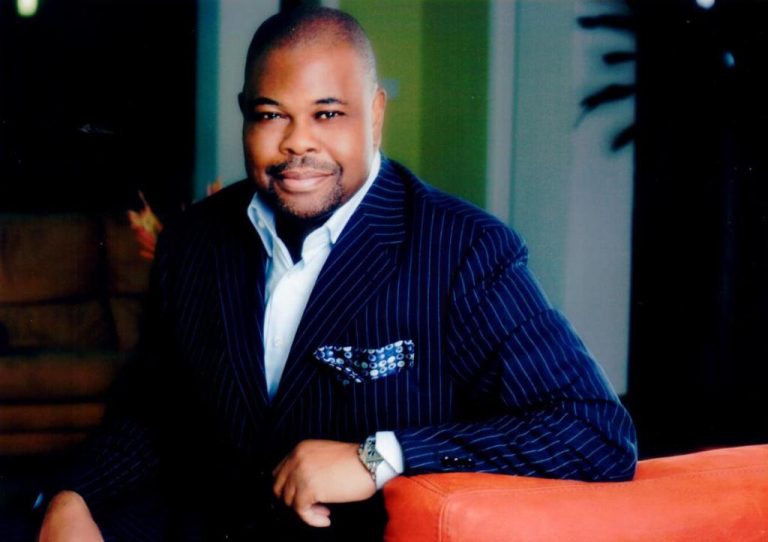
With such a wide aperture, it becomes clear the significance of our choice this year. After a rigorous and meticulous assessment, we are announcing Dr. Okey Anueyiagu as the Awka Times Person of the Year 2019!
Dr. Anueyiagu was selected for the unique and highly impactful philanthropic work he is doing, through his organization, Dr. Okey Anueyiagu Foundation (www.okeyanueyiagufoundation.org), to transform the ecosystem of elementary schools in Awka and environ.
Dr. Anueyiagu’s philanthropic contributions are significant and growing. He has contributed to various projects in support of the disadvantaged in our society. Through his organization he has built a modern accommodation and clinic for orphans in Awka, among other things. These are recognized, but it is most especially for his ambitious agenda of educational transformation that Dr. Anueyiagu has been selected as the Awka Times Person of the Year 2019.
His Foundation’s educational programme is extensive, involving the rehabilitation and revitalization of targeted elementary schools in Awka and environ. This project involves tearing down dilapidated old school structures; designing and constructing brand new school buildings to replace them; furnishing and equipping the schools; providing teacher training facilitation; and even helping with curriculum modernization.
It is an ambitious programme, unique in the Awka metropolis, which could impact as many as 100 schools and over 50,000 pupils, according to the Foundation’s projections.
As might be expected, there were many other worthy candidates for the Awka Times Person of the Year recognition. But Dr Anueyiagu stood out at this time for the size, scope and significance of his philanthropy. His foundation’s work is a radical and imaginative transformation of the physical and pedagogic infrastructure for primary school education in our community. It is a much needed intervention in an area and an era of unmitigated government failure.
Dr. Okey Anueyiagu was born in Kano, Nigeria. He graduated with honours from the University of Nigeria, Nsukka, and later obtained postgraduate degrees in political science and economics from the University of Rochester and Fordham University, both in New York, United States. He was a pioneer staff member of the old Anambra State University of Technology (ASUTECH).
Dr. Anueyiagu – teacher, author, entrepreneur, philanthropist and avid art collector – has distinguished himself in various fields.
As an author, has published a collection of research materials, journals and books, some peer-reviewed and well-received.
Dr. Okey Anueyiagu’s entrepreneurial activities started in the mid-1980s when he established advisory and trading firms specializing in corporate and public sector consultancy, among other services. He has served on the board of the Nigerian Coal Corporation, a perch from which he participated in processes geared toward the liberalization and commercialization of the Nigerian coal industry.
For over three decades Dr. Anueyiagu has promoted ventures in oil and gas, power and energy systems, agriculture, telecommunications, aviation equipment supplies, mining, engineering, construction and manufacturing. He currently serves on the boards of Pointec Group and Brown Brommel, companies that are pursuing and executing interests in construction, oil and gas trading, and refinery projects.
Dr. Anueyiagu is known as an avid art collector, with a track record of promoting art and culture across continents. For over 30 years, he has collected painting and sculptures from around the world. In 2012 he published an anthology, Contemporary African Art: My Private Collection of Onyema Offoedu-Okeke, reflecting on the sweeping social and governmental changes occurring in Africa and elsewhere in the world.
Dr. Okey Anueyiagu has received recognition and tributes for his accomplishments and philanthropy. Prof. George Obiozor, erstwhile Nigerian Ambassador to the United States, describes Okey Anueyiagu as a “prominent, responsible and highly respectable Nigerian…, an outstanding businessman…, a man of impeccable integrity… respected and admired… for his interest in the general welfare of humanity.”
Dr. Ibe Kachikwu, former Nigerian Minister of State, Petroleum Resources, and former Group Managing Director, Nigerian National Petroleum Corporation, considers Dr. Anueyiagu as “a person of topmost ethical and professional pedigree and… a well-respected Nigerian of means and stature…”
These accolades validate our choice of Dr. Okey Anueyiagu as the Awka Times Person of the Year 2019.
On receiving news of our selection, Prof. Chike Aniakor of Cross River University of Technology wrote to congratulate Dr Anueyiagu, saying that he was “not surprised” because over the years Dr Anueyiagu has made “useful contributions to humanity”. Prof. Aniakor wrote that Anueyiagu is “like an eagle on the iroko, like that elegant gazelle as it smooth-runs across the plains of the savanna, and like the peacock when it spreads out its wings in its feathery beauty.” He further told Dr Anueyiagu: “Like a dancer in the public arena, the audience continues to invoke your spirit of dance with choric energy.” Our Person of the Year clearly moves in artistic circles!
Dr. Anueyiagu is married to Hadiza, a lawyer and partner of 30 years. They have three daughters, Tochi, Ebele and Dera; and twin boys Aka and Arize.
Join us in saluting the Awka Times Person of the Year 2019, Dr. Okey Anueyiagu.
By Chudi Okoye
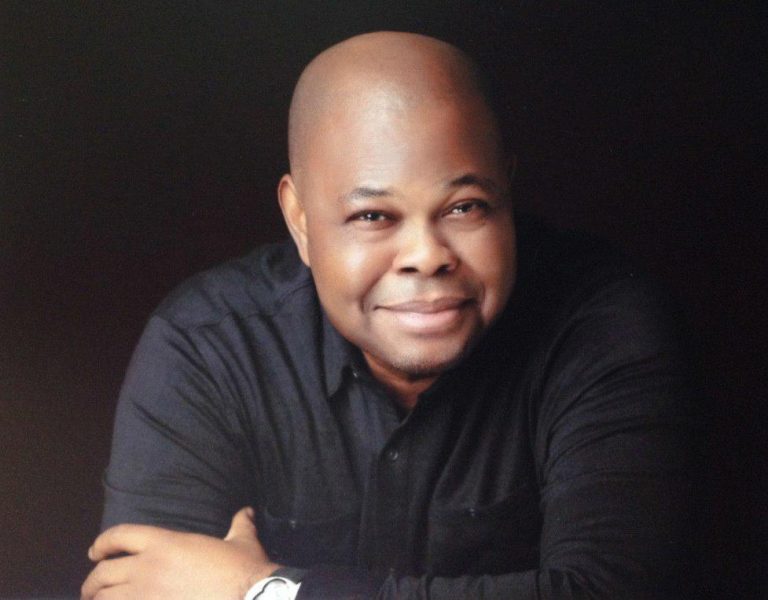
Dr Okey Anueyiagu proved to be of dramatic and phlegmatic disposition all at once. He came across as a controlled explosion, with a calm externality that belied a fiery intentionality.
Awka Times editors had tracked this urbane jet-setter across the globe seeking an interview on the extraordinary new project which his eponymous foundation is running: the funding, building and equipping of brand-new buildings donated to primary schools dotted around Awka, along with the training of teachers and curriculum modernization.
He had agreed to do an interview, pending his landing back in Nigeria. But as we awaited word of his return, Awka Times’ meticulous search for the Person of the Year ended with the selection of Dr Anueyiagu as the laureate! Our original interview plan thus took on an added significance.
Dr Anueyiagu finally returned to Nigeria, and we mobilized to move men and machine to meet with him in Lagos. At first, he would have none of the ceremony – preferring, it seemed, that the project bear its own silent testimony. But persistence overcame resistance and we finally got the good doctor to open up.
We present below our interview with Dr Okey Anueyiagu: accomplished author, philanthropist, educator, entrepreneur, art collector and Awka Times Person of the Year 2019. We ranged across his formative influences and his philanthropy, as well as political and development issues in Awka. He was unsparing, even daring, about the glaring conditions in his beloved hometown.
The interview is edited for length but with a sensitive touch that preserves the penmaster’s pulses.
(The excerpt below picks up after opening biographical questions – See Profile).
On His Antecedents
Awka Times Magazine (ATM): What are your earliest childhood memories – specifically about Awka and also where you grew up?
Dr Okey Anueyiagu (DOA): I was born and raised in Kano City, in Northern Nigeria. The city was a bustling cosmopolitan centre of mainly Hausa-Fulani indigenes who were mostly nomadic in nature and traded in goods and services. There were also a large composition of other tribal settlers of mainly Igbo and Yoruba extraction that made up the teaming population of the city.
My parents – who lived and worked in Kano – periodically took me and my siblings to Awka where we spent memorable times in the then beautiful town with our maternal grandparents. The memories that Awka left me with were endearing and can only be described in one word: enchanting. The level of joy that I experienced each time the trip to Awka was upon us can only be imagined.
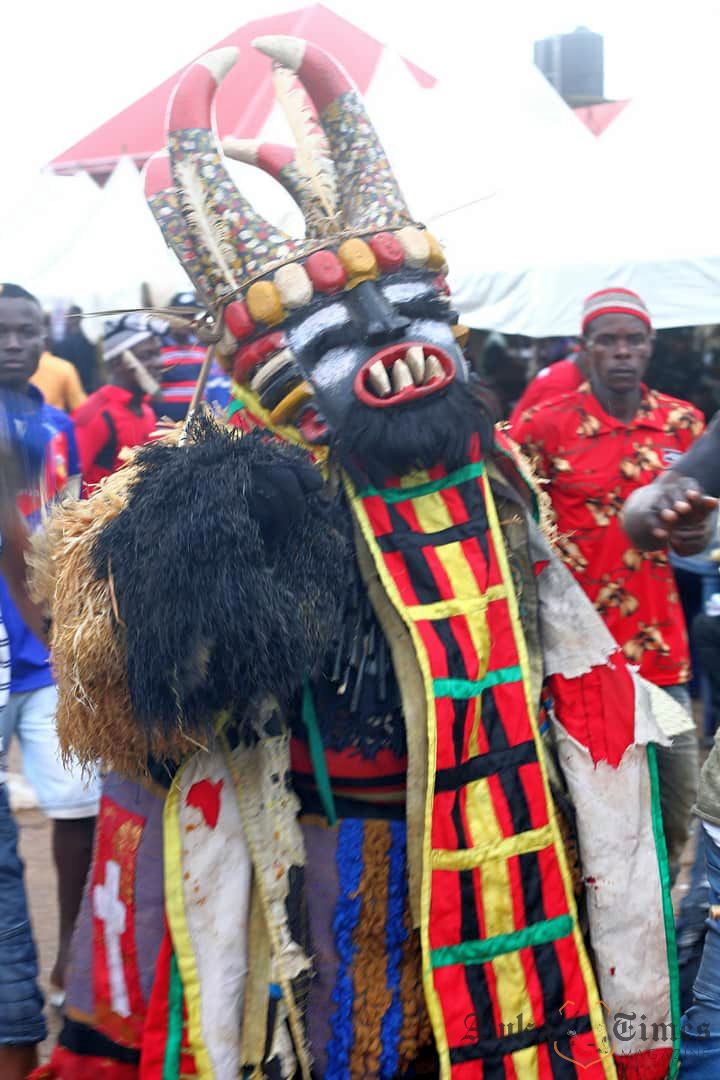
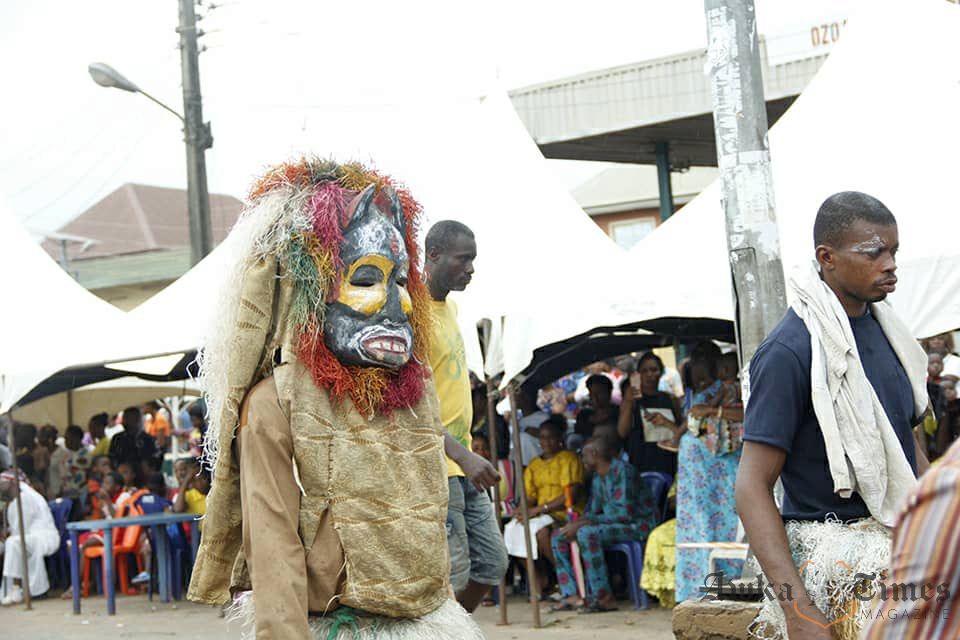
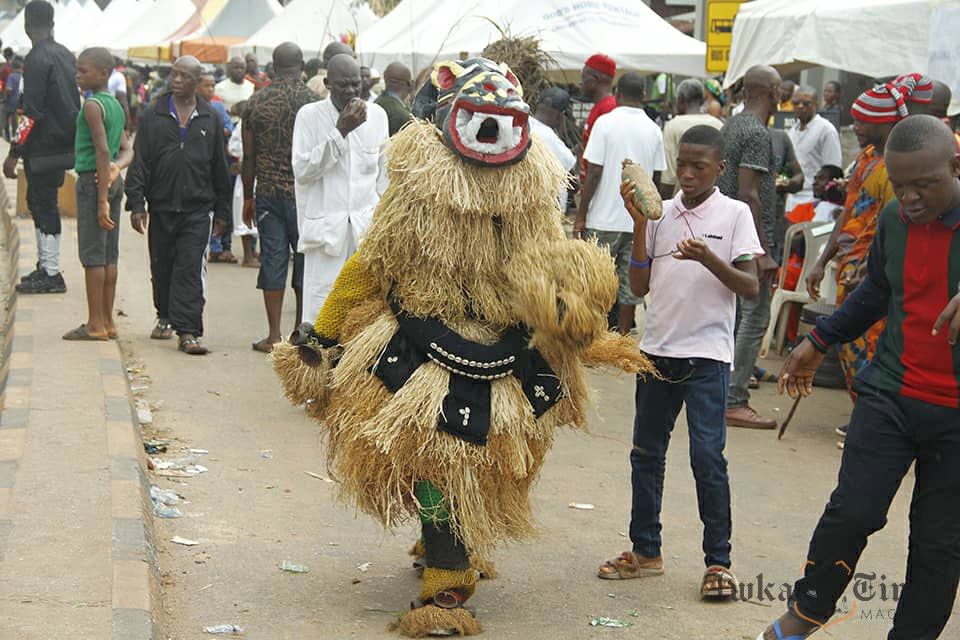
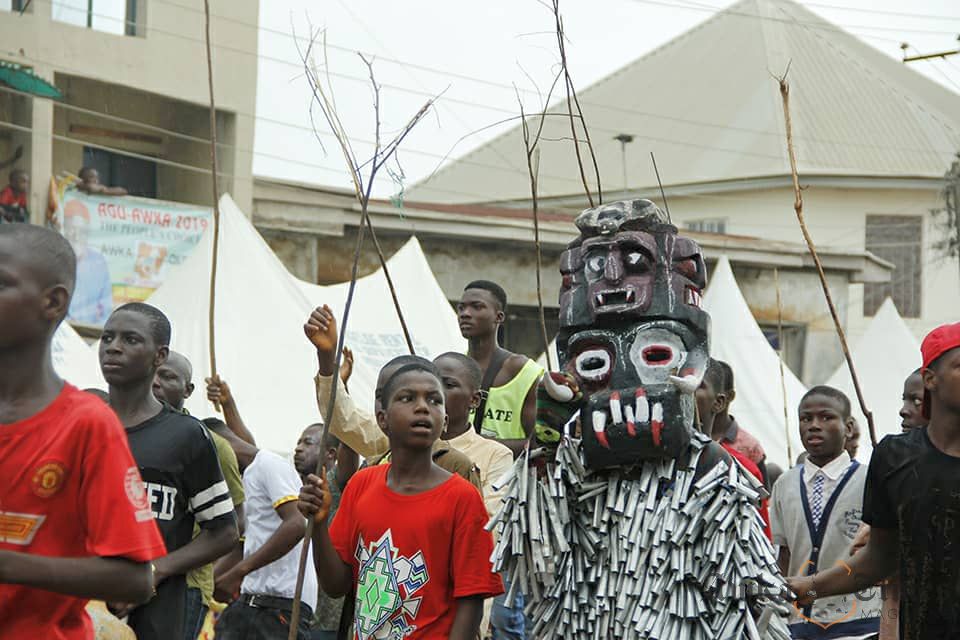
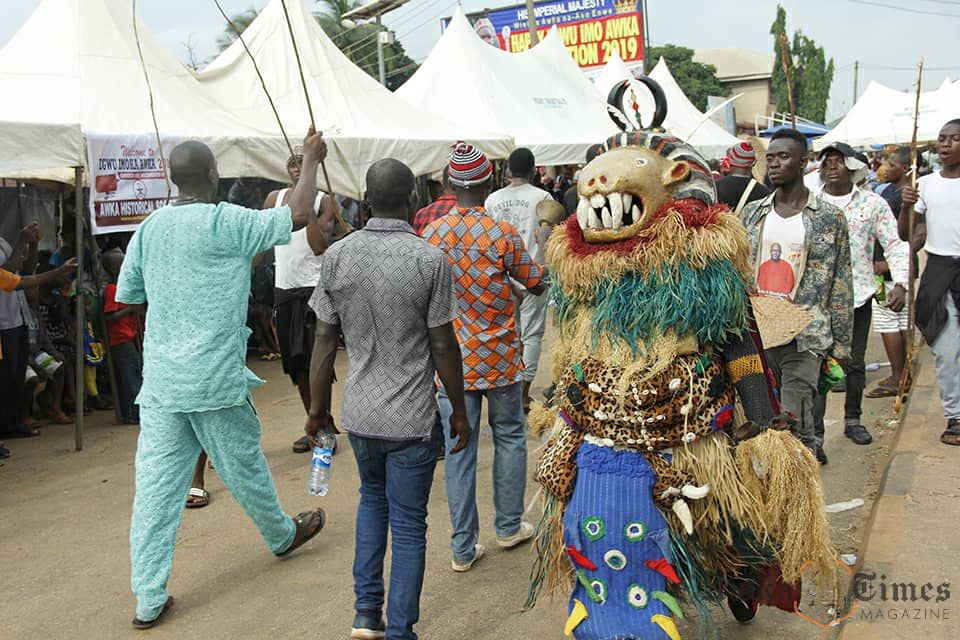
Awka was a peaceful town steeped in deeply exhilarating Igbo culture and tradition. The Egwu Imoka festival was what I looked forward to the most. I loved the very colourful masquerades and the rituals, and the tradition of the masquerades living up (oso n’ogba) to make the trip to Umuokpu village and back to the Imoka shrine. To me then, nothing was more enchanting than to partake in these festivities. I loved the food, the banters and happiness and the spirit of brotherly and sisterly love that were the hallmarks of the Imoka ceremonies. To miss attending these festivals then was unfathomable, and my father made sure I did not. For this, I owe him a world of gratitude, for I believe that it formed part of my love for our town Awka and my admiration of its values, language and culture.
Another everlasting and enduring memories of my early contact with Awka was when, in the early 1960s, my grand uncle Nwaokafor Ndum – father of Barrister Amanke Okafor – took the Ozo title. We had returned from Kano to attend the ceremony. It was the most elaborate traditional event that I had ever witnessed. It lasted for 21 days with the slaughtering of countless numbers of cattle (as it seemed to me). Various dance troops and masquerades attended. Each day presented different functions, colours, dances and delicacies. The abacha ncha, avbulu, aghalighali, aka aga, umeju anu, ugbogili na anyu nda, and all other items of specialized Awka delicacies were served. These days, I hear that anyone can take this exalted Ozo title, and that the prestige it carried in the past has evaporated.
ATM: What are the most memorable lessons you learned growing up?
DOA: Most of the lessons I learned growing up were the ones I got from my parents who, I believe, lived exemplary lives. Some of these lessons were passed down in unconscious ways. I believe now that through the process of socialization and cognitive learning I picked up various good examples of how to become a useful citizen of the world. Through my father, I acquired the attitude to be humble no matter how successful one may become. He taught me to be fearless and upright, and to never be spiteful even of people who do not like me. He always told me to treat everyone better than you would expect them to treat you, and to be kind to the poor, the sick, the deprived and the needy.
The lessons I got from my mother was that of loving God and loving people. She made us pray several times a day and by so doing imbibed in us the fear and spirit of God. For this reason, it has become very difficult for me to take any action without contemplating what the consequences would be before God. The lack of religion in our homes and schools today, I think, is the direct and consequential reason for the high rate of crime in our societies.
Over the years, I have continued to strive to imitate, emulate and follow in the footsteps of my parents, their paths of honour and integrity, to be a beacon of their shinning and unblemished lives. I always consider myself blessed and lucky to have had my parents’ incomparable legacies because these shaped my past and my present, and will fuel my future aspirations to match their noble ideals.
ATM: Your father was a great man in his own right. What did you learn from him that informs your philanthropic disposition?
DOA: I learnt from my father to give quietly. He contributed a lot to his society but he made sure that what his right hand did his left hand did not know. From my childhood I recognized my father’s philanthropy. He was the founder and the main mover and contributor to the establishment of the Ibo Union Schools in Northern Nigeria. He was the Chairman of the Ibo Union Scholarship Trust that sponsored the education of many Igbo sons and daughters locally and overseas. The Igwebuike Grammar School and the Amaenyi Girls Secondary School in Awka were his ideas and he pioneered their establishment. His philanthropy was monumental, but he never talked about them. It will be very difficult to follow in his footsteps.
ATM: Do you think that your father’s progressive politics informed your philanthropic orientation?
DOA: My father was an astounding journalist, a conscientious businessman and a consummate politician. He was indeed a great man who had his odyssey through journalism, politics, business and community service whilst sticking to the path of honour, honesty, integrity and hard work. I diligently watched him go through these processes.
He became deeply involved in local, regional and national politics. He played considerable role in the politics of pre-independence and his activism earned him occasional detention by the British colonialists. He was an active member of the leading political party then, the NCNC, which was formed by his mentor, Dr. Nnamdi Azikiwe and others. He rose to become chairman of the party in Northern Nigeria, having started out as a Councillor in Waje. In the lead-up to the December 1964 elections, NCNC established the United Progressive Grand Alliance (UPGA) with the Action Group, the Northern Elements Progressive Union (the main opposition party in the Northern Region), and the United Middle Belt Congress (a non-Muslim party strongly opposed to the NPC). In the UPGA coalition my father played a major role as deputy to the iconic Alhaji Aminu Kano, establishing what became a lifelong friendship with him.
As a child growing up under my father’s wings, I witnessed all these activities that he was involved in. I remember him on so many occasions meeting leading political figures like Aminu Kano, Ahmadu Bello, Michael Okpara, Nnamdi Azikiwe and many, many others. A lot of them came to our homes to meet with my father. Azikiwe was a frequent visitor. I remember much later listening to Azikiwe give a lecture to a large crowd of students and faculty at the University of Nigeria, Nsukka and hearing him mention my father’s name as one of his closest confidants who played a major role and contributed to the fight for independence. I was very touched by that and became prouder of my father.
Yes, my father’s politics was very progressive because he thought more about the future of his people and about how he could use his ideas to bring succor and peace to the people. In so doing, he became a giving person as he leveraged his position to lift up the conditions of others. This, no doubt informed my philanthropic orientation and disposition.
ATM: Apart from parental influence, what else from your childhood disposed you towards philanthropy?
DOA: I believe that apart from the influence of my parents in my philanthropic drive, I am disposed to doing the little that I do because of my belief that humanity and human existence must be preserved. Upon encountering the suffering and privation that have befallen the poor and less-privileged members of our society, especially in the rural area, it became clear to me that without private contribution to uplift the condition of these people, our society will decay and deteriorate to levels that will cause anarchy and general disintegration.
The fear of the scenario I just mentioned, and the dire consequences, and the compassion I feel for the needy, disposed me toward philanthropy.
On His Philanthropy
ATM: Your speech at the handover ceremony of Udeozo Primary School provided deep insights about the values driving your philanthropy. Do you see yourself as a crusader helping with the moral rearmament of society? Also, your philanthropy is currently focused on education at elementary school level, right? Could you tell us why you focus on education in general, and primary schools in particular?
DOA: I do not see myself as a crusader; rather I would prefer to be seen as purveyor of exemplary life, as someone who helps by providing essential tools (through quality education) that will help develop and re-orient the minds of our children. I believe very strongly that for any human to have high morals, the beginning of that person’s life is a critical point in time. The moral rearmament of our society must begin with our children. Give them good education that is grounded in the teaching of high discipline, the fear of God and great moral values, and you have built a great nation of morally upright men and women.
For this reason I have, for now, focused part of my philanthropy in education, especially in that of very young children. In setting up our Foundation, one of my major considerations was to entrench the Foundation in the redemption of the moral fiber of our society that has been gravely weakened, thus jeopardizing our basic our existence as humans. I believe that we can only fight this decay by investing in our children, because I still see our situation as not hopeless and completely lost, and that through the rebuilding of our children’s minds, we can fight these forces of retrogression.
I have written and spoken about the establishment of my philanthropic charity as being borne out of the belief and conviction that no form of human endeavor will thrive well without a properly secured liberty, happiness and equality that will create virtue and a sense of belonging in people, especially in our children during their formative years. You cannot expect a child with limited resources and impoverished education to live a progressive and normal adult life. Therefore, it is our collective responsibility as members of our society, to have moral disposition to public selfless interests.
ATM: You have completed three school projects so far, from available materials. These are Udeozo Memorial Primary School, Amudo, Agulu Community Primary School, Umuike, and Amaenyi Community Primary School Ayom na Okpalla. What informed the choice of these schools as the first tier of your schools renovation project? What specific considerations in general inform your choice of beneficiaries – Is it the condition of the school infrastructure, or geographic dispersion?
Also, if you may, what other school projects are in the pipeline? What areas are targeted? At what stages of development are these upcoming projects?
DOA: I set up the Foundation to do various things and perform interventions in Education, Healthcare, Water, Environment, Child Welfare, Art and Culture, Religion and Moral Rearmament and in other areas where the need to provide lifesaving support and sustenance for the poor is most acute.
Yes, we have completed these three school projects. They are not renovation projects, though. They are three brand-new classroom block buildings purposively designed and built to the highest quality surpassing even most international standards.


We undertook a turnkey project for elementary schools in Awka; that is to design, build, equip and furnish them, also facilitate teachers’ training. Our plan is to build about 100 schools providing about 1000 classrooms, catering in total to over 50,000 pupils, mostly in Awka and surrounding localities. We have started and completed the three that you mentioned here which are strategically located in a spread-out pattern within various localities in Awka town.
We are now mapping out our next projects and putting into considerations demographics, needs and some balance issue to ensure that as many indigenes of the town as possible become beneficiaries of our charity.
ATM: Do you make the decision about beneficiaries all by yourself, or in consultation with anybody else? If the latter, which individuals or groups?
DOA: The initial decisions are made by me, and thereafter consultations are made with the Trustees of our Foundation who contribute their individual and collective ideas and opinion. Through this interactive process we make the final decisions about the beneficiaries.
The members of our Board of Trustees are myself as the Chairman; my wife Hadiza and daughter Tochi, both lawyers, as member and Legal Adviser respectively. Others are Professor Ralph Oranu, Mr. Chris Obuekwe and Mr. Emeka Okoye. These men and women have been tremendously helpful and have provided visionary guidance that has ensured the success of the Foundation so far.
ATM: Who are the major partners to your Foundation?
DOA: We have no partners to our Foundation. All the projects we have done for several years have been from our private resources. This was intentional as we wanted to utilize our personal resources before asking for partnerships and external support. However, this position is changing as the realization of the enormity of the problems and the needs are rising above our private capacities. We are seeking out assistance for intangible help like training of teachers from overseas resource groups and medical assistance for hospitals in Awka and for some other Anambra State hospitals.
Presently, we are in advanced discussions with a major School System in Atlanta, Georgia, USA, to send us a corps of teachers, on a biannual basis, who will bring new ideas in teaching and introduce new curriculum that will broaden our children’s horizon in knowledge and expand their experiences, making them very competitive internationally. When this is implemented, an elementary school child from Ifite or Umuokpu village in Awka will be able to speak fluent French and Spanish as well as have skills in pure and applied IT sciences. I am very hopeful that the day is not too far to make this a reality.
ATM: Do you receive or seek any support from the government?
DOA: We have not sought nor received any support from government. Is it not this same government that has long left our children’s education, healthcare and lives in a state of total dilapidation?
ATM: Do you blame the government for the decay in educational infrastructure in Awka?
DOA: Is it not obvious that our governments from local and state to the federal tiers have long abdicated their responsibilities to our people? Of course, I blame them for not providing or sustaining the enabling environment that will make learning conducive and desirable. Have you seen these classrooms where our children study? They constitute eyesores and gross endangerment to human existence. Even animals should not be subjected to the debased environment under which these children study. I am therefore in a hurry to do my best to rescue these children from being subjected to study in classrooms unfit for the raising of pigs.
ATM: What are the specific details of the teacher training component of your schools project – who qualifies? what do they enroll for? how long is the teacher training programme? which are the training institutions? any beneficiaries yet?
DOA: The aim of training the teachers in our schools project is basically to develop their capacities and ensure progress and desired achievements of the children in the classroom. We are driven by the desire to change the face of education in Nigeria and we seek to train and empower teachers to be able to accelerate this process. The teachers are trained in improving communication and language of the child, effective teaching and classroom management and leadership in the 21st century school environment.
All primary school teachers are qualified for the training but the trainings are conducted in batches. The head teachers of the selected schools nominate teachers for every batch of the training. The teachers enroll to acquire new learning and teaching styles and skills in a responsive classroom environment. Each batch of training lasts for three days of intensive and rigorous work. They are also taught the integrated cross-curricular approach to teaching and learning.
We are deploying various training institutes in and outside of Nigeria to handle the various training programmes we have established.
At the moment, teachers of the three schools we have built have so far benefited from our training programme. Periodically, more teachers will undergo similar trainings.
ATM: You quoted Reinhold Niebuhr in your speech at Udeozo to the effect that “nothing that is worth doing can be achieved in a lifetime”. Do you not consider your philanthropic work so far to be substantive achievements?
DOA: To me, nothing in one’s life can ever be considered substantive enough. Achievements are measured according to one’s subjective views and considerations. I have never measured my achievements, as that should be left to others and ultimately in God’s hands.
I only derive my personal measurement when, in my private moments, I feel that I may have touched positively the heart and life of someone who does not even have a clue of who I am. That gives me immense satisfaction.
ATM: You are obviously still a young man, and your father did live to be 100. But have you started putting succession structures in place or even started to think about the leadership and strategic direction of the philanthropy after you retire?
DOA: Young man? Not that young though. My father lived a very virile and purposeful life. Until he died at 100 years a few years ago, he was as fit as a fiddle. He rarely used a cane to walk, and his brain and memory remained razor-sharp. He was a repository of knowledge and history.
Philosophically, I do not have an inclination to think that it is in our places or authorities to build succession structures in terms of human structural elements through families or associates. In my opinion, those pre-planned ascendency imaginations do not flourish, and even when they do, they do not do well. Take a look around and see the big families from the Azikiwes, the Awolowos, the Akintolas, the Ojukwus, the Aminu Kanos, and tell me what have become of the succession structures they built for their children and families to inherit and sustain.
I will leave it to God to build and nurture the succession structure that will progress and direct the affairs of my philanthropy long after I am gone.
ATM: Any challenges currently faced by your philanthropy? Any anticipated?
DOA: Of course there are always challenges. We experience the paucity of funds to face the ambitions programmes that we have planned out. The needs of our people far outweigh our resources and this had been an ever-present challenge for us.
ATM: Do you think that Awka has other notable individuals who can take up philanthropic work at your level?
DOA: Yes I do. I know that our town Awka is blessed with an abundance of talented people in business, academia, politics, and public services. Many possess tremendous amount of goodwill and patriotic love for our town enough to solve most of our perennial problems through philanthropic work.
On Awka Development
ATM: What do you think about Awka today in terms of the spate and pattern of urban development?
DOA: I do not think of Awka as a town that has reached, let alone sustained, the level of development expected for a state capital. Nor do I think that it can attain that level of development in this century!
If one may venture to be blunt, the town is a glorified slum in terms of its infrastructural development. The hazardous plan of the town and the continuing degradation of its already “shanty” outlook, is truly disgraceful. Whenever I visit the once beautiful, clean and serene town and see the decay and chaos, I begin to long nostalgically for the old Awka before the rude invasion of these politicians with their vacuous talk, their blindness and lack of vision.
A drive through the Eke Market – a market whose construction my father, through community effort, superintended – will disappoint any discerning person. The market built in 1970 right after the devastation of the civil war has deteriorated beyond comprehension.
ATM: Awka town is currently embroiled in leadership acrimonies. How do you think this affects the development of the town?
DOA: I do not see any direct correlation between these leadership acrimonies and the development of Awka. We have had similar acrimonies in the past. In the period following the civil war when the “Ichie or no Ichie” issue was raging, my father presided over a divided Awka as chairman of the town union and was able to rebuild the market from the ruins of the war, build a brand-new modern Post office, construct a modern water works that supplied the whole of Awka with clean portable water, amongst other valuable projects.
The actors involved in these acrimonies, if they mean well for Awka, can continue with their political games and gimmicks and at the same time promote and execute projects that will serve Awka and its desperate poor and needy. In short, they can chew gum and walk at the same time
ATM: Do you think that the Awka Development Union Nigeria (ADUN) should be spearheading the type of projects that your philanthropy takes on?
DOA: I do not think so, not just because of the known fact that they do not have the capacity but because they should focus on other intrinsic issues that may have serious consequences if not properly addressed. Issues like intergovernmental relations on matters that affect Awka. The ADUN should be a strong lobby for the interests of Awka. They should ensure that Awka land, culture, dialect, traditions and ways of life are preserved, protected and vigorously defended both internally and externally.
I am equally worried about the activities of the ADUN in the Diaspora. I think, and I say it with a bit of trepidation, that these various groups operating from overseas, despite their good intentions, are misguided and do not understand the roles they should play in the affairs of Awka. These Diaspora groups have replicated the quarrels and disunity from Awka and perfected them with dexterity. From leadership tussles to impropriety issues, the Diaspora groups are in fragmented spin. How would one expect growth from a disunited group?
Apart from the imbroglios in which these Diaspora groups are mired, I suspect that their activities aimed at supporting infrastructural development in Awka lack vision or clarity. I had the good fortune of attending one of the annual Awka events held in Atlanta several years ago. The turnout was incredible and the social activities were colourful and very well planned and portrayed a fabulous festival evening for attendees. It was indeed a very beautiful and proud outing for our people.
However, on the day for the colloquium to discuss substantive issues, the topic and the discussants focused on the infrastructural support for Awka by the ADUN in Diaspora. I was disappointed with the deliberation because I had thought that we were missing the mark. When I was invited to speak, I advised that the focus of the Diaspora group should not be on infrastructural development for Awka, that instead it should be more on how to foster internal unity amongst the various groups and on how to internally establish institutions overseas that will teach our children growing up in America, Europe, Asia and in other places outside Awka, our way of life; our Igbo language, Awka dialect, our food, our culture – to impart on these children the pride of being from Awka.
I suggested that instead of buying transformers, scanning machines and other equipment that may not work in Awka because of certain incompatibilities, they should think of building centers in various cities where our mothers living in America will, on weekends engage our children and other interested people to learn the Awka way of life and Igbo culture in general.
Ten years or more after this beautiful event in Atlanta, these Diaspora groups are still fighting for leadership and planning on sending transformers that we do not need in Awka, as you can only transform power or electricity when you have it.
ATM: Has the town union leadership reached out to you regarding your projects?
DOA: No, they have not, and I do not care if they do or not, for these projects that we started over 20 years ago in Awka are not done for anyone to reach out to me.
A few individuals from Awka and outside Awka and even from elsewhere in the world have reached out to me to express joy and appreciation for what my Foundation is doing, encouraging me to do more.
ATM: Awka has been on what one may consider a 60-year transition from an acephalous republic to a monarchy, in the process suffering severe convulsions and setbacks. Do you think the transition to monarchy is wrongheaded, or is Awka moving in the right direction?
DOA: This is a very difficult question for me. I will attempt to answer it as tactically as I can due to the sensitivity of the issue in Awka today. Like I said in a portion of this interview, my father was a brave, upright and fearless man, and he meticulously taught me and imbibed those values in me. I will frankly speak my mind and what I consider in my humble opinion to be the truth.
The acephalous and, if you may, the republican nature of the Awka people from historical antecedents was instituted by our ancestors whom I consider to be very wise and great philosophers. The fact that they created a constitution that allotted “kingship” to the oldest was indigenous and a masterpiece in itself. There were no acrimonies as the oldest was always not in doubt and the position was never contested.
Until the importation of alien culture and tradition into Awka in this so-called chieftaincy nonsense, we lived in total peace, harmony and tranquility. Granted that cultures and traditions are dynamic elements of any people, the introduction and imposition of this anomaly into our culture has wrecked our town.
I do not believe that Awka should have a “king”. I have silently protested this anomaly for decades. My father stood on this same ground when he opposed it in the past. He, however, gave in to the pressure that every town is doing “this thing”, and that it was required for the modernization of our culture , that its acculturation or assimilation was necessary to survive and interact with government and other towns that have done “this thing”.
I took the “Awka Enwe Eze” (“Awka does not have a king”) mantra and its exaltation of the general will and buried it deep inside my psyche. I have made sure to stay away from the goodies and the animosities or acrimonies that have followed in the wake of the kingship issue which is strangulating the town. I was twice invited to be adorned with a chieftainship title but I declined.
Today, Awka has a monarch who has been on the throne for decades but I heard that his crown is under threat. Is this not comical? Our forefathers must be turning in their graves and wondering what has become of their children. We delude ourselves when we think that we can control the destinies of a people; that we own the moment and time. Philosophically, I know that time is infinitely here and will [continue its progress in perpetuity]. It is we as humans that [are transitory], that shall all die leaving time in its [majestic infinity]. We are wasting ourselves when we continue to desecrate the ways of our lives instead of making [productive] use of our time on earth.
ATM: Do you think that your stature in Awka, Nigeria and the world at large can be leveraged to resolve the current leadership disputes in Awka?
DOA: To be honest I do not consider myself to have much stature anywhere. I always see myself as an ordinary person. I may have been endowed with a fantastic pedigree, a great parentage, a solid education and a modest work success, but I was brought up not to see those attributes as a status or a symbol of success, but as a call to service.
When the war ended my father abandoned his thriving business and stayed back in Awka to support his people. His friends and contemporaries were in the Federal Government and they begged him to return to business, promising to give him huge contracts, but he declined and gave his entire life, blood, sweat and tears to the Awka people. My mother called him “Mr. Awka First”, as he spent over 18 hours every day working for Awka, leveraging every contact he had to rebuild Awka. His immediate family suffered for this, but he toiled and toiled for this town and for the welfare of its people.
I once asked my father if it bothered him that the Awka people did not care or recognize his sacrifices. He just smiled and told me that it did not matter, and that what matters is that God gave him an opportunity to serve HIM through the Awka people.
Like my father, I will serve Awka and its beautiful people and humanity with all my might until I take my last breath.
ATM: Would you ever consider following in your father’s footsteps to get involved in politics?
DOA: NO!
I have absolutely no interest in getting involved in politics in any shape or form. I feel sorry for our so-called politicians when I hear them refer to their profession as “politics”. I wonder if members of this class look around themselves to see the havoc their profession has wreaked in our country. There must be a very few exceptions, but most of our politicians are a disgrace to their profession, or vocation as I would have preferred them to call the trade that they ply.
When my father practiced politics, they were committed to the emancipation of the downtrodden. They used their positions to canvas for the liberation of our country from colonialism and thought more of the followers as human beings rather than tools who were used for votes and for the intimidation of opponents and people with different ideas and dispositions. They were accountable to the electorate, and the voters held them responsible for failing to deliver on their promises.
But today both the politicians and the electorate are irresponsible. They both think of what they can take out of the system and the State without caring what damage their actions do to the entire system. It is therefore difficult to see myself belonging to this group that calls itself politicians. Despite the fact that a few of them are still good people, the ratio of the good to the bad is so disproportionately low.
Until the entire system is awakened and overhauled to the reality that our political constituencies are theaters for making huge impact in the affairs of the generality of the people, I will keep a safe distance from politics and its chalice of polluting charms and smelly allures.

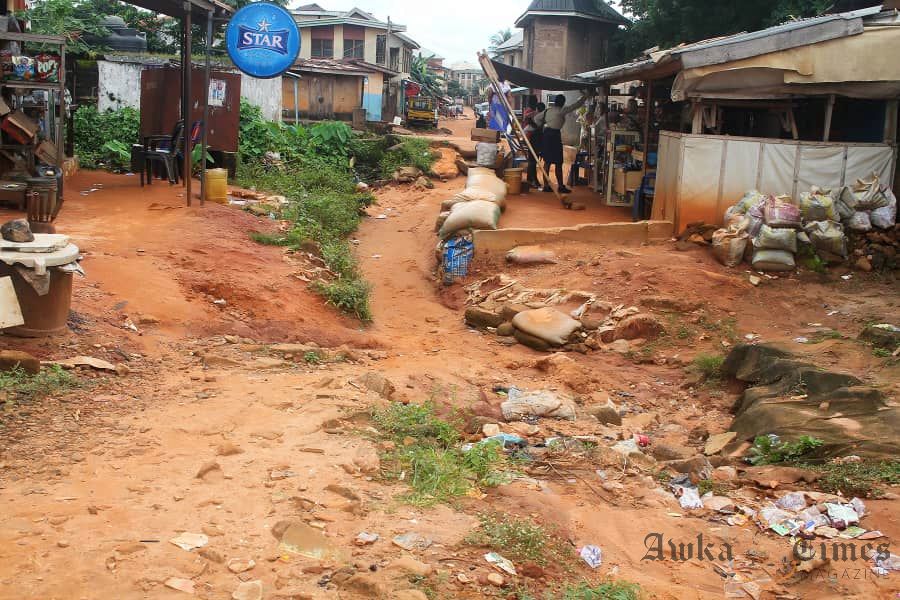
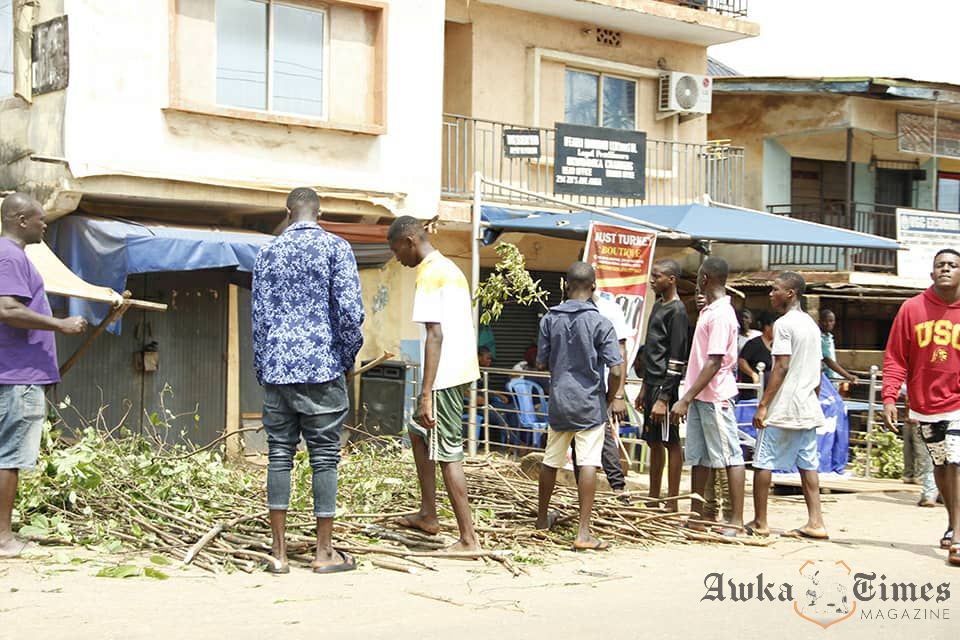
Awka town looks today very much what it is: an unloved capital city, lacking effective local leadership, trashed by residents and neglected by a government which keeps making promises for infrastructure development that it has not kept. Our photographers went around to document the grim condition of the capital city. See for yourself.


































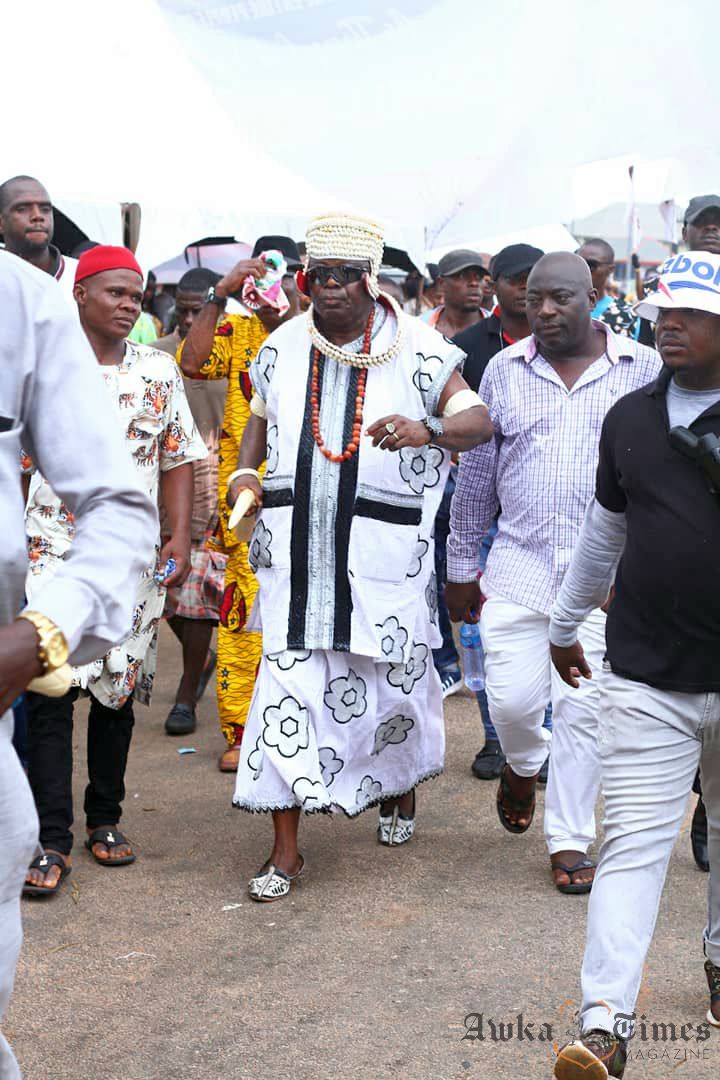
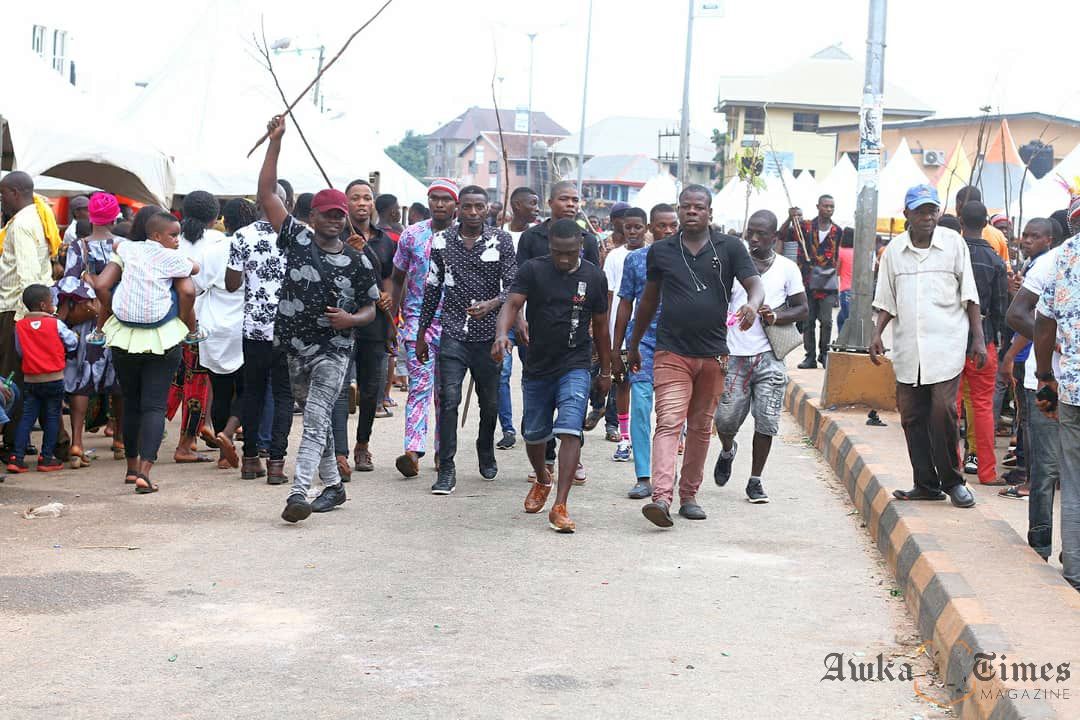
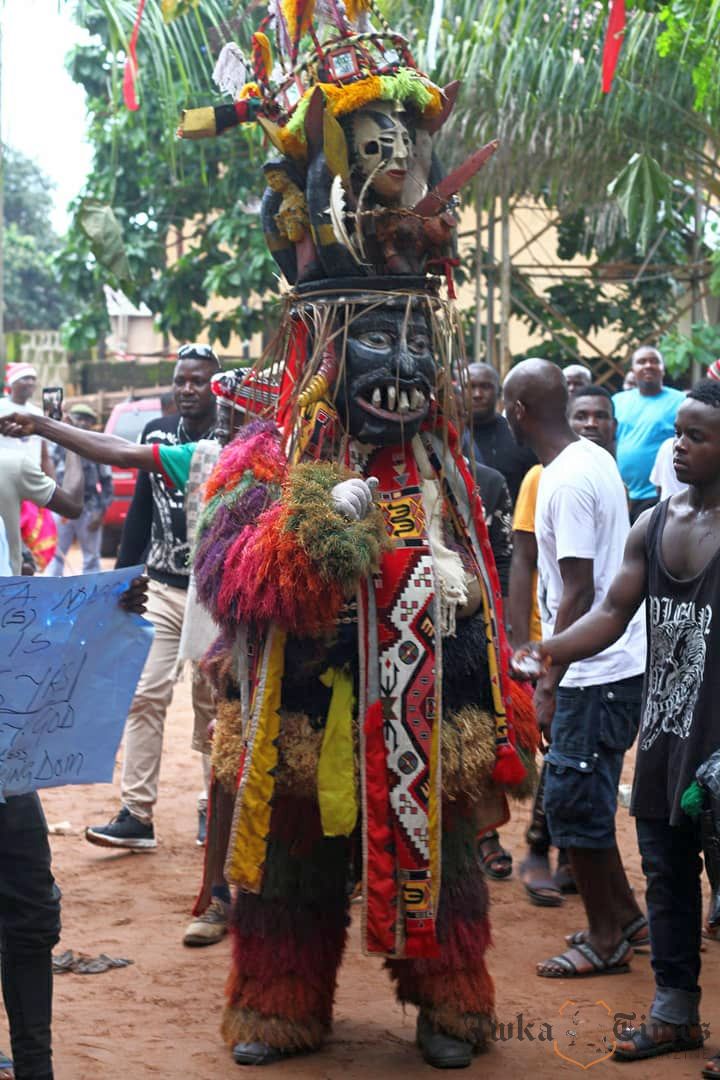
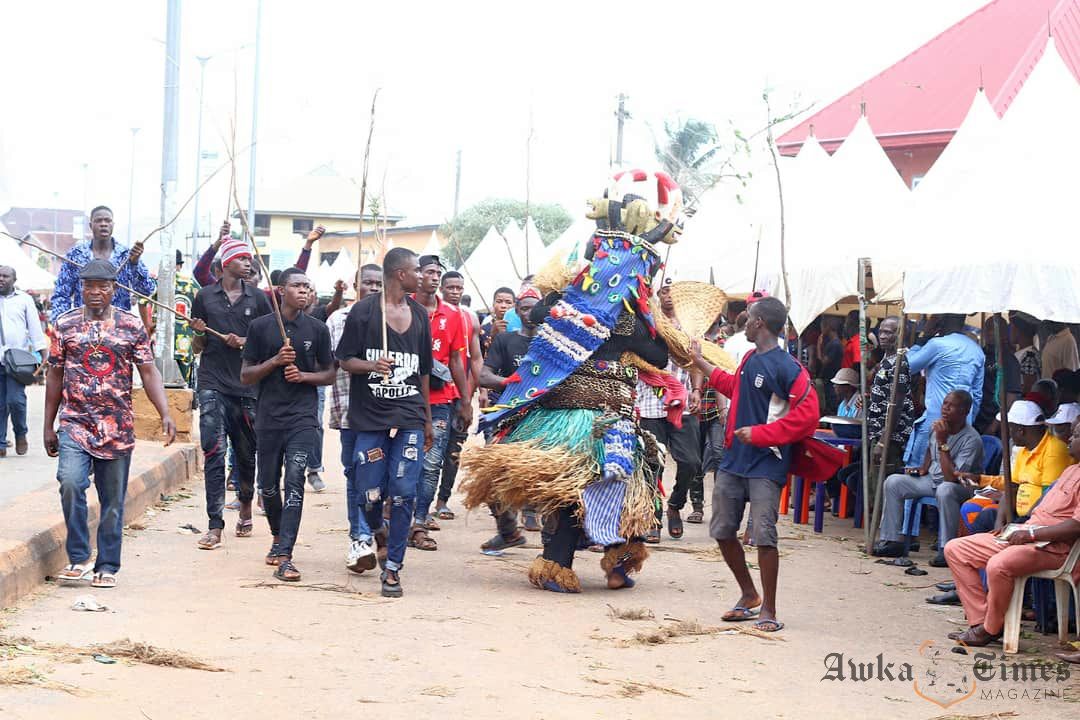
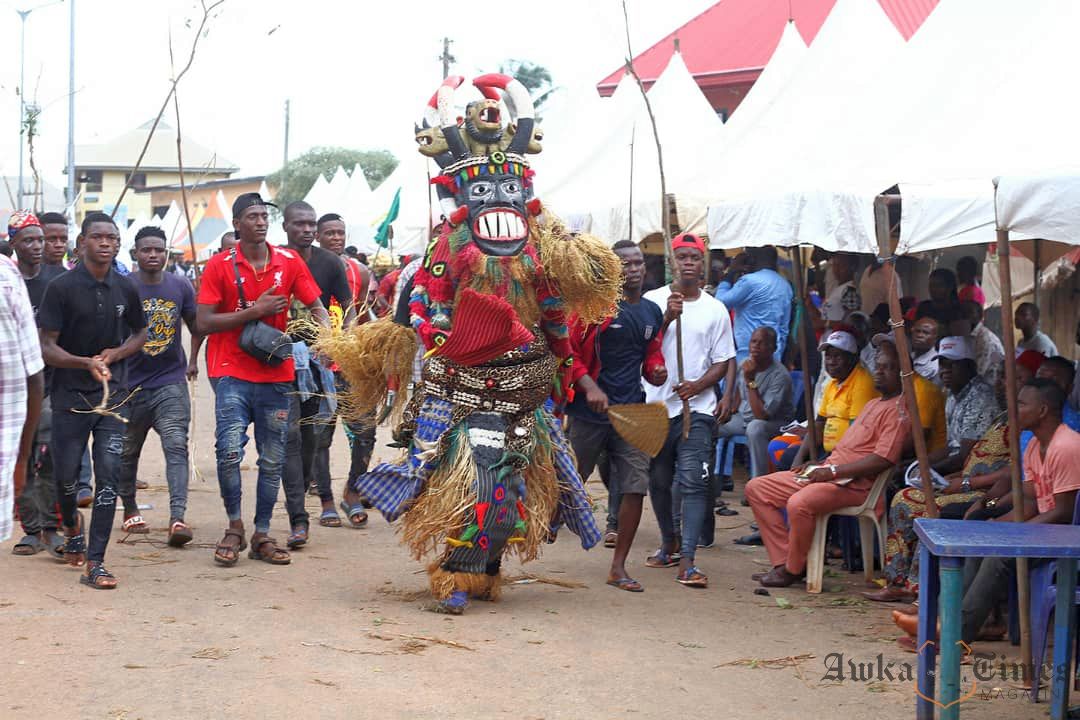
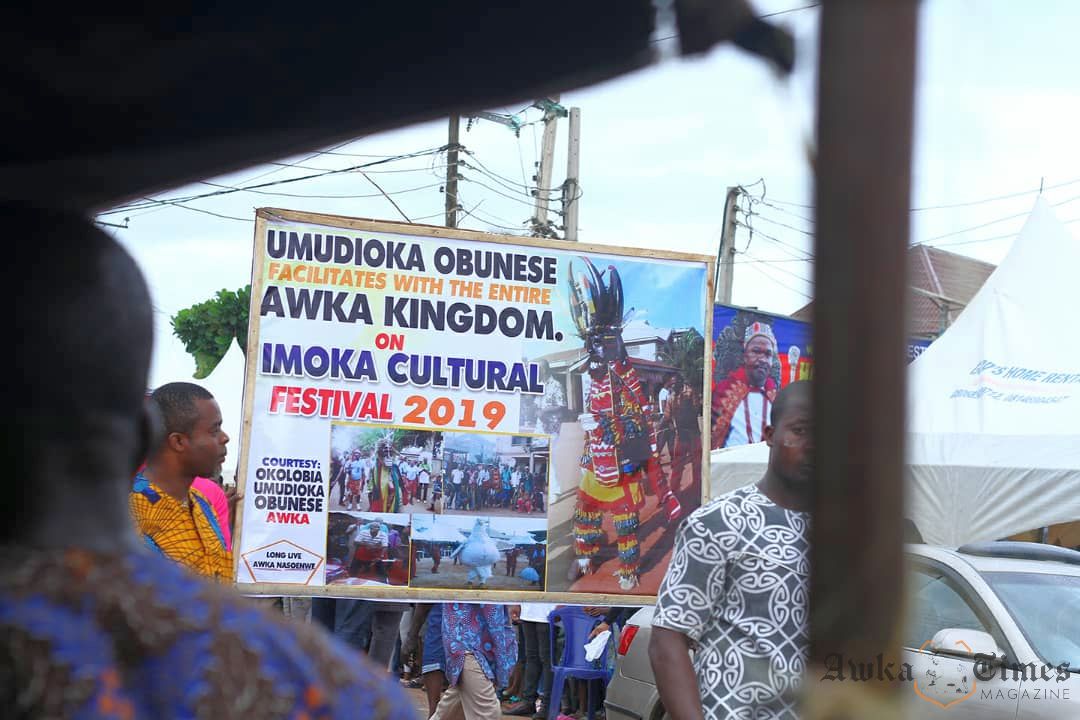
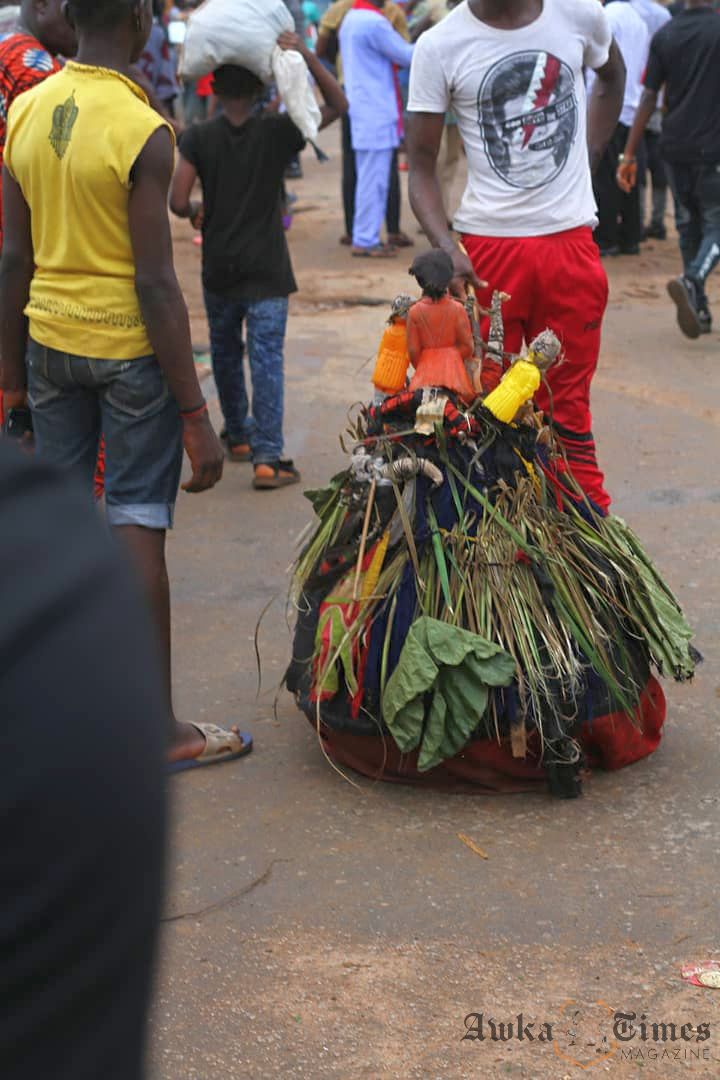
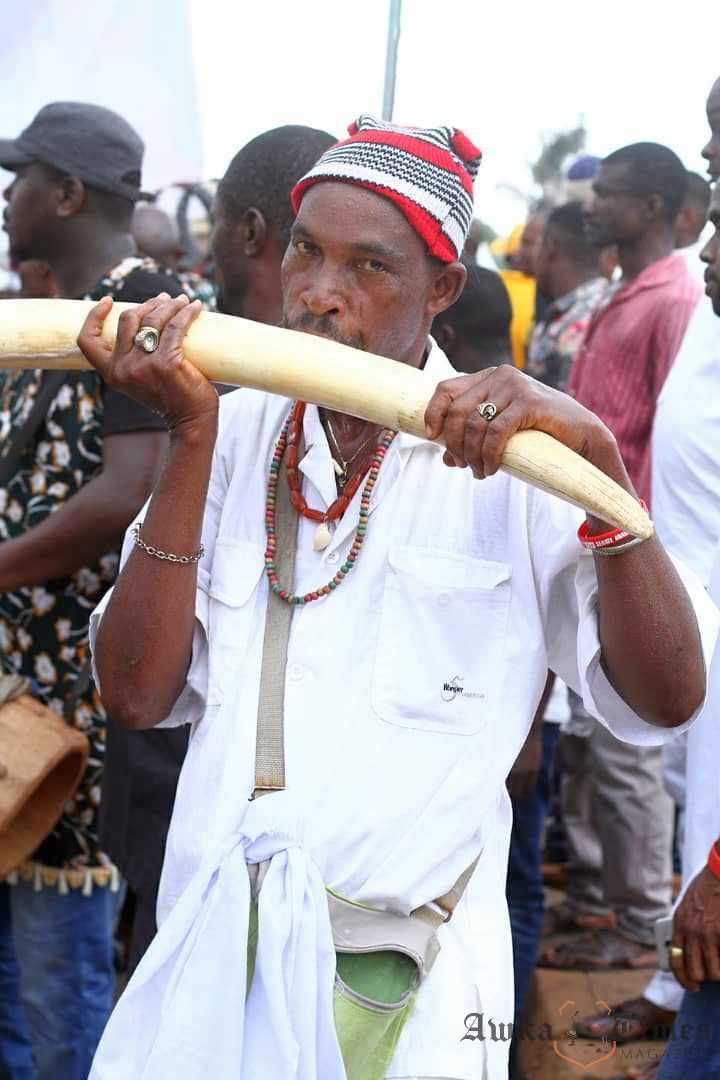
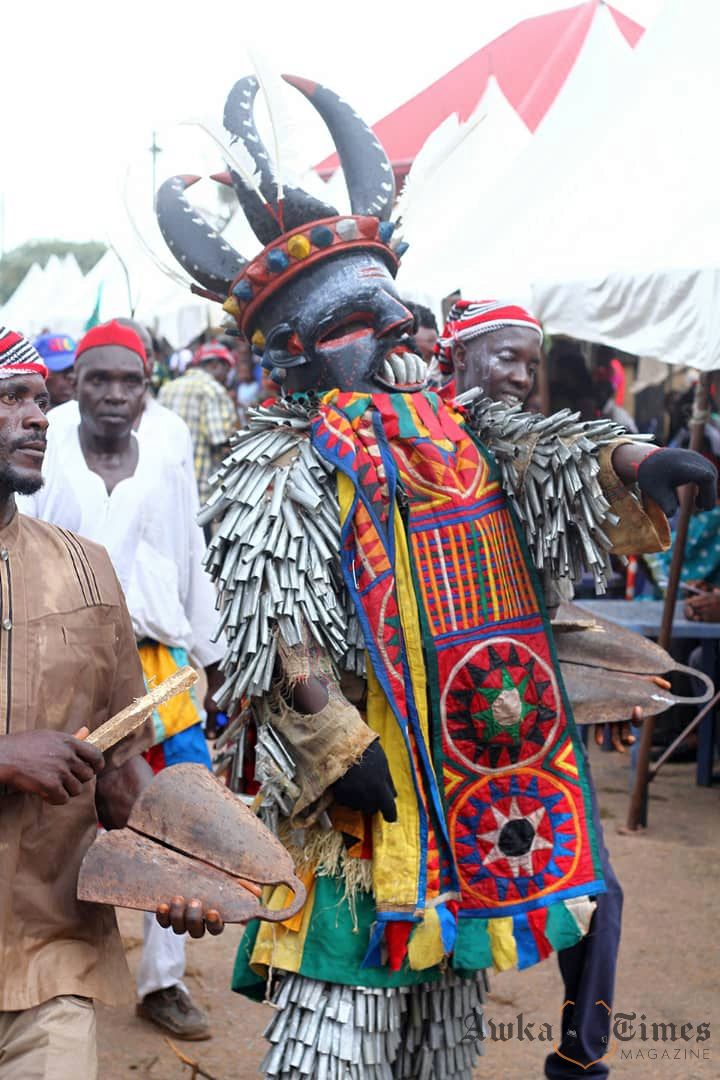
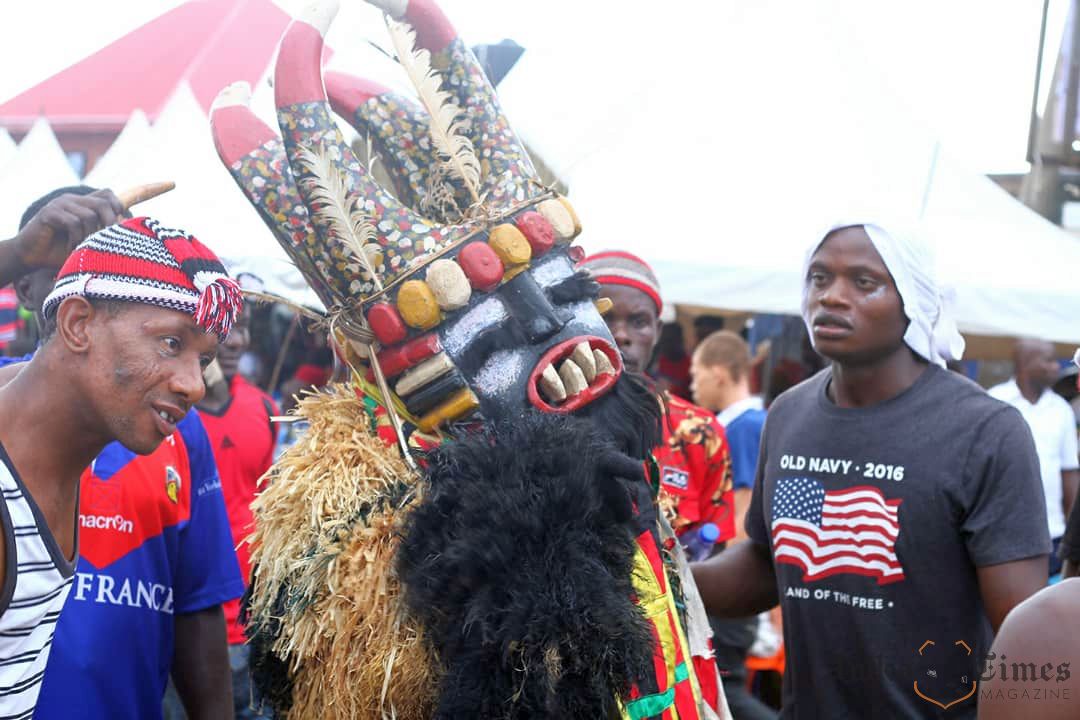
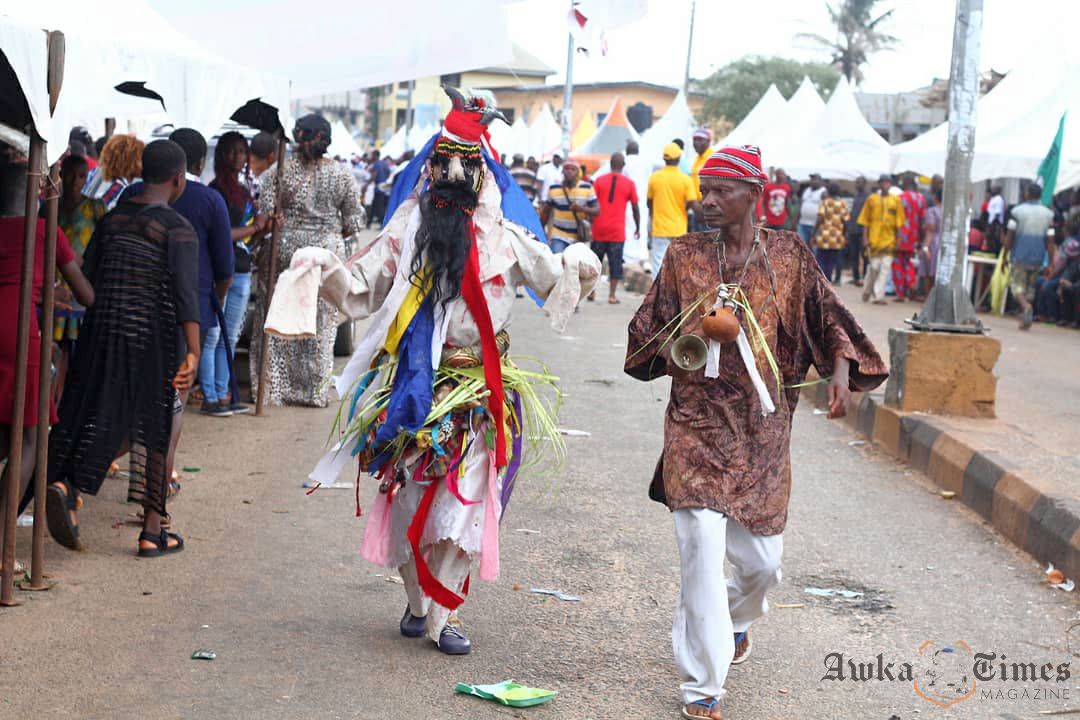
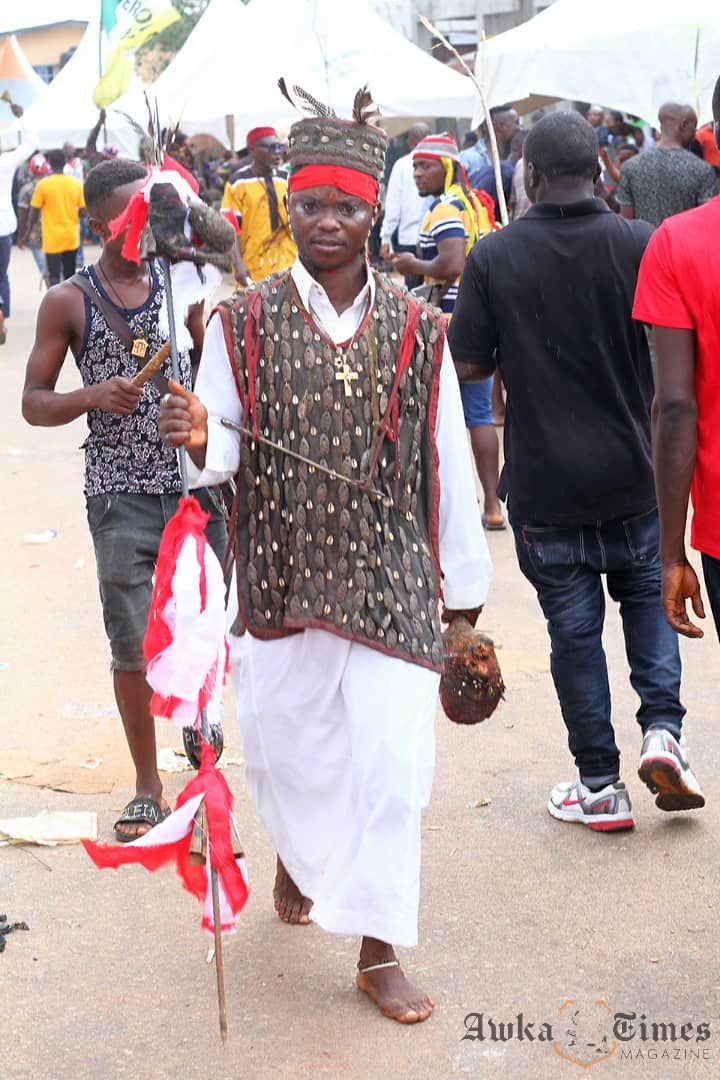
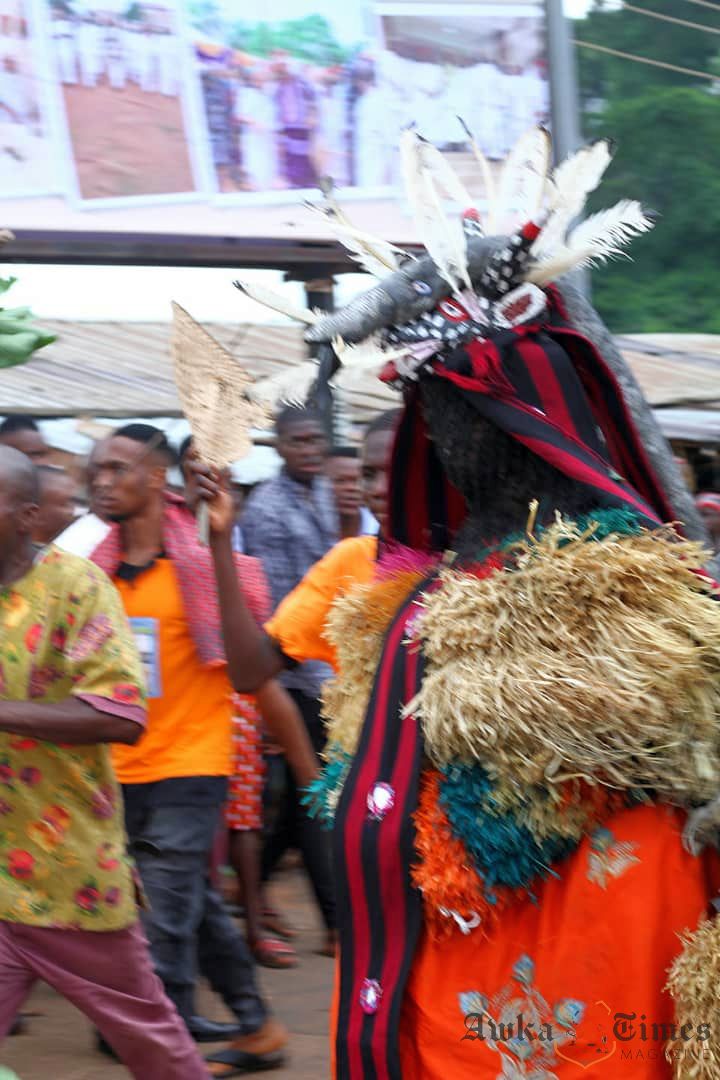
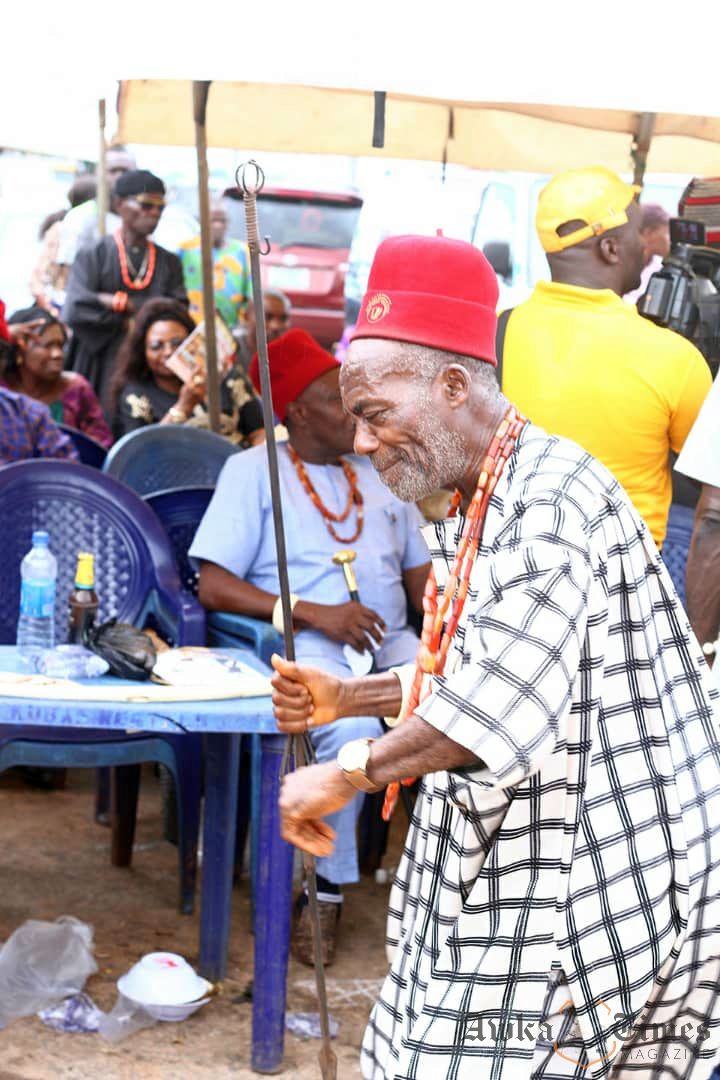
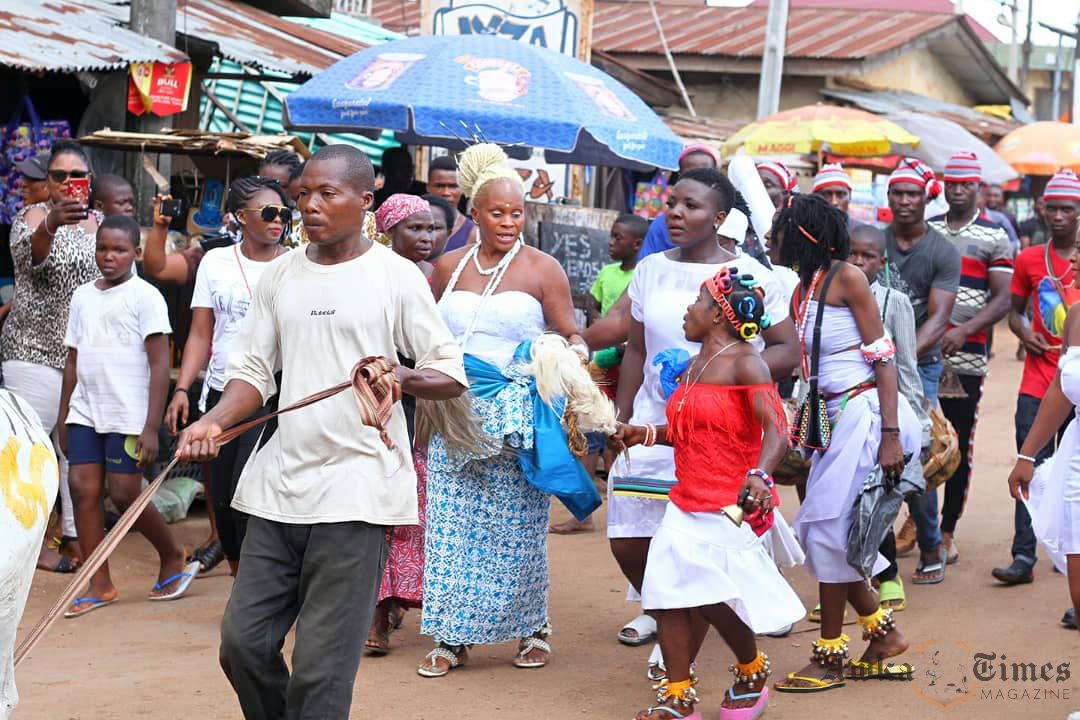
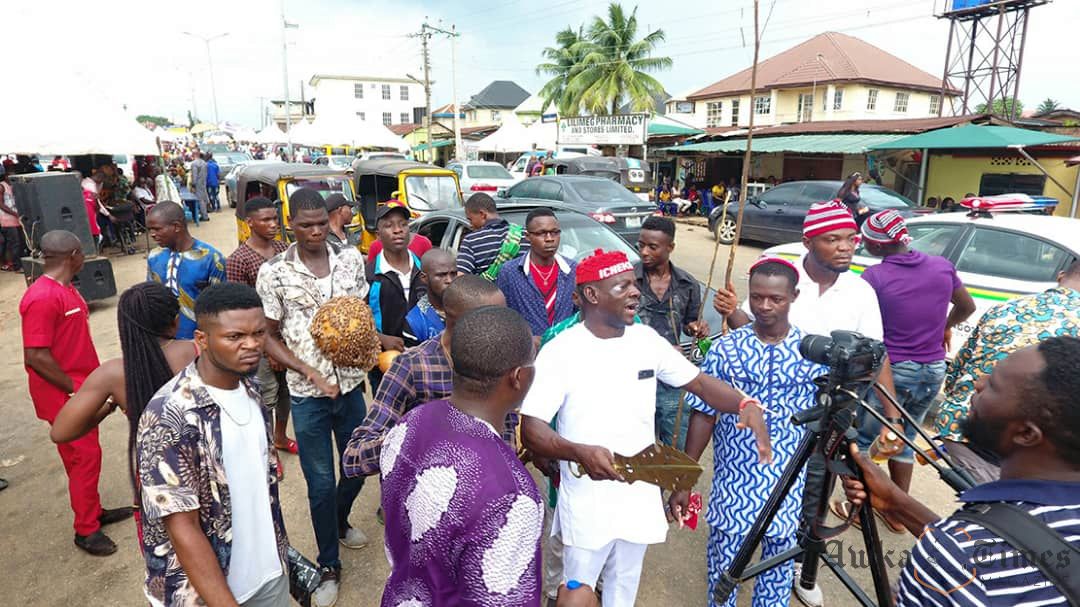
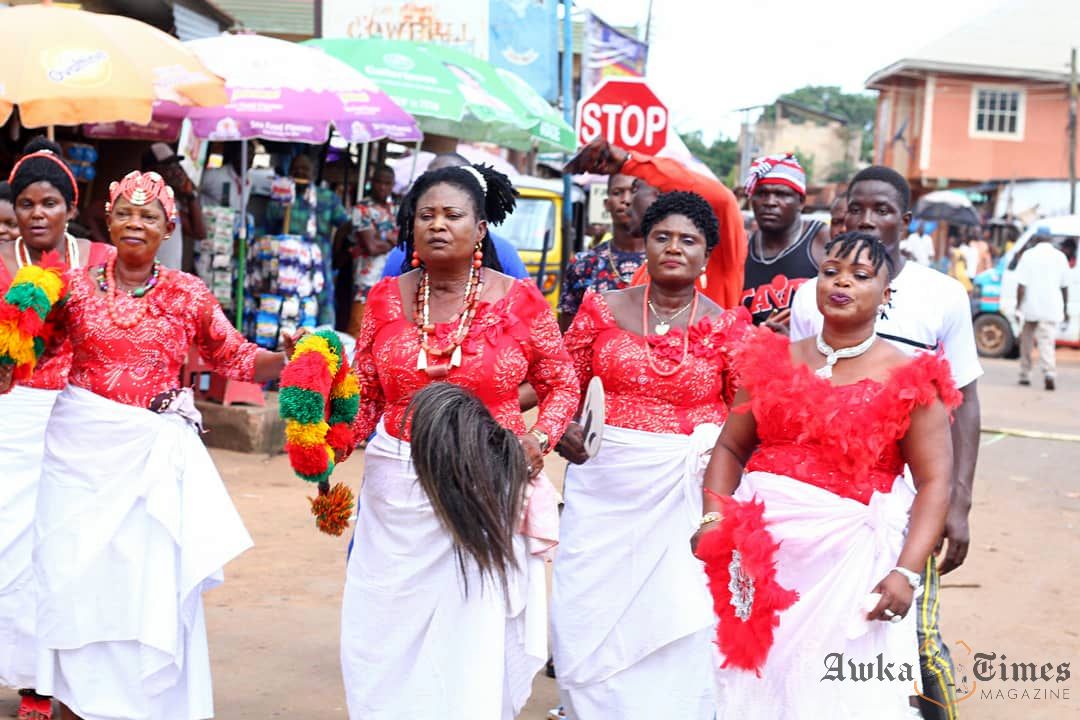
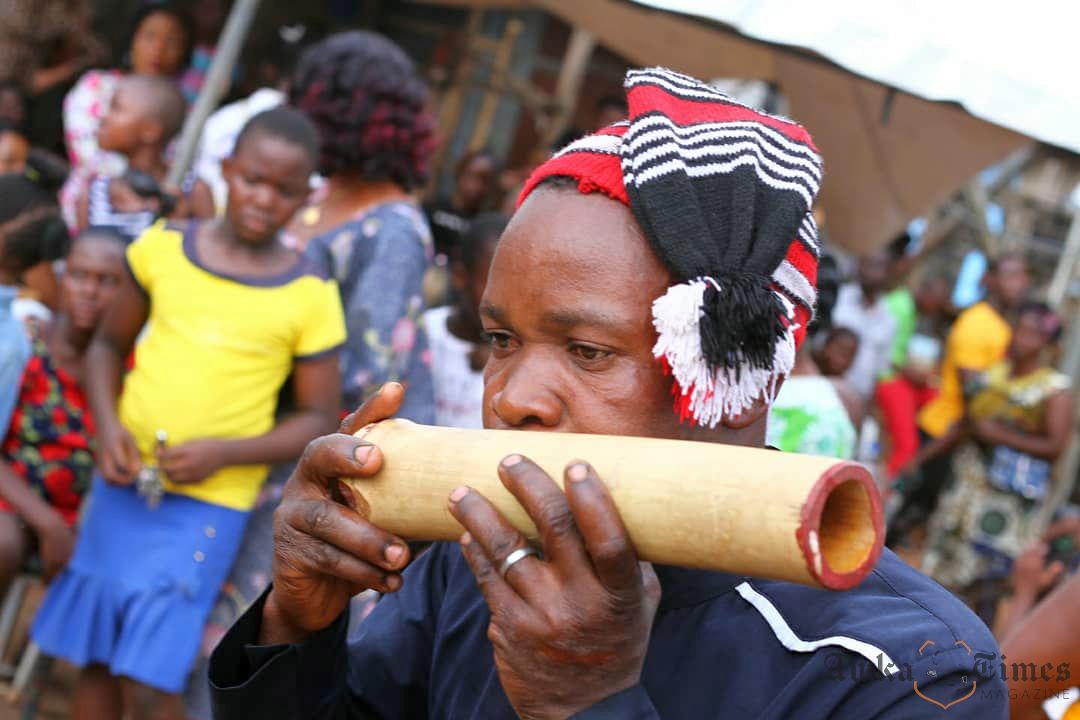
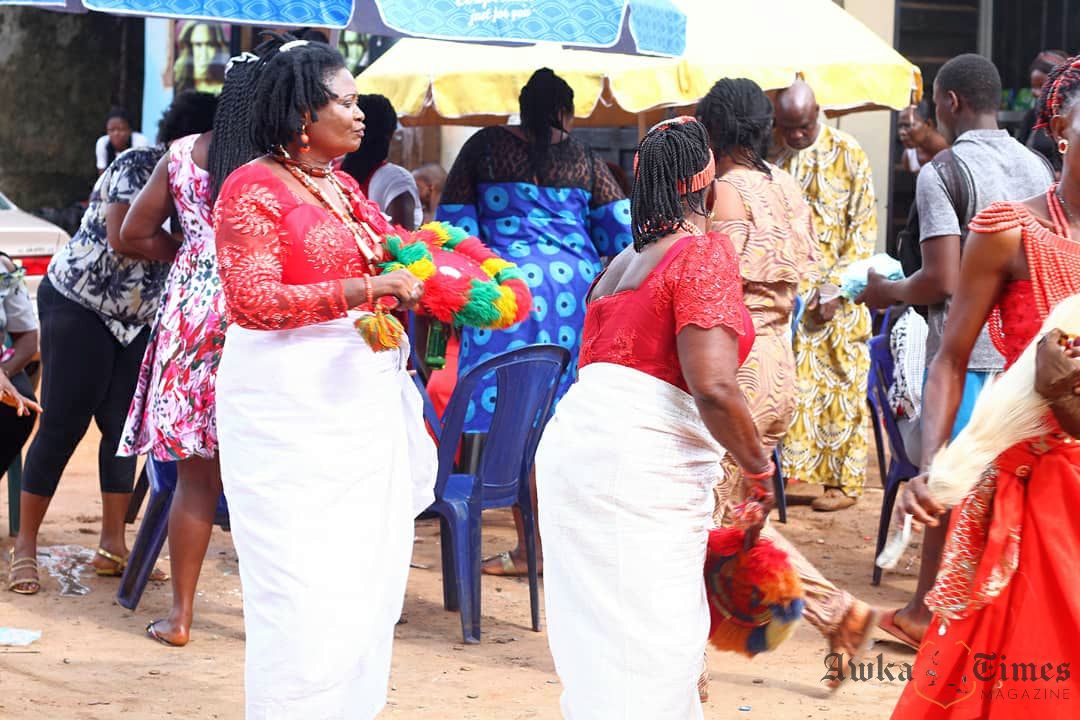
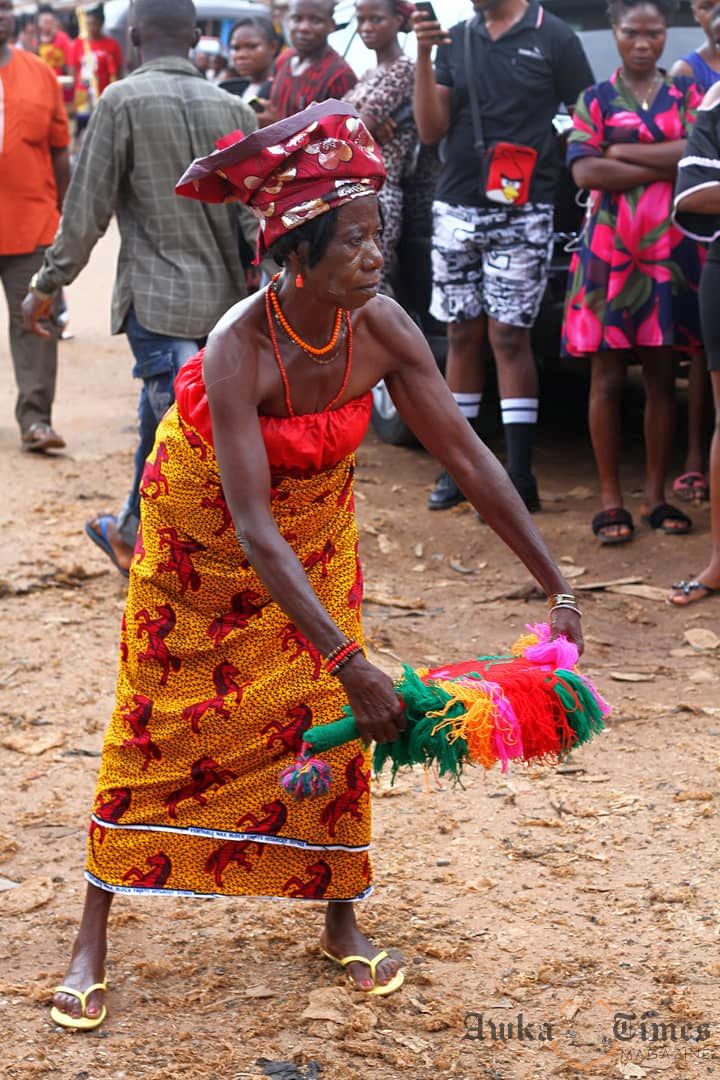
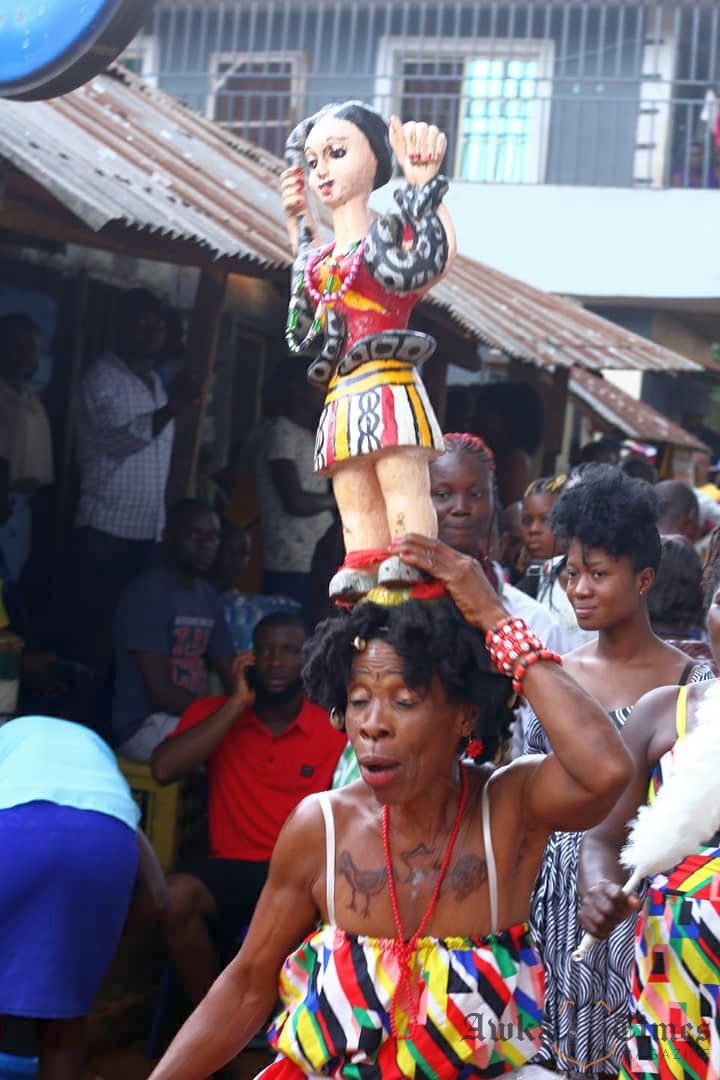
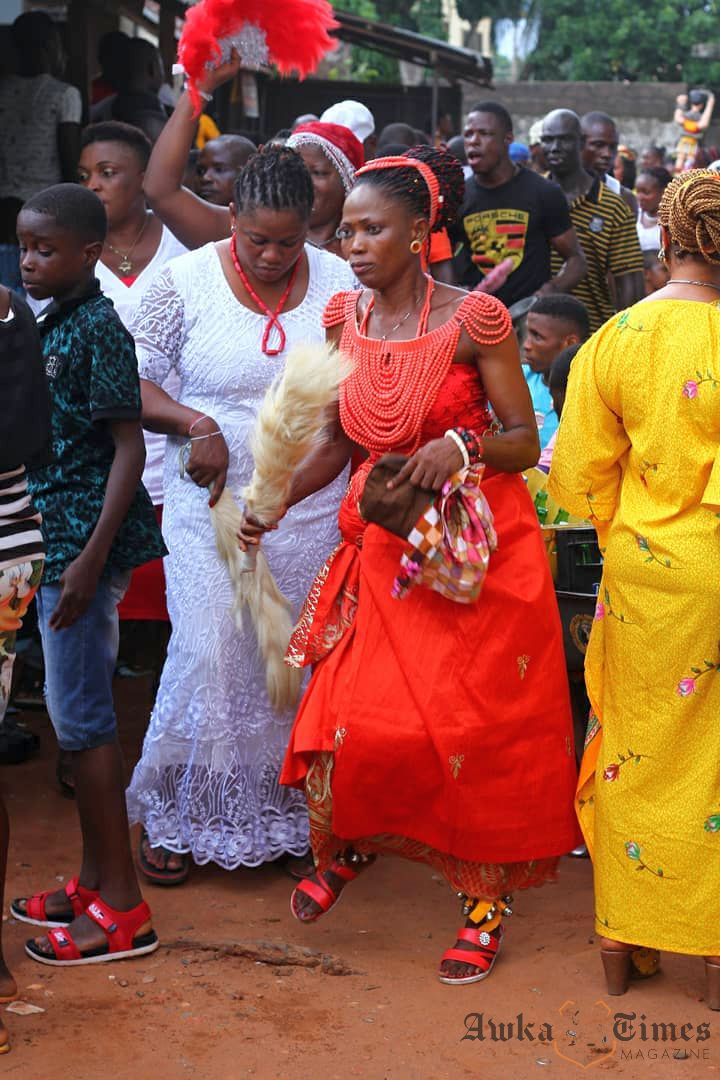
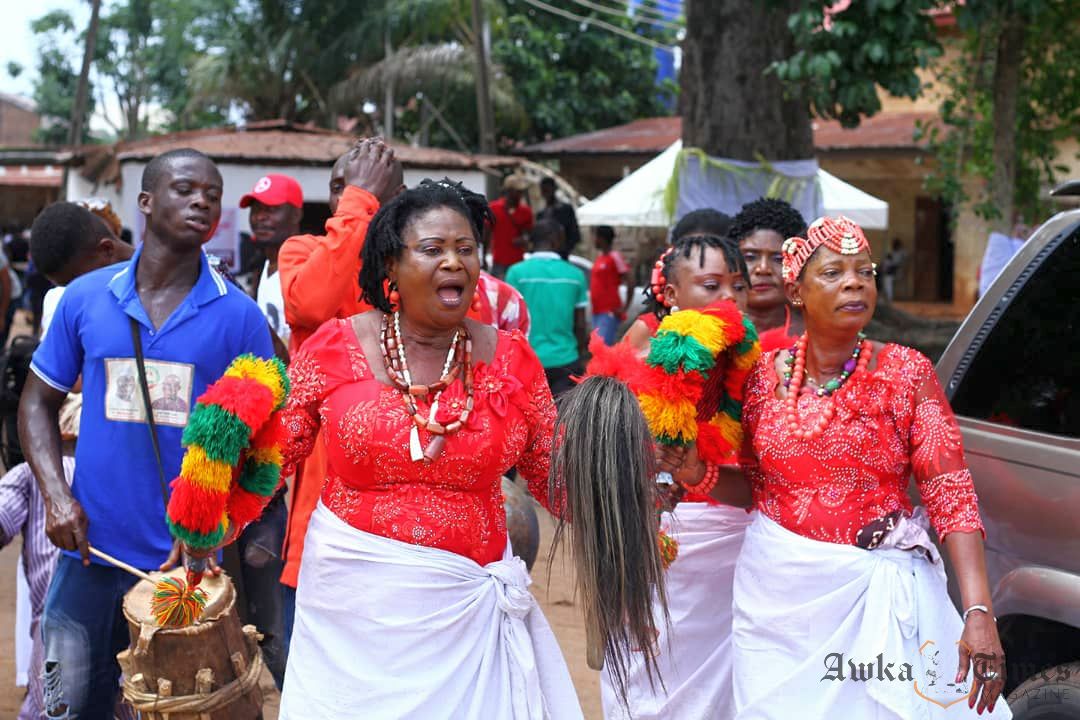
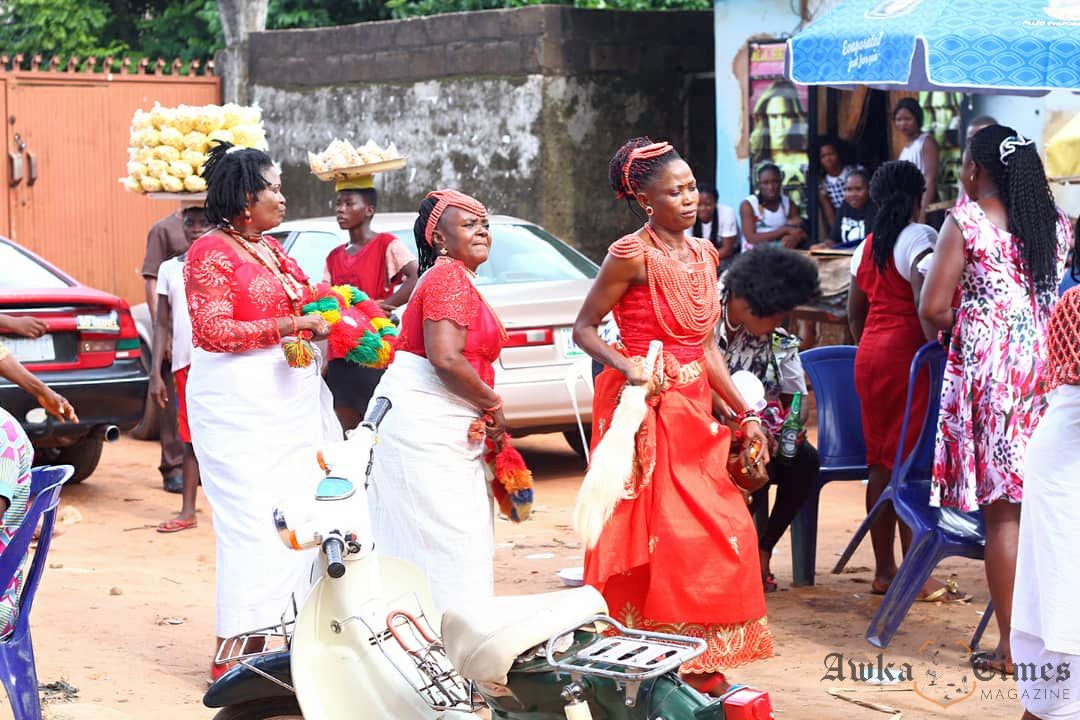
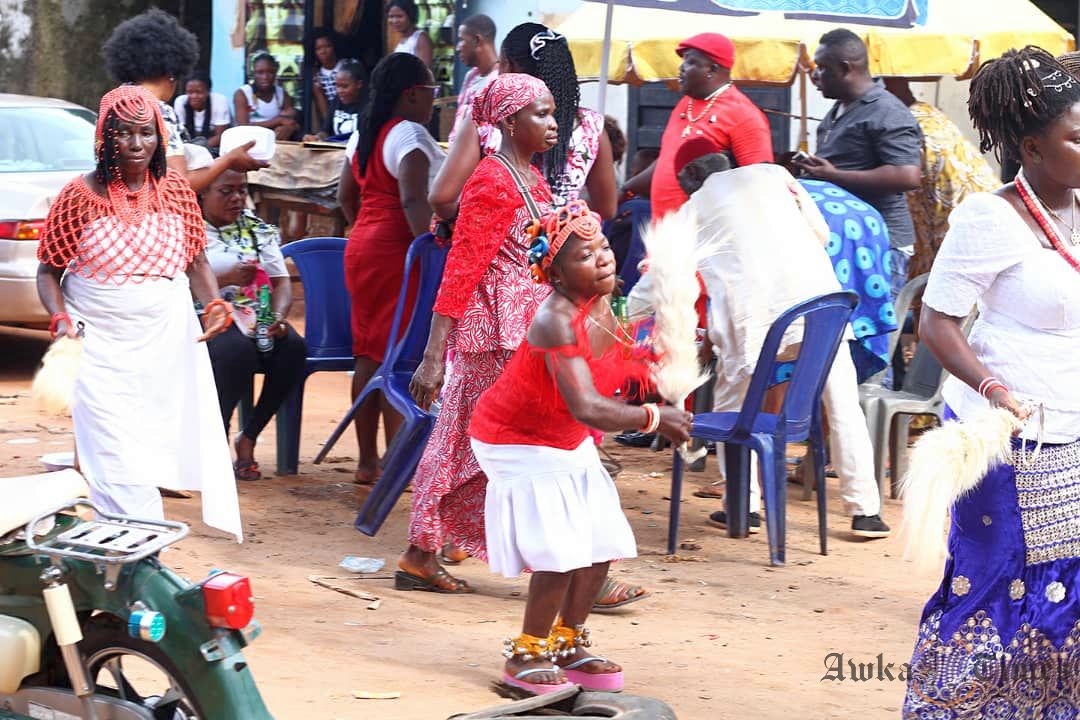
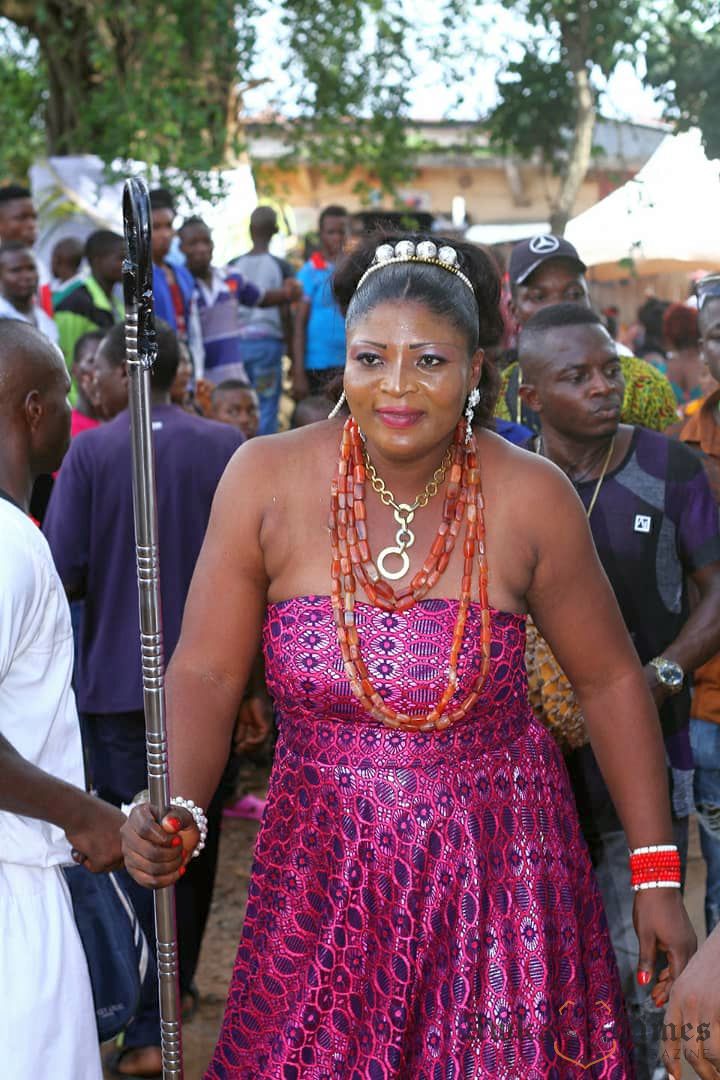
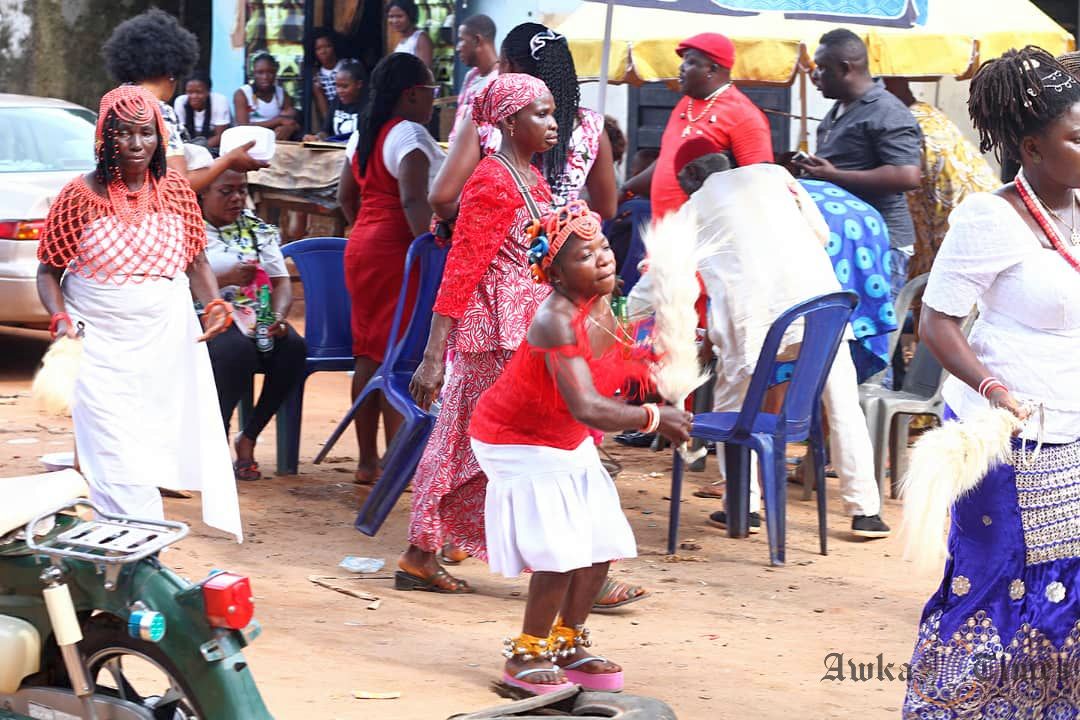
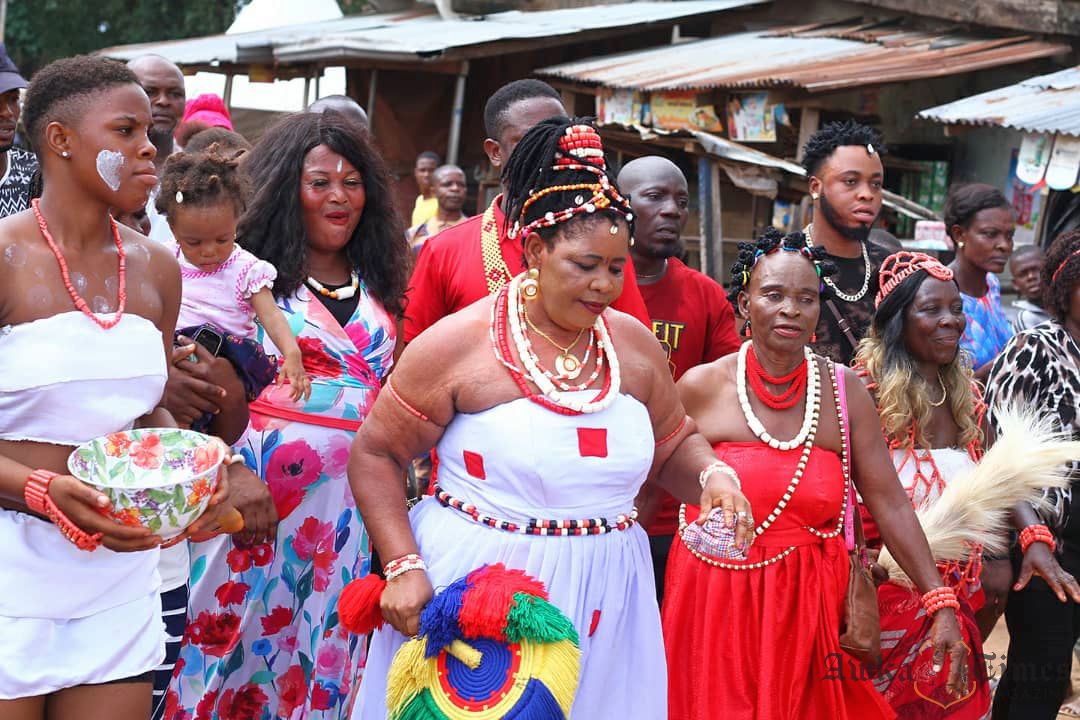
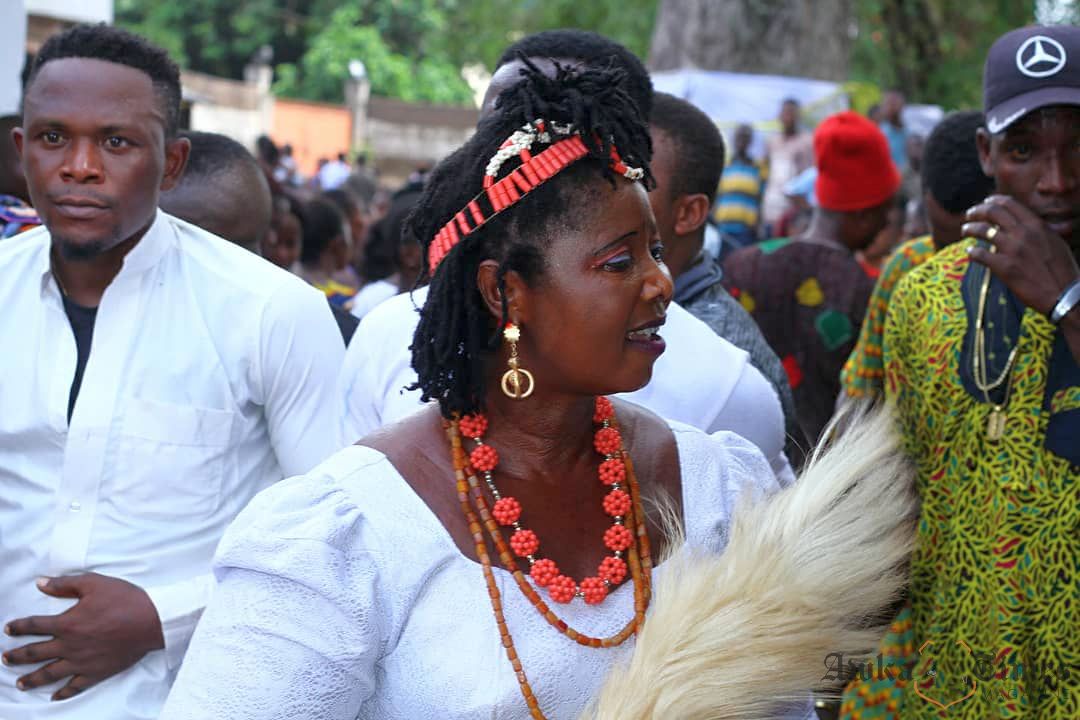
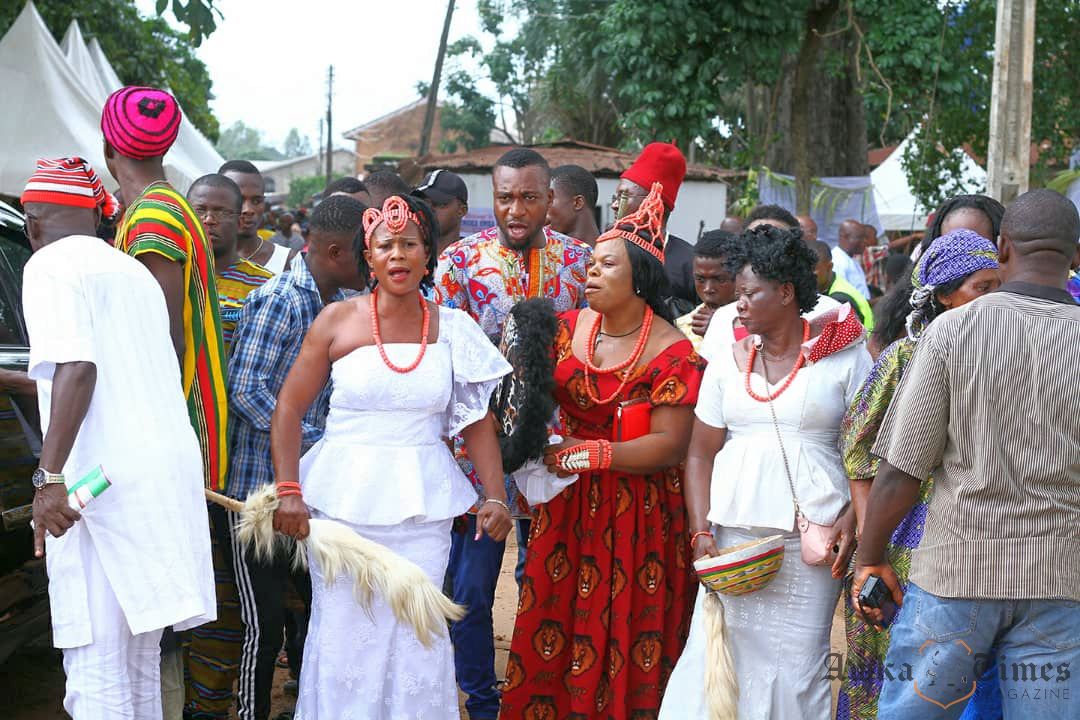
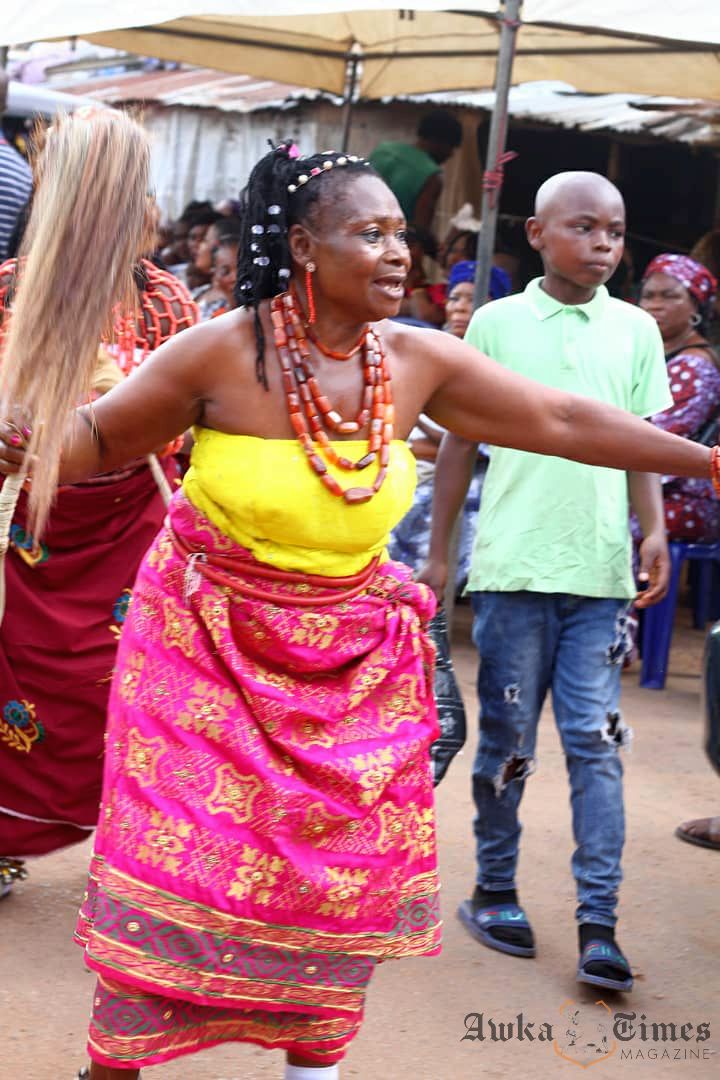
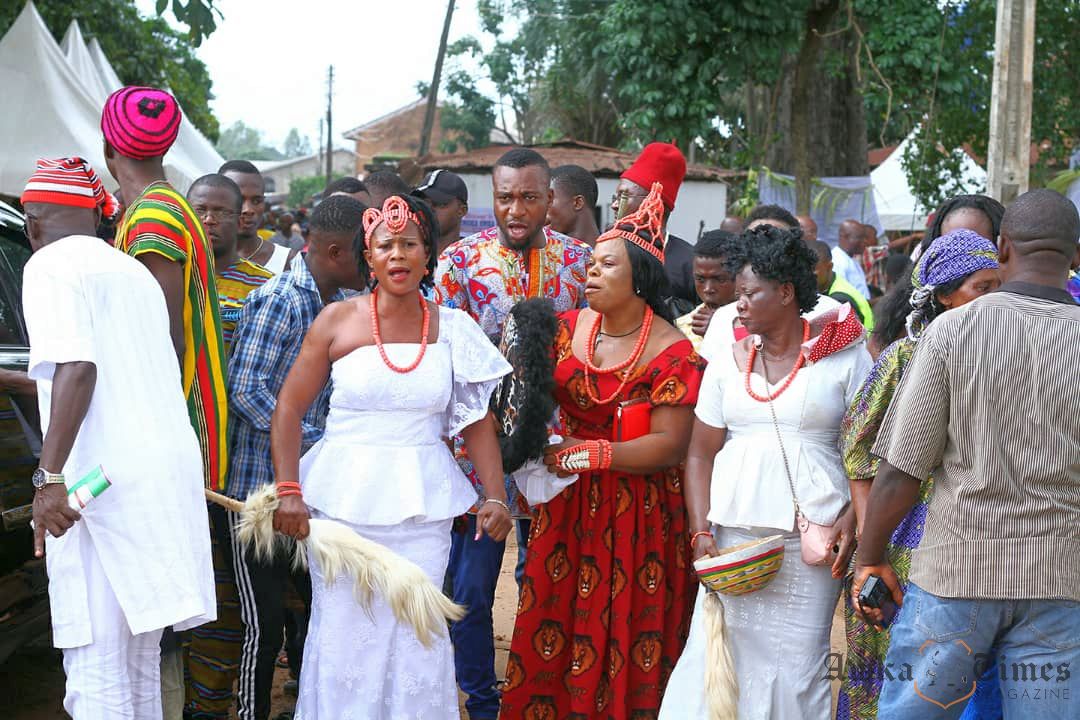
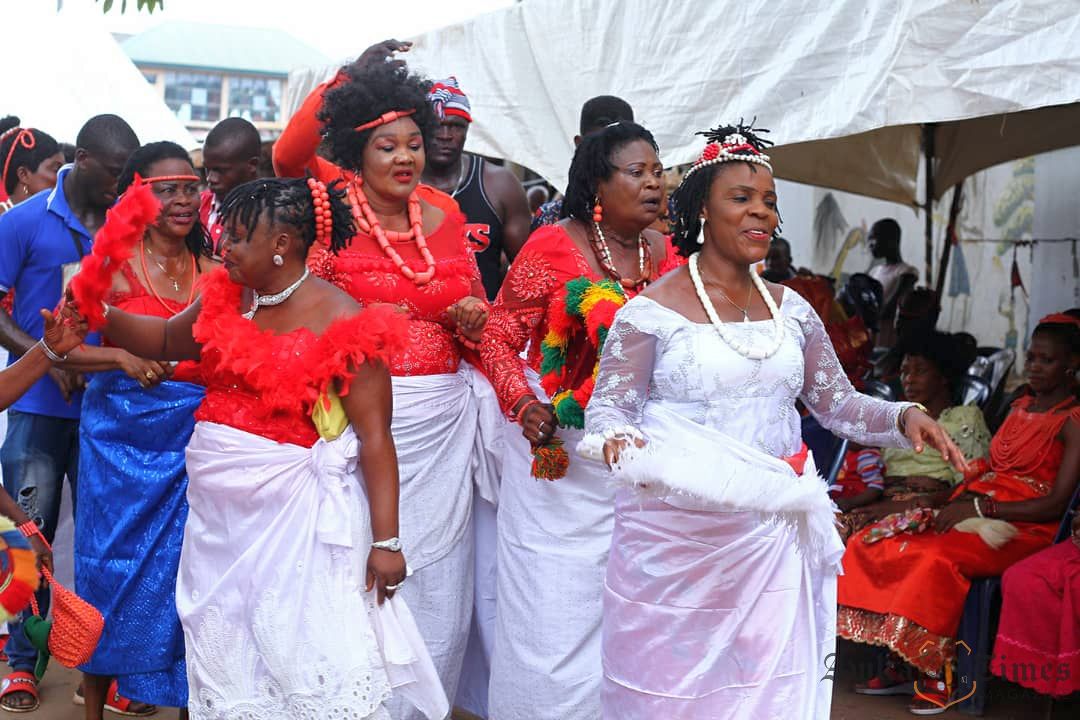
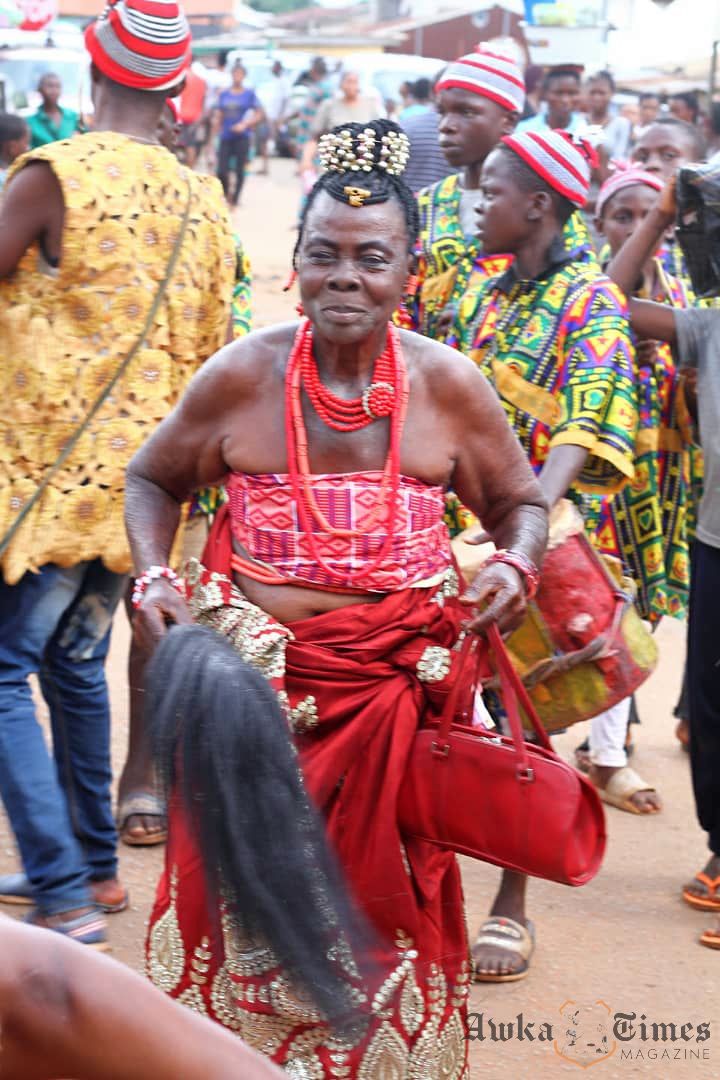
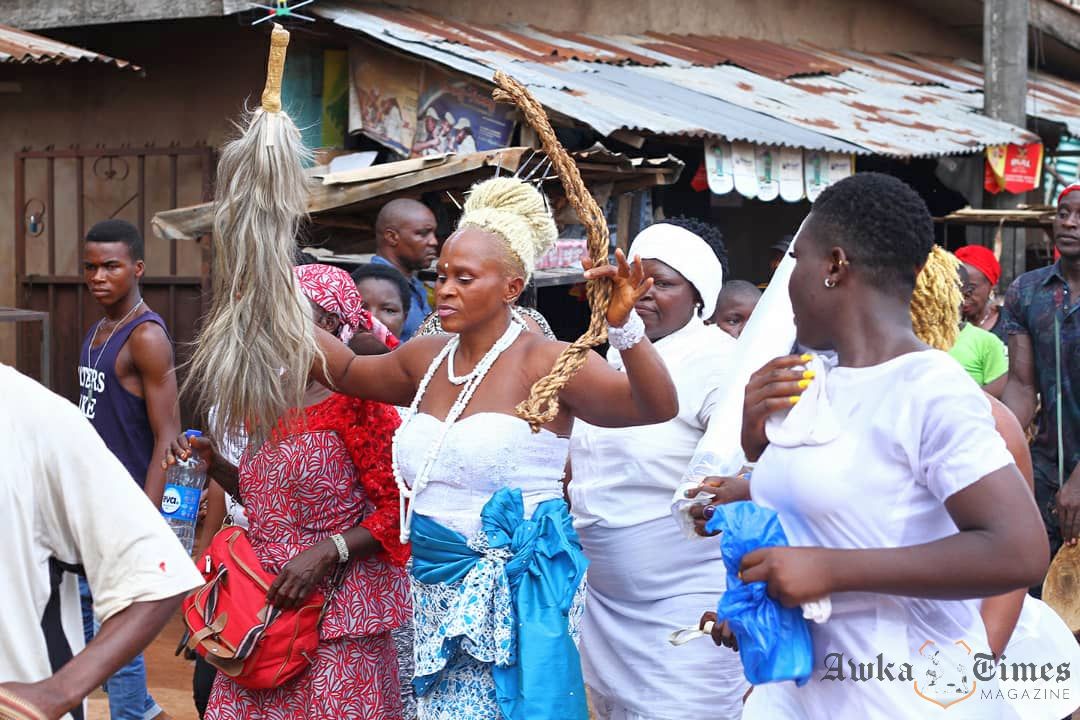
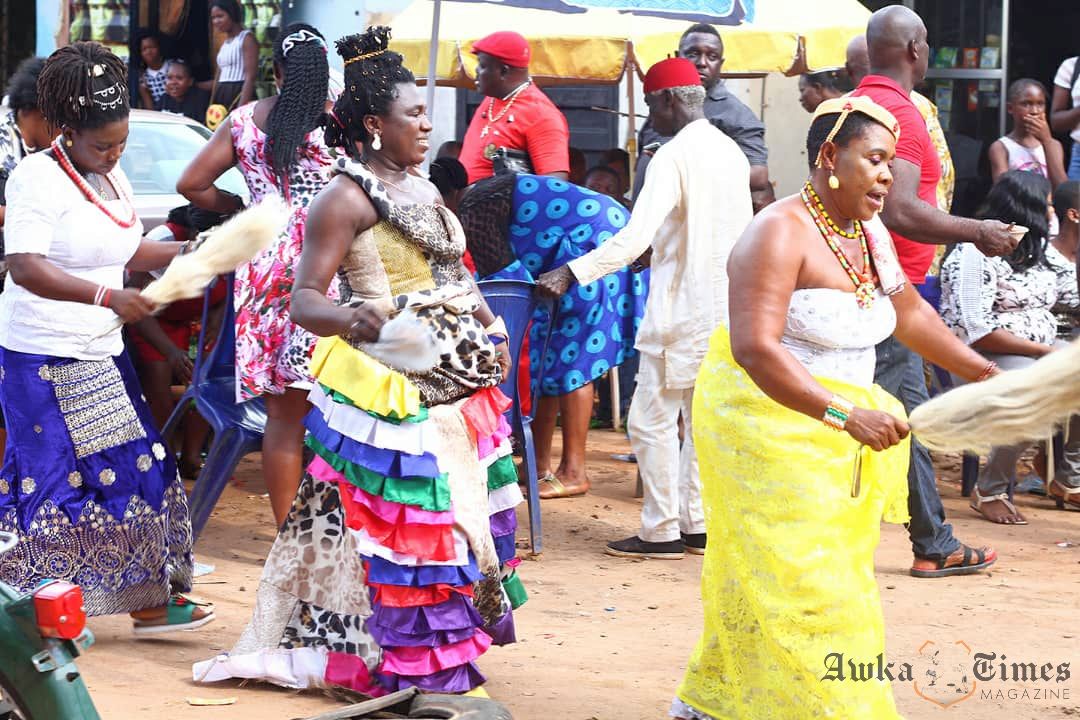
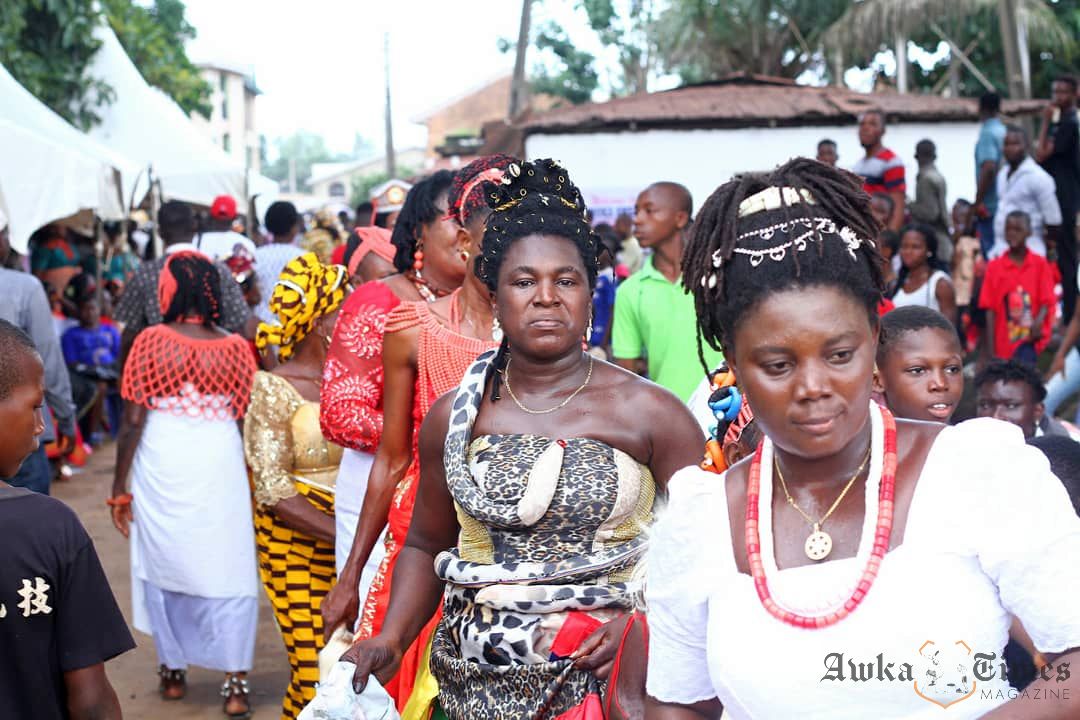
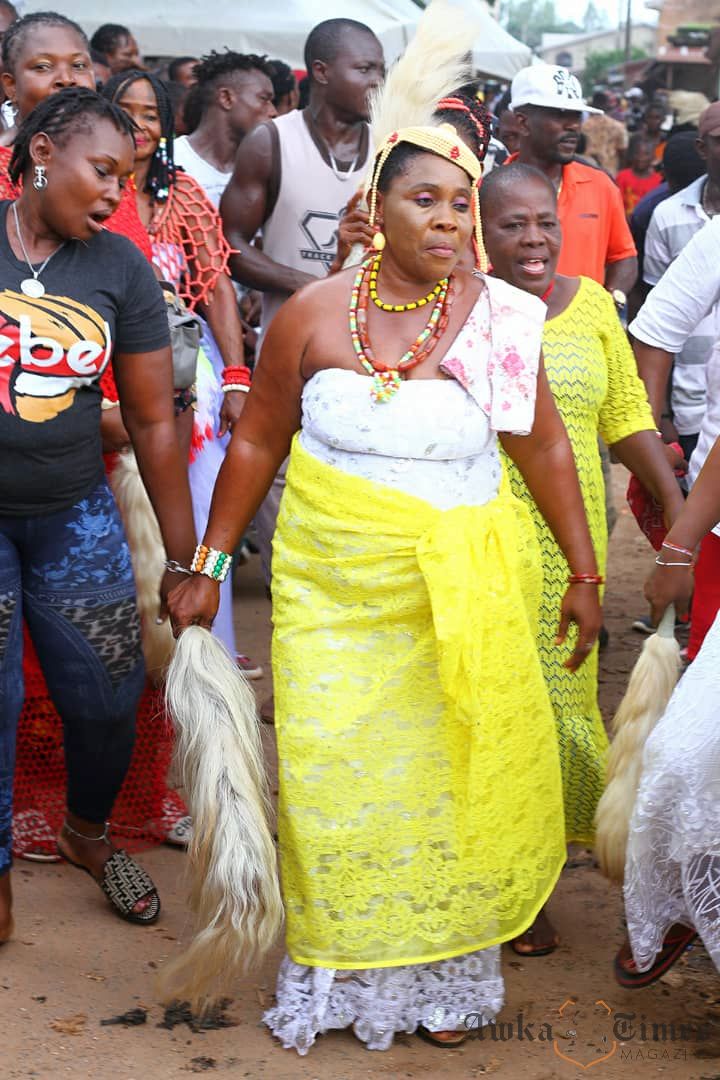
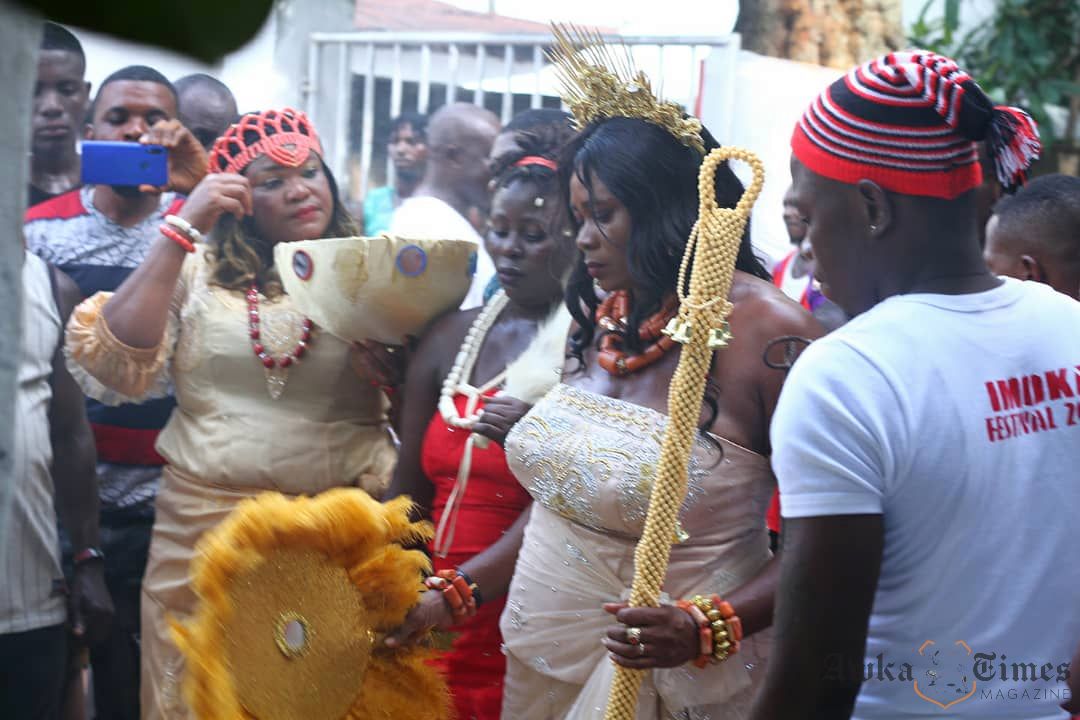
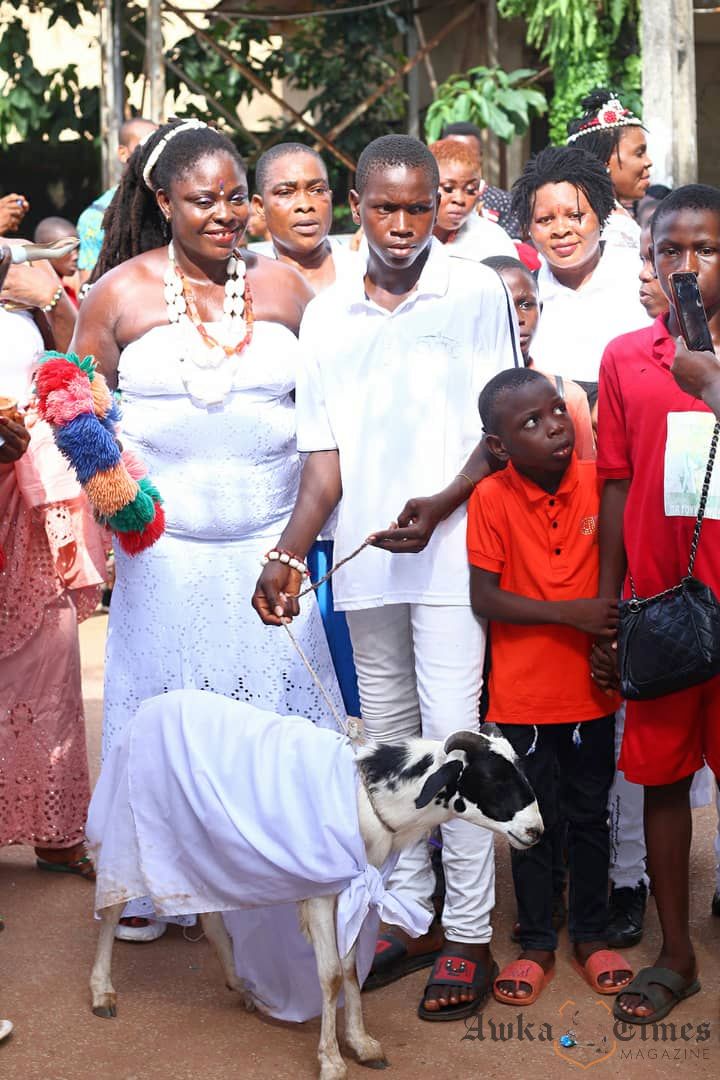
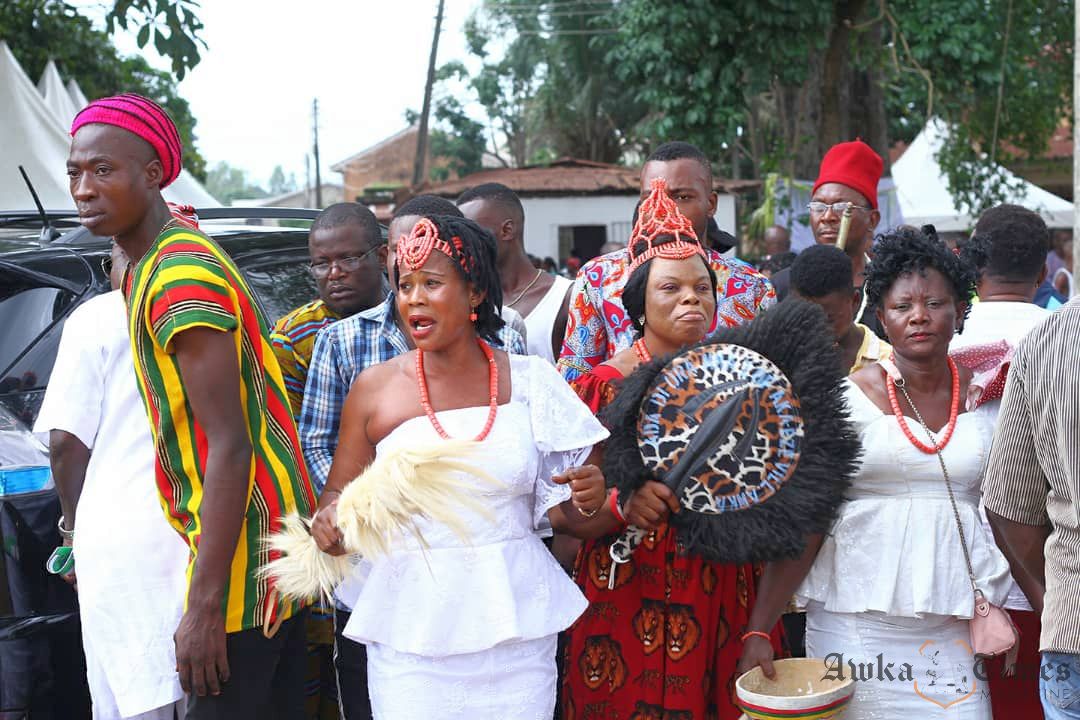
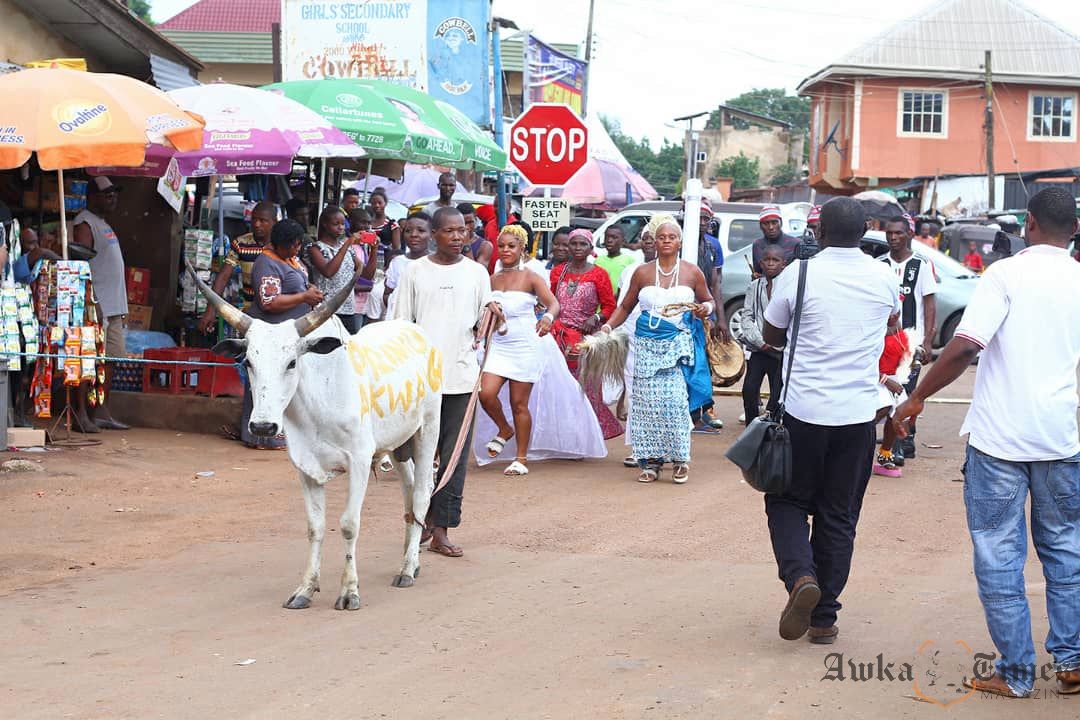
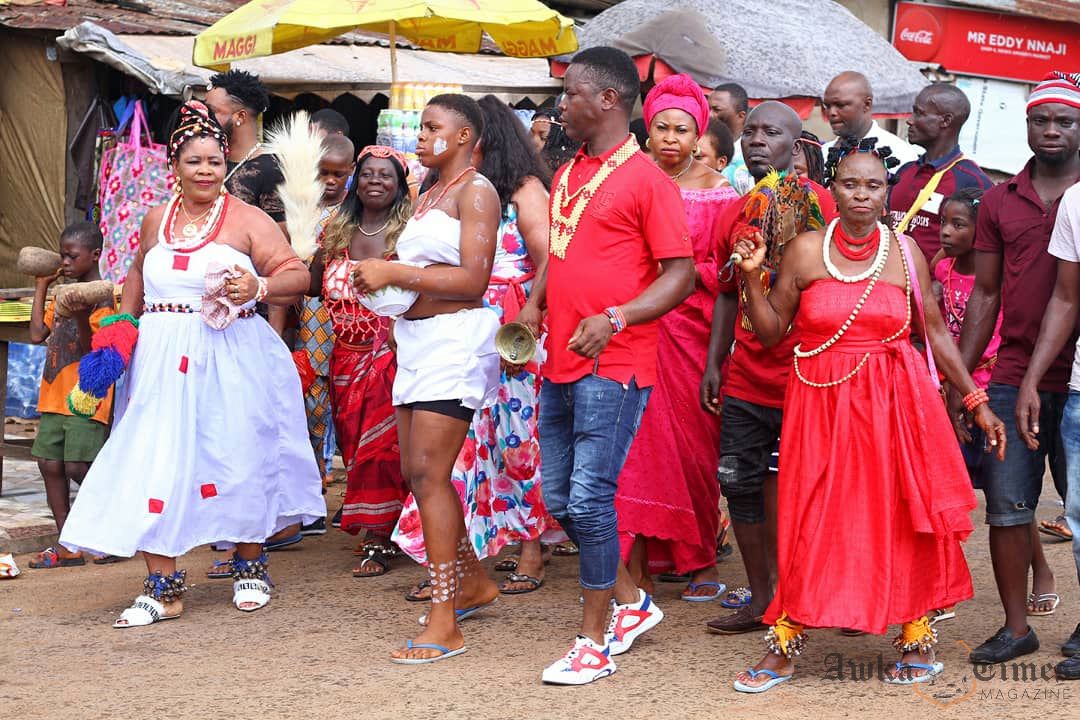
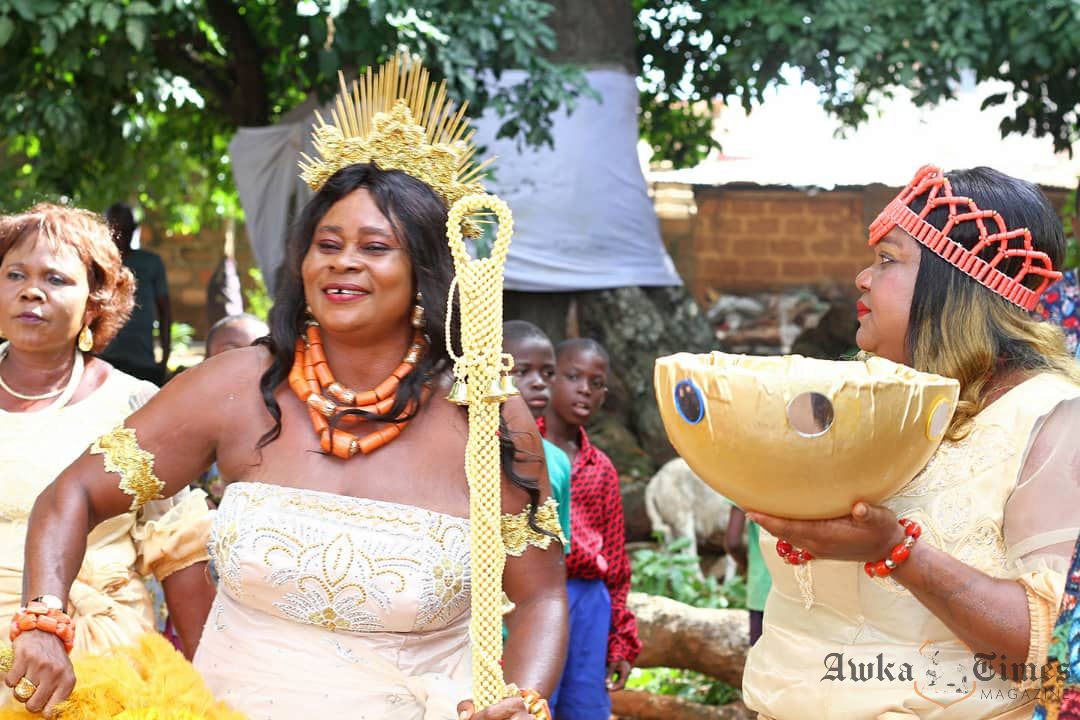
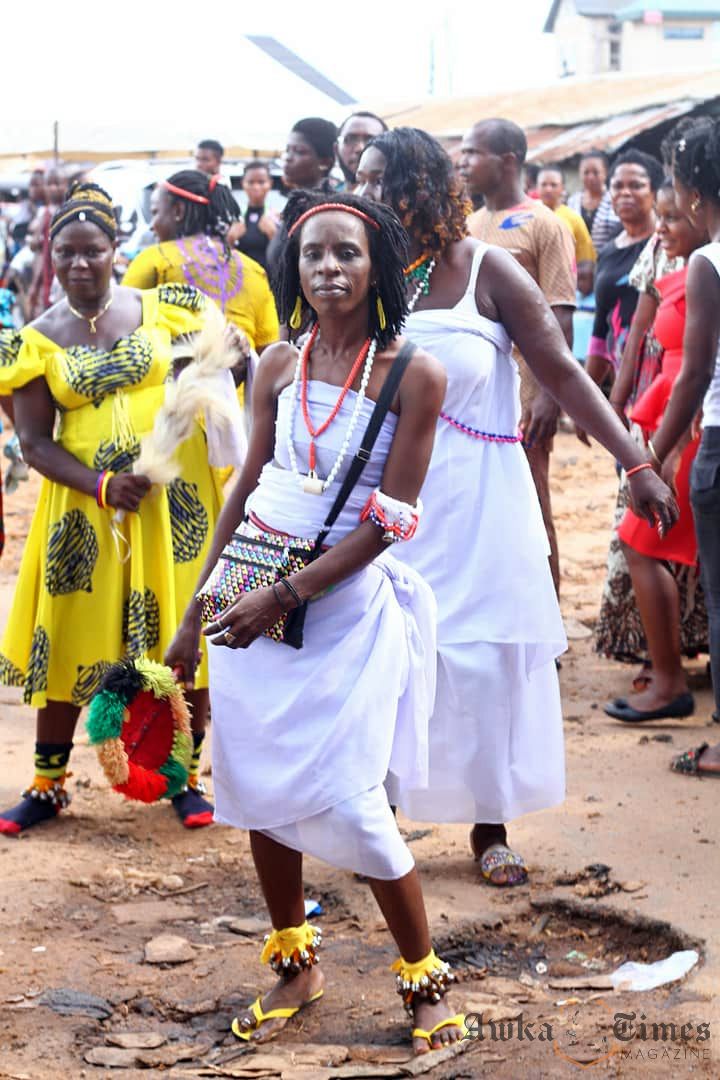
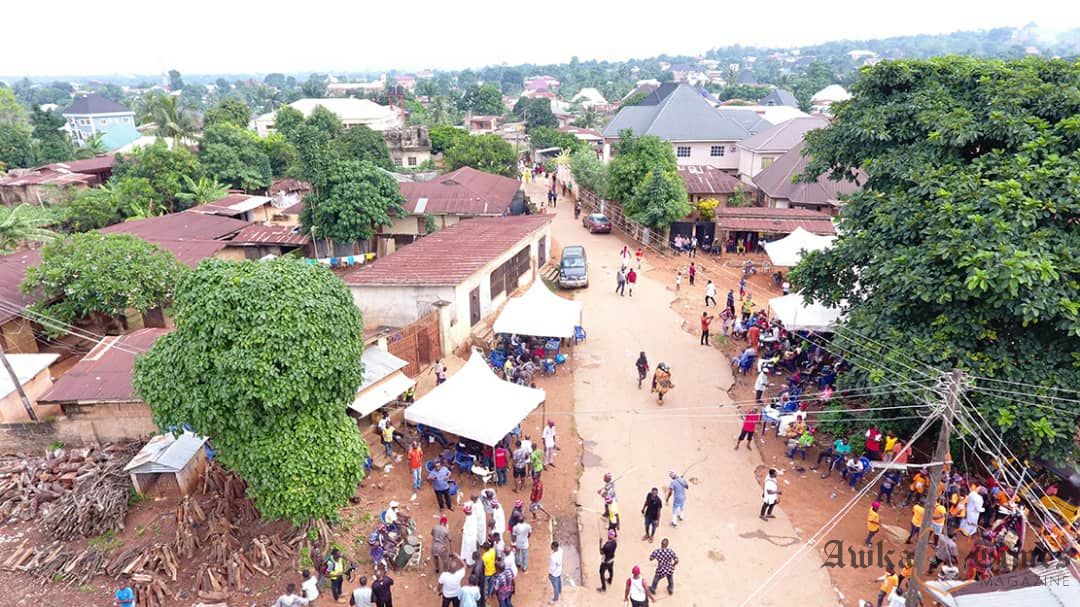
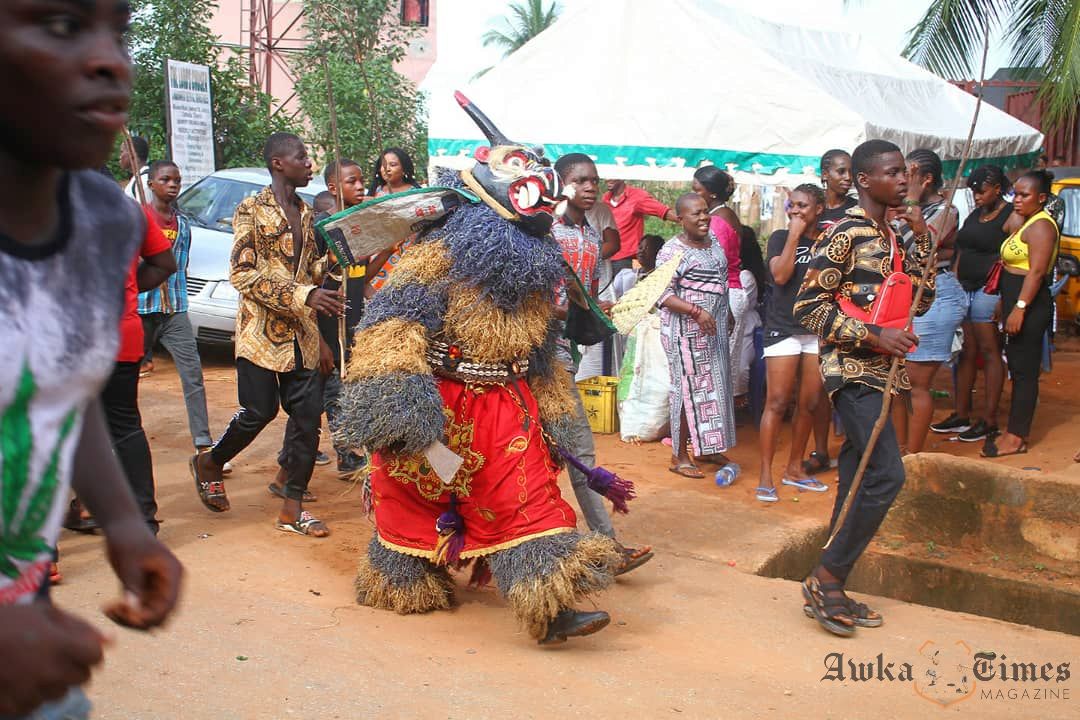
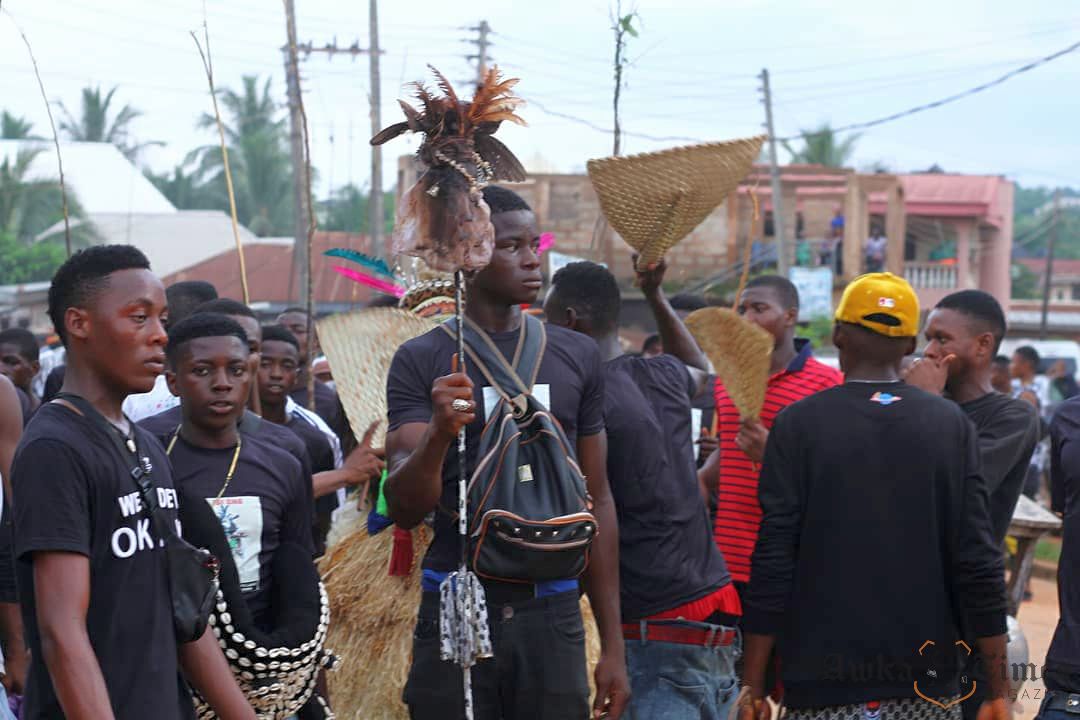
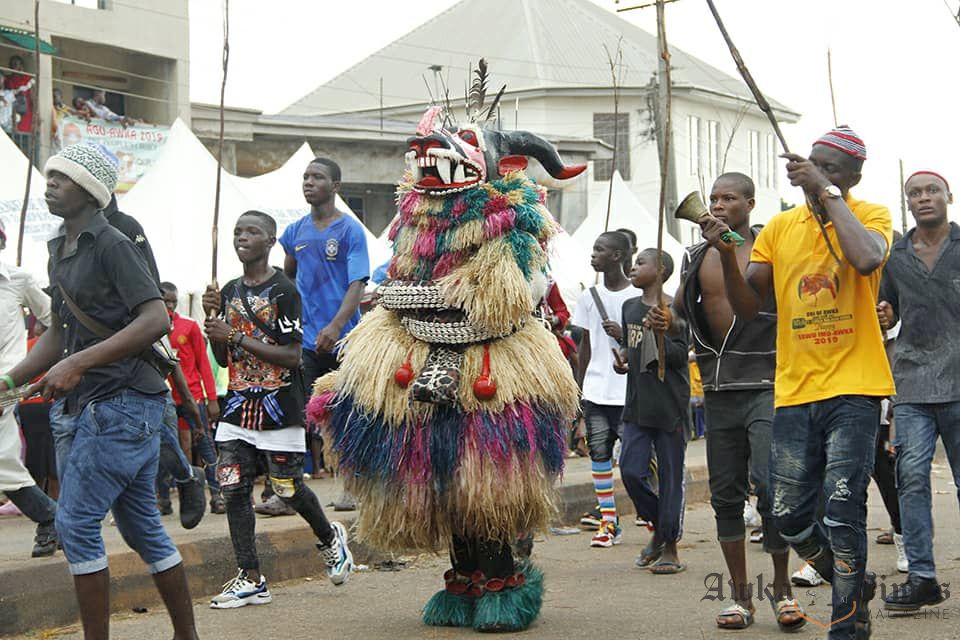
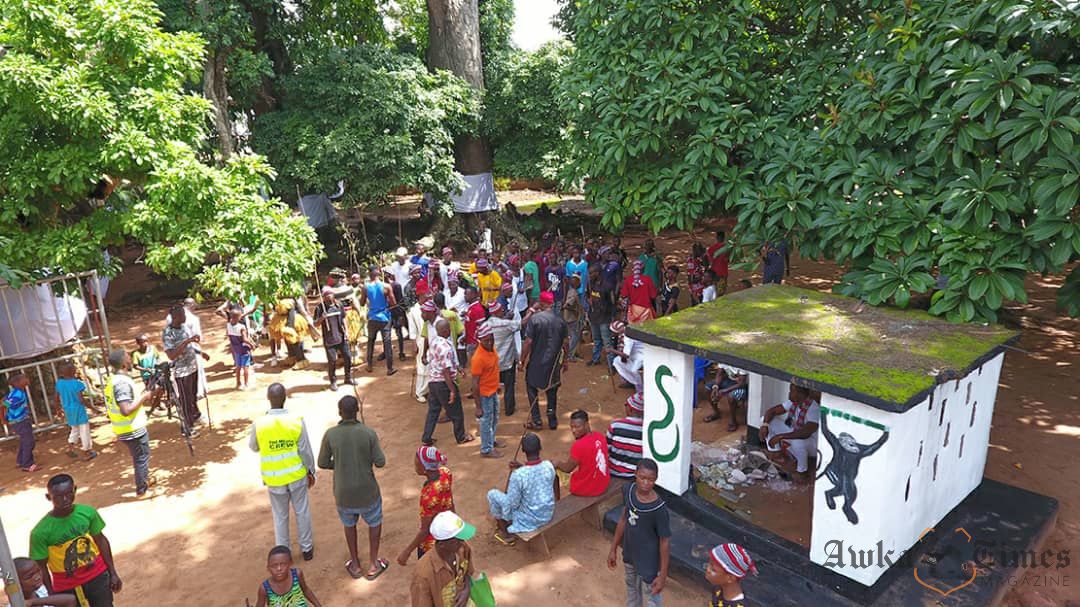
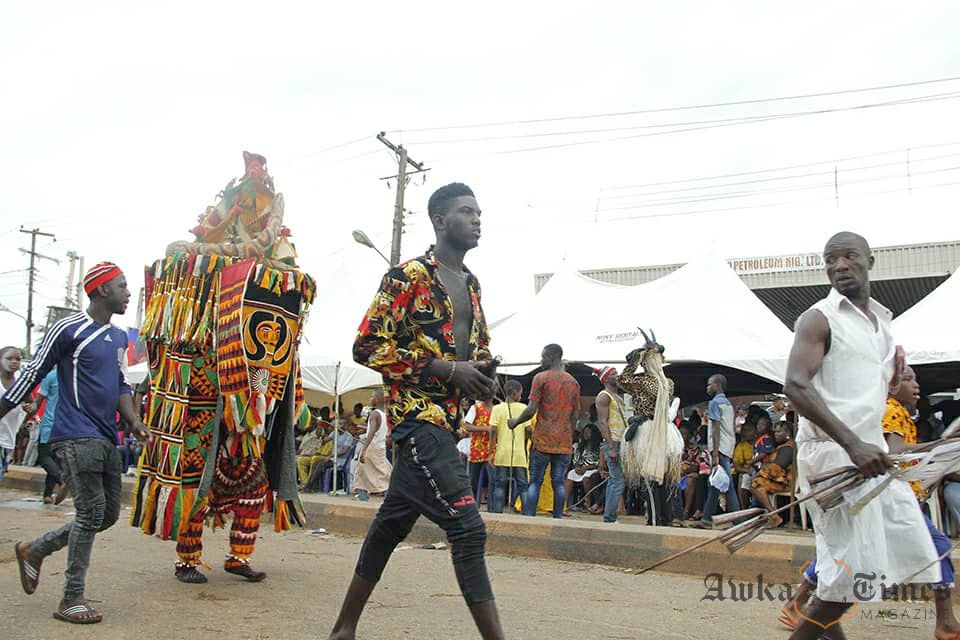
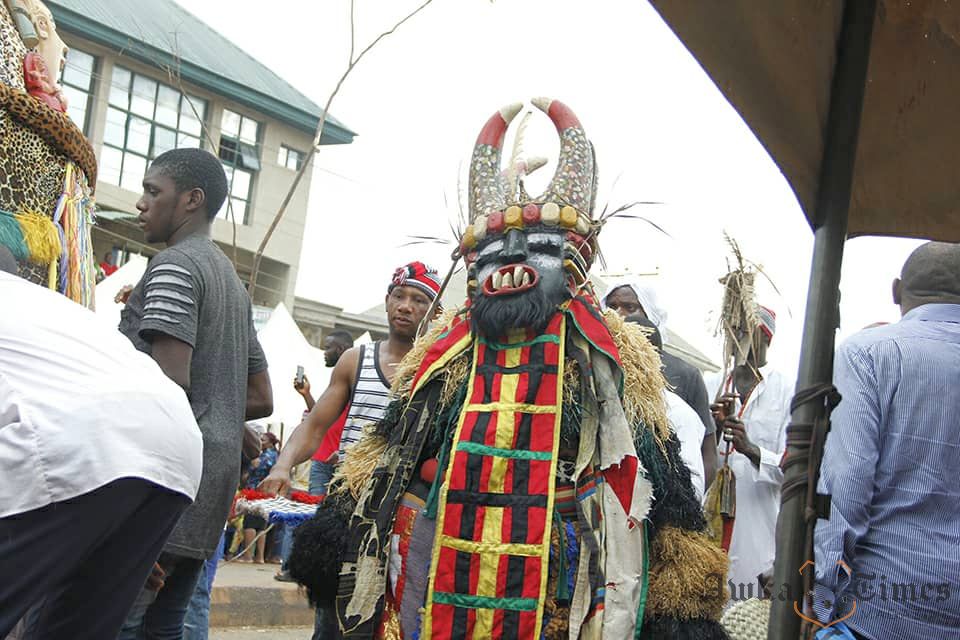
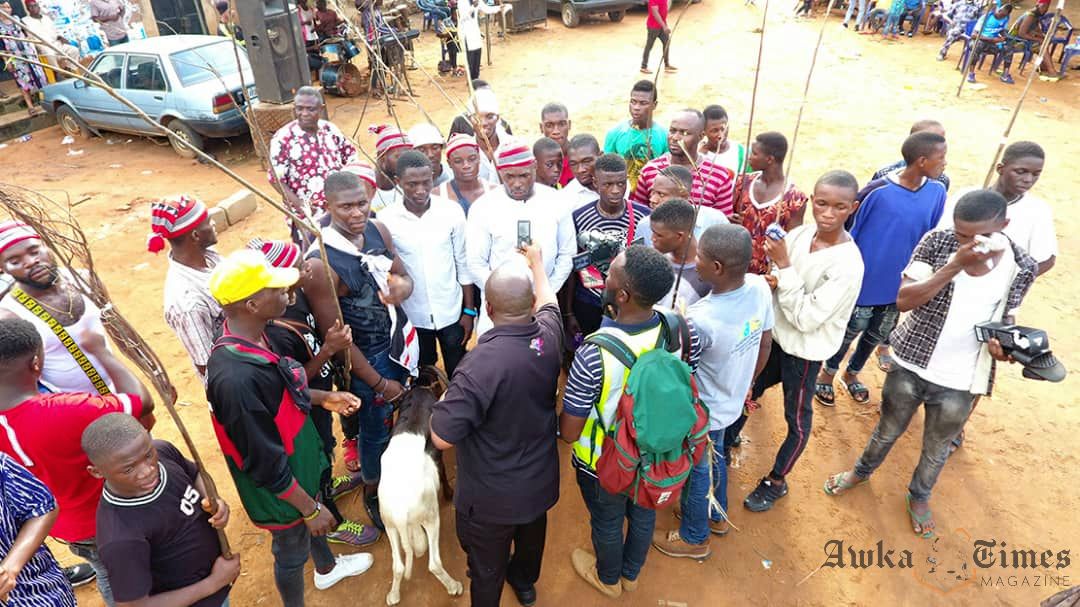
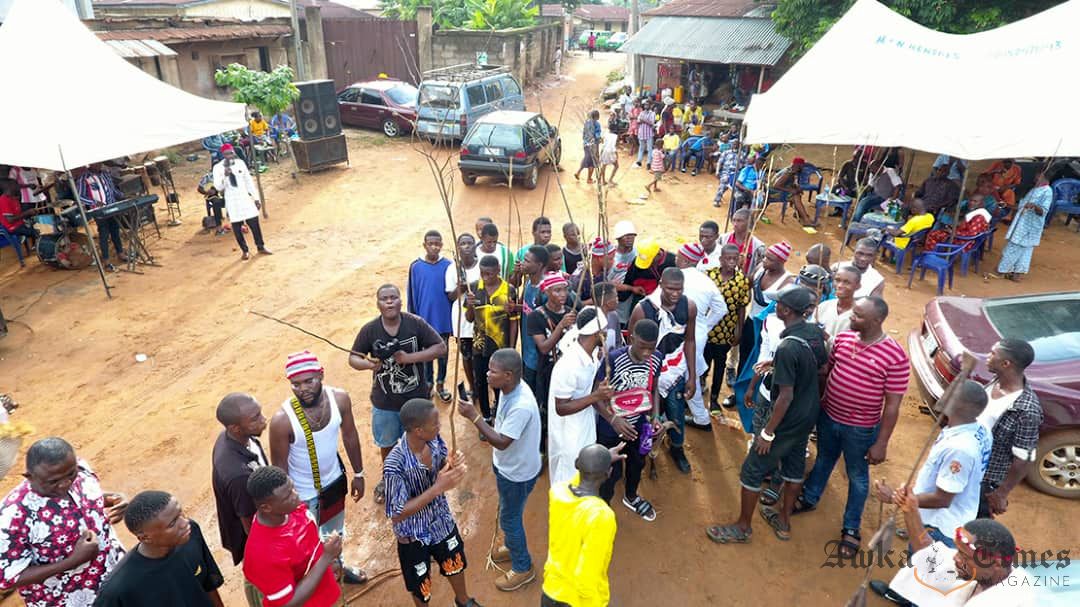
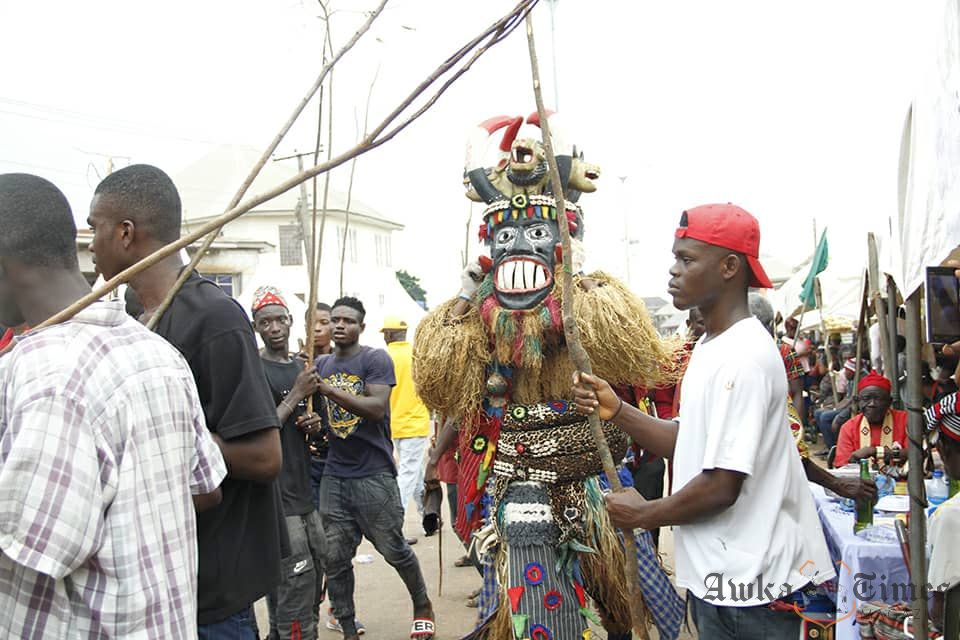
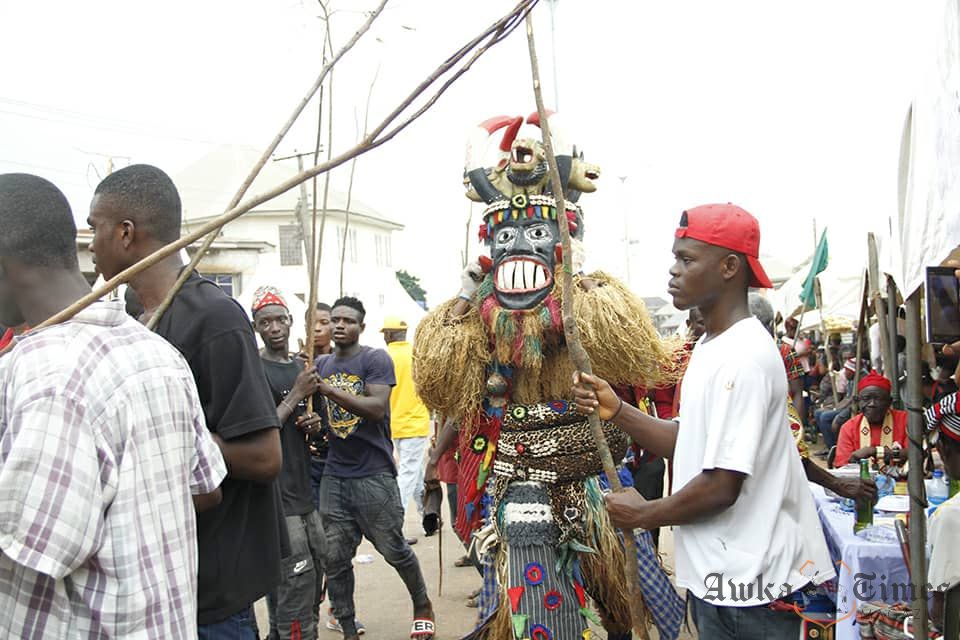
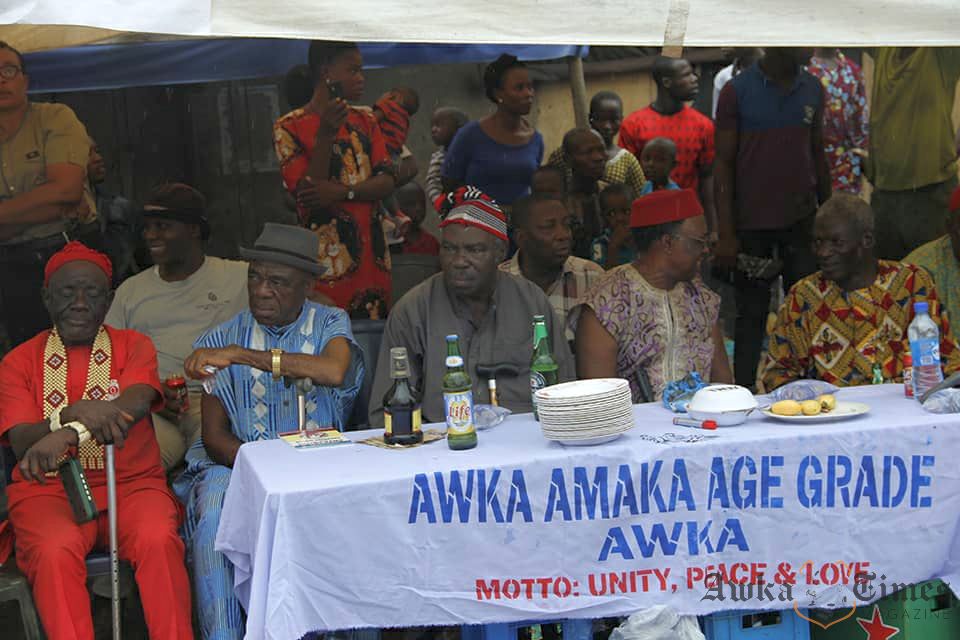
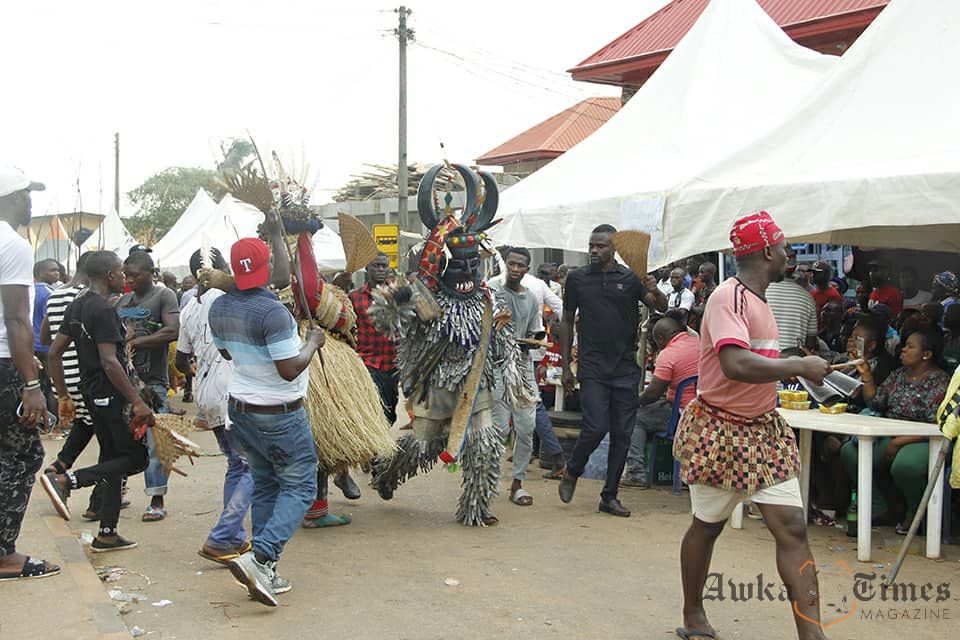
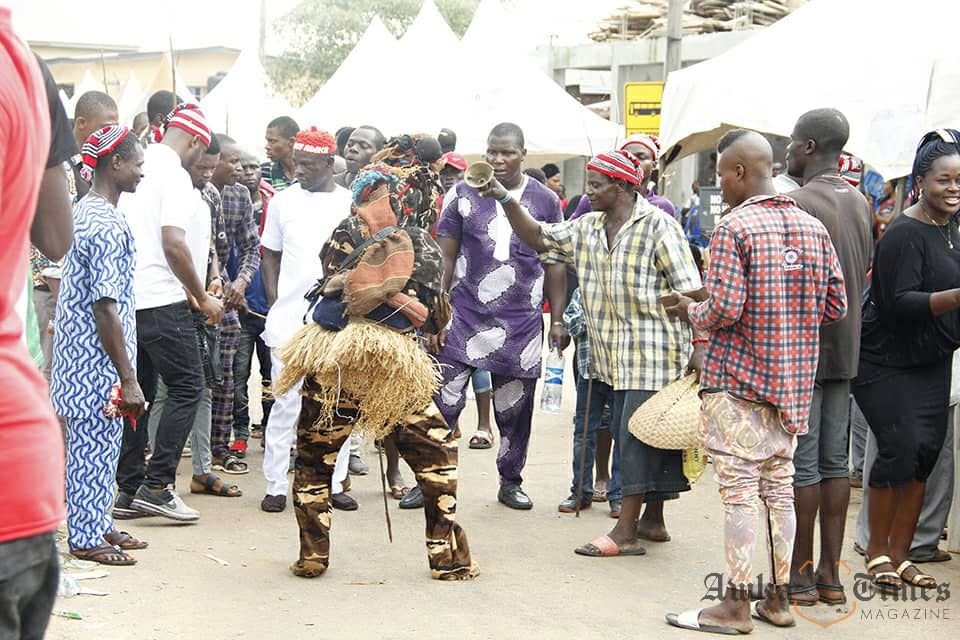
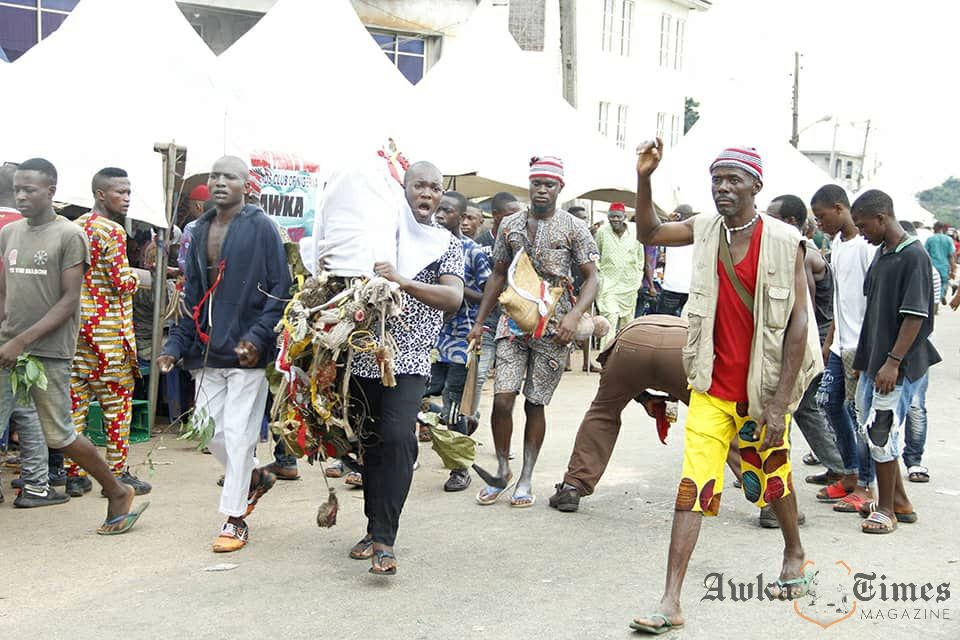
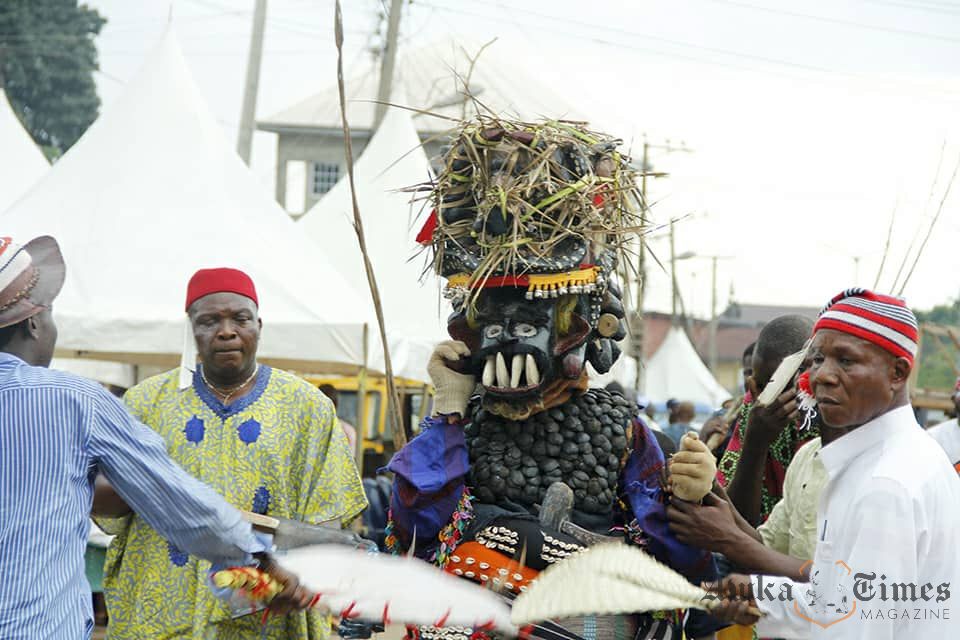
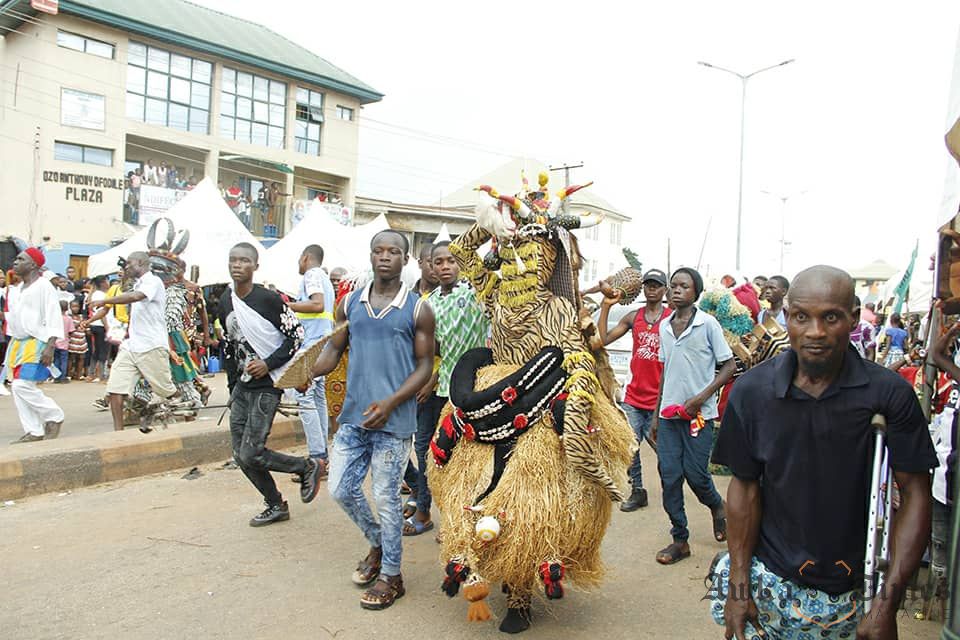
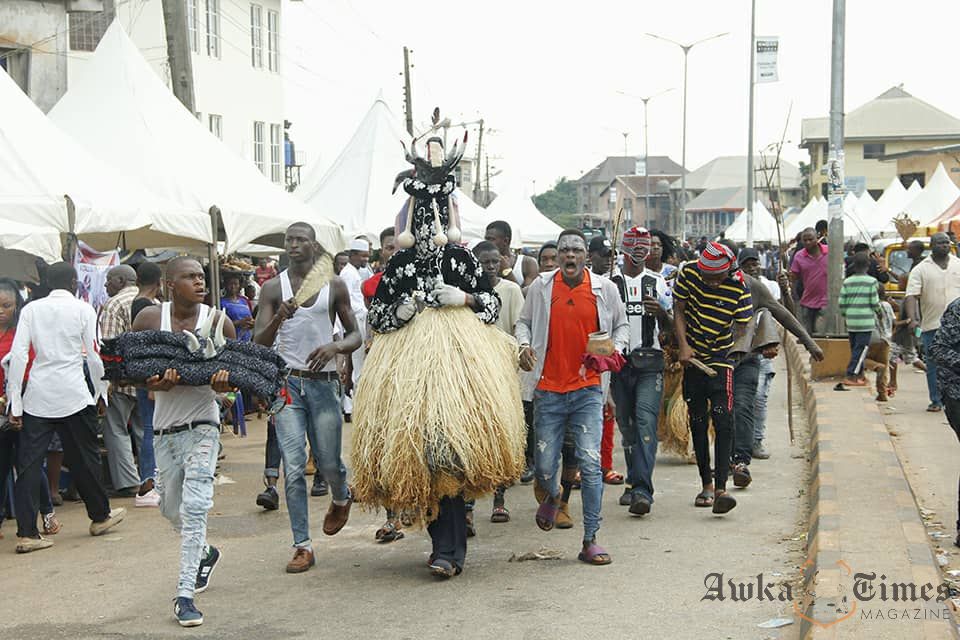
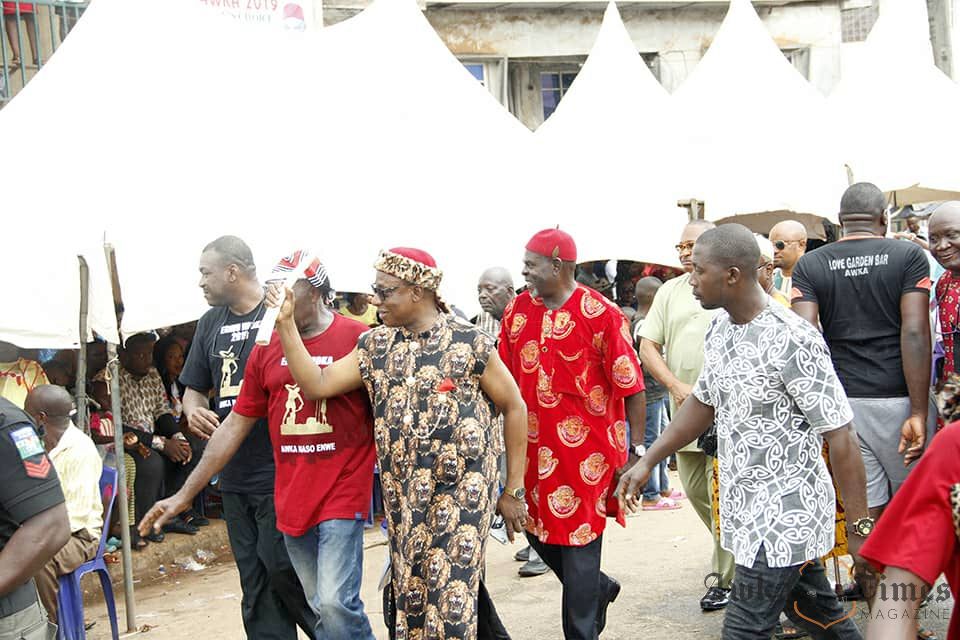
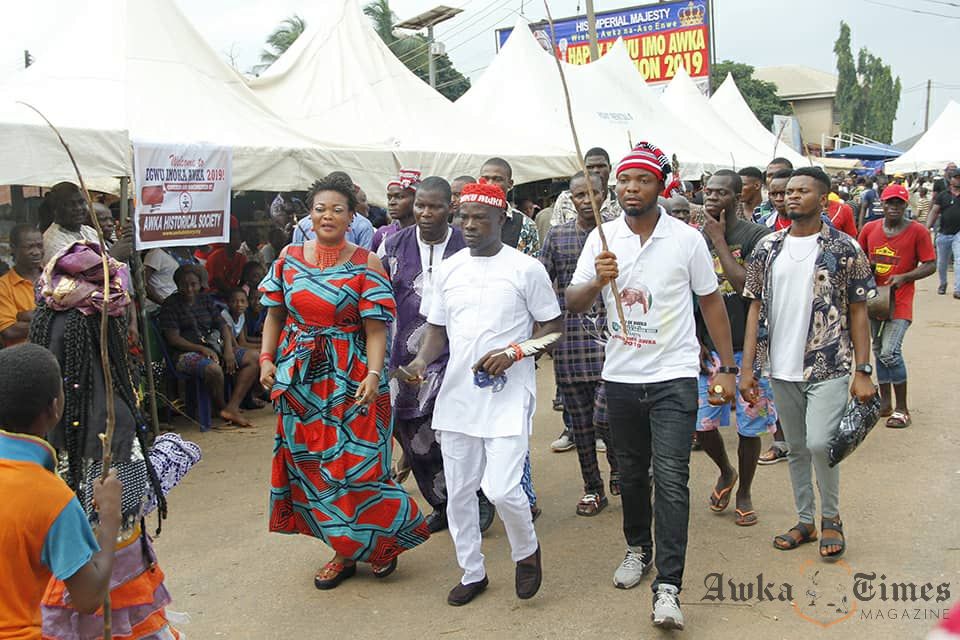
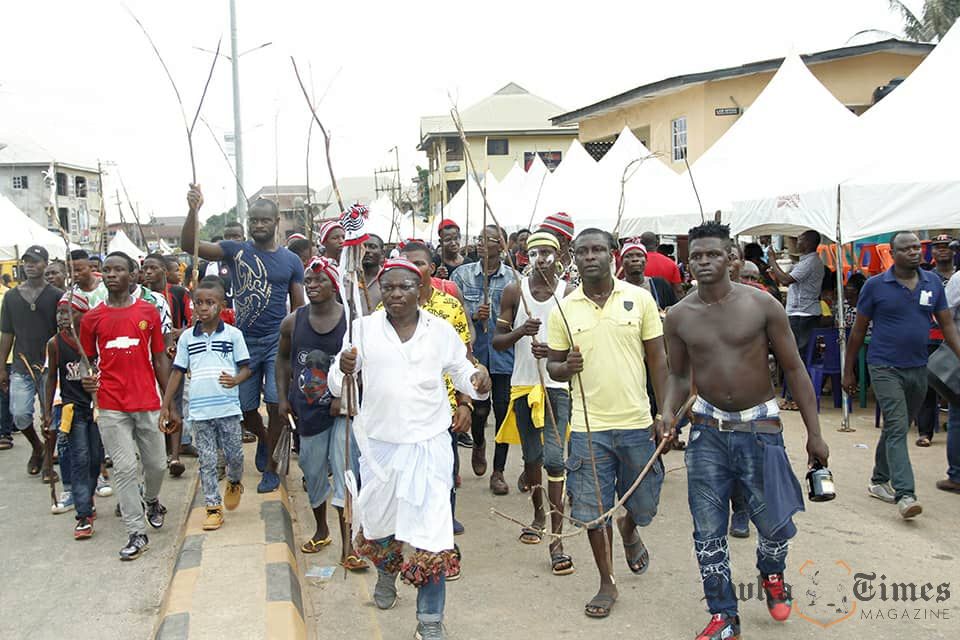
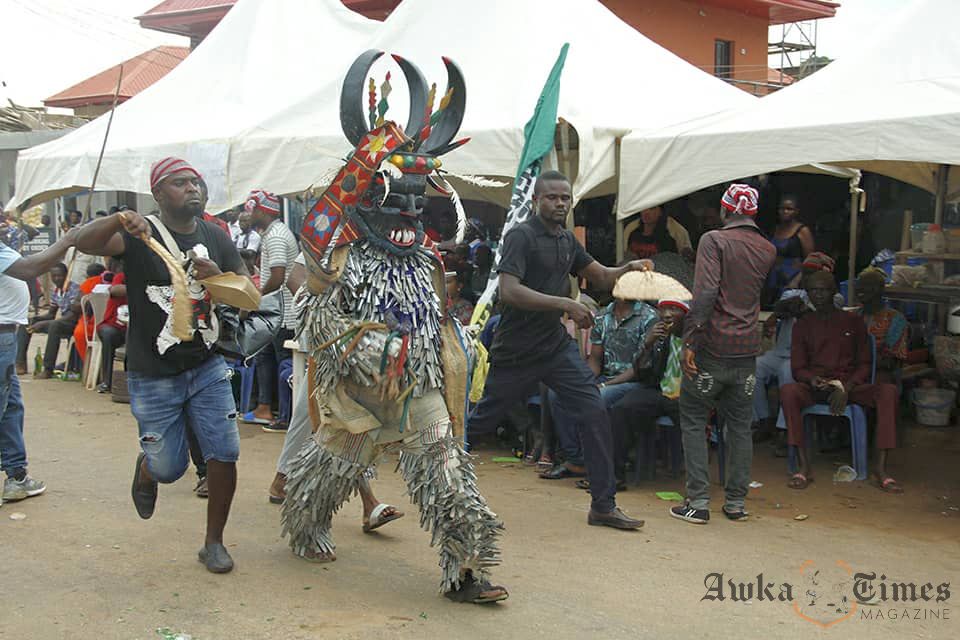
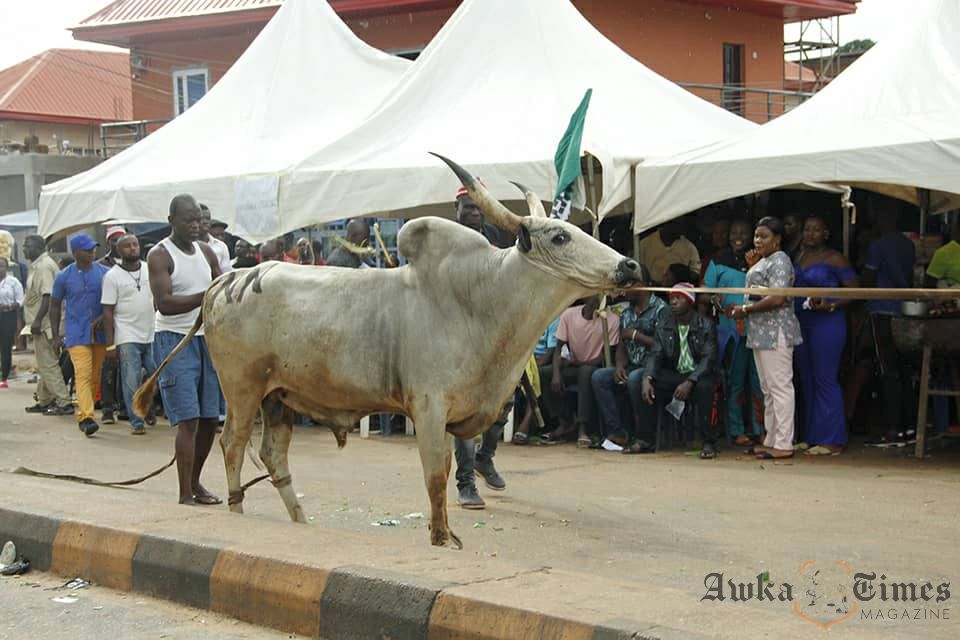
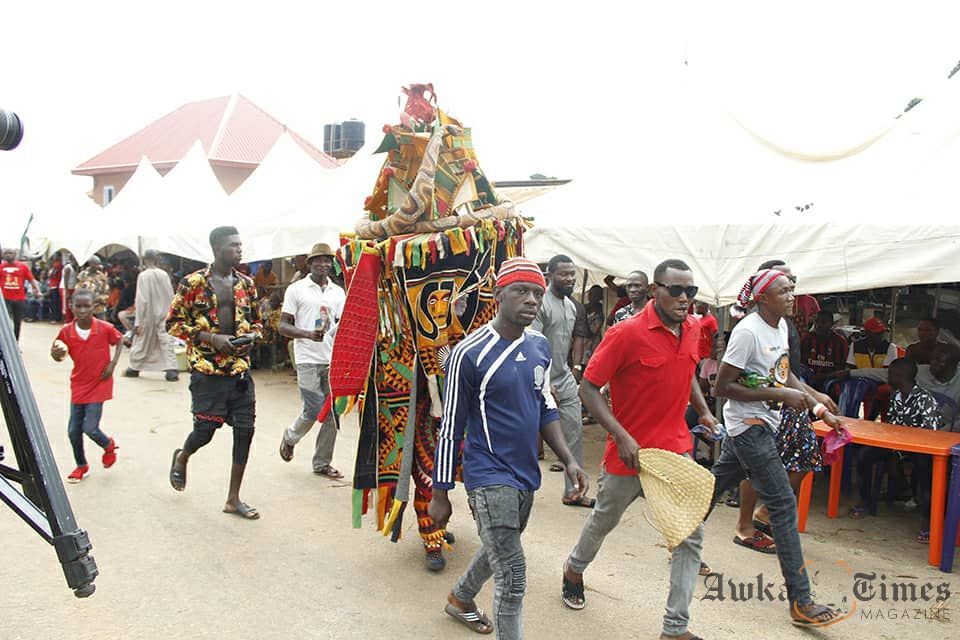
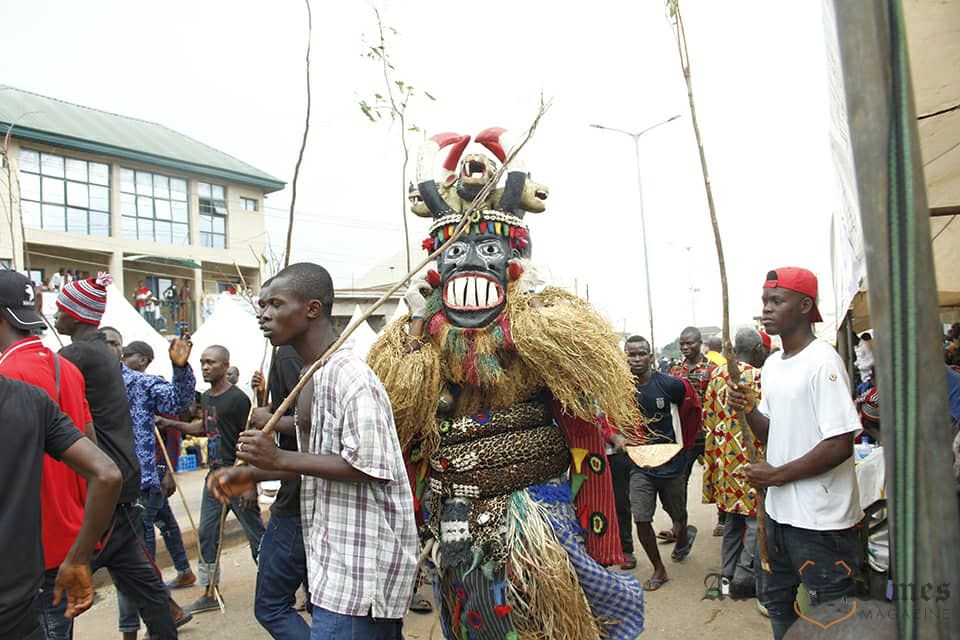
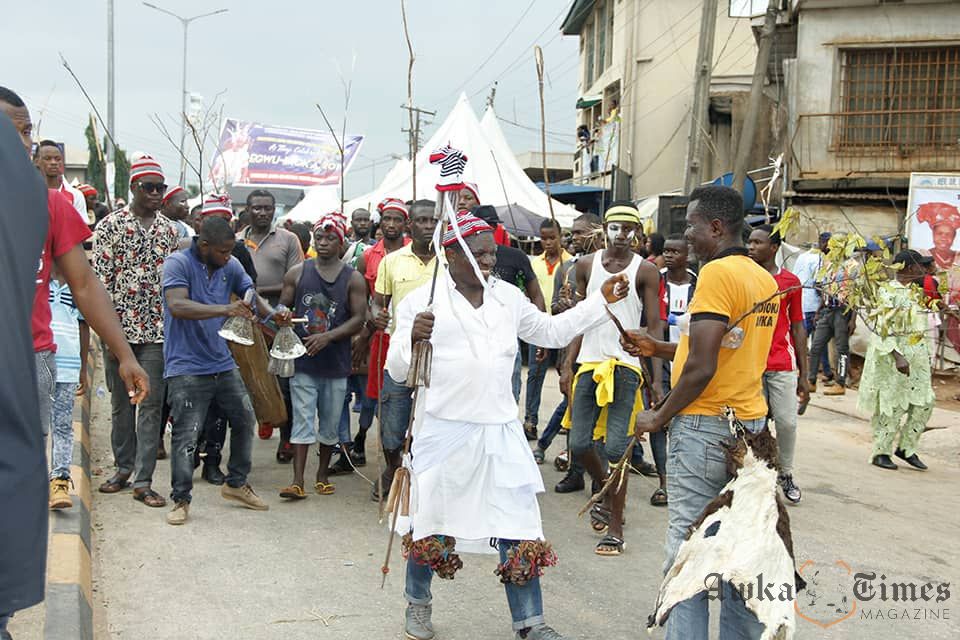
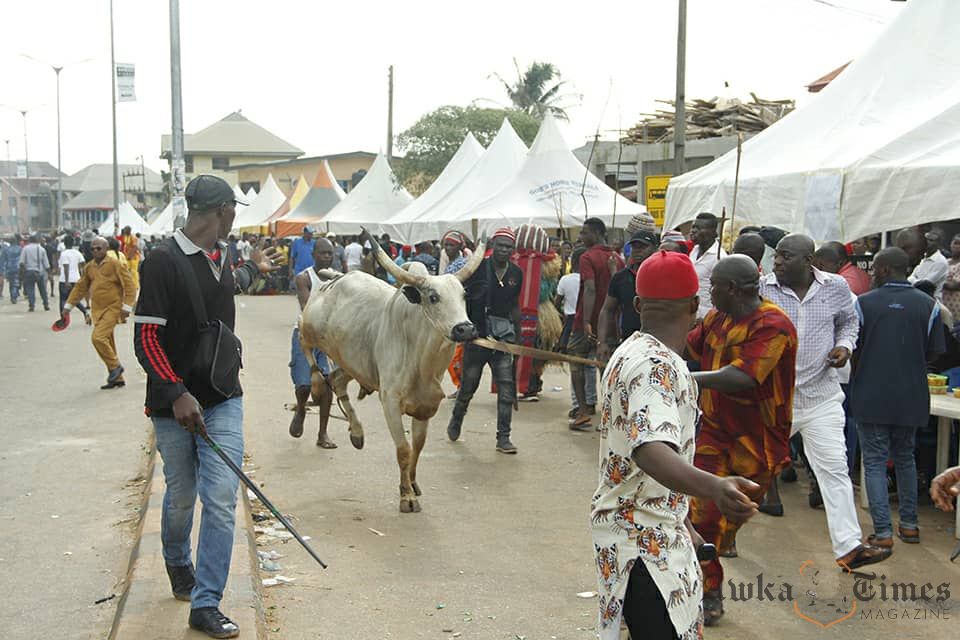
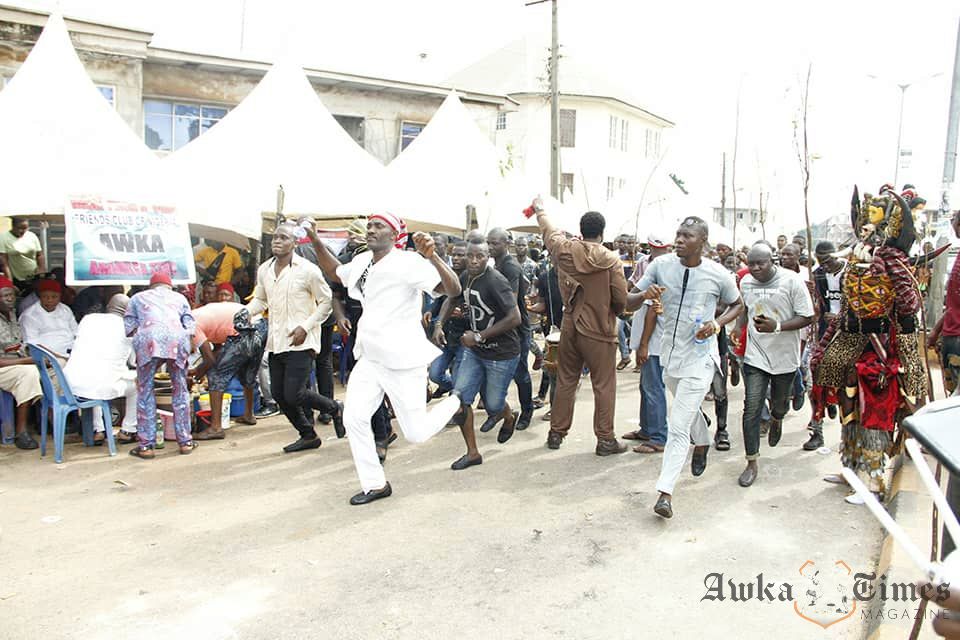
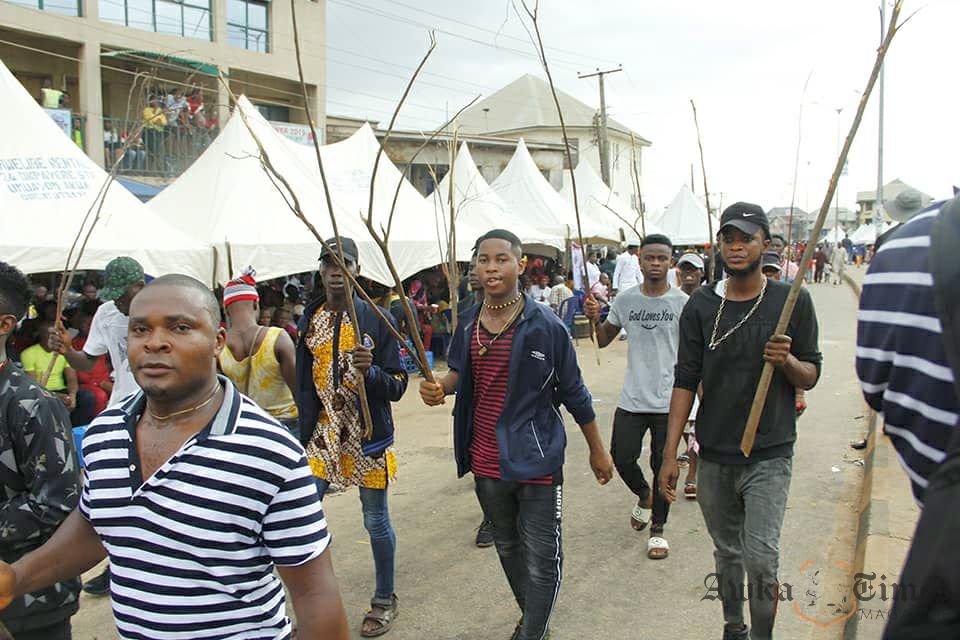
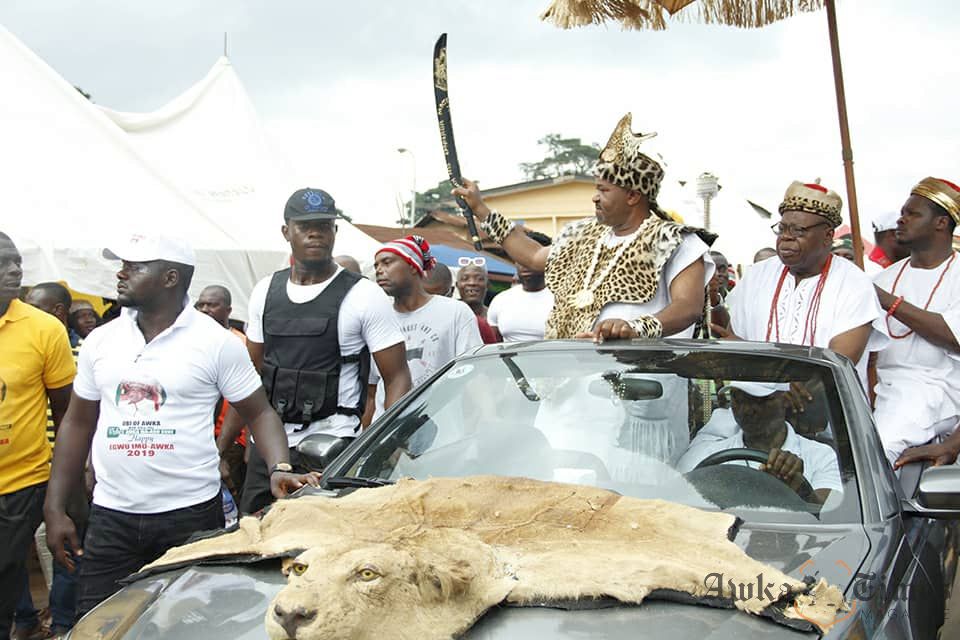
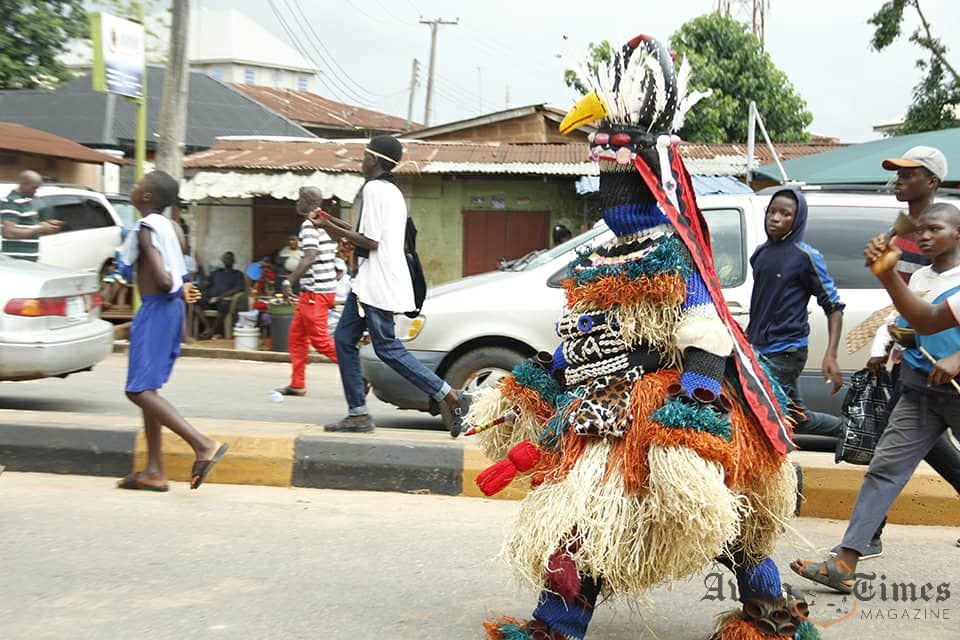
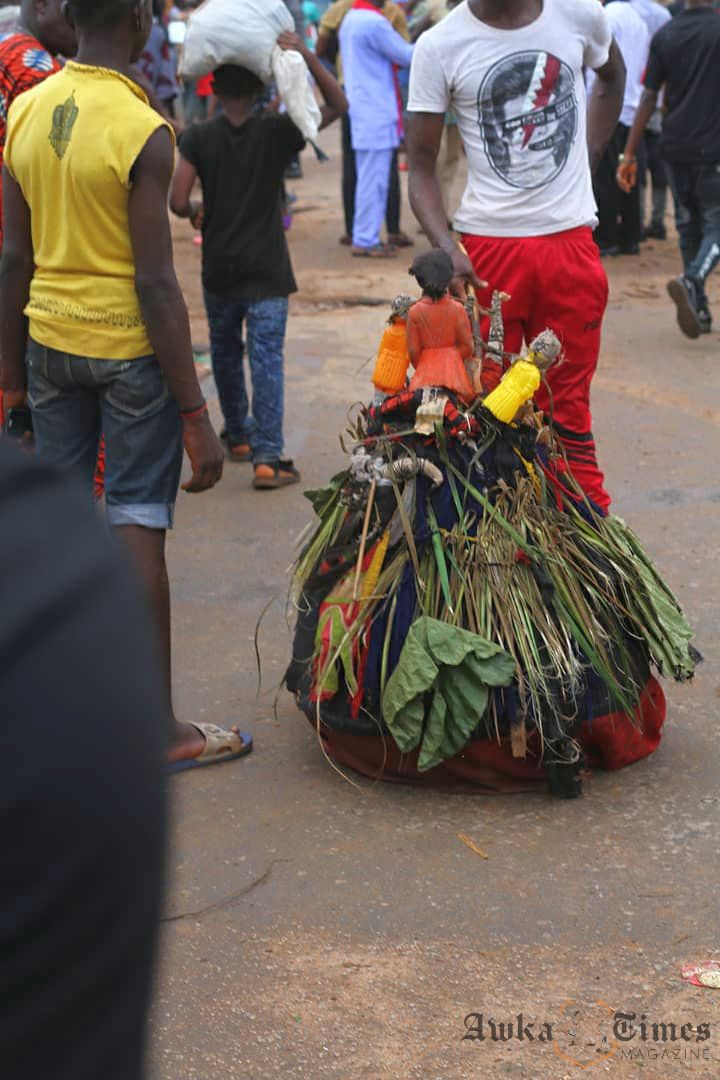
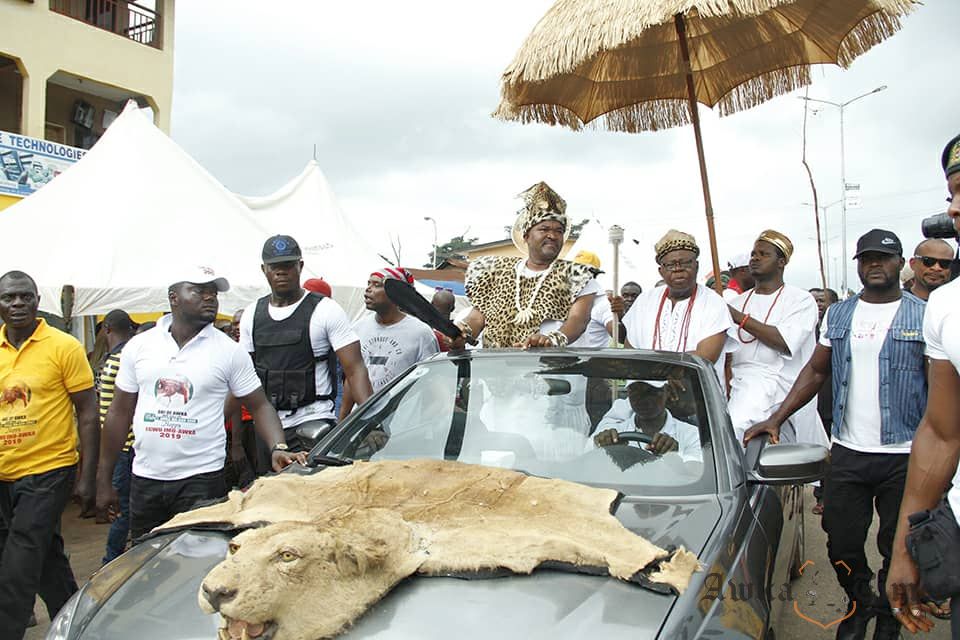
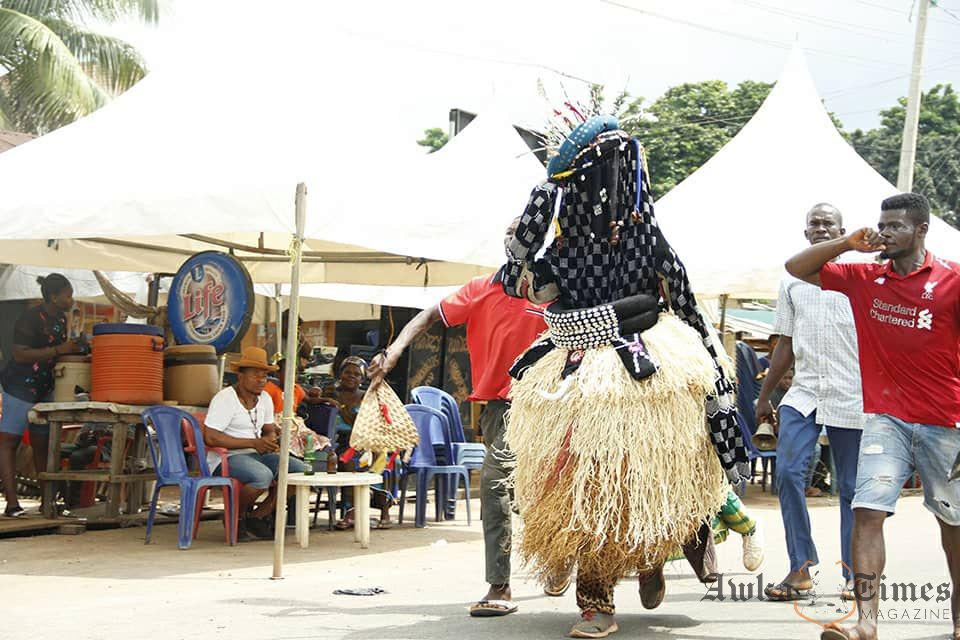
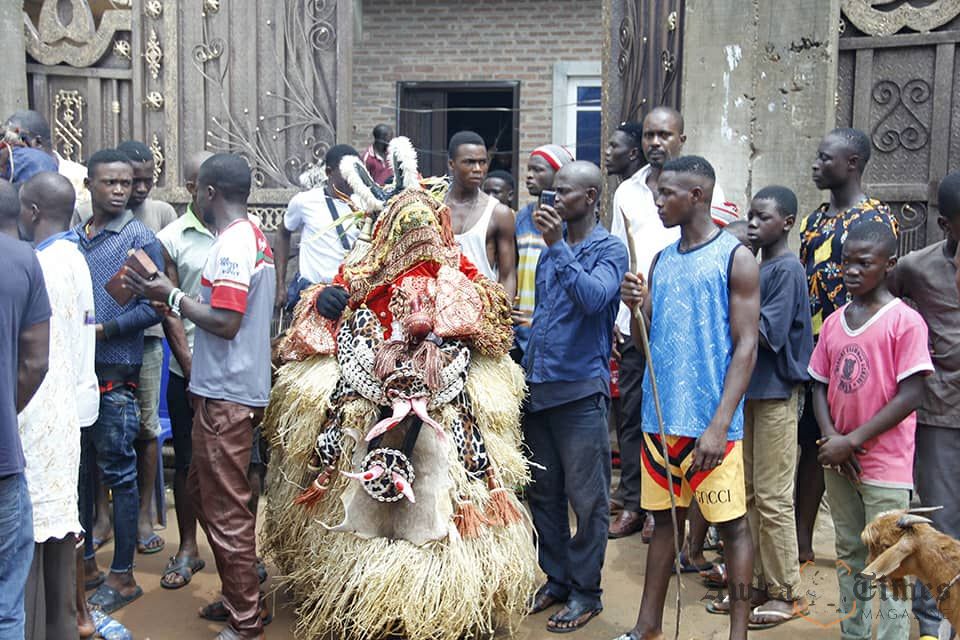
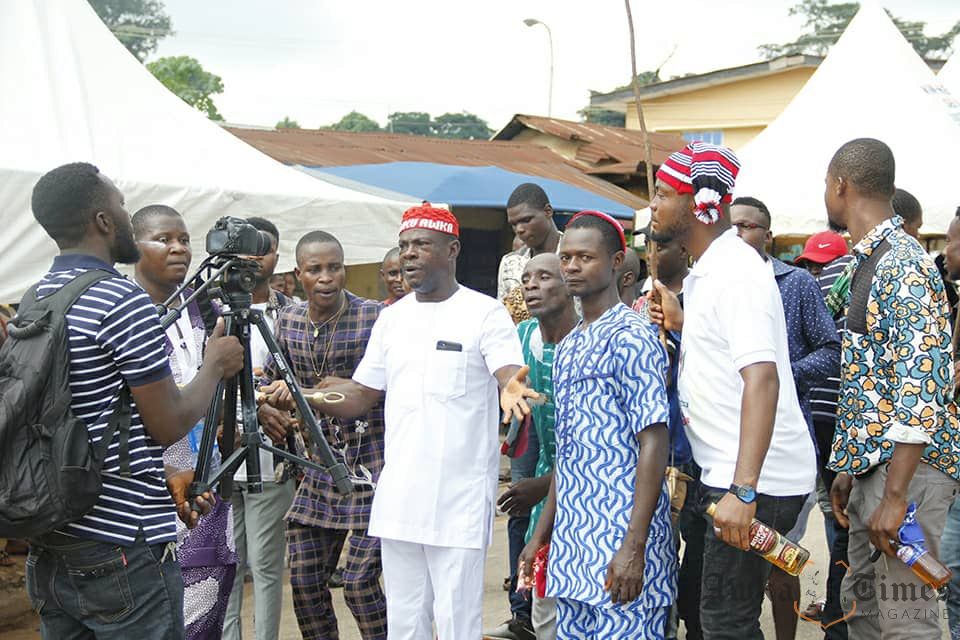
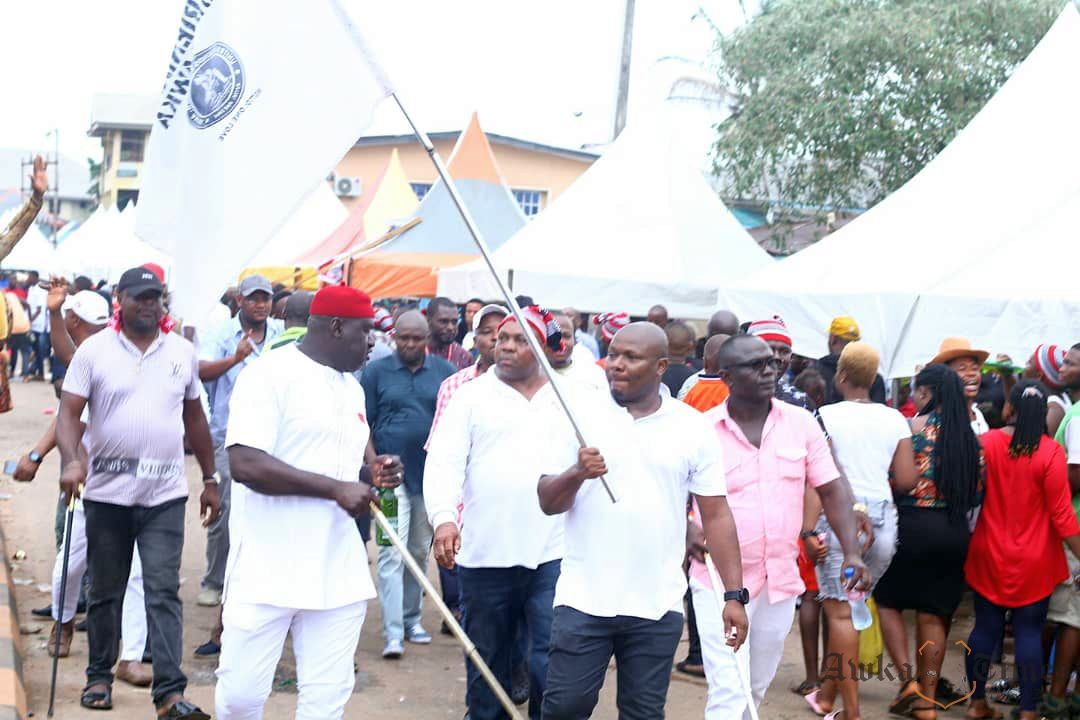
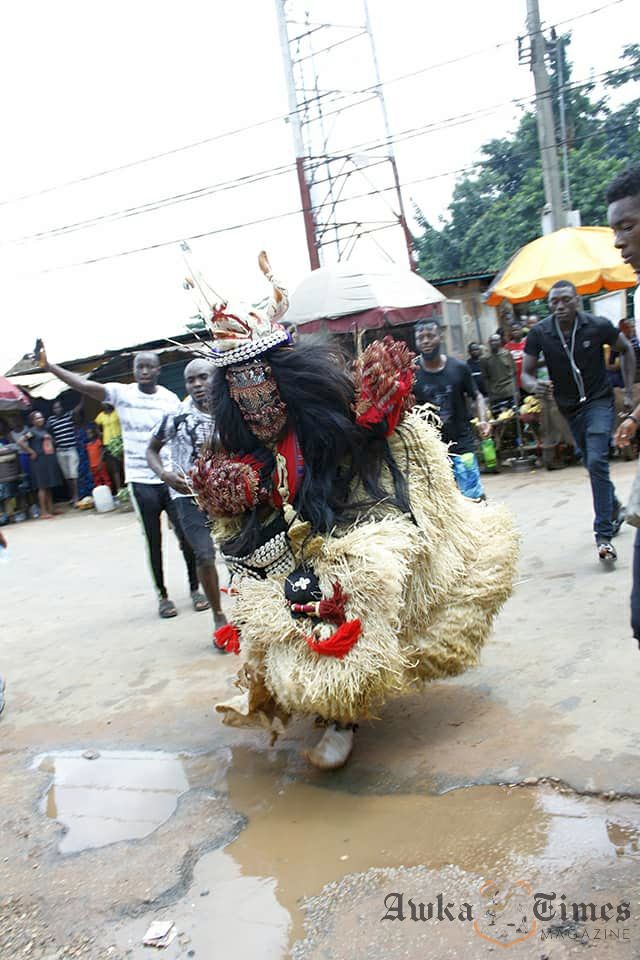
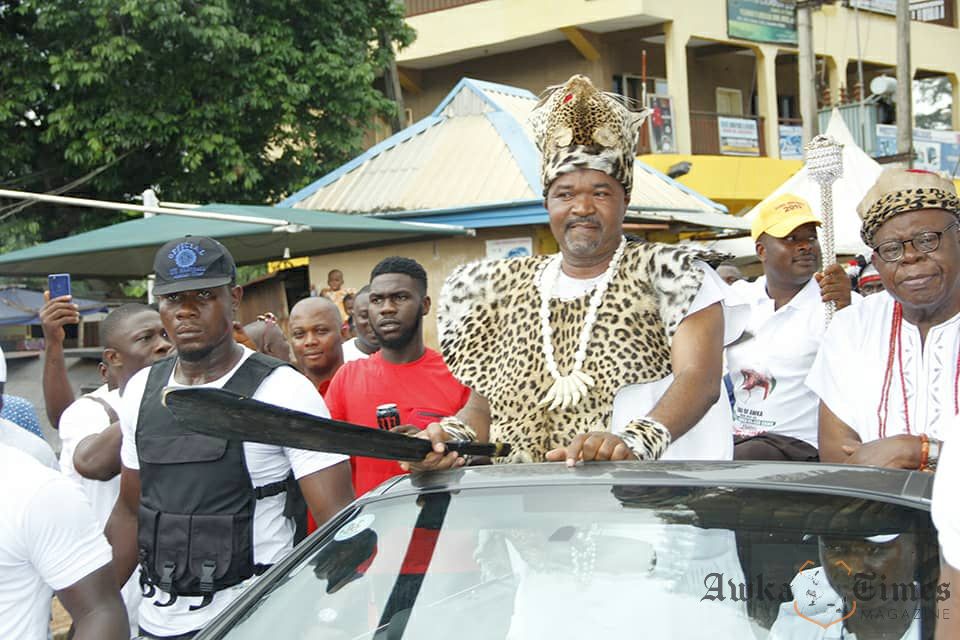
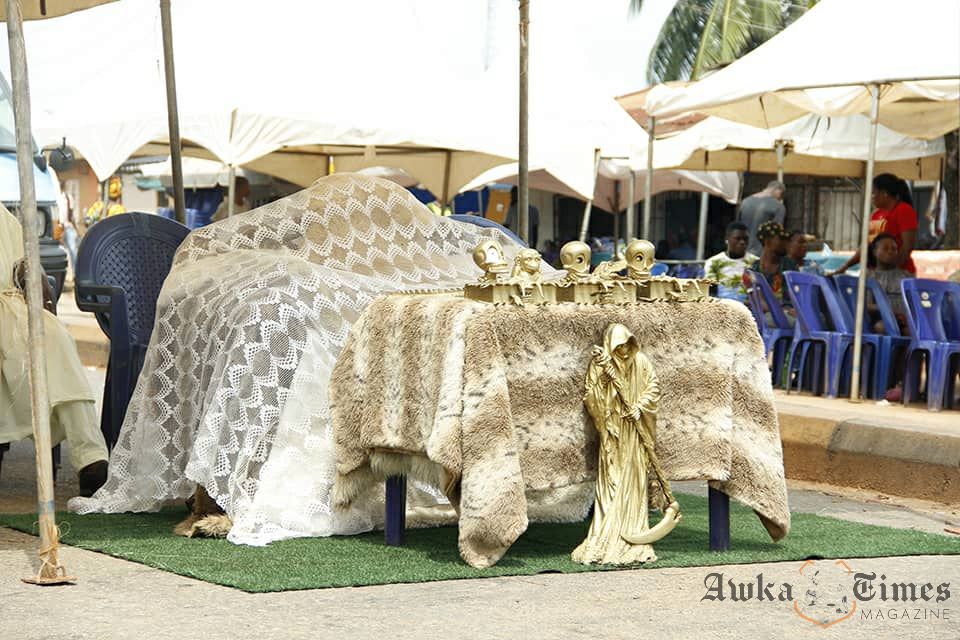
Egwu Imoka 2019 was a great success. In spite of the development challenges facing the town, Awka indigenes at home and abroad came out en masse to celebrate this annual event. Awka Times was there to record the event.








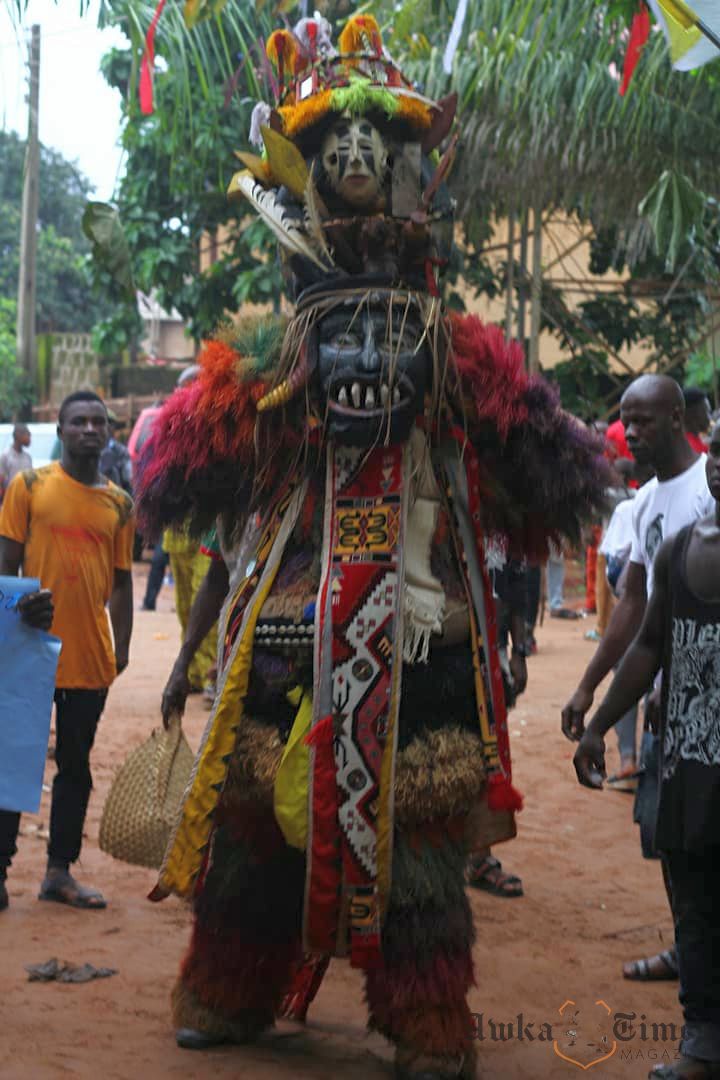

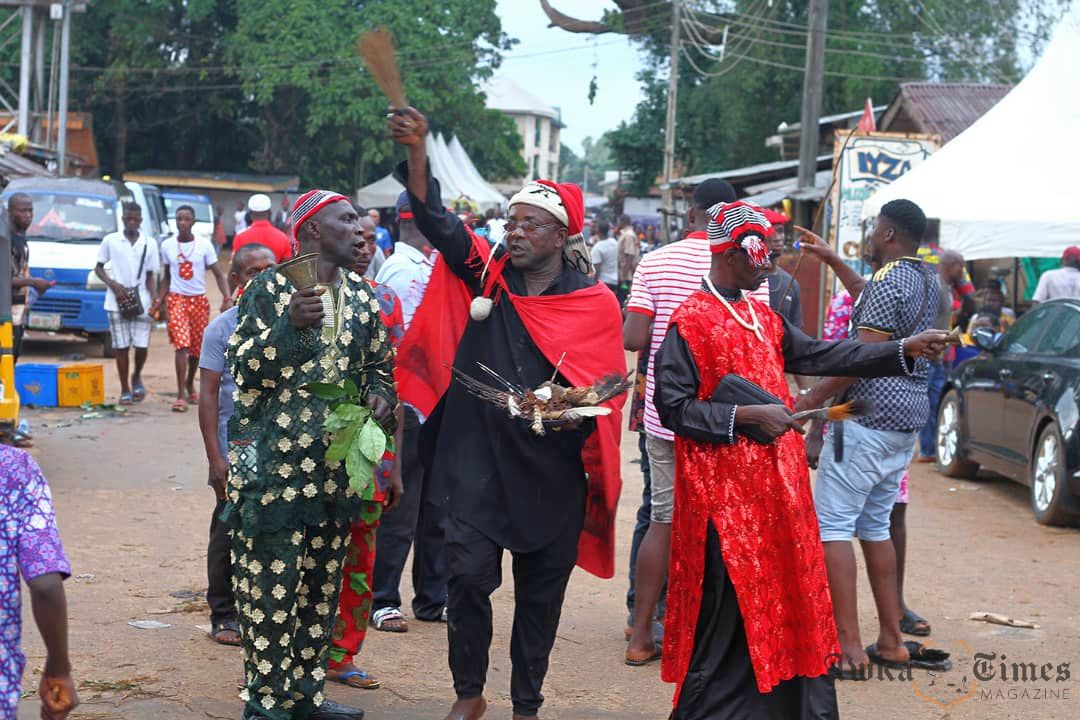

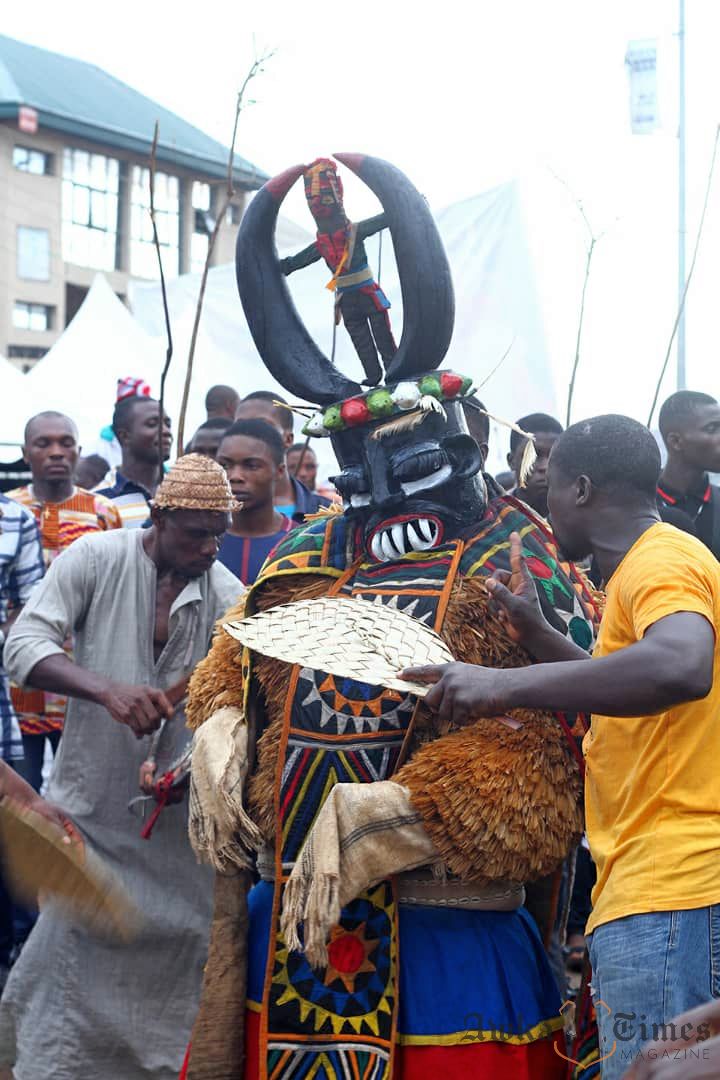
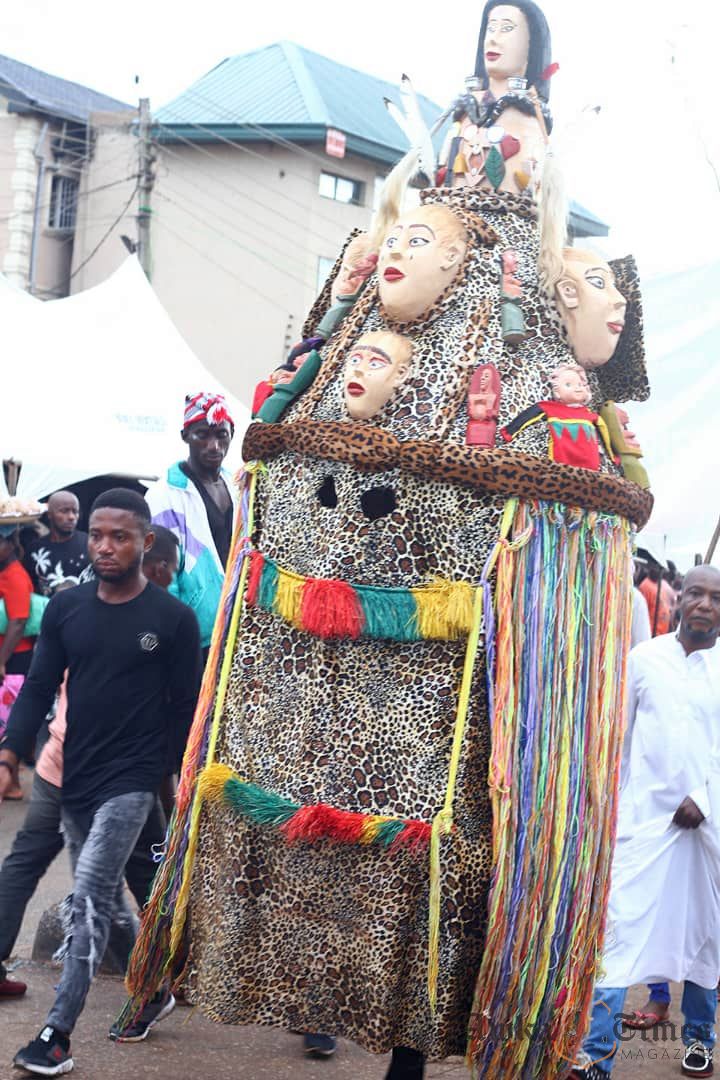

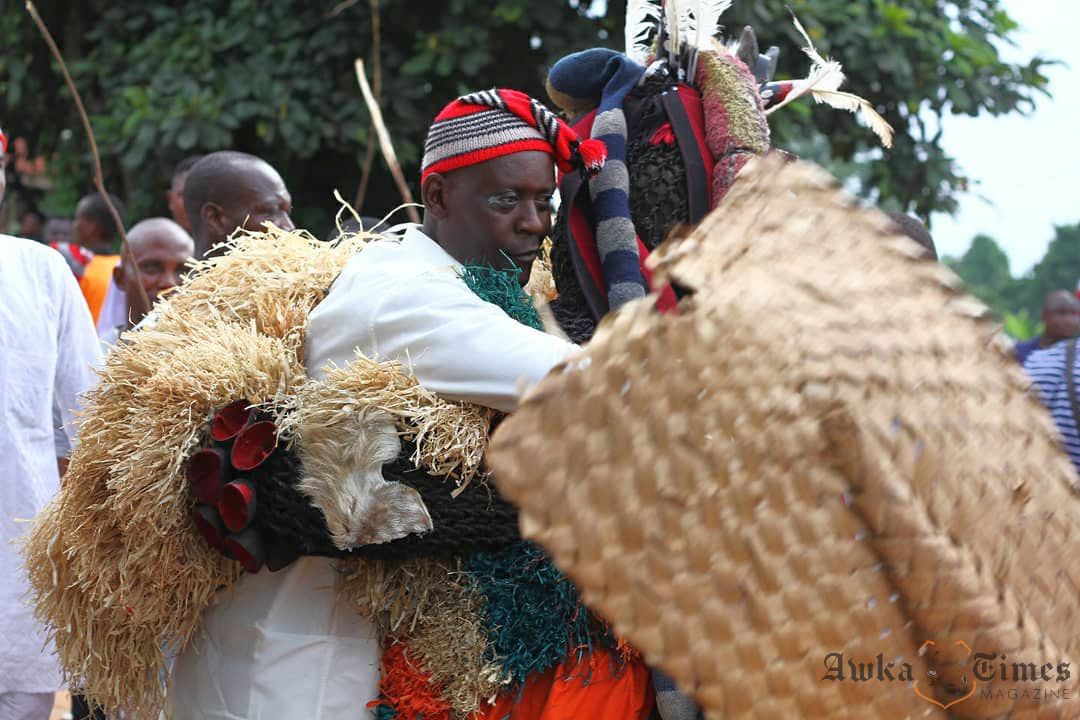

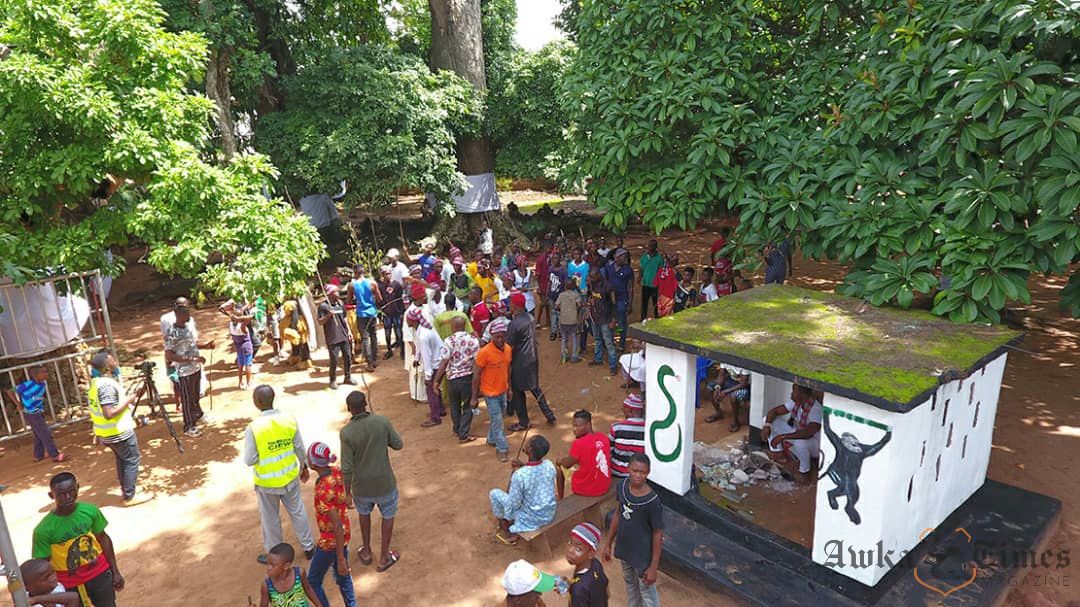
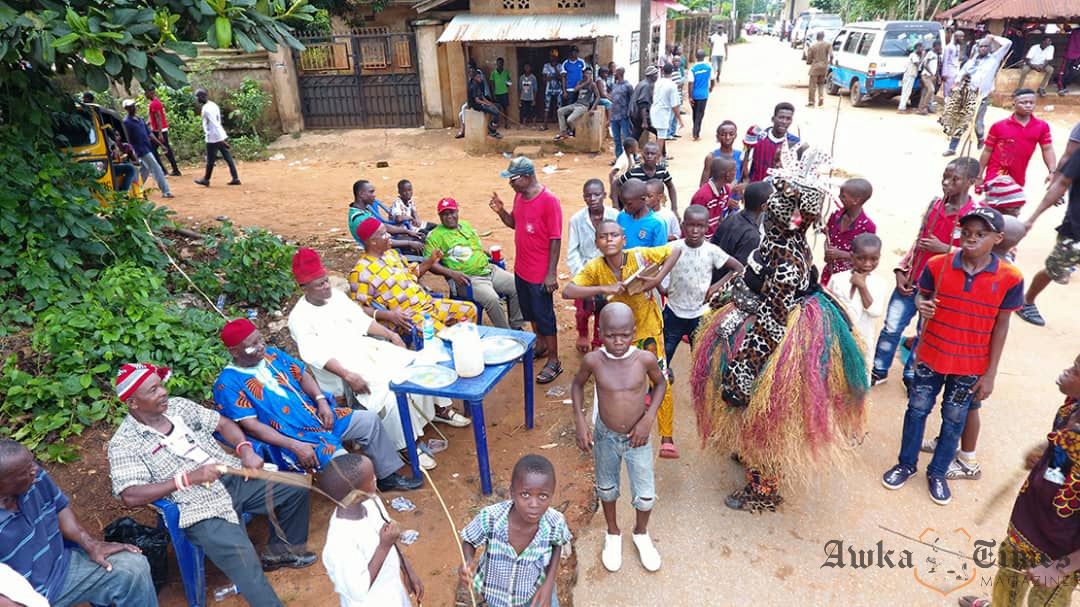
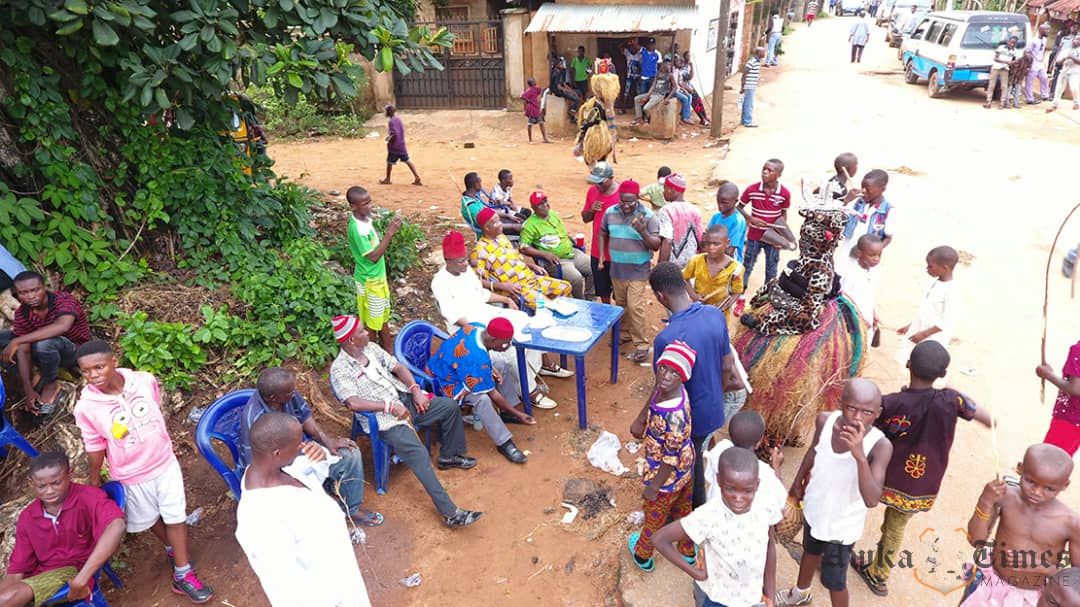
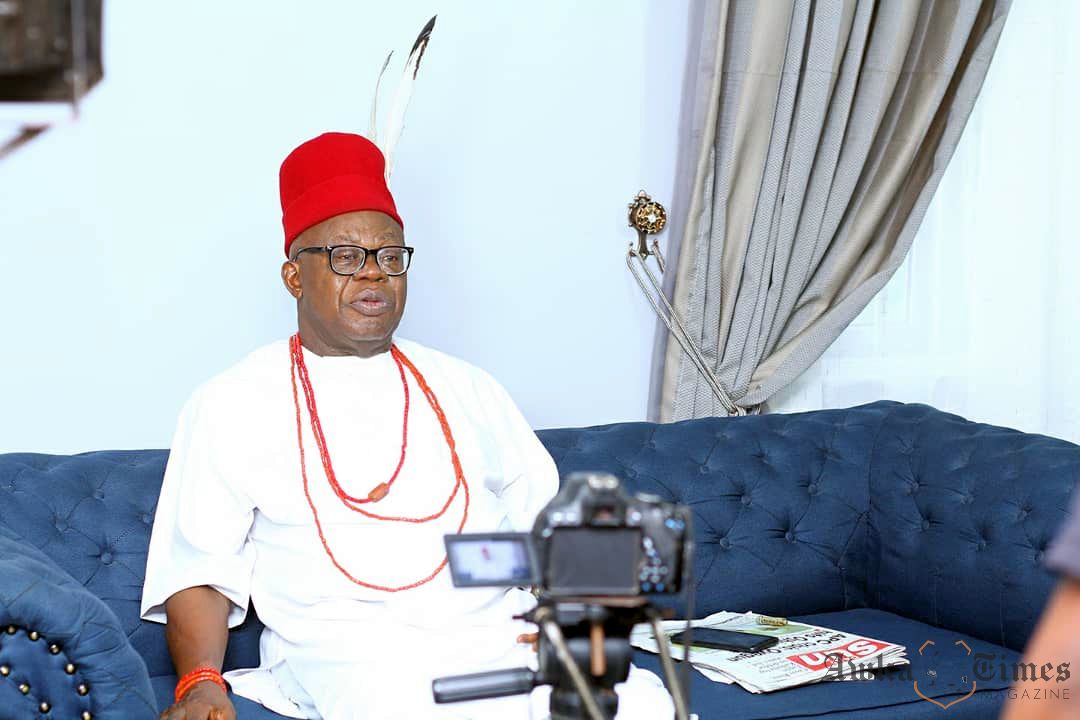
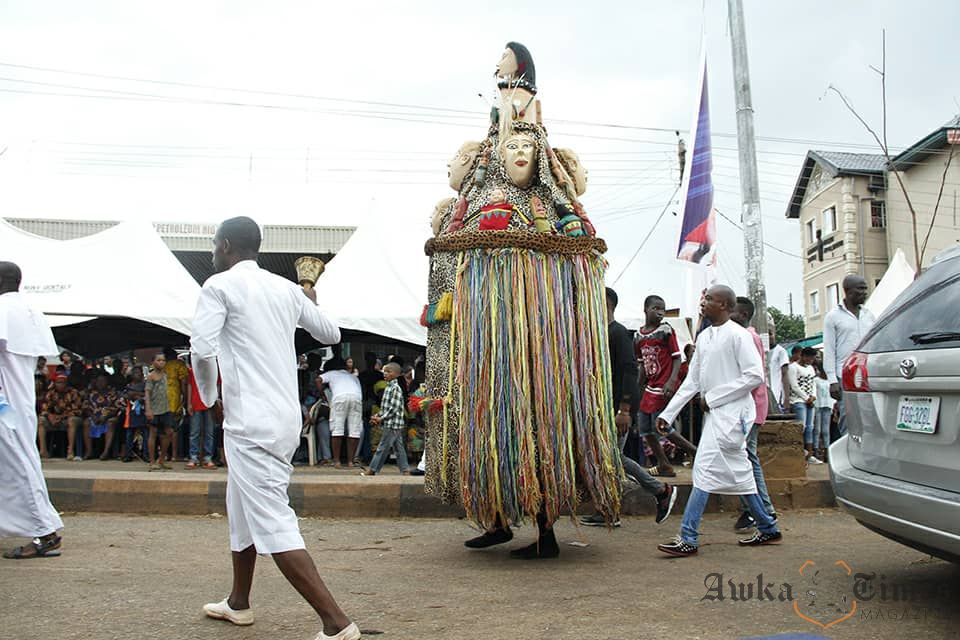

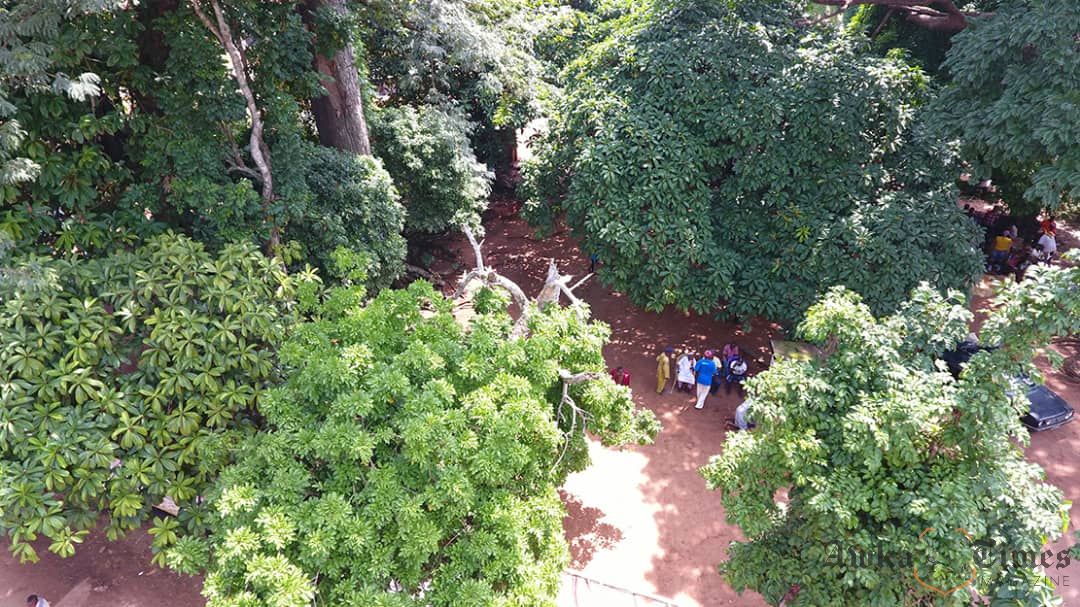
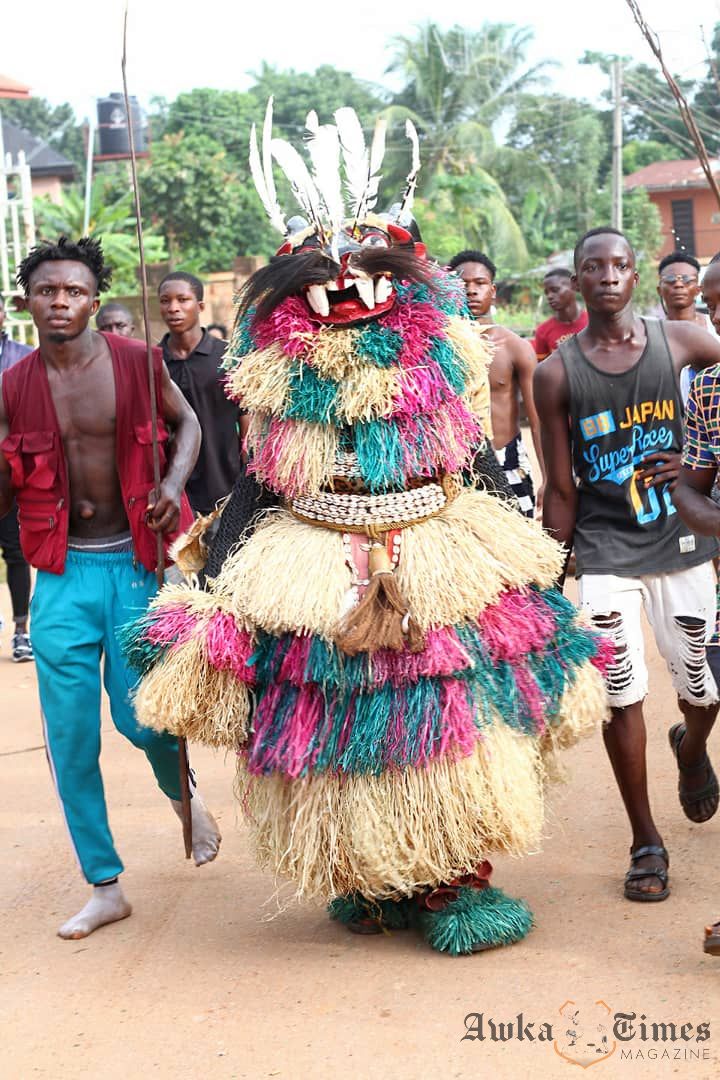

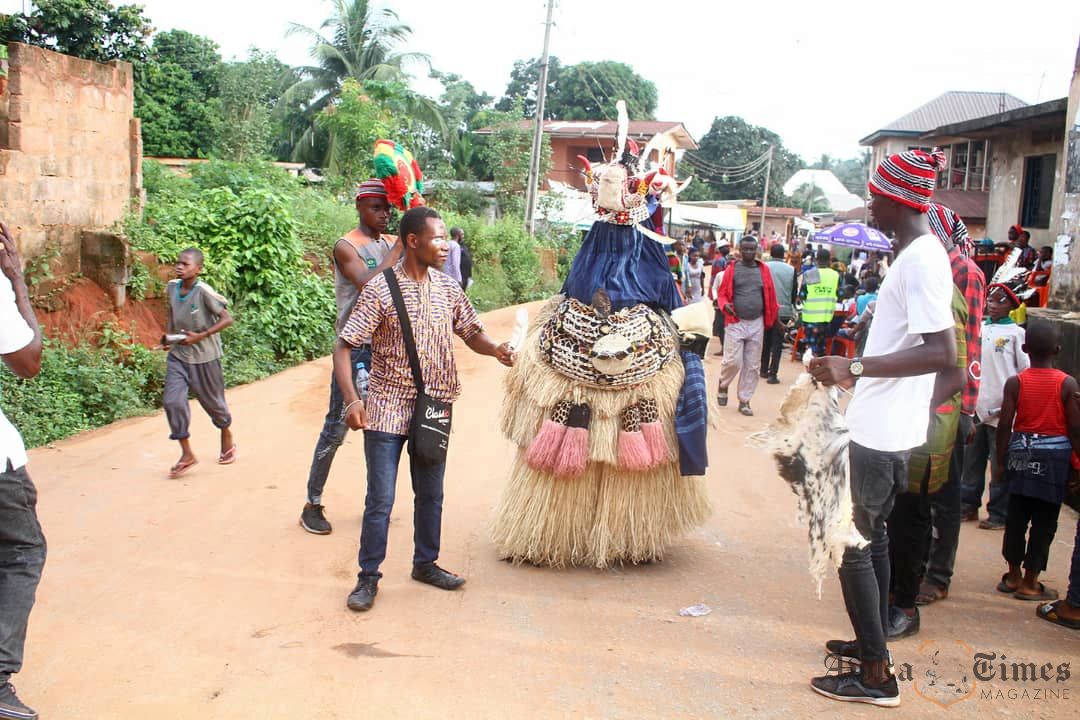
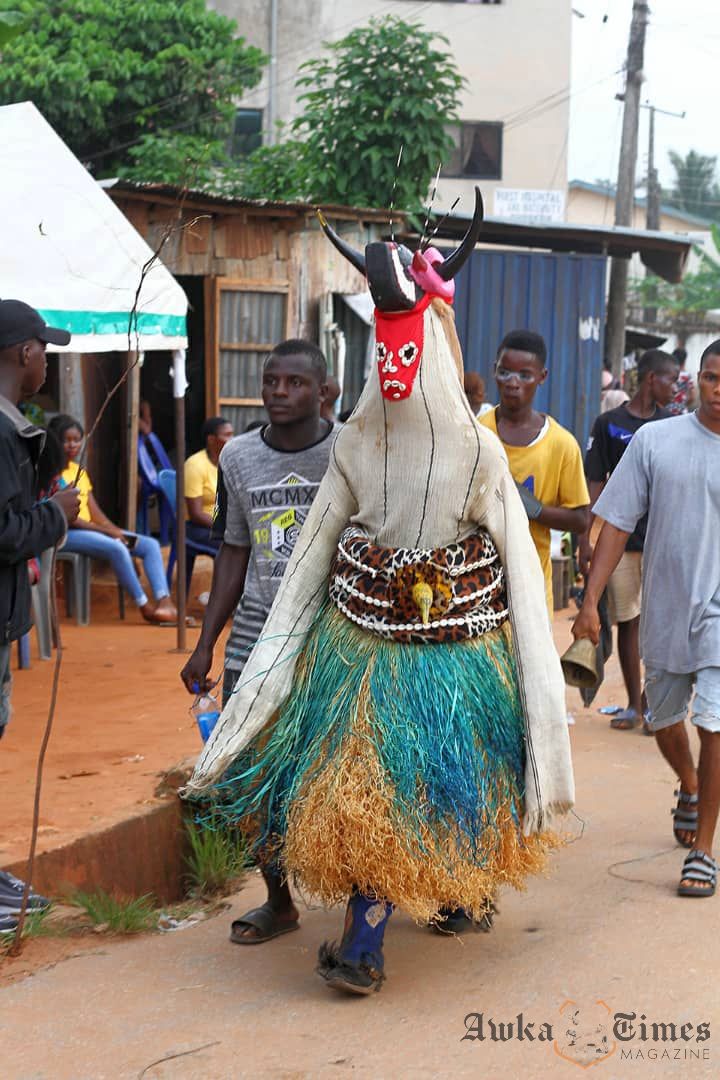
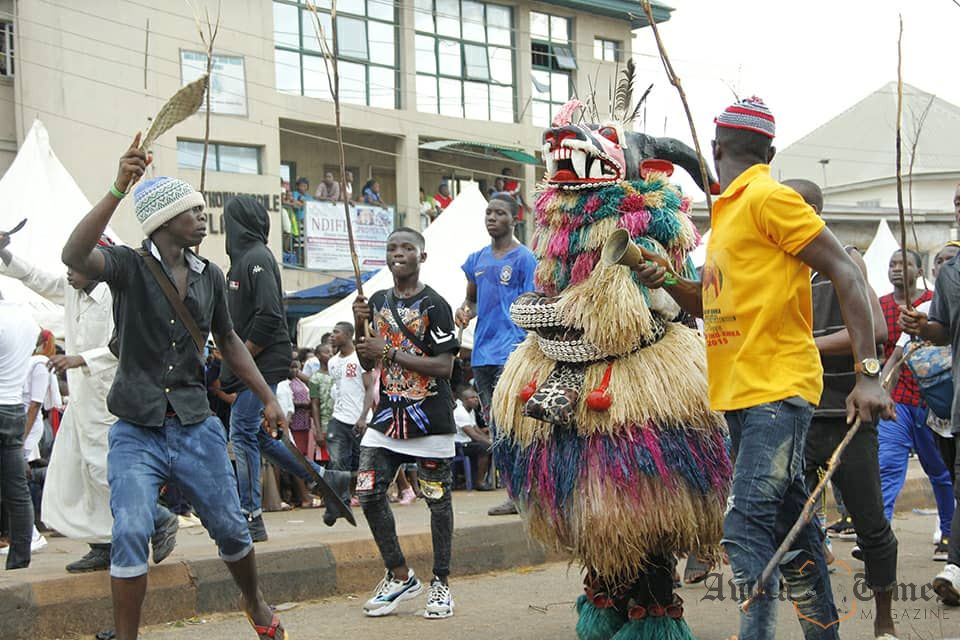
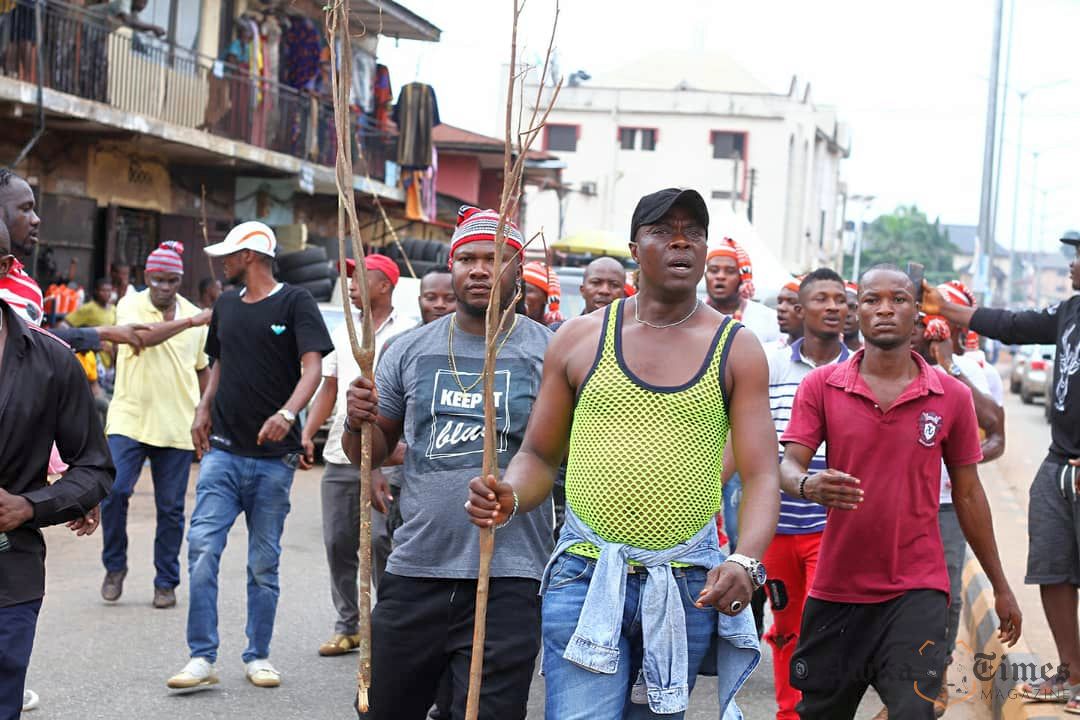
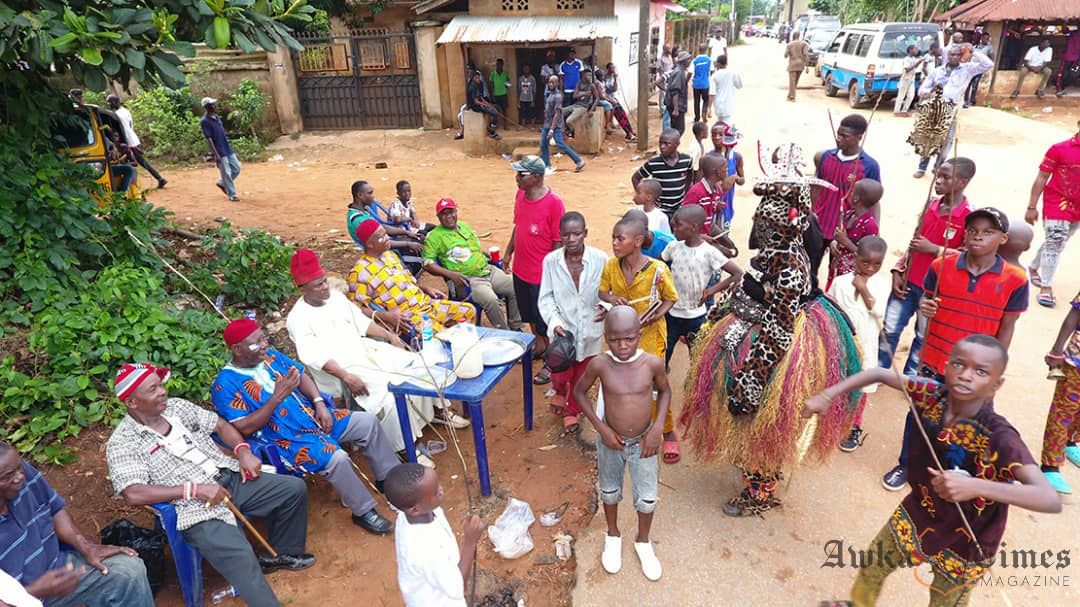
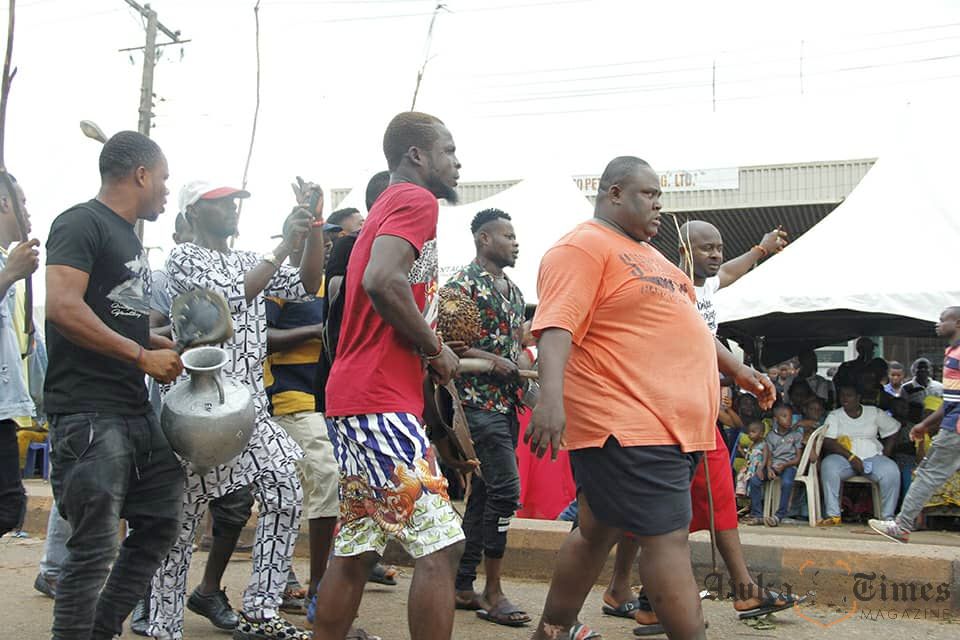
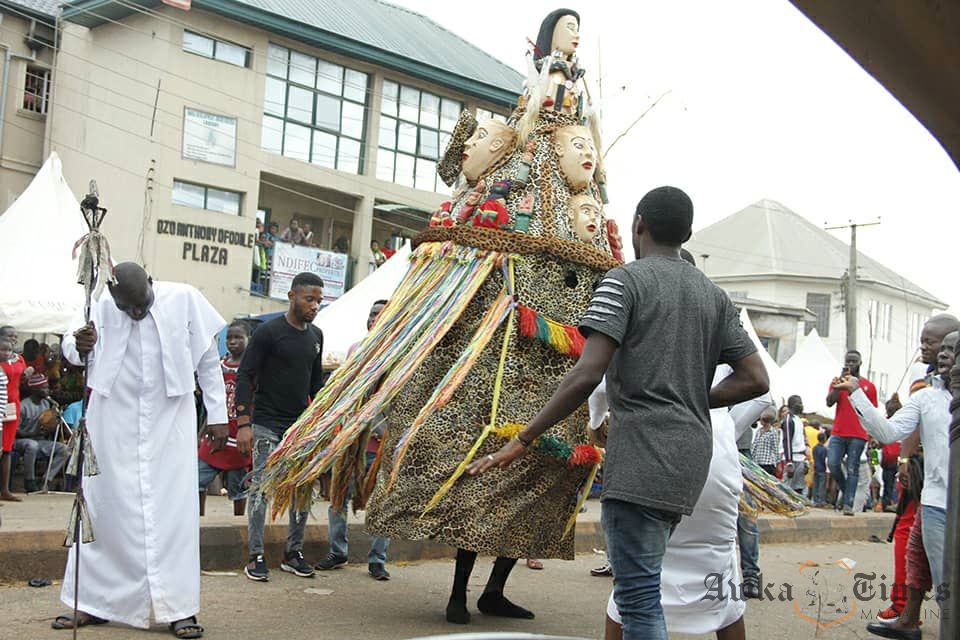
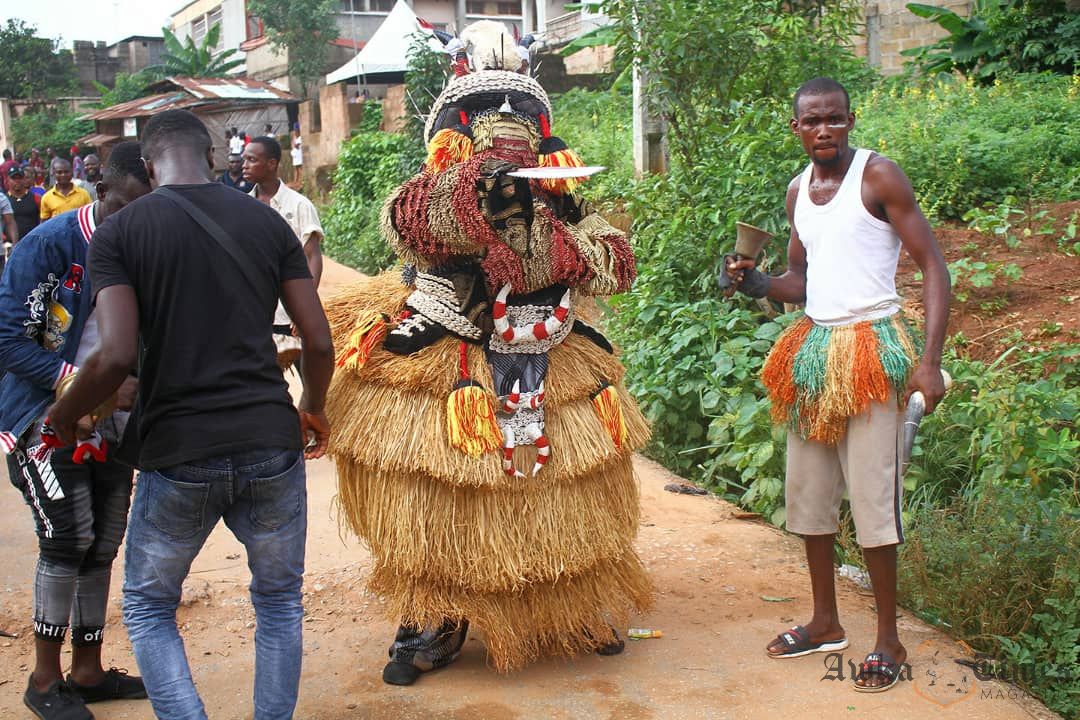

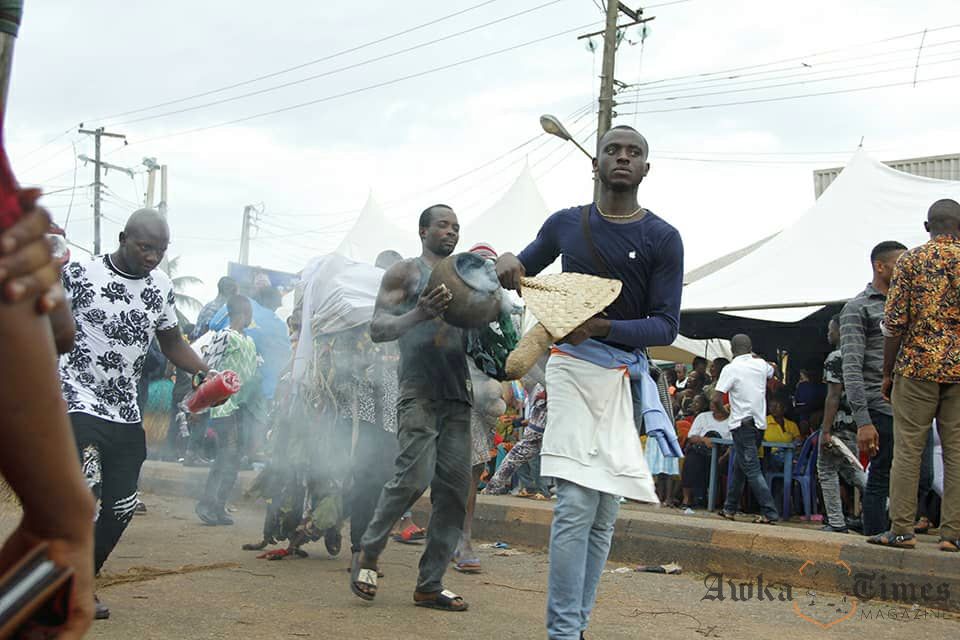
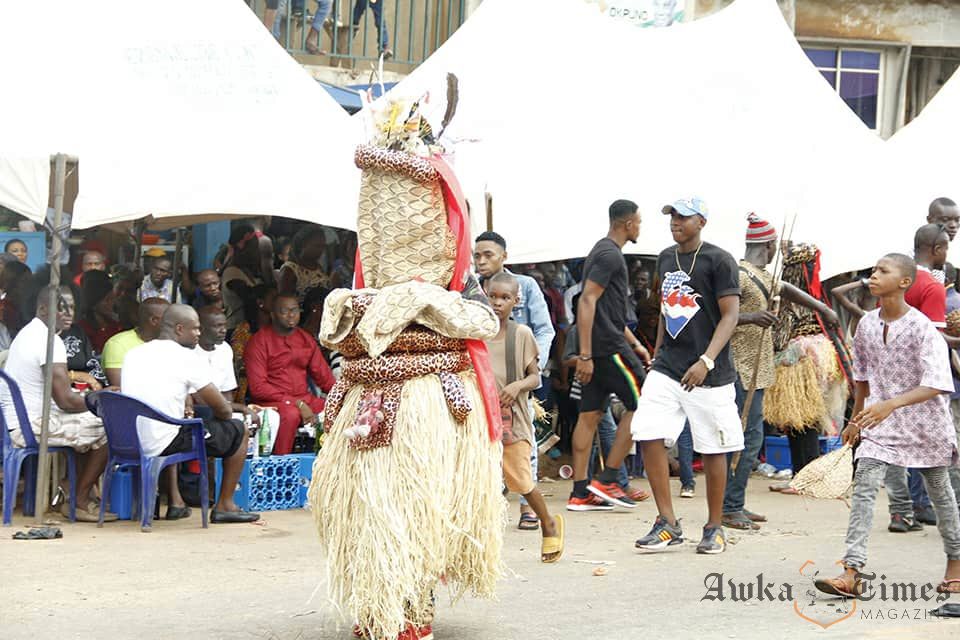
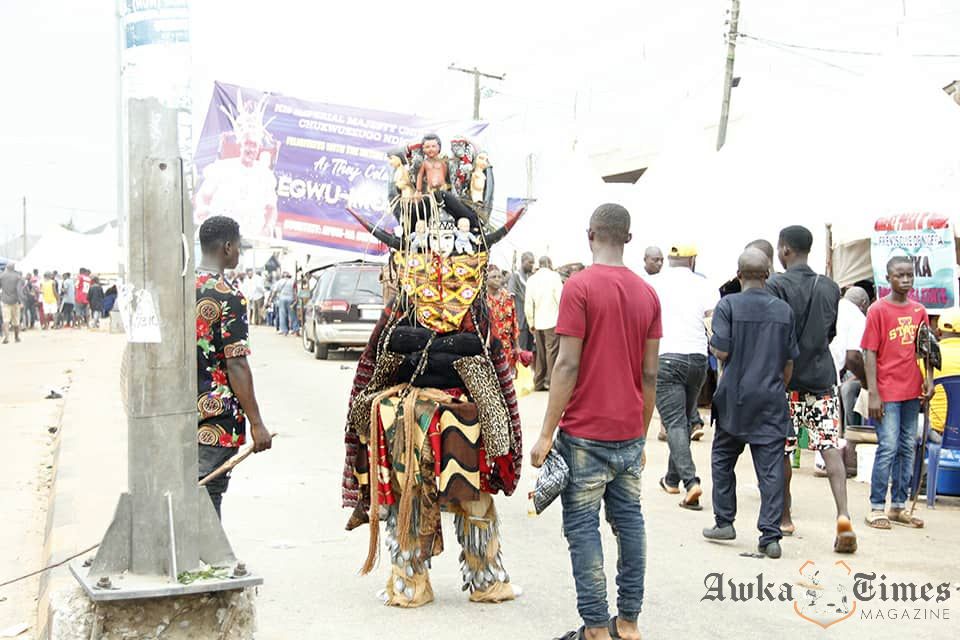
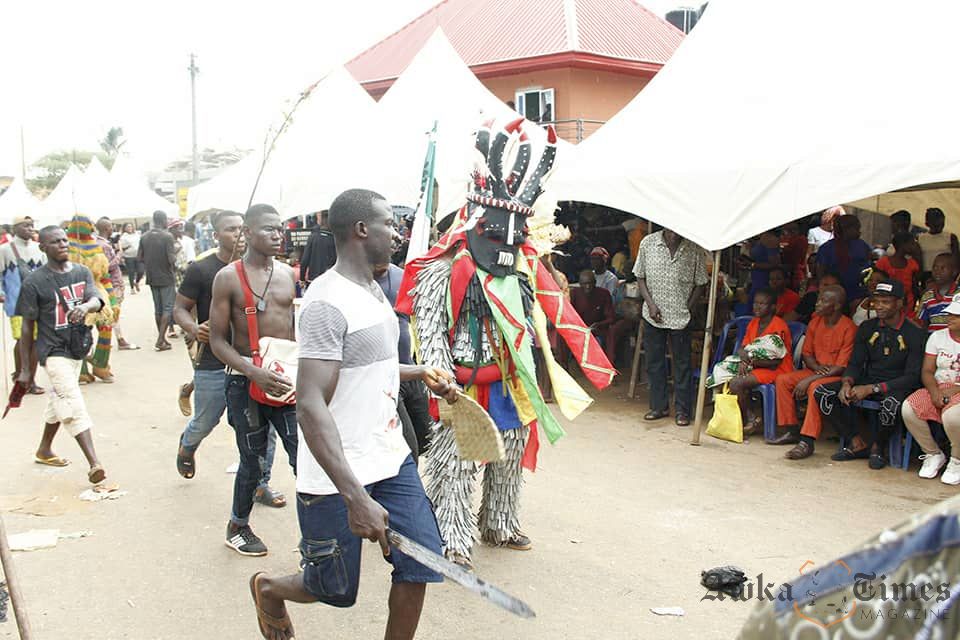
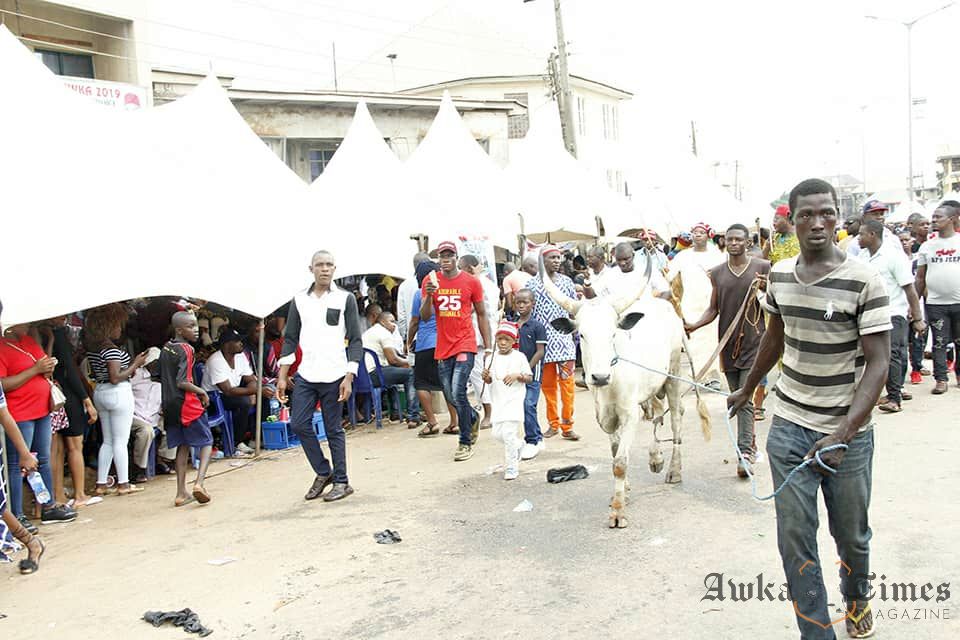
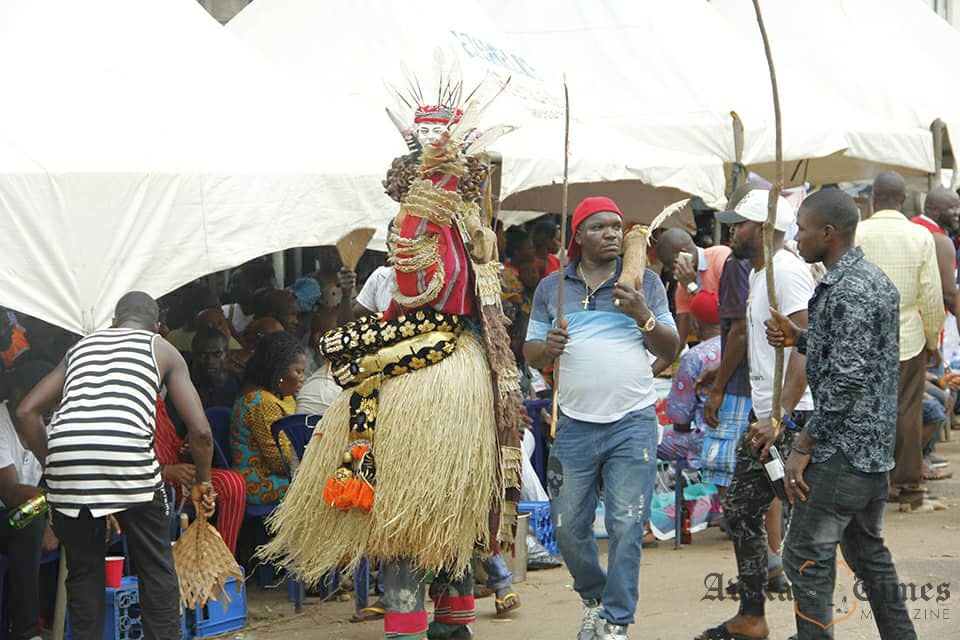
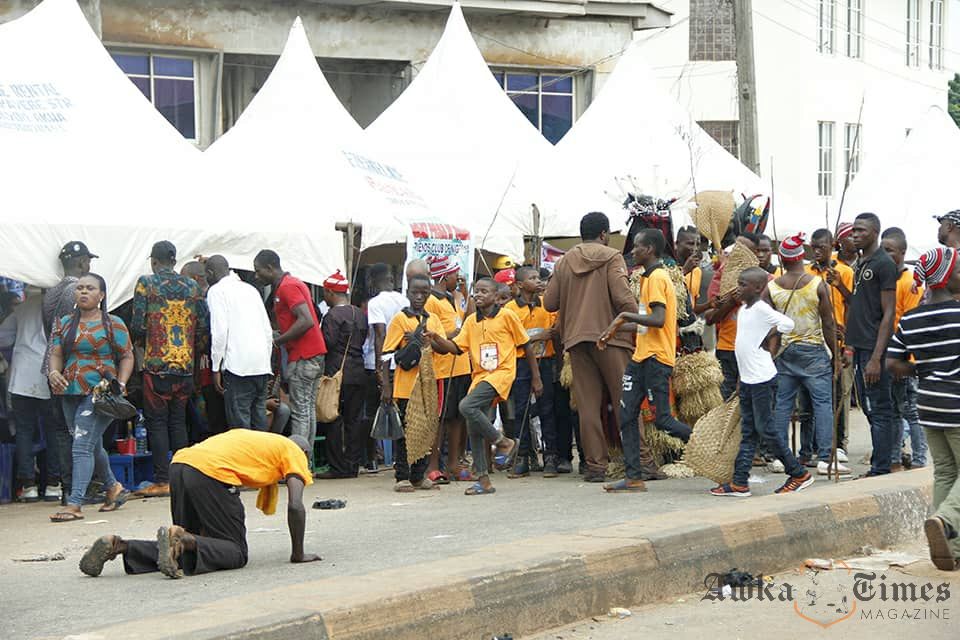
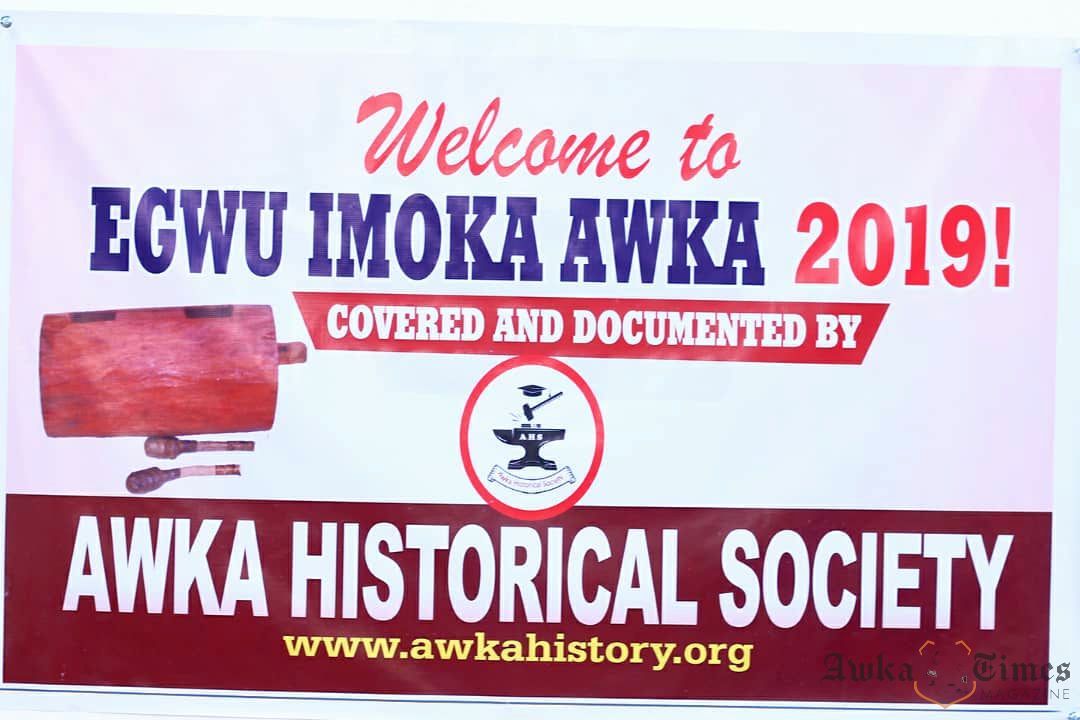
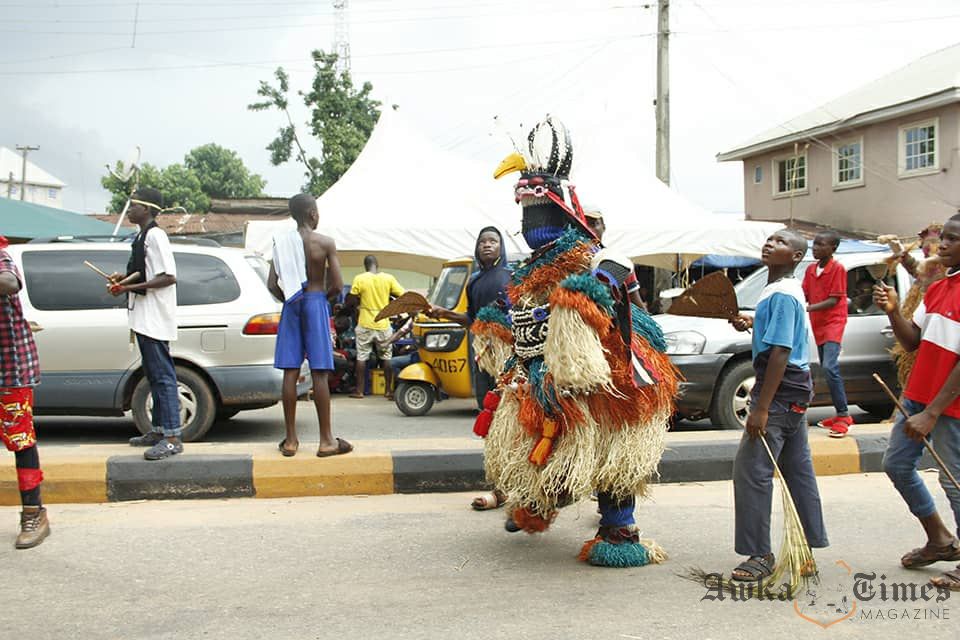
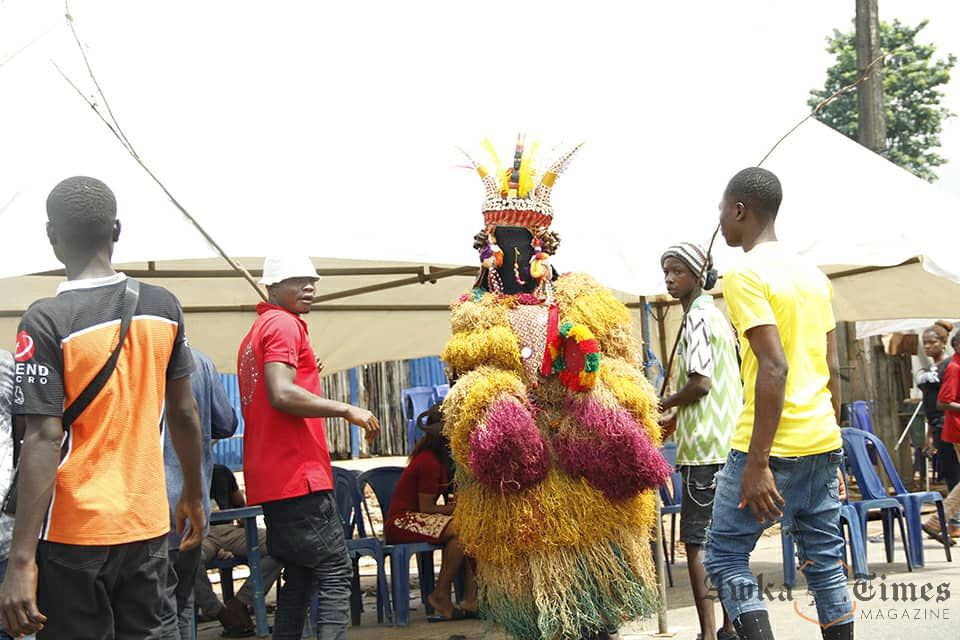
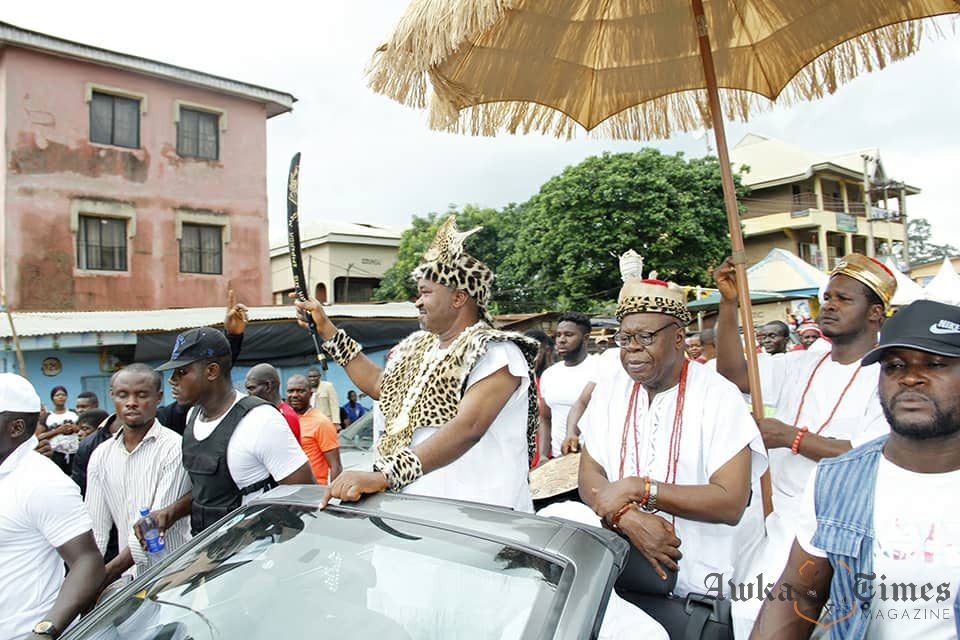
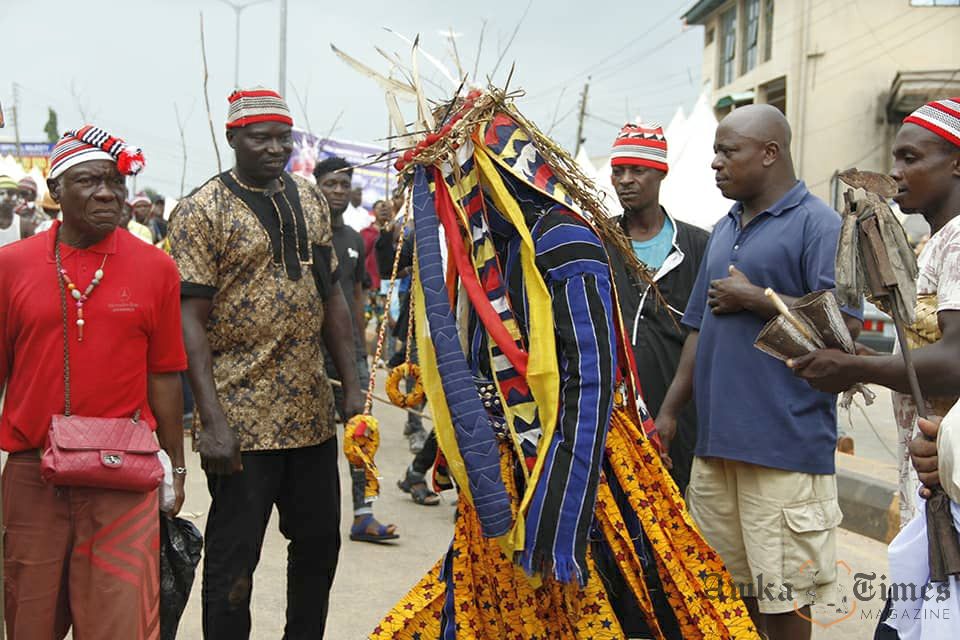
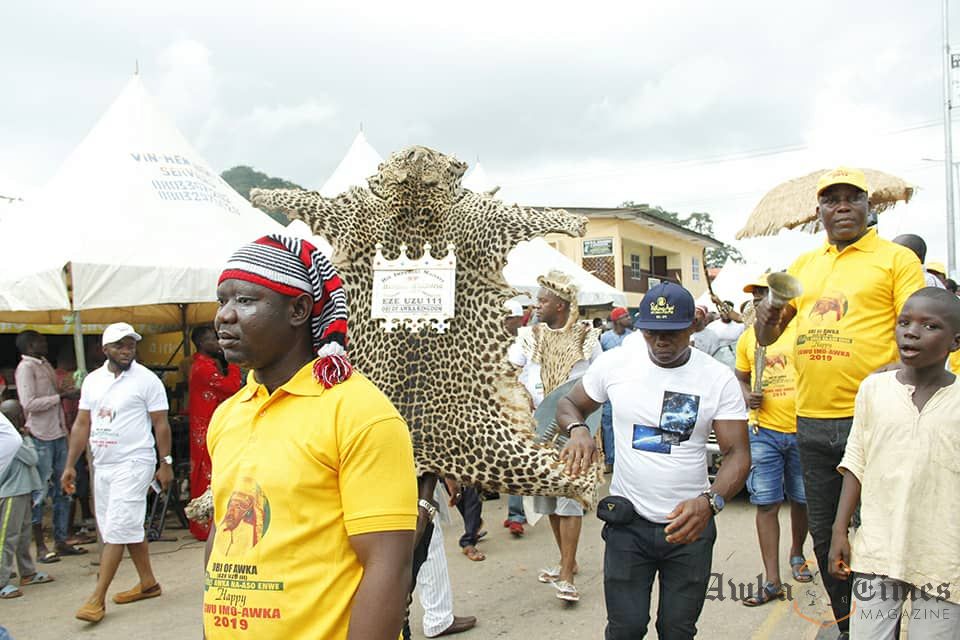

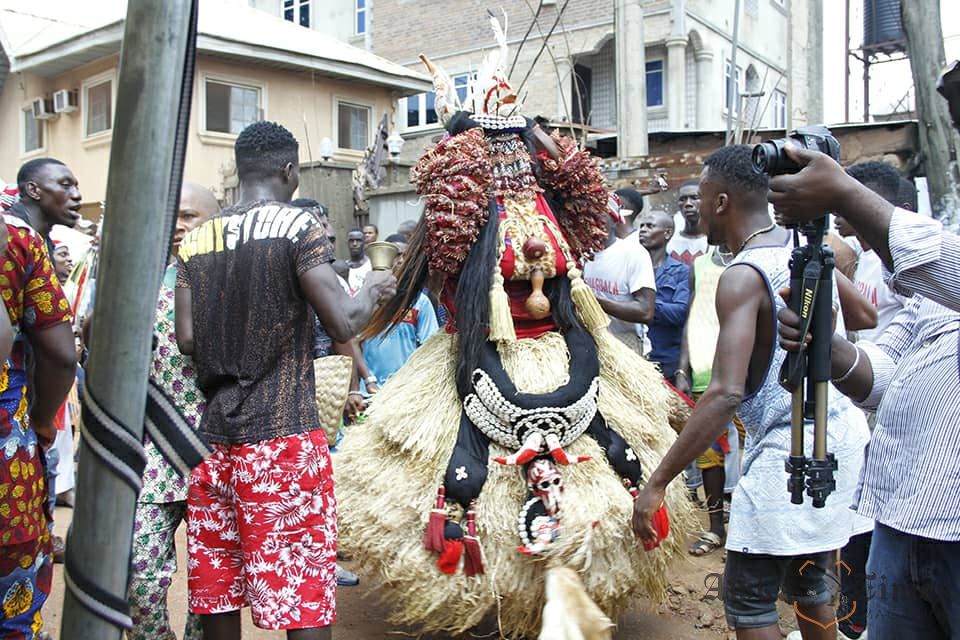
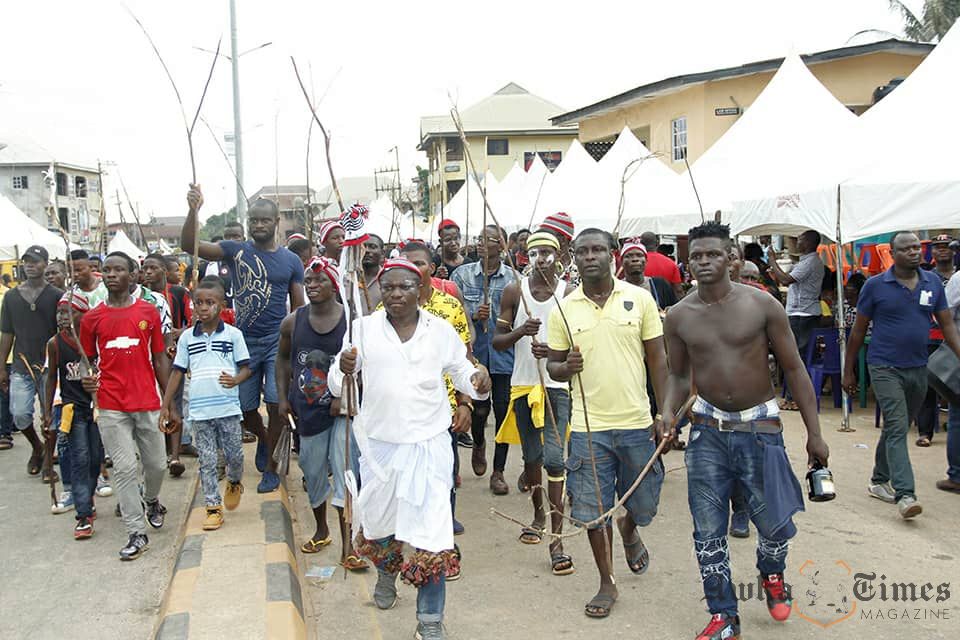
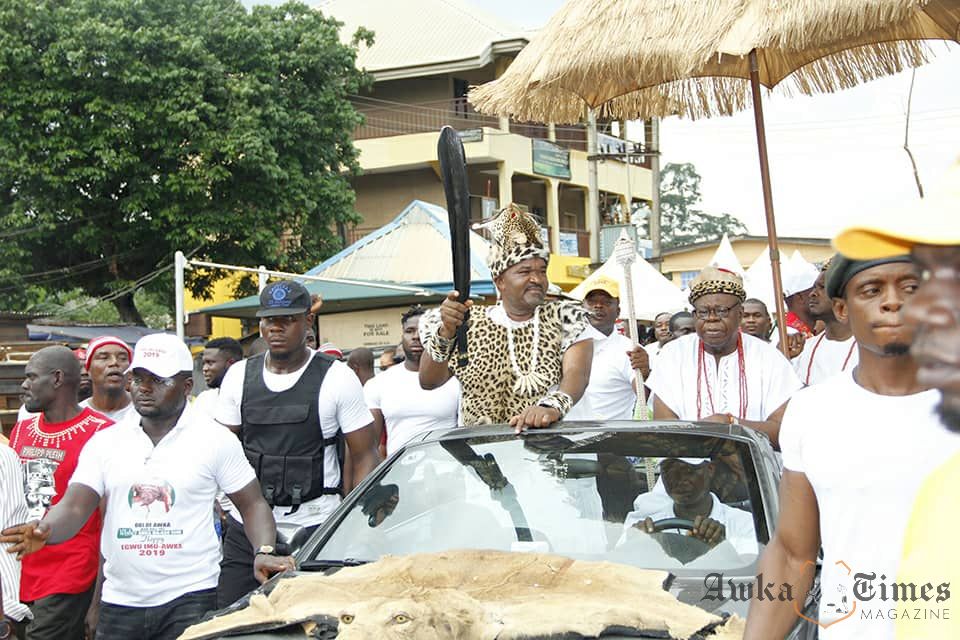







For millennia, Awka people rejected the idea of a sovereign chieftain. The Awka village republic existed as a segmentary society based on well-defined kinship structures. Then colonialism ensued. The evolving colonial constitutions produced at some point a House of Chiefs which required Awka to nominate a sovereign chieftain as a representative in the new legislative body. Ever since, Awka has been caught in a chaotic transition from kinship to kingship system, wanting a king but refusing to acknowledge his exaltation.
By Chudi Okoye
Onwurah Uzoku was horrified by the very suggestion. The British, finally achieving the pacification of Awka hinterland following the Agulu-Amikwo war of 1902-1904, were looking for local chieftains to help them govern the newly established protectorate. They had selected several notables to serve as Warrant Chiefs representing the seven Awka quarters. And they approached the illustrious Agulu chief, Uzoku, asking to elevate him as paramount chief. Uzoku was mortified. He flatly declined the offer, proclaiming that Awka had never had a sovereign and that anyone allowing himself to be made one would be instantly eliminated by the Awka gods!
This historical nugget summarizes the uncomfortable experience of kingship system in Awka.
Oral tradition and anthropological studies affirm that ancient Awka was a segmentary society. ‘Awka’ was essentially a commonwealth of autonomous villages that coalesced over time to form an organic city state. But while the evolution into statehood required the institution of centralized political structures, the underlying autonomy of the constituent villages – themselves made up of lineage-based clans and kindreds – has survived.
There is a reasonable hypothesis to advance that at its core the crisis in Awka emanates from the contradiction of moving from a kinship to a kingship system in a society in which egalitarian instincts still hold firm. Communal laws are binding and sacrosanct in Awka; but at the same time there is a strong sense of individual self-determination. Although the federating units of Awka saw the value of a unified community, they never evolved into a unitary city state.
In this, Awka was not unlike most Igbo communities. It is widely attested in the anthropology of Igbo societies that they were, up until the arrival of colonialism, largely stateless societies, having few central governing institutions but with power diffused to village structures. Chinua Achebe, in his essay “Chi in Igbo Cosmology” argues that Igbo political individualism emanates from Igbo ontological belief system:
The idea of individualism is sometimes traced to the Christian principle that God created all men and consequently every one of them is presumed worthy in His sight. The Igbo do better than that. They postulate the concept of every man as both a unique creation and the work of a unique creator. Which is as far as individualism and uniqueness can possibly go! And we should naturally expect such a cosmogony to have far-reaching consequences in the psychology and institutions of the people… [W]e should… notice… the fierce egalitarianism… which was such a marked feature of Igbo political organization, and may justifiably speculate on its possible derivation from this concept of every man’s original and absolute uniqueness.
Awka was one of the Igbo communities with the fiercest disdain for monarchic or oligarchic rule. All on its own, without being familiar with the Athenian notions of democracy and completely unaware of the revolutionary upheavals that had led to the establishment of the English Magna Carta (1215) and Bill of Rights (1689), French Declaration of the Rights of Man and of the Citizen (1789) and United States Bill of Rights (1789), the Awka of antiquity autochthonously developed a culture that upheld the values of individual liberty and political democracy. These values were not codified in any written document resembling the classical documents of Europe and the United States. But they were deeply embedded in Awka cultural precepts and unwritten laws. They were embedded in the hearts of the people and evinced in the confidence and self-assertiveness of a proud people who did not accept the superiority of any other culture or community. Awka abhorred the idea of personal rule and was only governed by preceptual codes that embodied the collective spirit of the temporal and ancestral community. It was this attitude that led to the institution of a gerontocratic system wherein the oldest person in the community, Otochal Awka (initially the “Okokpa”), was revered as the embodiment of communal authority, as the personification of the collective wisdom of the temporal society and the intuitive counsel of Awka ancestral spirits. Here is one description of this system by Ezewulu Anatogu in his book, Awka: From Chieftancy to Monarchy:-
In each village, the men were divided into three categories – the Youths (Ndikolobia), the middle-aged men (Ndi-otu), and the elders (Ndichie) which also included the Ozo-title-holders. Although all the people took part in legislative matters at a village assembly, nevertheless, in execution of programmes, they had separate responsibilities. The Youths constituted the fighting force, policing the entire community against external aggression and internal subversion; seeing to it that laws made by the community were carried out; and also, seeing to the general sanitation and cleanliness of the village. The collection of fines and levies were entrusted to the Ndi-otu (middle-class) while the elders (Ndichie) in addition to political powers also wielded judicial authority by sitting over settlement of disputes and individual claim suits. Judgement on any case was usually delivered by the eldest man or most titled man present on the occasion. This is because in every community, the eldest man or the highest title-holder was regarded as “primus inter pares” of the community. (1996, p.11)
In his celebrated book on Awka history, The Awka People, Barrister Amanke Okafor tried to capture the primordial political order in Awka, stating as follows (note the spelling, “Oka”):
By their system of government, the Oka people were the freest people in the world. They were republicans. No one man ruled over them (Oka enwere eze). In their society, they regarded each other as equals. They were ruled by their laws, in the making of which every citizen participated. They managed their affairs in the democratic assembly of the whole people, called “Izu Oka”, to which every citizen had the right to attend. The womenfolk had their own assemblies.
The nearest thing to kings that the Oka people had was the Society of Ozo title-holders. The members of this Society had traditional functions in Oka, and had a part in the management of the affairs of the town. They declared wars and made peace, on behalf of the town; and they settled disputes. But they ruled no one. They were just “primus inter pares” – first among equals.
When the British came, they wanted to make Onwurah Uzoku the paramount Chief of all Oka. But Onwurah declined saying that anyone who allowed himself to be made king of Oka would be struck dead by the gods of Oka instantly! (Amanke Okafor, The Awka People, Book 1, 1992; p. 8)
Allowing for the slightly imprecise language of a non-professional historian, the account given above by Barr. Okafor captures the antiquity of Awka political organization and the attitudes underlying it. The account shows clearly that kingship is alien to Awka people. A striking part of the account is the horror expressed by Onwurah Uzoku who had been invited by the colonial administration to take up the position of Paramount Chief for all of Awka. A similar reluctance was displayed decades later, in the dying days of colonial rule, by another Awka chieftain also asked to assume paramountcy over Awka people. This was in 1959 and the person in question was Ozo Obuorah Nnebe. The Eastern Region Government earlier in 1956 decided to accord recognition to traditional rulers as partners in local administration. The legal instrument for this was enacted as the Eastern Nigeria Chieftaincy Law of 1957, with a House of Chiefs eventually constituted in 1959. Several towns that were at the time without traditional rulers were encouraged to select one. Awka was among them. Based on an excerpt of a report attributed to P. Hezekiah Dike, Awka at the time approached Nnebe who was seemingly reluctant and had to be “cajoled” into accepting the position (in parenthesis, we note that Chief Nnebe subsequently presided over a pretty robust chieftaincy regime which belies his initial, supposed timidity!) It was thus that Awka came to have its first traditional ruler, in the person of Ichie Obuorah Nnebe, as paramount ruler of Awka, taking the title Ichie of Awka. He started out as a 3rd Class chief, but was soon recognized as 2nd Class chief by the Eastern Nigeria Government.
But every traditional ruler that Awka has selected has faced a crisis of acceptability. Ichie Nnebe endured constant challenges, with large parts of Awka, primarily “Mgbogo” villages, refusing to acknowledge the paramountcy of this Agulu chieftain. This was one of the original causes of the “Mgbogo vs. Mgbede” conflict. The next traditional ruler after Nnebe, Ozo Alfred Ndigwe, who was installed as the first “Eze Uzu” under the amended constitution of 1986, similarly suffered endless outrages. In our time, we have witnessed the serious crisis of legitimacy faced by the current traditional ruler, Eze Uzu II Obi Gibson Nwosu. Just as Nwosu now suffers the reality and utter humiliation of a competitive crown, his two predecessors also had to contend with the challenge of competitive crowns whilst still on the stool. In all these cases it has meant that the Eze Uzu, putatively paramount over the entire Awka polity, was or has been unable to command the undivided loyalty of Awka people as a whole. Without the indivisible support of the entire Awka citizenry, there follows a crisis of legitimacy. This in turn makes for unceasing instability.
We could theorize, on one level, that the harassments and indignities heaped on Awka monarchs simply reflect the self-preserving instinct of a society that remains uncomfortable with the idea of monarchy, a system it adopted mainly for the opportunistic reason of more effective democratic representation. Awka adopted the initial paramount chieftaincy model, which it later modified to a constitutional monarchy, primarily to take advantage of the political space for representation in the regional/state government. The monarchy model may be a necessity but Awka republican traditions are alive and well and they find expression as a system-regulating mechanism in the relentless irritations heaped on Awka monarchs!
Obi Gibson Nwosu himself, during his meeting with the Awka Pacesetters Club in 2015, in fact offered an interesting perspective in line with this paper’s hypothesis. According to the Club’s narrative,
[Eze Uzu II recalled that] Awka did not have an original culture of kingship. In the past, the Ozo Prestigious Group was the power engine of Awka [politics]; [it] dictated the rulership, cultural and traditional patterns of the Awka society… The Otochal Awka was… the [ultimate] symbol of rulership of Awka people akin to a king… The Ozo Awka [was] the ruling class, but [the buck stopped] with the Otochal Awka whose approval must be sought…for…every decision made [before finalizing] agreements.
The Eze Uzu opined that [the] emergence of an Awka King did not quite go down well with the [Ndu] Ozo who felt that the power they wielded all through [Awka] history had been watered down tremendously, and so [they] did not and [have] not relented in challenging the powers and leadership of Awka Kings, including his present kingship… [He said] that this had been the way of Awka people and that he is not the only one it happened to. The same thing was done to Igwe Alfred Orimili Ndigwe, Eze Uzu I; it also happened to Ichie Nnebe…, those that were kings in Awka before him.
Continuing, he said that one has to look deeply and realize that it is a common practice of Awka people to disgrace and disregard their leaders and kings. [He cited the example of] Orimili Ndigwe, [noting] that people threw sands and stones at…his car, on the road and at village squares. Why? Because, Awka was yet to come to terms [with the fact] that the king is the ruler and no longer the Ndu Ozo! (Awka Pacesetters Club, Peace and Reconciliation Committee Report, 2016, pp. 13-19)
Obi Gibson Nwosu made similar points in his interview with Awka Times. As he put it, “I am no longer perturbed by the hatred and Awka predicament. It has been a common practice of Awka people to disgrace and disregard their leaders and kings. People threw stones and sands at [Eze Uzu I] Orimili Ndigwe’s car on the road and at the village squares.”
Nwosu’s comment reinforces the idea that the harassment of Awka monarchs is likely an instinctive self-preserving mechanism of a republican polity.
The Eze Uzu, however, brings up a different perspective on the matter. As Nwosu describes it in the Pacesetter report:
[In pre-modern times], the moment the Ozo Awka [took a] decision and the Ọtọchal Awka concur[red], it [became] a law of the Awka people. [However] this medieval arrangement [that served Awka well] in the times of old… can no longer work for Awka people. It can’t work! Right now [Awka is] an integral part of the country Nigeria; there is the federal government constitution with provisions which supersede every other rule of engagement. In the order of governance, there is the Federal Government, State Government, Local Government and then the Town Union administration as officially upheld. The President-General (PG) heads the town union, whereas the Monarch – the traditional ruler – supervises the leadership of the town union led by the PG.
These are the provisions of the Constitution of the Federal Republic of Nigeria. There is nothing like the ‘Ozo Society’ in the Nigerian Constitution, or ‘Ajaghija’ or ‘Ahiajioku’ or ‘Amanwulu’. Nevertheless, the[se] are customs which can only be respected [by the] people [even if they have no role in the national dispensation]. (Pacesetters Report, op. cit. p. 19)
I will address later Obi Gibson Nwosu’s suggestion that the traditional ruler institution is recognized by the federal constitution as part of the governance structure of Nigeria. I will dispute that claim. But for now let us further interrogate the suggested rivalry between Ozo Awka society and the newly emergent institution of monarchy. Eze Uzu II hints at this rivalry with a faint suggestion that it may be because Ozo Awka, once an apex governing body in Awka, resents its marginalization in the new democratic dispensation. That may well be the case. But if it is indeed true that the emergence of the new governance institutions (Eze Uzu and the town union) and the marginalization of the primeval power blocs has created tensions among Awka governance institutions, is it entirely due to jealousy and resentment on the part of the dispossessed power blocs, or could there be something else at play?
Without doubt, marginalization can create disaffection among groups who suddenly find themselves without direct access to the new centres of power, in this case the state government leadership. More so in the patrimonial, patronage-based system that is Nigerian democracy. However, it is also likely that the emergent new powers are acting in a way that incites such resentment, perhaps unwittingly. If we read again, for instance, the statements attributed to Eze Uzu Gibson Nwosu in the Pacesetter interview (cited above) one senses an unmistakable disdain for the ancient governance institutions of Awka. The monarch gives the impression (assuming that the Pacesetter reporting is accurate) that he believes that the traditional governing institutions of Awka are antiquated and have no place in the modern democratic dispensation. If he believes that, or gives the impression that he does, it is only natural to expect resentment from the slighted institutions. It could become a toxic matter if the new monarch also acts in a manifest manner that affronts local tradition.
We may recall here the charges preferred against Obi Gibson Nwosu (see Charges Against Eze Uzu Gibson Nwosu) which later led to his purported impeachment. Much of the charges had to do with behaviors which were considered repugnant to Awka tradition. Nwosu of course denied all the charges, point by point. But the sense of his own words in the Pacesetter and Awka Times interviews in a way lends credence to the narrative emerging in the local community that the incumbent traditional ruler had been acting in a manner abhorrent to Awka customs and traditions and detrimental to Awka interests. Some of the monarch’s positions on cultural issues, especially when it came to choosing between the precepts of his Catholic faith and Awka customs (see The Nitty-Gritty of Osunankiti and also 20 Seconds of a Widow), gave the impression that the incumbent Eze Uzu may be too modern in his outlook and perhaps too devout in his adherence to a non-indigenous religion to perform a role which is intrinsic to the Eze Uzu institution, namely to act truly as the embodiment and custodian of Awka customs and traditions. It may be in part a suspicion of his exogenous cultural orientation that caused Eze Uzu II to suffer a deficit in traditional legitimacy, forcing him to rely more and more on the legal legitimacy (statutory certification) as his only source of authority – as indeed many consider that also lacks charismatic legitimacy! (see Daggers and Swagger in the Kingship Saga)
Some of the charges brought against Obi Gibson Nwosu also evoke another issue with deep historical and cultural resonance. This goes back to earlier times when the colonial administration, probably out of ignorance of the traditional governance systems in Igbo land, imposed Warrant Chiefs on local communities without appearing to care too much about the status of those Warrant Chiefs in the local community. I will quote Ewulu Anatogu (op.cit, p.12) at some length on this subject:
These warrant chiefs naturally usurped the powers of the traditional government of their respective communities and exercised their authorities solely in accordance with the wishes of their colonial masters.
The exercise of these powers by the warrant chiefs in utter disregard to norms of the community was regarded by some scholars as the remote cause of dissension between the chiefs and the people they were lording it over. In spite of this, some of these warrant chiefs were totally rejected by their people on the ground that they had no moral right to rule their subjects, either because they were not traditionally qualified to hold such positions, or because of their bad character or lowliness of birth (some were osu caste), or because of their abject poverty before assuming such positions. Most of them were neither members of plutocratic class nor gerontocratic hierarchy in their respective communities. In order to remedy these defects, some of the warrant chiefs hastily performed Ozo titles to enable them sit among the elders.
Their performance in local administration was considered collectively to be very poor, repressive, autocratic and corrupt. In essence, these warrant chiefs were regarded as stooges to the British Crown.
Of course nothing in the charges of misconduct levelled against Obi Gibson Nwosu remotely approaches the horrific experience with the Warrant Chiefs of the colonial era. But there may have been sufficient historical resonance for a community concerned about its powerlessness over its monarch – who has to be certified and remunerated by a foreign power (the state governor), who on the whole appeared too beholden to the external democratic potentate, and who seemed to disdain the Awka customs and traditions – that it forced a groundswell of local opposition to the monarch, culminating in his purported defenestration.
The foregoing suggests that Awka may truly be experiencing the pains of a ‘prismatic society’. It may be trapped in the tension of a stalled transition, straddling the twin prisms of its own tradition and ‘modern’ monarchy. Awka is in the middle of a monarchical transition and, not unlike the experience of nations going through tough democratic transitions, the town is experiencing unavoidable upheavals associated with the termination of one governance ideology and the institution of another. To explain further, Awka may still be striving to adapt its political tradition – a form of ‘gerontocratic democracy’ dominated by a certain elite groups – to a new monarchic order which relegates those once-powerful institutions. There is a kind of irony in the fact that Awka is having to replace its old republic with a monarchy specifically to gain more effective representation in the modern democratic order! It is a Devil’s Bargain (a Faustian bargain) that thrusts Awka into constant tension, into a tortuous and seemingly unending political transition.
Awka may be experiencing the pangs of a protracted monarchical transition, but she will probably in time acclimate to the idea of having a monarchy. The elite political settlement required to consolidate monarchic transition is still working itself out in Awka, and the current leadership crisis is certainly part of that – part of a longitudinal process of political reorganization to turn an ardent republic into a hierarchized monarchy able to participate more fully in the Nigerian democratic dispensation. It may seem like an interminable transition for those engaged in the process, but it is comparative to historical standard. For, if one really thinks about it, Awka has had a unitary chieftain for only 60 years – from the initial accession of Obuorah Nnebe; 33 years since the adoption in August 1986 of the Traditional Ruler’s Amended Constitution (an adaptation of an original chieftaincy constitution secretly drafted and registered by Nnebe) and the ascendancy of Ozo Alfred C. Ndigwe as the first Eze Uzu in March 1987. Arguably, this is not long enough a timespan for an impetuous and restless republic to discard its millennia of non-monarchic habits!
Awka may yet develop greater acceptance for the newfangled monarchic superstructure which, out of necessity for greater democratic representation, she elected to superimpose on the substructure of her ancient republican institutions. The monarchy could indeed become an acquired taste for Awka. But there are significant structural impediments to such an outcome present in the current experimental design of the Awka political system.
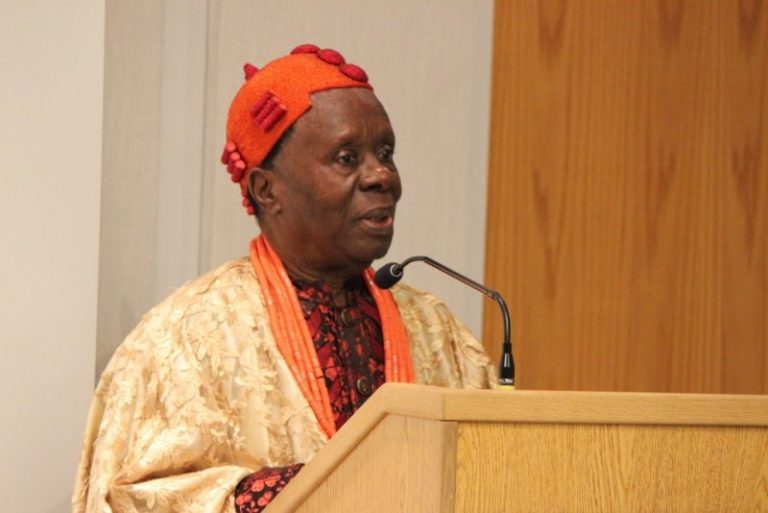
The kingship crisis in Awka has turned into a Gordian Knot. It has become a debilitating stalemate, with the contending coalitions caught in a strained balance of power. Neither coalition seems able to vanquish the other. Thus, a negotiated settlement has become inevitable, and it requires concessions from all sides. Political mediators in Awka should pursue this option, for real peace and progress to return to Awka.
By Chudi Okoye
Augustine Ndigwe swept into Tampa, Florida at about the same time, in late August 2019, that Hurricane Dorian began to pelt that pointy peninsula in southeastern United States. Like the gusty tropical cyclone that reached Category 5 intensity, Ndigwe had stormed into town on his way to the World Igbo Congress gathering where, in his usual barnstorming fashion, he had planned an appearance as “Eze Uzu III, Obi of Awka”. Also like Hurricane Dorian which swept up artefacts all over the Bahamas and Caribbean Islands, Ndigwe traversed the southern states of America – those places dense with Igbo diasporans – sweeping up his own artefacts of fervent applause.
At about the same time that Ozo Austin Ndigwe was being fêted in foreign forums, 6,000 miles across the world in Abuja, the self-effacing incumbent on the Awka Stool, Eze Uzu II Obi Gibson Nwosu, was attending a small private event where the daughter of his close political ally was getting married.
The contrast in circumstances couldn’t be starker. But it typified the saga of Awka kingship rivalry – the swagger of personal acclaim, the divided loyalties of Awka people, the seemingly unbridgeable gulf between the loyalist and insurgent coalitions, and the depressing tenacity of the kingship crisis – all aiming daggers at the very heart of Awka polity.
How do you handle a monarchic insurgency that has gathered steam and remains, to all appearances, an undefeated dream? How do you cope with a rebellion that remains a redoubt of unrestrained success?
Such today is the conundrum in Awka town as the kingship intrigue continues unresolved. Some elites in loyalist circles choose to ignore the dystopian reality. Some allow themselves fleeting moments of angst about it, but soon relapse into characteristic passivity. Others yet have roused themselves to ‘patriotic’ fervor, vowing with vigor to vanquish the vexing insurgency. The loyalist elites turn up their noses at what they consider an odiferous pollution of Awka political culture; others mock or maul what they see as unbridled personal ambition and gratuitous opportunism.
But against all opposing reactions, from supercilious disdain to legal confrontation, the insurgent claim on the Awka Stool continues unabashed. Awka people have watched as something that seemed at the start a ramshackle insurgency has morphed into a sophisticated assailment of the Awka Stool. Nothing as yet appears able to check the insurgency from Umuayom. Whether or not one is inclined to support it, it seems imprudent to ignore the strength and persistence of this enterprise.
For, despite protestations to the contrary, the following remains today the perception of political reality in Awka:
These are the basic and irreducible facts of the kingship crisis in Awka today, and they cannot be controverted except perhaps by partisans attempting to mischaracterize the situation.
The question then insists: How did we arrive at such a sorry state?
Things apparently started going awry from the very beginning. Nothing became the reign of Eze Uzu II than the manner of its inception. It seemed from the start that some personal factors relating to Dr Gibson Nwosu did not sit well with certain power blocs in Awka. His maternal trace outside of Awka was an issue for some. So too, it seemed, was his marriage to a foreigner. He had not long acquired the Ozo title, and so lacked that collegial acceptance it could confer. He did not seem too steeped in Awka tradition; he was (and remains) a devoted follower of a foreign religion to which, some thought, he owed greater allegiance than to Awka tradition; and, though unspoken, his overall modernist outlook suggested to some an inward antagonism to the ancient ways of Awka people, or an ‘otherness’ not fitting for the custodian of Awka culture. Gibson Nwosu was not a laboratory model for many in the influential circles with a fixed taxonomy of eligible profiles for an Eze Uzu!
Quite apart from his “exotic” profile, or perhaps because of it, there had been murmurs of impropriety in some circles about the process by which Gibson Nwosu acceded the Stool.
Mind, it was ever thus in Awka. There had been similar agitation at the emergence of Nwosu’s predecessor, HM Alfred Ndigwe. Also the very first paramount chief in Awka, Ichie Obuorah Nnebe, spent his reign fending off partisan restiveness.
In Nwosu’s case, the murmurs would metastasize into a sustained insurgency. Eze Uzu II would come to be accused of a series of impeachable misconduct by some members of Ozo Awka. Following a protracted tussle between the Eze Uzu and a faction of that society, the Council of Kingmakers in April 2017 declared that Nwosu had been dethroned. Consequent upon this declaration, the Council proceeded to name the then Head of Ozo Awka and Chairman of the Council of Kingmakers, Ozo Obuora Essel, as the Regent. The Regency, supposedly following constitutional rules, was to subsist for a period of six months during which time the renegades selected and installed a new Eze Uzu.
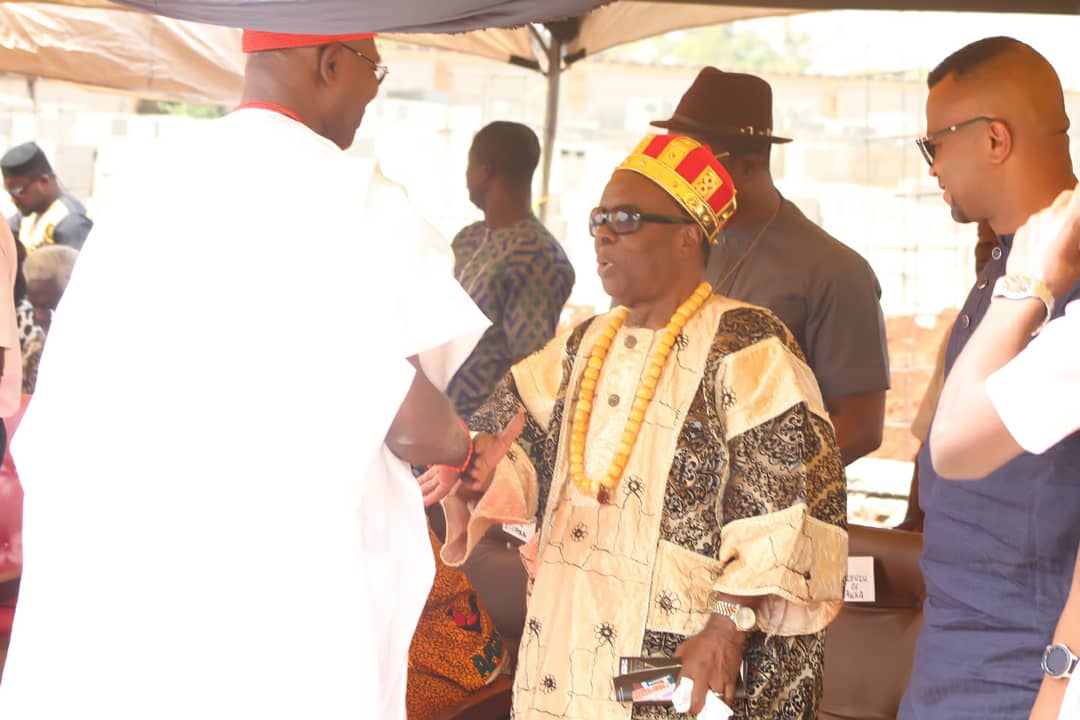 ▲ Eze Uzu II, Obi of Awka, Gibson Nwosu
The purported dethronement of Obi Gibson Nwosu by the Essel-led faction of the Kingmakers supposedly ensued because Nwosu had apparently failed to seriously answer to the charges brought against him before the Council. These charges (see sidebar) concerned certain misconduct violating the undertaking that Nwosu had signed earlier in January 2000, the first time he was cited for constitutional breaches.
The latest charges were a mishmash of complaints. It was a charge sheet by turns ponderous and puerile, though in places seriously incriminating. It should be noted that Eze Uzu Gibson Nwosu himself, and also through a phalanx of spokesmen, had strenuously denied – even rebutted – the charges of misconduct. In so doing, by its reckoning, the Nwosu camp felt that it had rendered his purported dethronement baseless. Separately, the Nwosu camp also argued that even were the misconduct charges of any merit, the faction prosecuting the case had not followed the strict provisions of law, and as such any alleged dethronement was of no legal effect. That may well be. However, since this procedural matter was never tested in court, this remains a moot point.
At the opposite end of this debacle, the legality of Ozo Augustine Ndigwe’s enstoolment itself remains patently unclear. For one thing, many indigenes have questioned the validity of his investiture, pointing in part to the allegedly artful process by which it came about. Some indigenes told Awka Times that on the day of the purported investiture, they had been invited to attend an advertised political party event. On arrival, they said, they encountered not a party event but the apparent installation of a purported new Eze Uzu! Such a sleight-of-hand is far from the open selection process specified in the constitution. This allegation, however, has also never been tested in court.
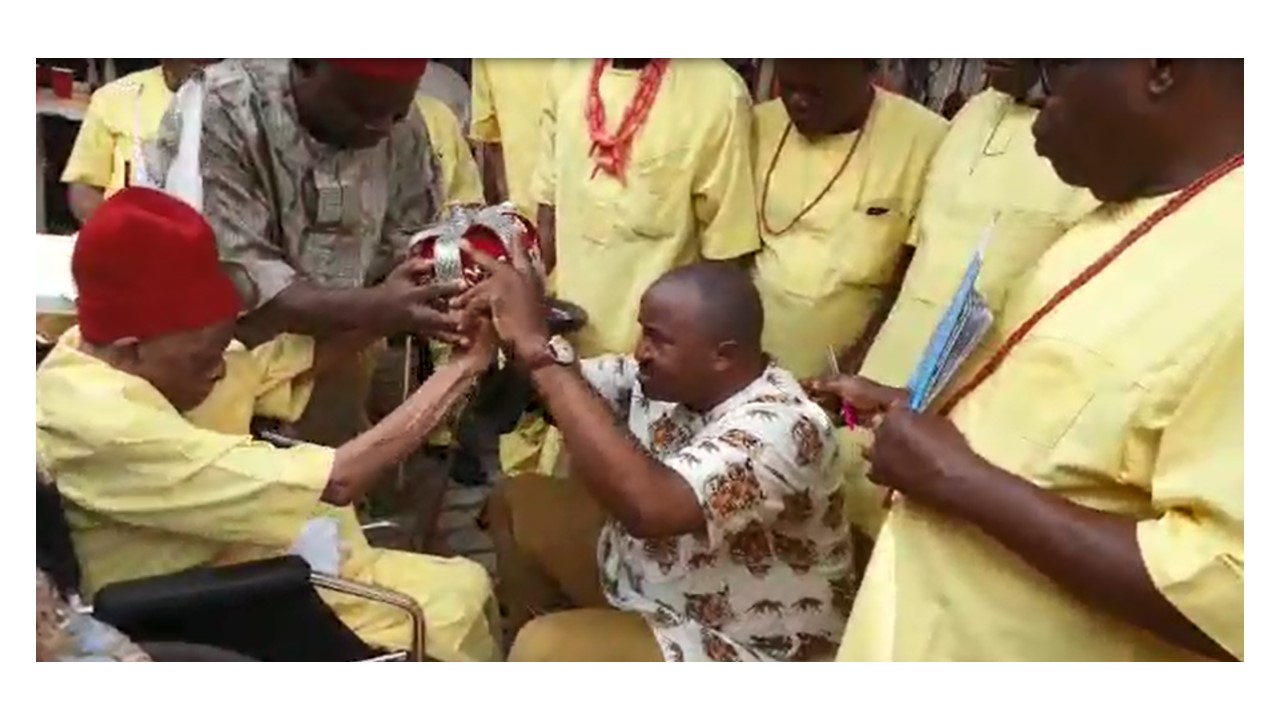
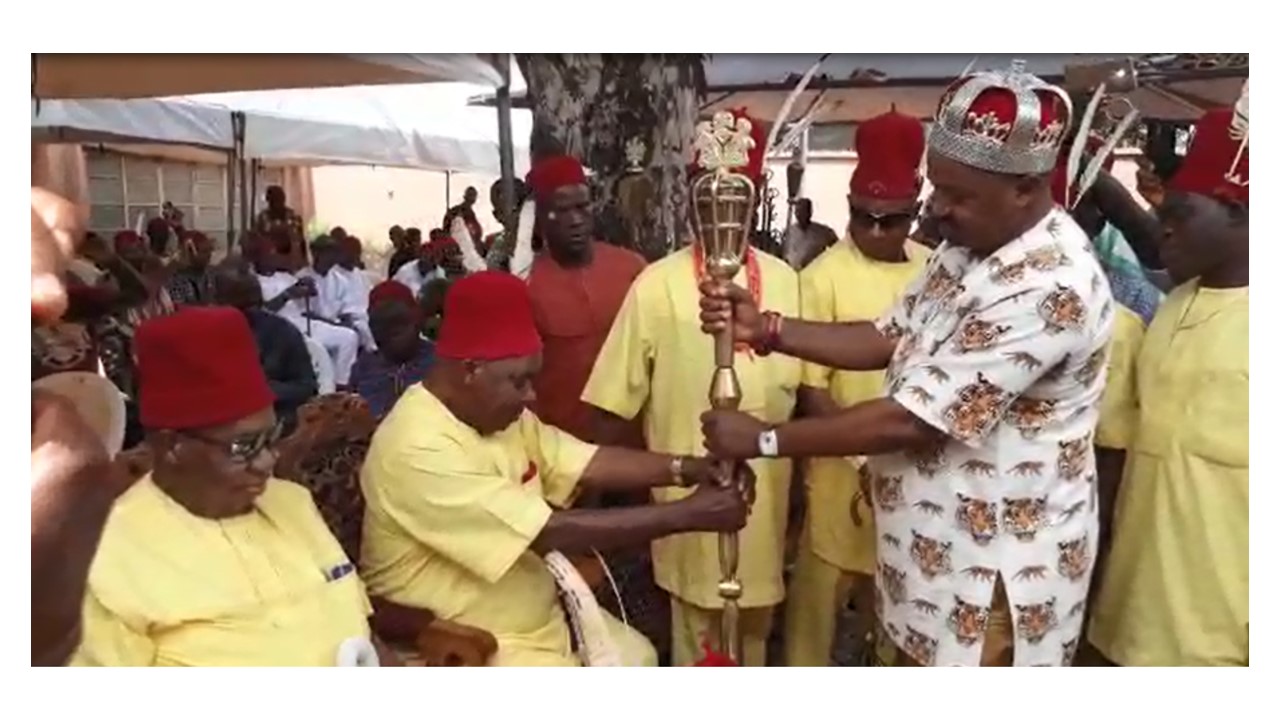
What has been partially litigated, which seems to further becloud the legality of Ndigwe’s claim, is the position of Nkwelle village on the succession issue. By constitutional rotation, it would be the turn of that village to produce a successor to Eze Uzu II whenever a vacancy materializes. Ndigwe’s village, Umuayom, is not eligible according to the rules, to offer a successor, having produced Nwosu’s predecessor who was in fact Ozo Augustine Ndigwe’s uncle. Ndigwe justifies his apparent selection by claiming, in an interview with Awka Times, that he had been sought out by Nkwelle people because there was no ready candidate from the village itself. It is unclear, however, if this claim can be sustained. For one thing, the assertion flies in the face of a published statement attributed to some Nkwelle spokesmen stating that the village was not aware of any vacancy on the Awka Stool. The statement also denied that the people of Nkwelle conceded their right to present the next Eze Uzu or indeed ever nominated Ndigwe.
The Nkwelle matter has been litigated, and the extant judgement from the courts upholds the objection of Nkwelle village. The case is however on appeal at present. The high court ruling may yet be overturned in the appeal, as Ndigwe indicated to Awka Times, especially with claims of procedural irregularity at the lower court. The Ndigwe camp insinuated this claim into the appeal case.
But whatever the outcome of the Nkwelle case, there seems to be a major issue here concerning the spirit of the law. Awka society from antiquity resented the idea of personal rule. The ancient town of Awka was the very crucible of republican government. All Awka governing institutions, and the culture of its politics, were designed to prevent extreme political stratification and the emergence of personal or aristocratic rule. This was the case for millennia in Awka, as several sources recounted to Awka Times in interviews. However, in an ironic twist of fate, the onset of self-rule in Nigeria created the need to install a paramount ruler in Awka after centuries of rejecting the very idea. The establishment of the Eastern Nigeria Chieftaincy Law of 1957 and the creation of the Eastern Nigeria House of Chiefs in 1959 compelled Awka to elevate one of its traditional chiefs to a position of paramount chieftain who would represent the town in the new legislative House. So began a political transition process that culminated in the present-day Eze Uzu institution.
But, while Awka was compelled by the expediency of political representation to elevate a single chieftain, it has made sure through evolving constitutional designs to preserve the republican precepts embedded in its political DNA. So, for instance, Awka insists on a traditional ruler who is merely primus inter titulos pares (first among titled equals). Awka paramount chief or traditional ruler law has remained pragmatic and humble, shorn of the grandeur and political aggrandizements that could tempt an over-ambitious or capricious chieftain. For instance, in order to curb the pretentions of an emergent Eze Uzu or his gaggle, the Awka Traditional Ruler’s Amended Constitution, 1986 refrains from using words like “king”, “royal”, “majesty”, “imperial”, “highness”, “prince”, “princess”, or indeed any corollary of these words. It simply says at Section 4 that:
The Traditional Ruler of Awka shall be Obi, the Eze Uzu of Awka.
Simple. No fanfare. No exaltation or magnification.
The constitution also severely curtails the powers of the chieftain, and it subjects him to elaborate checks by more ancient institutions of traditional governance in Awka.
By the same token, the Traditional Ruler’s Constitution enforces a rigid rotation of rulership among the 33 Villages of Awka town, collecting them in binary bundles of seniority within the Ezi and Ifite sections. The constitution leaves the unmistakable impression that it intends for rulership to rotate between the two Awka sections and to translocate through the constituent villages of each section, scrupulously avoiding the concentration of power in any one village.
It can be argued that Ozo Austin Ndigwe’s bid for the Awka Stool, however well-meaning it may be, offends the spirit of the Awka Traditional Ruler’s Constitution. Whatever the technicalities around the trial of Eze Uzu Gibson Nwosu; whatever the truth around the claim of Nkwelle people’s unbidden outreach to Ozo Austin Ndigwe; and whatever may lie behind the elusory details of the process by which Ndigwe himself came to effectuate his claim to the Stool, it should be clear to any patriotic-minded Awka indigene that Ndigwe’s accession negates the principle and spirit of power rotation and translocation espoused in the constitution. It represents an ossification of power, not just in one village, Umuayom, but indeed in one family! The implications of this bid for Awka politics are prodigious, and must be closely examined.
Notwithstanding the above technical and patriotic considerations, and despite the fact that Ozo Ndigwe suffers the statutory handicap of non-recognition, the chief continues to assert his claim to the Stool, seemingly with strong support from certain elite factions and civic associations, and segments of Awka grassroots. For his part, although he appears to have lost significant popular support, Obi Gibson Nwosu too continues to proclaim his incumbency, still retaining government recognition, the backing of notable elite factions, and undoubtedly a residue of popular support. Awka Times’ random sampling of popular opinion on the leadership claims shows that 43% of Awka people consider Gibson Nwosu the authentic Eze Uzu, 27% consider Ndigwe as such, and about 30% consider neither as the Eze Uzu. Significantly, as seen in our survey data, none of the claimants commands a majority of the votes!
This then is the stalemate in Awka today, a contest of “crowns” as it were, each side believing itself to possess the more credible claim to the Awka Stool and decidedly unwilling to concede.
There is of course an unequivocal and irrefutable case to be made that the authority of an Eze Uzu is established upon formal recognition and certification by the Anambra State Governor. Going by the provisions of the Awka Traditional Ruler’s Constitution, the Governor would appear to be the ultimate grantor of rulership authority. But the matter cannot be as simple as that. For, while the Governor has ultimate certifying authority, the constitution and its founding laws make it clear that the Governor will be required to endorse the community’s choice, in so far as the proper selection procedure is followed and the candidate meets the criteria specified in state law. To an extent, the Governor’s constitutive power might be said to be fiduciary, in that he is constrained to endorse the candidate chosen through the institutional processes of selection involving the whole community. The Governor cannot wantonly subvert the will of the people if the community speaks with one voice. However, the power of the Governor becomes more autonomous when there is ambiguity in the community, when there is contestation for the Stool and a crisis of legitimacy ensues.
It has long been accepted by social theorists, following the German sociologist and philosopher Max Weber, that political authority emanates from diverse sources in an established or even emergent social system. If authority is defined as “the legitimate power which one person or a group holds and exercises over another”, then a crucial question arises as to the source of that legitimacy.
There are generally three types of legitimate political authority identified in Weberian social theory:
The claim to legitimacy by Eze Uzu Gibson Nwosu, anchored on statutory certification, is largely based on the first type, legal-rational authority. That is undoubtedly a formidable claim. But an interpretive reading of the 1986 Traditional Ruler’s Constitution shows that it also embodies the second type of authority, one issuing from Awka traditional and cultural norms. This is why the constitution insists on a selection process originating with the legitimate governing institutions of Awka community. These institutions have deep cultural roots and it is their ultimate candidate, selected from a process involving the entire community, that is presented to the Governor for recognition and certification. The constitution therefore intends for the Eze Uzu to have both legal and traditional authority.
There could even be a case made for the salience of the third type of authority, based on individual charisma. The Awka people have a right to be led by someone who generates excitement, someone who animates the community and brings pride to it by his investiture, someone to whom the community could entrust their hopes and aspirations; that is, someone who inspires a strong sense of pride and patriotism in the populace. The Awka aphorism, gidigidi bu ugwu eze!, reflects this idea that a leader of the people must be a rousing personality, for it is only through his charisma that he can win the affection of the people and mobilize their collective will and energies to achieve community objectives. An Eze Uzu should be imbued with all of the above, and not just wield paper certification as the emblem of his legitimacy. At the same time, Awka does need her Eze Uzu to be formally recognized by the statutory authorities, else the very purpose for which Awka republican democracy came to be subsumed under a strange monarchic system will be defeated.
This writer argues that both Obi Gibson Nwosu and the challenger Ozo Austin Ndigwe will have to embody these three sources of legitimate authority to consolidate their claim to the Awka Stool. To the extent, at present, that both contenders in one or other regard suffer a deficit of political legitimacy, to that extent then is either claim incomplete. This assessment is reflected as well in the results of Awka Times survey (see above). And it means, sadly, that the struggle for the Awka Kingship Stool will continue in a stretched and sordid stalemate, as neither claimant considers their counterpart its rightful occupant.
There is yet another reason why the current stalemate may linger for longer. This relates to the personal motivations of the contenders. Awka Times gathers that at the onset of the present kingship crisis there had been some early third-party interventions attempting to nip the issues in the bud. These included both individual and group interventions. But these efforts were evidently unsuccessful. In part this was because the crisis swelled quite quickly, overwhelming early interventions by its sheer complexity. As we have seen, the Awka kingship crisis is not just a political squabble. It is a cauldron of personal resentment, religious animosity, cultural alienation, and of course a patent struggle for economic and political advantage. With such a heady mix, there was little hope for an easy or early resolution.
It is for this reason too that any expectation of a unilateral surrender on the part of either claimant must be considered unrealistic. For such continues to be the naïve hope in some forlorn fringes of Awka community, the idea being that either contender will somehow give up their claim. But what are the prospects for a unilateral surrender with so much at stake for either contender? We only have to consider what is at stake for each claimant to see the futility of such an expectation.

Besides, Nwosu would be loath to go down in history as the first incumbent Eze Uzu to be successfully unseated by a challenger. Since both of his predecessors had effectively seen off similar assaults, Nwosu would be wary of the judgement of history should he allow the challenger Ndigwe, with a specious claim to the Stool, to get the better of him. Already there is a narrative abroad that Nwosu’s self-effacing and humble demeanor – ironically just what the Awka constitution approbates – may have made mistakes that allowed his younger opponent to make inroads in his quest for the Awka Stool. To some extent, then, for Eze Uzu II there is an issue of personal pride involved in this saga.
But there must undoubtedly be a certain unease about a flamboyant challenger who Nwosu probably considers unfit for an Awka Stool that requires probity and personal humility. Nwosu might be uncomfortable with the challenger’s ambitions, worrying that such grand ambition could potentially harm the realm. (Ndigwe already proclaims himself an “Imperial Majesty”, a puzzling nomenclature since Awka is not and cannot be an ‘imperial kingdom’ under the Nigerian democratic dispensation). Nwosu would also be concerned about leaving a legacy where a future Awka monarch could be challenged at random; and he would worry that he might be blamed for leaving the Awka Stool with a precarious posterity if Ndigwe and his acolytes were to successfully force him from power.
So, Eze Uzu II Dr Nwosu will prove unyielding, both for personal and institutional reasons, to the idea of unilateral surrender.
An ambitious person like Ndigwe, who seems to have coveted the Awka Stool for so long despite claims of unbidden entreaty from Nkwelle, will also not voluntarily surrender it now that he has, in his view, attained or nearly attained its accession. There may be both personal and civic ambition in this quest for Ozo Ndigwe, as any discussion of the subject with him indicates. Having invested so much money, time and effort to achieve his goal, and with his personal and family prestige virtually on the line, it is almost unimaginable that Ozo Ndigwe would contemplate a unilateral surrender.
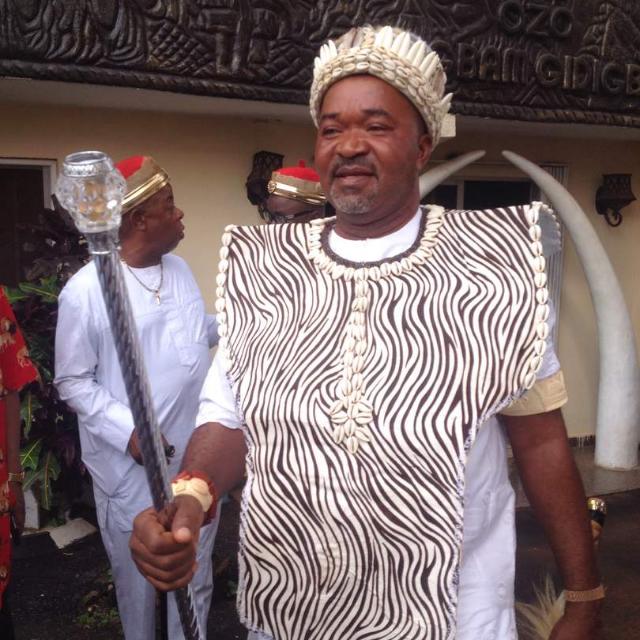
Such a concession could hurt his reputation. Ndigwe has raised the stakes so high, especially with the steps he has taken since his presumed enstoolment: He has orchestrated royal visits, mainly to non-Igbo monarchs, to announce his ascendancy; he frequently holds court in his domain surrounded by an entire courtly retinue; he is building his support base with purse and pageantry; and has raised such din and drama around himself that it is inconceivable for him to stand down voluntarily.
Besides, he has conferred subsidiary titles on several of his supporters, and in so doing has cleverly erected an ecosystem of ambition around himself, surrounded by a new ‘aristocracy’ of monied arrivistes who would not want to surrender their new status. They would lean hard on him to persist with his claim, were he implausibly ever to waver.
This writer simply cannot imagine Ozo Austin Ndigwe giving up his quest, having come this far. The kingship is his life!
The foregoing observations are without doubt grim sketches of despair for Awka polity. There is indeed much reason for pessimism, made more depressing when we consider the balance of forces in the ongoing monarchic battle. As earlier indicated, this is not the first time that an Awka chieftain would be challenged. It is not the first time that the reign of an Awka chieftain – Ichie or Eze Uzu – would come under factional stress. But let us consider here why the present challenge might be different from previous eruptions.
First, both Ichie Nnebe and Eze Uzu I, Obi Alfred Ndigwe, in their time faced intra-generational challenges – that is, their challengers were of similar ages or in the same generational cohort. By contrast, in the present case we have inter-generational rivalry, with Nwosu an octogenarian in contention with a Gen X opponent! This means that the challenger is able to mobilize youth support with some ease, especially in an ecosystem teeming with hordes of unemployed and possibly resentful youth. If sustained, Augustine Ndigwe’s accession, apart from fulfilling his personal ambition, could represent the overthrow of an old guard, a decisive generational upset and indeed the elevation of a new arriviste class. This alone makes his a formidable challenge, far more potent than what obtained in earlier generations.
Add to this the fact that Ndigwe has successfully splintered the ranks of the elderly constituency in Awka, with many elders in the Ozo Awka and other socio-cultural societies supporting him. It should be clear to all realistic observers that Ndigwe has built up a formidable, cross-cutting coalition which cannot easily be foiled by an octogenarian wielding a certificate from a governor who is otherwise unpopular among Awka people.
Throw into this calculus as well the utter imbalance in financial resources – based not just on Ndigwe’s observable advantage in personal wealth but also on his apparent access to a network of external financiers seemingly striving to secure a ‘vote’ in the selection of an Awka monarch – then you have a veritable mismatch in resources.
Ndigwe also appears nimbler and more media savvy. He exploits all media opportunities to advance his claim to the Awka Stool, understanding the importance of such excursions as a strategic tool. In the face of a clunky and conservative old guard still figuring out the world of social media, this gives Ndigwe a peculiar advantage not available to earlier challengers in Awka chieftaincy history.
And then there is the seeming ambivalence of the state government itself. While the government remains steadfast in upholding the incumbency of Eze Uzu II Dr Gibson Nwosu, it has avoided direct intervention to squelch the surge of Ozo Austin Ndigwe. The chief continues to parade himself as the traditional ruler of Awka, cannily and rather aggressively projecting himself in public and private fora within Awka and beyond as the extant traditional ruler of Awka. And yet for either security reasons, strategic prudence or some other unknown reason, the state government seems to have chosen a light touch thereby allowing Ndigwe to continue in his pursuit. (In a curious case, the state government recently issued a circular directing that no private individual or group should celebrate New Yam Festival in Anambra State before the traditional ruler of their community. It seemed to be targeted at Ndigwe who was planning a ceremony. He went ahead with his plan, with no reaction from the government, thus handing him a PR coup.)
Given all of the above, this writer cannot join those expressing calm equanimity about the current contest and what it portends for the future of the Awka monarchy. There is undoubtedly a pessimistic outlook for the young monarchy in Awka, and by extension for Awka political society.
What then is to be done? How can the monarchic intrigue in Awka, and the stultifying stalemate it has engendered, be resolved?
Many options are notionally available. These run the gamut from a decisive vanquishment of insurgency on one end, to the abdication or decertification of the incumbent on the other. These polarities represent the nuclear options that might be favored by either coalition. But facts on the ground, and the reality we have sketched above, make clear that there is no window for a nuclear option. The loyalist forces behind Eze Uzu Gibson Nwosu are not potent enough to defeat the renegade coalition behind Chief Augustine Ndigwe. Nor is the latter able to force the abdication or decertification of the incumbent.
Some people consider that the crisis, which has resisted all attempted solutions, will probably be settled by ‘natural selection’. Those who believe that Obi Gibson Nwosu was effectively dethroned in the April 2017 ‘putsch’ hold out a faint hope that the octogenarian will eventually come to find the fight too fatiguing; or that a new government in Anambra State could be persuaded to decertify him. They cite examples of such outcomes from elsewhere in Nigeria.
On the other hand, those in the loyalist camp argue that it is only a matter of time for a vitiated insurgency to implode. This is very likely, the argument goes, if the courts continue to rule against the insurgency and the government too continues to deny it recognition. Starved of judicial validation and also denied formal recognition, the insurrection will simply flame out, it is said. Besides, the loyalists believe that if superior courts uphold the lower court judgement against the insurgency, then the state government – which so far has avoided forcible intervention in the community affairs of the capital city – will have a freer hand to move in and extirpate the insurgency.
We can hope!
Either of these scenarios – incumbent exhaustion or insurgent implosion – is in fact plausible. However, there are too many imponderables. On the one hand, we see little sign of exhaustion on the part of the incumbent. Rather, his camp appears to have been recently re-energized by the victory of Engr Sir Tony Okechukwu in the appeal court ruling on the ADUN case. Okechukwu belongs to the loyalist camp.
Nor do we detect any wavering in government support for the incumbent Eze Uzu. One would rather expect government support to remain steadfast. With many monarchies in Anambra State teetering, ANSG will not want to create a ripple of insurrections by switching support to the renegades in Awka. There may be cases elsewhere in Nigeria where a new government favored the challengers. But these examples come from well-established kingdoms with long dynastic history. An incoming government in Anambra would be wary of countermanding its predecessor and switching recognition to the insurgents. It would be considered extreme political meddlesomeness if it did, and it could trigger a spate of crises the new government would want to avoid.
So much for the hopeful insurgents.
At the other extreme, the loyalists hoping for judicial victory and government interdiction of insurgency may themselves be being too optimistic. The victory of Engr Tony Okechukwu at the appeal court, where he successfully overturned an adverse high court ruling on the ADUN case, is instructive: None can be sure that the superior courts will uphold the finding of the lower court. If anything, the opposite seems more plausible. As earlier noted, the insurgent appeal already pointed to procedural irregularities which could imperil the lower court’s judgement. In addition, the well-financed insurgent camp of Austin Ndigwe can likely outspend the loyalist camp which is currently scratching and scraping to build up a war-chest for the legal battle. Money talks in the Nigerian justice system. Besides, the insurgents seem ready to drag the case all the way to the Apex Court. This means that the disposition of the Awka monarchy case could well take years – during which time anything is possible, including natural transitions and force majeure.
As for government interdiction of insurgency, without loyalist legal victory, this may not be forthcoming. Even with such a victory, government intervention might still be restrained for the reasons given above.
So what is the upshot of all this? That there is only one way to go to resolve the kingship crisis in Awka. That is, unequivocally, the path of constructive engagement between the contending camps, and the search for a negotiated settlement. This calls for a different mindset on all sides. The combatants must themselves be willing to make concessions. The insurgents cannot expect a duly certified incumbent to abdicate based on what are largely trumped-up charges concocted to eliminate a monarch who did not fit their partisan profile for an occupant of the Awka Stool.
Equally, the loyalists cannot expect a rousing insurgency which has survived the odds and appears to have a measure of populist support simply to fold up or melt away unacknowledged. The insurgency may have been driven by partisan grievance and personal ambition, but it has garnered strength due to evident lacuna in incumbent legitimacy. The insurgency must be acknowledged, and perhaps invited into the governing realms through a carefully designed arrangement that respects the strength of its coalition and constituency.
This is the only meaningful path forward, given facts on the ground.
The cognizant and civic-minded elites should engage a strategic peace initiative including personal diplomacy, formal peace missions, and even arbitration, to force a negotiated settlement. The elites should form a formidable coalition of peace mediators, mobilizing the masses behind their peace initiatives to compel concessions from the contending camps.
Only a negotiated settlement will help to resolve the continuing kingship conundrum in Awka.
Awka Times Magazine (ATM) is a publication of AHS Media Ltd., a versatile media company registered for magazine and newspaper publishing, public relations, events management and coverage and educational services, among other services. AHS Media possesses the rights to all published interviews, articles and pictures unless stated otherwise.
AHS Media Ltd. may receive compensation for some links to products and services on this website. Offers may be subject to change without notice.
© 2019 AHS Media Ltd. All Rights Reserved. Use of this site constitutes acceptance of our Terms of Use and Privacy Policy. Developed by MogRex