28 C
Awka
Tuesday, April 7, 2026

Trumpet With Certain Sound

Home Blog Page 20

Anambra State Government Takes Steps To Forestall Lassa Fever Outbreak

1

By Ndu Chris Nwannah, Awka Times Guest Writer

The Anambra State Government has put measures in place to guard against the outbreak of Lassa Fever in the area. As a result, it has put its Emergency Response Centres on alert following the ravaging of some states in the country by Lassa Fever.

Briefing newsmen in Awka, the Commissioner for Health, Doctor Vincent Okpala, said government had commenced sensitization of citizens to ensure that the disease does not come into the state. He stressed that the disease had a high index of suspicion at the moment.

The Commissioner stated that Lassa Fever was an acute Viral Haemorrhagic Fever caused by the Lassa virus. He however explained that proper environmental cleanliness would help in preventing the outbreak of the viral disease as the major carriers were rodents. Doctor Okpala challenged citizens to imbibe proper hand washing habits and avoid direct contacts with urine, saliva, faeces and blood of infected rats. He also cautioned against contacts with blood, urine, faeces, blood, vomits and body fluid of infected persons.

He announced that the fever manifests like other febrile diseases such as malaria with symptoms like headache, sore throat, cough, diarrhoea and chest pains. Severe cases could result in bleeding from ears, nose, eyes, mouth and other body openings.

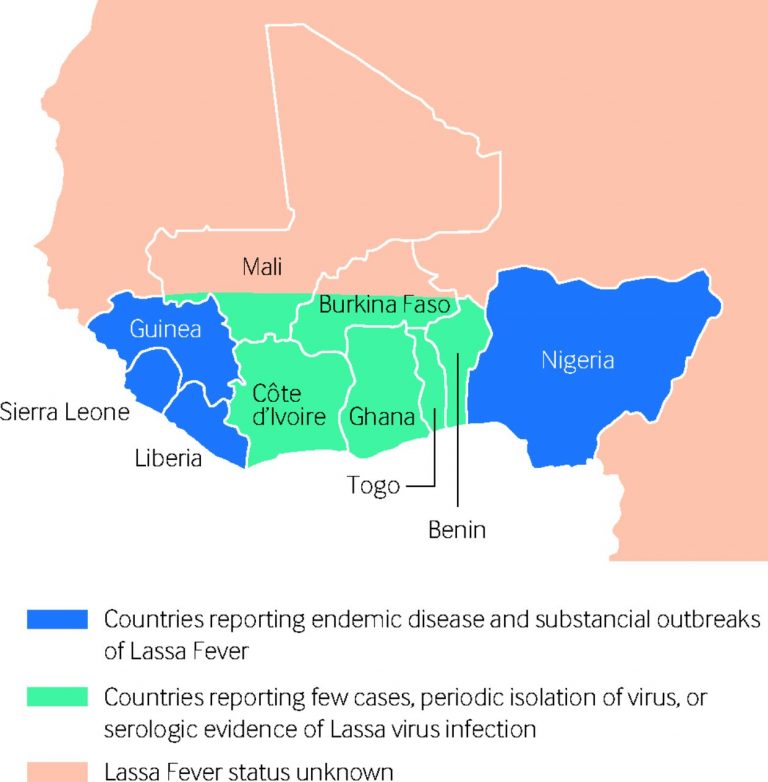
There had been reported cases of Lassa Fever in Ondo, Edo, Delta, Taraba, Plateau, Bauchi and Enugu states.

Awka Town Union Turmoil Continues as Factional Exco Hands Over to Caretaker Committee

0
WhatsApp Image 2020-01-23 at 2.17.34 AM
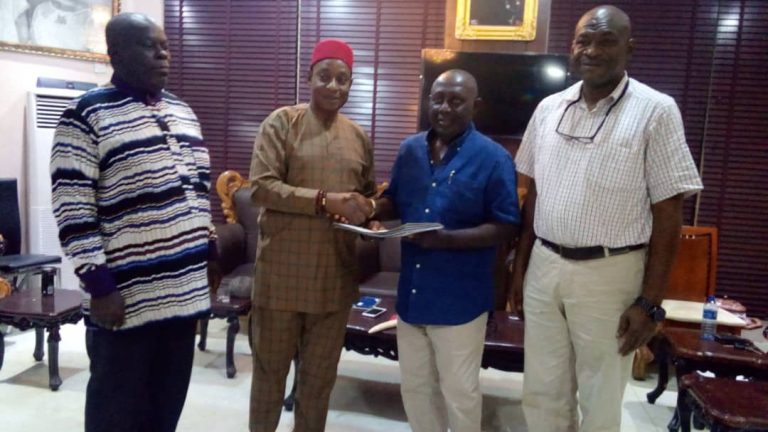
Dr. Amobi Nwokafor, Chief Chike Obuekwe and others at the handover event

… Caretaker Committee takes over from a factional Exco but opposing camp dismisses the initiative, saying that it is unconstitutional

By Ndu Chris Nwannah, Awka Times Guest Writer, with additional reporting by Emeka Ral, Awka Times Editor

A faction of Awka Development Union Nigeria (ADUN) previously led by Dr. Amobi Nwokafor as purported president-general has dissolved its executive council, handing over to the caretaker committee set up on Sunday, January 12, 2020 by the Awka general assembly (Izu Awka). The hand-over took place on January 22, 2020.

The Amobi Nwokafor faction of ADUN was elected in October 2016 following a controversial court ruling that had been appealed by the opposing faction led by Engr. Tony Okechukwu. The election had been conducted by a caretaker committee which was formed following apparent delay by the Anambra State government, the agency statutorily empowered to form such a committee. The state government never recognized the election of Dr. Nwokafor but has rather continued to acknowledge Engr. Tony Okechukwu as ADUN president well beyond his statutory tenure.

After emerging as the purported ADUN president-general in 2016, Dr. Amobi Nwokafor had pledged to lead the union for a single term of three years as enshrined in the 2008 ADUN constitution which was used to conduct the election. That constitution was later in 2019 invalidated by the Enugu Division of the Court of Appeal which affirmed the 2004 constitution as the extant law of the union.

In line with his commitment, Dr. Nwokafor met with members of his ADUN Exco on January 22, along with members of the newly-formed caretaker committee, to perform the dissolution and handover exercise.

Speaking at the occasion, Dr. Amobi Nwokafor expressed gratitude for the support he received from Awka people during his presumed tenure as ADUN president-general. Nwokafor particularly commended the Central Executive Council (CEC) of ADUN for working to ensure its success in the past three years. He also praised the Ozo Awka society – the prestigious chieftaincy institution which he had recently joined – for its stance in the ongoing kingship crisis in Awka. The Awka kingship stool is contested, and the Ozo society is largely opposed to Eze Uzu II, Dr. Gibson Nwosu, who is currently certified as Awka monarch by the Anambra State government.

As enshrined in the ADUN constitution, an outgoing president-general is supposed to initiate the election of a new executive prior to the expiry of his tenure. This, however, had not been done by Dr. Nwokafor whose presumed tenure expired in October 2019. In his handover speech, the former factional president-general of ADUN blamed the failure to conduct an election before now on the crisis in Awka, with efforts focused on finding solutions to the crisis. Dr. Nwokafor said that he was happy over the resolution of Izu Awka to create a 14-member caretaker committee to pilot the affairs of ADUN, including the conduct of a new election. He advised the caretaker committee not to deviate from the union’s roadmap but to show courage in tackling the tasks before it.

Several officials of ADUN who were present at the handover ceremony praised Dr. Amobi Nwokafor for his leadership. The former vice-president of ADUN South East, Barrister Oliseh Molokwu, described Amobi Nwokafor as a great leader who initiated laudable programmes to improve the wellbeing of Awka people. Similarly, the social secretary of the dissolved ADUN Exco, Comrade Obiora Okigbo, said that Ozo Nwokafor brought uncommon values into the leadership of ADUN in the last three years.

In another speech, an ex-officio member of ADUN, Chief Sunday Obuora, appreciated those who stood by the Exco in its three years of existence. He charged the past leadership to continue to pray and offer support to the new caretaker committee and Awka in general.

Addressing the gathering shortly after the handover, the Chairman of the newly established caretaker committee of ADUN, Chief Chike Obuekwe, applauded Ozo Amobi Nwokafor for utilizing his resources to offer great service to the people of Awka. Chief Obuekwe noted that he used his position to attract jobs, investments and scholarships to the community.

In accepting his new position as head of the caretaker committee, Chief Obuekwe promised to do the job wholeheartedly. He stressed that truth would be his driving force in the task to salvage Awka. He pleaded with the past Exco not to abandon the committee but to see the work as a collective responsibility.

It will be recalled that Chief Chike Obuekwe was the chairman of the ADUN caretaker committee that produced Engr. Tony Okechukwu as president general of ADUN in 2012. At the expiration of Okechukwu’s tenure in 2015, following a ruling of Awka High Court that a new ADUN election should be conducted, Chief Obuekwe was again asked to chair the electoral Committee by Izu Awka. However, the election was later concluded by Barrister Emmanuel Okechukwu following the resignation of Chief Obuekwe who was working for the Anambra State government at the time.

Meanwhile, one of the Awka stakeholders who is loyal to the Engr. Tony Okechukwu faction of ADUN, Chief Tony Egbunonu, has stated that the Izu Awka which constituted a 14-member caretaker committee to run the affairs of ADUN is a “nullity”. Chief Egbunonu claimed that the election which produced Dr. Amobi Nwokafor as president-general of ADUN was held without the approval of the state government.

Accordingly, he noted that such a decision was not binding on Awka people. Chief Egbunonu also claimed that the caretaker committee would not see the light of the day. He said the solution to the crisis in Awka was all parties coming together to chart a new course of action.

Similarly, the Tony Okechukwu faction of ADUN has argued that the actions of the opposing faction are of no consequence since that faction is not recognized by the state government. In a statement released to Awka Times, the public relations officer of the Okechukwu faction of ADUN, Comr. Emmanuel Ifeanyi Onyejiaka, said that “the caretaker committee purportedly set up by a purported Izu Awka is ridiculous. If anything, it tells you that a group of people have constituted themselves into bottlenecks in the way of peace for our town and our people must know this. On our part, we remain unperturbed by these gimmicks. We shall continue to stand on the path of legality. Those who have chosen to wallow in unconstitutionality and disdain for the law should continue.”

Commenting further, Comr. Onyejiaka said: “Come to think of it, how can a man say that he stepped down as PG after acknowledging the Appeal Court ruling which clearly stated that he was never elected! Isn’t it laughable? How can someone say he stepped down in January 2020 when actually his purported tenure of three years expired in 2019? Isn’t it laughable?”

He continued: “In fact, what is the place of the purported Izu Awka in the life of ADUN? Why do people act as though we are in a lawless society? For your information, Izu Awka is unknown to the ADUN constitution and I will leave it at that.”

Comr. Onyejiaka said that these same persons filed a law at high court seeking an interpretation of the judgement of the Appeal Court. “Why not wait for the outcome of that process?”, he asked in his statement. “It is a clear indication that they do not even believe in the process they have initiated. Worse still, rather than go to the Supreme Court, they went to a lower court, all in a bid to keep prolonging the confusion. We shall wait out the process but it would only be honourable that they do same. Trust me, the entire exhibition is a charade and we lose no sleep over it.”

The fissure in ADUN appears to be deepening despite the ongoing efforts by some informal groups to mediate the crisis.

Awka Appeal Court Commences Sitting in Feb ‘20

0

…. Governor Obiano says it will create jobs, quicken justice delivery

By Ndu Chris Nwannah, Guest Writer, Awka Times

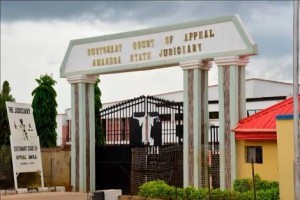
Arrangements are in top gear for the take-off of the Awka Judicial Division of the Court of Appeal.

Already, finishing touches are being made to the proposed Appeal Court complex located at the former Anambra State High Court/Customary Court of Appeal, Awka.

Governor Willie Obiano of Anambra State, while inspecting the upgrading of facilities at the Customary Court of Appeal Awka, expressed the hope that the Appeal Court would commence sitting by February 5 this year.

Governor Obiano assured that the Appeal Court would create jobs for citizens. According to him, it would also enhance the dispensation of justice as most of the cases in Appeal Court, Enugu which originated from the state would be transferred to the Awka Division of the Appeal Court.

He appreciated the level and quality of work being carried out on the proposed Appeal Court complex.

The Governor charged judges and other judicial officers to brace to the challenge of efficient and quick justice delivery in the country.

Governor Obiano had in 2019 set up a committee made up of legal icons to look into and develop a framework for the siting of a Court of Appeal in the state to cater for the large number of appeal cases emanating from the area.

On December 6 last year Justice Doban Mensah had led a delegation of the Court of Appeal to inspect facilities being put in place for the take-off of the Awka Division. The visit yielded fruits as the delegation approved its commencement as enormous work had been carried out at the complex.

Road Infrastructure Decay in Awka Capital City

0
WhatsApp Image 2019-09-24 at 2.45.30 AM (96)
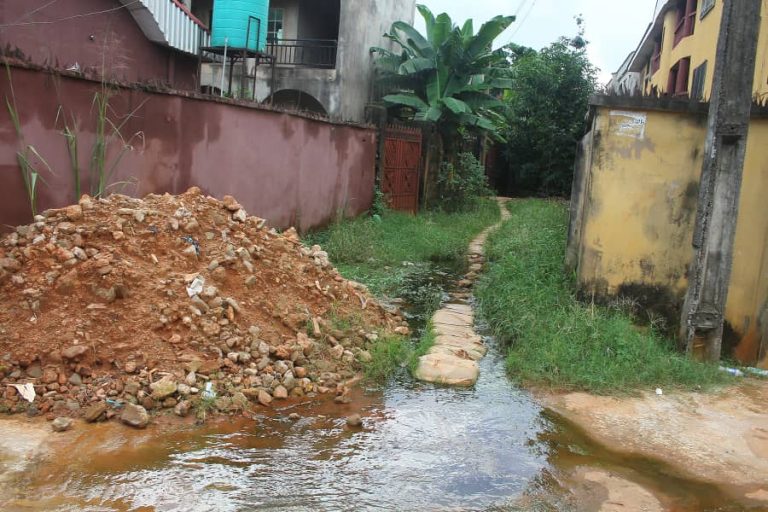
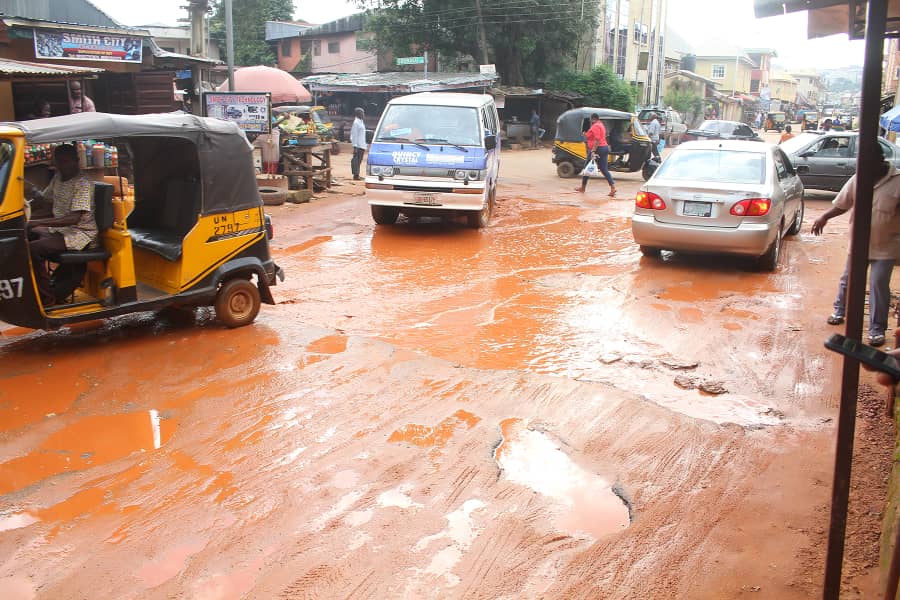
Impassable inner-city road in Awka, Anambra State

Awka capital city infrastructures are fast decaying amid neglect of the city by successive administrations and the ineffectuality of Awka community leaders. Twenty-eight years after Anambra State was created, it capital Awka remains a bedraggled and abandoned village-town with a highly undeveloped road infrastructure.

By Ndu Chris Nwannah, Awka Times Guest Writer
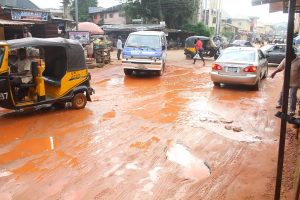
It was beautiful on the day of creation but it has turned sour in the expected season of celebration. The strong foundation laid for the emergence of Anambra State which has Awka as its capital seems to have been weakened by the apparent lack of will power and clear policies to drive a development agenda that would bring about the overall transformation of the area.

August 27, 2019 marked exactly the 28th anniversary of the creation of Anambra State. It was part of a cohort of nine states created by the regime of President Ibrahim Babangida on August 27, 1991 which increased the structure of Nigeria from 21 to 30 states.

It was a dream come true for the citizens of the new Anambra State. Indeed the indigenes of Awka counted themselves blessed on this very day.

However, a few decades on, this blessing seems to have turned into a curse. Expectations are far from being met, judging from the vision of the founding fathers of Anambra State with its capital in Awka.

The Victorious and Tortuous Journey

With the announcement of the splitting of the old Anambra into Anambra and Enugu states, there was celebration across the new Anambra State, especially in Awka. With the sharing of assets and critical institutions, it was time to settle down for the business of administering the infant state. The Permanent Site of the Anambra State College of Education, Awka became the Temporary Government House, hosting the offices of the Governor, principal officers and ministries to run the affairs of the state. This apparently led to the decision to merge the Awka College of Education with that of Nsugbe and its relocation to Nsugbe. Structures at GTC Awka (now FSTC), Awka South LGA Headquarters, and the Old Government Station Awka, among other private buildings were also utilized for administrative purposes.

In terms of administration, Anambra State has so far passed through such leaders as Joseph Abulu, Chukwuemeka Ezeife, Dabo Aliyu (Acting Administrator), Mike Attah, Rufai Garba, Emmanuel Ukaegbu, Chinwoke Mbadinuju, Chris Ngige, Peter Obi, Virgy Etiaba and the incumbent Governor, Willie Obiano. These leaders each left their footprint in the state but they have not done enough to improve the status of Awka, the capital city, in terms of infrastructure development.

Overview of Road Infrastructure in Awka

Awka was one of the main urban settlements in the old Anambra State, along with Enugu, Onitsha, Nsukka and Abakaliki. Today, Awka likely has the least developed urban infrastructure among these majors, even with its status as a state capital.

The failure of infrastructure development in Awka started several decades ago, spanning the tenures of several administrators and governors. Successive administrations in the new Anambra State have done little or nothing to transform the capital.

One of the most glaring aspects of the neglect of Awka is in the area of road infrastructure. Three major roads pass through Awka, namely Enugu-Onitsha Expressway, Enugu-Onitsha Old Road and Ekwulobia-Awka-Orlu Road. These are all federal Trunk A roads. The question is: what other road infrastructure have successive administrations developed in Awka?

Prior to the creation of the new Anambra State, several internal roads in Awka were in total disrepair. Many were completely unpaved. However, in the early years after the state was created, a few of the failed roads were reconstructed and new ones constructed using allocations from the Petroleum Trust Fund (PTF).

The eight-lane road leading to Alex Ekwueme Square Awka was constructed by Dr Chinweoke Mbadinuju who also reconstructed part of the Awka-Okpuno-Isuanaocha-Mgbakwu road. Mbadinuju’s successor, Dr Chris Ngige, made a noticeable impact by initiating the reconstruction of the Old Enugu-Onitsha road within the Agu-Awka axis. The Awka-Nibo-Mbaukwu road was also tackled by the Ngige administration.

The spate of road construction in Awka slowed somewhat under Governor Peter Obi. He did however complete the reconstruction of the Old Enugu-Onitsha started by Ngige shortly before he was sacked by the Appeal Court. Roads within the Umudioka village axis were done under Obi while Iyiagu drainage across the Awka Expressway, which was blocked during the Mbadinuju administration, was opened to enhance the flow of flood.

During the interregnum of Dame Virgy Etiaba as Governor following the impeachment of Mr Peter Obi, the Arthur Eze road, formerly Achalla road was reconstructed. It was also Virgy Etiaba who initiated the construction of the Awka Inner Ring road from Umunnoke-Nkwelle through Agulu, ending at Ukwuoji.

The administration of Governor Willie Obiano has taken on some major road infrastructure projects. It completed three flyovers within the capital city. The Ukwuoji-Umuenechi-Umubelle-Nibo road project with a bridge across Obibia stream is ongoing. The dilapidated portion of Ifite section of Nnamdi Azikiwe University road has received some attention though work there seems haphazard. The government was also working on the road along the Unizik Gate-Amansea axis but, again, work there is stalled.

The State government is also pursuing the Esther Obiakor Estate road project. Apart from roads within the Awka city centre, most roads located in the Awka Capital Territory are begging for urgent attention. The Awka-Isuanaocha-Achalla road is a great link to the headquarters of Awka North Local Government Area at Achalla. The road is well known to the people as the Greenfield road, having been initiated by Governor Jim Nwobodo in the early eighties to connect several food producing communities in the old Awka. This job which was awarded by the Obiano administration on completion would reduce the burden of accessing Achalla by passing through four Local Government Areas. This job is yet to be completed, while several completed stretches are already crumbling. The Amansea-Ebenebe-Ugbene- Ugbenu- Awba Ofemili road project inherited from the Peter Obi administration is strategic to the transformation of the Capital Territory. But this job has not received the attention of government as residents continue to lament its worsening condition.

A journey from Awka to Mgbakwu, a six-mile jaunt, ordinarily should take about 10 minutes. But it takes over 30 minutes to reach Radio Nigeria and Anambra State Polytechnic located in the community. The job for the reconstruction of the road is going on at a snail’s pace as its poor condition had forced visitors and workers to stop plying the route with their vehicles, while transporters increased their fares, thereby worsening the plight of the citizens.

Dilapidation of Awka Inner Roads

Awka must be among the state capitals in Nigeria with the largest number of unpaved or macadamized roads. In Amikwo community axis alone, Amikwo Road, Aguegbe Lane, Umusu Street, Okwuego Street, Sammy Sparkle/Amansea Lane, Isiagu-Amikwo Road, Ifeacho Street, Ezeokpue Lane, Ukwudala, Nnama, Ogbalingba, Gabriel Igwe, Umuoramago, Odumodu, Umudiana and host of other lanes are almost impassable. Numerous other roads located in Umudiana, Okperi, Igweogige, Isiagu and Obunagu villages, all in Amikwo are in the same condition. These areas have high population density, offices, businesses and hotels, attracting a horde of visitors and artisans. But vehicular movement is usually impeded due to bad roads.

In the same manner, roads in Ayom Na Okpala, Agulu, Ezi Awka, Amachalla Na Ato, Ifite and Nkwelle communities are in pitiable condition. A drive through Umukwa, Umuogwali, Umueri, Umuenechi, Omuko, Umubelle, Umueri, Umuayom, Amudo, Amachalla, Umuzocha, Achalla Oji, Umudiaba, Umuokpu and a host of other villages in Awka paints a horrible picture of people existing in the dark era. Yet, this is the capital city of Anambra State, the seat of government, where executive decisions are taken and matters of governance discussed.

The road infrastructure challenge in Awka is not just the failure to pave the inner-city roads but also that paved roads are poorly maintained, with pavement distress everywhere. Roads like Arthur Eze, Court Road, SM Okeke, Dike Street, Oby Okoli, Works Road, Obunagu Road, Ring Road, Umuoramma Road, Umuokpu bypass,, Kwata/Express/Obunagu Road, Amaenyi Girls’ Road, Ifite/All Saints Road, Old INEC, High Tension, Regina Caeli, Amaku Teaching Hospital, Ekwueme Square, ASUBEB/INEC, Juhel/Nodu/NUJ Secretariat and other roads are riddled with potholes and crocodile cracks, or littered with debris. In some cases large parts of the road surface pavements are completely worn, rutted or deeply distressed. Many roads in Awka have been damaged by erosion or yet have dangerous shoulder (pavement edge) drop-offs. But they are left but left unrepaired.

Awka roads are indeed, in many parts, a horrid eyesore. Across the town, miles and miles of decaying roads cause more than a shaky drive. They cause traffic snarl-up and travel delays; cost motorists huge premiums in vehicular damage and economic delays; and increase driving risks and health hazard. Roads pitted with potholes or those that lack features such as shoulders and rumble strips can cause collisions, putting drivers and passengers at greater risk of injury and even death.

The poor state of Awka these roads has undoubtedly left the citizens groaning and wondering why such infrastructures should be allowed to decay without appropriate attention. Even visitors to the area are left aghast as to the inability of the government to thoroughly embark on massive reconstruction of such roads. Awka residents longingly make references to roads and infrastructural development in Abakaliki and Enugu, the counterparts capital in Enugu and Ebonyi states.
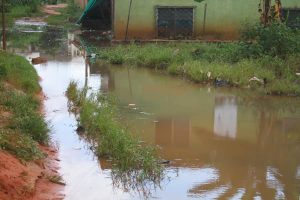
Flood in the City

Road designs are closely associated with flood control in cities and other settlements. Professionally designed drainages aid easy flow of flood after rains. A few flood channels in Awka are masterfully built, but the majority are not deep enough and properly constructed to carry the volume of flood emanating from downpours in the area. The topography of the city is well set out that if drainages are thoughtfully designed, flooding of streets and homes will be a thing of the past.

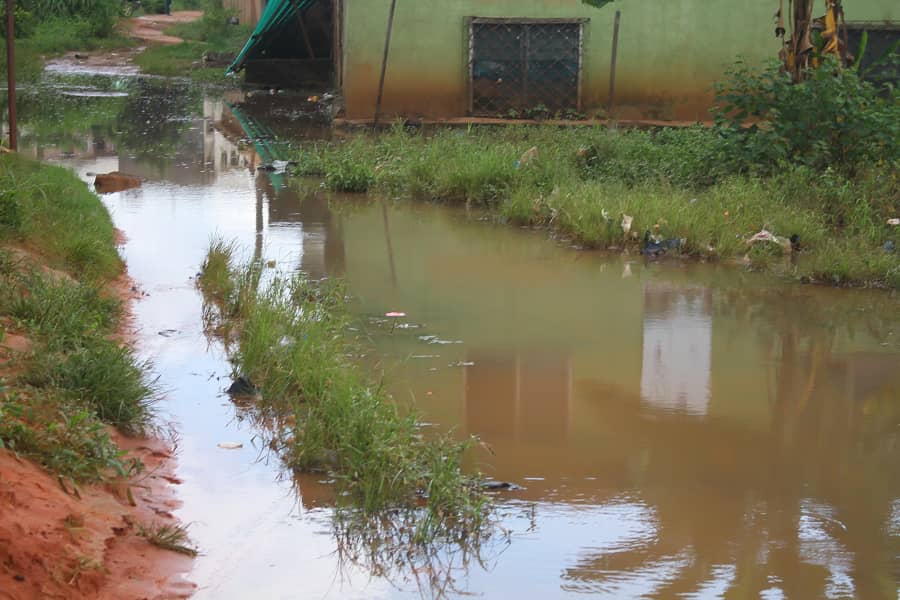
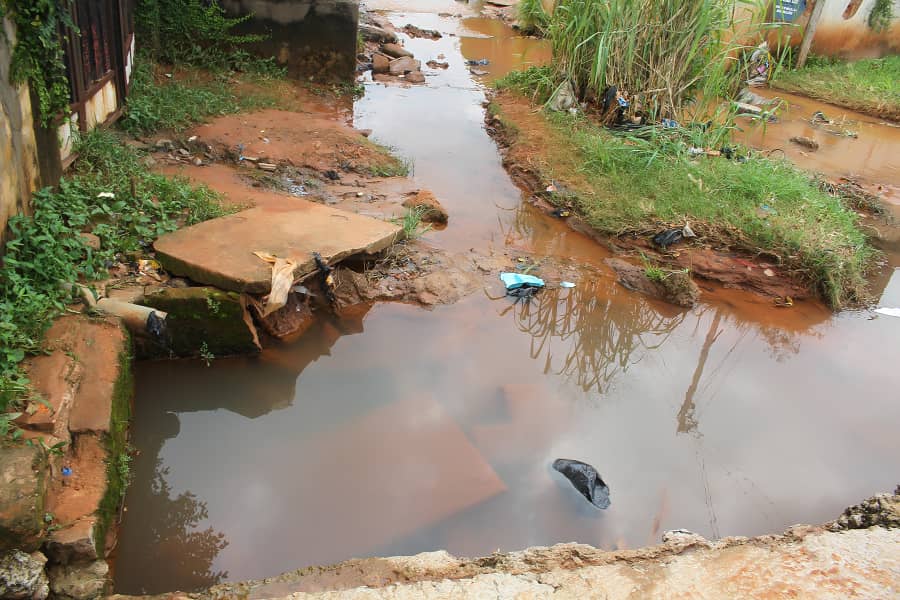
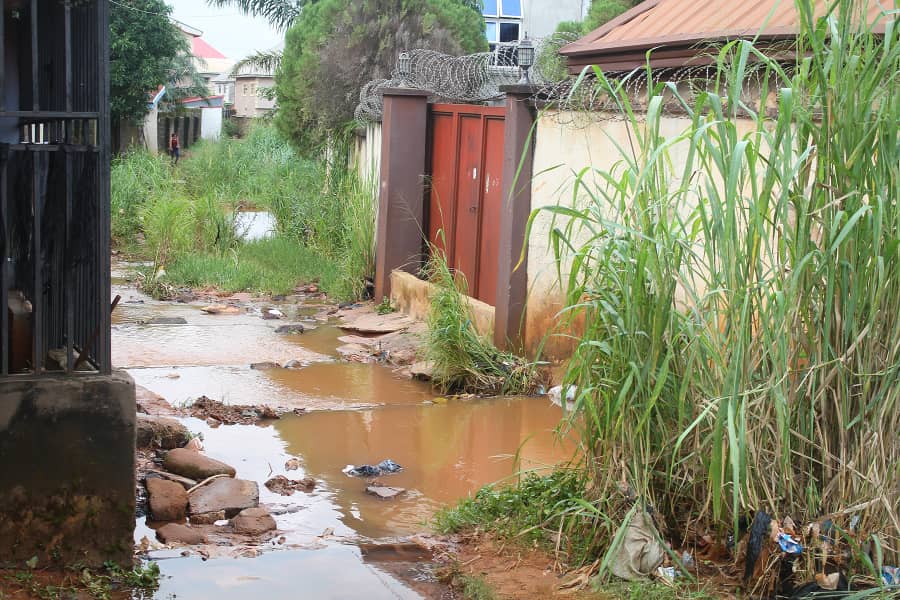
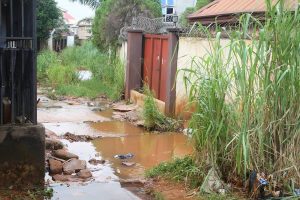
For instance, floods from Umudioka and Umuzocha villages are expected to be channelled down to Ngene Ukwa stream by Aguegbe Amikwo axis, Obibia and Ofiachi streams as well as Iyiagu drainages. However most of the gutters are not linked to help the flow of flood, while they are lacking in some areas. The situation is also worsened by the fact that due to lack of tarred roads in hinterlands, flood usually carry sand and debris into the drains as well as major roads. This usually exacerbates the flood challenges in the city. The same situation applies to the upper Amaenyi and Ifite axis of Awka where floods were expected to have been channelled to flow downward to Ezu River, Obizi River and several rivulets that dot the city.

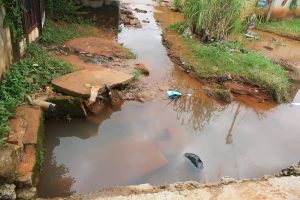
Human practices also contribute a lot to flooding apart from poorly constructed flood channels. Citizens are in the habit of throwing refuse into flood during rains. This debris eventually finds its way into the gutters and subsequently blocks the flow of flood. Some Awka residents also habitually dump their waste into drainages and along streets. These actions clearly negate efforts to ensure seamless flood flow and clean city as enunciated by the government, as the Anambra State Commissioner for Works, Mr Marcel Ifejiofor, told Awka Times in an interview in his office.
Urgent Measures Needed to Fix Awka Infrastructure

Given the economic and social costs associated with infrastructure degeneration in Awka, it is scarcely surprising that residents, commuters and visitors have been speaking out with increasing frustration and resentment, demanding urgent measures to fix the city. They accuse the state government of neglecting its duties in the area. Those who bare their minds say that there is no real intention or a meaningful plan to the capital city 28 years after the creation of the new Anambra State. However, the State government denies any deliberate neglect of the capital city. Rather, Commissioner Ifejiofor told Awka Times that the government is coping with an unprecedented volume of rainfall this year, and promised that repair of the worst affected roads will be undertaken after the rainy season.

But many Awka indigenes do not accept the excuse about excessive rainfall. Retired school principal, Mr Ejike Onyechi, blamed the issue on lack of political will and poor planning. According to him, it is due to poor planning that a little drop of rain creates massive flooding in the heart of the capital.

Chief Keluo Dike, a former Councilor in the Awka South Legislative Council, told Awka Times that the condition of Awka is worrisome. He noted that most of the critical roads in Awka today are those built by the PTF several years ago, and insisted that no conscious effort has been made to offer Awka a befitting outlook by past and present administrations.

Community leader, Chief Paul Okeke, also bemoans the infrastructural crisis bedeviling Awka capital city. Chief Okeke told Awka Times that the situation called for a surgical overhaul. He pointed out that Awka is “dotted with impassable roads”, and that the capital city “deserves a better treatment than what presently obtains”.

A tricycle operator, John Odoh who hails from Ebonyi State, told Awka Times that operators like him are the worst hit by the dilapidation of Awka roads. He complained that “mechanics are taking most part of the money we generate as no week passes without my keke going for maintenance”. Odoh pleaded for immediate solution to the road decay in the area through the rehabilitation of existing roads and construction of new ones.

Frustration over the infrastructure decay in Awka is palpable. But some inhabitants have become cynical, telling Awka Times that they no longer wish to speak on the issue because in the past their impassioned pleas and complaints were ignored by the authorities.

But others are still willing to express their frustration, hoping that the government will listen. Secretary of the Igweogige Village Assembly of Awka, Comrade Charles Umeadu Nworah, is still hopeful despite his deep disillusion about the plight of Awka, which he likened Awka to the proverbial goose which lays the golden egg, and the neglect of the city by successive administrations. As Nworah told Awka Times,

 “It is unfortunate that Awka people find themselves in this pitiable situation. I don’t know why the present generation that clamoured for Awka as a capital could not enjoy the benefits of the capital. We have gone to places. We have lived in places. For instance in Lagos…go to Mushin the whole roads are tarred. Come to Awka, where are the roads? What benefits have we derived that Awka was made the capital? The Awka hinterland is totally abandoned. Come to Amikwo where I live, there is no road there that is tarred. In fact this rainy season caused more havoc in Awka than it caused in other areas”.

Comrade Nworah further challenged the government to quickly put measures in place to address the myriad problems facing the capital city.

“Government is for the people and people are for the government. They should touch the lives of the common people living in the hinterlands so that they will have a sense of belonging, because with the way things are going, when you tell an average Awka man that he is from the capital, he will say God forbid. What makes him a capital man? When there is no light in his place, when there is no pipe borne water in his place, when there is no tarred road in his place and when there is no drainage in his place”, he said.

Comrade Nworah noted that the solution lies in government embarking on projects that will actually touch the lives of the common people residing in the capital city and its environs.

However, the Anambra State government was quick to assert that it had not abandoned Awka capital. Commissioner for Works, Ifejiofor, protested in the interview with Awka Times that many road projects are going on within the Awka Capital Territory. According to him, the Ukwuoji-Umuenechi-Nibo Road is ongoing at the Awka end.

When the Ukwuoji-Nibo road was awarded it received serious applause from the inhabitants. The bridge across Obibia stream has been constructed with most of the earth work already delivered. Mr Ifejiofor explained that work on the road was hampered by the heavy rains this season as the terrain is swampy and slippery. He however assured that the job would be delivered in the dry season.

The Commissioner also mentioned other projects going on in Awka such as Esther Obiakor, Immigration, Millennium and Unizik Gate to Amansea. Mr Ifejiofor revealed that the state government has concluded plans to award contract for the construction of roads within the Agulu community in Awka after  completing due process.

On the failure of government to repair the damaged roads in Awka, Mr Ifejiofor insisted that the rains impeded such but assured that government is using the seasonal downtime to determine the most critical of the dilapidated areas to focus on.

The commissioner conceded that while some drainages in Awka are well-designed and functional, others are not properly channelled. He said that the government is aggressively desilting gutters in Awka and other major settlements in order to reduce flooding and allow for easy flow of flood.

Special Assistant to Governor Willie Obiano on Community Liaison, Comrade Obi Ochije-Modilim, also told Awka Times that government is doing its bit to change the fortunes of the area, and he challenged citizens to complement such efforts. Ochije-Modilim is unhappy that inhabitants throw refuse into the drainage, while a handful of others use structures to block waterways. He urged the authorities not to hesitate to demolish such building in their efforts to transform Awka into a model city.
Urgent Measures Needed to Fix Awka Infrastructure

Given the economic and social costs associated with infrastructure degeneration in Awka, it is scarcely surprising that residents, commuters and visitors have been speaking out with increasing frustration and resentment, demanding urgent measures to fix the city. They accuse the state government of neglecting its duties in the area. Those who bare their minds say that there is no real intention or a meaningful plan to the capital city 28 years after the creation of the new Anambra State. However, the State government denies any deliberate neglect of the capital city. Rather, Commissioner Ifejiofor told Awka Times that the government is coping with an unprecedented volume of rainfall this year, and promised that repair of the worst affected roads will be undertaken after the rainy season.

But many Awka indigenes do not accept the excuse about excessive rainfall. Retired school principal, Mr Ejike Onyechi, blamed the issue on lack of political will and poor planning. According to him, it is due to poor planning that a little drop of rain creates massive flooding in the heart of the capital.

Chief Keluo Dike, a former Councilor in the Awka South Legislative Council, told Awka Times that the condition of Awka is worrisome. He noted that most of the critical roads in Awka today are those built by the PTF several years ago, and insisted that no conscious effort has been made to offer Awka a befitting outlook by past and present administrations.

Community leader, Chief Paul Okeke, also bemoans the infrastructural crisis bedeviling Awka capital city. Chief Okeke told Awka Times that the situation called for a surgical overhaul. He pointed out that Awka is “dotted with impassable roads”, and that the capital city “deserves a better treatment than what presently obtains”.

A tricycle operator, John Odoh who hails from Ebonyi State, told Awka Times that operators like him are the worst hit by the dilapidation of Awka roads. He complained that “mechanics are taking most part of the money we generate as no week passes without my keke going for maintenance”. Odoh pleaded for immediate solution to the road decay in the area through the rehabilitation of existing roads and construction of new ones.

Frustration over the infrastructure decay in Awka is palpable. But some inhabitants have become cynical, telling Awka Times that they no longer wish to speak on the issue because in the past their impassioned pleas and complaints were ignored by the authorities.

But others are still willing to express their frustration, hoping that the government will listen. Secretary of the Igweogige Village Assembly of Awka, Comrade Charles Umeadu Nworah, is still hopeful despite his deep disillusion about the plight of Awka, which he likened Awka to the proverbial goose which lays the golden egg, and the neglect of the city by successive administrations. As Nworah told Awka Times,

 “It is unfortunate that Awka people find themselves in this pitiable situation. I don’t know why the present generation that clamoured for Awka as a capital could not enjoy the benefits of the capital. We have gone to places. We have lived in places. For instance in Lagos…go to Mushin the whole roads are tarred. Come to Awka, where are the roads? What benefits have we derived that Awka was made the capital? The Awka hinterland is totally abandoned. Come to Amikwo where I live, there is no road there that is tarred. In fact this rainy season caused more havoc in Awka than it caused in other areas”.

Comrade Nworah further challenged the government to quickly put measures in place to address the myriad problems facing the capital city.

“Government is for the people and people are for the government. They should touch the lives of the common people living in the hinterlands so that they will have a sense of belonging, because with the way things are going, when you tell an average Awka man that he is from the capital, he will say God forbid. What makes him a capital man? When there is no light in his place, when there is no pipe borne water in his place, when there is no tarred road in his place and when there is no drainage in his place”, he said.

Comrade Nworah noted that the solution lies in government embarking on projects that will actually touch the lives of the common people residing in the capital city and its environs.

However, the Anambra State government was quick to assert that it had not abandoned Awka capital. Commissioner for Works, Ifejiofor, protested in the interview with Awka Times that many road projects are going on within the Awka Capital Territory. According to him, the Ukwuoji-Umuenechi-Nibo Road is ongoing at the Awka end.

When the Ukwuoji-Nibo road was awarded it received serious applause from the inhabitants. The bridge across Obibia stream has been constructed with most of the earth work already delivered. Mr Ifejiofor explained that work on the road was hampered by the heavy rains this season as the terrain is swampy and slippery. He however assured that the job would be delivered in the dry season.

The Commissioner also mentioned other projects going on in Awka such as Esther Obiakor, Immigration, Millennium and Unizik Gate to Amansea. Mr Ifejiofor revealed that the state government has concluded plans to award contract for the construction of roads within the Agulu community in Awka after  completing due process.

On the failure of government to repair the damaged roads in Awka, Mr Ifejiofor insisted that the rains impeded such but assured that government is using the seasonal downtime to determine the most critical of the dilapidated areas to focus on.

The commissioner conceded that while some drainages in Awka are well-designed and functional, others are not properly channelled. He said that the government is aggressively desilting gutters in Awka and other major settlements in order to reduce flooding and allow for easy flow of flood.

Special Assistant to Governor Willie Obiano on Community Liaison, Comrade Obi Ochije-Modilim, also told Awka Times that government is doing its bit to change the fortunes of the area, and he challenged citizens to complement such efforts. Ochije-Modilim is unhappy that inhabitants throw refuse into the drainage, while a handful of others use structures to block waterways. He urged the authorities not to hesitate to demolish such building in their efforts to transform Awka into a model city.


Awka Town Union Crisis Deepens With Dramatic Factional Move Amid Legal Uncertainties

1
Tony Okechukwu and Caretaker Ctte
Izu Awka convened to create new ADUN Caretaker Committee. Inset: Engr. Tony Okechukwu

On January 12, 2020, a faction in the lingering leadership contest in Awka Development Union Nigeria (ADUN) made a dramatic move by appointing a caretaker committee to run the affairs of the Union and also conduct fresh elections. There is uncertainty as to the legal basis for this move, and as to whether the opposing camp or indeed the state government will accept the validity or the framework of the new caretaker committee. Awka Times examines the history of this case and the complex legal issues involved.

By Chudi Okoye

The crisis of Awka Development Union Nigeria (ADUN) gained traction over the last week with new actions taken by a faction of the union, along with its allied fractions, ostensibly to move Awka town forward from the debilitating crisis. It will be recalled that on Sunday January 12, 2020, a general meeting of Awka town, the capital of Anambra State of Nigeria, was convened during which a 14-man caretaker committee was constituted to steer the affairs of ADUN, with a mandate to conduct new elections for the union. This dramatic intervention by the Awka general assembly (Izu Awka) significantly changes the game and could deepen the political fray in Awka. The move pits the two contending sides in the Awka crisis even more deeply into entrenched corners, bringing deep constitutional issues to the fore.

The side that set up the caretaker committee through Izu Awka invoked a ‘doctrine of necessity’ and the supposedly unwritten conventions of Awka governance to justify its action against potential sanction by the state government. The opposing side insists that the state government retains the exclusive authority to create such a committee, and even seems to believe that the state has powers to prolong by administrative fiat the tenure of a town union’s executive council beyond the remit of the community’s constitution.

The factional contention has deepened Awka political crisis.

ADUN has faced a crisis of contested leadership since 2015 when the tenure of the as-at-then incumbent executive council expired and the president-general, Engr. Tony Okechukwu, initiated plans to conduct a new election in which he had hoped to contest for a second term. A purported 2008 ADUN constitution thought to be in effect at the time prevented a second term for the executives. (As that constitution put it at Articles 10.1-2: “The President-General and all the officers of the Union as well as the members of the Executive Council shall hold office for one three-year term… There shall be no room for re-election into the same position an officer has served.”) However, a pre-existing 2004 constitution and another purported constitution created in 2014 by the Okechukwu-led ADUN executive both provided for a second term. (As the 2004 Constitution put it at Article X (1): “The President-General and all the officers of the Union as well as members of the Executive Council shall hold office for three years, subject to re-election for another three years.”) Contention thus arose over the validity of the various constitutional documents.

Predictably, the matter resulted in litigation, with action initiated at the Awka High Court by the ADUN faction opposed to Engr. Okechukwu. A ruling by the court on July 27, 2016 granted all the reliefs (10 in all) sought by the plaintiffs.

Among the reliefs sought by the plaintiffs and granted by the high court were: (1) a declaration that the 2008 ADUN constitution was the subsisting constitution of the union; (2) a declaration that Engr. Okechukwu’s tenure as PG had expired and that he was not eligible to re-contest due to constitutional tenure limit; and (3) a declaration that the next ADUN PG should come from the Ezi quarter of Awka, which as it happened was not Okechukwu’s quarter of the town.

The high court declared that Okechukwu’s tenure had ended on March 17, 2015, and granted a plea asking that the Anambra State government should withdraw its recognition of Okechukwu. It also ordered that the Anambra State government should set up a 7-man caretaker committee to conduct the affairs of the union for three months during which time the committee should conduct an election for the union.

In his defense at the Awka High Court hearing, Engr. Okechukwu had argued that the high court would be wrong to uphold the 2008 ADUN constitution since this document was not registered with the CAC (Nigeria’s Corporate Affairs Commission), noting that only the 2004 constitution was so registered. He also argued that the high court did not have jurisdiction to hear the originating case because the matter concerned a body registered with the CAC, and therefore such jurisdiction lay with the federal high court.

The Awka High Court ruling, rendered by Hon. Justice D. C. Maduchesi, rejected the defense arguments and ruled comprehensively for the plaintiffs.

Post-Judgement Drama

Drama ensued in the wake of the high court judgement. A 7-man caretaker committee purportedly set up earlier on March 27, 2015 under the chairmanship of Chief Chike Obuekwe to run the affairs of ADUN upon the presumed expiry of Tony Okechukwu’s tenure but which did not commence work due to extant litigation, was resuscitated at another Izu Awka held on August 14, 2016 in the wake of the July 27, 2016 Awka High Court judgement. The carry-over chairman of the committee, Chief Obuekwe, would resign his position in September 2016 but plans were nonetheless set in motion for the caretaker committee to conduct new ADUN elections on October 15, 2016.

However, ahead of these elections, on October 5, 2016, the Anambra State Government’s Ministry of Local Government and Chieftaincy Matters issued a strongly-worded letter to the chairman of the caretaker committee pointing out that “the High Court [had issued] an order directing the State Government to constitute a Caretaker Committee to run the affairs of the Union in the interim as provided by law.” The letter was signed by Barr. Ikechukwu Onyeabo, at the time a Special Adviser to the Governor on Chieftaincy and Town Union Matters. The letter decried the action of the faction which it said “rather than wait for government to implement this order of court… purported to constitute a Caretaker Committee for Awka Development Union Nigeria in flagrant disobedience of the order of court and the law regulating town unions in Anambra State.” The letter said that the caretaker committee set up by the faction was “illegal” and was thereby “disbanded”. It also said that the election proposed by the committee was “unlawful”, and it urged all sides “to respect the rule of law and await any further government action in this matter.” Finally, the letter directed what it called “the present executive committee of [ADUN] led by Chief Tony Okechukwu [to] continue to run the affairs of the Union…”

Notwithstanding the injunction from the government, the faction proceeded with its plans and did conduct elections which brought in a new executive council led by Dr. Amobi Nwokafor as a new president-general of ADUN. In part, the thinking of the faction, according to the lead attorney for the plaintiffs, Barr. Ralph Nzekwe, was that the letter from the government was “of no moment” because at the time Engr. Tony Okechukwu’s tenure had effectively expired and there was no basis in law for tenure elongation as was purported in the government’s letter.

For his part, shortly after the 2016 Awka High Court ruling Engr. Okechukwu had filed an appeal at the appellate court in Enugu seeking a determination on his defensive arguments which had been rejected by the Awka High Court. Okechukwu’s appeal concerned the jurisdiction of the Awka High Court to hear the originating case, and the validity of the 2008 constitution upheld by the lower court.

Engr. Tony Okechukwu, government-recognized ADUN President-General

Dr. Amobi Nwokafor who emerged as contending ADUN President-General

In its ruling delivered nearly three years later in July 2019, the appeal court rejected Engr. Okechukwu’s argument questioning the jurisdiction of the Awka High Court; it ruled that the lower court did have jurisdiction to entertain the originating case. However, on the question of which ADUN constitution was valid, the appeal court ruled that the 2008 and 2014 constitutions were “unknown to law and cannot by any stretch of imagination be accorded any probative value.” The appeal court affirmed that the 2004 Constitution was the valid and subsisting constitution of ADUN.

In a rather controversial extension of its ruling the appeal court, presided by Justice Ignatius Igwe Agube, also argued: “Assuming the Appellant [Engr. Tony Okechukwu] had acquiesced and/or conceded to the use of the purported 2008 Constitution (as amended) in the conduct of the Election in 2012 [the election that ushered in Okechukwu’s first tenure], it does not derogate from the established fact that in the eyes of the law, the said Election was conducted in compliance with the 2004 registered constitution of ADUN…” This was a significant conclusion by the appellate court.

Different Interpretations

After this ruling, the two camps in the ADUN tussle both declared victory! Each camp called an Awka general meeting to put its own spin on the appellate ruling handed down from the hills of Enugu. On the one hand, both factions professed their acceptance of the appeal court ruling. However, their acceptance of the ruling appeared to be predicated on differing interpretations. The Okechukwu coalition accepted the Enugu judgement on the presumption that Okechukwu had “won” the case. It claimed that Engr. Tony Okechukwu’s election was never based on the 2008 constitution but instead, as it said the appeal court had affirmed, on the CAC-registered 2004 ADUN constitution. Based on this, Tony Okechukwu claimed the right to conduct a new ADUN election.

The plaintiffs in the original high court case (respondents in the appeal), for their part, proclaimed that the appeal court ruling implied that both contending PGs had been elected on the basis of the 2008 constitution which was invalidated by the appeal court. As such, the camp argued, all PG claims including Okechukwu’s were nullified. This camp further claimed that the ruling meant that the only entity legally qualified to conduct new elections for ADUN was the Board of Trustees headed by Engr. Nzekwe Ibe who had been ADUN president from 2001 to 2007, several cycles before the current imbroglio. It resolved therefore to call upon Engr. Ibe at a future date to conduct new ADUN elections.

With these differing interpretations of the appeal court ruling, the crisis of ADUN simmered throughout the summer of 2019, and before long, with a hint of harmattan hanging in the air, the faction claiming that Enugu had nullified all PG claims headed back to court for an interpretation of the Enugu ruling. The lead attorney in the case, Barr. Ralph Nzekwe, told Awka Times that the judgement of the Enugu court “is very clear; it is as clear as air.” The appeal court, he said, was simply “called upon to pronounce on jurisdiction and constitution. The appeal court was not called upon to say whether the tenure of Engr. Okechukwu is still running.” Continuing, he wondered how Okechukwu’s tenure could be said to still subsist when the very constitution that Okechukwu claims to have underpinned his election in 2012 provides for a three-year term which had already elapsed in 2015. “So where does he derive the powers to continue parading himself [as ADUN PG]?,” Barr. Nzekwe asked. “That is my question!” It seems this was the reason his faction returned to the court, to secure a formal and final interpretation of the Enugu ruling.

Political Uncertainty and Peace Initiative

Amidst these clashing claims and renewed litigation, Awka political scene became inevitably inflamed yet again. The situation was further aggravated by the spiral of events relating to the kingship crisis in Awka. The town has long faced an interrelated set of crises involving the kingship institution and the Ozo Awka society. As the year 2019 wound to a close and traditional end-of-year events were lined up, it seemed at a point as if the factional altercations would come to a head. A cross-scheduling of competing kingship events on the same day (it is unclear if this was planned or fortuitous) had prompted the Anambra State government to issue a strongly-worded statement warning against any breach of public peace. There was heavy presence of security forces in Awka on the day the competing events were held.

The swirling crises led, inexorably, to growing calls for renewed peace-making effort. An informal peace mediation group which had been working on the Awka crisis, the True Awka People (TAP) – temporarily rattled by the renewed ructions and litigation – resumed its efforts to re-engage the warring parties in meaningful peace talk. The chairman of TAP’s Political Action Committee (TAP-PAC), Engr. Ifeanyichukwu Uyanne, told Awka Times that the group is intensifying peace efforts in order to avoid further deterioration which could only hurt Awka town. Engr. Uyanne said that TAP-PAC members “are intensifying their efforts to ensure that peace is achieved. In light of the emerging developments,” he said, “we are planning on a strategy to [arrest the situation]. Certainly, we’ll [shortly] come up with an [effective] peace program.”

Engr. Ifeanyichukwu Uyanne, Chairman TAP-PAC

Engr. Uyanne recalled that “TAP-PAC, on behalf of TAP general assembly, had earlier in 2019 hosted two peace conferences [involving the two opposing camps]. The peace conference resolutions [held] that no group should [carry out a factional] ADUN election, and that [efforts should be made by] the two groups to ensure that a unified ADUN election is organized… using the 2004 ADUN constitution.” He said that TAP-PAC is “delighted that the two parallel ADUN groups have continued to honor these resolutions even till date.”

Engr. Uyanne intimated that the mediation group is working on strategies and modalities for a unified ADUN election. He thus appealed to all concerned Awka patriots, especially those with strategic influence, to urge the ADUN factions to restrain from conducting any partisan election which would only exacerbate the situation, but rather to wait for joint “modalities [that would] bring all parties together to conduct a single unified ADUN election using the 2004 ADUN constitution.”

Search For Solution Amid Legal Confusion

The search for peace may be complicated by legal uncertainties surrounding the moves initiated at the January 12 Awka general meeting. The faction that convened the meeting, which is allied to the plaintiffs in the original ADUN case at the Awka High Court, appeared to be following up on its earlier-stated plan to set up a caretaker committee to conduct new ADUN elections. This January 12 move had come ahead of the determination of a subsisting court case filed by this same faction seeking an interpretation of the Enugu ruling. It is unclear why the faction is moving ahead of its own court case. Although this has been interpreted as an aggressive move for first-strike advantage, a spokesman for the new caretaker committee assures however that the committee is ready to participate in any meaningful effort to find peace.

In an internal statement issued to TAP-PAC, the general secretary of the newly constituted ADUN caretaker committee, Doctor Obiora Okechukwu, said that “the caretaker committee is open to any reasonable suggestion to create peace in our land.” Doctor Okechukwu assured TAP-PAC of his “highest regard in behalf of the ADUN caretaker committee,” saying that the committee will welcome all efforts to find peace “with open hands and minds” because “Awka interests supersedes any sectional interest.” He however insisted that the new caretaker committee “will not shirk [its] duty as spelt out at Izu Awka.”

But there are potential legal hazards facing the new caretaker committee. The issue here relates to the legal provenance of the caretaker committee. The committee has been set up ostensibly under the auspices of Izu Awka, an assembly nowhere mentioned in the 2004 ADUN Constitution, let alone as a constitutive authority for ADUN. It is not entirely clear if the assembly has the power to set up such a committee, especially since the meeting did not declare any specific legal instrument empowering it to constitute such a legal entity. Awka Times reached out to Dr. Aneze Chinwuba, erstwhile secretary of Ozo Awka society and primary instigator of the Izu Awka caretaker committee initiative, to ascertain the legal basis for the move. Dr. Chinwuba argued that Izu Awka is the supreme decision-making body of Awka community which wields traditional authority over all Awka institutions including ADUN. In constituting the caretaker committee, he said, Izu Awka was exercising its traditional authority to promote the political welfare of Awka society.

Dr. Aneze Chinwuba moderating Izu Awka on Jan 12, 2020

A similar point was pressed by Barr. Ralph Nzekwe, lead attorney for the anti-Okechukwu camp, in a chat with Awka Times. Asked to explain if the 2004 ADUN Constitution imbues Izu Awka with constitutive or supervening authority over ADUN, Barr. Nzekwe said “whether the constitution provides for such or not is immaterial, in the sense that this constitution is the constitution of ADUN. It is not the constitution of Izu Awka. ADUN is a creation of Izu Awka… ADUN derives its powers from Izu Awka.” Reminded that this is not explicitly captured in the law governing ADUN, Barrister Nzekwe retorted: “Which law? Is that not the law of ADUN? Is it the law of Izu Awka? Many things we do at Izu Awka are not governed by [written] law. It is conventional law. Invariably, you see that there is a mixture of written and unwritten constitution here. Izu Awka has no written constitution.” He agreed however that this intermixture of written and unwritten laws creates a nebulous situation that exacerbates the legal and political uncertainties facing Awka. He further agreed that a future process that formalizes Awka conventions into a coherent set of written laws would help to eliminate the ambiguity.

In a further effort to clear up the legal question, Awka Times also contacted a prominent Awka lawyer intimately connected with the case and asked if Izu Awka, a non-statutory body, had the power to constitute an ADUN caretaker committee. “Legally no,” the barrister replied. In fact, he said, “ADUN Constitution [makes] no provision for [a] caretaker [committee at all].” He suggested however that “Izu Awka [being] the highest decision making body for all Awka people including members of ADUN [could, out of] necessity but not constitutionally, take it upon itself to set up a caretaker committee for ADUN.”

Based on the explanation helpfully (or hopefully) advanced by the learned lawyer, it would seem that the dramatic and unilateral move by Izu Awka on January 12 to set up a caretaker committee for ADUN was based not on some explicit legal principles but on a ‘doctrine of necessity’ arguably invoked out of a patriotic zeal to move Awka forward. In other words this was probably a well-meaning, if overtly political, intervention by the faction that convened the Izu Awka.

Still, it is unclear how the opposing pro-Okechukwu faction perceives the January 12 intervention, especially with a matter pending in court to interpret the Enugu ruling (TAP-PAC is putting out feelers to this camp).

Nor is it clear how the Anambra State government has received the initiative, as it appears to entail a usurpation of the government’s legal powers to constitute such a committee. In Anambra State, there is a law that governs the affairs of town unions. This law started life as an edict and has been incorporated into the Laws of Anambra State as the Fund for Rural Development Law. Section 26(3) of this law imbues the Commissioner for Local Government and Chieftaincy Affairs with powers to dissolve an extant town union executive and to constitute a caretaker committee in its place, specifically where there is dispute. It may be for the reason that such power inheres on the state government that the Awka High Court ruling of 2016, whilst finding in favor of the plaintiffs, nevertheless ordered that the state government set up a caretaker committee to conduct the affairs of ADUN.

The lawyer contacted by Awka Times confirmed that this law does assign the power to appoint caretaker committees to the state government. He argued however that the arrogation to the state government obtains only where a town union’s constitution is not registered with the Corporate Affairs Commission (CAC). The barrister noted that “all incorporated unions under the Companies and Allied Matters Act (CAMA), a federal law, are regulated by that law.” This federal law, he said, is superior to state edict or law. He stated that for unincorporated town unions the state “government can dissolve and appoint [their] caretaker committees, [but] in the case of ADUN, an incorporated union under CAMA, government has no powers to dissolve or appoint its caretaker committee.”

This argument may be valid but it seems to fly in the face of the fact that the state government had in the past dissolved an ADUN executive council and imposed a caretaker committee. It also seems to be at discord with the material facts surrounding this matter. It may be recalled that one of the points argued by Engr. Okechukwu at appeal was that the Awka High Court did not have jurisdiction to hear the originating case because the matter concerned a body registered with CAC, and that such jurisdiction lay with the federal high court. However the appellate court ruled against this argument, confirming that the Awka High Court did have jurisdiction, even though it ended up overturning the findings of the lower court which favored the plaintiffs. This seems to upset the argument that the state government cannot set up a caretaker committee for a CAC-registered town union since this was a CAMA-related issue regulated only by federal law.

Awka Times asked the learned lawyer if, by upholding the jurisdiction of the Awka High Court in this case, the appeal court did not therefore uphold the right of the state government to set up the committee. It may be recalled that one of the reliefs sought by the plaintiffs themselves in the originating summons at the Awka High Court was an order for the Anambra state government to set up a caretaker committee within 90 days of the ruling. This relief, as we have seen, was granted. So the question arises: Why would the plaintiffs themselves seek such a relief if the state government did not have powers to set up a caretaker committee for ADUN, and why would the court grant it?

We put these questions to the lawyer helping us through the legal complexities of this case.

The lawyer, who preferred to address Awka Times inquiry anonymously, responded by saying that “the issue of dissolution of a body corporate under CAMA was never contested in any of the two courts.” He insisted however that “any contest involving the application of federal law and state law is always tilted in favor of federal law to the extent of any inconsistencies.”

This answer may be arguable but it seems to diverge from the ruling of the appeal court, and indeed from the state government’s assertive construction of its powers in these matters, as we have seen.

With the assertive position previously taken by the Anambra State government regarding its constitutive power, the question then arises whether a showdown with the state government is looming in regard to the ADUN affair. Will the government clamp down on Izu Awka’s caretaker committee, or will it simply fail to recognize the committee’s electoral process and any ADUN officers that emerge from the process?

On the other hand, how do the initiators of the caretaker committee, who say that they will not stand down no matter what, feel about potential government intervention? Do they worry that government might wield the big stick and kick in to stop their schtick?

According to Dr. Aneze Chinwuba, the group is undaunted and unafraid. “They can’t stop it,” he said. “The only thing government can do is to not recognize the persons elected [as ADUN executives], just like what they did to Dr. Amobi Nwokafor. But we all lived. We are not expecting government recognition because they never recognized the Eze Uzu III that we crowned, so how will they recognize ADUN PG? But we are only doing what is right. They can’t stop Awka!”

It is clear that battle lines are drawn. Awka needs to get its act together, perhaps with the intervention of TAP-PAC and other mediation groups, or face further internal rupture and possible clashes with the government, or – equally important – continued marginalization, despite its capital status, in the affairs of Anambra State.

Awka Times reporter, Stella Nzekwe, contributed additional reporting to this story.

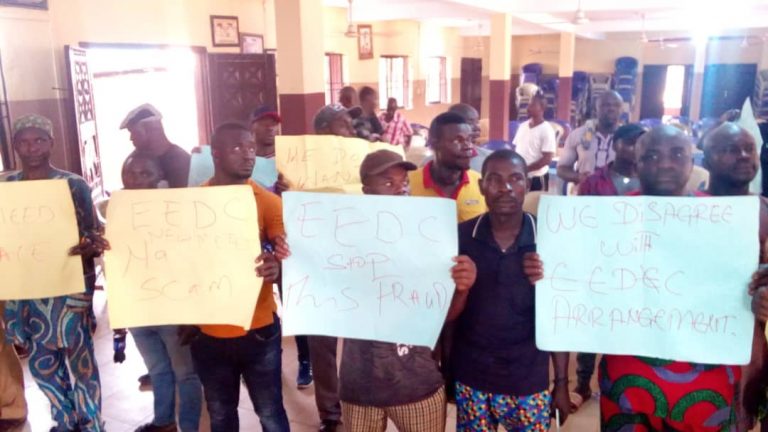
Electricity Consumers in Awka Protest Against Phase-Out of EEDC Unistar Meters

0
WhatsApp Image 2020-01-17 at 3.25.51 AM
Consumers in Awka protesting EEDC decision

…. Demand replacement of meters without new payment

…. Reject estimated  billing

By Ndu Chris Nwannah, Awka Times Guest Writer

Protests have continued to trail the decision by the Enugu Electricity Distribution Company (EEDC) to phase out the Unistar prepaid meters.

The EEDC had in a statement made by its Head of Communications, Mr Emeka Ezeh, announced the stoppage of vending credits through the Standalone prepaid meters also known as Unistar meters by January 1, 2020.

This measure brought it in conflict with customers who had trooped to Awka and other district offices in the South East geopolitical zone to recharge their Unistar meters.

The situation threw numerous homes and offices into darkness and confusion as they had to depend for long periods on fuel energy, which invariably increased the expenses they made on sourcing electricity. For many, food, meat and other items stored in freezers became defrosted, leading to huge economic losses.

These had led to outbreak of protests in EEDC districts, including Onitsha, where customers in Omagba lamented the untold hardship suffered as a result of the phase out of Unistar meters.

Also, following the commencement of its implementation, hundreds of electricity consumers in Awka have taken to the streets to express their disenchantment with the decision.

The protesters marched from Ndichie Square, Umudioka Village to Nkwo Amenyi through Zik Avenue to EEDC Awka office which was heavily guarded by security personnel.

The protesters who carried placards with such inscriptions as “EEDC we are not happy”, “EEDC we need light”, also reached Amawbia before returning to Ndichie Hall Umudioka, Awka.

One of the protesters, reportedly a human rights activist, Comrade Osita Obi, described the current action by EEDC as unfortunate and called for the federal government’s intervention to stop the plan.

Comrade Obi however stressed that if the Unistar meters were to be removed, EEDC should install immediate replacements at no cost to consumers.

He lamented the migration of prepaid consumers to estimated billing, which he claimed was obnoxious and retrogressive.

The organizer of the protest, Chief Aiza Nwosu, stated that consumers had suffered untold hardship due to the inability to recharge their prepaid meters as most of them had remained in darkness.

Another protester, Chief Obiora Okigbo, alleged that EEDC embarked on the programme to shortchange its customers, stressing that it was a great disservice.

On his part, a political and community leader, Comrade Ugochukwu Nwimoh, called on EEDC to exhibit customer friendliness and apply responsibility to issues affecting electricity consumers in the South East zone.

EEDC had in a new statement claimed that the phase out of the standalone meters would affect very few customers, numbering about 40,000 out of over 400,000 (10%) already using prepaid meters.

It also alleged that EEDC had started replacing such meters and offering customers ample time to pay for them over a period of 24 months, a statement which the protesting consumers denied.

Anambra Marks Armed Forces Day Amid Remembrance of Biafran Revolution

0
WhatsApp Image 2020-01-15 at 7.32.53 AM
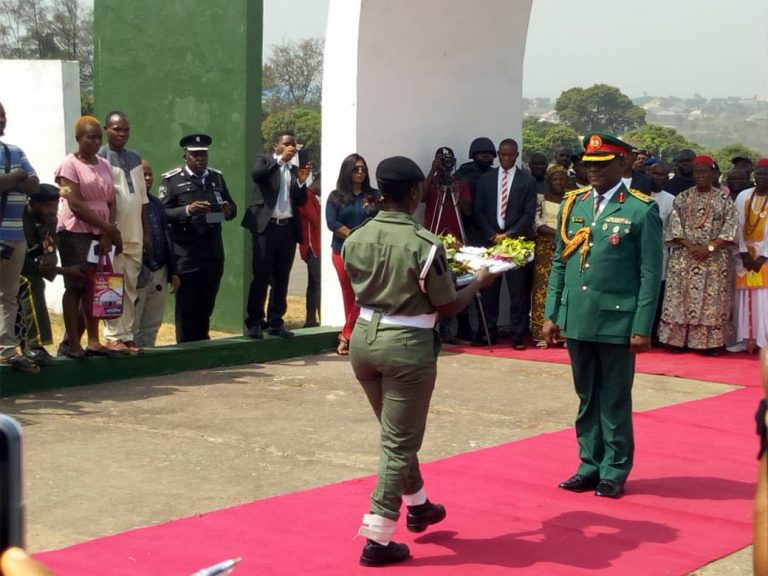
The Jan 2020 Armed Forces Remembrance Day Event At Ekwueme Sq. Awka

… Event severely delayed due to late arrival of Anambra State governor, with the state governor away on vacation in the United States

By Kenechukwu Chukwudi, Awka Times Guest Reporter, with additional desk research  

This year marks the 50th anniversary of the end of the Nigerian Civil War, a war fought between the government of Nigeria and the secessionist state of Biafra from 6 July 1967 to 15 January 1970. The cessation of hostilities was marked when leaders of the Biafran forces surrendered to the federal troops. Biafran forces at the time were led by Philip Effiong, the deputy to General Chukwuemeka Odumegwu Ojukwu, the Biafran leader who went into exile in Côte d’Ivoire.

AP Interview With Gowon on July 1, 1967

The final theaters of the war came on 7 January 1970 as Nigerian forces launched an offensive named “Operation Tail-Wind” in which the 3rd Marine Commando Division led by Col. Olusegun Obasanjo attacked Biafran forces, supported by the 1st Infantry division and the 2nd Infantry division. With the concerted offensive, the Biafran towns of Owerri fell on 9 January 1970, and the strategic Uli town fell on 11 January.

A few days before the final federal offensive, Ojukwu had been forced to flee into exile, flying off to Côte d’Ivoire (then Ivory Coast) and instructing his deputy Philip Effiong to handle the Biafran surrender.

Biafran deputy leader, Philip Effiong, surrenders to Gowon, Jan 13, 1970

Effiong surrendered to General Yakubu Gowon of the Federal Army on 13 January 1970, at Dodan Barracks, Lagos. The surrender paper was signed on 14 January.

On the day of the surrender, Effiong said the following, according to an AP news file reported in the New York Times of 16 January 1970:

I, Philip Effiong, do hereby declare: I give you not only my own personal assurances but also those of my fellow officers and colleagues and of the entire former Biafran people of our fullest cooperation and very sincere best wishes for the future.

It is my sincere hope the lessons of the bitter struggle have been well learned by everybody and I would like therefore to take this opportunity to say that I, Maj. Gen. Philip Effiong, officer administering the government of the Republic of Biafra, now wish to make the following declaration:

That we are firm, we are loyal Nigerian citizens and accept the authority of the federal military Government of Nigeria.

That we accept the existing administrative and political structure of the Federation of Nigeria.

That any future constitutional arrangement will worked out by representatives of the people of Nigeria. That the Republic of Biafra hereby ceases to exist.

Gowon interviewed on the day of Biafran surrender

Though January 15th is not the exact date when the war ended, it was the date in 1966 when the first military coup, led by Major Kaduna Nzeogwu, took place in the country culminating in the death of many including the then Prime Minister, Abubakar Tafawa Belewa and host of other civilian and military leaders, and became one of the major reasons for the civil war.

The Armed Forces Remembrance Day may be said to be an occasion which evokes deep feelings of loss in the former Biafran territory, reviving tales of the civil war, especially the pain, destruction and the death of loved ones and a shattered dream. It is a day in which Nigerians as a whole seek to remember the fallen heroes who paid the supreme price for the unity the country, which remains fragile even to this day.

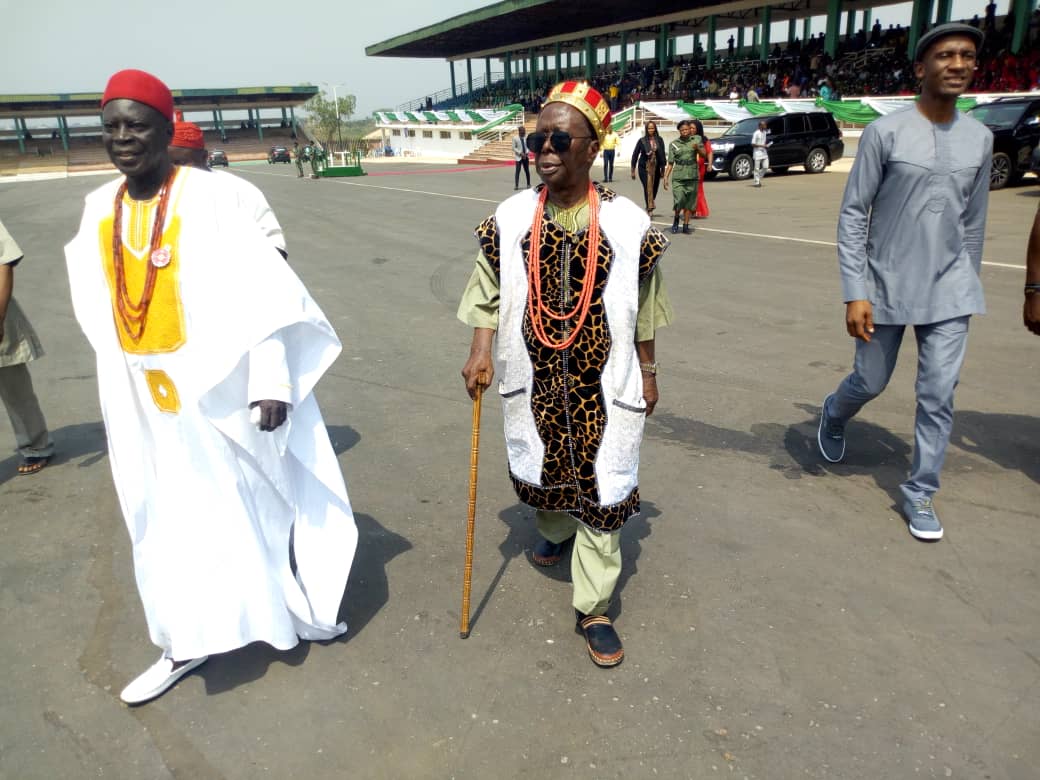
The Remembrance Day was marked in Awka, the capital of Anambra State, at the Alex Ekwueme Square. At the venue were gathered officers and men of the Nigerian Army, Nigerian Navy and para-military organizations such as the Nigerian Police Force, the Nigerian Security and Civil Defense Corps (NSCDC), the Federal Road Safety Corps (FRSC). There were also traditional rulers, representatives of several organizations and members of the general public as the Armed Forces Remembrance Day was being marked.

At the event, guests were seated as early as 10am but the ceremony – usually a brisk and solemn affair with military parade and other rituals concluding within an hour – could not commence due to absence of the special guest of honour, the governor of Anambra state, Chief Willie Obiano. The deputy governor of Anambra State, Dr. Nkem Okeke, was meant to represent the governor who has been out of the country since the end of last year.

The usual tradition of guests such as military and para-military chiefs, Speaker of the State House of Assembly, state Chief Judge and others mounting the dais for salute could not hold due to the absence of the special guest. All those present, including retired soldiers and officers who make up the Nigerian Legion, waited for hours until a few minutes past 1pm when the deputy governor finally arrived. With his arrival, the ceremony started in earnest.

The singing of the national anthem and an inspection of guard mounted by 120 soldiers and commanded by nine officers quickly commenced as soon as the deputy governor arrived. The ceremony of wreath-laying at the foot of the unknown soldier(s) followed thereafter, intended to honour the fallen soldiers who paid the supreme price for the unity of the country. The wreath was laid by the deputy governor, Dr. Nkem Okeke.

Apart from the deputy governor’s, wreath-laying was also performed by the State House of Assembly speaker, Hon. Uchenna Okafor, the state Chief Judge, Justice Ijem Onwuamaegbu, the Commissioner of Police, Mr. John Abang, the traditional ruler of Okpuno, Igwe Sunday Okafor, military chiefs from the 302 Artillery Regiment, Onitsha and Nigerian Naval Outpost, Ogbaru. The event climaxed when a widow of a departed soldier knelt to lay her wreath, evoking emotions among those present. This was followed by a twenty-one gun salute and the blowing of the last bugle signaling a farewell to the dead soldiers.

The deputy governor, in his speech, eulogized officers and men of the Nigerian  Armed Forces, praising them for paying the supreme price for the unity, security and prosperity of the Nigerian nation. He said no amount on earth could compensate for the price they paid. He also said that the state government is doing a lot to secure the lives and property of Ndi Anambra, noting that this has yielded positive results, evidenced by the volume of investment that is pouring into the state and by peaceful coexistence within the state.

Some members of the public interviewed by Awka Times applauded the choice of January 15th as a Remembrance Day for the Armed Forces, given its importance in Nigerian history. One of them, Kenechukwu Arinze, noted that although the 15 January 1966 putsch is sometimes perceived as an Igbo coup, given the number of Igbo officers involved, it was in reality a revolutionary coup which had a pan-Nigeria agenda but was not properly executed. He said that those who took part in it should be remembered as heroes who wanted a better Nigeria.

HM Eze Uzu II, Gibson Nwosu, arriving at the event

The traditional ruler of Awka, HM Eze Uzu II Obi Gibson Nwosu, who actively participated in the war as the second in command in the Biafran Airforce, was also present at the event. He had laid the wreath on behalf of traditional rulers in previous years.

Tanker Explodes, Killing One at Amawbia Junction

0
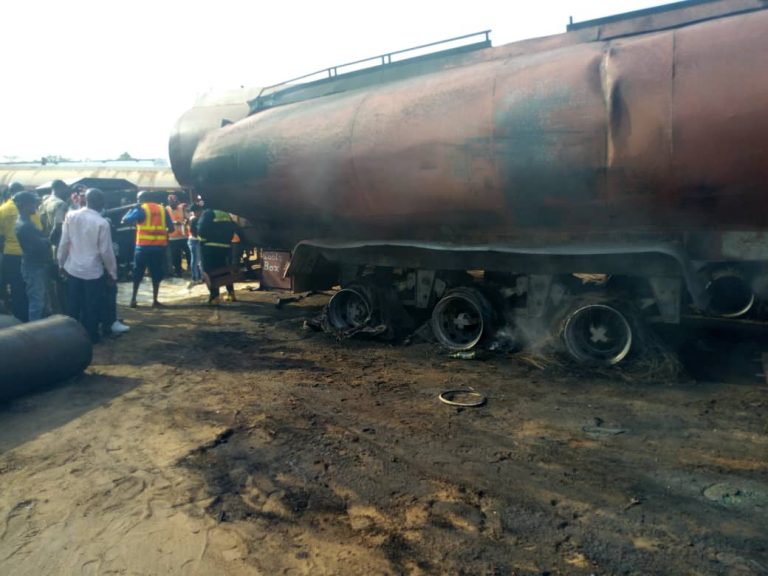
Burnt out tanker
Charred oil tanker at the Amawbia Awka fire incident

By Kenechukwu Chukwudi, Awka Times Guest Reporter, at the scene of the incident  

An oil tanker exploded today, January 14, 2020, around the Amawbia Awka bypass on the Enugu-Onitsha Expressway in Anambra State, Nigeria, leaving one person dead.

It was a gory site of pain, agony and emotion, as many gathered to see the lone casualty of the tanker explosion, which the late mechanic was said to have been working on before the tanker exploded killing him.

The Director and Chief Fire Officer of Anambra state, Engineer Martins Agbili, noted that they got a distress call from the control room of the Nigerian Police Force, and they quickly mobilized to get to the scene of the tanker explosion and contained the fire.

Engineer Agbili said the cause of the explosion could not be immediately ascertained, but he noted that the tanker which might still contain some flammable substance might have triggered the explosion while being worked on.

He advised workshops to always have fire a prevention or containment plan, and to notify the fire service to be on standby when such work is about to be undertaken, especially when carrying out such work in the early or late hours of the day.

Mr. Emeka Ifejiofor, a member of the public who was passing by when the incident happened, said he couldn’t actually say what caused the fire but guessed that the tanker wasn’t washed properly to prevent the flammable substance from exploding.

Security agencies consisting of the Nigerian Police Force, Nigerian Security and Civil Defence Corps and the Federal Road Safety Commission were seen at the scene providing security and evacuating the lone casualty to hospital.

It may be recalled that a little over a year ago, on February 10, 2019, there was another tanker fire that occurred not far from the scene of the latest mishap, near the Anambra State Governor’s Lodge in Awka, the state capital, in which no fewer than seven persons perished.

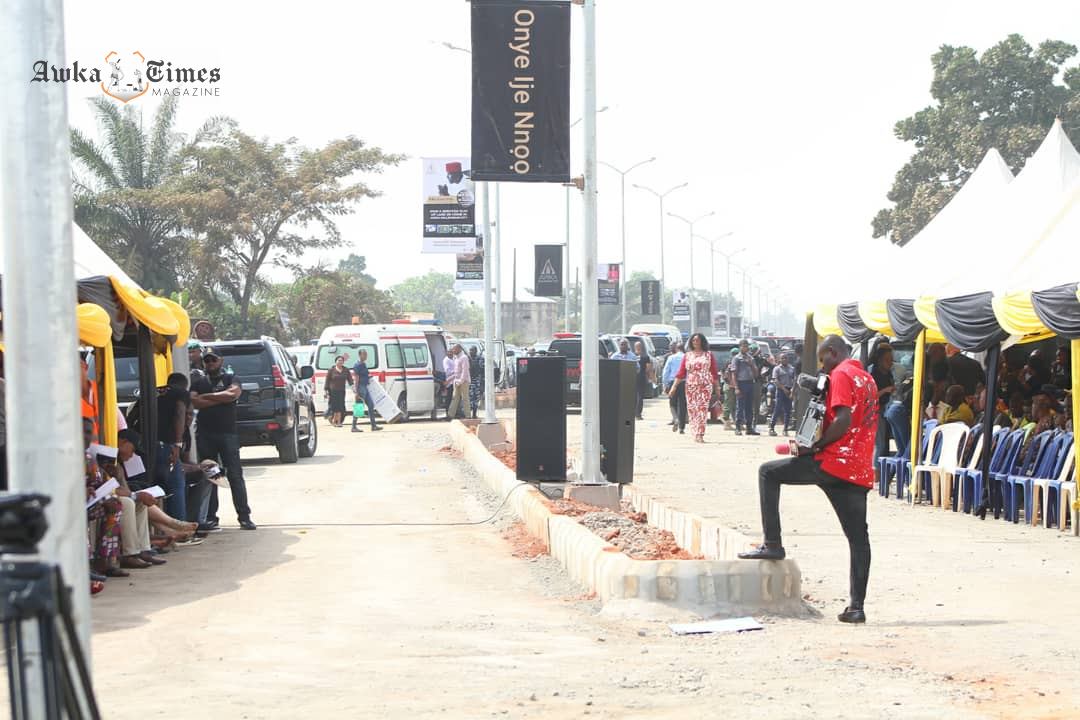
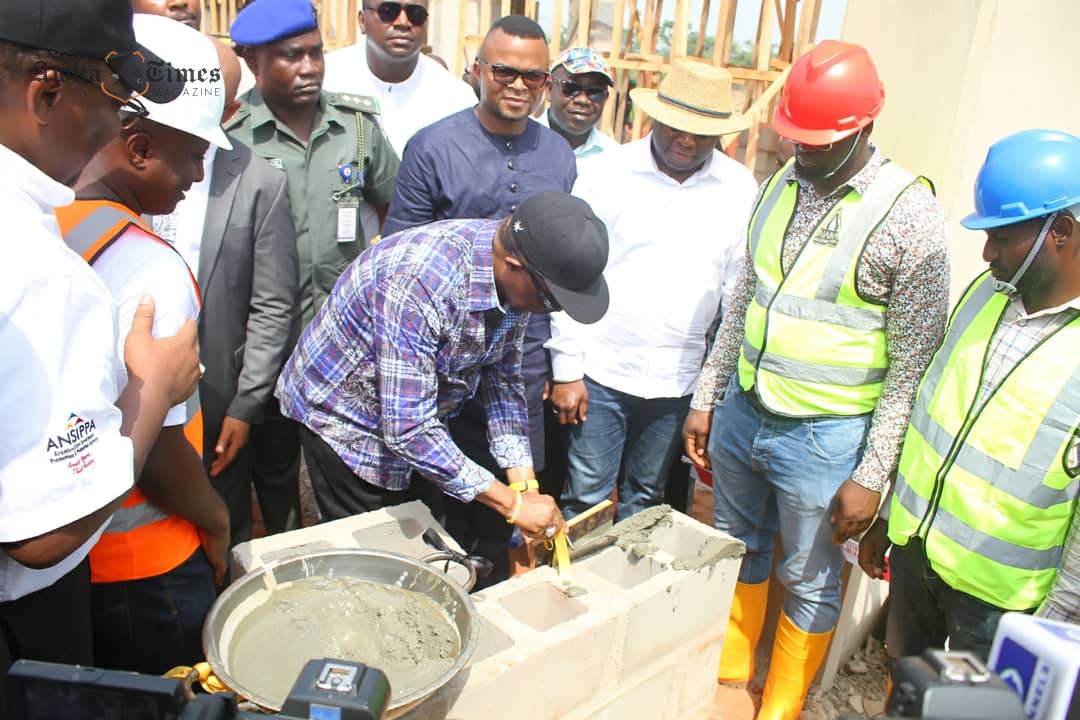
AMC Groundbreaking Event

0
WhatsApp Image 2019-12-26 at 3.13.00 AM
Awka Millennium City Entrance Gate Under Construction

Awka International Conference Centre: Deadline Missed But Work Is Proceeding At Pace

0
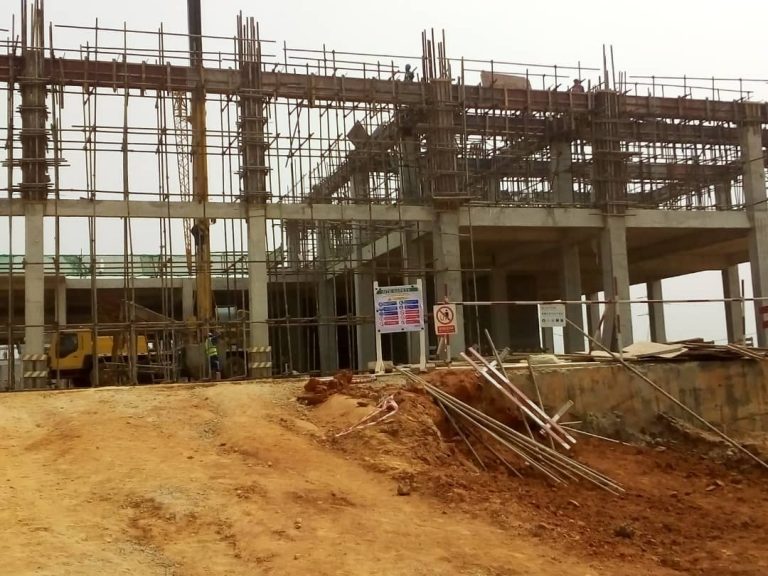
WhatsApp Image 2020-01-07 at 5.19.34 AM
Stage of work at the Awka International Conference Centre as of Jan 7, 2020

Development of the Anambra International Conference Centre at Awka is ongoing, though project delivery deadlines have been missed. Governor Willie Obiano seems determined to finish the project before his terminal date. But it appears that ancillary developments needed to maximize the economic impact of the project are not yet contemplated by the government. Nor have officials begun to message the broader benefits of the convention centre to the general public.

By Chudi Okoye, with additional field reporting from Stella Nzekwe

You can sometimes sense a slight tremor in the voice of Willie Obiano, governor of Anambra State, Nigeria, when he talks about the International Conference Centre (ICC) being erected in the state capital, Awka. You can even trace an American twang in his tongue or catch a tiny twinkle in his eyes (if unspectacled) sometimes when he announces new milestones in the project’s evolution. There can be no doubt about it: the ICC project, among the numerous that this reportedly vigorous governor has launched, is one that is very close to his heart. The governor himself has said that the conference centre is “very very dear” to him, and his commissioners claim that it would be one of the administration’s landmark projects.

Willie Obiano has visited the ICC project site several times since work commenced in early 2017, according to project sources, sometimes even turning up unannounced. The governor seems to be conversant with key details of the development and is able to describe them with ease. There he was on December 15, 2018, during the official flag-off of the project, pronouncing on the architectural details of the building. At one point he even plunged into the acoustical design being implemented to manage the physics of sound in the conference halls.

Governor Obiano loves the Awka International Conference Centre project! That much is clear.

So it is a little surprising that today, two-and-a-half years after initiation and despite earnest assurances by the governor, the conference centre remains far from finished. Officials had first indicated that the project would be completed within a year after it was initiated in 2017. But following a change of plan and project contractors, Obiano himself announced during the official project flag-off in December 2018 that the project would be completed in December 2019, stating that the contractor had been fully “mobilized to deliver the job in 12 months.” That wasn’t to be, however, as it became clear in the course of the year that the project was overrunning. So later in October 2019, on two separate visits, the governor himself and the contractor as well revised the completion date, announcing that it would now be delivered by the end of March or in April 2020. The Commissioner for Housing, Arch. Mike Okonkwo, told Awka Times that part of the delay had been caused by Governor Obiano’s increase of the scope of work. He insisted that the April deadline will be met, noting that any further delay will be communicated to the public.

So, going by official assurance, the Awka ICC project should be nearing completion at this time.

And yet, when Awka Times visited the conference center site on January 7, 2020 to assess readiness, we found a project evidently in flight but nowhere in sight of landing. On the day that we visited, we saw a bevy of construction equipment though not the frenzy of activity that would suggest imminent completion. When probed by Awka Times about the feasibility of the new deadline, project engineers could only commit to likely completion sometime this year. When contacted to discuss the project, Barrister Venn. Amaechi Okwuosa, current MD/CEO of Awka Capital Territory Development Authority (ACTDA) which is a project stakeholder, seemed more guarded. He told Awka Times that the project would be “ready in the nearest future.”

So, will Awka ICC turn out to be another one of those abandoned projects that have become the hallmark of successive administrations in Anambra State?

Not likely, based on current set of facts. Governor Willie Obiano seems certain to chalk this one up before he takes his final walk as Anambra State governor.

Video: Project architect, Piyous Abah, showing Awka Times round the site

Massive Project

The Awka International Conference Center is a large project by most standards, even from mere visual observation. There is, however, conflicting statistics about the project as obtained from diverse sources. The main ICC building is confirmed by project technicians to be a 7,000 square-meter edifice, similar in size to the Abuja International Conference Centre which was built in 1991. Project sources also indicate a seating capacity of 7,000 (5,000 in the ground floor auditorium and 2,000 scattered around the first floor) as against a seating capacity of 10,000 sometimes touted by officials. The size of land earmarked for the project is inexact. Government sources say that the complex is “strategically sited on a parcel of land… measuring not less than 7 hectares.” And officials provide different figures for the parking space: “1,200”, “1,500 to 2,000” and “3,500” cars, they variously assert, although project technicians affirm the figure of 3,500.

It is worth noting, for comparison, that the London ExCel, an exhibitions and convention centre situated on a 100-acre site, reportedly has 3,700 parking spaces on the campus. And the National Exhibition Centre in Solihull, England, sitting on a 611-acre site, offers 29,000 car parking spaces. It stretches imagination therefore to expect that the 7-hectare Awka ICC site (just over 17 acres) might support a 3,500-car parking facility. Still, even a median in the range of official estimates from Anambra State government would be impressive in the local and regional market.

The foundation of the main ICC building is elevated about 3.6 meters high, designed to withstand the effects of flooding in the low-lying area. There is plan to re-channel runoff rain water into a picturesque canal on the grounds of the complex, according to Commissioner Mike Okonkwo, who was once ACTDA MD/CEO and is now helming the housing ministry which is one of the project stakeholders.

Elevated foundation at the ICC to prevent flooding

The Awka International Conference Centre is located in the Agu-Awka outskirts of Awka. The facility, said to be state-of-the-art, will include a grand entrance foyer with atrium, sub-dividable auditorium/ballroom, exhibition hall, well-equipped chalets for conference participants, meeting rooms, green room, storage, an upscale restaurant, stores, a bookshop, conveniences, staff room and associated spaces. There will be two galleries (Gallery A and Gallery B), and an elevated stage. Included within the exhibition hall will be a workshop/seminar area for professionals which will be available all year round. The design concept also envisages a well-planned parking lot, manicured lawns and, as indicated, a picturesque canal.

3D  model of the ICC’s main entrance (source: ANSG Ministry of Housing)

3D  model of the ICC main building (source: ANSG Ministry of Housing)

3D  model of the ICC’s grounds (source: ANSG Ministry of Housing)

3D  model of the ICC’s ground floor lobby (source: ANSG Ministry of Housing)

Governor Obiano has said that the model was “copied from Dubai”, although it is not clear which specific venue in Dubai inspired his administration.

Likely Economic Impact

Anambra State government officials use astounding superlatives to describe the Awka ICC. They say that it will be “the best”, “the biggest”, the “most modern”, and that there will be nothing like it in the South East of Nigeria – some even claim in the entire southern Nigeria! In terms of the actual benefits likely to accrue from the facility, officials seem most exercised by the potential to boost the state’s internally generated revenues (IGR). Governor Willie Obiano said for the umpteenth time during project inspection in October 2019 that the development “will boost the state’s internally generated revenue (IGR).” All the concerned commissioners – Works, Housing – and heads of the stakeholder parastatals emphasize the same thing: an expected boost in IGR once the ICC becomes functional. Occasionally, there is a passing reference to other economic benefits, with Governor Obiano for instance saying that the facility “will create economic activities that will generate jobs and wealth for the people as well as improve the aesthetics of the [Awka capital] territory.” But the clear animating justification for the project from the government’s perspective centers on the expected IGR lift.

The official emphasis on government revenue uplift is understandable. Awka Times gathered that the Awka International Conference Centre – unlike the many public private partnership projects that the government has initiated – is a 100% equity ownership of the state government. Presumably, therefore, all revenues accruing from event bookings will flow directly into the state’s treasury, along with rental income from resident outlets and supposedly slices from sundry other transactions at the facility. Such accruals could be significant if the convention centre attracts brisk business.

Surprisingly however, despite the IGR fixation of the state government, Awka Times found that officials have no modeled projections for the level of expected treasury accruals. None of the official sources contacted by Awka Times was able to hazard even a guess as to the amount of revenues expected from conference bookings and related venue spending.

Even more surprising is what seems like official reticence on the potential impact of the ICC on the local economy. The broader impact of the convention centre on the economy may likely dwarf whatever IGR accruals the government might secure. But it seems, from official responses to Awka Times probe, that no formal study has been done to delineate the cumulative benefits of ICC operation for the broader economy.

Although it now seems doubtful, it would be rather fortuitous were the Anambra State government able to keep the new date of April 2020 that it has set for the completion of the Awka International Conference Centre. That timing would coincide with the Global Meetings Industry Day (GMID) event scheduled for 14 April 2020 (https://www.pcma.org/event/2020-global-meetings-industry-day-gmid/). The event, led by the Meetings Mean Business Coalition, “honors the meetings and events industry’s enduring business value,” according to the organizers. A study authored by Events Industry Council and Oxford Economics estimated the global economic impact of meetings and business events to be $2.53 trillion in 2017. This report provides a guide to estimate the potential impact of the Awka International Conference Centre on the local economy, beyond the arguably narrow revenue focus of the Anambra State government.  

Total impacts of global business events (2017) (Source: “Global Economic Significance of Business Events”, Events Industry Council/Oxford Economics, 2018, p. 6)

Established models for measuring the economic importance of the meetings industry typically include the following, although not all inputs would apply in the case of Awka ICC:

  • Exhibition and conference event bookings
  • Hotels and other accommodation services
  • Food and beverage serving services
  • Railway passenger transport services
  • Road passenger transport services
  • Water passenger transport services
  • Air passenger transport services card services
  • Transport supporting services
  • Transport equipment rental services
  • Shopping and other retail services
  • Entertainment and related services
  • Recreation and other equipment services
  • Travel agencies and other reservation services
  • Tour operator and tourist guide services
  • Cultural services
  • Sporting and other recreational services
  • Miscellaneous tourism services (e.g. insurance, travel)

From these micro-inputs conference modeling then estimates macro-level economic impact in terms of the following metrics, among others: gross domestic product/gross value added, employment generation, wages and salaries, and taxes.

Meetings industry model (Source: “Measuring the Economic Importance of the Meetings Industry”, World Tourism Organization, 2006, p. 12)

If the Anambra state government has commissioned studies to understand these larger effects, officials certainly aren’t talking about it. So it is more likely that no such study exists, a departure from global best practice.

Requisite Developments

If the Anambra State government is to maximize IGR and trigger other economic benefits from the ICC, it must invest in developing a convention ecosystem around the Awka International Conference Centre. It should not simply plunk down a swanky conference centre in an arid ecosystem which is not conducive for conference tourism. There must be adequate road infrastructure, modern transportation infrastructure including a local passenger airport shuttle, world-class hotels, restaurants, shopping outlets, and a myriad other destination infrastructure, to attract large-scale meeting events from other competitive destinations.

The officially-certified traditional ruler of Awka town (the position is contested), Eze Uzu II Gibson Nwosu, speaking through his traditional prime minister, Chief Ben Okoye, told Awka Times that the community is not directly involved in the planning and implementation of the Awka ICC project. He said however that “the development of Awka infrastructure should be a priority for the state government, not just because Awka as capital is the face of Anambra State, but also because the development of the town’s infrastructures will do more to attract meetings, exhibitions, tourism and investment into Awka far more effectively than mere marketing could ever do.”

Officials are not yet talking about developing such conference ecosystem. Attention is simply focused on completing the conference centre project before Governor Willie Obiano’s exit. But officials must assess the potential for the Awka ICC to attract major national or international events at the expense of more developed venues elsewhere in Nigeria. If the Awka International Conference Centre, however opulent, exists in a primitive or sub-par tourism ecosystem, it will likely not be competitive and may end up a waste. The sums of money being invested in the project may not be recovered in a reasonable time frame, if ever (government sources would not confirm the exact amount being spent on the Awka ICC project, except to say that it is over ₦2 billion).

Anambra State Commissioner for Housing and Urban Development, Arch. Mike Okonkwo

When Awka Times raised these perspectives with the responsible commissioner, Arch. Mike Okonkwo, he defended the government, saying that the siting of the Awka ICC project was deliberate because it is surrounded by different structures like Awka Millennium City Estate, Stanel, Women Development Centre, and a yet-to-be-built five star hotel. Nevertheless, proximity to a gated residential/commercial development, or to a gas and servicing station, whilst perhaps necessary as part of an ecosystem for a conference venue, may not be sufficient. The “five-star” hotel, if and when built, would be more integral, as would road and transport systems.

Similarly, Awka governing institutions, in particular Awka Development Union Nigeria (ADUN) as well as the local kingship institution, should be involved in the planning. Around the world municipal authorities are often involved in destination marketing, including the promotion of convention and exhibition venues. Awka Times checks revealed that the Awka South local government authority, just like the Awka community governance institutions, is not involved in planning for the Awka ICC. Without local participation to guide central command planning, it will be difficult to manage and measure the broader impacts of the Awka International Conference Centre on the local economy. And in the end, the local community and the state at large might not see the fuller benefits of the development, long after its champion, Governor Willie Obiano, has departed from the scene.


Awka ICC Project Vendors

Contractor – ZTC Nigeria Limited, 178 Lugard Avenue, Lagos, 09060000581

Consultants –  JIL Engineering Associates

Consultants – RB Consultants Ltd, Plot C Presidential Road Independence Layout Enugu, 08033041300, inforbconsultantsltd@gmail.com

Architects – Geometrics Associates

Mechanical/Electrical – Vencou Engineering Co Ltd, 07064835199, 36 Akin Adesola Street Victoria Island, Lagos, vencoultd@yahoo.com