The United States government demands an independent investigation of the president of the African Development Bank – a former Nigerian minister – who was charged with gross misconduct but was cleared in an internal investigation of the bank. Nigeria opposes the US request for further investigations, thus setting up a potential clash of influences between the regional power and the most important non-regional member of AfDB.
By Chudi Okoye
Nigeria and the United States of America are at loggerheads over how to handle the case of Dr. Akinwumi Adesina, the president of the African Development Bank Group (AfDB) who had faced charges of gross misconduct. Dr. Adesina was cleared in an internal AfDB investigation accepted by the Nigerian government which is nevertheless spurned by the United States. Nigeria and the US have the highest voting powers in AfDB and each wields significant influence in the bank and across the region.
A former Nigerian head of state, General (rtd.) Olusegun Obasanjo, himself with subsisting influence in Africa and the United States, has weighed in on the matter and is mobilizing some former African heads of state in support of the incumbent and the Nigerian position.
The AfDB president, Dr. Adesina, had been accused of a series of misconducts by whistleblowers in the bank. The allegations appeared to be serious, including corrupt use of bank resources for private gain, nepotistic and arbitrary intervention in the bank’s recruitment processes, inefficient personalization of management decision-making and political lobbying, among other allegations. He was specifically accused of awarding exorbitant contracts to personal acquaintances, appointing relatives and friends to strategic positions, and misuse of bank resources including payment for personal projects.
Following the allegations, an internal AfDB investigation was launched which ran for three months. The investigation, conducted by the bank’s Ethics Committee, concluded by dismissing all allegations against the bank’s president.
Dr. Adesina was elected in May 2015 for a five-year term and is well-positioned for re-election as an unchallenged candidate. But his prospects are tangled up with the whistleblower allegations and with what appears to be geopolitical intrigue.
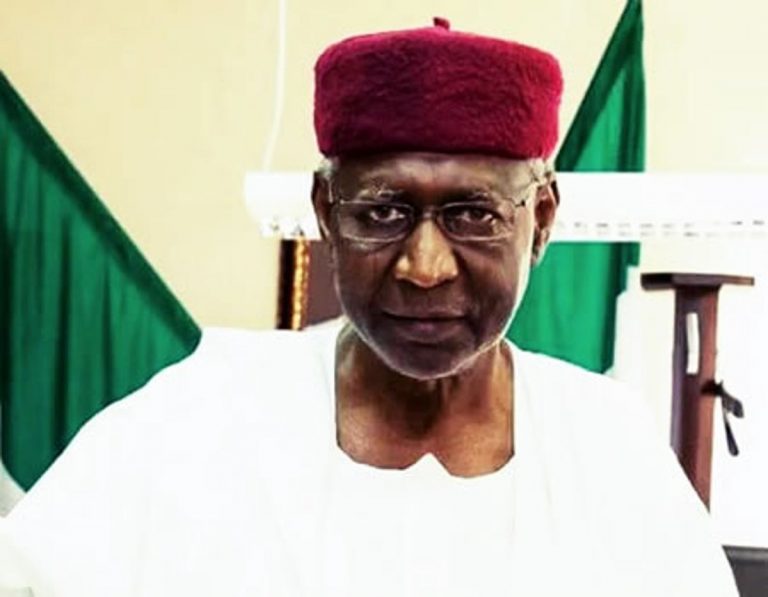
▲Dr. Akinwumni Adesina, incumbent AfDB president
The United States, an important non-regional member of the African Development Bank, appeared to have taken issues with the findings of the Ethics Committee and its adoption by the bank’s Board of Governors. Shortly after the committee’s report was adopted, the US released a widely circulated letter in which it dismissed the findings, pointedly questioning the integrity of the bank’s internal investigation.
In the letter, dated May 22nd and addressed to Mrs. Nialé Kaba, chairwoman of the bank’s Board of Governors, the U.S. Treasury Secretary Steven Mnuchin rejected the findings of the Ethics Committee and the decision by the AfDB’s Board of Governors to accept the Ethics Committee’s conclusions and end the internal investigation. It called for an independent probe into allegations against the AfDB president.
“We have deep reservations about the integrity of the committee’s process,” Secretary Mnuchin declared. “Instead, we urge you to initiate an in-depth investigation of the allegations using the services of an independent outside investigator of high professional standing.
“Considering the scope, seriousness, and detail of these allegations against the sole candidate for bank leadership over the next five years, we believe that further inquiry is necessary to ensure that the AfDB’s president has broad support, confidence, and a clear mandate from shareholders,” Mnuchin said.
But the Nigerian government has thrown its weight behind the embattled AfDB president. Dr. Adesina had served as Minister of Agriculture and Rural Development in Nigeria prior to his AfDB accession in 2015. Nigeria proclaimed itself satisfied with the internal AfDB investigation and the findings of Ethics Committee.
In a letter also addressed to Nialé Kaba, AfDB board chairperson, the Nigerian government said that it had closely followed the allegations against the AfDB president and that it welcomed the report of the Ethics Committee which exonerated him. The 28 May 2020 letter, seen by Awka Times, was signed by Nigeria’s Minister of Finance, Budget and National Planning, Mrs. Zainab Shamsuna Ahmed.
According to the letter,
“The Ethics Committee in carrying out its work, as clearly as stated in their report, called on oversight organs of the Bank (Anti-Corruption, Auditor General, Human Resources) to answer questions and provide any relevant information related to the allegations. They did so and these were clearly stated in the Ethics Committee report. The Committee also called on the whistleblowers to submit ay additional evidence, facts and documents to buttress their allegations but they did not.”
The letter also stated that:
“The Ethics Committee has conducted and completed its work following the rules, laws, procedures and guidelines as laid down by the Resolution of the Board of Governors. The Resolution calls for the Ethics Committee to submit its report, and supporting documents, to the Chair of the Board of Governors.”
▲Nigeria’s finance minister, Zainab Ahmed
The Nigerian finance minister averred that the Board of Governors in turn duly followed laid down rules in reviewing the Ethics Committee’s report.
“The Chair of the Board of Governors followed the laid down rules, procedures, guidelines, and the governing laws of the Bank, and ruled appropriately that she concurred with the report and conclusion of the Ethics Committee that dismissed all allegations against the President.”
The affirmative letter from Nigeria was sent only days after the United States had rejected the findings of the Ethics Committee.
The US’ call for an independent investigation is opposed by the Nigerian government. In her letter to the Chair of the AfDB Board of Governors, Nigeria’s finance minister of noted that America’s demand for “independent investigation” was unjustified because it went “outside of the laid down rules, procedures and governing system of the Bank…”
“As Board of Governors we must uphold the rule of law and respect the governance systems of the Bank,” the statement insisted.
It is unclear as yet how the United States will react to Nigeria’s acceptance of the extant findings and its opposition to the US demands.
A former Nigerian head of state, Olusegun Obasanjo, who is intervening on behalf of Dr. Adesina, also expressed concerns about the rules and the US stance. In a letter dated May 26th which the former head of state sent to a number of influential former African heads of state, Obasanjo called for a united front against US intervention.
“The US Treasury Secretary disparaged the Bank and ridiculed the entire governance system of the Bank, which has been in place since 1964 [when AfDB was established]. This is unprecedented in the annals of the African Development Bank.”
▲Former head of state, Olusegun Obasanjo
Gen. Obasanjo has had his differences with the administration of Major General (rtd.) Muhammadu Buhari but he is nevertheless aligned with the administration in canvassing the Nigerian position.
“If we do not rise up and defend the African Development Bank,” Obasanjo argued, “this might mean the end of the… Bank, as its governance system will be hijacked away from Africa.”
The general proposed that the former heads of state issue a collective press statement to support “the laid down procedures” which were used to investigate the allegations against Dr. Adesina and which subsequently exonerated him. Gen. Obasanjo attached a draft of a joint press statement to his letter for review by the addressees.
It is not yet clear how the other African leaders would react to Obasanjo’s proposal. But it would be surprising if Gen. Obasanjo would make his intervention public were he not reasonably certain of positive response from his counterparts. Nigeria wields a lot of influence in AfDB, alone funding one of the lending instruments of the bank, Nigeria Trust Fund (NTF) from which many African countries secure beneficial loans.
It remains to be seen if the United States, likely motivated as much by transparency concerns as by geopolitical considerations, will buckle under pressure from Nigeria and its allies in the AfDB.♦
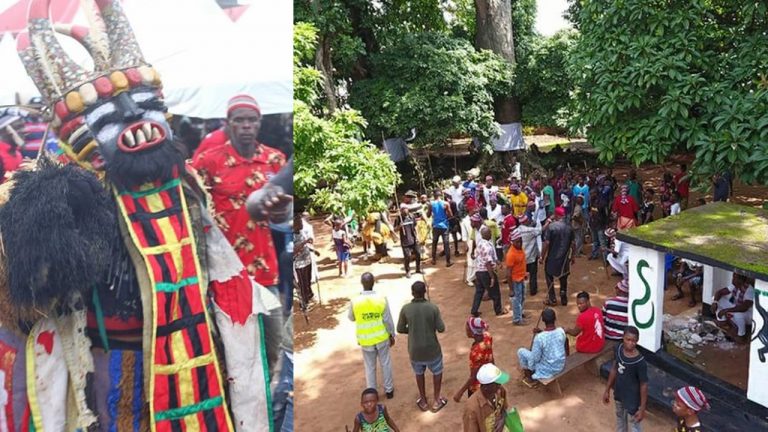
The 2020 edition of the traditional Awka festival, Egwu Imoka, has commenced. Day 1 of the three-day carnival, a cardinal event in Awka cultural calendar, took place as planned on May 25, 2020.
There had been some uncertainty in the lead up to the commencement of the event. The Anambra State government had, on May 10, issued an order suspending Egwu Imoka 2020, along with other cultural events in the state, on account of the growing incidence of coronavirus contagion in the state. The state government issued the suspension order as Anambra State, which went for a stretch of time without an active coronavirus case, began to record new cases. The Anambra State Police Command also issued a statement stipulating to a full enforcement of the government’s order.
Notwithstanding the government’s suspension order, the custodians and planners of the Awka heritage event, following apparent oracular consultation (with Imoka, the Awka deity which is honored during the event), had insisted that the event would be held, albeit with sensitivity to government rules on physical distancing and social restraint amidst the Covid-19 crisis.
With the virtual stand-off, it was unclear how the Egwu Imoka 2020 event would unfold. Day 1 of the festival provides a clue.
Awka Times reporters who monitored the Day 1 events report a mixed outcome. Day 1 of Egwu Imoka consists in a mission called Osonogba Umuokpu, a contingent of humans and masquerades despatched to the non-contiguous Awka village of Umuokpu to deliver a message inviting the village to the upcoming Egwu Imoka event. Usually it is a boisterous procession snarling southwestwards from main Awka town to Umuokpu village, with assemblies of merrymakers gathered all over the town and along the stretch to Umuokpu.
Initial frontline reporting by Awka Times suggests a determined but muted observance of the opening-day event. The emissary to Umuokpu was duly despatched, including men, masquerade and motorcade. Pockets of participants came out, gathered in isolated spots around Awka, in proud and assertive jollity to mark the event. Awka Times reporters observed some conscious attempt to follow the government’s guidelines relating to the coronavirus pandemic. But in many spots it seemed that the ascending spirit of the event simply overtook the gathered revelers and any observance of Covid-19 rules was forgotten.
This is not unlike observations in re-opened markets and churches around Anambra State – simply citizens habituated to certain cultural practices attempting to be mindful of unfamiliar social gathering rules.
Stay tuned for detailed reporting on the Day 1 of Egwu Imoka 2020 by Awka Times reporters, Kene Chukwudi and Stella Nzekwe, which will include descriptions of the day’s events and the perspectives of the event organizers and various stakeholders.
In the meantime, we present below a collection of Awka Times’ initial pictures and videos from Day 1 of the 2020 Egwu Imoka festival.
♦Pictures and video clips from Awka Times reporters, Stella Nzekwe and Kene Chukwudi
I would be angry now if I weren’t already so numb. These are not normal moments! Things are not the way they used to be. What kind of life and world are we living in? Is the whole world dreaming? We are ‘like a fish, doped out of the deep and bobbed up bell wise’.
You may be tempted to ask: ‘What is the matter now?’
The answer is COVID-19 or coronavirus. It kills with reckless abandon and no one is spared. Where are all the great miracle prophets? Where are the great dibias (medicine men)? The efficacy of your powers is now in doubt. We need your prophesies and solutions to make your power relevant and effective. Even our great leaders are afraid. They have no solution to the problem. The fear of coronavirus is the beginning of wisdom.
In my continent, Africa, and my country, Nigeria, we came to see and learn that all the billions budgeted every year for health were just a publicity stunt. Our government has no clue. Some are sharing eba and egwusi/ogbono soup instead of testing the people to detect the virus. We have no hospital in place and the health sector is in disarray. The Nigerian government, faced with the exceptional situation that we are all currently going through, decided to invite Chinese doctors to help out at the expense and protest of the indigenous doctors. Afterall, the priority is first and foremost the health and safety of our leaders who can no longer travel out due to restriction of non-critical international flights.
Our doctors and experts cum consultants cannot even devise a means to command the citizens’ respect. Where are all the billions budgeted for the Nigerians health ministry? Nigerians need answers now. Even the AsoRock clinic, at the centre of federal power in Abuja, Nigeria, is underfunded. We even heard the virus struck Aso Rock, with some of the inhabitants/residents reportedly missing. Wonders shall never end. Every month and year, our leaders travel to the United Kingdom, Germany, France, United States, etc. for health check-ups. The money for such travels and the payment from those check-ups could be used to build modern and efficient hospitals, equip and maintain them.
As it stands, our leaders’ travels to the western world and even to South Africa – often merely to treat common cold, cough, and headache – have been rendered impossible: not by dint of legislation but by Mother Nature. No more travels to these countries even if you got rich stealing from our coffers. You will not be attended to. The mystery is telling them to fix our hospitals and health sector. Coronavirus is the big boss. It is the Killjoy that reached Aso Rock when it arrived on the shores of Nigeria.
People were told to stay home without any government plan(s) for their welfare. Even our president, Maj. Gen. (rtd.) Muhammadu Buhari, reduced the price of petrol or fuel in the midst of the crisis. Is this not laughable? Most Nigerians do not have cars. Even for those who have, how does the reduction of fuel cost benefit drivers who are locked down anyway? Is our government insane? Why are our leaders so insensitive to the cries of the poor masses? During the electioneering campaign, our politicians will be busy distributing and sharing bags of rice, salts, garri, and Naira. Where are those politicians today? All the food prices are beyond the reach of the common man. Where are our governments and their price control boards? Unscrupulous members of the Nigerian Police Force and Army are having a field day with extortion and intimidation of the poor masses all in the name of the COVID-19 pandemic. No Movement!, the government says. But you move if you pay such unsavoury servants.
The COVID-19 virus does not discriminate. It cares nothing about your gender, race, social status or orientation. It is real and can infect and affect you. So, whether you are black, white, boy, girl, adult, king, queen and president or prime minister, you are not immune to it. You must follow the directives to physically isolate. Coronavirus is real and cannot be bribed. It is the beginning of wisdom for us all. Thus, awareness and enlightenment are highly crucial.
With the coronavirus, wealth no longer counts, private jets are grounded and useless, you are confined to only one room regardless of the size of your mansion. Prayer houses are all deserted; our politicians – presidents, governors, lawmakers – can’t parade their motorcades; the roads are free and everyone is more or less ensconced in their own tent.
What matters now is the life of safety and survival. COVID-19 exposed the weakness of our health care systems and has shown how ineffectual our leaders are. Years of corruption, mismanagement and resources, plus an unimaginative and insouciant leadership left us thoroughly exposed to a malignant and unfamiliar virus. Our leaders are bereft, uncertain what to do. Globally, there is as yet no vaccine for the virus, no cure is in sight. But unlike the advanced countries which, with developed welfare systems have been able to care for their locked down populations, years of waste has left us in a squalid state. Our leaders have tried lockdown, but we have found that even with charitable interventions our governments cannot afford to keep our populations locked down. Yet, they dread lifting the lockdown, afraid that our healthcare infrastructures cannot cope with any surge in infections.
Our leaders are caught between a virus and a hard place.
One thing about this virus is that it did not emanate from Africa but Africans will catch its most grievous consequences. In part this is because of the state of our economies and our lack of preparedness. And of course the ineptitude of many African leaders.
We have seen the glaring leadership vacuum in Nigeria as our sick and enfeebled president presides oner a debilitated government. While much of the world’s leaders regularly update their citizens on pressing efforts to manage the pandemic and its fallouts, our president recedes further into the catacombs of Aso Rock, blinkingly emerging at sparse moments to read prepared update scripts he lacks the cognitive power to understand. At a time that energetic leadership is needed, Nigeria, under the care of a frail septuagenarian, seems to be leaderless.
COVID-19 has further exposed the crazy contradictions of leadership in our society. Nigeria is creaking under the weight of overrated and overpaid leaders without any idea how to run the nation. Leaders who impoverish our society whilst living in affluence and splendor. Those who plunder our treasuries and preside over a rudderless society with rickety infrastructure have been exposed. We have seen that they cannot provide basic healthcare, or even minimal welfare whilst imposing ill-considered social restriction policies. Our leaders have been exposed for incompetence, their ineptitude and their lack of vision. If we didn’t know it before, the ferocity of coronavirus has brought it home to us.
Yes, I am angry. But I am also delighted. Because coronavirus has shown us that the real deadly organisms are the parasites we call our leaders. Our present suffering might just shake us out of our stupor and pus us to do something to eradicate the parasitic infection parading as leadership in Nigeria.
Egwu Imoka participants at the Imoka Shrine, Amaenyi Awka
An Awka flagship cultural event, Egwu Imoka, is suspended by the Anambra State government amid renewed fears of coronavirus contagion. Official representatives of the town applaud the suspension, advocating only the merest spiritual observances. But worshippers of the Imoka deity want a more expansive celebration within physical distancing rules, wondering why Christian worship is tolerated while government circumscribes a traditional religious ceremony. Festival organizers are striving to navigate the commands of a jealous deity and an insistent government.
By Chudi Okoye, with field reporting from Stella Nzekwe
A spectacle of contending powers looms in Awka, the capital of Anambra State, involving a veritable test of wills between the revered local deity and the state government. The tension turns on two conflicting edicts emanating separately from the spiritual and the secular powers concerning whether the annual traditional event in Awka, called Egwu Imoka, would hold this year. The temporal power, Anambra State government, has spoken. It issued a statement on 10th May proscribing the 2020 edition of Egwu Imoka. The government says this event, like all cultural events in the state, must be suspended in light of the coronavirus pandemic gripping the land which necessitates physical distancing measures. But the Awka local deity, Imoka, appears to have spoken as well, insisting that the festival must proceed, according to an oracle seemingly obtained by the Imoka chief priest. It is now left to the wisdom of all concerned to navigate the numinous and the secular edicts handed down to Awka by its governing powers.
Government Grounds Egwu Imoka 2020
Egwu Imoka is the most colourful and most famous traditional festival celebrated by Awka people. It is the first feast observed in traditional Awka calendar, ushering in the New Year and planting season. It is a medium through which the community pays homage to the Imoka god beseeching it for a prosperous new planting season. It has deep spiritual connotations but it also embodies unique cultural aesthetics including mock battles, theatrical displays, dance, costumery, masquerade cult initiations, masquerade display, other social activities and ubiquitary conviviality.
Egwu Imoka is typically celebrated in the fifth week of the Awka lunar month. It subsists for one native week (lasting four market days) and is usually orchestrated every year to great pomp and pageantry, following detailed preparations by an advance planning committee. But events are turning out to be quite different this year. With the onset of the coronavirus pandemic, the Anambra State government had begun to introduce physical distancing rules to minimize contagion. A gradual escalation of the restrictive guidelines indicated that social gathering events, especially ones like Egwu Imoka involving expansive social interaction and revelry, might become improbable.
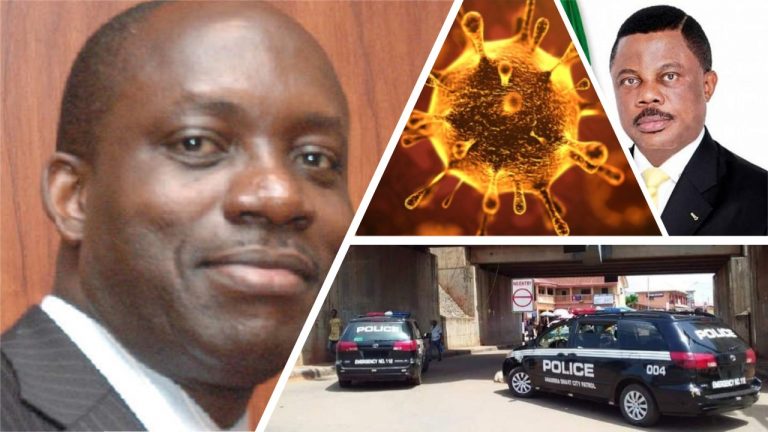
The likelihood of such events receded as Anambra State, long holding a record as the only tested state with no active case of coronavirus, suddenly began to report new cases. The state had been forced by social restiveness and public pressure from the likes of Prof. Chukwuma Soludo, former governor of the Nigerian Central Bank and likely gubernatorial candidate, to relax its lockdown rule and other social restriction measures. But the government got tougher as new cases began to be reported in the state.
On 10th May, not surprisingly, the Anambra State government issued a statement announcing that it had suspended the 2020 edition of Egwu Imoka, along with other cultural events in the state. According to the statement, signed by the Secretary to the State Government (SSG), Prof. Solo Chukwulobelu,
“the Government of Anambra State, taking cognisance of [the] prevailing federal government curfew order, state government order on public gatherings, World Health Organisation (WHO), and Nigeria Center for Disease Control (NCDC) guidelines on preventing the spread of Covid-19, hereby suspends 2020 Egwu Imo Awka (sic) cultural festival. The suspension also extends to other cultural festivals in Anambra State.”
▲Anambra State SSG, Prof Solo Chukwulobelu
The government advised members of the public “not to attend such festivals, and to stay at home, or go about their business observing Covid-19 guidelines previously issued by the federal and state governments.”
It noted that traditional rulers, presidents-general of town development unions and organisers of such festivals were being put on notice that they would be “held responsible should the festivals go ahead.”
It also indicated that security agencies had been mandated to “strictly enforce the suspension order.”
Shortly after the government’s announcement, the Anambra State Police Command also released a statement saying that it was “determined to enforce the [state government’s] order to the letter and will therefore not hesitate to arrest and prosecute any individual or group of persons found violating this Government order which was made in the overall interest of ‘Ndi Anambra’ and other residents alike.”
Awka Times spoke with the Anambra State Police Public Relations Officer (PPRO), Mohammed Haruna, inquiring about the proposed enforcement arrangements. He insisted that government position proscribing the 2020 feast was the official position, noting that any contravention would attract sanctions. But he would not be drawn on whether the police was planning to put boots on the ground to monitor compliance.
▲Anambra State PPRO, Mohammed Haruna
Official Leadership in Awka Backs ANSG
Reaction to the proscription has been mixed in Awka community, ranging from applause and acceptance to disgust with the manner of announcement, all the way to protests and threats of defiance. The government-recognized traditional ruler of Awka, Eze Uzu II Obi Gibson Nwosu, who is away for annual medical check-up in the United States, told Awka Times when contacted by telephone that he fully supported the government’s decision to suspend Egwu Imoka 2020. The octogenarian, a devout Catholic who by his position is a key custodian of Awka culture, has rarely participated in the pagan rites of Egwu Imoka although he lends it his formal blessing. When asked if his counsel was sought before the government made the announcement, the monarch told Awka Times:
“I do not expect that government will seek my permission to rule the state the way it sees fit. But they have done what they should do by informing me. I consider the suspension reasonable to save our population.”
▲Govt-certified Awka monarch, Eze Uzu II Obi Gibson Nwosu
The long-tenured monarch advised worshippers of the Imoka deity to hold the Egwu Imoka feast in their homes in the days of the event. He suggested that the deity’s chief priest, known as Eze Imoka, alone with a handful of his assistants, could go to the Imoka shrine on the day of the event to perform the sacramental rites whilst maintaining the government’s physical distancing guidelines. But he cautioned that the social aspects of the festival – including masquerading, parades, dance presentations and the convivial revelries – should be curtailed to comply with government directives.
“The deity can still be worshipped in individual homes,” Obi Gibson Nwosu told Awka Times. “We [the leaders of Awka town] have not said that we want to cancel Egwu Imoka. It is the decision of the state government. And we must obey the government.”
The Awka traditional ruler subsequently released a joint statement with the government-recognized president-general of Awka Development Union Nigeria (ADUN), Engr. Tony Okechukwu – himself also a devoted Catholic and also out of town – expressing support for the government’s decision.
The statement noted that although it was “sad” that “our revered and age long (sic) Imoka festival” was being suspended, “we have to concede that the COVID-19 pandemic is REAL and constitutes a GREAT threat to our communal activities and life, hence such unusual (sic) decision.”
The monarch and the president-general again suggested that “the Eze Imoka, where necessary, may carry out essential spiritual aspects of the festival at the Imoka Shrine alone,” but advised “all celebrants of the Egwu Imoka festival… to make merry in the confines of their individual homes.”
A political science lecturer at the Nnamdi Azikiwe University, Awka, Prof. Frank-Collins Okafor, expressed his support for the suspension in an interview with Awka Times.
“The suspension of Imoka festival is a welcome development bearing in mind the menace of the raging COVID-19 pandemic and the number of people that do participate yearly in the Imoka festival. The fear is that based on the thick clustering of people during the festival, the possibility of spreading the virus is very high… I believe the action is to save lives because life is greater than festivals. Only the living celebrates.”
Restive Adherents Want More Festive Latitude
Beyond the unstinting assent from Awka officialdom, there seems to be more mixed reaction from the cross-section of Awka society. Most opinion sampled by Awka Times recognized the necessity of the injunction but some indigenes were miffed that government took such a decisive action on a sensitive cultural issue without due consultation. Others wondered why a government that has allowed Christian churches to reopen amid the coronavirus crisis should seek to circumscribe a traditional religious feast. Yet others who are devout worshippers of Imoka insisted that the festival must be held, expressing fears about possible retribution from an aggrieved deity if critical rituals were not performed.
Soon after the announcement of the suspension of Egwu Imoka 2020, Awka Times contacted the chief priest of Imoka, Mr Mmaduabuchi Ikegbunem, to ascertain if he had prior notice of the suspension. “I was not informed or consulted by anyone,” he lamented, “not by any government official or any head of the Awka community.” He said that he only heard of the suspension through the community stentor, Mr Iza Nwosu, who announced the suspension in the night of 12th May.
Mr Ikegbunem claimed that it was unheard of in Awka that a secular government would be the authority to tell Awka community whether or not to celebrate its ancient sacred feast. He said that it was up to the spirits to provide guidance, since they were also aware of the health crisis in the land. He warned that if the situation was not carefully handled there could be grave consequences, including deaths. In his first interview with Awka Times conducted just days after the suspension, Mr Ikegbunem said he had not had a formal consultation with the Imoka deity regarding the event and that it was after such consultation that he could confirm if the event would proceed and on what dates.
The Imoka chief priest argued that since Christian churches were allowed to worship it made no sense to debar traditional religious worship. He urged the government to allow the festival to proceed if the deity willed it.
“We will pay heed to the state government’s announcement but only after consulting the Oracle. We will do whatever she instructs us to do. If she accepts the suspension, so be it. If she asks us to go ahead and celebrate the festival, so be it. The only thing [government] can do will be to arrest me. In that case, I will carry the deity along to the [police] station.”
Awka Times also sought out the chairman of Egwu Imoka 2020 organizing committee, Mr Anayo Obiakor, asking for his perspective on the government’s decision. He said that the planners were cognizant of the Covid-19 exigency but were disappointed that the “government of Anambra State did not consult any of us before making such public suspension on Imoka festival 2020,” adding that “we only heard about it on the air.” He said that the stakeholders were not happy with the government’s approach, arguing that it should have consulted the community to find workarounds. He wondered why government “did not suspend churches and markets,” and insisted that the suspension of Imoka festival was unworkable. He promised that the event would still hold although the government’s guidelines pertaining to coronavirus containment would be followed.
▲ Egwu Imoka Planning Cttee Chair, Anayo Obiakor
An Awka traditional title holder, High Chief Ikechukwu Ozoemene, told Awka Times that the Anambra State government was negligent by not consulting Awka cultural custodians before taking the decision. He said that the unilateral decision was a big blow to Awka traditional institution.
A retired public servant and head of Igu-Aro in Awka, Chief Patrick Nweke, also complained about the government’s slight of Awka leaders, telling Awka Times that he believed the government should have acted more wisely. Nonetheless, Chief Nweke said that he supported the decision and called on Awka indigenes to be patient until the pandemic is brought under control.
A youth leader in Awka, Mr Kenechukwu Nnacheta, also condemned the lack of consultation in this case, noting that government had consulted with other interest groups like market associations before taking decisions that impacted them. Mr Nnacheta stated that Egwu Imoka is an event in which adherents worship their god just as the Christians do their God. He told Awka Times that the government should have liaised with the organizers to work out a compromise rather than impose a total suspension of the annual event.
Dr. Uche Ebeze, an associate Professor of Mass Communication at the Nnamdi Azikiwe University said in a chat with Awka Times that the government should have been aware that Egwu Imoka celebration had a fixed rotation in Awka traditional calendar and could not be shuffled around or postponed like a birthday party. He noted that government had allowed churches and major markets like Eke Awka and Onitsha main markets with minimal physical distancing compliance to reopen and wondered why government would not extend the courtesy to Awka traditional worshippers. He urged the government to reconsider and allow Egwu Imoka to be held, saying he was certain “that all protective measures will be observed” during the event.
An aspect of the suspension that bothers the Egwu Imoka practitioners is potential reprisals from an angry Imoka deity should it be given short shrift. The chief priestess of the deity, Ezenwanyi Uchenna Okafor, explained to Awka Times that there could be problems if the community fails to appease the Imoka god.
Another Awka indigene, Mr Kenneth Kenechukwu Okoli, spoke in a similar vein of potential reprisals in an interview with Awka Times. Mr Okoli noted that it was all very well for the state governor and the commissioner of police to proclaim their injunction against the god but said they would return to their home towns at the end of the day, leaving “Awka indigenes… to bear the consequences.” He said that “we don’t want to die because of Imoka,” insisting that “we must perform the rituals so that when it will be judged in the Spirit land, it will be good.” He noted that practitioners could celebrate the event in their own homes while avoiding the larger social conventions of the festival to comply with the government’s goal of controlling the spread of coronavirus infection.
Honourable Ugochukwu Nwimo, a special adviser to the Anambra State governor on community liaison, speaking both as a government functionary and an Awka indigene, pleaded with the government “to allow Awka community to celebrate the festival” if adjustments could be made to the event programme to comply with physical distancing guidelines. He assured that “community leaders will help in making sure that no one breaks the laws and that [official guidelines] are observed.”
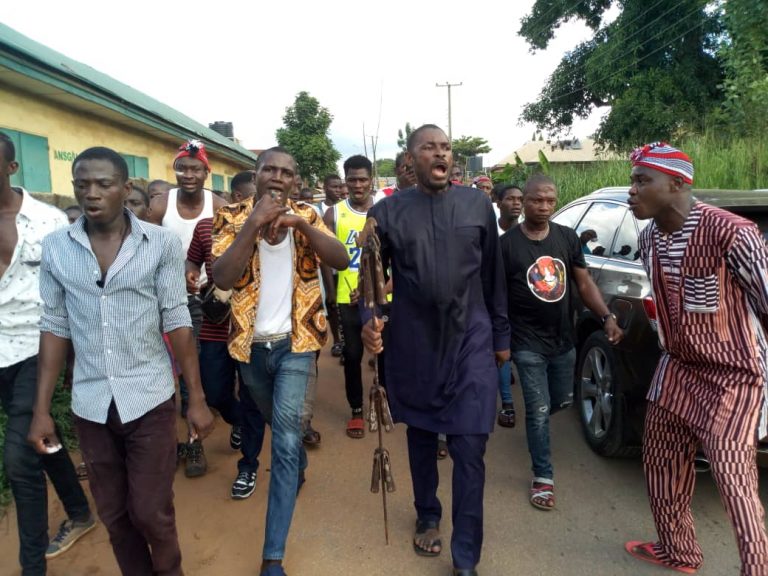
Whilst various stakeholders and concerned persons pleaded with the government to reconsider its position, a number of Awka indigenes gathered in front of the Anambra State government house days after the suspension of Egwu Imoka was announced intent on protesting the decision. It was a peaceful but a seemingly insistent protest meant to convey a message to both the government and the organizers of the Egwu Imoka that the adherents expected their sacred feast to be accommodated.
Event Organizers Calibrate Options
Amidst the swirling uncertainty concerning Egwu Imoka 2020, Awka Times returned to the Imoka chief priest, Mr Mmaduabuchi Ikegbunem, to assess the position. This time, Ikegbunem confirmed that the deity had given its edict. He said the order was that the feast must be held. This meant, he said, that Awka could not abide by the cancellation of the event as pronounced by the secular government. He said, however, that although the deity insisted on the performance, it offered scope for human modulation of the events. Through human agency, he said, the event could be conducted in a “balanced” way that satisfied sacred obligations but also accorded with the government’s guidelines for Covid-19 prevention. He said that all the major elements of the sacred ceremony must be observed but calibrated in a manner that would be sensitive to the contemporary health exigencies.
Egwu Imoka typically involves three key events held on different days: a contingent comprising a mixture of humans and masquerades despatched to the non-contiguous Awka village of Umuokpu to announce the commencement of the event; a tumultuous and highly ritualistic Opu-Eke Day heralding the opening events when adherents troop to Imoka shrine to pay homage and tender their offerings, a day usually begun with a procession of mystically decorated women led by the Eze Nwanyi going to pay homage to the deity in its shrine; and a day for the grand finale, known as the Masquerade Day, usually marked by mass masquerade outings, entertainment, merriment and varied pageantry.
The chief priest told Awka Times at the follow-up interview that he could now confirm the dates for the Egwu Imoka 2020 event. He declared that the formal kick-off event, being the emissary to Umuokpu, had been set for 25th May. This would be followed by Opu-Eke Day on 29th May, and the finale on 30th May.
The Imoka chief priest described to Awka Times the arrangements being made to reconcile the festival to the exigent guidelines from the government. For instance instead of a tumultuous procession of masquerades and humans marching to Umuokpu, he said that a small contingent of around 15 key persons could travel in a bus to deliver the commencement message to Umuokpu. The village too would be advised to send a delegation no more than 20-person strong. He said on the critical Opu-Eke Day only a selected and highly coordinated number of persons would accompany the chief priest to the shrine to perform the rituals, while on the Masquerade Day individuals would be encouraged to perform the ceremony in their homes. He said the usual mass of celebrants and revelers congregating at the market square would not be allowed this year.
The chief priest informed Awka Times that he had been working with Chief Austin Ndigwe, a claimant to the contested Awka kingship stool recognized by sections of Awka community as Eze Uzu III, to arrange for security contingents to superintend the event. He said that security personal would be placed at strategic locations around the Nkwo market square which constitutes the epicenter of Egwu Imoka celebrations. Chief Ndigwe himself had earlier availed Awka Times with a statement that he had released advocating for low-key Egwu Imoka celebrations this year. He would not be drawn, on further inquiry, to confirm any arrangements that he might be making for police mobilization.
▲Ndigwe, acclaimed as Eze Uzu III, at Egwu Imoka 2019
In the febrile contestation for the Awka monarchy stool, the Anambra State government has resolutely denied official recognition of Chief Ndigwe’s claim. However, Ndigwe has been a staunch advocate of the Egwu Imoka festival, once sharing with Awka Times his dream of giving it global visibility.
The Nigerian police force is enshrined in the exclusive list of the 1999 Constitution of Nigeria, meaning that it is under federal jurisdiction throughout the nation. Chief Austin Ndigwe is known to be closely allied with Dr. Celestine Okoye, a Deputy Inspector General (DIG) of the police and an Awka indigene. It is likely that Ndigwe, as he had done in past events, is leveraging his contact with DIG Okoye to arrange for police coverage of the event.
It remains to be seen if the compromise plan for Egwu Imoka 2020 can be pulled off, allowing Awka community to perform some version of its hallowed festival to appease the local deity whilst constraining social enthusiasms that might contravene guidelines laid down by an overstrung state government struggling to manage a menacing pandemic.♦
Awka Timesguest reporters, Pamela Henry-Igwe and Mini Chalas, contributed to the field reporting for this story.
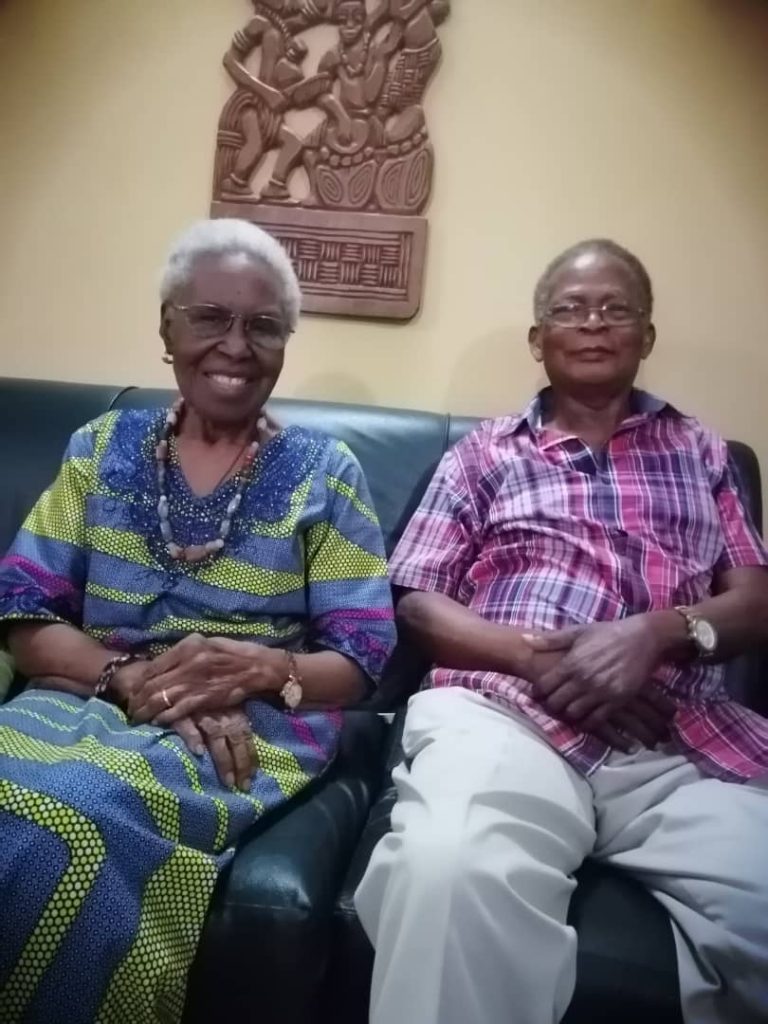
Maj. Gen. and Mrs. Madiebo, birthday celebrants (Awka Times exclusive)
By Chudi Okoye
Double birthday celebrations are being held for Major General (Rtd.) Alexander A. Madiebo who turned 88 on April 29, 2020, and his wife, Mrs. Regina Ifeyinwa Madiebo, who turned 90 today, April 30, 2020.
General Madiebo had had a promising career in the Nigerian Army, and also later a distinguished leadership role in the Biafran Army.
He had been an outstanding student at the storied Government College Umuahia, which was breeding ground for many of Nigeria’s future leaders. Later, deciding on a military career, Madiebo went for his first military training at the Regular Officers’ Special Training School in Teshie, Ghana. Subsequently he attended the renowned Eaton Hall Officer Cadet School in Chester, England, along with General Yakubu Gowon, with whom he also trained at the legendary Royal Military Academy, Sandhurst, England.
Alex Madiebo was commissioned into the Nigerian Army in 1956 as a 2nd Lieutenant. He rose quickly, soon promoted to become the first Regimental Commander of the Nigeria Army Artillery. At Nigeria’s independence in 1960, he became ADC to the first Nigerian Governor-General, Dr. Nnamdi Azikiwe.
After the Nigerian Civil War broke out in July 1967, Madiebo, who had narrowly escaped the pogrom in the North, became the Commander of the 51 Brigade. Soon, however, in the wake of several early battlefront setbacks on the secessionist side, then Biafran Head of State, General Chukwuemeka Odumegwu-Ojukwu, promoted Madiebo to become the General Officer Commanding of the entire Biafran Army. He held that role until the cessation of conflicts.
The civil war ended in a defeat for Biafra, but all sides in the war acknowledged Major General Madiebo’s brilliance as a military tactician who fought gallantly against heavy odds, outmatched in men and munitions but never in personal bravery.
He would later tell the story of the civil war in a critically acclaimed book, The Nigerian Revolution And The Biafran War, published in 1980 by Fourth Dimension Publishers.
The Biafran icon lives in well-deserved retirement these days, and at this time is enjoying birthday celebrations with his beautiful wife and joint celebrant, surrounded by family and friends.
Awka Times salutes General and Mrs. Madiebo, wishing the sprightly couple many more years ahead.
Happy birthday!!!
▲Biafran military high command inspecting a parade in 1969. Maj. Gen. Madiebo (3rd from right) and Gen Ojukwu (4th from right) among others.
Prof. Soludo against coronavirus lockdown, likely influencing policy change in Anambra State
… Soludo article dismisses government’s “panicky”, copy-cat approach to containment
… Says lockdowns could be economically devastating and are unsustainable over time
… Awka Times investigation reveals community behaviors in breach of lockdown rules
… ANSG tweaks lockdown policy but Soludo tells Awka Times he is not linking it to his article
By Chudi Okoye
It amounted to a remarkable display of intellectual gumption, taking a position seemingly at odds with the prevailing instinct of an administration to which his political fortune might be tied. Amid the ongoing debate about the validity and viability of lockdown as a coronavirus containment strategy, a likely contender in the next gubernatorial election in Anambra State, Prof. Chukwuma Soludo, has come out with a lacerating critique of lockdown which is at the core of the Anambra State government’s organizing philosophy for coronavirus containment. According to Prof. Soludo, who is currently Chairman of Anambra Vision 2070 Committee, a planning group set up by the Anambra State government, the widespread strategy of lockdowns and social distancing currently being implemented in Anambra State, Nigeria at large and elsewhere in Africa is unsustainable and could trigger a devastating outcome of “economic pandemic”.
In a widely-circulated position paper articulating what he called his “personal” views, the former governor of the Central Bank of Nigeria (CBN) starts off with an olive branch arguing that “no one can blame African policymakers for the initial panicky copy and paste response” they adopted in combating the coronavirus scourge. Such response, as Soludo describes it, consists largely in copying without much thought the “coterie of defensive measures” adopted by Western countries, including border closures, lockdowns, social distancing policies, and an assortment of welfare interventions implemented alongside healthcare measures such as setting up testing and isolation centres. Prof. Soludo recognizes the logic of such measures in the midst of the coronavirus exigency. “No public officer”, he says, “wanted to be blamed for doing nothing or not doing what others were doing.”
But Soludo wonders whether merely copying the Western model is “the right approach for Africa”. He argues that Africa has “two unsavoury options” in dealing with the coronavirus menace. According to him, Africa could simply maintain “the conventional template including lockdowns” copied from Western countries, or it could seek “heterodox (creative local) approaches without lockdowns”.
Prof. Soludo rejects the first option, arguing that “a strategy that includes lockdowns/border closure is the worse of the two options, given our social and economic realities.” He says that “lockdowns in Africa suffer time-inconsistency problem without a credible exit strategy; is unaffordable and could potentially worsen the twin pandemic—health and economic—in Africa.” He warns that imposing lockdowns in the current circumstance amounts to adopting a “suicidal… waiting game” involving an indeterminate period of uncertainties which could prove devastating and “near impossible in much of Africa.”
State And Federal Lockdown
Although Prof. Chukwuma Soludo locates his analysis at the continental African level, his intervention, whether or not intended, amounts to a searing critique of the coronavirus containment measures currently being implemented by states and the federal government in Nigeria. Soludo is a member of the All People’s Grand Alliance (APGA), the current governing party in Anambra State. He is also a member of the Economic Advisory Council set up in September 2019 to advise the Nigerian president, Maj. Gen. Muhammadu Buhari, on a range domestic and global economic issues.
Soludo’s strategic access to both the state and federal governments makes his intervention all the more poignant.
▲Prof. C. Soludo, critic of lockdown policy
The federal government and subnational authorities in Nigeria have implemented a panoply of prohibitive measures including stay-at-home or lockdown policies which constitute the core of their coronavirus containment strategy.
In Anambra State, the government has introduced successive waves of social distancing policy, advising citizens to stay at home. Initially, the state adopted a more laissez-faire approach, proposing rather than imposing social distancing measures. However, as more cases of coronavirus infection were reported elsewhere in Nigeria, the state government imposed more stringent measures, closing down schools and subsequently offices and markets. And then, earlier in April after a fretful Anambra reported its first coronavirus case, the state government shut down the state’s boundaries and embarked on a stricter enforcement of its social restriction policy.
The state government adopted measures to allow passage only for essential services and haulage trucks bearing essential commodities. All non-essential movements were prohibited, and even persons granted freedom of movement must wear masks made with approved materials, the government insisted. The restrictive measures would remain in force even after the Anambra State governor, Willie Obiano, in a statement issued on 22 April, announced that the Index Case in Anambra had been tested and re-tested and, repeatedly found negative, had been discharged.
▲Gov. Willie Obiano, architect of lockdown policy
The same cautious control has been imposed by the federal government. Although federal authorities were initially accused of being slow to respond to the menace, the federal government claims that it had started putting measures in place from the moment on 27 February 2020 when Nigeria confirmed its first case of coronavirus. Since then, federal authorities have been advising state governments to clamp down on movements as a way to curb coronavirus contagion. Federal institutions including schools and universities and the bureaucracy were shuttered. The federal government exercised emergency powers imposing lockdowns in Lagos and Ogun States, and the Abuja Federal Capital Territory, three areas with the earliest surge of reported cases. Subsequently, in mid-March the federal government banned entry for travelers arriving from 13 highly exposed countries. It followed this up shortly with a closure of all international airports in the country, initially for four weeks and then recently extending the closure for another two weeks.
Nigeria, at state and federal levels, is on precarious lockdown, and it is unclear when the imposition will be lifted.
Restriction Drives Restiveness
The imposition of lockdowns has proved a source of angst and restiveness amongst global communities. Such restiveness is evident even in advanced economies with established social welfare institutions where governments are making contingency payments to facilitate stay-at-home policies. In the United States, for instance, the government approved an initial US$2.2 trillion coronavirus stimulus package, following this up with an additional US$484 billion relief for small businesses and hospitals. More relief provisions are in the pipeline.
In Europe, governments in the eurozone have voted on measures that could provide more than a half-trillion euros ($550 billion) for companies, workers and health systems to cushion the economic impact of the virus outbreak. Individual European governments like Germany are providing supplementary relief.
In the United Kingdom, the government announced £330 billion ($398 billion) of government-backed loans and guarantees, among other earmarks, to provide coronavirus relief.
These massive provisions provide the structural basis for the lockdown policies imposed by Western countries. But this is a template being copied by African governments, including the local authorities in Nigeria, which can ill-afford such levels of fiscal intervention. “[No] government in Africa can seriously pay for lockdowns,” Prof. Soludo argues, “[and without] government support, no more than 5% of Africa’s 1.3 billion people can possibly survive any prolonged lockdown on their own finances.”
In Africa with its subsistence economies and contingent earnings where, as Prof. Soludo reports, about 80% of the population lives “from hand to mouth on daily toil and hassle”, restiveness engendered by the continuing social restriction is intensifying.
As Soludo puts it:
“The millions of persons in the street who are struggling between life and death each day with numerous other challenges do not, and will never, understand why so much additional hardship is being foisted upon them because of the novel coronavirus. For most of them (wrongly though), it is an elite problem since, for them, the ‘hunger/other disease virus is more dangerous than corona virus’.”
A “complete lockdown”, he said, would be “almost impossible in our social settings. In most cases, the orders simply create opportunities for extortion for the security agencies: those who pay, move about! Attempts to force everyone into a lockdown for extended period may indeed be enforcing a hunger/stress-induced mass genocide. More people could, consequently, be dying out of hunger and other diseases than the actual Covid-19.”
It is an apocalyptic critique probably unexpected from someone so close to the governing authorities. But there is no questioning the validity of Soludo’s critique. Awka Times investigations in the local Awka area revealed aspects of the scenarios envisaged by Prof. Soludo.
Locked Down But Not Held Down
Soon after the Anambra State government began a more stringent enforcement of its social distancing and lockdown policies, Awka Times traversed the streets of the Anambra State capital, Awka, to observe the level of compliance with the rules and to take a pulse of public reaction. During mid-April, in the days following the announcement of total lockdown in the state, some notable precincts along Zik Avenue – the main street in Awka which is usually a bustle of economic and social activities – seemed deserted. Some of the banks, offices and shops that line the streets were open but sparsely populated or patronized.
There was light traffic everywhere, human and vehicular. Perhaps the most notable absences were the ubiquitous commuter tricycles, colloquially known as keke. The sparseness of these vehicles, the very symbol of economic mobility in Awka, offered the most potent metaphor of the effect of the lockdown at that initial phase.
At the central commercial hub, the popular and usually boisterous Eke Awka market, stalls were totally shuttered in the early days following the full lockdown. In fact, all local markets from Nkwo Amaenyi in the northeastern part of the state capital through Eke Awka in the southwestern precinct to the neighboring Amawbia town, were closed in the heady aftermath of the full lockdown. Some shop owners were seen forlornly straggling in the vicinity or seated by their storefronts ruing the inactivity and contemplating the coming losses. Even the irrepressible street hawkers selling edibles and vendibles were barely seen in their usual haunts around the local markets.
Some perishable goods sellers lamented the fact that their products would be wasted before the two weeks of lockdown imposed by government would be over. This was mid-April: they were not to know it then but government would later extend the lockdown. Some other shop owners who spoke to Awka Times wondered how they could feed their families without business income or government subsidy.
Days of lockdown in Awka and environ
1 of 41
In the days since total lockdown was announced, the state government in Anambra has been tweaking the policy – but mostly around the edges. All around Awka and beyond, government and public offices remain closed. The only exceptions are the ‘essential’ services: police, other security agencies, medical establishments, media houses etc. Banks are open but with skeletal staff. Drugstores and foodstuff markets are officially permitted to open but only on Tuesdays and Fridays.
Despite the official stance, Awka Times observed that in many parts of Awka, since after the initial stricture of total lockdown, non-essential trade is slowly returning. Days after the initial closure of the Awka markets, it was announced that all markets should be moved to some designated locations. Eke Awka main market food sellers were asked to remove to the old Awka stadium close to Igwebuike Grammar School. But this arrangement did not last long due to lack of security. Sellers who complied complained that their goods were stolen. One man was beaten close to death. Following complaints to the market chairman, food sellers were asked to return to their stalls but to open only on Tuesdays and Fridays.
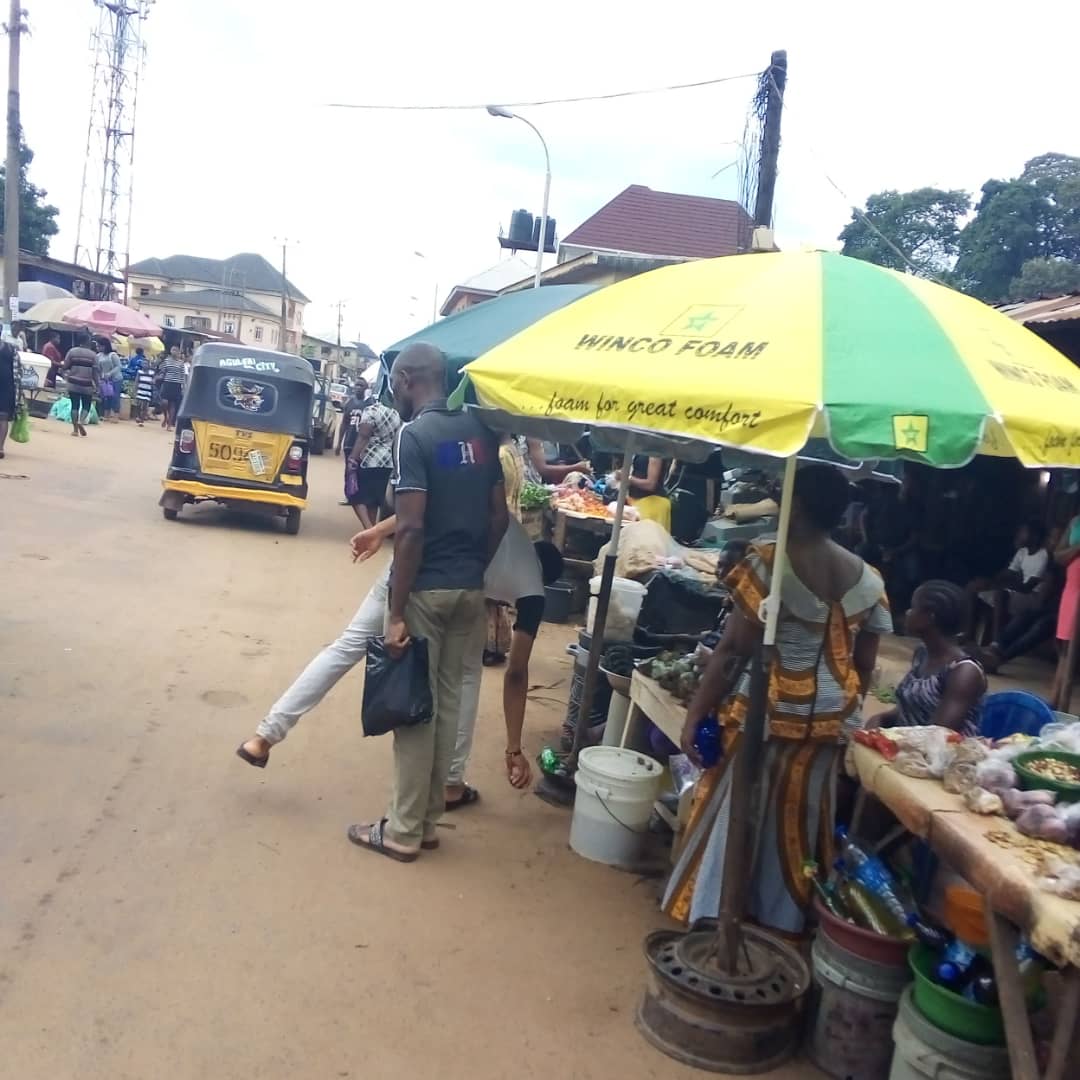
Still, marketers have hardly complied with the limited reopening, Awka Times has observed. Markets are meant to open only of Tuesdays and Fridays, but from the Garki meat market in the northern fringe of Awka capital territory down to the central business district around Eke Awka and beyond to the southern tip of the town, shops are open once again and commerce is buzzing. All manner of trade is conducted at the various markets, even with law enforcement standing by. On 24 April when an Awka Times reporter set out to assess the situation, she noticed that human and vehicular traffic was heavy, surging almost at the pre-lockdown level with no observance of social distancing rules whatsoever. Our reporter noticed that many shops had been re-opened, brazenly displaying their goods – clothing, bags, shoes, hair products and accessories. In her enquiries, the reporter heard defiant remarks to the effect that “Coronavirus is not for Anambra State.”
In addition to marketers, artisans have continued to ply their trade, though with surreptitious caution, also in the belief that the coronavirus threat is exaggerated and did not compare with the risk of hunger and economic strangulation.
It would appear that the lockdown is now observed more in the breach in many areas of the Anambra State capital, especially in the informal sectors of the local economy. If the lockdown is being breached in the state capital under the watchful eyes of police and enforcement task force, one wonders about the level of compliance in the interior communities of Anambra State.
Awka Times did observe a level of compliance in certain parts of Awka town. In areas such as the usually busy Obi Okoli-Unizik Temporary Site junction, along the Awka-Enugu Expressway, at the Aroma junction and all around the government Secretariat, even at major parts of Zik Avenue, shops operate sparingly, more at dusk and into the night than in brazen daylight. Some shops are open but with door protectors in place, the timorous shop owners lingering in the background ready to attend to their prospects whilst looking out for security and law enforcement personnel. Some shop owners and service providers stay inside and take calls to offer their services, Awka Times gathered.
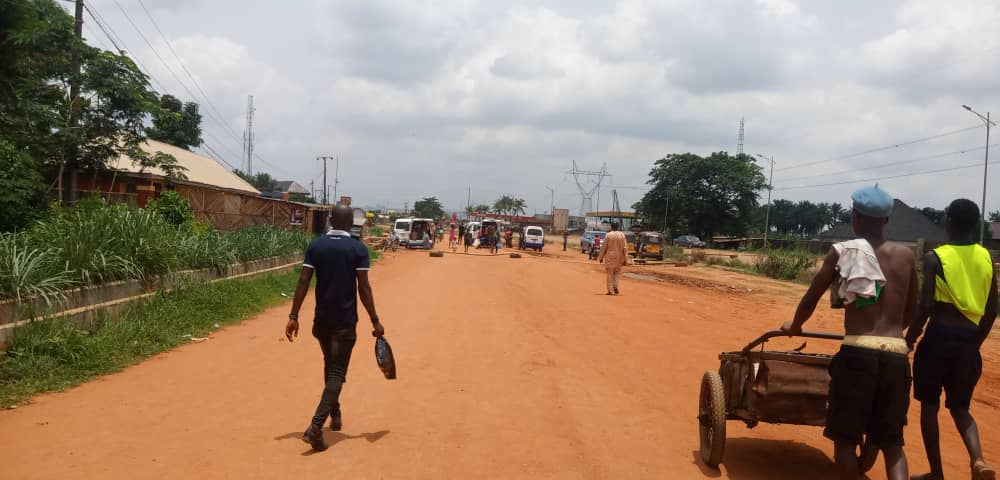
Awka Times also tried to monitor the enforcement of boundary closure which had been imposed by the government to facilitate contact tracing soon after the lone coronavirus case was announced in the state. At Anambra State’s northern boundary with Enugu State near Amansea, Awka Times observed a post of ramshackle barriers and spirited inspection of inter-state traffic. But while vehicular traffic was dutifully controlled at the barrier, humans crossing the boundary on foot were not accosted by officials. A whole new transport chain had emerged whereby vehicles shuttled commuters up to one side of the boundary, the passengers then simply crossed the boundary on foot to embark waiting shuttles on the other side. This was the simple workaround by the cross-boundary travelers, and it was happening right before boundary patrol officers.
The workaround and exigent improvisations prove what Prof. Soludo has alluded to: that total lockdown is impossible given the nature of African economies.
The question which Soludo tries to address, beyond the effectiveness of enforcing the lockdown, is whether total lockdown is even a theoretical necessity in the fight to curb coronavirus contagion. He answers this question in the negative and proceeds to offer an alternative solution which he says would help to contain the spread of the virus without the economic strangulation resulting from total lockdown.
Soludo Solution and ANSG ‘Response’
Prof. Soludo begins his articulation of solutions with a definitive suggestion, namely that “African countries should urgently dismantle the border closures as well as the stay at home/lockdown orders.” He says that he “strongly support[s] the re-opening of all of Africa urgently” on the ground that “Africa cannot afford lockdowns that [are proving] ineffective anyway.”
Prof. Chukwuma Soludo’s proposal of an immediate rescindment of government lockdown policy places him somewhat at variance with some other more cautious policy interlocutors. Among these is Mr. Osita Chidoka, a former Minister of Aviation in Nigeria who contested in the 2017 Anambra State governorship election against the successfully re-elected incumbent, governor Willie Obiano.
During a recent conference call to discuss responses to the threat of Covid-19 in the South East of Nigeria, Mr. Chidoka disclosed that he had discussed the issue of lockdown with Soludo and was glad that the professor had synthesized his thoughts into a circulated presentation. Chidoka agreed that the closure of Anambra state boundaries was problematic, especially given the dependence of the state on food imports from other states. He gave the example of yam imported from Benue and Taraba states.
▲Osita Chidoka: advocate of ‘restart without spreading’
Chidoka also agreed that the lockdown was not necessary, but said that we are where we are. He said he had learned from Dr. Anthony Fauci – the director of the US National Institute of Allergy and Infectious Diseases (NIAID) and a lead member of the Trump Administration’s Coronavirus Task Force – that we don’t fully understand the virus and therefore that no solution should be rashly discounted. He said the lockdown was not the solution but a solution, and that “we should be tentative in our views”. Chidoka said that the issue of lockdown is as important as that of how to deal with “1m infected people” should there be a surge with a rash reopening. He advocated what he called “restart without spreading”, which is a more cautious reopening strategy informed by extensive testing results.
Besides his forceful intervention on the issue of lockdowns, Prof. Soludo offers other ideas to deal with the coronavirus threat including: concerted exploration of local medicinal cures for Covid-19; use of the crises to drive new economic opportunity such as local production of face masks, hand sanitizers, gloves etc.; and longer-term fiscal reform and restructuring of African economies. “Every shock or pandemic presents opportunities,” Soludo says, arguing that we should seek to “exploit the global opportunities offered by the [present] crises.”
Awka Times noticed that after Prof. Soludo’s widely publicized intervention, the Anambra State governor, Willie Obiano, on Saturday 25 April, issued a statement ostensibly intended to provide updates on his administration’s coronavirus strategy. The statement came rapidly after a similar update the governor had given on Wednesday 22 April. It was the shortest interval so far in the governor’s intermittent updates, occurring at a time that Soludo’s statement was making the rounds in mainstream and social media, including government-owned media outlets. In his latest update, Obiano said his administration was motivated to “make few adjustments to our strategy against the pandemic,” including the following:
Food markets including restaurants and bars could reopen immediately for normal business.
Movement within Anambra State has now been reopened.
Churches could reopen but worshippers must comply with the standard protocols of Covid-19.
Major markets could be officially reopened after review meeting with market leaders on 27 April 2020.
State boundaries however are to remain closed, and all preventive protocols including wearing face masks and sanitization remain in place.
It isn’t clear the extent to which Soludo’s intervention informed the Anambra State government’s policy recalibration. It is remarkable that the policy change came in the swirl of an extensive circulation of his article, unusually only days after an update had been given by Governor Obiano.
So is there a nexus between Prof. Soludo’s intervention and the Anambra State government’s policy change? Awka Times put the question to Prof. Soludo himself. As might be expected, the professor demurred, only offering the following unpresuming response to Awka Times:
“I don’t personally make any connection between my article and what any government does. I have publicly shared my thoughts as a public intellectual; what policy makers make of it is up to them.”
Whatever the impulse behind the sudden policy change by the government of Anambra State, whether it was the felicitous results from testing or the restiveness and pragmatic breach of the government’s lockdown policy, the change also coincided with a forceful intervention by a strategic ally of the government, someone probably planning a pitch to succeed the incumbent governor. If policy development around the coronavirus menace becomes an issue in the upcoming governorship election, it could not hurt Prof. Chukwuma Charles Soludo that he seems to have influenced government thinking to alleviate the strictures of a government policy with a perilous impact on the population.♦
■ The field observations used to develop parts of this report were provided by Awka Timeseditor, Emeka Ral and reporter, Stella Nzekwe, with contributions from guest writer, Ndu Chris Nwannah and reporter Ella Okonkwo.
Late Mallam Abba Kyari, President Buhari's Chief of Staff
By Chudi Okoye
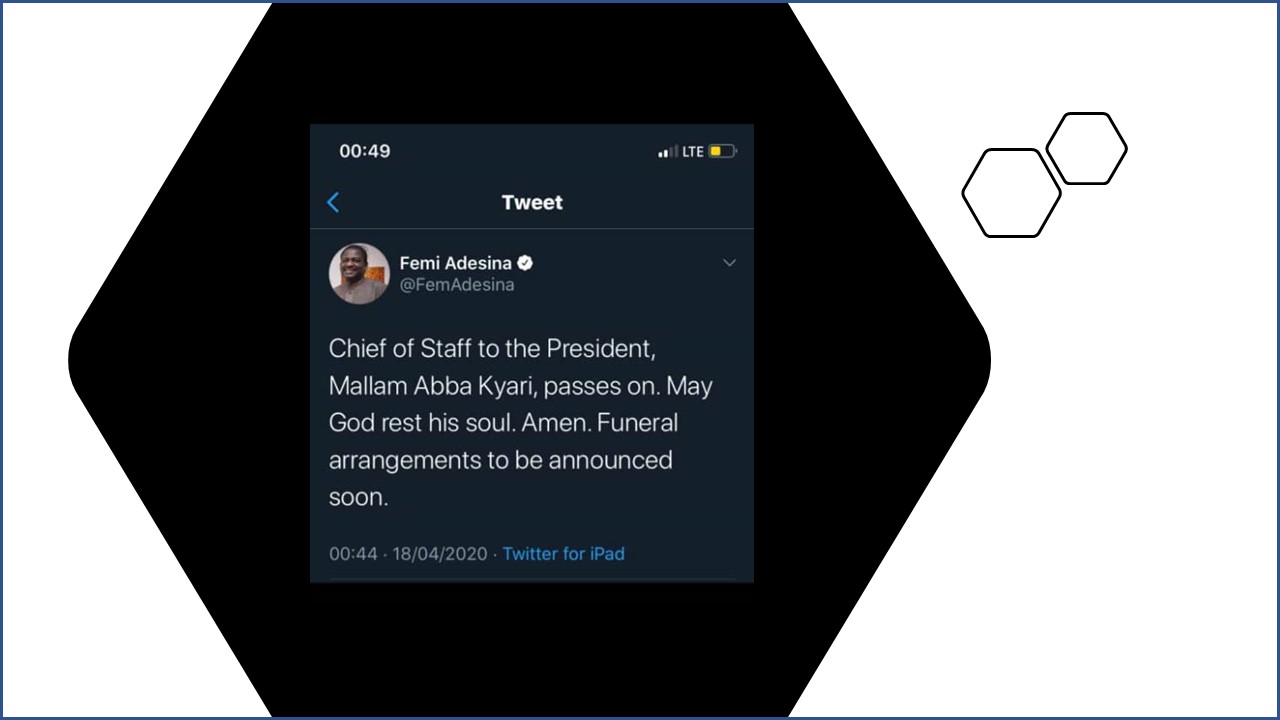
The Chief of Staff to the Nigerian president, Mallam Abba Kyari, is dead. His death was confirmed in a tweet posted at 12:44 am local Nigerian time on Saturday, April 18, 2020 by Mr Femi Adesina, Special Adviser to President Muhammadu Buhari on Media and Publicity.
Mr Adesina’s tweet read as follows: “Chief of Staff to the President, Mallam Abba Kyari, passes on. May God rest his soul. Amen. Funeral arrangements to be announced soon.”
▲Mr Femi Adesina’s Tweet
In a press release later posted on his Facebook page, Mr Adesina confirmed that “the deceased had tested positive to the ravaging COVID-19, and had been receiving treatment.” He wrote that Mallam Kyari he died on Friday, April 17, 2020.
Mallam Abba Kyari’s death came after a period in which he was reported to be battling coronavirus infection. The powerful mandarin is the first reported victim of the dreaded disease in the upper echelons of the Nigerian government.
His death will reverberate through the Buhari administration and the broader terrain of Nigerian politics. It may also likely recast the allegedly lethargic approach of the Nigerian federal government in combating the disease. Mallam Kyari’s demise may equally spark desperate speculation about his contact history and the spectre of contagion in the administration.
It will be recalled that Mallam Kyari had gone on a visit to Germany and Egypt, two global hot spots of coronavirus contagion, after Nigeria had recorded its first coronavirus case on February 27. He was reported to have met with officials of Siemens in Germany during his tour, accompanied by the Minister of Power, Saleh Mamman. The meeting took place on March 9. It was announced on March 24 that Kyari had tested positive for Covid-19 in a test performed the previous day.
After Mallam Kyari’s infection became public, he left Abuja for Lagos to receive proper medical care, although the federal government remain secretive about his whereabouts. Mallam Kyari himself had issued a statement on March 29, six days after his positive test, confirming his situation and plans.
“…last week, I tested positive for coronavirus,” he wrote, “the pandemic that is sweeping the world. I have followed all the protocols government has announced to self-isolate and quarantine.”
He said he was making personal arrangements for treatment. “I will transfer to Lagos later today for additional tests and observation, Mallam Kyari wrote. He claimed that this was “a precautionary measure”, that he felt “well” and did not have “high fever or other symptoms associated with this new virus…” He also said that he had “been working from home”, and “hope[d] to be back at my desk very soon.”
It is thought that Mallam Kyari died at the health facility in Lagos.
Mr Femi Adesina said in his notices that funeral arrangements would be announced in due course.
Incidentally, the death of Mallam Abba Kyari came soon after a ramp up in coronavirus cases and fatalities were announced by the Nigerian Centre fo Disease Control (NCDC).
As we report in the updated Awka Times tracking, on April 17 Nigeria added 51 new cases and recorded four new deaths, the largest daily additions so far.
The growing number of cases and fatalities, dramatized by Mallam Kyari’s death, will concentrate minds within the administration.
Awka Times will track the developments and provide details later.
The current distribution of federal relief funds as coronavirus infection spreads in Nigeria has raised questions of distributive equity, with growing complaints of lopsided distribution to the North. However, Awka Times analysis shows that current distributions may be targeted more at chronic poverty alleviation rather than addressing the specific exigencies of the coronavirus scourge, a policy choice that may still rankle in some parts of the country.
By Chudi Okoye
Amidst the swelling incidences of coronavirus infection in Nigeria, with more of the country on lockdown as part of the containment effort, the federal government of Nigeria has commenced the distribution of relief funds to the most vulnerable members of the society. However, there is confusion about the government’s priorities as cash transfers so far do not appear to align with known facts about the distribution of coronavirus infections in the country.
There is probably some virtuous logic behind the current distribution of federal relief funds, but it is not obvious on cursory analysis.
Creeping Count of Coronavirus Cases
With the official count of coronavirus in Nigeria at 442 as of 16 April 2020, Nigeria remains in the lower rungs of continental and global ranking of the pandemic scourge. It is currently 12th in Africa and 98th in the world. Despite the relatively low ranking, within the country itself there is wide disparity in reported incidences of coronavirus.
The latest update of confirmed coronavirus cases indicates that 19 of the country’s 36 states and the federal capital Abuja have reported incidences of the disease.
In terms of geopolitical spread, the South West remains the only zone with all its constituent states reporting confirmed Covid-19 cases. The zone so far has reported 67.4% of the total confirmed cases in Nigeria, with Lagos State alone reporting 56.8% of nationwide cases. This is no doubt correlated with the skewed availability of testing facilities in the state.
Abuja FCT is another heavily impacted area with 15.2% of the total conformed cases in Nigeria. The North Central zone within which the FCT is located has in total about 16.7% of the national tally, with cases also reported in Niger, Benue and Kwara states located in that zone.
The South South zone, with four of its six states reporting confirmed cases, has 6.1% of the national total.
The North West zone has 7.7% of the national total, with reported cases in Kano, Kaduna and Katsina states.
The remaining geopolitical zones appear as yet to have miniscule exposure to the coronavirus contagion. North East has 1.4% of the national record, with cases there reported only in Bauchi State. The South East zone – where Anambra and Enugu states have so far reported a single case each – brings up the rear with 0.7%.
The threat of coronavirus spread has forced federal and state governments in Nigeria to impose social distancing guidelines, with schools, public institutions and centres of economic activity shuttered in most parts of the country. The new guidelines are being enforced with varying levels of strictness and dexterity.
Focusing the Federal Funds
The lockdown was bound to unleash severe disruptions and hardships, the effect of which appears to bear most heavily on the poorest segments of the society. For this reason, across the country private individuals, civic groups as well as state governments are making strenuous efforts to provide palliative packages to the most imperilled parts of the population.
The federal government too has initiated its own relief programme. It is leveraging the National Social Safety Nets Project (NASSP), which is supported by the World Bank, to provide financial support to poor and vulnerable households in Nigerian. A component agency of this project, the National Social Safety-Nets Coordinating Office (NASSCO) recently released what it calls the “National Social Register of Poor & Vulnerable Households” which, according to the agency, is “built through a rigorous, transparent community-based targeting process undertaken by states and validated by NASSCO.” The agency’s register is updated to 31 March 2020, and calibrates the targeted households and corresponding populations by state.
Shortly after the release of the poverty register, another component agency of NASSP, the National Cash Transfer Office (NCTO), was activated to begin the release of what was touted as Covid-19-related relief funds to targeted households. The new disbursement is based on the National Cash Transfer Programme (also known as Household Uplifting Programme, HUP) which is said to be one of the “social investment programmes anchored by the Federal Government of Nigeria.” This programme had been established in 2016 with World Bank support.
Data is now available for the distributions made so far under the scheme. Awka Times dug into the available data, triangulating it against the overall national population and also the distribution of coronavirus cases so far reported across the states of Nigeria. For simplicity and political salience, we calibrated the analysis by geopolitical zone.
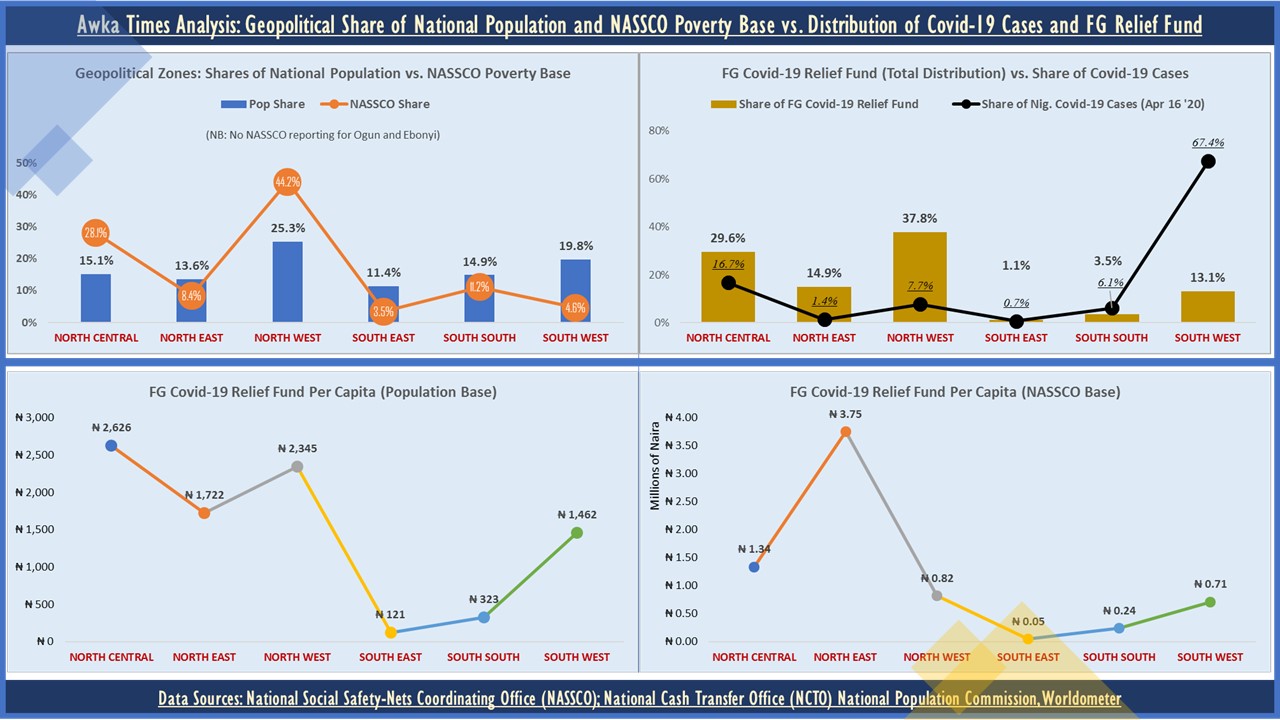
The result of our analysis is presented in an easily-accessible dashboard.
▲Click to enlarge
Analysis of the Paralysis
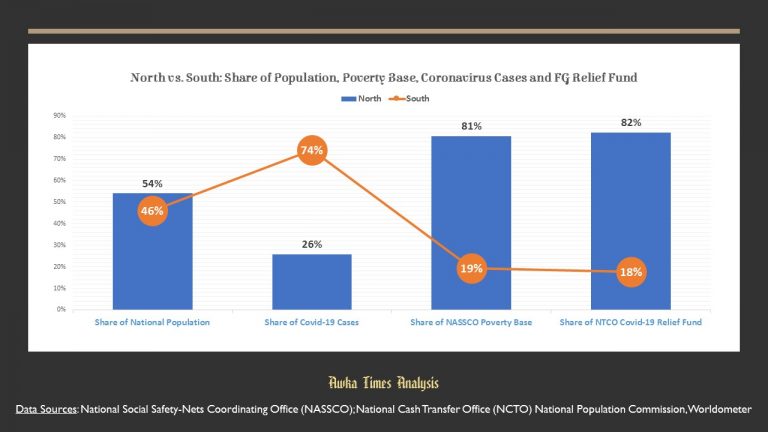
The results of the analysis are intriguing. Part of the results seem intuitive, probably in line with known facts about the spread of prosperity in the country. For instance, the Southern geopolitical zones constitute about 46% of the Nigerian population but yield only 19.3% of NASSCO’s registered poor. On the other hand, the Northern geopolitical zones, comprising 54% of the population, produce 80.7% of the registered poor.
A breakdown shows that the South East region, according to aggregated census data, represents about 11.7% of the national population whereas it constitutes merely 3.5% of NASSCO’s tally of the extreme poor. The South West geopolitical zone, with 19.8% of the population, registers 4.6% of the extreme poor. And the South South zone, with 14.9% of the population, produces 11.2% of the poor.
In other words, all the Southern geopolitical zones under-index their population share in the poverty register.
The Northern states, on the other hand, mostly over-index their population share in the poverty track. The North West, with 25.3% of the population, produces a whopping 44.2% of the desperate poor in Nigeria. The North Central zone, with 15.1% of the national population, yields about 28.1% of the extreme poor. The North East, however, with 13.6% of the population, throws up 8.4% of the registered poor, thus on the current tally under-indexing its population share.
Awka Times analysis shows that while the distribution of the federal government’s Covid-19 relief funds aligns with the poverty skew in the country, it is rather inversely correlated with the actual distribution of coronavirus cases in the country. Aggregated data as of April 16 shows that 74.2% of coronavirus cases were reported in the Southern geopolitical zones, far outstripping the 25.8% reported in the North.
On the other hand, the bulk of the federal relief fund so far released, 82.3%, has been released to recipients in the North. The disbursement aligns with the concentration of poverty in the North but it is woefully misaligned with the concentration of coronavirus cases in the South. The most glaring case is in the North West zone: with 44.2% of the registered poor, the geopolitical zone has received 37.8% of the federal relief funds even though it has only 7.7% of the country’s confirmed coronavirus cases.
It may be a matter of policy preference: whether to target palliative provisions at the alleviation of chronic poverty in general or at the poor who are likely the most impacted by the exigent hardships engendered by the coronavirus pandemic. It is a policy choice, and so far it appears that the federal authorities have preferred the former, choosing the alleviation of chronic poverty over the exigencies of the current health scare.
Policy choices are often moral choices. It is a matter of debate whether the federal government’s current preference is the right one.
(Being an adaptation of a prayer offered by the African American, George Lawrence, in New York, commemorating the fifth anniversary of the abolition of slave trade in 1808.)
By Chudi Okoye
O! thou father of the universe and disposer of events, thou that inspired Awka Times from the dark and formless mass of despair pervading our homeland, Awka
And anointed thy sons and daughters here in this editorial team to take up the task of reporting and repairing our town, basking in the golden streams and rivulets of thy wisdom as we do so
We have convened under thy divine auspices as pioneer members of Awka Times editorial team preparing to launch the magazine
We have gathered not to indulge some overweening career ambition or profit motivation, or to celebrate the partisan disposition of arms by which the fate of Awka people continues to be wasted, thus contaminating the elegant fields of our fatherland with desperate desolation
Rather we gather to seek ways to bring forth the light of thy wise counsel, to stay the hands of the merciless powers and profiteering factions stirring up division in Awka
Thou have guided our deliberations and exertions thus far with thy tender hands, leaving our hearts expanded with gratitude for thy providences
Yet, dear Lord, inundated in the sea of thy mercies we further crave thy fostering care for the days ahead leading up to and beyond the launch of our magazine
O! wilt thou crush that power that may stand in our way, that will impede the dissemination of truth by Awka Times, or such that still seeks to hold our brethren in the bondage of partisanship and ignorance
Dear Lord, let the gentle breeze of thy blessing wash over the affairs of Awka Times Magazine, and let the light of thy wisdom illuminate our paths
Let Liberty, O Lord, unfurl her banners; and let freedom, justice and prosperity reign triumphant in Awka, if thou wilt wish it, dear Lord, from the labors of this overburdened team and its overtasked leaders.
Awka is a town pregnant with possibilities
No one can yet decipher what she will deliver
Awka was part of the nexus of early Igbo civilization
Throughout, Awka has carried the burden of Igbo history
Great deeds were done in this land of manifest destiny
Awka forefathers created a great society
To spark the eruption of modernity in Igboland, even Nigeria
Awka made things, manufactured things: For self and others
Awka sustained the gods of foreign lands
Equipped other peoples to build their own economies
Awka was the smithland of Igboland
And later became the capital of a core Igbo state
The inner city from which Igbo civilization would radiate
But look at Awka now: spent and bent in desperate despair
The bearer of distant burdens has become a burden itself
Community leadership is diffuse and obtuse
The people are dazed and confused
The town feels abused and abandoned
Lagging behind peers as a township
Slagged for its ragged look and musterless leadership
But Awka has an irrepressible spirit!
An inexpressible destiny!
Awka will rise again!
Awka will rise to the battle
With new clamor and new amour
Led by citizens with resurgent valor!
The age of Awka rebirth is dawning! Awka Times, a Trumpet With Certain Sound
Summons a generation primed for its time!