28 C
Awka
Sunday, April 5, 2026

Trumpet With Certain Sound

Home Blog Page 12

The Hordes and the Spin Doctors

0
Utopia or Dystopia?

The Hordes and the Spin Doctors

By Chudi Okoye

Spare a thought for the huddled hordes in our forlorn fatherland
Their muddled minds spooked by relentless spinmeisters
Daily assaulted by fatulent accounts of a fabulous reality
Supposedly their lot instead of a dystopian existence
Created by the conspiratorial convergence of conmen
At the commanding heights of governing institutions
And armies of artful and well-rewarded myth makers
Who polish dystopia into unverifiable utopia.

Yet again spare a thought for the unsuspecting masses
Daily assailed by the phalanx of propaganda peddlers
Promising El Dorado under the sizzling custodianship
Of brand new leaders the likes of whom we’ve never seen;
They’re fed soaring tales of deeds they can’t comprehend
From the esoteria of finance to the mysteria of philanthropy
Which the spin doctors invoke in behalf of their paymasters
To lift the hungered hordes from despair to spasms of new hope.

Seattle, May 21, 2021

The Sod’s Prayer

0
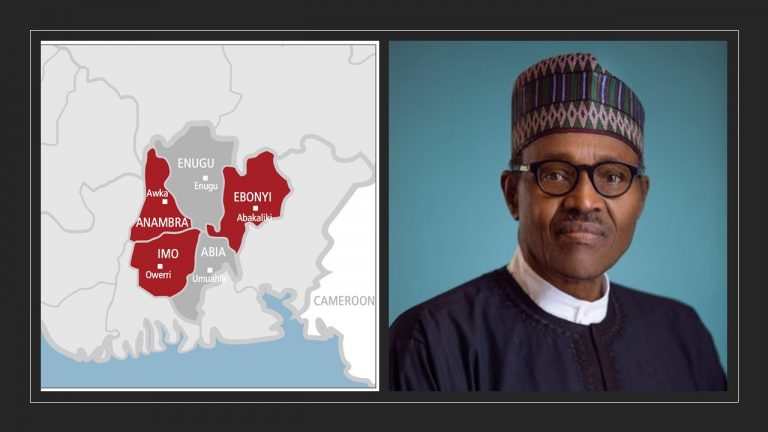
Saga of President Buhari and the South East geopolitical zone

The Sod’s Prayer

By Chudi A. Okoye

Our dearly beloved Father
Thou which art in Aso Rock
Hallowed be thy name!
Thy kingdom come
Thy will be done in Igbo land –
The land you crush with iron hand –
As it is desired by Fulani bands.

Master, you can squelch our self will
Thy flock can invade the land we till
And you may deny us our say
But we beseech thee with dread:
Daddy, please give us this day
Our daily bread;
By this supplication we seek
Not, by any means, the common weal
Of our people, in pains, hoping to heal
But merely our individual gains.
We seek thy private favors, oh Master
Even though upon our land rains
Thy wanton ire and thy vindictiveness.
We shall proclaim thy distinctiveness
Even as you seem to seek the final solution
Against a people that you once fought
And crushed bodily but not their thought.

Please forgive our irreverent brethren –
Those upright folks with manly pride –
Father forgive them their trespasses
For they know not what they do!
We ourselves with beseeching hands
Have long forgotten thy old trespasses
Perpetrated against our traumatized people
And now willingly we also do forgive
Thy vile and enduring trespasses
Thy wanton and unremitting brutalities
Furtively enacted but largely unspoken
Against the forlorn peoples of the East
Who appear beaten but remain unbroken.
We forgive, quite willingly Sir, all thy excess
Just so we can retain our treasured access
To the labyrinths of power in Aso Rock.

This we promise thee today, our Master:
Those kith and kin with thin skin
Whose roar rattles the forests of injustice
Will not lead us into the temptation
Of ever confronting – ever! – this oppression.
Daddy, please deliver us from their drivel
Their constant complaints about the evil
Visited upon their lives by commands
Issuing from the hallowed entrails of Aso Rock.

Those isolated vanguards of Igbo patriotism
Raising ructions and righteous revolt
Fail to contemplate the current catechism
Fail to see that after seeking power for so long
Preternaturally striving to ascend the rung
You now hold the country in fearsome remand
And Nigeria is truly – for now – thy kingdom
The domain of thy power and thy glory.

But away with them, Abba Father!
We won’t be deterred from thy beneficence!
We won’t be prized from our prominence!
We will revel in thy present eminence,
And joyfully so, our benevolent Master, we will,
Assured that however strident the critics’ peal
Our forgetful columns will come to be dazzled
By the shiny spoils of our slavish toils.
We will ride the paternoster of a new story
And our stars will glimmer with reflected glory
For ever and ever
Amen.

(First draft: Seattle, March 4, 2021)

In Time, the Tyranny of Fulani Rule in Nigeria Will Wither Away

0
Nigeria's fate: Tranquility following the storms of ethnic rule

Like the transient severity of winter, the blistering storms of ethnic rule in Nigeria will blow over and progressive forces could yet become ascendant

By Chudi Okoye

I woke up from fretful slumber this morning and found there is finally a promise of tranquility.

What a blustery winter night it had been!

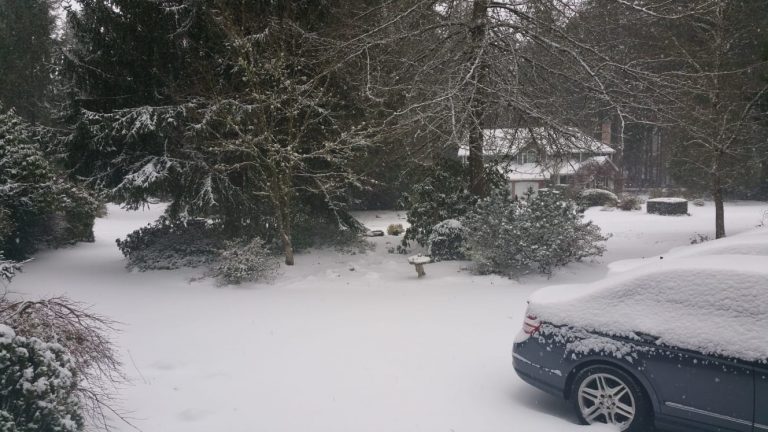
Here in the sticks, my neck of the woods in the sparse suburbia of the US Pacific Northwest, the withering winds of winter can be especially severe in some years. Despite the usually delightful sparkle of summer and the deciduous charm of autumn in these parts, winter on occasion can be exceedingly windy and worrisome. As I write, the temperature is subzero, at -5 oC, much as it had been through the turbulent night. Winter storm alert remains in place from the canny weather authorities in Washington State. It is all a far cry from the alluring warmth of my ancestral homeland, the ancient town of Awka in Nigeria, where the temperature currently hovers around 30 oC. I dream often of my ancestors and my homeland.

Last night, as I lay cloistered in my lair, I could hear the cackle of wind and the crackle of giant cedar trees in the greenbelt adjoining my backyard as they fall, finally succumbing to the tempestuous blast of winter. I lay awake much of the night, ready to activate the household emergency plan if electricity snapped out, or if, heaven forbid, a tree fell on the roof – not an uncommon hazard in the hazy severity of winter in these parts.

But now it is morning. And as I look out the window, the weather is benign; there is a beauteous blitz of snowflakes and piles of settled snow in the driveway. It is breathtaking. It is innocent. My kids, were they here and not away to a more clement weather, would be outside now molding snowballs or playing some snow game.

As I ponder the transition, from a turbulent night to a benignant morning, I wonder anew about the transience of experience, about the impermanence of adversity. We like to worry about the momentary turbulences of existence. But other than the immortal dictatorship of time, nothing of our exigent experiences and catastrophes persists into perpetuity.

And so it can be in Nigeria, an inchoate ‘democracy’ currently under the yoke of a primitive and stupendously incompetent oligarchy dominated by a Fulani core.

Fulani political dominance in Nigeria is founded on little else besides brute force and institutional corruptions: a far cry from the hegemonia of enlightened classes in more developed societies. The Marxist philosopher, Antonio Gramsci, taught us that the ruling class in bourgeois society maintains its power not so much through brutish control but through cultural hegemony – through an almost imperceptible control of the beliefs, perceptions, values and mores of society. The enlightened bourgeoisie and its governing vanguards maintain power largely because their worldview (their Weltanschauung) is at the core of accepted culture in broader society.

But this is far from the situation in the chaotic pseudo-capitalist periphery that is Nigeria. The current governing elite in the country, over which the predatory Fulani core presides, is not sophisticated enough to impose democratic order in the cacophonous society over which it seeks to assert control. The Fulani-dominated governing class is politically covetous, but it lacks enlightenment and can only maintain power and aggrandize itself through brute force and institutional corruption, albeit in a supposedly democratic setting.

For this reason, the ascendant Fulani-dominated political oligarchy in Nigeria, though controlling an overly expansive federal government, cannot long sustain its power. Its ambition is far in advance of its cognitive and intuitive capacities. Its grip over Nigeria is taut and tenuous, and will surely snap at some historic moment.

The Fulani-dominated governing elites lust after power, in part because – lacking imagination – they see political power as their principal means of economic accumulation. But the governing elites in Nigeria have no sophisticated understanding of power, or indeed of society, and so they rule the country through a vulgar mix of force and malignant corruption – in the manner of most primitive tyrannies in history. The dominant classes have no coherent governing agenda, no idea how to translate the immense potential of Nigeria into greatness. They stumble from one disjointed development program to another, fumbling through a prismatic ecosystem marked by an unworkable mix of poorly performing but modernizing institutions and decaying tradition. Nigeria’s ascendant elites cannot formulate an organic agenda of governance. Nor can they execute any such, because the shiny policy programs often borrowed from abroad by their harrowed technocrats are subjected, without fail, to the rapacious interests of the primitive oligarchy and its Fulani core.

Because of the historic failure of Nigeria’s Fulani-dominated governing classes, there is no consensus attending their leadership in the broader constituencies of Nigerian society. The governing factions rule but they are not sovereign.

The modern state is defined in part by its monopoly of law and force; it alone can lawfully wield the coercive instruments of power. But the wobbly hierarchies of Nigeria’s political elite have no such monopoly. They maintain control by corrupting the body politic. Or they marginalize vast sections of society as they exploit social resources, corruptly enriching themselves, their cohorts and their consorts.

Or they unleash the illiterate legions of their region and their religion to terrorize vast populations in far-flung localities in Nigeria. We have seen this of late, a burgeoning spate of terror from Boko Haram and wanton criminality by Miyetti Allah. The latter is supposedly an advocacy grouping for Fulani pastoralists. But it is a barely masked front for the ambitions of cattle colonialism and Fulani imperialism in Nigeria.

The Nigerian polity has lately become overwrought, increasingly so in the era of its incumbent president, the reclusive but exceedingly ambitious Muhammadu Buhari: a wild political jungle where contending elite formations use primitive instruments of coercion to maintain power and ethnic advantage.

But this is unsustainable. It is historically unsustainable. We can assert this thesis of unsustainability if we properly dissect the dialectic of political and ethnic conflict in Nigeria. We often – to an extent, correctly – posit the politics of Nigeria in terms of ethnic competition for scarce resources, whereby state power is pursued with viciousness because it confers distinct advantage in the competition for resource control. Sometimes we – correctly as well – also characterize political conflict in Nigeria as elite or even class struggle, with accumulation at its core.

Yes, we couldn’t begin to understand Nigerian politics without situating at its center the struggles for resource control among elite groups and the ethnic enclaves to which they belong. Yet, this is only a partial picture. We might just as usefully characterize the conflicts of Nigerian politics as a historic confrontation between the retrogressive but increasingly assertive forces of Fulani oligarchy and its disparate allies, seeking to entrench hegemonic control over the Nigerian state, and the diffused forces of progress and modernity, mostly but not exclusively entrenched in the South, which are slowly emerging to dominate the Nigerian civil society. This is an unmistakable dialectic of Nigerian politics: the swelling trends of civic modernity colliding with the claims of a neo-patrimonial order, a veritable confrontation between modernity and backwardness.

The arc of historical progress may be long and daunting in Nigeria, with records of intermittent reversals in fact, but all things being equal it should result in the triumph of modernity and progress over the forces of stagnation.

In the face of their increasing marginalization, especially under Buhari’s ‘democratic’ junta, the despondent peoples of southern and other parts of Nigeria are wont to invoke God as their rescuer, expecting divine redress for their unbridled neglect and exclusion. But, assuming that God is a disinterested observer or a neutral arbiter of ethnic politics, I would argue that it is not God as such that will rescue the oppressed peoples of Nigeria. Rather, it is their own redemptive efforts driven by the inexorable logic of progress – the unstoppable march to modernity – that will ultimately overwhelm the forces of reaction in Nigeria.

The Fulani core increasingly dominates Nigerian politics, vastly gaining ground under the parochial presidency of Mr Buhari. But a nescient culture based on cattle economy and primitive accumulation cannot long resist the onslaught of progressivism; it cannot long prosper in an interconnected world powered by supercomputers and superphones and the cumulative advance of artificial intelligence.

History is on the side of the currently despondent peoples of southern Nigeria and their progressive allies.

Or, it should be.

If the assured triumph of progress is delayed in Nigeria, it may be due in part to the vicious contradictions in the Nigerian civil society wherein scientific progress coexists with resistant superstition, seen in a growing retreat from reason and enlightenment and a return to religious fatalism. Churches and hopeful hallelujahs everywhere!

If the forces of stagnation led by the Fulani attain hegemonia in Nigeria, this will owe in no small measure to the persistence of these polarities in the Nigerian civil society between superstition and modernity.

World history is replete with instances where barbarism triumphed, for a while, over the forces of enlightenment. But almost always, it was the decay of enlightened civilization that paved the way for barbarian ascendancy.

On first view, the vignettes of history provide only cold comfort for the increasingly marginalized peoples of southern Nigeria. But in time, if these marginalized civilizations could rise up, they will find that the logic of history favors them, that the magistery of modernization favors those with an enlightened outlook.

The peoples of southern Nigeria and their progressive allies elsewhere could change Nigeria’s muddled history if only the huddled masses and their befuddled leaders will rise up and claim their destiny.

Progressive forces could ride the storms of reactionary rule in Nigeria and emerge to a new morning, as we did in these parts, riding the roaring blasts of a winter night to find a benevolent new day.

Obama’s Rope-a-Dope

1
2020 Election: Barack Obama worked hard to defeat Donald Trump

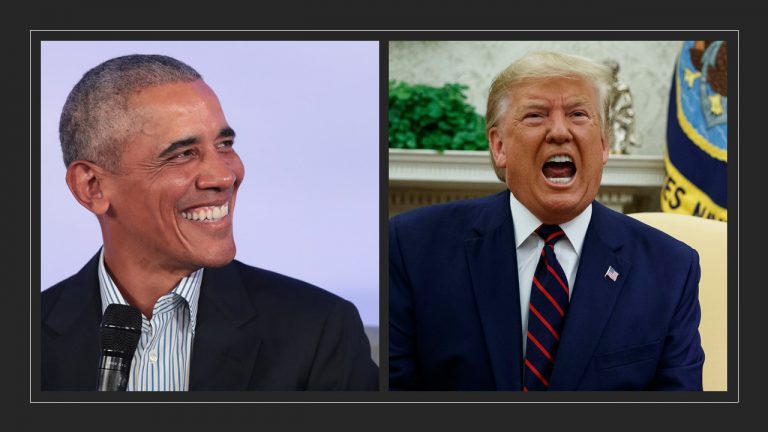
With the current tally of votes in the 2020 US presidential election pointing to a possible defeat for incumbent Donald Trump, former president Barack Obama, a Trump bête noire mercilessly vilified by the sitting president, may have got his revenge after campaigning spiritedly to toss out his truculent successor.  

By Chudi Okoye

A few days ago, a video clip emerged showing a lithe President Barack Obama shooting a perfect 3-pointer on a basketball court during one of his final campaign stops for Joe Biden, the flagbearer of the Democratic Party in the 2020 US presidential election. This video trended, to the unending elation of the amiable former president’s admirers and sportspeople in general.

But there were many who bristled with indignation at Barack Obama’s chutzpah. The mouth wagged, and social media ragged.

Most critics failed to pick up on the poetic importance of that portentous punt.

That shot – spanned but unplanned – signaled the imminence of Obama’s revenge against Mr Donald Trump after years of vicious vilification by his successor, a treatment about the most savage and least dignified in modern US presidential history.

After dropping that ominous shot, an ebullient Obama bounded off court, saying to the amazed onlookers: “This is what I do! This is what I do!”

Obama’s elated celebration, which innocent observers considered innocuous and amusing, rather predictably stoked the embers of hate in the swamp of American politics. Many of the complainers, most of them prepossessed pundits and importunate critics, thought the past president’s posture prideful and preposterous. And they let their fevered feelings flow.

But regardless of the ire of Obama’s haters, that shot of his was a hot (and hip) harbinger of his imminent performance. It was a pointer to his zestful contribution to the Democratic Party’s effort to terminate the squalid aberration that is Donald Trump’s presidency.

In the four years of his chaotic incumbency, Mr Donald Trump has gone way beyond any previous successor with his vengeful and invidious attack on his predecessor. He has assailed Obama’s legacy, tearing an edifice eight years in the making with sadistic pleasure. He has gone much beyond policy-related critique to a personalistic assailment of Obama.

His apparent jealousy of the younger and much cooler Black man has led him to absurd levels of animadversion. Unlike other modern presidents, for instance, he took nothing of the hand-off manuals prepared by the outgoing administration. He rejected everything with Obama’s imprimatur on it. Trump would not even allow a painted portrait of Obama to be displayed in his White House, a depraved animosity redolent of the rumor that he had paid Russian prostitutes to piss on a bed in a hotel room previously used by the Obamas.

The man is sick!

President Obama, the ultimate political tactician, had kept his cool through all the provocation, quietly plotting his revenge. And he would exact his revenge in spectacular fashion.

In heavyweight boxing, the great Mohammed Ali developed a tactic that he called “rope-a-dope” which enabled him to vanquish much bigger and more fearsome opponents in the ring.

Ali let the ferocious pugilists punch themselves to exhaustion, and once sensing fatigue he would move in with a staccato of withering punches to knock out the now-bumbling opponent.

It was often a lethal but beautiful thing to watch.

President Obama may just have delivered a political rope-a-dope on Trump. He went on the hustings with glee, often delivering more eloquent attacks on Trump than Biden could manage. He laid bare the incumbent’s incompetence and moral vacuousness. He showed up his successor as a pretender, a man unfit for office punching way above his intellectual weight.

He made the American voter see Trump for what he really is: a grubby hustler without a moral centre.

The result is now coming in, and it looks like Trump will be a one-term president.

It seems Obama has truly delivered a sucker punch.

Since the election was called for Joe Biden, there has been a splurge of spontaneous rejoicing erupting around the world. The world is breathing a sigh of relief because it feels a looming disaster has been avoided in the world’s democratic tradition. Under Trump, America, the world’s most powerful beacon of democracy, seemed to be sliding towards autocracy. V-Dem, a global democracy-tracking organization, noted earlier this year that the United States under Donald Trump was “the only country in Western Europe and North America suffering from substantial autocratization.”

Let that sink in. Think what might have happened had the world’s most powerful democratic standard become increasingly autocratized, if Trump won a second term.

But it seems the American voters put a halt to creeping authoritarianism. They cast an emphatic vote for an empathic pragmatist, Mr Joe Biden, a man with all the instincts of a principled democrat. The world is celebrating this result, relieved that the America that leads the democratic tradition seems to be returning after rejecting a pariah president.

But it is still more than two months before Biden can fully assume office. In the meantime, we have a vindictive incumbent, a man without any redeeming grace sitting in the Oval Office seething with resentment. A vengeful Trump may seek to scorch the earth, to make America pay for his ignominious rejection. He has so far refused to concede defeat, and is in fact claiming that the election was rigged, thereby creating uncertainty about the transfer of power.

Right now, amid the din of global rejoicing, we can’t quite hear the mewling of Donald Trump as he asserts a claim that his mandate was stolen. But the situation is precarious, and this man can still do damage.

We know that Trump won’t go quietly. He’s always been a cheat, in business and in his personal life. So now, the final votes are being counted and Trump seems utterly hobbled by Obama’s Black constituencies in Pennsylvania and Georgia. We can hear an incandescent Trump flailing about, alleging irregularities that he can’t prove, and initiating a slew of suits to skew the results in his favor.

It won’t work of course. America’s vigorous institutions, from the secret service to the military to the bureaucracy, can be expected to contain the crazed conniptions of a cornered president. But Trump is still dangerous, a proud man who has been bested by a Black brother. He’s a wounded Leviathan thrashing about, trying to bring down the edifice of American democracy on his way to political ignominy.

Yes, Trump may yet try to tear down America’s democratic institutions, proving the point of a highly prescient book written by Republican strategist Rick Wilson which claimed that Everything Trump Touches Dies. He may try to instigate the phalanx of ferocious militias and partisans who supported him. Trump – though now thwarted in his twisted quest for demagogic power – could yet let out a giant scream summoning his more nihilistic columns to mount resistance or cause ruination.

But, if loser Trump doesn’t manage to cause civic disorder or plunge America into an internecine war, he’ll eventually have to go.

And America can begin cleansing and healing itself.

During one of the Democratic Party’s presidential primaries debate, the moderator asked the contestants to describe the first thing they’d do if elected. The smartest response to that question came from the delectable Senator Kirsten Gillibrand. She said her first task would be to “Clorox the Oval Office” after the pollution of the Trump years.

If the current vote tally holds up, Joe Biden will become the next president of the United States.

Biden will have to work hard to prize Mr Trump out of the White House.

And he’ll need buckets of Clorox to cleanse the Oval Office after the stain of Trumpian presidency.

Birthday Felicitations for Dr Matthew Offodile

0
Birthday Celebrant, Dr Matthew Offodile (ATM image)

Dr Matthew Ejiofor Offodile (FNMGS, FNAH), a highly celebrated geologist and Awka statesman, marks his 84th birthday this week.

Dr Offodile remains active as a consultant exploration geologist/hydrogeologist and Managing Director of Mecon Geology and Engineering Services Ltd., Jos, Nigeria.

He graduated from University of Ibadan with a B.Sc. London degree in Geology in 1964.  He started his career in the Nigerian Geological Survey the same year, as a trainee hydrogeologist in the Enugu and Sokoto offices of the department.  In 1965, he was appointed in the Sokoto and Maiduguri postings the author was involved in the Nigerian Geological Survey United States Geological Survey joint programme of investigation of the Sokoto and Chad ground water basins.

Matthew Offodile obtained the M.Sc. London and Diploma of the University College, London (Hydrogeology) and the Ph.D (F.D.) degree of the University of Uppsala (Institute of Palaeontology), Sweeden in 1976.

From 1972 to 1973, he was posted as Geologist in Charge, Geological Survey, Jos, from where he covered most areas of the former Benue-Pateau State, with emphasis on the Geology of the Nigerian Benue Valley.

He served as President of the Nigerian Mining and Geosciences Society in 1984-85, a fellow of the  Nigerian Mining and Geosciences Society (FNMGS) (1985) and Nigerian Association of Hydrogeologists (FNAH) (2000).

Dr Offodile holds the 2002 most distinguished Rt. Hon. Nnamdi Azikiwe/NMGS Award for his consistent contribution to, and promotion of, the study of the Earth Sciences in Nigeria.

He is also a Recipient of the 2009 Nigerian Mining and Geosciences Society (NMGS)/Shell Development Company (SDC) Award, the Highest Award of the Nigerian Mining and Geosciences Society.

He is a father, grandfather, uncle and senior citizen who continues to contribute to the development of his beloved hometown, Awka, the capital of Anambra State.

Hearty congratulations, Dr Offodile!!

(This notation derived extensive materials from a University of Ibadan entry for Dr Matthew Offodile. Awka Times acknowledges the copyright authority of the university.)

Free Online Courses From Yale and Other Universities

0
YALE-UNIVERSITY-SCHOLARSHIPS

Dear Readers,

Most of us will be concerned and some probably directly impacted by the frequent strikes by university teaching staff which invariably create severe discontinuities and dilution of tertiary education in Nigeria. While we pray for a speedy resolution whenever these strikes are initiated (by ASUU and/or ASUP), there are available resources that those impacted could use to keep learning.

Some of our readers may already be aware that several of the world’s leading universities do offer free online tuition on a wide range of courses. The best of these free courses are those offered by Yale, Harvard, Oxford, Cambridge, Princeton, MIT, Notre Dame, Stanford, Columbia and UCLA, among other universities.

We have reviewed and are particularly impressed with the depth and range of free courses offered by Yale University, one of the oldest and most prestigious universities in the United States. The lectures are presented by some of the university’s leading academics and subject matter experts. Their offering covers everything from Geology and Geophysics to core Physics, Astronomy, Chemistry, Biomedical Engineering, Molecular and Cellular Biology, Economics, Philosophy, Political Science, Psychology, Religious Studies, History… you name it.

It’s all free. You can watch the lecture series online as video delivery, typically lasting upwards of an hour per lecture. This will probably prove a little costly for those without unlimited data package. Good thing is that you can also download the lecture series as audio files and play them offline.

You can also open the transcripts of the lectures and just read them as text. This is the cheapest option.

Think of it as attending Yale University, one of the world’s most prestigious universities, for free.

Our students who become homebound when the strikes occur (and who in any case often lack books and lecture materials) could really benefit from this academic facility. But it’s not only for our students and youths. Adults who probably graduated a while back can refresh their minds and update their knowledge: they will not only remain intellectually engaged but can also improve their current skills.

Life-long learners and knowledge seekers can also dive into diverse subjects beyond their immediate fields of specialization and acquire course-level tuition without paying!

If interested, just click the link below which lists all the freely available Yale courses. Identify the subject of interest to you….and go to Yale!

https://oyc.yale.edu/courses  

Here is the click-stream for the Yale University offering:

> Click the Yale link provided above to see the list of available courses by department.

> For a selected course, click the link provided in the column named “Course Title”. This leads to the actual course page.

> To access the course content on the course page, select the tab named “Sessions”. This leads to the list of lecture sessions for the course. They are typically an hour long, and number over 20 for each course.

******

For a list of other leading universities that also offer free online courses please click the link below:

https://www.thebestcolleges.org/free-online-classes-and-course-lectures/  

These universities offer their free (in some cases partially free) online courses through their own websites, or through their YouTube channels and iTunes podcasts.

But the phenomenon of free online tuition is much broader than that. Through our research, we discovered that there are now in fact some global initiatives by the top universities to provide tuition through collaborative online platforms where they provide their free and heavily subsidized courses. These offerings are collectively called Massive Open Online Courses (MOOCs), provided through collaborative platforms such as the following (links provided):

1. Coursera (www.coursera.org): This appears to be the largest of the collaborative platforms, currently with 150 university partners from 29 countries. Their participating universities include Stanford, Duke, Penn, Princeton, Michigan etc. They also have corporate partners like IBM, Google, and PwC that have launched their own courses. Coursera currently has about 2,700 online courses and about 33m registered users around the world.

2. Udacity (www.udacity.com/): This platform focuses more on tech and vocational courses for professionals and those seeking “nanodegrees” that are recognized by many employers. They have some university partners as well as tech companies like Google, Nvidia, Microsoft, Amazon, IBM etc. They now have about 1.6m users.

3. edX (www.edx.org): This is an initiative jointly launched by the two prestigious universities Harvard and MIT, offering rigorous coursework across many disciplines. Some 70 schools, corporations and NGOs offer courses through this platform. The partners have over 1,800 online courses and over 14m students worldwide. They offer certificates for successful completion, and some courses are credit-eligible.

All these online education initiatives are free or heavily subsidized. For practically nothing or a token fee one could obtain an employer-recognized degree, nanodegree or certificate from one of the top universities of the world.

We are really excited about these opportunities. They offer our youths (and adults) access to the world’s most prestigious universities as “virtual exchange” students. They expose subscribers to the latest research in their chosen fields, and avail course materials that may not be readily available otherwise.

We hope that our readers will fully utilize this invaluable opportunity.

Enjoy!

Awka Times Management

Anambra State Governor Suspends ‘Errant’ Traditional Rulers: Matters Arising

0
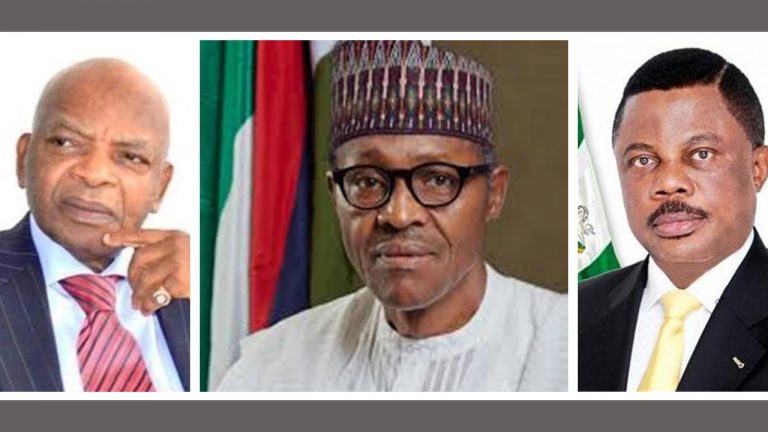
Prince Arthur Eze, President Buhari and Gov. Willie Obiano

The Anambra State governor appears to possess the powers to punish the ‘miscreant’ monarchs, but he may have neglected to follow due process in exercising his powers.

By Chudi Okoye

Anambra State is yet again in the news, but this time for all the wrong reasons. At a time that various governments and supporting institutions are charging at the challenge of Covid-19, a pantomime is playing out in Anambra. The state governor, Chief Willie Obiano, is locked in an unseemly battle of wits with the flamboyant and rebarbative oil magnate, Prince Arthur Eze, and a rabble of renegade traditional rulers who recently went on a self-seeking excursion to Abuja, a sortie seemingly orchestrated by the financier who fancies himself an anointer of prelates and appointer of potentates in Anambra State.

The traditional rulers had sallied forth to Abuja, in all their ostentatious glory, apparently assured of an audience with President Muhammadu Buhari, at whose majestic court they reportedly planned to present their grouse against the governor of Anambra State. The mission came unstuck: despite initial protocol clearance, Buhari in the end refused to grant an audience to the gaggle. (A face-saving quickie was later arranged with Buhari’s Chief of Staff, Prof Ibrahim Gambari). Perhaps playing a deft political game in behalf of an All Progressives Congress (APC) party looking for an inroad into Anambra State, the president reportedly advised Prince Arthur Eze to desist from his churlish confrontations with Governor Willie Obiano and to settle matters with him.

Perhaps emboldened by Abuja’s royal rebuff of Arthur Eze’s loyal gang, Willie Obiano swung into action. In just a matter of days after the Abuja escapade, the governor secured the support of the Anambra State Traditional Rulers Council – or at least that of its august leadership – to suspend the twelve importunate traditional rulers who embarked on the unfortunate mission to Abuja. A statement issued on 12 Aug. 2020 and signed by Mr. Greg Obi, the Anambra State Commissioner for Local Government, Chieftaincy and Community Affairs, announced that the governor had suspended the certificates of recognition issued by the state government to the twelve errant rulers. The letter indicated that the suspension would subsist for one year, but it noted that the sanction could be “renewed” or even “upgraded” (presumably to an outright revocation of recognition) depending on the government’s review of the subsequent conduct of the traditional rulers.

If there is any worthy point of intervention in this vaudevillian comedy of errors going on in Anambra State, it relates to the question of the legality of the suspension order imposed by the state governor on the miscreant monarchs.

More broadly, there is also a question concerning the impairment of representation in the Traditional Rulers Council for the affected communities. If the Council is a forum for consequential deliberation on community affairs, why should a community suffer for the purported errancy of its monarch?

I had raised this precise point with a highly-placed Anambra State government official when I received a copy of the suspension order sent to the media. I wondered if the suspension order was sustainable, whether the government could fend off pressure from the affected communities complaining of disenfranchisement for the errors of their self-dealing rulers. The immediate retort from the government official was that some communities have not had a monarch for a long time, and that they have somehow managed to carry on. As such, he was implying, the affected communities could weather the withering of their traditional rulers for a period.

I considered this a valid response, but then to that extent it raises a whole different question about the utility of these monarchies. If Igwes can be dismissed or suspended without implication for their communities, then what is the point of them in the first place? Are they really adding any value?

That is a broader question to be taken up some other time. The narrower issue here is the legal one.

There are some legal experts who are already raising an objection to the governor’s suspension of the monarchs, and they are advising the implicated Igwes to test the matter in a court of law. One of such canvassers, H. E. Okolo (Esq), an Abuja-based barrister, questioned the legality of the suspension order on two grounds:

(1) That it is the community that selects and confers authority on traditional rulers and not the state government; therefore the government can neither suspend nor remove the monarchs.

(2) That the suspension order, in seeking to sanction the traditional rulers purportedly for undertaking an unauthorized mission to Abuja, infringed on their right to freedom of movement as guaranteed by Article 13 of the Universal Declaration of Human Rights and also by Section 41 (1) of the Nigerian Constitution (1999).

I find myself puzzled by this line of attack. I am puzzled that the barrister in question would anchor his challenge on universal grundnorm but not refer to the relevant local statute upon which the suspension order was based.

The government’s statement made clear that the suspension order was based on “the powers conferred on His Excellency the Executive Governor of Anambra State under Section 10(b) of the Anambra State Traditional Rulers Law 1981” (sic). If the suspension order is to be challenged, one would think, it should be done within the logical constraints of the local law.

There is no need to appeal to universal principles here since there is sufficient ground, within the ambit of the local law, to interrogate the suspension gambit.

For one thing, there is a technical point about dates. The extant version of the Anambra State Traditional Rulers Law came into force on 10 Sept. 2007. Although the new law did not secure the assent of the sitting governor at the time, Peter Obi, his apparent dissent was overridden by a superordinate majority vote in the House. There had been a twist in the passing of the 2007 law to do with a clerical error at Section 55 of the new law which was intended to repeal the preceding 1981 law: instead of specifying the year “1981” the section mistakenly instantiated a non-existent “1991” law. For reason of this error, some have argued that in fact the 1981 law was never repealed and is still in force. However, this argument is unsustainable. Merely going by the legal principle of desuetude which sunsets an existing law due to lack of use, it can be argued that the 1981 law has become obsolete given the existence of a properly enacted replacement law. The Anambra State government, in referencing the 1981 law in its suspension letter, had either forgotten that the traditional ruler law was re-enacted in 2007 or it failed to acknowledge the doctrine of desuetude. If then, by this argument, the 1981 version of the law has become void, there might arise a question as to the validity of the suspension order since it invoked a legal instrument that has since been superseded.

The suspension order should have been based on the 2007 version of the Traditional Rulers Law. However, had this been the case, it would have raised a serious challenge against the suspension order, one relating to the question of due process. Section 10 of the law, titled “Suspension and withdrawal of recognition”, states as follows:

Notwithstanding anything contained in this Law, the Governor shall, with the approval of 2/3rd majority of the House of Assembly members, withdraw the recognition of a recognized traditional ruler if the Governor is satisfied that such suspension or withdrawal is:

– necessary having regard to the code of conduct required by the customary law existing between the traditional ruler and the town or community which he represents; or         

– necessary in the interest of peace, order and good government.

A formal interpretation of this section confirms that the governor has the basic authority to initiate a disciplinary action against an errant traditional ruler. However, the law is clear that the governor cannot take a unilateral action in this regard but must secure the approval of a 2/3rd majority of members of the state House of Assembly. There is no indication, at least going by the language of the suspension letter, that the state House of Assembly was consulted or even informed in this matter, as required by law. This is probably a litigable oversight.

The Traditional Rulers Law, at Section 16 titled “Allegation of misconduct”, also lays out the process to follow in such circumstances:

  • Notwithstanding Section 10 of this Law, whenever there are allegations of grave misconduct against a recognized traditional ruler the Commissioner [of Local Government, Chieftaincy and Community Affairs] shall cause administrative enquiry to be held in respect of such allegations.                                                                           
  • Where the Commissioner, after such enquiry, is satisfied that such allegations are proved against the recognized traditional ruler or that the recognized traditional ruler has ceased to enjoy the popular support of his town or community, the Commissioner shall advise the Governor to withdraw, with the approval of the House, the recognition of such recognized traditional ruler.

Again, it is not clear from the suspension letter that the governor followed this process, either in constituting an administrative enquiry or in taking the pulse of the affected communities as to the popularity of their monarchs.

This last point, relating to the opinion of the impacted communities, raises a more fundamental question about the action of the government. Ever since Igbo communities began to create for themselves secular kings to rule over them, forsaking their republican heritage at it, there has been a tension as to the source of legitimacy for the newfangled monarchs: Do they derive their legitimacy from the communities which choose them, or from the government which certifies and remunerates them?

In an earlier Awka Times treatment of this question with regard to Awka, the capital of Anambra State which is currently embroiled in a monarchic intrigue, we argued that the Awka Traditional Ruler constitution invokes a Weberian duality of legitimacy in which ‘traditional’ and ‘charismatic’ legitimacy is conferred through community selection of an Awka monarch (Eze Uzu), while ‘legal’ legitimacy is conferred through the government’s certification of a monarch chosen by the community. In that Awka Times piece, we argued that none of these strands of legitimacy is valid without the other. As we put it:

There is of course an unequivocal and irrefutable case to be made that the authority of an Eze Uzu is established upon formal recognition and certification by the Anambra State Governor. Going by the provisions of the Awka Traditional Ruler’s Constitution, the Governor would appear to be the ultimate grantor of rulership authority. But the matter cannot be as simple as that. For, while the Governor has ultimate certifying authority, the constitution and its founding laws make it clear that the Governor will be required to endorse the community’s choice, in so far as the proper selection procedure is followed and the candidate meets the criteria specified in state law. To an extent, the Governor’s constitutive power might be said to be fiduciary, in that he is constrained to endorse the candidate chosen through the institutional processes of selection involving the whole community. The Governor cannot wantonly subvert the will of the people if the community speaks with one voice. However, the power of the Governor becomes more autonomous when there is ambiguity in the community, when there is contestation for the Stool and a crisis of legitimacy ensues.

If there is no ‘dominant gene’ as it were between community-imbued legitimacy and legal authority from government certification, it follows that Governor Obiano had the power to act but needed to have done so after consultation with the community. Again, there is no indication in the suspension letter that such a consultation was undertaken.

The contours of this case are now clear from the foregoing discussion. It seems superfluous to refer, as some legal experts have done, to the Universal Declaration of Human Rights or even the Nigerian Constitution in this case. The local statute is the relevant law for the matter at hand.

On that score, Governor Willie Obiano appears to be on solid legal ground to undertake disciplinary action against an errant traditional ruler. His suspension order against the twelve royal miscreants is therefore, on the face of it, intra vires.

That said, the Anambra State Traditional Rulers Law makes it clear that the governor must act with the consent of the House of Assembly, following due consultation with the affected communities. Since it is not clear the governor followed due process in exercising his statutory powers, he has opened his action up to credible legal challenge, if the impacted monarchs can muster the courage and the resources for such a challenge.

The oil magnate and his minions, if still in a menacing mood, could of course finance such a challenge. The suspension order could be challenged for referencing the voided 1981 statute or if the extant 2007 law is invoked, on the grounds that due was not followed. But given the reported injunction from Abuja for local truce, the renegades might not mount a challenge. This means that the suspension order could in fact run its course – due process be damned – or it could be commuted at some felicitous point when the governor’s political interest is served by such clemency.

 This article has been expanded from the original version to address a legal argument relating to the status of the 1981 version of the Traditional Ruler Law.


A Parable of Vultures and Maggots

0

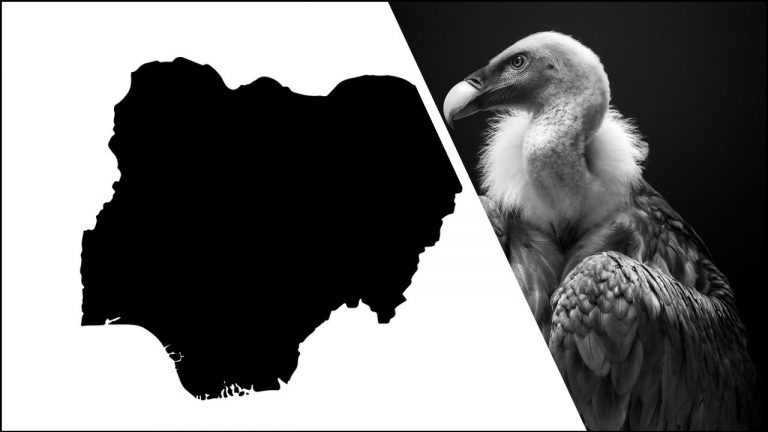
A flock of vultures in flight is called a “Kettle”; when the vultures touch down to ground or perch upon a tree in descent towards their target, they are called a “Committee”; and when the scavenger birds are feeding together at a carcass, they are known as a “Wake” – ATM editor-in-chief.

By Chidera Michaels

Carcasses do not, by definition, have life in them, and so offer no resistance to scavengers which feast of them. But even some living bodies, before dying, become sickly, traumatized by diseases that prevent a normal functioning of their organs. Such too offer little resistance to scavengers. Vultures typically feed on cadaver, but they are able to recognize when a living animal is on its last legs and so begin to hover in the air above it. Sometimes before the animal takes its last breath, vultures are already tearing at it with their powerful bills. Maggots, however, wait for the vultures to finish gorging, and for the sun to soften the carcass, before they swarm their cadaverous feast.

The carcass in this case is Nigeria. This contraption of a country appears to still have pulse, but in reality it has been long dead and in an advanced stage of putrefaction. The vultures (the politicians, the public office holders, government contractors and the like) are tearing at its purulent parts as fast as they can, as if on a deadline. Meanwhile the maggots (the political thugs comprising jobless youths, political jobbers, and some traditional rulers), in tandem with the vultures, are swarming round the carcass picking off any useful parts left in it.

And of course, because of the putrescent state of the carcass, it is giving off offensive odor. Anyone who has been in the proximity of the carcass or has poked inside its entrails in contaminated by its awful stench. Even if one does not have the carcass’s odor on one, the rest of the world treats one as if one reeks of the carcass’s miasma. As it now, this carcass has further degenerated into a gooey and unsightly mangle. As a result, the offensiveness of its effluvium has magnified tremendously.

A wake of vultures on a feeding frenzy is jostling for position over the decaying carcass that is Nigeria. The greedy vultures mantled over the deceased prey are so numerous that they have totally blocked off the sun with their fluttering feathers. The vultures jostle amongst themselves for better positions as they greedily tear off parts from the carcass. And the maggots, hoping for their own feeding opportunity, are cheering the vultures on. To demonstrate their loyalty and agreement with the vultures’ endeavors, the maggots lavish chieftaincy titles on the vultures and record praise songs in their honor.

But once in a while, a vulture is driven off the feeding frenzy by the strong-arms tactics of the vultures from the North. When this happens, the maggots who are tribesmen of the ostracized vulture frown in disapproval. The ostracized vulture and maggot scream “marginalization” in bouts of self-pity. They forcefully argue that the carcass, fast melting into a putrid mangle, is the national cake of which they deserve a piece. Their vehement point being that vultures from their own tribes possess the rights to feed on the carcass as well. And they argue that the sins of the ostracized vulture are no greater than those of the vultures still feeding on the carcass. The sins of the ostracized vultures, they say, pale in comparison with the corruptions of the vultures from the North presiding over the wake.

It should be noted here that the vultures from the North are considered a sacred kettle of some sort, soaring above the flock. How this came to be is wrapped up in a web of intrigues orchestrated by the Bible-thumbing looters from Europe as they got ready to palm off their colonial contraption to these Northern vultures in the mid-19th century. Ever since that colonial sleight-of-hand, the vultures from the North have held on to power with their vicious talons, wielding the long guns, and lately have added the marauding cows and armed herdsmen to their arsenal  for Southern invasion. And they cruelly assert that the entire carcass of Nigeria is their inheritance; that anything in the carcass is theirs for the taking.

Occasionally an ostracized vulture from the South, which hitherto had shamelessly aligned itself with the Northern vultures in an obvious bid to self-preserve, is allowed back in to partake in the feeding frenzy. When that happens, the maggots from the returnee’s tribe are ecstatic beyond measure. They line the streets and sing songs of praise in honor of the returnee vulture. They thank and praise God for the re-admittance of the vulture which, in a prior stint at piloting their affairs, impoverished them all by looting their resources. Note that this released vulture is part of the reason why the maggots roam the streets without jobs, without hope. But the maggots are just happy to see the vulture released. They say that the vulture may be a thief, and may have robbed them of their future, but that it is their own vulture.

When the maggots bemoan the fact that their roads are without asphalt, and are filled with potholes, they do not blame this vulture. When they cry for lack of electricity, they hold the putrefying carcass responsible. When they realize that the degrees they obtained from their universities are worthless, it doesn’t cross their minds that the vulture’s looting was partly responsible for that. Rather, they put all the blame on the odoriferous carcass.

And of course the carcass, ravaged by the weapon-wielding vultures from the North, cannot be revived into a modern political economy. The Northern vultures know that the maggots of the North have no use for modernity. The Northern vultures and their maggots would rather go back to the tenth century when life was simple but brutish. A time when all they needed to do was tend to their cattle and kill and despoil those that did not share their religious belief.

The re-admission of previously ostracized vultures gives the maggots hope that their own turn to feed on the carcass is imminent. That is why it never occurs to the maggots to condemn the deeds that earned the vulture ostracization in the first place. The dream of every maggot is to have the chance to loot parts of the gooey carcass, their national cake. Avarice is the real religion of every maggot and vulture in this dead and vanishing carcass. Citizens of the carcass throw around gratuitous hatred and kill and maim one another, ostensibly for religious reasons, but their only authentic religion is primitive greed. For the vultures, no amount of money or possession is enough. This is the tradition into which the maggots have been acculturated.

It goes without saying that the maggots are the foot soldiers of the vultures. Sometimes one gets the feeling that the wellbeing of the vultures is the primary concern of the maggots. As far as the maggots are concerned, what the vultures want is what the vultures get, no questions asked. And as long as a vulture is of the same tribe as the maggots, the vulture can do no wrong. The vulture’s “success” is seen as the tribe’s. And to speak ill of the vulture is a taboo. Therefore, whichever way one looks at it, questioning the integrity of a vulture within the vulture’s tribal enclave is considered an unforgiveable act.

The body politic that was Nigeria died a long time ago and its carcass is now in advanced stage of decomposition. It never stood a chance really because the prognosis even from its very inception was always terminal. The body politic is dead, and it cannot be revived. Its remains are now only being picked over by vultures and maggots.

 The opinion expressed in this article are the author’s and does not necessarily reflect the editorial position of Awka Times. Chidera Michaels is an attorney and a Christian theologian based in Baltimore, MD, United States (email: chideramichaels@gmail.com).

Rogue ‘Enforcers’ Exploit ANSG Covid-19 Regulations

0

Anambra Police Command says it is clamping down on the illegal activity 

By Pamela Henry-Igwe, Awka Times guest reporter

Concerned residents of Anambra State are asking authorities in the state to look into the activities of some individuals, passing themselves off as Covid-19 enforcement task force, who harass the populace and extort monies for alleged infringement of the government’s pandemic guidelines.

There are growing complaints that some miscreants have been harassing and intimidating residents of the state, extracting spot ‘fines’ from culprits for supposed violations of the government’s coronavirus containment protocols.

A victim of such extortion, one Mr. Cosmas lbe, told Awka Times that on one occasion he had been wearing his face mask under his chin when one of such illicit gangs accosted him and forced him to part with ₦1,000 as a purported fine. He said however that the ‘enforcers’ fled the scene with his money as bystanders began to question their authenticity.

Another victim, Mrs. Bassey Effong, told Awka Times that a similar rogue gang had forced her into their vehicle and were driving off with her when they spotted an earlier victim who recognized them, at which point they panicked and then pushed her out of the moving vehicle.

There have been several cases of such extortionate attempt by rogue enforcers trying to cash in on the Anambra State government’s renewed effort to enforce public compliance with its Covid-19 containment guidelines.

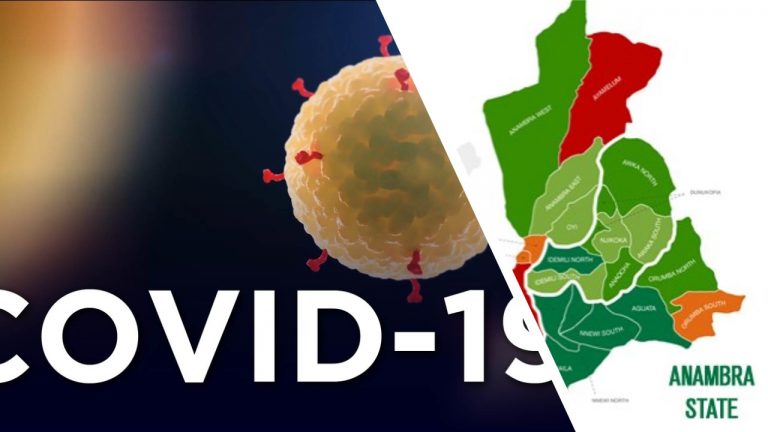
The government recently intensified its containment effort as cononavirus infection has increased in the state and elsewhere in Nigeria. Anambra State still ranks low in the incidence of coronavirus infections, placing 30th among the 36 states of Nigeria and the Abuja Federal Capital Territory, with 0.3% of total coronavirus cases in the country and 1.2% of the reported deaths as of July 11, 2020. But even this low count represents a notable uptick in a state that had appeared to be virtually free of infections only a few weeks ago. The uptick has spun the government into a tizzy, occasioning a recent two-week market shutdown in Awka, the state capital.

The scoundrels posing as enforcers seem to be exploiting the government’s new regime of determined enforcement. But it isn’t entirely clear if the perpetrators are merely impostors with no connection to the government, or if they include overzealous functionaries among the government’s and other official contingents trying to cash in on their position.

A businessman in Anambra State, Mr. Adewale Olu, suggested to Awka Times that government should set up a task force to look into the harassment and collection of illegal levies by these touts. Mr. Anthony Ezue, another resident of the state, also called on the state government to look into the activities of the Covid-19 task force, especially in Onitsha area.

Mr. John Uka called for re-training of the task force, and urged the government to institute protocols for easy identification of the official personnel.

Responding to the growing menace, the Anambra State Police Command has ordered a clampdown on illegal task force teams claiming to be enforcing Covid-19 measures in Anambra State. In a statement released to the press, the police command said:

“The attention of the Anambra State Police Command has been drawn to the incessant extortions, harassment, intimidation and assault by illegal task force teams claiming to be enforcing Covid-19 measures…”

The statement noted that the Commissioner of Police in Anambra State, CP John B. Abang, “frowns at such atrocities and has ordered [an] immediate clampdown on all persons involved [in the nefarious practice], especially in Onitsha and environs.”

The police said it had received reports indicating that the “hoodlums” wear reflective jackets and operate in shuttle buses/keke with stickers bearing the inscription: ‘COVID-19 TASK FORCE’.

The police stated unequivocally that “no such task force has been constituted by the State Government to operate on the streets and highways within Anambra State.” It said that only accredited market organizations “are authorized to operate such enforcement teams within their respective markets ONLY.”

In view of the above, the police is warning that it will bear down heavily on the illegal activity.

According to the police statement, “the Command will henceforth arrest and prosecute anyone found extorting money or intimidating members of the public in the guise of enforcing face mask protocols.”

It remains to be seen if the public, suffering the hazards of the coronavirus, will be spared the additional burden of criminal extortion pretending to enforce government regulations.

“You Appointed the Best Man to Head NBET”, Obiano Tells Buhari

0
Dr. Nnaemeka Ewelukwa, CEO of NBET

By C. Don Adinuba

The governor of Anambra State, Willie Obiano, has commended Nigerian president, Muhammadu Buhari for appointing Dr. Nnaemeka Ewelukwa as the chief executive of the Nigerian Bulk Electricity Trading plc (NBET), an Anambra native popularly known as the Bulk Trader.

“You couldn’t have appointed a more qualified, competent and reform-minded technocrat for the job,” Governor Obiano said in the letter to Buhari.

The Minister of Power, Engr. Saleh Mamman, two weeks ago announced President Buhari’s approval of Dr. Ewelukwa as replacement for Dr. Marylyn Amobi, also from Anambra State, whose five year tenure will end on July 24.

“It is self-evident that the president recognizes the critical role of the NBET in the electricity value chain in Nigeria and so went for the best to help move the entire power sector in a different direction,” Governor Obiano declared.

Dr. Ewelukwa, the NBET general counsel until his appointment, has been involved in Nigeria’s power sector reform for at least 10 years, having worked at the Presidential Task Force on Power (PTFP) headed by Professor Bart Nnaji before he was appointed the Minister of Power in July, 2011, and led the greatest revamping of Nigeria’s perennially problematic power sector.

As the pioneer NBET general counsel and secretary, he led the team which negotiated with independent power producers on power purchase agreements (PPAs) and thus enabled huge investments from the private sector into Nigeria’s electricity generation business.

Governor Obiano observed that the new NBET CEO played a key role on the team which identified serious legal, regulatory and policy constraints to the development of Nigeria’s electricity and suggested ways to overcome the challenges.

“Due to the… impressive work done by such outstanding technocrats as Professor Nnaji and Dr. Ewelukwa, the British and American governments, among others, assisted Nigeria to develop the critical power infrastructure,” noted the governor who also recalled how such global firms as General Electric of the United States, Siemens of Germany and Daewoo Heavy Industries of South Korea took an unprecedented interest in the country’s power sector.

Chief Obiano described Ewelukwa as “infectiously humble and principled, a team player and farsighted leader with a good international exposure, key leadership requirements in today’s globalized world.”

The governor said he is confident that Dr. Ewelukwa would bring glory to Nigeria the way a number of Anambra indigenes given critical national assignments discharged their duties.

“The whole nation,” he stated, “remembers with nostalgia the fantastic work done since the restoration of democracy by such sons and daughters of Anambra State like Professor Chukwuma Charles Soludo as the Central Bank governor; Professor Dora Akunyili as the Director General of the National Agency for Food and Drug Administration (NAFDAC); Engineer Ernest Ndukwe as the CEO of the Nigerian Communications Commission (NCC); Mrs. Oby Ezekwesili as head of the Due Process Office before becoming the Minister of Solid Minerals and later Minister of Education; and Engineer Emeka Eze as the Bureau for Public Procurement Director General.”

The son of a leading academic lawyer, Ewelukwa studied law at the University of Nigeria, Enugu Campus, before proceeding to the London School of Economics to specialize in international business law and Queen Mary College of the University of London where he took a doctoral degree in privatization of state-owned enterprises and reform of the Nigerian power sector.

Author of three authoritative books on electricity transactions, the new NBET CEO is also a member of the Chartered Institute of Arbitrators.

C. Don Adinuba is Anambra State Commissioner for Information and Public Enlightenment.