





By Chudi Okoye, Stella Nzekwe and Ken Chukwudi
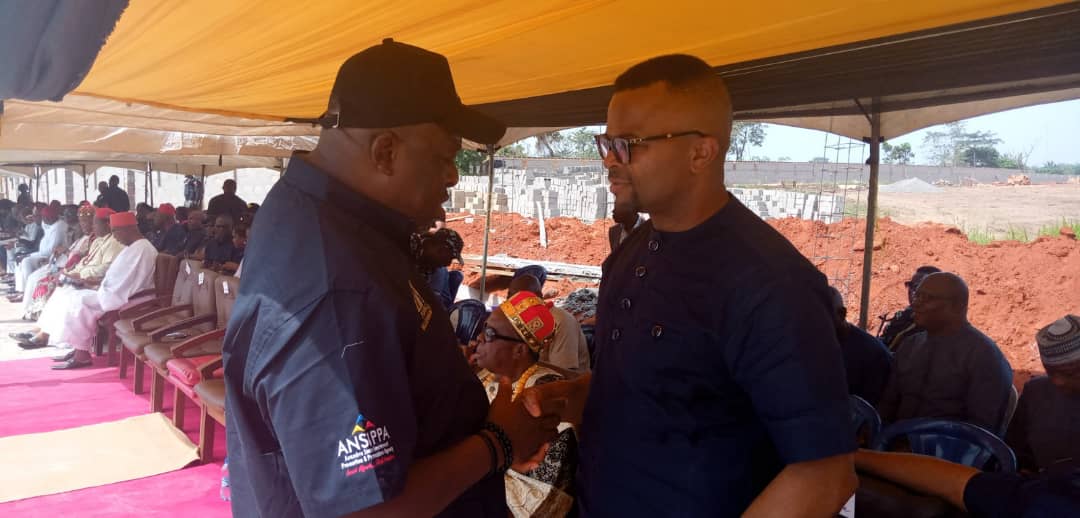
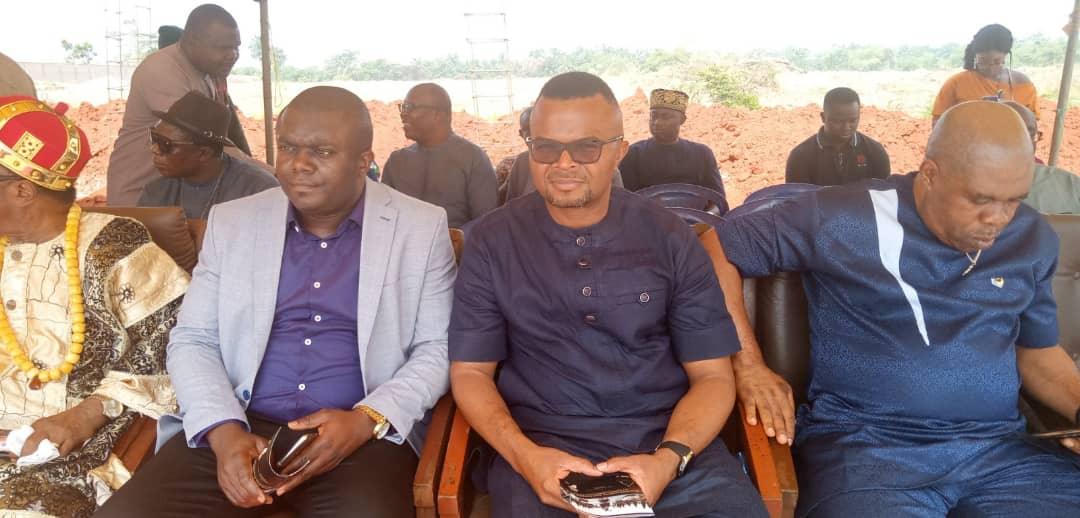
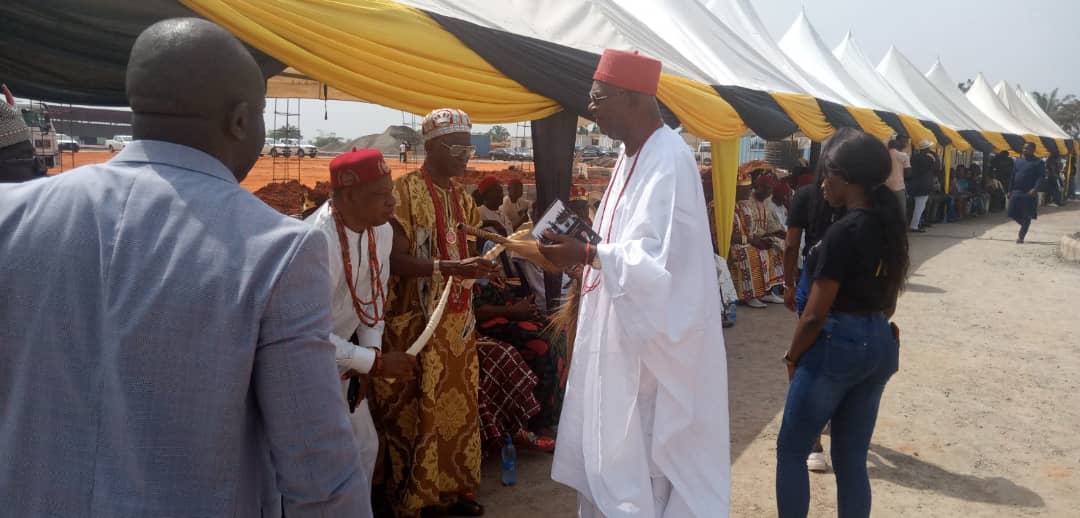
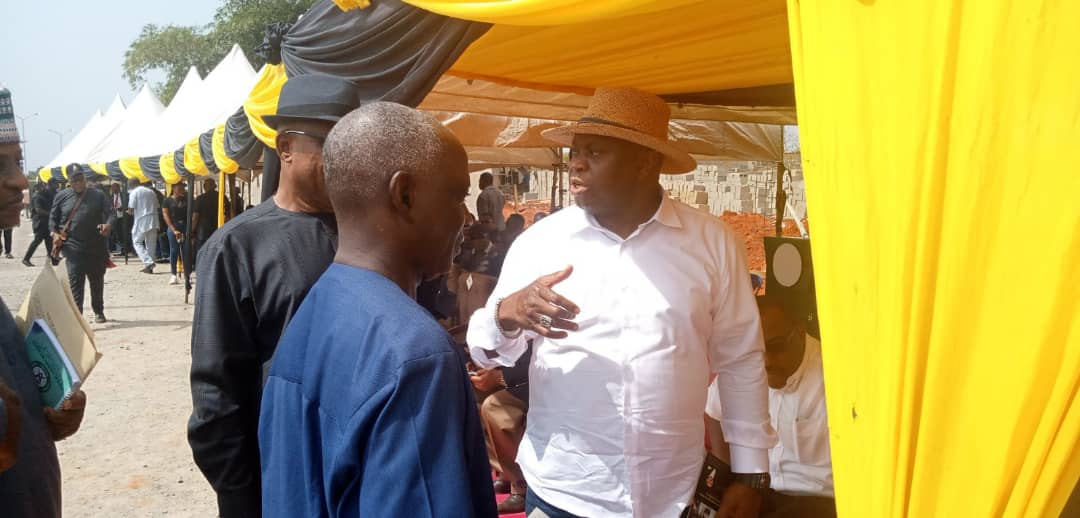
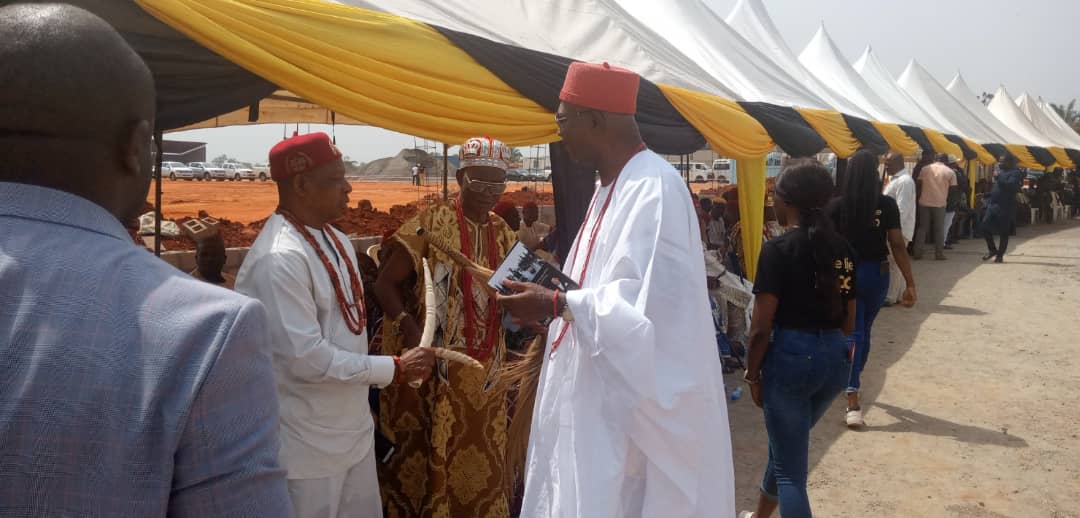
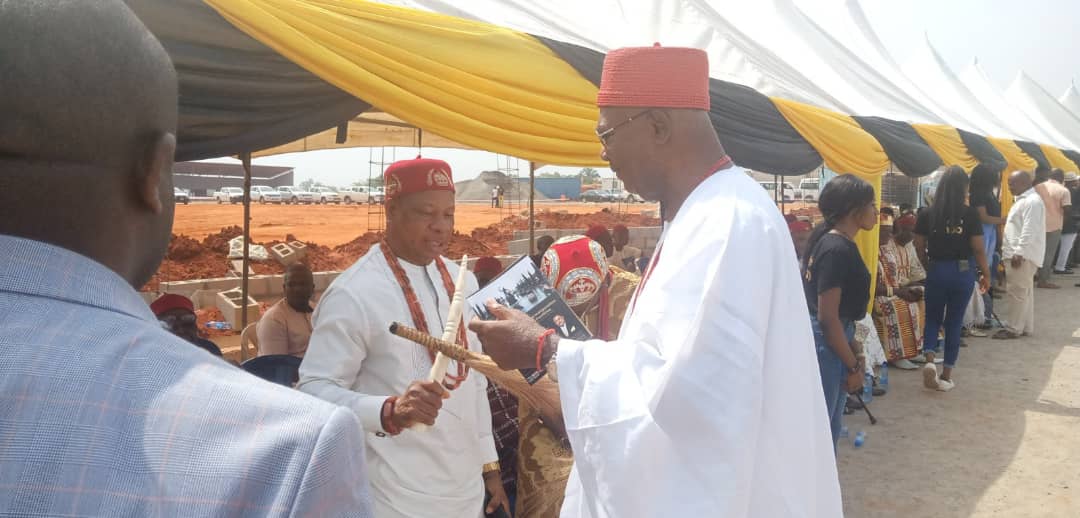
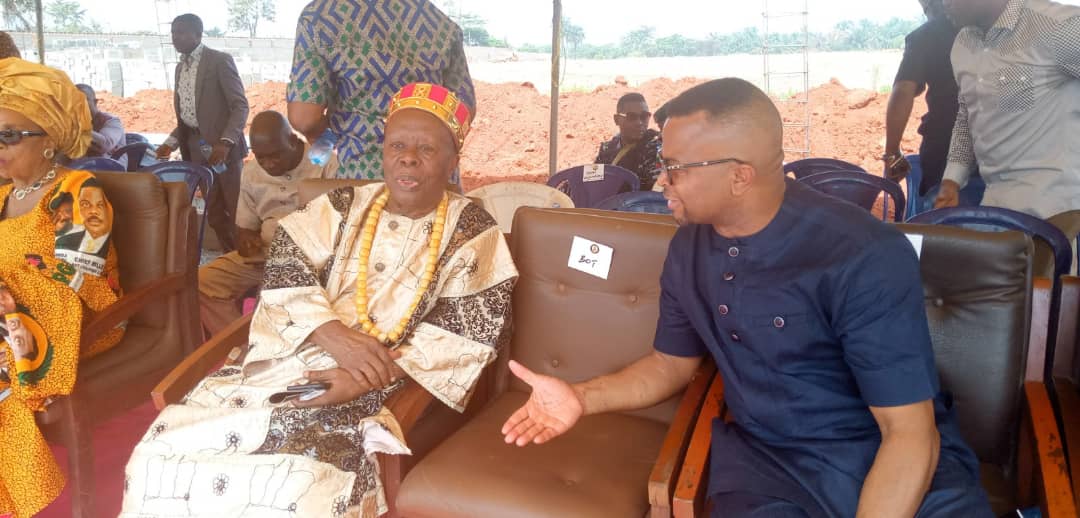
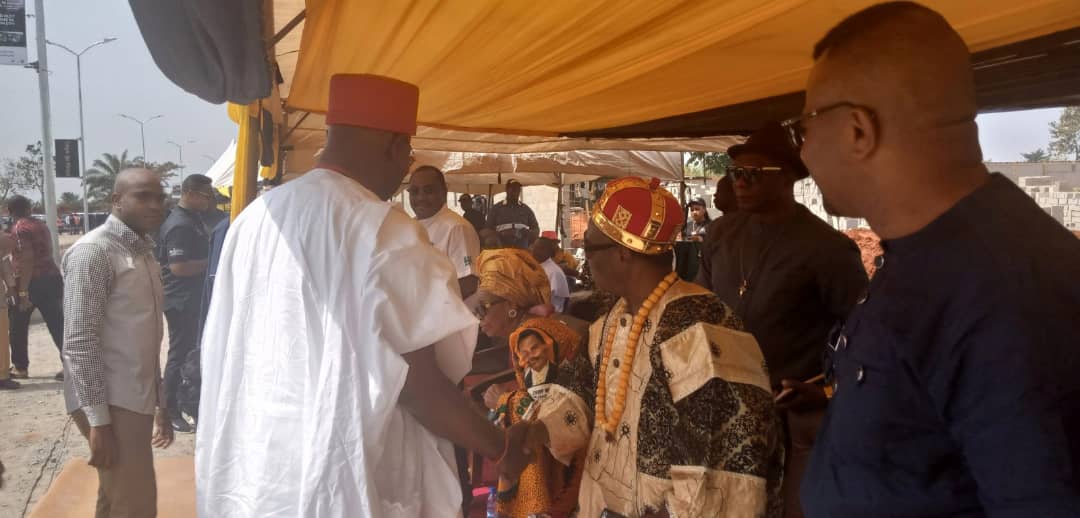
The 2020 edition of the traditional Awka festival, Egwu Imoka, has commenced. Day 1 of the three-day carnival, a cardinal event in Awka cultural calendar, took place as planned on May 25, 2020.
There had been some uncertainty in the lead up to the commencement of the event. The Anambra State government had, on May 10, issued an order suspending Egwu Imoka 2020, along with other cultural events in the state, on account of the growing menace of coronavirus contagion in the state. The state government issued the suspension order as Anambra State, which went for a stretch of time without an active case of coronavirus, began to record new cases. The Anambra State Police Command also issued a statement stipulating to a full enforcement of the government order.
Notwithstanding the government’s suspension order, the custodians and planners of the Awka heritage event, following apparent oracular consultation with with Imoka, the Awka deity which is honored with the event, had insisted that the event would be held, albeit with sensitivity to government rules on physical distancing and social restraint.
With the virtual stand-off, it was unclear how the Egwu Imoka 2020 event would unfold. Day 1 of the festival provides a clue.
Awka Times reporters who monitored the Day 1 events report a mixed outcome. Day 1 of Egwu Imoka consists in a mission called Osonogba Umuokpu, a contingent of humans and masquerades despatched to the non-contiguous Awka village of Umuokpu to deliver a message inviting the village to the upcoming Egwu Imoka event. Usually it is a boisterous procession snarling southwestwards from main Awka town to Umokpu village, with assemblies of merrymaking gathered all over the town and along the stretches to Umuokpu.
Initial frontline reporting by Awka Times suggests a determined but muted observance of the opening event. The emissary to Umuokpu was duly despatched, including men, masquerade and motorcade. Pockets of participants came out, gathered in isolated spots around Awka, in proud and assertive jollity to mark the event. Awka Times reporters observed some conscious attempt to follow the government’s guidelines relating to the coronavirus pandemic. But in many spots the ascending spirit of the event simply overwhelmed the gathered revelers and any observance of the rules was done with scarce
This is to inform the public that effective Monday, 15th June, 2020, Eke Awka Market, in Awka South Local Government will be shut down.
This is as a result of non-compliance by the market traders and customers with Covid-19 protocols including wearing of protective face masks, provision of running water and soap for washing of hands, keeping of physical distancing etc.
Also, effective Monday, 15th June, 2020, curfew in Awka South local government will be from 8pm to 6am daily, until further notice.
These actions by the government is as a result of increased cases of Covid-19 in Awka South Local Government.
The government is also putting other market leaders and local government councils in the state on notice that a similar curfew action will be taken, and markets in the local government closed down if it is observed that such markets do not observe Covid-19 protocols.
All should please be guided and take the issue of observing Covid-19 protocols seriously.
Announcer
Professor Solo Chukwulobelu
Secretary to Anambra State Government
Thursday, 11th June, 2020

Beginning and Becoming
By Chudi Okoye
I. Primordial Chaos
Long before that bold and blazing beginning,
Before the One awoke and conceived creation
There had been only chaos and utter darkness
A lawless void of vast and volatile potential
Where quantum fields danced with phantom force
And the formless deep trembled with restless energy.
II. Theomergence
From the shadowed depths of that dizzied domain,
Following prolonged epochs of primal perturbations
There stirred at last a self-arising Sentience
A sudden spark flaring in the fathomless abyss.
Thus did God emerge
Bursting from the bind of that bottomless chasm.
Seizing hidden patterns in the primeval pulsations
He coded Himself into coherence and consciousness
Becoming Essence amid the mounting disorder.
And in the fullness of His radiant becoming
He pervaded the rowdy realm as Sovereign Will.
At this point, perceiving the potential of creation
His thought turned toward a template.
III. The Singularity
After aeons of this divine contemplation,
His mind fiercely focused on forging order
God gathered the scattered quantum threads.
Stretching across the roiled and boiling void,
With immense power and irresistible authority
He compressed all into an infinitesimal point
And then God said,
“Let there be a Beginning.”
Thus was the singularity created
A kernel of infinite potentiality
Tense and dense with destiny
Core of the coming cosmos
And seed of spacetime.
Within this coil of concentrated chaos,
Hotter than the heart of a thousand suns
God encoded the fundamental constants:
Speed of light, gravity, the quantum rules
And a myriad other cryptic measures
By which the laws of nature would unfold.
Now laden with laws and ready to rupture
The singularity rapidly inflated to a vast expanse
And, in an instant, unleashed a fiery surge
Spewing elementary particles across the void.
Quarks, once restless motes in a seething sea
Were bound by the invisible bonds of gluons
While pions, those flickering couriers of force,
Knitted neutrons and protons into atomic nuclei
To forge the first building blocks of existence.
This, over time, wove the wonders of our world.
IV. Cosmic Evolution
From that fiery first surge, the universe expanded.
The singularity, now unbound, had become space
A swelling sea of restless matter and nascent light.
Swift photons sped forth, as heralds of lucid dawn
Enacting God’s pre-coded command:
“Let there be Light!”
The fabric of becoming stretched too rapidly
For photons’ light to lap the celestial expanse.
Yet in their wake, darkness yielded to radiance
Revealing a universe in glorious formation.
Hydrogen and helium, the humblest of kin
Gathered by gravity’s lure to forge the first stars.
Amid this, stellar furnaces flared and fused
Creating carbon, oxygen, and heavier elements.
Furious supernovae flung these seeds far afield
Scattering matter across the macrocosm.
Through violent collisions and slow accretions
Galaxies, planets, and moons were moulded –
All in motion, guided by gravity’s glorious hand.
From their whirling births and consequent spin
Day and night unfurled upon the shapen worlds
Their glories unveiled in rotational spectacle.
Time itself was born, entwined with space.
Distance became a measure of memory.
And over the undulating roll of time
A conducive corner of the cosmic vault
Became stage for the flowering of life.
V. Wonder of Life
The wonders of our world would be wasted
If no conscious mind emerged to mark them.
God, being wise, inscribed in the singularity
The photonic code, “Let there be Light!”
A command to illumine the evolving universe
As a visible and intelligible reality.
Another divine algorithm was encrypted
In the same primordial principles of nature
Which majestically decreed:
“Let there be Life!”
A crowning command to be carried out
Through an intimate dance of chance and law
Following a fuller unfoldment of cosmic form.
For millions of millennia this algorithm lay latent
As grand cosmogonic events shaped the stage.
Then in the deep, sun-warmed waters of Earth,
A pale planet in an unprepossessing precinct
The primordial soup was fortuitously stirred
And, with this, the ancient instruction revived.
Within that boiling, once-foiling broth
Arose the delicate wonder of abiogenesis.
Humble RNA, medium of that primal message
Transmitted it in tender, tentative syllables
Until self-copying code, with blind persistence
Conspired with membrane to cradle the cell.
Within this fragile vesicle, the first memory stirred:
A molecule had learned to remake itself!
This, the miracle of molecular replication
Was the hinge, the turn, the holy ground
Where matter crossed from chaos into code.
Now stirred, the planet’s pulse began to quicken
As chemistry courted contingency into complexity.
Molecules multiplied, some flawed, some favored
And in their fortunes, evolution found its formula.
Through aeonian tides of chance and change
Genes arranged, traits emerged, species diverged
From microbe to multicell, from fin to limb
All by the fearsome splendor of natural selection.
VI. Second Emergence
With a prodigious passage of evolutionary time
Through a grand, relentless flourishing of form
Consciousness kindled in creatures of clay
The kind able to contemplate the cosmos
And turn inwards to ponder their purpose.
In these creatures, the circle was at last closed:
A cosmos comprehending through conscious life.
The silent, ancient algorithms of light and life
Awoke within a fragile skull of bone and dream
And found their meaning in a new-made mind.
In this way, humanity auspiciously emerged
A living similitude of that first Sentience:
Self-aware beings able to wonder as they wander
To apprehend the elegant equations of existence
And decode the very laws that shaped their rising.
God vaulted from void into a vaunted mind.
By divine decree and nature’s own signature
Humans, too, emerged from matter into meaning
To become, in their view, the crown of creation.
And now, as titans of the terran cradle
They enhance and hinder the will of nature.
Let there be Light! Let there be Life!
Despite the myriad imperfections of existence
There is purpose in its stubborn persistence.

As speculation swirls over his potential return, Goodluck Jonathan must weigh the promise of redemption against the peril of forfeiting the very legacy that defined his statesmanship.
By Chudi Okoye
He doesn’t exactly cut the profile of a practiced political pugilist. Nor does he convey the canny core, the conspicuous charisma, or the competitive crust of a comeback kid. Yet any strategist gaming out Nigeria’s 2027 presidential race would be rash to rule out Goodluck Jonathan’s chances, should he choose to re-enter the fray. If he runs, as rumors suggest, it won’t be a slam dunk, but neither would it be a disastrous clunk.
The whispers have grown louder in recent days about Jonathan’s possible run. Could the complaisant ex-president who lost re-election in 2015 be contemplating a comeback? His political rise had always seemed a touch providential. He entered politics after the sudden death of Sani Abacha in 1998 enabled Nigeria’s return to civilian rule. Joining the People’s Democratic Party (PDP), Jonathan became deputy governor of Bayelsa State in 1999, then governor in 2005 when his principal, Diepreye Alamieyeseigha, was removed on corruption charges. He was vice-president within two years, and then president when Umaru Yar’Adua died in 2010. He won a full term in 2011, despite unease in the Muslim North, which felt it was still their turn under Nigeria’s informal power-rotation pact. But his lucky streak stalled in 2015, when he was toppled by a North-Southwest electoral alliance. Jonathan conceded defeat even before all results were announced, and has largely avoided partisan politics since leaving office.
If he seeks the presidency in 2027, would fortune favor him again? His prospects are interesting, with a mix of enticing possibilities – rooted in regional arithmetic and his own legacy – and daunting challenges in the current environment.
Tailwinds for a Trailblazer
There’s an Igbo saying that “name is destiny.” In Goodluck Jonathan’s case, it seems doubly true. Luck propelled his political ascent, and his graceful concession in 2015 proved fortunate for Nigeria. That single act delivered the country’s first peaceful transfer of power between rival parties, cementing his place in the nation’s electoral history. Today, his most potent political asset lies in that legacy – a reputation as a hero of Nigerian democracy. He left office under the shadow of defeat, yet stepped into the warm glow of global praise for placing country above ambition. In the decade since, that aura has only deepened, with Jonathan emerging as a kind of statesman, monitoring foreign elections and occasionally speaking on the world stage.
Jonathan’s peaceful concession did not only burnish his global image; by averting post-election turmoil, it also bolstered his domestic standing. The goodwill generated by that gesture likely helped insulate him when his successor, Muhammadu Buhari – reviving patterns from his military past – launched an aggressive anti-corruption campaign targeting Jonathan’s administration. Several of his ministers and close allies were prosecuted amid high-profile investigations into the OPL 245 oil block deal, diversion of arms-procurement funds, and questionable withdrawals from the Excess Crude Account. Even his wife, Patience, was probed, her accounts frozen and properties impounded. Jonathan himself was never charged, and he consistently denied wrongdoing, casting the probes as political persecution. Despite serious questions about his presidency, he has retained a relatively benign personal image – an asset in a political culture where corruption is routine and Buhari himself left office with a tattered legacy. That contrast could blunt some of the incumbency advantages available to President Tinubu, who faces prodigious scandals of his own – a clouded wealth trail, frail health, and a prickly political past that remain points of persistent debate. If Jonathan runs in 2027, this offers him a wedge, if he’s willing to wield it.
Exploiting Tinubu’s weaknesses will require more than moral capital; regional dynamics could further tilt the scales in Jonathan’s favor. The South-South, which produced its only president since independence during Jonathan’s tenure, would almost certainly rally behind his comeback – delivering a crucial bloc of oil-rich states. More intriguingly, northern political calculus may offer him an unexpected advantage. The North–Southwest alliance that toppled Jonathan in 2015 seems troubled, with northern elites increasingly uneasy about entrenched Southwest dominance. While the North voted heavily against Jonathan in 2015, its leaders may recall his infrastructural investments and successful amnesty programs, while calculating that his single remaining term is preferable to Peter Obi’s potential eight-year tenure, which would delay the region’s return to power. Even Atiku’s ambitions in this cycle disrupt northern succession plans. As for the South-East, the region reliably backed the PDP in every presidential race since 1999 – except in 2023, when Obi’s Labour Party surge reshuffled loyalties. Still, Jonathan’s perceived fairness during his presidency may yield dividends, potentially splitting the South-East vote even if he cannot dominate as in previous cycles.
If stitched into a functional coalition, this regional patchwork could give Jonathan a formidable geographic base, potentially complicating Tinubu’s path to re-election.
Beyond regional arithmetic, Jonathan possesses tangible political assets that distinguish him from likely rivals. At 67, he would present a generational middle ground: younger than Tinubu and Atiku, and slightly older yet more seasoned than Obi. His executive experience spans state and federal levels: he served as deputy before becoming governor, and as vice before presidential accession. By contrast, Obi’s experience is confined to state governance; Atiku has only served nationally as vice-president; even Tinubu, despite his presidency, offers gubernatorial experience and a brief legislative role from the aborted Third Republic. More notably, Jonathan has remained with the PDP through victories, defeats, and internal upheavals, contrasted to the political peregrinations of likely rivals. His experience and constancy could resonate powerfully with voters and party faithful weary of opportunism.
Perhaps most compellingly, a Jonathan victory in 2027 would embody a poetic symmetry. The man who enabled Nigeria’s first peaceful electoral turnover could guide it through the critical “second election” test of democratic consolidation – adding to the reciprocal poetry of defeating his old nemesis, the APC. His victory would be difficult to contest by a ruling party that benefited from his gracious concession twelve years earlier. For Jonathan personally, 2027 represents his final realistic shot at redemption; by 2039, when the South’s turn theoretically returns, he would be nearly 82 and beyond serious consideration.
Headwinds and Hazards
However one frames it, Jonathan has a real shot in 2027 if he chooses to run. Yet, for all the factors in his favor, he could just as easily encounter gales that demand careful navigation. If he enters the race, the test will be whether he has the starch to press his advantages through turbulent weather.
Chief among the challenges is his fractured party. The PDP has been divided and depleted since its 2015 defeat – partly a reflection of Nigeria’s incumbent-dominant culture, but also of deep internal fault lines. Jonathan’s party loyalty is admirable, yet his post-presidential influence has waned as untamed forces have claimed control. Fissures and defections ahead of the 2023 elections cost the party a winnable race and triggered further erosion. Today, the party appears under the sway of Nyesom Wike, the former Rivers State governor who currently serves as a minister in Tinubu’s administration. Even from his federal perch, Wike exerts significant control over Rivers politics, subjecting Governor Simi Fubara to a protracted and very public struggle for autonomy. Wike’s triple allegiances – to PDP, APC, and himself – create an almost impossible conflict of interest, and his grip on key party structures means he could actively undermine Jonathan’s bid in service of his own future ambitions. He did exactly that to Atiku Abubakar in the last presidential election cycle – sabotage that eventually drove Atiku out of the party. Wike likely now has broader regional reach, bolstered by APC inroads in the South-South since the last election.
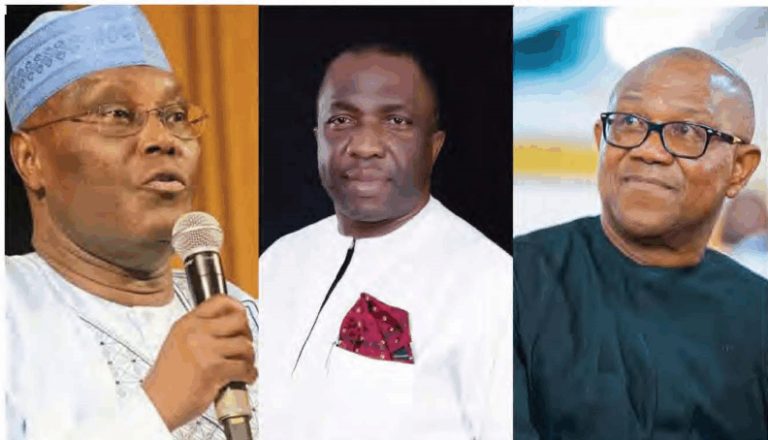
Jonathan wouldn’t have only Wike to worry about on the opposition front. There’s a flank of other figures with their own rigid demographic calculus who may resist stepping aside, thus frustrating any fusion of opposition forces. Atiku and Obi face the same brutal arithmetic about 2027: Atiku would be nearly 85 when the North’s turn returns in 2031; Obi would be 78 when opportunity reverts to the South in 2039. Both likely see 2027 as their final window and will take some persuading to bow out. Atiku has already joined the new African Democratic Congress (ADC) coalition, while Obi appears torn between that front and his Labour Party base. Aligning these formidable figures behind his candidacy would require incredible political dexterity from Jonathan – yet without major opposition consolidation, there’s scant prospect of defeating the APC.
Goodwill and good fortune have followed Goodluck Jonathan’s political career, meaning he has rarely – never really – fought partisan guerrilla warfare. It’s fair to ask whether he has the chops to tame the demons within his own party before facing the Enuma Elish monsters lurking in the wider political waters. The affable ex-president has yet to reveal the ruthlessness that Wike has displayed within the PDP – or such as he will need to confront the broader opposition and the formidable machine Tinubu has built. He has yet to display such “will to power,” as Nietzsche might say.
The APC, which defeated Jonathan under a less coldblooded leadership, would be even more determined not to lose to him under a more disciplined and cutthroat standard-bearer. The party’s machinery, resources, and institutional advantages as incumbent would be fiercely marshaled against any Jonathan restoration – Nigeria’s “second electoral turnover test” dream be damned. Unlike 2015, when some APC members may have harbored private respect for the sitting president, a 2027 contest would be viewed as an existential battle. It will require a field general to snatch victory from APC’s stranglehold. I have my doubts whether Jonathan has the mettle. But then again, God works in mysterious ways.
To Run, or Not to Run
It is unclear whether Goodluck Jonathan will risk a run in 2027, though speculation grows. If he’s pondering the prospect, it may be a liminal decision – resting partly on rational calculation, but ultimately on instinct and id.
Jonathan would be a formidable contender. He possesses unique strengths relative to likely rivals: a benign reputation and statesmanlike credibility, extensive governing experience, broad regional reach, and the historic resonance of a potential comeback. Yet structural obstacles loom: his fractured party under hostile influence, rigidities that may forestall a unified opposition, and the reality of an incumbent APC machine determined to retain power.
A key consideration is whether he can reassemble the cross-cutting coalition that carried him in 2011 but crumbled by 2015 under northern discontent and economic strain. That would require uncommon political footwork – negotiating with PDP powerbrokers harboring their own ambitions, enlisting governors who control local party machinery, and persuading rivals to step aside. It won’t be easy, but where there’s political will, there’s a way.
Much depends on how Jonathan reads the national mood, and how he assesses Tinubu’s administration. Nigerians may endure the severity of Tinubu’s neoliberal reforms as necessary sacrifice, but inequitable outcomes could drive a desire for change. If so, Jonathan may wonder whether he could be considered a credible vanguard of that change. Voter demographics may work for him in this regard, with nearly 40% of the electorate aged 34 or younger, and another 35% between 35 and 49. Given his past presidency, of course, he may be seen by some voters as part of an older order, even though he is younger than Tinubu and Atiku and roughly in the same age cohort as Obi. But he could navigate this tension if he presents himself not as a nostalgic reprise, but as a transitional figure capable of stabilizing the country while paving the way for generational change.
Yet the most compelling factor may be Jonathan’s psychological disposition. For him, historical vindication beckons – a chance perhaps to complete an interrupted legacy while cementing his role as democracy’s unlikely guardian. But failure carries steep costs. His statesmanlike image hinges on his dignified exit in 2015; a second defeat could transform the president who advanced Nigerian democracy into just another politician unable to accept political mortality. He might recall the fate of his namesake, Dr. Nnamdi Azikiwe, whose stature was diminished by unsuccessful late-career bids for power in the Second Republic.
Perhaps the greatest question Jonathan must confront is what it would take to topple a tenacious slugger like Tinubu. Defeating this incumbent may demand a scorched-earth, bare-knuckled campaign that could corrode the very moral authority that has defined Jonathan’s post-presidential identity. The paradox is stark: though one of the few challengers with a real shot at victory, winning could transform Jonathan into someone fundamentally unlike the dignified statesman the nation respects. Even a triumph won through ruthless politics may feel like defeat, a sacrifice of the grace and restraint that underpin his legacy. It might be, in some ways, a Pyrrhic victory. More than fear of losing, Jonathan must wrestle with fear of the toll victory might take.
Ultimately, the man who once conceded defeat with patriotic dignity will decide if it serves the country to concede yet again, this time to the nobility of that fear.
The New Apostles’ Creed
(A Declaration for the Age of Reason)
By Chudi Okoye
We believe in one God,
the Supreme and Almighty Being,
consubstantial with all that is,
whose will immanates in nature’s laws,
as witnessed in the wonder of our world.
We believe in Jesus of Nazareth,
the revolutionary founder of our faith.
He was very man, mortal in every sense,
begotten and made by human parents,
and lived fully as human substance.
He was an exemplar of courage,
the embodiment of compassion,
who taught mercy and fought for justice.
In word and deed, he depicted the power of love
to heal divisions and mend the human condition.
He challenged the oppressors of his day,
and stood firmly with the marginalized,
calling for a kingdom of righteousness
here on Earth, not in the abstract beyond.
We honor his suffering and death
as the toll of truth-telling in halls of hubris.
We proclaim that his vision and mission
did not die with him on the cross,
but are resurrected in all who walk his path.
We reject the tyranny of rigid dogma,
the corruption of creeds created for control.
We embrace the freedom of thought,
for mind and macrocosm hold more mysteries
than ancient creeds ever conceived.
We commit completely to the care of Earth,
our virgin mother and home of all humanity,
and to the pursuit of peace with sacred justice,
following the footsteps of our forerunner, Jesus.
This is our faith and our focus,
rooted in reason and forged for our season.
It is hinged on history’s hard-won lessons,
and open to all people of sincere purpose.
Amen.
Nigerian democracy has achieved its first transfer of power. Under current conditions, is a second possible?
By Chudi Okoye
If one were to judge only by the objective conditions, by the battered lives and melancholic mood of the masses, the outcome of Nigeria’s 2027 general elections might seem all but inevitable. The country today finds itself mired in a miasma of man-made crises, its denizens in deep despair, and the citadels of hope erected with the return to civil rule a quarter of a century ago now crumbling. Years of dysfunction under democracy – soaring inflation, rising unemployment and poverty, a collapsed economy, rampant insecurity, you name it – have further frayed the fragile fabric of the nation, eroding faith in the system, especially in those at its summit. There is, without doubt, a far harsher and more volatile atmosphere than what prevailed in 2015 when an intrepid new opposition bloc, the All Progressives Congress (APC), toppled the long-running reign of the Peoples Democratic Party (PDP). Back then, PDP strutted across the Nigerian stage, branding itself Africa’s biggest political machine and boasting it would enjoy sixty years of uninterrupted hegemony. Yet the juggernaut proved vincible, in no way immune to an insurgent opposition.
The partisan formations that fused to form the APC, in truth, had modest electoral footprints. In the 2011 presidential election, these precursor parties – mainly the Action Congress of Nigeria (ACN), the Congress for Progressive Change (CPC), and the All Nigeria Peoples Party (ANPP), with a faction of the All Progressives Grand Alliance (APGA) – secured a combined vote share of just 39.8%. This was a full 19 percentage points behind the PDP’s commanding performance under Goodluck Jonathan, who claimed 58.9% of the vote. The APC’s component parties also held only a minority of elected offices: nine governorships, with 126 House of Representatives and 32 Senate seats.
Yet by 2015, just two years after their formal merger under the APC banner, this coalition had engineered a 14-point swing to capture the presidency, expanded their gubernatorial reach to 17 states, and won clear majorities in both chambers of the National Assembly – 212 seats in the House and 60 in the Senate.
It was a watershed moment: Nigeria’s first federal-level “turnover” election, in which a dominant ruling party was defeated and peacefully handed over power – less than two decades after the transition from military rule. This was hailed globally as a milestone for Nigerian democracy.
Now, as Nigeria approaches the 2027 elections, it faces what comparative democratization theorists call the “two-turnover test.” First articulated by the late Samuel P. Huntington, this test holds that a democracy cannot be considered consolidated until it has experienced not just one but two peaceful alternations of power through elections: first, when the ruling party that inherited power in a democratic transition is defeated at the ballot and cedes power to the successful opposition; and second, when that successor – now the incumbent – likewise loses an election and peacefully transfers power to another challenger. Nigeria crossed the first threshold in 2015. The deeper test now is whether the APC, having displaced the PDP and governed for over a decade, would accept a democratic reversal of fortune if the electorate so decides – or, put differently, whether it would attempt to rig the election and subvert the democratic will.
The significance of this goes beyond mere procedural succession; it is about normative entrenchment. The first turnover – whereby an opposition party defeats the post-transition incumbent – signals that democratic competition is viable and that incumbents can be displaced through ballots rather than bullets. This is why Goodluck Jonathan is celebrated for his role in 2015, as the incumbent who enabled Nigeria’s first real turnover. However, the deeper challenge lies in the second turnover: whether the victorious opposition, after enjoying a spell in power, will itself accept electoral defeat and relinquish authority peacefully. It is this second alternation – from the opposition-now-incumbent (in this case, APC) to another legitimate challenger – that signifies a deeper democratic consolidation, one that institutionalizes alternation as a norm rather than a fluke.
This is why Nigeria’s 2027 elections constitute more than an ordinary contest: they represent a reckoning in the republic’s rhythm of alternation, a test of whether democratic rotation has matured into a systemic ethos or remains hostage to the fluid calculations of elite power. The test becomes even more cogent when objective conditions, such as those currently facing Nigerians under APC rule, suggest the imperative of political turnover.
The Economy and 2027
By the logic of APC’s historic performance in 2015 – and following a materialist conception of democratic politics – the major opposition bloc today ought to be coasting to victory in 2027. There is, in fact, some theoretical basis for this presumption. Scholars such as Huntington and Adam Przeworski long emphasized the role of economic conditions in catalyzing democratic transitions and sustaining democratic regimes. Yet more recent research on political turnover has shown that, while economic hardship often coincides with electoral losses for incumbents, it is neither consistently strong nor sufficient as a predictor of turnover. Put differently, economic privation may be a necessary condition for democratic alternation, but it isn’t sufficient. This holds across most democratic systems – especially politically and socially fragmented ones. In such contexts, material crisis alone rarely dictates electoral outcomes. Results also hinge on elite alignments, identity cleavages, and the strategic discipline of the opposition. In other words, while economic crisis correlates with political turnover, it is not dispositive.
Political science research on this suggests a notable asymmetry: all things being equal, economic distress tends to provoke voter punishment of incumbents more forcefully than economic improvement guarantees their re-election. Yet this pattern can be tempered when incumbents – like President Bola Tinubu – cultivate reputations as reformers, armed with ambitious policy agendas and high-profile institutional endorsements. Tinubu has leveraged his transformational record as Lagos State governor to bolster support among key domestic constituencies. His neoliberal reforms since becoming president – including subsidy removal and currency devaluation – have also drawn praise from global financial institutions like the IMF and World Bank, despite their punishing impact on the populace. Such technocratic validation may unlock foreign loans, including a currently proposed $20 billion facility, potentially easing fiscal constraints and stabilizing the economy before the next election. Politically strategic interventions like this could complicate opposition efforts to translate economic hardship into political turnover.
Nigeria’s opposition should certainly highlight the depth of economic distress in the country as momentum builds toward 2027. That messaging must be hammered home, to avoid repeating the missed chances of 2019 and 2023, when public frustration with APC could not be converted into electoral victory. But economic appeals alone will not suffice. Success requires a broader, more disciplined, and genuinely multidimensional strategy.
Beyond the Economy
The Democratic Party in the United States often deploys the campaign slogan, “It’s the economy, stupid” – a catchphrase that powered Bill Clinton’s 1992 victory which has since become catechism. It is a crisp and clever messaging the Nigerian opposition might adopt for 2027, except they will face an incumbent seen not only as a reformer but also as a shrewd political tactician.
Bola Tinubu, a founding member of the APC, is widely credited with helping to orchestrate its historic 2015 breakthrough. Unlike Goodluck Jonathan, who struggled to control the PDP even as president, Tinubu wields far stronger control over his party. He also enjoys a crucial advantage Jonathan lacked: insulation under Nigeria’s informal regional power rotation logic. As a southerner, Tinubu occupies the South’s “turn,” providing a significant buffer against northern challengers like Atiku Abubakar. By contrast, Jonathan was viewed by many in the North as a usurper after he assumed office following President Yar’Adua’s death in 2010. That perception galvanized the northern backlash and ultimately contributed to his defeat.
Rotation logic doesn’t of course protect Tinubu against southern rivals like Peter Obi, or even Jonathan himself who might be mulling a comeback. Nor have his personal vulnerabilities – ongoing health concerns and persistent corruption allegations – completely disappeared. Yet today’s landscape is further complicated by a fragmented and feeble opposition. The new coalition forming under the African Democratic Congress (ADC) banner suggests a growing urgency, but it remains nascent and institutionally fragile.
The APC’s own path to power was years in the making. Negotiations for merger reportedly began before the 2011 elections, culminating in a formal union two full years before its triumph. By contrast, the ADC initiative is coalescing barely 18 months ahead of the 2027 polls, and hasn’t yet become a unified force. It must now navigate competing ambitions and ideological tensions to build cohesion. Just as pressing, it isn’t clear what institutional machinery incoming partners will bring to strengthen the ADC structure, despite their personal clout and loyal followings. Atiku has exited the PDP; Obi’s Labour Party is fractured; and the APC renegades have little independent base.
The opposition must also contend with potential institutional bias, with the electoral commission, INEC, and even the judiciary thought to have come under greater political control.
All this adds up to what political scientist Richard Joseph once called Nigeria’s “untidy reality” – his term for the stubborn gap between theory and political practice. For the opposition to mount a credible 2027 challenge, it must move from grievance to strategy, from ad hoc coalition-building to genuine cohesion. As in 2015, any real prospect of turnover will require not just elite solidarity but also a solid, broad-based civic mobilization across the country.
Turnover, Not Run Over
A global study of 2,488 national elections spanning seven decades found that electoral turnovers, by replacing incumbents with motivated challengers, can significantly improve economic outcomes, human development, and democratic governance. Yet democratic consolidation is not achieved in a single moment but through repeated cycles of political alternation. Samuel Huntington’s “two-turnover test” marks a key milestone: when both the post-authoritarian incumbent and its successor peacefully surrender power at the ballot box. Although Huntington’s benchmark is normative rather than temporal, comparative research suggests this milestone usually occurs within two to three decades of sustained democracy. Political scientist Milan Svolik observes an even narrower window, estimating that consolidation occurs after five or six electoral cycles – roughly two decades of regular, peaceful transitions.
By this latter metric, Nigeria appears to be lagging – dragging its feet toward democratic maturity and sagging in global standing. In 2027, the country will enter its eight presidential election and seventh electoral cycle since the 1999 transition, yet it has seen only one peaceful transfer of power. The lag becomes starker when stacked against regional peers. Ghana, beginning its Fourth Republic in 1992, achieved its first turnover in 2000 and the second in 2008. It crossed the critical two-turnover threshold in 16 years and four electoral cycles – the same timeframe in which Nigeria, the so-called ‘Giant of Africa,’ got through its first test. Kenya met the mark in 2022, as did Senegal despite decades of one-party dominance. In Benin and Cape Verde, electoral turnover is now almost routine.
But timelines alone don’t tell the whole story. In deeply divided societies like Nigeria – with fierce identity cleavages, weak institutions, and a statist economy where government mediates resource distribution – democratic alternation is not just symbolic but existential. The second turnover is vital to institutionalizing competitive politics and preventing a winner-takes-all culture. Regular transfers of power ensure inclusion and maintain legitimacy, reinforce the rule of law, and avert a dangerous fusion of party and state. Delays don’t just miss theoretical milestones; they risk hardening authoritarian reflexes, entrenching patronage networks, and discrediting the electoral process altogether.
Some may find comfort in Nigeria’s marginally longer civilian tenure: that 36 of its post-independence years (about 55%) have been under democratic rule. Never mind that 16 of those years were under civilianized ex-military dictators. They may be especially buoyed by the fact that the Fourth Republic has endured into its third decade. Such optimists might argue that Nigeria is not behind but still has some runway toward democratic consolidation, even by global standards. Yet many now worry that Nigeria could be sliding into one-party rule – that its fragile democracy is being run over, not heading for turnover. Political science research lends weight to such fears, suggesting that democracies which fail to achieve second alternations within two to three decades tend to stagnate or regress.
This is what makes the 2027 elections so consequential. For Nigeria’s democratic project to mature – and maintain global credibility – there must be change in the next polls, or at least a real possibility of it. Nigeria can’t be allowed to drift into “competitive authoritarianism,” with democratic institutions dominated by the ruling party. This is untenable in a pluralistic society.
That said, we can’t expect the ruling APC to relinquish power without a fight. Opposition forces must earn the upset. Fortunately, they don’t need to manufacture discontent – it already pervades the polity amid widespread economic distress. But ambient grievance alone will not suffice. The opposition must work harder to overcome their current fragmentation. If there’s to be a turnover in 2027, it will require focus and a greater sense of historical responsibility on their part. It took heavy lifting to achieve Nigeria’s first electoral turnover in 2015. It will take serious organization, coalition-building, message discipline, and renewed civic engagement, along with extreme vigilance by all democratic actors, to make the next elections a turning point for the nation.
To prevail against APC’s entrenched machinery, the ADC coalition must address internal discord and any structural weaknesses, and go beyond a basic political playbook.
By Chudi Okoye
It could fizzle out even before it fires, or flare into a force that fundamentally reshapes Nigeria’s political future. The latest opposition stirrings in Nigeria ahead of the 2027 general elections, gathering under the African Democratic Congress (ADC), may prove another damp squib in the country’s long history of coalition mirages. Recent reports of wrangles within its ranks sadly suggest this possibility. Yet, if the protagonists persist – and if, shall we say, the gods are benevolent – their efforts may yet flower into a forceful formation capable of facing down the ruling All Progressives Congress (APC) in 2027. More than this – and if we dare hope: were the coalition to overcome its troubles and even find its footing as a formidable front, it could fuel a fierce fight that forges a new frontier for democracy and competitive politics in Nigeria.
I recognize the many contingencies, the conditional “ifs” framing this scenario. Skeptics already scoff at the initiative, calling it a “coalition to nowhere” – harsh, but not entirely uncharitable. The ADC alliance is embryonic, and emerging signs suggest some fragility and lack of coherence. However, should momentum build – should the currently disjointed actors resolve their differences – Nigeria could approach a moment of rare political drama: the proverbial clash between an immovable object and a potentially irresistible force.
In the philosophical paradox where such a clash is posited, the outcome is always elusive. Classical physics, Chinese dialectics, even Western scholasticism balk at the confrontation of absolutes. The only constant in such collisions is disruption – whether through mutual exhaustion, narrow breakthrough, or systemic change. If Nigeria is headed for such disruption in 2027, it could jolt the country toward democratic renewal.
But we are a long way from a political thriller. The mechanics of the ADC coalition are just cranking up, with signs of internal stress already surfacing. There are other serious challenges ahead, not least the overlapping ambitions of the major players and their fractious antecedents – all of which I’ll get into shortly. In fact as things stand, the default trajectory for the elections remains one of inertia, with the null hypothesis favoring the ruling party. But if the opposition coalition keeps building momentum – if it can find coherence and rise above its contradictions – that hypothesis may yet be shattered.
For the opposition to shatter that hypothesis, it must expose the APC’s fatal decade of governance, a record so ruinous it should erase the party’s structural advantages as incumbent.
Case Against APC
In any functioning democracy, the ruling party must periodically re-earn its mandate, not inherit it by default. On that score, APC will enter the 2027 race bearing a heavy burden of underperformance. Over more than a decade in power, first under Muhammadu Buhari and now Bola Tinubu, the party has presided over an economy in retreat, a state in disrepair, and a society in deep despair. Once considered a corrective to the corrosive Peoples Democratic Party (PDP), APC has instead overseen a cataclysmic national regression.
When APC assumed office in 2015, Nigeria’s GDP stood at $546 billion, the largest in Africa. As of 2024, even after a recent statistical rebase by the National Bureau of Statistics (NBS), that figure has shrunk to just $243 billion – a staggering collapse of more than 55%. The ‘giant of Africa’ now ranks fourth on the continent. Inflation has soared above 30%, up from around 9% in 2015, with Nigerians facing record-high food prices, surging transport costs, rising unemployment, and deepening poverty. The naira has tumbled from around ₦197 to the dollar in 2015 to over ₦1,550 today. The administration attributes this mainly to devaluation and exchange-rate unification, but it is explained as well by deep structural weaknesses in the economy.
While foreign reserves have nudged up, the country’s debt has ballooned by 52% from $63.8 billion in 2015 to $97.2 billion as of June, and might soon exceed the 2023 peak of $114.4 billion with Tinubu’s $21 billion external borrowing plan to plug shortfalls in the 2025 budget. Debt servicing now consumes over 90% of the chronically low government revenue, with the debt burden paralyzing fiscal policy and edging Nigeria toward a debt trap. Attempts at subsidy reform, though necessary, have been carried out without safety nets, unleashing widespread hardship even as the administration maintains an expensive cost of governance.
Beyond the economy, security remains fragile. Though some gains have been made against insurgents in the Northeast, other flashpoints remain – from kidnapping syndicates in the Northwest to separatist tensions in the Southeast. The persistent insecurity further deters investment, constraining mobility and the ruling party’s capacity to govern. Most corrosive of all has been APC’s retreat from national inclusion: a bid for survival through sectional patronage – seen under Buhari and now Tinubu – as its broader legitimacy erodes.
To be sure, some of the governance challenges predate APC rule. But after more than a decade in power, the Aimless Party in Charge hasn’t only failed to deliver, it has deepened the dysfunction. Despite retaining formidable assets – electoral machinery, patronage networks, and Tinubu’s tactical acumen – the party is stumped and exhausted.
This, in sum, is the thesis of the upcoming election. Or what it should be. With the ruling party’s abysmal record, there’s clearly an opening for the opposition bloc, if it doesn’t turn into Another Doomed Coalition. The question then is whether the opposition can seize the moment, or whether – like a mirage glimpsed on the horizon – this remains an opportunity within sight but beyond reach.
Coalition Prospects
In the telling of coalition leaders, the initiative got off to a solid start and, despite current vicissitudes, remains on course. I recently spoke with ADC founder Ralph Nwosu, who said his party’s emergence as coalition platform culminates his long-held vision of a formidable opposition bloc, one that once won backing from former president Olusegun Obasanjo. Nwosu led the resignation of ADC’s national working committee to allow for a new leadership structure – a “patriotic sacrifice,” he called it, but also savvy rebranding for a previously marginal formation. He hopes this “selfless” gesture might inspire a new political ethos and foster strategic cooperation among incoming partners – especially the big names likely to vie for the coalition ticket.
I came away impressed by Nwosu’s commitment. But beyond his earnest vision lies a messier reality. If the APC is vulnerable heading into 2027, the ADC-led opposition bloc is far from ready. Though now nominally led by retired brigadier-general David Mark, the coalition is less a disciplined formation than a restless assembly of political exiles, bound more by rejection of Tinubu than any shared vision. Whether this can be forged into a cohesive, electable platform remains uncertain.
The contrast with the 2013 merger that birthed the APC is instructive. That was a formal fusion of parties – ACN, CPC, ANPP, and a faction of APGA – creating a unified electoral machine with national reach. The ADC effort, by contrast, is a looser convergence of anti-Tinubu actors from PDP, Labour, and even APC. That in itself is not unusual – coalitions can form without merging – but without deeper integration or a shared structure, they risk devolving into opportunistic rivalries. Many entrants bring no transferable machinery, having been estranged from their former perches. This exposes the bloc to familiar weaknesses: limited reach, threadbare funding, and reliance on charisma over structure.
These deficiencies also help explain the rising tensions within the ADC. Although the collective resignation of the party’s executive is hailed, enabling a smooth transition to coalition leadership, some dissidents see it as a hostile takeover. The internal backlash has been swift: one prominent figure, Nafiu Bala, has now declared himself interim national chairman, rejecting the coalition leaders as “strangers” and threatening litigation. This turf war, framed as constitutional dispute, also reflects deeper anxieties – about identity, control, and ideological dilution.
Beneath the surface are broader fissures over credibility and ambition. Some ADC old guard are disillusioned by the inclusion of career politicians like Atiku Abubakar, seen as a perennial aspirant and transactional tactician. Atiku arrives from a fractured PDP, without clear institutional backing, as do other arrivistes like Rotimi Amaechi and Nasir El-Rufai. Peter Obi maintains ambiguous duality, straddling the coalition while still technically tied to his divided Labour Party. Frustration with his overture has encouraged rival ambitions, including that of his 2023 running mate, Datti Baba-Ahmed.
There are also concerns about the dynamics of the ADC presidential ticket itself. Atiku’s evident interest is perceived in some quarters as a Northern power grab, particularly galling after what’s seen as his usurpation of the South in 2023. For his part, Obi may consider 2027 his final viable window before the informal North-South power rotation locks him out until 2039, by which time he may have lost interest, his support base eroded, and age may well be a constraint. Some Northern strategists, wary of ceding the presidency for two terms to a candidate like Obi, are mulling the return of former president Goodluck Jonathan as a one-term compromise – a figure that could help assuage Igbo presidential aspiration, though from the South-South.
What emerges is a coalition burdened by overlapping ambitions, diverging geopolitical calculations, and a deficit of trust. Without clear architecture and unifying leadership, the ADC alliance risks becoming not a platform for national renewal, but a cacophonous procession toward disintegration.
Yet all is not lost. These contradictions are not destiny; they are challenges to be resolved – the very stuff of politics. With inclusive bargaining and smart institutional design, the coalition can still find its footing.
Coalition Strategy
Despite the ruling party’s dismal record, the opposition cannot defeat it by relying on a basic political playbook. To unseat the APC in 2027, the ADC coalition must go beyond strategic ABCs. It needs something extraordinary – both in scale and sophistication – to overcome the advantages of incumbency. The APC, after all, pulled off the first-ever presidential-level defeat of a ruling party in Nigeria. It is adept at this game. ADC must level up to stand a chance, especially with the tactician Tinubu playing defense.
At the start of this essay, I invoked philosophy and physics to frame the coming contest as a theoretical clash between an immovable object and an irresistible force. That clash remains possible, but only if the opposition coalition becomes truly irresistible. And that will require far greater coherence, creativity, and discipline than it currently exhibits.
To be fair, all political coalitions require time to harmonize. The 2013 APC merger, often cited as precedent, also wrestled with internal contradictions before consolidating. That said, the current discord in the ADC coalition – from ideological incoherence to leadership squabbles – must be managed with dexterity, not despair, if there’s to be a meaningful path forward.
I do not presume to dictate a roadmap. But some fundamentals are urgent. First among them is internal consolidation. Ralph Nwosu and the prior ADC leadership, alongside interim coalition managers, must act swiftly to soothe internal dissent and restore institutional legitimacy. Factionalism helped derail opposition chances in 2023, snatching defeat from the jaws of victory. If the coalition cannot contain its centrifugal tendencies, how can it credibly hope to govern a fractious democracy like Nigeria? Internal reconciliation is not mere housekeeping; it is rehearsal for governance. ADC, govern thyself.
A tactical transition team should be convened at once, charged with clarifying ideological goals, defining leadership structures, and engineering procedures resistant to entropy. The simmering dissent must not be allowed to fester, exposing factions to external pressure or inducement.
The thorniest issue for the coalition will likely be the choice of presidential flag-bearer. The ADC needs its new celebrity entrants to make an electoral impact in 2027; they, in turn, need a consolidated bloc to mount a credible challenge. It is, in theory, a reciprocal bargain. Yet these heavyweights carry significant political baggage, which could weigh down the alliance. Extreme care is needed in making this crucial choice.
In my view, the coalition should apply a simple “political physics” formula, enabling it to overcome APC’s entrenched advantage. ADC must ignite a force potent enough to ripple through party ranks, grassroots, and the wider electorate. That force is enthusiasm. To this end, I propose the equation: E = MCᴿ. Enthusiasm (E) is generated when momentum (M) – the product of mass and velocity, as in physics – is activated by an exceptional candidate (Cᴿ) with the highest quotient of four Rs – Recognition, Reputation, Resources, and Reach. The nod to Einstein’s famous equation, E = MC², is deliberate: the opposition needs explosive force, not incremental drift.
The 2023 results validated this equation. Obi inspired energy but lacked structure and reach. Atiku wielded machinery but faced internal friction and voter fatigue. Tinubu, though victorious, secured only a narrow plurality amid record-low turnout – buoyed by money and muscle, but short on charisma and reputation.
ADC must find a candidate who embodies all elements in the equation. Aspirants will press their claims, but the coalition must apply this simple test: who can generate the force – the enthusiasm – needed to counter incumbent advantage? It must look closely, perhaps beyond headline names, for a breakthrough candidate suited to the moment.
Nigeria stands at a crossroads between democratic renewal and deepening decline. We’ll soon see whether ADC rises to the occasion, or dissolves into dysfunction.
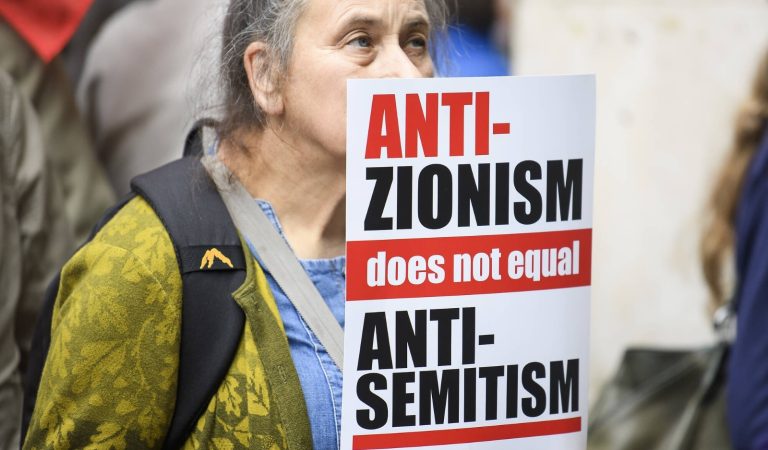
“Semitism” once described a mosaic of Middle-eastern peoples; today, it is Jewish by monopoly. “Anti-Semitism” began as banner for German nationalism, became Jew-hatred, and now simply criminalizes any critique of Israel. It’s been a calculated drift from label to libel.
By Chudi Okoye
How fierce and flush it must feel to be Israel today!
It reigns supreme in the Middle East, having almost completely neutered its enemies in the neighborhood. It has turned the world’s dominant nation, the United States, into what I’ve called a “stooperpower” and reduced other major nations to stuporpowers. Despite the immense controversy it generates, it is venerated in key corners of civic and civil society.
Perhaps Israel’s greatest achievement is that, despite its ferocious militarism, it miraculously maintains an aura of innocence and moral immunity. Today, any criticism of Israel – let alone of Jews more broadly – is swiftly branded as anti-Semitism, a tactic meant to shut down debate. Critics from students and artists to pundits, governments, and even global institutions like the United Nations have been labeled, or rather libeled, as anti-Semitic. In effect, Israel is treated as a nation above reproach.
Yet, whatever the modern sensitivity, few nations were rebuked in sacred texts as searingly as ancient Israel. They were called a sinful nation, a brood of evildoers (Isaiah 1:4), and more trenchantly, a brood of vipers (Matthew 3:7). Their rituals and prayers were scorned by God, who declared their hands full of blood (Isaiah 1:11, 15) and vowed to scatter them, ruin their land, and draw His sword against them (Leviticus 26:33). They were called stiff-necked (Acts 7:51–52), told their true father was the devil, not Abraham (John 8:44), and their assembly denounced as the synagogue of Satan (Revelation 2:9, 3:9). One apostle openly accused them of killing the prophets (1 Thessalonians 2:15); they were blamed for the crucifixion of Christ (Matthew 27:25); and Scripture bluntly declares their covenant with God obsolete (Hebrews 8:13).
These are not the words of modern critics or fringe conspiracy theorists. They are canonical indictments delivered by God, Christ, and their prophetic messengers – some of the most blistering condemnations of the Jewish people ever written.
If the Almighty God, Jesus, or the fire-breathing prophets and apostles of sacred Scripture spoke today with the same scorching fury once poured upon Israel, they would be denounced as anti-Semites. Even a milder version of their rebuke would draw condemnation from Israel and Western governments. In the U.S., they’d be mauled by media or hauled before a disciplinary panel. As students, they might be expelled or arrested; as immigrants, denied entry or deported. Jobs could be lost, grants revoked, ties severed. Some might be digitally erased, purged by institutions wary of controversy or retribution.
The label of “anti-Semitism” has become a license to silence. So fraught is the phrase, so loosely defined and wantonly wielded, that in today’s febrile field even sacred, ancient, internally directed critique could be condemned as anti-Jewish hate speech.
In America today, you may call White people racists or drug addicts, label Black folks as thugs or ‘welfare queens,’ or brand Brown immigrants as criminals, and face no formal consequence. Even such stereotypes are protected speech under the First Amendment. But the faintest critique of Israel’s actions – its persecution of Palestinians, territorial expansionism, or ethno-national laws – invites a swift anti-Semitic smear. This functions not merely as condemnation but as cudgel. It can bring career-ending fallout, or trigger blacklisting, doxxing, deplatforming, even investigation. The price of dissent is no longer outrage; it is erasure. Free speech boundaries tighten sharply around Israel, especially in domains policed by Western liberal consensus. We inhabit a climate of selective moralism, where outrage is not universal but strategically weaponized.
There’s no longer any pretense about it. At the recent Glastonbury Festival in the UK, the English punk-rap duo Bob Vylan led a pro-Palestinian chant and offered a restrained critique of the Israeli military, condemning its indiscriminate killing of Palestinians and calling for its disbandment. The reaction was rapid and ruthless. The British Prime Minister and Leader of the Opposition issued caustic rebukes. Israel’s Embassy in London declared the remarks “anti-Semitic.” Avon and Somerset Police opened a criminal investigation. The band’s talent agency dropped them. And the U.S. Department of State revoked their entry visas ahead of a planned autumn tour.
This was a libertarian music festival at which previously performers had mocked the monarchy, insulted the sitting prime minister, advocated for anarchism, and even burned effigies of political leaders – all without eliciting any comparable state response.
The same U.S. State Department, according to media reports, now treats nearly all criticism of Israel, even peaceful solidarity with Palestinians, as grounds for visa denial. Student protesters are labeled threats to public order, and routine pro-Palestinian phrases can trigger rejection. A senior official testified that the shift stems from a 2025 executive order by President Donald Trump, which made fighting anti-Semitism a foreign policy priority. The result: hundreds of revoked student visas and growing outcry over what civil rights lawyers call an “ideological deportation policy.” The strategy reflects a troubling drift toward political securitization (framing dissent as security threat), raising urgent questions about free speech, ideological vetting, and the limits of democratic pluralism.
It is especially striking, given the torrent of supercilious slurs from the very president now gatekeeping alleged hate speech against Israel. Trump has smeared Muslims, derided “shithole” African countries, and hurled vicious insults at migrants crossing the southern border. “When Mexico sends its people, they’re not sending their best,” he declared in 2015. “They’re bringing drugs. They’re bringing crime. They’re rapists.” He later warned that such immigrants were “poisoning the blood of our country” and bringing “very contagious diseases.” That this fellow is now the arbiter of moral speech is nothing short of astonishing.
Against this backdrop, Trump’s crackdown on speech critical of Israel smacks less of national security than of selective repression. It indicates an alarming trend of dissent being securitized, thought policed, and democratic norms hollowed out. Worse, this authoritarian drift, framed as a stand against anti-Semitism, risks inflaming the very tensions it purports to quell. When civil liberties are curtailed to appease a foreign actor, it begins to look like institutional capture. And when American power serves foreign agendas over American rights, it breeds the resentment that corrodes democracy from within.
Triple Capture
How did we come to this, where democratic dissent is branded as bigotry, and conscience is criminalized? Why has the charge of “anti-Semitism” become such a fearsome weapon, silencing debate and shielding power? Why is Israel placed above reproach?
On some level, the answer lies in the uniqueness of the Jewish Holocaust – the systematic Nazi campaign during World War II that sought to exterminate European Jewry. While the Holocaust stands as one of the most chilling atrocities in human history, it is far from the only or even the deadliest human catastrophe; yet it has acquired singular symbolic power in Western moral consciousness, shaping perceptions of Jewish suffering and exceptionalism. The explanation for this symbolic singularity lies in a triple capture rarely discussed as linked subjects: Jewish capture of Western institutions, most notably in the United States; the semantic seizure of “Semitism,” redefined in narrow, ahistorical Jewish terms; and a deep-seated theology of Jewish exceptionalism.
State Capture: The first pillar is the subordination of Western policy to Israeli interests. The United States – that “stooperpower” of my poetic lament – often advances Israel’s agenda over its own strategic priorities, global standing, and domestic welfare. Billions in aid flow annually to Israel, even as American infrastructure decays and social programs are gutted. (Recall Senator Ted Cruz, pushing more aid for Israel while backing cuts to weather forecasting as his Texas district flooded.) These flows persist, even when Israeli leaders openly defy U.S. presidents. This isn’t alliance; it’s obeisance. The “special relationship” has curdled into servitude. Driven by a powerful Israeli lobby and fervent evangelical pressure, U.S. policy, press, and principle now reflexively tilt toward Tel Aviv – evident in pro-Israel UN vetoes, gag laws, and crackdowns on dissent. All this reveals the extent of the political capture. As in America, so across the West.
Semantic Capture: The second pillar is the appropriation of the term Semitism, which has acquired a narrowly Jewish meaning. Historically, Semite referred to a mosaic of Middle-eastern and African peoples: Akkadians (Assyrians and Babylonians), Arabs, Arameans, Canaanites (including Phoenicians and ancient Israelites), and Habesha peoples (such as Ethiopians and Eritreans). These are distinct ethnic, cultural, and historical groups, united by diverse Semitic tongues – Hebrew, Arabic, Aramaic, Amharic – all descended from the Afro-Asiatic root. Many have faced prejudice and persecution across time. Yet since the 19th century, the term has been increasingly “Judified” – semantically annexed to refer almost exclusively to Jews, thereby effacing other Semitic identities. The term anti-Semitism itself rose to prominence in 19th-century Germany through the writings of Wilhelm Marr, who gave racial and pseudo-scientific shape to older religious hostilities, reframing Judeophobia as an ethnic and civilizational threat. This philological shift narrowed the meaning of “anti-Semitism” to denote only hatred against Jews, enabling a form of linguistic enclosure and Jewish monopolization of victimhood.
This isn’t merely semantic drift; it is discursive imperialism. Arab critique of Zionism is labeled “anti-Semitic,” even when the critic shares linguistic and ethnic descent with the so-called victim. The irony would be comic if it weren’t coercive. The semantic field has been fenced off, surveilled, and rebranded – a clear case of identity capture through linguistic distortion. Today, the term is casually tossed out and fiercely weaponized by many who scarcely understand its fuller etymology or historical breadth.
Theological Capture: The third and most enduring pillar is the Jewish claim of divine election, a paradox that proclaims one universal God yet reserves His covenant for one ethnic group. Rooted in the Hebrew Bible (“chosen people,” Deut. 7:6; “holy nation,” Ex. 19:6) and sustained by rabbinic tradition, it is often framed by Jewish theologians as a great burden of higher moral expectation rather than privilege (Amos 3:2). Yet this theology collapses under its own contradictions, not least because nearly half of Israeli Jews are secular atheists who reject the very God whose covenant supposedly justifies their state. Zionist ideologues, meanwhile, often insist it is “anti-Semitic” to expect Israel to meet higher ethical standards than other democracies – ironically undermining the very premise of the moral election they invoke. Their posture, in effect, gives credence to Christian supersessionist theology, which holds that the old covenant is obsolete.
Whatever the internal tensions surrounding the claim of election, externally it reeks of arrogance and entitlement, especially when deployed to defend Zionism. With it, spiritual metaphor becomes geopolitical license; expansion, divine mandate; dispossession, sacred inheritance. A people claiming God’s special favor inevitably diminish all others made by that same God.
Beyond theological inconsistency, the claim of chosenness fails basic rational scrutiny. Science and philosophy refute such claims. Genetically, all humans share common ancestry; no group holds inherent moral or spiritual superiority. Philosophically, if God is truly universal and just, favoritism toward one group reduces Him to a tribal deity – contradicting the very essence of monotheism. Logically, the claim is unverifiable: grounded not in evidence or reason, but in mythic assertion aligned with power.
Clearly, the triadic architecture of Jewish exceptionalism is deeply problematic. It has fueled havoc not only in the Middle East but also in the West, becoming a key driver of authoritarian drift.
As I conclude this essay, I offer three brief correctives. First, Western governments, the U.S. above all, must abandon their devotional deference to Israel. It is absurd, even embarrassing. No nation, ethnicity, or faith should be exempt from critique. Second, we must reclaim the inclusive meaning of “Semitism,” and similarly distinguish anti-Jewish bigotry from principled criticism of state policy. Third, we must demythologize ‘chosenness,’ rejecting all claims of divine favoritism in public affairs. It is a logical absurdity – an ancient Jewish trope that, frankly, diminishes God.
Only by confronting this triple capture – political, semantic, and theological – can we unshackle democratic conscience from the ropes of fear, and restore speech, dissent, and justice to the civic sphere.
APC reign has ruined Nigeria. Only a united opposition can end its run in 2027, but obstacles abound.
By Chudi Okoye
It would, in and of itself, mark a minor miracle if the main opposition parties could cobble together a viable coalition and rally behind a common candidate in Nigeria’s 2027 presidential election, given the knotty fault lines they must navigate. It would amount to a major democratic milestone if they actually win the election, defeating the ruling party and unseating a seemingly invincible President Bola Tinubu after just one term. It was the canny incumbent, after all, who engineered Nigeria’s first-ever presidential opposition victory, the 2015 upset that ushered in Muhammadu Buhari. Now with Nigeria impoverished and mired in pain under his presidency, Tinubu’s defeat – were the opposition implausibly to pull it off – would be nothing short of sensational. It would be partisan victory, democratic advance, and poetic justice, all rolled into one.
If there were ever a moment to “throw the bums out,” an opportunity for regime change in a hopelessly misgoverned country, it would be the upcoming 2027 general elections, which will occur at the 12-year mark of All Progressives Congress (APC) rule. All national indices have cratered under this incompetent party, even in comparison to the 16-year incumbency of the People’s Democratic Party (PDP) it displaced.
Under the APC, Nigeria has become a global poster child for immiseration. About two-thirds of Nigerians suffer from multidimensional poverty, according to the National Bureau of Statistics – making the country the world’s poverty capital by volume, along with India, a nation over six times its population. While Nigeria’s GDP growth averaged over 7% between 2000 and 2014 under the PDP, it has languished around 3% since 2015. Nominal GDP tumbled from $552 billion in 2014 to just $188 billion in 2024, according to IMF estimates, with so far wild valuations for 2025. GDP per capita has crashed by 75%, from $3,223 to just $807 over the same period, placing Nigeria among the poorest countries per capita in the world. Inflation has soared from 8.05% in 2014 to over 31% in 2024, unemployment has surged, and the naira has collapsed from ₦197 to over ₦1,550 to the dollar.
Public debt has exploded over the APC decade, up 53% in dollar terms and a staggering 1,138% in naira terms, reflecting both fiscal recklessness and catastrophic currency devaluation. Even with this debt binge, critical infrastructure and public services have deteriorated. The real sector is gasping: businesses are failing, manufacturing is in retreat, and foreign investors have fled, triggering heavier reliance on reckless borrowing and inflating the fiscal deficit. Nigeria’s Human Development Index (HDI) stands at 0.564, far below the global average of 0.744, dropping from 152nd place in 2014 to 164th in 2023, according to UNDP data. Amid deepening poverty, governance continues to be marred by bloated budgets, inflated contracts, and opulence at the top – even as ordinary Nigerians sink deeper into hardship.
Compounding the economic collapse is a spiraling security crisis. Insurgency, kidnapping, banditry, communal violence, and terrorism have become endemic, further deterring investment, constraining mobility, and weakening the state’s capacity to govern.
Perhaps most corrosive of all is the APC’s abandonment of national inclusiveness. While the PDP’s flawed but recognizably pan-Nigerian ethos once held the centre, APC rule has entrenched brazen sectionalism. Buhari’s presidency skewed appointments and investments toward the North; Tinubu’s has shifted the favoritism to his South-West base. Federal positions, capital projects, and policy priorities have been tilted to his home region, eroding the principle of federal character and breeding resentment in marginalized sections. The resulting parochialism has undermined national cohesion and dangerously destabilized the polity.
Without question, APC rule has been an unmitigated disaster. Like the infamous analgesic APC – Aspirin, Phenacetin, Caffeine – whose side effects often outweigh its relief, Nigeria’s APC has left the nation with more pain than panacea. The party should have paid an electoral price, and nearly did in the 2023 elections, but for the PDP’s puzzling fragmentation. Were military rule not anathema in the current global zeitgeist – and were Nigeria’s own military not a hollowed force, discredited by its abject misrule – there might long have been a martial correction to this ongoing tragedy. But Nigeria has, for better or worse, settled into a democratic dispensation. A democratic correction is therefore imperative. This is why the 2027 elections are critical.
But what are the chances of a true electoral turnover in 2027? Can a fractured opposition flank dislodge a failed, yet entrenched ruling party – one that still controls the federal levers of patronage, propaganda, and power? Can opposition forces form a unified front to overcome these incumbency advantages?
Complicated Coalition
It is astounding that Nigeria’s opposition parties have not gained strength in the face of APC’s dismal record. If anything, these parties have become weaker – enduring defections, factionalism, and loss of political strongholds – while the ruling party appears to have recovered from its 2023 wobble, when it won by a slim plurality of 36.6%, 19 points less than its 2019 score and the lowest of any winning party in the Fourth Republic. As things stand, it is highly unlikely that any single rival party can, on its own, defeat the APC at the next polls. This explains the growing momentum behind opposition coalition, after initial tentativeness.
The main opposition forces now appear to be pursuing a two-pronged strategy. They’ve made an attempt to register a new political party with the Independent National Electoral Commission, called the All Democratic Alliance (ADA). But the effort has stalled amid INEC claim of competing submissions for the same acronym and complaint about application backlog. Sensing political interference, the opposition forces have activated a fallback: the adoption of the African Democratic Congress (ADC) as its operational platform. Prominent figures from PDP, the Labour Party (LP), and even APC have taken up interim leadership roles, including former Senate President David Mark as interim National Chairman. However, while the ADC’s founding leadership resigned en masse in a “patriotic sacrifice” to accommodate the coalition, some state chapters are resisting the incursion, raising the specter of legal contests and internal sabotage.
The ADC may prove a pragmatic alternative, but there’s concern about its lack of public recognition and limited grassroots infrastructure. The party has no national machinery and barely registered in previous elections; even with a well-known figure like Pat Utomi as its presidential candidate in 2007, it couldn’t scratch up half a percent of the vote. Critics dismiss it as a “paper platform.”
However, recent Nigerian political history cautions against underestimating what a charismatic, nationally viable candidate can achieve with even the most obscure party. Peter Obi and Atiku Abubakar demonstrated this in 2023. Obi transformed the nondescript Labour Party into a national force, winning 25.4% of the vote – carrying the Federal Capital Territory and 11 states, including Tinubu’s traditional stronghold of Lagos. Atiku, despite major defections and internal sabotage in the PDP, still secured 29.07%. Neither won, but both performed impressively given the headwinds. Their combined vote share easily surpassed Tinubu’s, and without its fragmentation, the PDP might well have romped home with a landslide. If either Obi or Atiku emerges as the coalition’s standard-bearer, they could transform ADC into a serious contender, assuming they’ve retained their political potency.
Make no mistake: 2027 will be a hard-fought election, likely the last stand for the protagonists of the previous cycle. President Bola Tinubu of the APC will fight with fierce intent for re-election, seeking to seal his legacy and potentially entrench South-West dominance. Atiku Abubakar, an ageing PDP veteran, will mount what may be his final charge, driven by ambition and a desire to redeem a thirty-year odyssey of thwarted aspirations. Peter Obi, for his part, is impelled by national relevance, a moral debt to his fervent supporters, and the grueling burden of Igbo presidential aspiration. Obi is the youngest of the trio, but he too faces the urgency of age, with his next viable chance potentially not until 2039.
Each man, then, is moved by more than mere ambition. In a tragic, Shakespearean sense, they seem trapped by fate, driven by the hunger for culmination or the yearning for closure, each acutely aware of history’s looming judgment. This will harden their postures and leave little room for retreat.
Yet here lies the paradox: having squandered their best chance to defeat the APC in 2023 by splintering the PDP, opposition forces must now reconsolidate into a coalition resembling the very party they fractured, if they hope to prevail in 2027. The logic is as damning as it is ironic: fragmentation weakened them then; reunification is their only viable path now. But there is a rub. For any coalition to succeed, one of the two leading aspirants – Atiku or Obi – must stand down, something they failed to do in 2023. And how can that happen now, given the unforgiving arithmetic of age, legacy, and narrowing opportunity?
This is the classic Prisoner’s Dilemma in political form. Both aspirants know that cooperation offers the best outcome for their cause, but each is burdened by personal imperatives that make compromise difficult, if not impossible. The result could be mutual ruin – a rerun of 2023, where division handed an improbable victory to the incumbent. The coalition’s challenge, then, is to find a rational path through this emotional and strategic minefield. If Atiku and Obi – or the political blocs behind them – can transcend this impasse, it would mark not just a tactical breakthrough, but a profound evolution in Nigeria’s democratic maturity. It would suggest a shift from egocentric ambition and parochial calculation to strategic realism and national purpose. And it would show that Nigerian opposition politics had learned from its past mistakes and finally come of age.
There is precedent for this. In 2013, after massive losses in previous elections, APC was created from a set of carefully selected opposition parties, coalescing around a single, dominant candidate, Muhammadu Buhari. The new party went on to defeat the PDP in 2015, marking the first time a ruling party lost power at the presidential level in Nigeria. It was a breakthrough for the coalition and a milestone for the country.
But that precedent came with caveats. The 2013 alliance was anchored on a candidate with clear numerical dominance. Buhari’s Congress for Progressive Change (CPC) had polled 31.97% in the 2011 presidential election, while the Action Congress of Nigeria (ACN), led by Tinubu, had just 5.44%. Other coalition partners barely registered. There was thus little debate about who would lead the ticket.
In contrast, today’s opposition bloc presents what may initially appear to be a balanced equation, at least between the two principal contenders. Atiku and Obi enter the 2027 cycle with broadly comparable national reach, similar vote shares in 2023, and distinct but substantial support bases. On the surface, there is no obvious senior partner. Yet this surface parity may conceal underlying asymmetries. A closer examination – parsing their 2023 performances beyond headline figures, tracking post-election shifts in regional loyalties, analyzing APC inroads into their respective bases, and assessing the durability of their coalitions – reveals more complex dynamics. When one also factors in personal reputation, political experience, networking capacity, rotational logic, and overall coalition viability, the strategic balance may begin to tilt.
These, I imagine, are among the critical factors that will shape the coalition’s internal calculus as it seeks to select a standard bearer – a decision that could determine not only the fate of the alliance but the direction of the country itself. To aid that effort, I will, in Part 2 of this essay, weigh the comparative strengths and vulnerabilities of the leading aspirants, and also explore viable strategies to ensure the coalition succeeds.
Awka Times Magazine (ATM) is a publication of AHS Media Ltd., a versatile media company registered for magazine and newspaper publishing, public relations, events management and coverage and educational services, among other services. AHS Media possesses the rights to all published interviews, articles and pictures unless stated otherwise.
AHS Media Ltd. may receive compensation for some links to products and services on this website. Offers may be subject to change without notice.
© 2019 AHS Media Ltd. All Rights Reserved. Use of this site constitutes acceptance of our Terms of Use and Privacy Policy. Developed by MogRex
